Kitchen & Dining · Small
Best Juicer for Canning Tomato Juice: Top Electric Strainers Reviewed
Find the best juicer for canning tomato juice. Compare electric tomato strainers and food mills for home preserving. Read expert reviews and buyer insights.
Affiliate disclosure: As an Amazon Associate I earn from qualifying purchases.
At a glance
1
Best Overall for Home CannersWeston
2
Best for High-Volume ProductionArinoo
3
Best Budget Manual OptionNorpro
5
Best Versatile Food StrainerKitchen Crop
Detailed reviews
The Weston Deluxe strikes a balance between power and practicality for serious home canners. Its 250-watt motor with forward and reverse function lets you process large batches without the hand fatigue that drains energy during a long canning day. The 1-gallon hopper is generous enough to keep you feeding continuously, and the three stainless steel screens (1.5mm, 3mm, and 6mm) cover tomatoes, berries, and chunky salsas without needing to buy extra accessories right away.
Owners report that this machine processed 30 pounds of tomatoes in 30 minutes, which speaks to real efficiency gains over manual alternatives. The reversible motor is a smart inclusion, preventing jamming when tougher skins catch. However, the aluminum head can develop gray discoloration if you run it through the dishwasher, so hand-washing is mandatory, and a light coating with food-grade oil between uses prevents oxidation, the same oxidation concern that makes airtight containers for juicing essential when storing your freshly strained tomato juice. The motor also isn't designed for continuous operation beyond 5 minutes at a time, so you'll need to pause and clear the discharge chute periodically.
If you compare this to the Reber electric tomato strainer below, the Weston is lighter, more compact, and costs less upfront, making it ideal for gardeners and small-batch preservers who don't need industrial-scale output.
Pros
- 250W motor with reverse function prevents jamming
- Three interchangeable screens cover multiple food types
- Processes large batches in under 30 minutes
- 1-gallon hopper reduces reloading frequency
Cons
- Aluminum head requires hand-washing and oil maintenance
- Must run in short 5-minute intervals to avoid overheating
Key features (5)
- 250-watt motor with forward and reverse speeds
- Three stainless steel screens (1.5mm, 3mm, 6mm) included
- 1-gallon hopper capacity for bulk processing
- Adjustable discharge chute to fit various bowl sizes
- Lightweight, countertop design with no clamp required
The Arinoo brings commercial engineering to a home canning budget. Its 450-watt pure copper motor and dual-channel design automatically separate seeds and skins without needing filter swaps, which is conceptually elegant if the execution holds. Food-grade 304 stainless steel throughout means no aluminum oxidation worries, and the machine is built heavier and more robust than the Weston, suggesting longer-term durability under daily use.
Buyers who have had success report smooth processing of Roma and heirloom tomatoes with minimal jam-ups, and the machine's ability to handle continuous operation for extended periods is a real advantage over smaller electric models. The catch is assembly and initial setup. Several owners encountered problems right out of the box: loose shipping plugs that leaked oil, strainer heads that wouldn't click into place despite effort, and poor documentation with manual sections scattered across multiple languages. One buyer received a unit where the discharge shoot design frustrated rather than facilitated the pour, adding mess to cleanup. This is a machine that demands careful assembly and a willingness to troubleshoot if something doesn't align.
Compared to the Weston Deluxe, the Arinoo targets people processing 100+ pounds per season who can tolerate a steeper learning curve and occasional wrestling with setup in exchange for higher throughput and industrial-grade materials.
Pros
- 450W copper motor processes up to 330 lbs per hour
- Food-grade 304 stainless steel resists corrosion and staining
- Dual-channel design eliminates need for filter changes
- Handles continuous operation better than smaller motors
Cons
- Assembly challenges and unclear instruction documentation
- Discharge chute design can be awkward and messy in practice
Key features (5)
- 450-watt pure copper motor with high-speed output
- Dual-channel separation system, no filters required
- Food-grade 304 stainless steel hopper and drip tray
- Continuous-duty motor rated for extended processing
- 5-year warranty and lifetime customer support
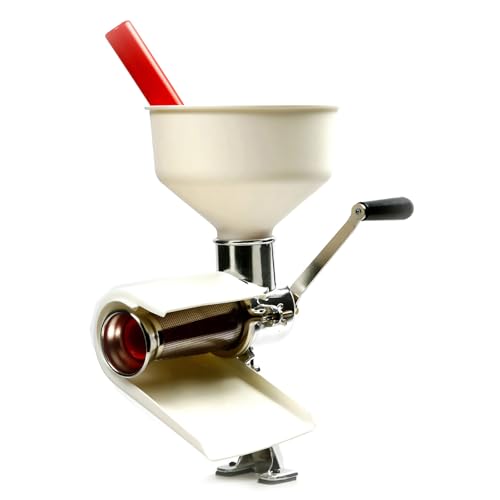
The Norpro 1951 represents over a decade of refinement in manual food straining. Its spiral auger driven by hand crank separates pulp, seeds, and skins efficiently, and the simple mechanical design means there's almost nothing to break. For gardeners processing smaller batches or those who prefer not to buy an electric motor, this tool delivers consistent results at a fraction of the cost.
The real strength here is the berry and specialty screens available separately. Owners making raspberry jam or blackberry syrup report that the berry screen (1953, sold separately) extracts significantly more juice than the standard 1.5mm screen, and doing so requires nothing more than loosening bolts on both sides of the frame. The design is straightforward enough that even first-time users find it intuitive after a few tomatoes. Cleanup is manageable if you address the screen immediately after use with a stiff brush; procrastination turns dried pulp into a nightmare.
However, manual operation requires two people for sustained work or someone with considerable arm endurance. Unlike electric versus manual tomato strainers used side by side, the Norpro's hand-crank demands constant input, and fatigue sets in well before you finish a 50-pound batch alone. The clamp mount also requires a suitable countertop edge, limiting where you can set it up. If you're comparing this to an electric option like the Weston, expect to spend 2–3 hours of active cranking versus 30 minutes of machine time.
Pros
- Hand-crank design with no motor means zero electrical dependence
- Interchangeable screens available separately for berries and salsa
- Simple spiral-and-auger mechanism rarely needs repair
- Lowest up-front cost of any option reviewed
Cons
- Requires two people or extreme arm endurance for bulk batches
- Screen cleanup is tedious if pulp dries; requires immediate attention
Key features (5)
- Manual hand-crank operation with no battery or plug needed
- 3-quart hopper capacity with chrome-plated steel screen
- Includes fine mesh screen and spiral auger
- Additional screens sold separately for berries and pumpkin
- Clamp-mount design anchors securely to countertop edge
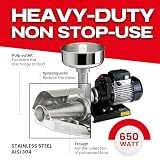
The Reber N.5 represents the high end of what a home canner can buy without crossing into commercial equipment. Built in Italy since 1964, this machine carries genuine pedigree; it's not a rebadged generic design. The 650-watt induction motor drives an all-metal gear system with an oil-bath gearbox that requires zero maintenance, and the cast-iron body with epoxy coating combined with 304 stainless steel hoppers and filter cone suggests construction meant to outlast its owner.
Owners report processing raw tomatoes for hours without clogging, and the machine's ability to handle continuous operation without thermal shutdowns is a genuine advantage over smaller motors that need cool-down breaks. The 772 lbs per hour throughput is real; buyers working through 8 bushels of tomatoes describe completing in 3 hours what previously took a full day. Optional attachments (pasta press, meat grinder, grater) add versatility if you want a second tool.
The trade-offs are weight (this machine is not a lightweight), price (significantly higher than the Weston), and documentation headaches. Several owners struggled with manuals that were mostly Italian, requiring YouTube research to understand assembly, and the bolted-on filter cone meant removing multiple nuts before and after each use. Unlike the Weston Deluxe or Arinoo, this is a machine you set up once in a permanent spot and leave there. If you're comparing this to electric versus manual tomato strainers for occasional use, the Reber's premium price justifies itself only if you're processing triple-digit pounds annually for years to come.
Pros
- 650W induction motor runs continuously without thermal shutdown
- All-metal gears and cast-iron body outlast plastic-heavy competitors
- Processes 772 lbs per hour with minimal seed and skin remnants
- Optional attachments expand utility beyond tomato straining
Cons
- Heavy machine requires permanent countertop placement
- Bolted filter cone requires wrench removal before and after each use
Key features (5)
- 650-watt induction motor with maintenance-free oil-bath gearbox
- Cast-iron body with food-grade epoxy, stainless steel internals
- Processes up to 772 lbs per hour of tomatoes or fruit
- Compatible with optional pasta press, grinder, grater attachments
- Made in Italy with 5-year manufacturer warranty
The Kitchen Crop Johnny Apple (also called Victorio by some retailers) sits between the Norpro and electric machines. The hand-crank version ships complete; add an optional electric motor later if you decide bulk work demands it. The clamp design is secure and mounts to any countertop edge between 3/4" and 2-1/8" thick, giving you flexibility in kitchen layout.
Owners praise the hopper size and the pulp output quality for traditional tomato sauce; the fine puree means minimal additional cooking down before canning. Processing 75 pounds of tomatoes yielded 29 quarts of clean sauce with manageable cleanup. The stainless steel screens resist corrosion, and the spiral mechanism is straightforward to disassemble for washing. One important note: this machine creates a finely pureed, juice-and-pulp combination rather than separating them cleanly. If you want textured tomato sauce with visible chunks, you'll need to skip the strainer and do the work differently.
The hand-crank requires two people for comfortable sustained work or someone willing to endure significant arm fatigue alone. Compared to the Weston electric or Reber, you sacrifice speed but gain the flexibility to add a motor later without buying a new machine. The leakage some owners mention is minor but worth noting; using a baking dish under the chute helps contain splashes.
Pros
- Works by hand or accepts optional electric motor attachment
- Sturdy clamp mount fits standard countertop edges
- Stainless steel screens resist discoloration and corrosion
- Excellent for traditional tomato sauce and fine purees
Cons
- Hand-crank exhausting for batches over 50 lbs without motor
- Creates fine puree; not suitable for chunky textured sauce
Key features (5)
- Hand-crank design compatible with optional electric motor
- Secure clamp mount for countertops 3/4" to 2-1/8" thick
- Apple/tomato screen (1.3mm) included; berry and salsa screens available
- Cast aluminum body with stainless steel screen components
- 5-year warranty covers all parts and construction
How to Choose a Tomato Juice Strainer for Canning
Electric vs. Hand-Crank: Speed and Endurance
Electric models like the Weston and Reber cut processing time dramatically, turning a 6-hour manual job into 30 minutes. If you're canning more than 50 pounds per season, an electric motor pays for itself in saved time and shoulder relief. Hand-crank options (Norpro, Johnny Apple) cost less upfront and never need a power outlet, but they demand sustained physical effort. If you grow tomatoes or buy bulk produce regularly, prioritize speed; if you preserve occasionally, a manual tool offers simplicity and independence from electricity.
Motor Power and Processing Volume
A 250-watt motor (Weston) handles typical home batches well; 450+ watts (Arinoo, Reber) suits gardeners processing 100+ pounds in a single session. Higher wattage also means the motor can run longer without thermal shutdown, reducing the need for cooling breaks. Check the hourly throughput specs: the Reber's 772 lbs per hour is industrial capacity, while the Weston's undisclosed rate is closer to 100–200 lbs per hour. Match the motor to your actual harvest volume, not your aspirations.
Screen Quality and tomato juice canning preparation
Interchangeable screens expand utility. The Weston includes three (1.5mm, 3mm, 6mm), while the Norpro and Johnny Apple allow you to buy berry and salsa screens separately. Stainless steel screens resist corrosion and staining better than aluminum or plated steel. Consider your typical workload: tomatoes year-round? Buy a machine with a fine screen included. Making berry jam once a year? A coarser screen or optional berry screen is fine. Cleaning is easier if you address screens immediately after use; dried pulp jams the mesh and turns cleanup into drudgery.
Hopper Size and Continuous Operation
A 1-gallon hopper (Weston) lets you feed larger batches before stopping to reload. Smaller hoppers mean more frequent pauses. Motors also vary in continuous-operation endurance; the Reber's oil-bath gearbox allows hours of uninterrupted work, while smaller electric motors (Weston, Arinoo) need 5–15 minute rest intervals to avoid overheating. If you're processing 100+ pounds in one session, continuous operation matters. If you work in shorter bursts, smaller hoppers and periodic breaks are manageable.
Our picks at a glance
1
Best Overall for Home CannersWeston
2
Best for High-Volume ProductionArinoo
3
Best Budget Manual OptionNorpro
5
Best Versatile Food StrainerKitchen Crop
Frequently asked
Can I use a regular food processor or blender instead of a tomato strainer?
A food processor will puree tomatoes but won't separate seeds and skins, leaving you to strain afterward. A tomato strainer does both simultaneously, saving time and producing cleaner sauce without extra steps. For canning, the strainer's efficiency and consistent output are worth the dedicated tool.
What's the difference between a food mill and a tomato strainer?
Food mills manually press food through a single fine screen, while tomato strainers use a rotating spiral or auger to force food through multiple interchangeable screens. Strainers are faster, especially electric models, and better for bulk processing. Food mills are simpler and quieter but slower for large batches.
Do I need to blanch and peel tomatoes before running them through a strainer?
No. Most strainers, especially electric models, handle whole or halved raw tomatoes efficiently. The machine separates skins and seeds automatically. You only need to wash, core, and halve larger fruit to fit the hopper. Roasting or cooking tomatoes first is optional and may reduce processing time slightly, but it's not required.
How do I clean the screen after processing tomatoes?
Clean the screen immediately with a stiff brush under running water while pulp is still wet. Dried seeds and skin jam into mesh holes and are nearly impossible to remove later. A narrow bottle brush or toothbrush works well for reaching clogged areas. Hand-wash only; dishwasher heat can warp plastic parts and degrade metal finishes.
Can I add an electric motor to a hand-crank strainer later?
Yes, if the machine is designed for it. The Johnny Apple accepts an optional motor attachment. The Norpro hand-crank does not. Check the product listing before buying if you want the flexibility to motorize later without replacing the entire unit.