Best Juicer at Walmart: Top Picks for Fresh Home Juice
Find the best juicer at Walmart with our comparison of 5 top-rated models. Cold press, citrus, and centrifugal juicers reviewed for families and health-conscious cooks.
Verdict, analysis, and key features for each pick.
#1 Pick
Best Overall
EanOruus
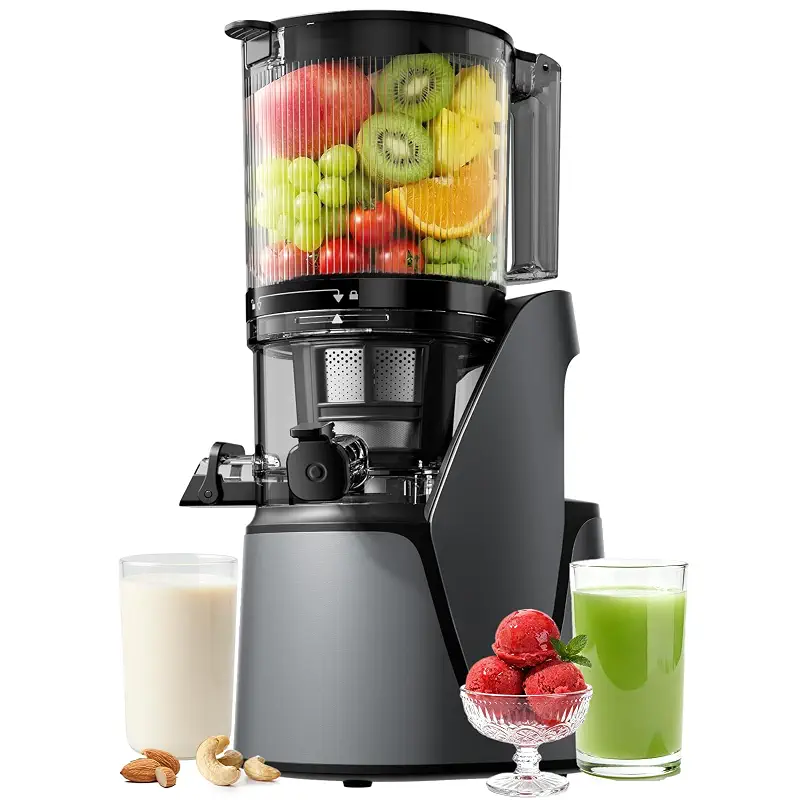
EanOruus Juicer Machines, 3-in-1 Cold Press Juicer, Premium Gray | Makes Juice, Nut Milk & Sorbet, 6.5" Extra Large Chute, 100oz Large Capacity, AC Motor
4.4(2,580)
Versatile cold press that juices, makes nut milk, and sorbet with a wide chute and strong motor.
Ideal for: Families and wellness cooks who juice daily and want versatility without buying multiple machines.
The EanOruus stands out for doing more than one job well. Its design lets you switch between juice, nut milk, and frozen sorbet with simple filter swaps, which means you're not locked into a single use case. The 6.5-inch chute accepts whole apples and carrots with minimal prep, and owners consistently report that the AC motor handles fibrous vegetables (kale, beets) without jamming. The 100-ounce capacity means you can batch juice for several days if you're serious about daily intake.
Where it earns trust is in juice quality. Buyers praise the dry pulp output and minimal foam, which signals genuine extraction efficiency. Some users did report early squeaking or locking issues on first use, but these resolved with normal operation. The machine is also relatively quiet once settled, a real advantage if you juice early mornings.
Compared to single-purpose citrus juicers, the EanOruus trades simplicity for range: you're learning one machine that does three things rather than mastering the fastest way to squeeze a lemon. If you want to experiment with greens, nut milk, and the occasional sorbet bowl, this is the practical choice.
Pros
Large 6.5-inch chute reduces prep time significantly
100-ounce capacity handles batch juicing easily
function: juice, nut milk, and sorbet with filter swaps
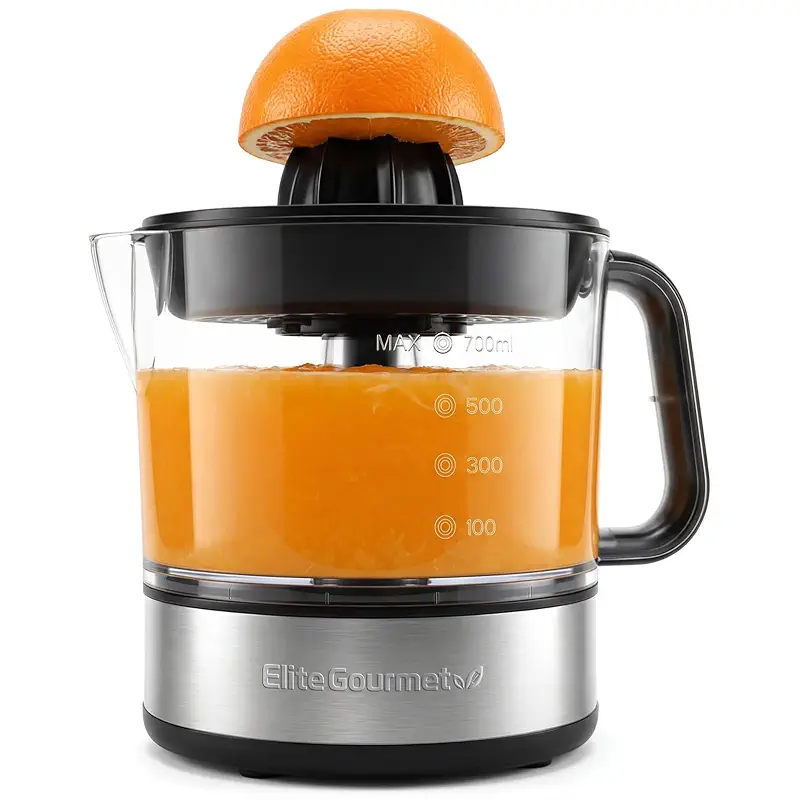
Ideal for: Citrus lovers, families making regular lemonade or fresh OJ, and anyone with limited counter space.
The Elite Gourmet excels at what it was built for: turning oranges, lemons, limes, and grapefruits into fresh juice with minimal fuss. The 40-watt motor is stronger than typical 25-watt citrus models, which matters when you're pressing through a bag of grapefruits or juicing daily. The auto-reversing reamer spins both directions to pull maximum juice, and users report filling the 24-ounce container easily from just a handful of lemons.
The three-setting pulp dial lets each family member customize: no pulp for smooth OJ, light pulp for texture, or full pulp if you want fiber. A well-designed pour spout prevents drips, and the compact footprint fits small apartments and RVs. Owners who juiced 4–5 times weekly over months report zero wear: the stainless steel strainer doesn't rust, the plastic base doesn't crack, and the motor stays consistent. Unlike the EanOruus, which requires some learning for leafy greens and hard vegetables, this one asks nothing of you but halved citrus.
Where the Elite Gourmet falls short is scope: it does citrus, and citrus alone. If your household wants fresh OJ one day and green juice the next, you'll need a second machine. Also, some seeds slip through the filter into the juice, so a fine strainer is worth having nearby.
Pros
40-watt motor stronger than standard 25-watt citrus juicers
Three adjustable pulp settings for personal juice preference
Compact design fits small kitchens, apartments, and RVs
Durable stainless steel parts resist corrosion and odor
Cons
Citrus-only function; cannot juice vegetables or leafy greens
Some seeds and fine pulp escape the filter into finished juice
Key features
40-watt motor with auto-reversing reamer for thorough extraction
24oz juice container with three-position pulp control dial
Easy-pour spout designed to prevent drips and spills
Stainless steel strainer and rim resist rust and fruit-acid damage
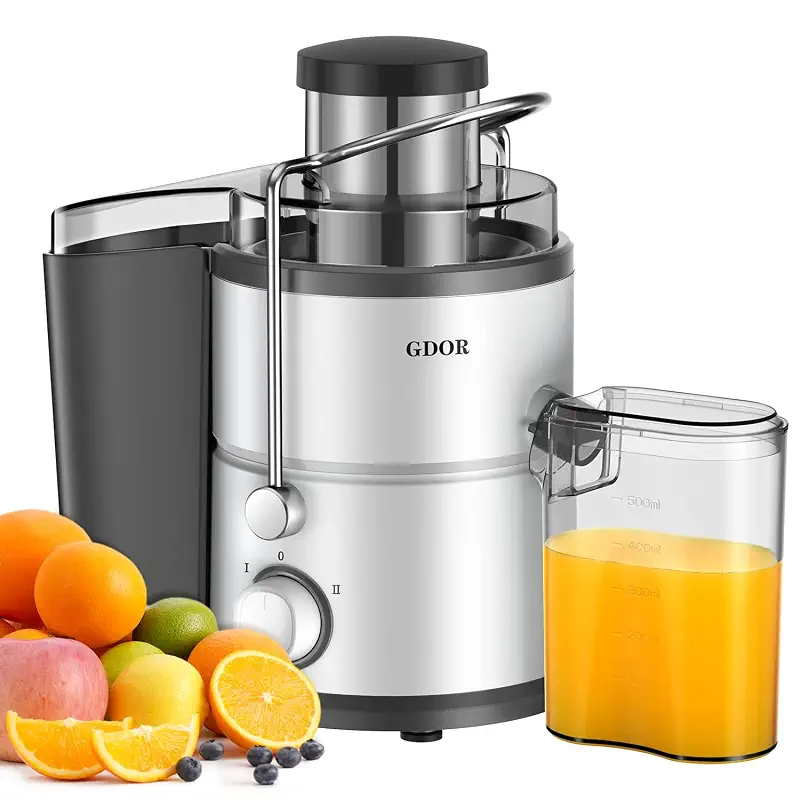
Ideal for: Budget-conscious beginners and casual juicers who prioritize quick daily use over maximum nutrient retention.
The GDOR delivers solid juice yield at an entry-level investment, making it the right choice if you want to test juicing habits without committing serious money. The 800-watt motor is genuinely powerful: it spins at two speeds (low for soft fruits like oranges and tomatoes, high for harder carrots and kale), and owners report quick juice extraction in seconds. The 3-inch feed chute saves some prep work, though you'll still need to cut hard vegetables into pieces smaller than you might with a cold press model.
The built-in foam separator in the juice jug is a practical touch that prevents clogging, and the included cleaning brush makes teardown straightforward. Non-slip feet keep it stable on the counter, and safety features like an overheat shutoff add peace of mind for daily use. Where it underperforms against the EanOruus or Aaobosi is in juice extraction efficiency: more liquid stays trapped in the pulp, and on high speed, the motor can sound harsh. Centrifugal juicers also generate more heat during spinning, which some nutrition enthusiasts argue breaks down heat-sensitive vitamins compared to slow-press methods.
If you're making juice 2–3 times a week for immediate consumption and don't mind prep work, this is enough machine. If juice yield and preservation of micronutrients matter more than price, the cold press options justify their higher cost.
Pros
Dual-speed system adapts to soft and hard produce
Powerful 800-watt motor handles carrots and hard vegetables
Foam separator in juice container reduces clogging
Compact footprint and lightweight for easy storage
Cons
Centrifugal spinning generates heat; some nutrients may degrade
More liquid remains in pulp compared to cold press machines
Key features
800-watt motor with dual-speed (13,000–18,000 RPM) operation
3-inch wide feed chute reduces vegetable prep time
Built-in foam separator catches excess foam in juice jug
Overheat protection and safety lock prevent accidental operation
Included cleaning brush and 17oz juice jug with non-slip base
#4 Pick
Best for Greens
Aaobosi
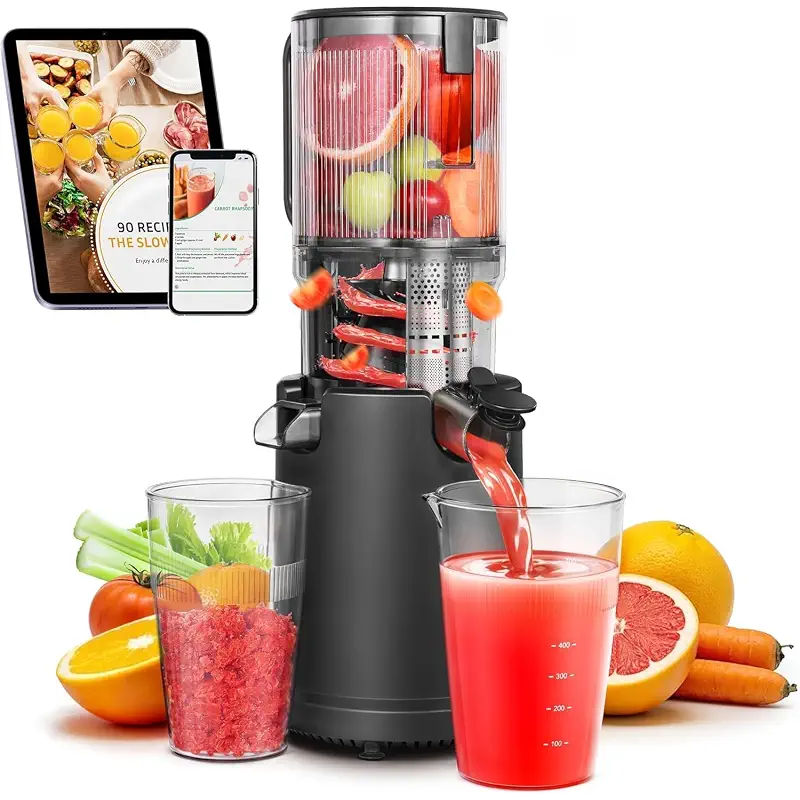
AAOBOSI Cold Press Juicer, 5.4-Inch Chute for Whole Fruits/Veggies | Quiet slow-masticating motor, easy-clean parts and high juice yield for fresh morning juice, family breakfasts and meal prep
4.5(3,716)
Slow-masticating juicer optimized for leafy greens, quiet operation, and 30% more juice yield than centrifugal models.
Ideal for: Green juice enthusiasts, apartment dwellers who prefer quiet appliances, and wellness practitioners making celery or wheatgrass shots.
The Aaobosi excels at extracting juice from kale, spinach, and other leafy vegetables that defeat faster juicers. The slow 60-RPM masticating auger gently crushes rather than spins, which handles delicate greens without shredding them into foam. Lab-verified claims show 30% higher yield than centrifugal machines, and owners confirm that pressing celery or wheatgrass twice yields noticeably more juice the second time: a sign the first pass doesn't fully deplete the pulp. The triple-filtration system and auto-cutting blades prevent jams, a common frustration with cheaper cold-press models.
At just 58 decibels, it's remarkably quiet: early morning green juice without waking the household. The 5.4-inch chute handles whole apples and sliced carrots, though owners note that cutting vegetables lengthwise into thinner pieces optimizes extraction. The company's customer service is notably responsive; one owner reported a plastic-rim chip caused by their own error, and the manufacturer replaced the part at no cost and inquired about the health situation that prompted the juicing.
The Aaobosi does trade some versatility for specialization: unlike the EanOruus or Ecoself, it doesn't swap filters for sorbet or nut milk. And the plastic chute and auger are durable but not commercial-grade, so rough handling or forcing vegetables may cause cracks over years of heavy use. For someone committed to daily green juice or celery cleanses, this is the quiet, efficient choice.
Pros
Slow 60-RPM extraction optimized for leafy greens without foam
Lab-verified 30% higher juice yield than centrifugal juicers
Ultra-quiet operation at 58dB, suitable for early mornings
Auto-cutting blades prevent jams with fibrous vegetables
Cons
Plastic auger and chute may develop cracks under rough handling
Single-function juicer; does not make nut milk or sorbet
Key features
Low-speed 60-RPM masticating motor extracts maximum nutrients
5.4-inch chute for whole apples, carrots, and leafy greens
Triple-filtration with double mesh filters for pulp-free juice
180-watt energy-efficient motor with stainless steel housing
Included cleaning brush and reverse function prevent clogging
#5 Pick
Most Versatile Premium
Ecoself
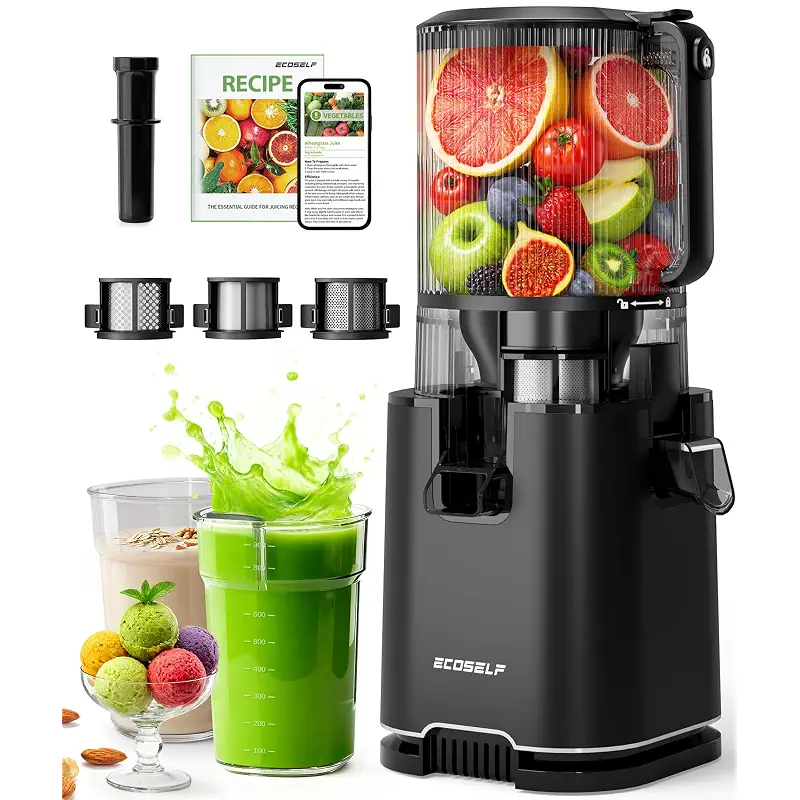
ECOSELF 3-in-1 Cold Press Juicer Machines, 6.0" Feed Chute, 100oz Capacity | Juice, Sorbet & Nut Milk with 3 Filters | Easy to Clean & Assembly | Reverse Function | Slow Masticating Juicer | With Pusher
4.8(71)
Feature-rich cold press with filters, 6-inch chute, all-metal gearbox, and 24-month warranty for serious juicing.
Ideal for: Serious daily juicers, health practitioners, and households prioritizing durability and all-metal construction over budget.
The Ecoself sits at the premium end but justifies the position through engineering refinements that reduce vibration and extend machine life. The all-metal gearbox is a step above plastic-gear competitors, which means smoother power delivery and less risk of premature failure. The upgraded quiet motor operates at low speed with high torque, handling both soft fruits and tough roots without struggling. With three interchangeable filters (fine for smooth juice, coarse for pulp, and blank for sorbet) it mirrors the EanOruus versatility but adds the durability of metal internals.
The 6-inch feed chute is the widest in this lineup, and combined with the self-feeding chamber design, you genuinely load whole apples and let the machine pull them through. Owners rave about how little prep time is needed, especially for serving juice in bottles for juicing that you've prepared in advance. The juice comes out smooth with minimal foam, and the pulp is consistently dry. The included recipe book and 12-month warranty (extendable to 24 months with registration) reflect a company confident in durability. Customer support is live via phone and email, which matters if something goes wrong.
The trade-off is price: it costs more than the EanOruus and significantly more than the GDOR. If you juice 5+ days a week and want a machine that will still work reliably in three years, the metal gearbox and customer service justify the premium. For occasional weekend juicing, the EanOruus handles the job at lower cost.
Pros
All-metal gearbox reduces vibration and extends lifespan
6-inch extra-large chute with self-feeding capability
filters for juice, pulp juice, and frozen sorbet
12-month warranty extendable to 24 months with registration
Cons
Premium pricing reflects quality; significantly higher than budget models
Some food may remain inside chamber after use, requiring cleanup
Key features
Low-speed, high-torque motor with precision-machined metal gearbox
6-inch feed chute and self-feeding chamber for minimal prep work
Three interchangeable filters for juice, pulp, and sorbet functions
UltraPress spiral compression design for smooth, pulp-reduced juice
Includes food pusher, recipe book, and 24/7 email support
How to Choose the Right Juicer
Four trade-offs that actually matter when matching a juicer at walmart to your kitchen.
Decide Between Juicer Types
Cold press juicers use slow-spinning augers to squeeze juice, retaining more heat-sensitive vitamins and yielding 20–30% more juice than faster machines. Centrifugal juicers spin fast and work best for hard vegetables and quick daily use; they're louder and generate more heat. Citrus juicers are single-purpose but excel at oranges, lemons, and grapefruits with no prep. The choice depends on your routine: weekday health-conscious green juicing favors cold press; casual orange juice on weekends favors electric citrus. Understanding cold press versus centrifugal juicers helps you weigh nutrient preservation against speed and cost.
Assess Chute Size and Prep Work
A wide chute (5–6.5 inches) means whole fruits and vegetables drop in with minimal chopping, saving 5–10 minutes per session. Models with 3-inch chutes require cutting carrots and apples into quarters. If you juicer daily, the time saved by a large chute compounds quickly. Cold-press models generally offer larger chutes than centrifugal ones, another reason they suit meal-prep habits.
Consider Capacity and Batch Juicing
A 17-ounce juice container suits one or two servings; a 100-ounce hopper lets you load ingredients for a family or batch multiple days' juice at once. If you're prepping for the week, larger capacity means fewer refills. Smaller kitchens may not have counter space for a 100-ounce machine, so measure before buying. Some juicers also include separate pulp containers, which organizes cleanup.
Account for Noise and Cleanup Time
Centrifugal juicers are louder (often 70+ decibels); cold-press models run at 50–60 decibels. If you juice before 7 a.m. and share a home, a quiet machine matters. Cleanup varies too: the juicer cleaning and maintenance routine for a centrifugal model takes 10 minutes; cold-press machines with mesh filters may take 15–20 minutes, especially after juicing carrots or beets. Budget time accordingly if you juice daily.
Evaluate Warranty and Long-Term Durability
Entry-level machines often carry 1-year warranties; premium models may offer 2-year coverage. Metal gearboxes last longer than plastic ones, and customer support responsiveness matters if something breaks. Reading owner reviews for durability over multiple years (not just first impressions) helps you predict whether a juicer will work as well in year three as year one.
Frequently asked
Quick answers to the questions readers ask most.
Can I juice leafy greens like kale and spinach in a centrifugal juicer?
Centrifugal juicers can process leafy greens, but they produce more foam and leave more juice in the pulp compared to slow-masticating models. If greens are your primary juice base, a cold-press juicer like the Aaobosi or Ecoself will yield 20–30% more juice and require less cleanup. Centrifugal juicers work better for hard vegetables like carrots and apples.
How often should I clean my juicer to avoid mold and buildup?
Clean your juicer immediately after use, while pulp is still moist. Rinse all removable parts under running water, use the included brush for mesh filters, and wipe down the motor housing. If you juice daily, a thorough deep clean once weekly (soak mesh filters in water and vinegar for 30 minutes) prevents mold. Delay cleaning by even a few hours and dried pulp becomes much harder to remove.
What's the difference between a cold press juicer and a regular centrifugal juicer?
Cold press juicers use a slow auger (60–80 RPM) that gently crushes produce, minimizing heat and oxidation. Centrifugal juicers spin at high speed (up to 18,000 RPM), extracting juice faster but generating more heat. Cold press yields more juice and preserves more nutrients; centrifugal juicers are faster and louder. Cold press costs more but suits daily health-focused juicing. Centrifugal suits casual weekend use.
Can I make nut milk and sorbet in any juicer?
No. Only cold-press models with interchangeable filter cartridges (like the EanOruus or Ecoself) can make nut milk and sorbet. Centrifugal and citrus juicers are designed for juice extraction alone. If you want a single machine for multiple tasks, choose a cold press model and verify it includes the sorbet and nut milk filters before purchasing.
How long does fresh juice stay fresh in the refrigerator?
Cold-pressed juice lasts 72 hours (3 days) refrigerated because low-speed extraction minimizes oxidation and enzyme breakdown. Centrifugal juice, due to higher heat and air exposure during spinning, lasts 24 hours. Store juice in an airtight glass container in the coldest part of your fridge, away from light. Freeze leftover juice in ice-cube trays if you won't drink it within the window.