Verdict, analysis, and key features for each pick.
#1 Pick
Best for High Volume
Weston
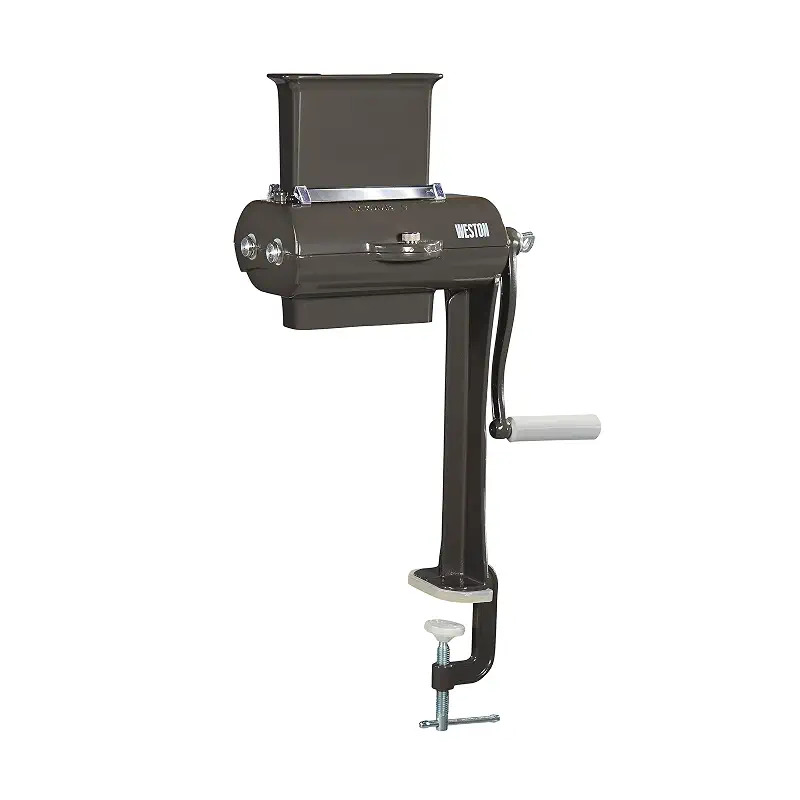
Weston Manual Support Beef Jerky Slicer, Quick and Easy Operation For Cuts Up To 5” Wide x 1.25” Thick, Durable Aluminum Construction, Stainless Steel Blades, Charcoal Gray (07-3801-W-A)
4.2(541)
Heavy-duty clamping slicer that handles bulk jerky production with consistent results and minimal effort.
Ideal for: Serious jerky makers, hunters processing bulk game meat, anyone making jerky more than monthly.
The Weston manual slicer is built for jerky makers who process pounds of meat regularly. Its 32 stainless steel blades cut 15 quarter-inch strips at once, and the C-clamp mounting means once you dial it in on your work surface, it stays put while you feed meat through. Buyers report slicing 5 to 30 pounds in under half an hour, and the uniform thickness they get removes guesswork from drying time.
The trade-off is assembly and cleanup. You'll need to disassemble the slicer after each session to clean between the blade shafts properly; a snap-ring tool helps, though Weston doesn't always include one in the box. The blades are fearless sharp, so cut-resistant gloves become a practical investment if you make jerky often. A few owners noted that if meat jams (usually from overfeeding), reversing the handle crank clears it without damage.
Compared to cutting-board systems like the Hi Mountain, this slicer trades the hand-safe pressing plate for raw throughput and table mounting. If your jerky hobby is seasonal or one-batch-a-month, the setup hassle might frustrate you. If you're processing a freezer full of game meat, the speed justifies the ritual.
Pros
Slices 15 strips simultaneously at consistent thickness
Handles meat up to 5" wide and 1.25" thick
Stable C-clamp mount stays secure on any work surface
Completes bulk slicing in under 30 minutes
Cons
Requires disassembly and careful blade cleaning after use
Extremely sharp blades demand attention and protective gloves
Key features
32 stainless steel blades for quarter-inch consistent strips
Accommodates large meat cuts up to 5 inches wide
Built-in C-clamp secures to tables and countertops
Includes stainless steel combs and meat tongs
#2 Pick
Best Budget Combo Kit
shop-ezy
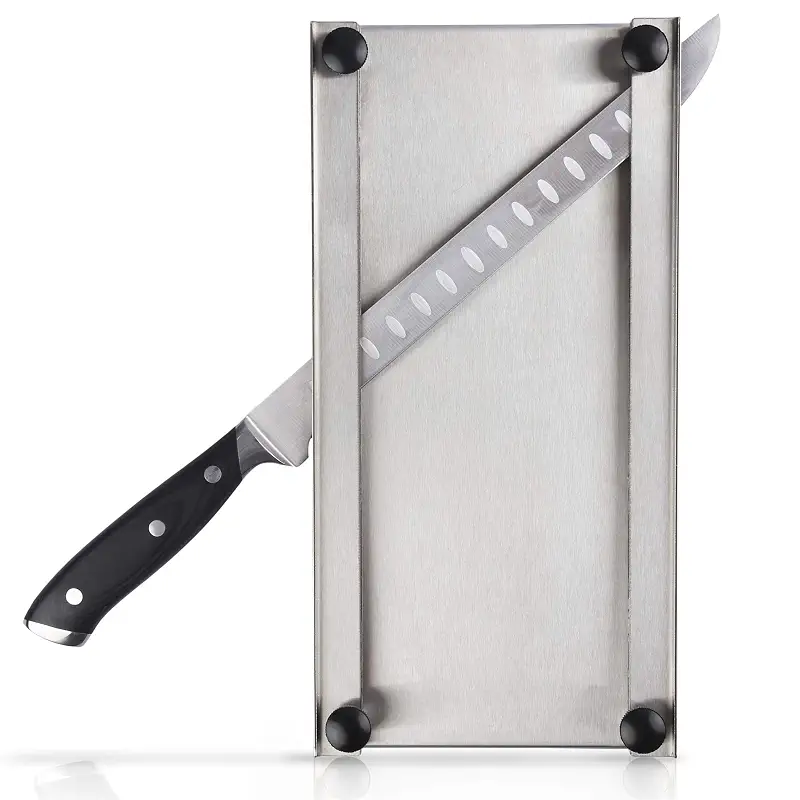
Meat slicer Stainless Steel Jerky Maker Cutting Board With 10-Inch Professional Slicing and Carving Knife
4.3(633)
Affordable manual board with 10-inch knife and adjustable nylon spacers for occasional jerky makers.
Ideal for: Budget-conscious jerky beginners, occasional home jerky makers with limited storage.
The shop-ezy kit bundles a stainless steel cutting board with adjustable thickness guides and a sharp 10-inch carving knife. For jerky makers who don't mind a slower, hands-on approach, this works well. You set the nylon spacers to 1/8, 1/4, or 3/8 inch thickness, lay your meat on the board, and slice with the included knife. A hand protector comes with the set, though feedback suggests most users skip it once they get comfortable with the blade.
The board itself is compact (6 by 12 inches) and takes almost no storage. The stainless steel is food-safe and easy to rinse. Owners appreciate that you don't need frozen meat and can work with room-temperature cuts. The downsides are process time and, again, sharp edges. One reviewer noted all the metal edges are razor-sharp during assembly, and the rails can nick fingers during cleaning if you're not careful. The knife handle also feels slightly misaligned to some users, though it still performs.
This is a step down from the Weston in pure speed; you're slicing one piece at a time, then removing it before the next cut. But it costs less and takes up minimal space, making it a sensible entry point if you're testing whether jerky making sticks as a hobby. Compared to the Hi Mountain's safety-focused pressing plate, the shop-ezy asks more of your knife technique.
Pros
Includes sharp 10-inch stainless steel carving knife
Adjustable thickness spacers for 1/8, 1/4, and 3/8-inch cuts
Compact 6-by-12-inch footprint for tight kitchens
Food-grade stainless steel easy to rinse and maintain
Cons
Very sharp metal edges require careful handling during assembly and cleaning
One-slice-at-a-time process slower than machine-fed systems
Key features
10-inch professional carving knife with high-carbon stainless steel blade
Nylon spacer guides for 1/8, 1/4, and 3/8-inch thickness control
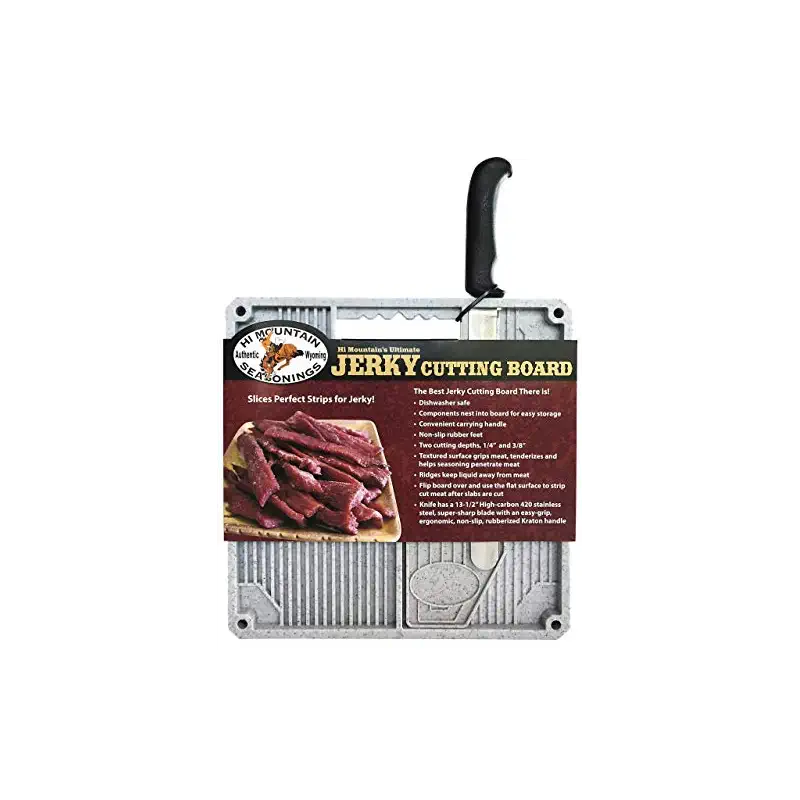
Ideal for: Home cooks prioritizing safety, families making jerky together, those uncomfortable around extremely sharp blades.
Hi Mountain's jerky kit prioritizes the user experience with a hand-safe pressing plate that holds meat firmly in place while you slice, reducing the risk of fingers drifting into the blade. The serrated 13.5-inch knife is sharp and ergonomically designed, and the board itself features juice grooves to catch drippings, textured ridges for grip, and non-slip feet so it stays put during use. A carrying handle makes transport easy, and the whole board is dishwasher-safe.
Owners consistently note that the pressing plate is the real differentiator here. With meat held securely, your free hand stays away from danger, and slicing becomes almost meditative rather than a white-knuckle exercise. The 1/4 and 3/8-inch thickness options cover most jerky recipes, though one buyer mentioned that even the thinner setting produces slices slightly thicker than knife cuts, which can extend drying time a touch. The knife stays sharp with basic maintenance, and cleanup takes minutes.
If you compare this to the Weston machine, you're trading speed and volume for safety and simplicity. The Hi Mountain won't slice pounds in 20 minutes, but it won't demand disassembly or cut-resistant gloves either. It's the right call if hand safety matters more than production speed, or if your jerky batches are modest.
Pros
Hand-safe pressing plate keeps fingers away from serrated blade
Dishwasher-safe board for quick cleanup
Juice grooves capture drippings, non-slip rubber feet stabilize board
13.5-inch serrated knife with comfortable ergonomic handle
Cons
1/4 and 3/8-inch settings may produce slightly thicker slices than expected
Manual one-at-a-time slicing slower than motorized or multi-blade machines
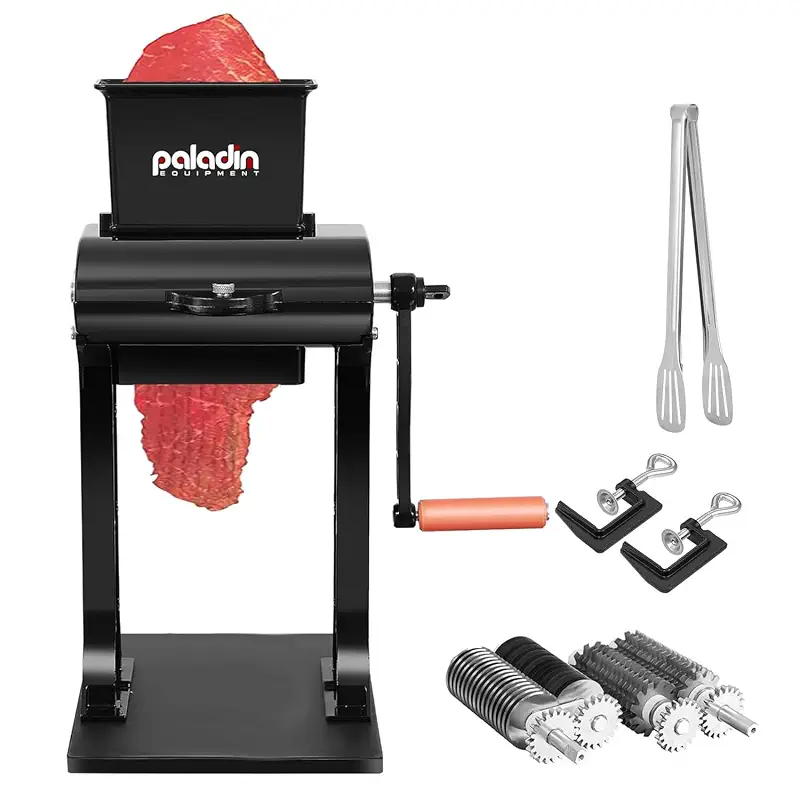
Ideal for: Hunters and bulk meat buyers, cooks who tenderize before jerky, those processing whole roasts without butcher prep.
The Paladin Equipment machine is a hybrid: it tenderizes tough cuts with one blade set and slices jerky strips with another. If you buy whole roasts rather than pre-cut steaks, this two-stage approach saves a separate butcher visit or knife work. The tenderizer blades create heat channels and break down connective tissue, which also helps seasonings penetrate deeper. Once tenderized, flip the blade assembly and run pieces through the jerky blades to get consistent strips.
Owners report processing 20 pounds of venison or beef in 30 to 45 minutes, and the clamp-to-counter mounting keeps things stable during the crank. Assembly is straightforward, and the aluminum body feels durable. The catch is cleanup: you essentially need to disassemble the machine completely and use a half-inch bottle brush to get between the tenderizer and slicer blades. One reviewer emphasizes that a simple soak won't cut it, and food-grade silicone spray helps prevent corrosion during storage. A couple of owners also reported stripped threads on the base out of the box, suggesting quality control gaps. The jerky slicer blades also tend toward thinner cuts than some alternatives, which means faster dehydration but less meaty texture.
Manual versus electric jerky slicers is a personal choice; this machine stays manual, so no electric bill. But if you're starting with whole roasts and want tenderizing plus slicing in one tool, the Paladin cuts out extra steps. The Hi Mountain, by contrast, is pure slicing: you tender separately if needed.
Pros
Two blade sets: tenderizer and jerky slicer in one machine
Handles meat up to 0.8 inches thick and 4 inches wide
Clamping base keeps unit stable during hand-crank operation
All parts hand-wash cleanable with warm soapy water
Cons
Requires complete disassembly and bottle brush for thorough blade cleaning
Jerky slicer produces very thin strips that shrink significantly when dried
Key features
Two sets of stainless steel blades: tenderizer and jerky slicer
Fits meat up to 0.8 inches thick and 4 inches wide
Aluminum construction with table-clamp base included
Compact 13-by-9.5-by-17.3-inch footprint for kitchen countertops
#5 Pick
Best Compact Multi-Blade
SupMaKin
SupMaKin Fresh Meat Slicer with SteadyGrip, Adjustable 2/4 mm, 17 IN 1 | Stainless Steel Manual Meat Cutter, Cleaver Kitchen Knife, Jerky Slicer Suit for Chicken Breast Beef Pork
4.0(101)
Ultra-compact 17-blade manual slicer that cuts thin strips in one stroke, ideal for small kitchens.
Ideal for: Apartment dwellers, compact kitchen users, those needing a portable secondary slicer.
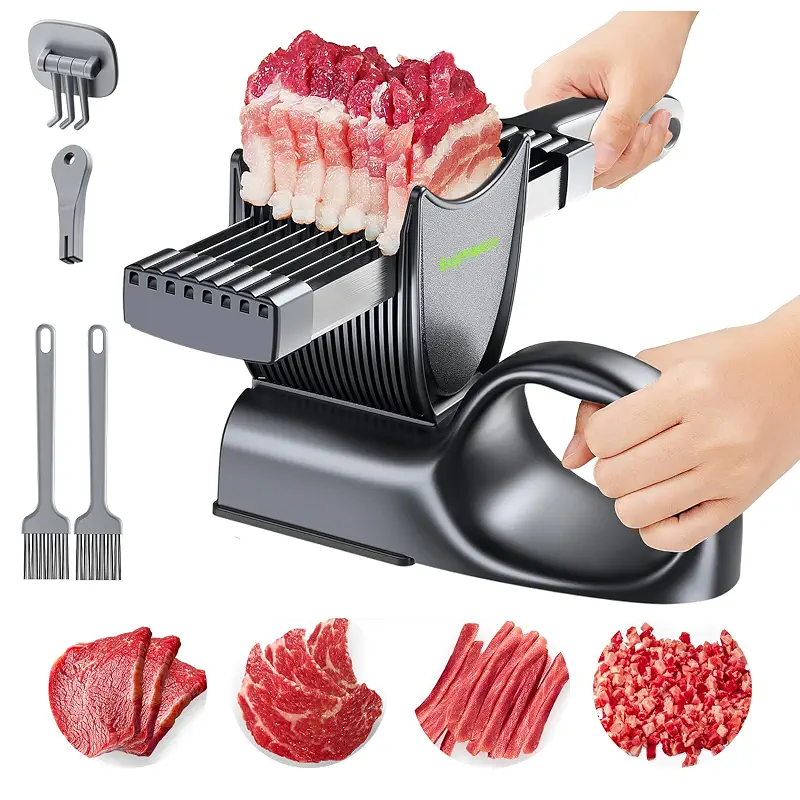
SupMaKin's fresh meat slicer is the most unconventional option here: a handheld frame holding 17 parallel blades that slice a piece of meat into 18 thin strips in a single push. The concept appeals to apartment dwellers or anyone with minimal counter space. You run the meat through once for slices, stack them, run them through again for strips suitable for jerky or hot-pot ingredients. Two blade sets (2mm and 4mm) let you adjust thickness, and suction cups hold the whole frame steady on smooth countertops.
Buyers who get the setup right love it for speed and compactness. One reviewer praised it for cutting venison jerky prep time in half. But quality control is inconsistent. Several owners reported blades arriving dull right out of the box, despite warning labels. The sharpener included is tiny and doesn't fully restore edge on all blades. The frame also has a learning curve: meat can stick between blades if you overstuff, and you need to clean out jams carefully. It's best suited to fresh, room-temperature meat; frozen cuts and bones will damage it.
This is fundamentally different from the Paladin or Weston machines. Where they're workbench-mounted and engineered for sustained use, the SupMaKin is a secondary tool for quick slicing in tight spaces. It trades durability and consistency for portability. If your kitchen is tiny or you want a backup slicer, it's clever. If it's your primary jerky tool, expect frustration unless you get a unit with properly sharpened blades.
Pros
Ultra-compact design with 17 parallel blades cuts 18 slices in one stroke
Two blade sets for 2mm and 4mm thickness options
Suction cup base attaches to smooth countertops without clamps
Includes cleaning brush and 2-year quality guarantee
Cons
Blades often arrive dull and tiny included sharpener doesn't restore all edges
Meat can stick between blades or jam, requiring careful clearing
Key features
17 parallel stainless steel blades for multi-slice one-stroke cutting
Two blade sets: 2mm and 4mm thickness for different cuts
Suction cup base secures to smooth kitchen surfaces
Compact wall-mountable design saves valuable kitchen storage space
How to Choose a Jerky Slicer
Four trade-offs that actually matter when matching a jerky slicer to your kitchen.
Clamped Machine vs. Cutting Board vs. Multi-Blade
Jerky slicers fall into three camps. Clamped machines like the Weston mount to your table or counter and stay put, handling high volume fast but demanding disassembly for cleaning. Cutting boards with guided knives (Hi Mountain, shop-ezy) are safer, slower, and require less cleanup but take longer per batch. Multi-blade handhelds (SupMaKin) are the most compact and portable but less durable and prone to jam-ups. Your choice depends on jerky volume and available counter space. If you make jerky monthly or less, a board slicer or multi-blade works. If you process a freezer full of game meat, a clamped machine saves hours.
Meat Thickness and Feeding
Different slicers accept different meat sizes. The Weston takes cuts up to 5 inches wide and 1.25 inches thick, letting you run steaks through whole. The Hi Mountain board is 6 by 12 inches, sized for typical supermarket steaks. The Paladin Equipment slicer handles 0.8-inch thickness and 4-inch width. None of these require frozen meat, though a slight chill helps maintain control. If you buy large roasts, the Weston or Paladin's tenderizer-plus-slicer option saves preliminary butcher work. Thinner, pre-cut steaks work fine with any board system.
Thickness Control and Slicing Jerky with Uniform Thickness
Consistency is the whole point of a dedicated slicer. The Weston cuts quarter-inch strips 32 at a time, eliminating variation. The Hi Mountain and shop-ezy boards use nylon spacers to lock thickness at 1/8, 1/4, or 3/8 inch. The Paladin also produces uniform strips but thinner than most prefer, meaning faster drying. SupMaKin's 2mm and 4mm blades offer flexibility but require careful feeding to avoid jam-ups. Choose a slicer whose thickness range matches your recipe; thicker strips take longer to dry, thinner ones dry fast but become brittle if over-dried.
Blade Sharpness and Safety
Every slicer here has fearless sharp blades, and that's a feature. But it demands respect. The Weston's blade shafts need careful disassembly and a bottle brush or specialized tool to clean. The Hi Mountain's hand-safe pressing plate shields your fingers, making it the safest option for families or new users. The shop-ezy's 10-inch knife and SupMaKin's parallel blades require more knife discipline. Cut-resistant gloves (not included by most manufacturers) become a smart investment if you make jerky often or have young helpers in the kitchen. Never ignore a manufacturer's warnings about blade care; dull blades jam, and jamming tempts you to push harder and risk cuts.
Cleaning and Storage
Cleanup separates the convenient from the tedious. The Hi Mountain board is dishwasher-safe and takes five minutes. The shop-ezy rinses easily but has sharp edges to navigate. The Weston, Paladin, and SupMaKin all require disassembly, with the Weston and Paladin needing bottle brushes between blade shafts, not a quick rinse. Factor cleanup time into your decision, especially if you make jerky weekly. The Hi Mountain and SupMaKin take minimal storage space; the Weston and Paladin need corner counter real estate or a closet shelf.
Frequently asked
Quick answers to the questions readers ask most.
Do I need to partially freeze meat before slicing jerky?
No. Most modern slicers handle room-temperature meat without issue. Partial freezing (1 to 2 hours) can help maintain control if your slicer's blade or knife tends to slip, but it's not required. The Weston, Hi Mountain, and Paladin owners report good results with unfrozen meat. Freezing completely is a mistake; it dulls blades and can jam the mechanism. Let thawed or room-temp meat sit at about 50 to 60 degrees Fahrenheit if you want firmness without ice crystals.
What thickness should jerky slices be for even drying?
Most jerky recipes call for 1/4 inch thick slices, which typically dry in 4 to 8 hours in a standard dehydrator. Thinner slices (1/8 inch) dry faster but risk becoming brittle; thicker slices (3/8 inch) stay chewier but take 8 to 12 hours or longer. The Hi Mountain's two settings (1/4 and 3/8 inch) cover the common range. Once you land on a thickness you like, a dedicated slicer keeps every batch uniform, so drying time stays predictable.
Can I use these slicers on frozen or partially frozen meat?
Most slicers work best on thawed or lightly chilled meat. The Weston, Hi Mountain, and Paladin specify unfrozen meat to avoid jamming and blade strain. SupMaKin's manual explicitly says not to use frozen or partially frozen meat. Complete freezing also dulls blades. A light chill (an hour or two in the fridge) helps maintain shape, but full freezing defeats the slicer's advantage and risks equipment damage.
How often do I need to clean the blades?
Clean after every use. Meat residue hardens and attracts bacteria, and it can dull blades or cause jams on the next session. The Hi Mountain board goes in the dishwasher, so cleanup is one step. The Weston and Paladin require disassembly and a bottle brush between blade shafts: plan for 10 to 20 minutes. SupMaKin and shop-ezy boards rinse easier but need careful attention to the edges. Always let blades air-dry completely before storing to prevent corrosion, and consider food-grade silicone spray on metal parts if you store long-term.
Which slicer is best for very tough or marbled meat?
The Paladin Equipment's tenderizer blades work well on tough cuts, breaking down connective tissue and creating channels for seasoning. The Weston handles thick, tough steaks with its 32 blades running in parallel. For very fatty or marbled meat, partial chilling helps the blade bite cleanly without slipping. The Hi Mountain and shop-ezy boards require a sharper, more deliberate knife stroke on tough meat, so they work but demand more effort. If tenderizing is a regular step in your jerky process, the Paladin's dual function saves a separate tool.