Discover authentic Japanese porcelain bowls and dishware. Compare traditional Arita ware, Saikai pottery, and modern sets for ramen, rice, and everyday use.
Ideal for: Home cooks making ramen, udon, or pho regularly who want a complete serving set.
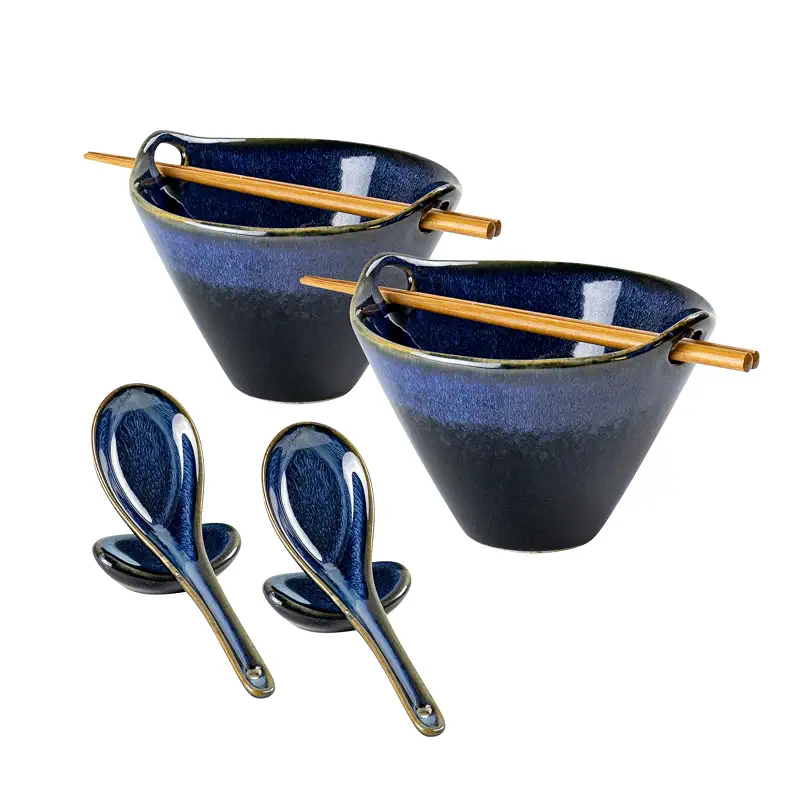
The Unicasa ramen bowls hit a sweet spot for home cooks who want authentic-feeling Japanese tableware without a steep investment. At 20 ounces per bowl, they're substantial enough to hold a proper noodle serving, and the reactive blue glaze gives each piece character. The chopstick rest cutouts are a thoughtful touch that sets them apart from plain bowls, and buyers consistently praise how the set arrives well-packed and ready to use immediately.
What really appeals here is the completeness. You get two full place settings with matching spoons and chopsticks, so there's no hunting through drawers for accompaniments. The porcelain fires at over 1300 degrees Celsius and passes food-safety standards, which matters if you're serving guests or family regularly. One caveat from reviews: the 20-ounce capacity works best for noodle dishes and soups, not for rice or stir-fries where you'd typically want something shallower and wider.
Compared to the Fire Rose Saikai set, these bowls prioritize depth and noodle-specific function over the minimalist Japanese rice-bowl tradition. If your kitchen leans toward ramen nights and casual Asian dining, this delivers better value. The downside is that the size feels generous for traditional rice servings, so they're less versatile for everyday Japanese home cooking.
Pros
Chopstick rest cutouts add practical Japanese design detail
Complete set includes bowls, chopsticks, spoons, and rests
Heavy, durable porcelain with consistent glaze finish
Microwave, dishwasher, and freezer safe for daily use
Cons
Deeper bowl shape less ideal for traditional rice service
20-ounce capacity oversized for some Asian dishes
Key features
20-ounce capacity deep porcelain bowls with reactive blue glaze
Matched chopstick and spoon set included for two place settings
Fired above 1300 degrees Celsius; lead and cadmium free
Ideal for: Home cooks seeking authentic rice bowls, gift-givers, and collectors valuing handcrafted Japanese pottery.
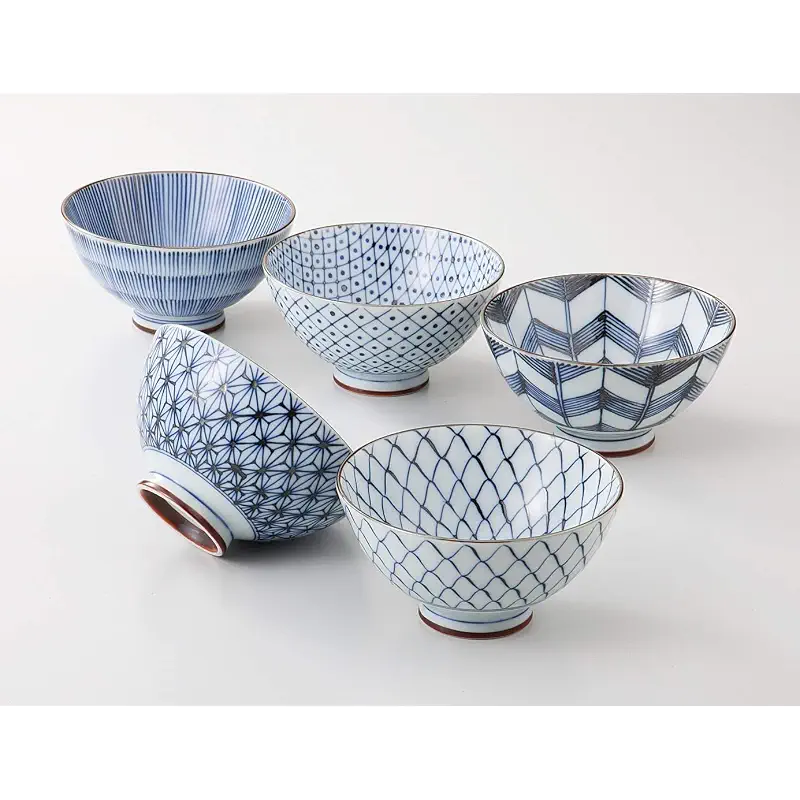
Saikai pottery brings legitimacy to the category. Each of the five bowls in this set features distinct, hand-painted patterns rather than printed designs, and buyers consistently note that the craftsmanship feels elevated compared to mass-market alternatives. Made in Japan and sized at 300 milliliters, these are true rice bowls, not oversized soup vessels. The weight is surprisingly light for the material, which suggests careful firing and design rather than thick-walled compromise.
What makes this set special is presentation. It arrives in a gift box with careful padding, so many buyers keep the packaging and use it as-is for giving to friends or family. The patterns are understated and varied, which speaks to the Japanese approach of embracing asymmetry and individual character. One limitation: at 4.5 inches in diameter and 2.5 inches tall, these are genuinely small. That's authentic for rice service (a Japanese meal balances many small dishes), but reviewers with larger appetites or Western portion expectations have returned them.
Where this differs from the Unicasa set is philosophy. The Fire Rose Saikai bowls respect traditional rice-serving proportions and aesthetic, whereas the Unicasa ramen bowls are designed for Western-scale noodle bowls. If you're interested in understanding japanese porcelain bowl types guide through actual usage, these teach you how traditional Japanese meals compose around smaller, more frequent servings.
Pros
Hand-painted patterns on each bowl, not printed designs
Authentic small rice-bowl proportions and weights
Gift-ready packaging in sturdy blue box suitable for presents
Dishwasher and microwave safe despite delicate appearance
Cons
Small capacity (300ml) not ideal for large Western portions
Only three of five bowls padded during shipping in some cases
Key features
Set of five porcelain bowls with individual hand-painted patterns
300ml capacity per bowl; 4.5-inch diameter, 2.5-inch height
Made in Japan with authentic traditional firing techniques
Includes gift-ready packaging suitable for immediate presenting
#3 Pick
Best Heritage Arita Ware
有田焼やきもの市場
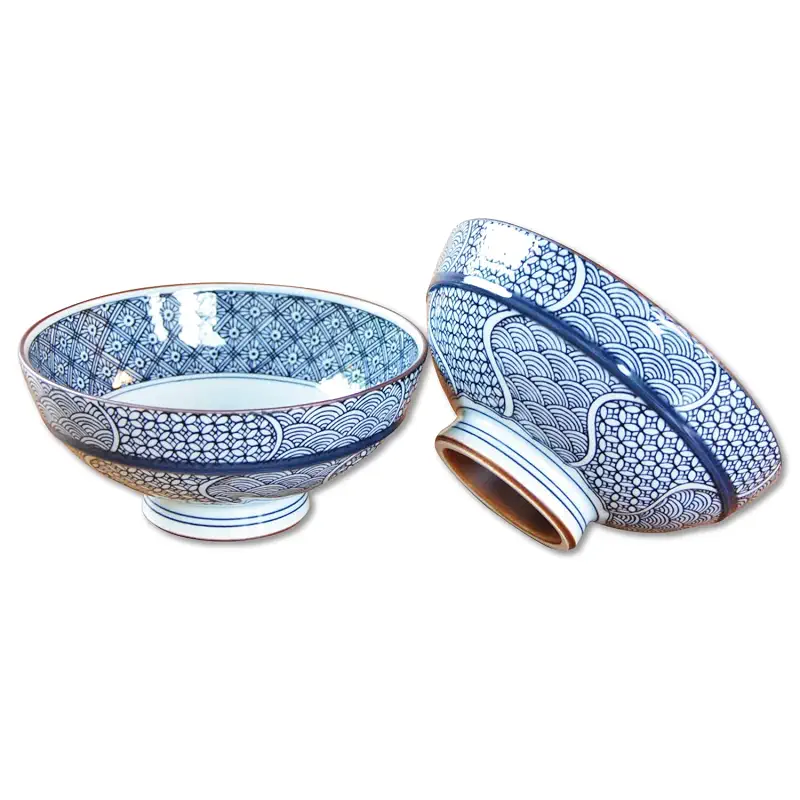
有田焼やきもの市場 Japanese Rice Bowl 5.3 inches in Diameter set of 2 Ceramic Arita Imari ware Made in Japan Porcelain Jimon-ori Large
5.0(2)
Authentic Arita rice bowls with 400-year ceramic tradition; perfect for buyers seeking genuine heritage porcelain over production volume.
Ideal for: Collectors and purists seeking authentic Arita-ware heritage and traditional Japanese tableware craftsmanship.
These bowls carry serious provenance. Made in Arita, one of Japan's most storied ceramic centers, they represent a pottery tradition dating back four centuries. The fact that review counts are low (only two ratings so far) actually reflects their positioning: these are specialty imports aimed at buyers who understand that arita imari porcelain styles carry historical weight and are not mass-market commodities. The 5.3-inch diameter and 2.4-inch height mirror traditional rice-bowl proportions, and the bowls come in gift packaging as standard.
What you're buying here is authenticity and heritage. Arita ware carries recognition among collectors and those familiar with Japanese tableware culture. The bowls are microwave and dishwasher safe, so they're not decorative-only pieces, yet they demand respect in handling. The limited review data means you're betting on brand heritage rather than large-sample buyer feedback, but the manufacturing location and traditional methods speak clearly.
Unlike the Fire Rose Saikai bowls, which emphasize painted pattern variety, these Arita pieces prioritize the pottery tradition and regional recognition. If you want to invest in bowls that tell a story about Japanese craft, this is the path. The trade-off is that minimal reviews mean less community guidance on durability or performance over time compared to the Unicasa or Fire Rose options with hundreds of buyer experiences.
Pros
Authentic Arita ceramics with 400-year production heritage
Traditional rice-bowl dimensions for Japanese portion sizes
Comes in gift packaging ready for presentation or storage
Microwave and dishwasher safe for practical everyday use
Cons
Very limited review count limits real-world durability feedback
Heritage positioning may command premium pricing perception
Key features
Set of two rice bowls made in Arita, Japan with traditional methods
5.3-inch diameter, 2.4-inch height; authentic Japanese proportions
Imari-ware classification; 400-year ceramic tradition region
Gift-boxed and suitable for both daily use and display
#4 Pick
Best for Small-Dish Service
有田焼やきもの市場
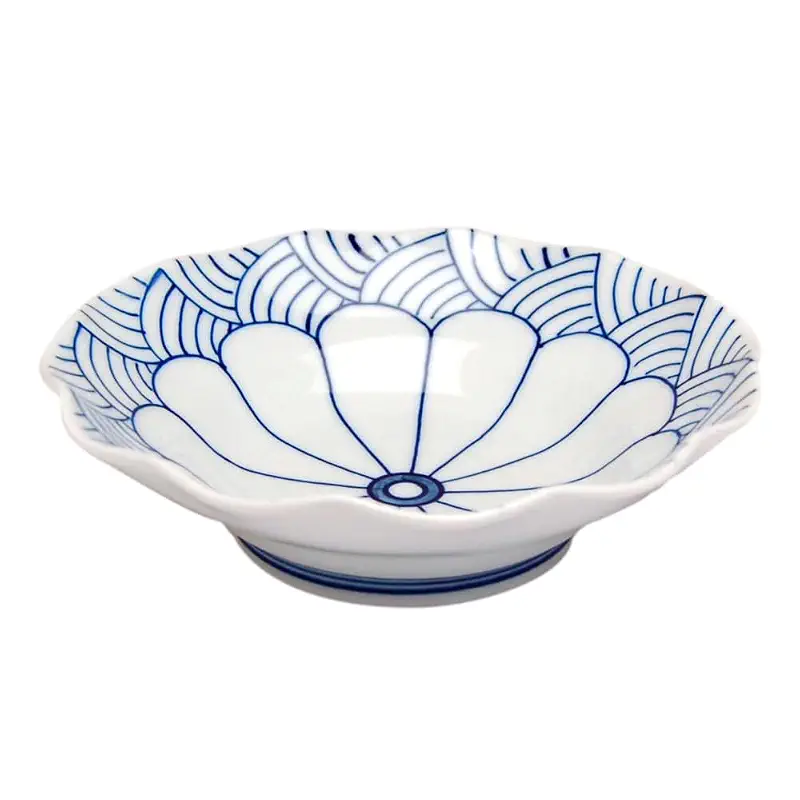
有田焼やきもの市場 Small Japanese Bowls for side dishes 5.9 inches Ceramic Porcelain Made in Japan Arita Imari ware Kikuwari Seigaiha
5.0(1)
Arita-ware small bowls designed for side dishes, pickles, and appetizers; authentic Japanese multi-course dining approach.
Ideal for: Japanese cuisine enthusiasts building authentic place settings for multi-course home dining.
Where the previous Arita bowls focus on rice, these are purpose-built for the Japanese meal structure: multiple small dishes surrounding the main components. At 5.9 inches wide and 1.8 inches tall, they're shallow and wide, ideal for holding miso, pickles, stewed vegetables, or snacks. This reflects how Japanese home cooking actually works, with each diner receiving several small portions rather than one large entree. The Arita production and heritage match the rice bowls in this lineup, so if you want a cohesive tableware collection, pairing these with the traditional rice bowls builds an authentic place setting.
The limitation is functional: these aren't for soups or noodles, and buyers need to understand their specific role in Japanese table composition. Unlike the Unicasa ramen bowls that work across many Asian cuisines, these require a certain dining philosophy to deploy effectively. That's not a weakness if you're cooking Japanese food regularly; it's exactly the point. Compared to the all-purpose Unicasa set, you sacrifice versatility for authentic cultural fit and the satisfying experience of understanding how traditional Japanese meals organize around variety and balance.
For a buyer assembling a genuine Japanese tableware collection rather than a single multipurpose bowl set, these fill a necessary gap. They arrive gift-boxed and microwave/dishwasher safe, so they work for both display and regular use.
Pros
Shallow 5.9-inch diameter design ideal for pickles and side dishes
Ideal for: Soba enthusiasts, Japanese tableware collectors, and cooks exploring traditional noodle-eating rituals.
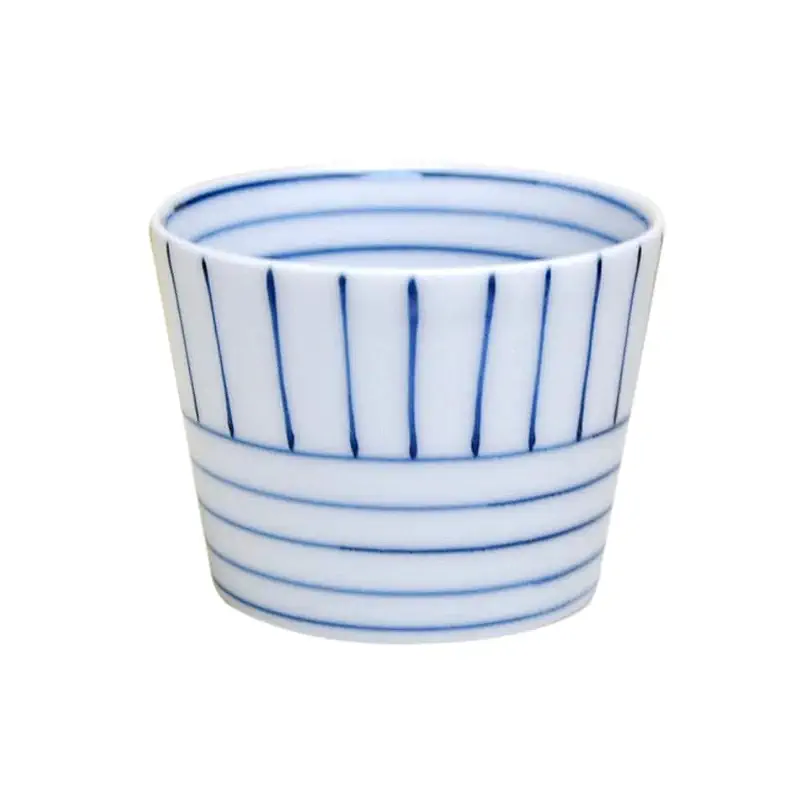
This is a specialized tool for a specific culinary purpose: soba noodle dipping. When you eat soba traditionally, you portion the noodles, dip them into sauce held in a choko, and eat them without slurping from a bowl. It's a different approach than ramen, which you eat directly from the broth. This cup is made for that ritual. At 3.1 inches wide and 2.3 inches tall, it's small and purposeful, and the Arita heritage means you're holding a piece of pottery culture while using it.
The obvious drawback is narrow use. Unlike the Unicasa ramen bowls that double for soups and stir-fries, or the Saikai set that works for rice or snacks, this choko does one job. But if you eat soba regularly or want to understand how Japanese tableware is built around specific meals, that focus is the entire point. Many Japanese homes keep a choko for soba night, the way Western kitchens might have a specific pasta bowl. The fact that it's microwave and dishwasher safe means it's not precious only; it genuinely handles daily use.
Compared to the best sake set options available elsewhere, a soba choko serves a different cultural function, but it occupies the same shelf-space mentality of specialized Japanese tableware. If you're interested in understanding the depth of Japanese pottery beyond the basics, this teaches you how cultural meals create their own serving vessels rather than adapting Western designs.
Pros
Authentic Arita choko designed specifically for soba sauce service
Traditional design supports proper soba-eating technique and ritual
Microwave and dishwasher safe despite specialized heritage
Gift-ready packaging and 400-year ceramic tradition backing
Cons
Very limited use case; designed only for soba dipping sauce
Single unit with minimal review data; niche product category
Key features
Arita-ware soba choko cup sized for traditional dipping sauce
3.1-inch diameter, 2.3-inch height; traditional proportions
Made in Japan with 400-year regional ceramic heritage
Microwave and dishwasher safe; includes gift box packaging
How to Choose Japanese Porcelain for Your Kitchen
Four trade-offs that actually matter when matching a japanese porcelain brands to your kitchen.
Understand Bowl Type and Function
Japanese tableware is built around meal structure, not one-size-fits-all bowls. Rice bowls are small and deep, designed for the portion size of cooked rice in a balanced meal. Ramen bowls are larger and wider, built for broth and noodles. Soba choko cups are small and specific to dipping sauce. Understanding the japanese porcelain bowl types guide helps you choose pieces that actually fit how you cook. If you eat ramen three nights a week, a dedicated ramen bowl makes sense. If you serve traditional Japanese meals with multiple small dishes, buying a set of small side bowls is smarter than trying to adapt one large multipurpose bowl.
Regional Heritage and Authenticity
Arita and Imari, both in Saga Prefecture, have been producing ceramics for over 400 years. Bowls marked as Arita-ware or Imari-ware carry historical legitimacy and traditional firing methods. Not all Japanese porcelain is Arita-made; brands like Saikai also produce in Japan using traditional techniques but may not carry the same regional designation. Understanding arita imari porcelain styles helps you decide whether regional heritage matters to you. For collectors and those seeking connection to Japanese ceramic culture, the heritage pieces offer storytelling value. For everyday cooks wanting reliable, attractive bowls, production location is less critical than material quality and your actual use case.
Weight, Glaze, and Durability
Quality Japanese porcelain fires at high temperatures (often above 1300 degrees Celsius), creating dense, durable pieces. Bowls that feel substantial without being heavy suggest careful engineering rather than thick-walled compensation. Glaze matters: a smooth, slightly glossy finish resists scratching and staining better than matte surfaces. Check whether bowls are lead and cadmium free, especially if serving children or using them frequently. Most modern Japanese porcelain meets food-safety standards, but confirming this in product details protects your health and ensures the bowl will age well rather than degrading with use.
Set Composition and Your Cooking Style
Complete sets like the Unicasa ramen bowls include matching chopsticks, spoons, and serving pieces, making them immediately functional for entertaining. Specialty sets like Arita rice bowls or side-dish bowls work best if you're building a collection around authentic Japanese dining or a specific meal type. Consider whether you cook Asian food multiple times weekly, occasionally, or as special occasions. Buyers using bowls frequently prefer depth and heft (like the Unicasa ramen set), while those seeking tableware art or gift pieces gravitate toward heritage brands and hand-painted patterns. Match the set to your actual kitchen rhythm, not aspirational cooking.
Frequently asked
Quick answers to the questions readers ask most.
Are Japanese porcelain bowls really better than regular ceramic or stoneware?
Japanese porcelain is fired at higher temperatures than many Western ceramics, creating a denser, more durable material that resists chipping and staining. The glaze tends to be smoother and harder. Whether that translates to 'better' depends on your needs: regular stoneware is perfectly functional for everyday use, but if you value longevity, food safety, and aesthetic finish, Japanese porcelain offers measurable advantages. Heritage pieces from Arita carry centuries of refined technique, which shows in balance and proportion even if the practical performance difference is subtle.
Can I use Japanese rice bowls for other dishes like soup or dessert?
Technically yes, but traditional rice bowls are sized and shaped specifically for rice portions in a balanced Japanese meal. Using them for Western-style soups or large dessert portions feels awkward because the proportions don't align. That's not a flaw in the bowls; it reflects that Japanese tableware is designed around a particular food culture. If you want flexibility across many dishes, larger bowls like ramen sets or Western-style serving bowls work better. For authentic use, match the bowl type to the meal.
Are these bowls safe for microwave and dishwasher use?
Most modern Japanese porcelain listed here is microwave and dishwasher safe, but hand washing is often recommended to preserve hand-painted patterns and glaze finish. The porcelain itself tolerates both appliances, but sustained heat and detergent may fade or dull decorative patterns over many cycles. If the bowls are display pieces or gifts you want to preserve, gentle hand washing extends their life and appearance. For everyday use bowls, dishwasher safety is convenient, though even then, occasional hand washing protects the finish.
What's the difference between Arita and Imari porcelain?
Arita and Imari are neighboring regions in Saga Prefecture, Japan, both with 400-year ceramic traditions. Historically, Arita produced fine porcelain, and Imari was the port through which it exported, so 'Imari-ware' became the international name for ceramics from the Arita region. Today the terms overlap significantly. Bowls marked Arita-ware emphasize the production region's heritage, while Imari-ware reflects the historical export classification. For buyers, both represent authentic Japanese regional pottery with centuries of technique.
How do I know if a porcelain bowl is truly made in Japan versus just branded as Japanese?
Authentic Japanese-made porcelain is marked on the bottom with 'Made in Japan' or a Japanese manufacturer stamp. Check product descriptions for production location and regional designation like Arita-ware. Brands like Saikai and 有田焼やきもの市場 clearly state Japan production and heritage. If a product doesn't explicitly state 'Made in Japan' or a regional designation, it's likely produced elsewhere and imported. The packaging and gift presentation suggest authenticity but aren't guarantees; always verify the bottom marking.