Kitchen & Dining · Cookware
Best Japanese Petty Knife: Top 5 Picks for Home Cooks
Find the best Japanese petty knife for precise cutting. Compare hand-forged steel, ergonomic handles, and sharp edges for fruit, vegetables, and detail work.
Affiliate disclosure: As an Amazon Associate I earn from qualifying purchases.
At a glance
1
Best OverallMitsumoto Sakari
2
Best ValueProduct of Gifu Japan
4
Best for Serious WorkTojiro
Detailed reviews
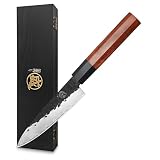
The Mitsumoto Sakari strikes the balance we look for in a petty: a blade sharp enough to glide through delicate fruit skins without crushing soft produce, paired with a handle design that actually supports extended prep work. The 3-layer construction gives you hardness where it counts at the edge while the side steel provides toughness, so you're not babying a fragile tool. Owners consistently praise how the octagonal rosewood feels under repeated use, and the weight distribution means your hand doesn't fatigue during long sessions of garnish work or shallot prep.
The tradeoff is maintenance: high carbon steel demands hand washing and immediate drying to prevent rust. That's a common requirement in this category, but it's worth knowing upfront. If you do detailed vegetable or fruit prep regularly, the sharpness retention justifies the care routine.
Compared to the Tojiro DP option, this petty is lighter and more agile for fine work, though the Tojiro edges ahead if you want maximum corrosion resistance with less fussing. The Mitsumoto sits in the middle ground: serious enough for daily kitchen work, not so demanding that occasional cooks feel overwhelmed.
Pros
- Razor-sharp out of the box, glides through delicate produce
- Octagonal handle reduces hand fatigue over long sessions
- Excellent balance between hardness and toughness
Cons
- Requires immediate hand drying to prevent rust
- Not designed for heavy-duty tasks like frozen foods
Key features (4)
- 3-layer high carbon stainless steel, hand-forged to HRC 60±2
- 5.5-inch blade sized for one-handed control and curved fruit peeling
- Octagonal rosewood handle with natural moisture resistance
- Includes protective sandalwood storage box
This Product of Gifu Japan petty deserves attention from budget-conscious cooks who don't want to sacrifice edge retention. Seki has been the center of Japanese cutlery for centuries, and this knife benefits from that heritage even at an entry-level price. The 8A stainless steel holds an edge without the rust anxiety of high carbon, making it a low-fuss option for kitchens where hand-drying discipline isn't consistent.
Owners report the blade is genuinely sharp out of the box and holds its edge longer than you'd expect for the cost. The thin grind means it slices cleanly rather than wedging through ingredients. At 4.7 inches, it's slightly larger than some competitors, which some cooks prefer for a bit more blade presence without becoming unwieldy.
If you're weighing this against the Famcüte option, the Gifu edges out on corrosion resistance and maintenance ease, whereas the Famcüte leans toward a slightly more ergonomic handle and a fancier presentation package. For pure cutting performance per dollar, the Seki wins.
The trade is that stainless isn't quite as sharp as high carbon when you do get a fresh edge, and it won't stay razor-keen quite as long. Still, the edge it holds is plenty for garnish work, peeling, and trimming.
Pros
- Thin grind cuts cleanly without wedging through produce
- Stainless steel resists rust with minimal fussing
- Sharp out of box, edge holds up over weeks of use
Cons
- Won't stay quite as razor-keen as high carbon steel
- Slightly thicker blade than some high-end competitors
Key features (4)
- 8A stainless steel blade forged in Seki, Japan's cutlery capital
- 4.7-inch blade with thin grind for clean slicing action
- Rosewood handle, lightweight at 1.8 ounces
- Low-maintenance option for daily kitchen use
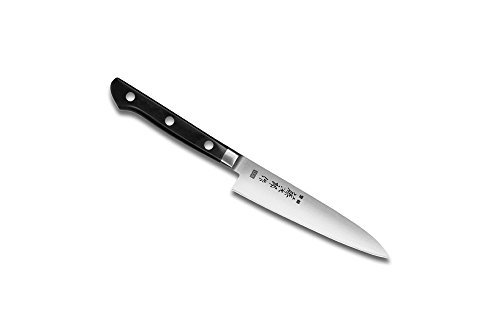
The Tojiro petty (5-inch model) sits at the professional end of the home-cook spectrum, and it earns that reputation through steel choice and construction. The laminated VG-10 core surrounded by 13 chromium stainless gives you the best of both: a hard, sharp center that holds its edge through heavy use, sheathed in corrosion-resistant outer steel that makes maintenance straightforward compared to pure carbon blades.
We'd reach for this petty if your kitchen routine runs hot. The laminated construction means sharpening on a quality water stone brings the edge back to commercial sharpness without special technique. Owners report that after years of use, these knives still perform at a level that rivals much pricier brands. The bolsterless design gives you working clearance between blade and fingers, which matters when you're moving fast through a prep station.
Where this differs from the Mitsumoto is that the Tojiro prioritizes durability and maintenance ease over the lightest, most delicate feel. If you're comparing this to the Famcüte, the Tojiro is tougher and better for professional kitchens; the Famcüte offers a slightly more comfortable grip if you're doing this casually at home.
The handle is somewhat compact, which some cooks appreciate for control and others find limiting. It's well-made but doesn't have the sculptural appeal of a premium rosewood option.
Pros
- Laminated VG-10 steel maintains edge through heavy prep cycles
- Stainless durability with professional sharpness retention
- Bolsterless design clears fingers during rapid chopping
Cons
- Compact handle may feel small for larger hands
- Requires water stone sharpening to maintain intended geometry
Key features (4)
- Laminated VG-10 cobalt alloy core with 13 chromium stainless sides
- 4.7-inch blade, 9.1 inches overall, weighs only 2.5 ounces
- Laminated reinforced handle resists aging and handle separation
- Hygienic ferrule junction prevents dirt buildup
This larger Tojiro petty pushes into utility knife territory, and that extra blade length (5.9 inches versus 4.7 on the standard petty) gives you room for longer slices and meatier tasks. The same VG-10 laminated construction carries over, so you get that professional edge retention and stainless durability. Owners who've chosen this size report it becomes their most-used kitchen knife because it bridges the gap between a petty's precision and a chef's knife's capacity.
The extra blade height between your fingers and cutting surface matters when you're breaking down chicken or working through a pile of shallots. The black laminated reinforced handle (ECO wood) is blocky by design, prioritizing grip security over sculptural appeal. If you're used to refined, rounded handles, this takes adjustment; if you want maximum control during fast work, this design wins.
Compared to the standard Tojiro petty, you get more versatility at the cost of a narrower specialization. The Mitsumoto is still sharper out of the box and lighter for garnish work; this Tojiro DP is the knife you keep in your hand all afternoon. It's also the knife that justifies investing in a proper water stone, because the VG-10 rewards careful sharpening.
The price reflects professional build quality. This is a knife you can hand to someone and say "this will last longer than your kitchen."
Pros
- 5.9-inch blade covers more ground than a standard petty
- Laminated VG-10 holds professional edge through heavy use
- Blocky handle provides maximum grip security during fast work
Cons
- Blocky handle not to all tastes; less ergonomic than sculpted options
- Requires quality water stone to maintain the intended edge geometry
Key features (4)
- VG-10 cobalt alloy core with 13 chromium stainless lamination
- 5.9-inch blade with moderate flex suitable for utility work
- Black laminated reinforced ECO wood handle for grip durability
- Hygienic ferrule and ambidextrous blade profile
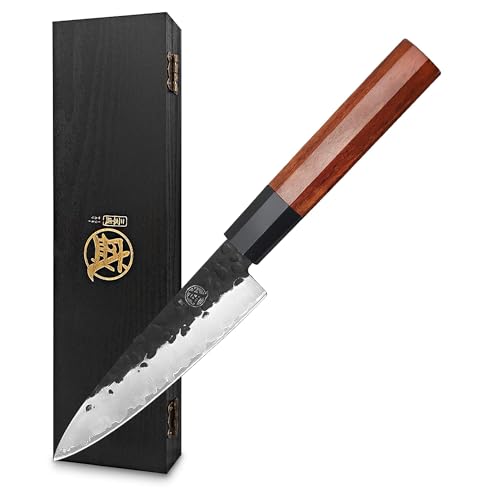
The Famcüte petty opens differently than the others in this lineup: it's positioned as a gift-worthy piece that also happens to cut exceptionally well. The African rosewood handle is the visual anchor, and owners consistently mention how pleasant it is to hold. The contoured grip, combined with precision weight distribution toward the blade, reduces strain during extended prep work.
The steel is the same family as the Mitsumoto, so you get that hardness (HRC 58-62) and edge-holding ability. The dimpled blade pattern isn't just for show; it reduces sticking when slicing. Owners report the knife arrives very sharp and maintains that sharpness through regular use. For someone doing frequent garnish work, herb trimming, and soft-vegetable prep, this petty delivers.
Where this trade-offs compared to the Tojiro options is durability under heavy commercial use and ease of sharpening. High carbon steel demands more care and maintenance than laminated VG-10. Some users report it takes a while to get the same edge back on a stone that the Tojiro holds naturally. If you're comparing this to the Gifu value option, you're paying more for the handle experience and visual appeal; the Gifu is sharper out of box and more forgiving on maintenance.
The packaging and presentation make this a standout choice if you're shopping for yourself or as a meaningful kitchen gift. Just understand you're investing in an experience and aesthetic alongside the blade.
Pros
- Sculpted African rosewood handle reduces hand fatigue
- Dimpled blade reduces food sticking during slicing
- Very sharp out of the box with good edge retention
Cons
- High carbon steel requires hand drying to prevent rust
- Thicker blade profile limits some precision cuts versus thinner options
Key features (4)
- high carbon steel hand-forged to HRC 58-62
- 5-inch blade with dimpled surfaces to reduce food adhesion
- Contoured African rosewood handle, ambidextrous design
- Gift-ready packaging with protective storage box
How to Choose a Japanese Petty Knife
Steel Type and Maintenance
The petty knife steel types guide breaks down the main choices: high carbon options like and VG-10 hold sharper edges longer but demand immediate hand drying and careful storage to prevent rust. Stainless steel petties are lower maintenance and forgiving for kitchens where quick cleanup matters more than peak sharpness. Laminated construction, common in professional knives, wraps a hard core in softer stainless to balance both traits. Your maintenance comfort level should drive this choice as much as raw cutting performance.
Blade Length and Handle Fit
Standard petty blades run 4.7 to 5.9 inches. Smaller blades excel at garnish work and soft-produce peeling; larger petties handle trimming, fileting, and heavier vegetable work. Handle length and shape matter equally. A compact handle suits home cooks with smaller hands and fine control work; a longer, block-style handle supports faster prep and works better for larger hands. Try to visualize your most common cutting task, then match blade and handle size to that motion.
Petty versus Paring Knife Differences
The petty versus paring knife differences matter when you're building your knife kit. Paring knives are smaller, lighter, and designed for one-handed peeling and detail work in tight spaces. Petties are longer and heftier, meant for two-handed cutting on a board. A petty is more versatile if you prep frequently; a traditional paring knife is the right choice if you mainly peel fruit by hand. Many home cooks benefit from owning both, each optimized for its narrow purpose.
Edge Retention and Sharpening
A sharper blade isn't always better if you can't maintain it. Laminated VG-10 knives reward quality water stone care and hold their geometry well across years. High carbon steel reaches a finer edge but needs consistent maintenance. Budget stainless options won't achieve the same hair-splitting sharpness but stay practical for weeks between sharpenings. Consider whether you'll invest in stones and technique or prefer a blade that forgives casual honing.
Our picks at a glance
1
Best OverallMitsumoto Sakari
2
Best ValueProduct of Gifu Japan
4
Best for Serious WorkTojiro
Frequently asked
What's the real difference between a petty and a paring knife?
A petty is typically used on a cutting board with two hands and ranges from 4.7 to 6 inches, designed for slicing and trimming. A paring knife is smaller (2-3 inches), held in one hand, and specializes in peeling and delicate work in your palm. Petties are more versatile for kitchen work; paring knives are better for hand-held peeling. Many cooks own one of each.
Do I really need to hand-wash and dry high-carbon petty knives immediately?
Yes, if you want to avoid rust and staining. High-carbon steel like and VG-10 oxidize quickly when wet. Hand washing and towel drying immediately after use takes less than a minute and prevents rust pitting that degrades the edge and appearance. Stainless petties don't demand this urgency, though hand washing is still recommended for all kitchen knives to preserve the edge.
Which steel type holds an edge longest?
Laminated VG-10 and pure high-carbon blades hold sharper edges longer than standard stainless, but VG-10 maintains its edge geometry better over time because the softer outer steel protects the harder core. High-carbon steel gets sharper but can micro-chip if you're not careful. For most home cooks, laminated VG-10 offers the best balance of edge retention and durability across years of use.
Is a Japanese petty worth the price over a standard Western paring knife?
If you prep frequently, yes. Japanese petties are thinner, sharper out of the box, and hold their edge longer than most Western alternatives. You also get lighter weight and better balance, which reduce hand fatigue. The cost difference narrows when you factor in years of use and fewer sharpening sessions needed. If you peel fruit occasionally, a cheaper Western parer might suffice.
Do I need a water stone to sharpen a Japanese petty?
For optimal results, especially with laminated VG-10, a water stone is ideal because it maintains the blade geometry Japanese knives are designed around. Honing steels or pull-through sharpeners can damage the edge profile. That said, budget stainless petties can be touched up with any quality sharpener. If you're new to Japanese knives, consider whether you're willing to invest in stone sharpening or prefer low-maintenance stainless.