Kitchen & Dining · Cookware
Best Japanese Omelette Pan: Top Tamagoyaki Pans for Home Cooks
Find the best Japanese omelette pan for rolled eggs. Compare tamagoyaki pans with nonstick surfaces, even heat, and quality construction for authentic results.
Affiliate disclosure: As an Amazon Associate I earn from qualifying purchases.
At a glance
2
Best with AccessoriesHappi Studio
3
Best Starter KitOleex Your Kitchen Helper
4
Premium Cast Iron OptionYymiyu
5
Premium Hybrid NonstickHexClad
Detailed reviews
The Techef pan arrives pre-tested by over seven thousand home cooks, and the consistency of praise is striking. Owners describe effortless rolling, even heat distribution, and a nonstick surface that resists damage when you use wood or silicone tools. The forged aluminum body sits at that sweet spot: heavy enough to distribute heat without hot spots, light enough that you're not straining your wrist while rolling layers. Most users report that a little practice and moderate heat yield perfect results in two or three attempts.
What makes this stand out is durability feedback. Owners mention using this pan for years without visible scratches, and the PFOA-free Teflon coating holds up to repeated use if you respect the nonstick surface (no metal utensils, no brutal scrubbing). The rectangular shape is standard, the handle doesn't wobble, and it works across all stovetop types including induction. The dishwasher-safe rating adds convenience, though hand-washing extends life.
One practical note from buyers: don't overheat the pan. Medium or medium-low heat keeps eggs from drying out or browning too fast, which is less about the pan's fault and more about the technique tamagoyaki requires. Compared to the Happi Studio pan with its included lid, the Techef trades that steaming advantage for a lighter, more nimble tool.
Pros
- Exceptional nonstick surface resists scratching with soft tools
- Even heat distribution eliminates hot spots and uneven cooking
- Heavy aluminum construction stays stable and wobble-free
Cons
- No lid or cooking accessories included in the set
- Requires learning curve for perfect rolling technique
Key features (4)
- Forged heavy-gauge aluminum (3004 commercial-grade) for even heat
- 3-layer reinforced PFOA-free Teflon nonstick coating with scratch resistance
- Induction-ready heavy-duty base, works on all stovetop types
- Oven safe to 350°F, dishwasher safe for easy cleanup
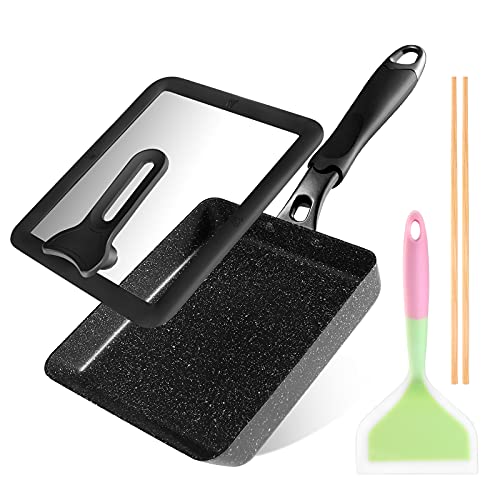
The Happi Studio set arrives as a complete package: the square pan, a matching lid, a spatula scaled to the pan size, and cooking chopsticks. That lid is the key differentiator. Owners who invest in this pan report that the lid speeds cooking and helps the top of the egg layer set without over-browning the bottom, which cuts both time and trial-and-error. The included spatula is exactly the right width, and buyers consistently mention how that specific accessory made the rolling process less intimidating.
The pan itself uses Maifanite stone material with PFOA-free nonstick, and heat conduction is brisk and even. Users describe minimal sticking even on their first attempt, and cleanup is as easy as a rinse. The 7 by 6 inch size suits one or two-person portions perfectly, and storage takes minimal space. One owner noted making steamed rice rolls in it successfully, which speaks to the versatility. The heat-resistant polymer handle stays cool during use, and it works across all stovetop types.
One caveat: the lid quality can vary. One buyer received a lid with rubber peeling on arrival, which raises concerns about overall assembly quality despite the pan performing well. Also note that the set is made in China, not Japan, despite the marketing emphasis on Japanese cookware heritage. If the lid arrives in good condition, this is a complete beginner's kit; if it doesn't, the core pan is solid but the bundle loses its appeal.
Pros
- Lid helps cook egg layers evenly and speeds preparation time
- Included spatula and chopsticks are precisely sized for the pan
- Maifanite stone with nonstick coating heats fast and cleans easily
Cons
- Lid quality inconsistent; some arrive with peeling rubber or glue residue
- Higher entry cost despite being made in China, not Japan
Key features (4)
- 7 by 6 inch square pan with matching lid for even steaming
- Maifanite stone construction with PFOA-free nonstick coating
- Includes spatula, chopsticks, and serving dish for complete setup
- Heat-resistant handle, dishwasher safe, induction compatible
The Oleex kit packs five carefully chosen tools into one purchase, and first-time users report an unusually high success rate with tamagoyaki on the first attempt. The 5 by 7 inch pan is smaller than competitors, which means every tool in the box fits its proportions, nothing feels oversized or wasted. The silicone spatula is durable and wide enough to roll without breaking the egg layers, the included oil brush applies seasoning evenly, and the frying chopsticks help manage layers without sticking. The bonus musubi mold and serving plate add playful versatility.
What sets this apart is the recipe card and instruction clarity. Owners who've struggled with rolled eggs in regular round pans consistently say this kit's combination of proper tools and guidance made the difference. The nonstick surface is responsive but not flaky; the pan heats evenly, and one beginner noted that even on a forty-year-old electric coil stovetop, finding the right heat level was straightforward. The composite wood handle is durable and stays cool, and cleanup is brisk.
The trade-off is size. One buyer who cooks regularly noted that four-egg recipes don't fit comfortably, so this kit is best for single or two-egg portions. The plastic handle can also be susceptible to heat if positioned too close to a flame. Compared to the Yymiyu cast iron option, this trades heavier, longer-lasting material for lighter handling and a lower learning curve: better for apartment kitchens or occasional cooks.
Pros
- Complete kit with tools perfectly scaled to pan size
- Included recipe and step-by-step guidance boosts first-attempt success
- Lightweight, compact design fits small kitchens and stovetops
Cons
- Too small for recipes using more than two or three eggs
- Plastic handle can melt if placed too close to flame
Key features (4)
- 5 by 7 inch square pan with PFOA-free nonstick coating
- Includes silicone spatula, oil brush, cooking chopsticks, and musubi mold
- Two-layer heat-conducting base for even temperature distribution
- Lightweight composite handle, works on all stovetops, easy storage
#4 PickPremium Cast Iron OptionYymiyu
Pre-seasoned Japanese cast iron with liquid nitrogen treatment and restaurant-quality heat retention.
Ideal for: Experienced cooks, cast iron enthusiasts, those prioritizing heat retention and longevity.
Cast iron and tamagoyaki is a combination that makes immediate sense once you experience it, and the Yymiyu pan is engineered to skip the months-long seasoning wait that discourages most home cooks. It arrives pre-seasoned and treated with liquid nitrogen technology, which significantly reduces rust risk and creates a naturally nonstick surface that improves with each use. Owners describe exceptional heat retention across the 9 by 7 inch rectangular surface, even distribution that rivals what comes out of decent Japanese restaurant kitchens. Each fold sets cleanly, and the texture of rolled eggs has structure and appeal that lighter aluminum pans can't quite match.
The detachable wood handle is a smart design choice: it stays cool on the stovetop but can be removed so the pan body goes into the oven up to 500°F for finishing or re-seasoning. The build is heavy (1.5 kilograms), which appeals to cooks who trust weight as a sign of durability, and the chemical-free nonstick surface means no PTFE or PFOA concerns. Works on all heat sources including induction and campfire cooking. One significant drawback is the included spatula, which multiple owners found inadequate; you'll want to invest in a separate one designed for cast iron.
Compared to the HexClad hybrid nonstick pan, the Yymiyu trades modern hybrid construction for traditional cast iron character: heavier, longer-lasting, and better for heat retention, but it requires more care and learning. The investment is substantial, but owners who commit to cast iron maintenance report years of reliable performance. Beyond tamagoyaki, cast iron also excels at searing small portions of fish or steak, though you'd want a best pan for cooking fish if you focus primarily on seafood rather than eggs.
Pros
- Liquid nitrogen pre-treatment and seasoning eliminate startup hassle
- Chemical-free nonstick surface improves naturally with use
- Exceptional heat retention and even distribution across rectangular surface
Cons
- Heavy weight (1.5 kg) requires more wrist effort during rolling
- Included spatula is inadequate; requires separate purchase for proper technique
Key features (4)
- Pre-seasoned cast iron treated with liquid nitrogen for rust resistance
- 9 by 7 inch rectangular design with deep walls for layered cooking
- Detachable solid wood handle, oven-safe pan body to 500°F
- Works on all heat sources: induction, gas, electric, halogen, campfire
The HexClad tamagoyaki pan represents a different engineering approach: tri-ply aluminum between two stainless-steel layers, laser-etched with hexagonal nonstick pattern. The result is a surface that resists scratching far better than traditional PTFE coatings, maintains heat like stainless steel, yet cleans like nonstick. Owners report that eggs never stick, cleanup is effortless, and the pan feels substantial without being as heavy as cast iron. The hybrid pattern is designed to get small searing moments even on eggs, which creates texture without requiring mastery.
The 6 by 8 inch size is slightly larger than the Oleex kit but smaller than the Yymiyu cast iron, offering a middle ground for two to four-egg portions. The pan is oven-safe to 900°F (significantly higher than competitors), dishwasher-safe, and works on induction and all other cooktops. The lifetime warranty from HexClad carries weight in a category where pan longevity is a real concern. One owner noted it excels at grilled cheese sandwiches alongside tamagoyaki, expanding use cases.
The main drawback is price and a missing lid. The pan doesn't include a lid like the Happi Studio, which several buyers note would help steam the top layer; you'll want to purchase one separately. The cost also reflects HexClad's brand positioning: this is a step up from mid-range nonstick. Compared to the Techef best-overall pick, the HexClad offers superior scratch resistance and oven temperature tolerance but at a significantly higher investment for a smaller feature set.
Pros
- Hybrid hexagonal nonstick resists scratching far better than traditional coatings
- Oven-safe to 900°F enables finishing and advanced cooking techniques
- Lifetime manufacturer warranty provides long-term confidence
Cons
- No lid included; must purchase separately for steaming layers
- Premium pricing reflects brand position, not additional built-in features
Key features (4)
- Tri-ply construction: aluminum core between stainless-steel layers
- Laser-etched hexagonal nonstick pattern resists scratching and sticking
- 6 by 8 inch rectangular shape with stay-cool handles
- Oven-safe to 900°F, dishwasher safe, induction ready, lifetime warranty
How to Choose the Right Japanese Omelette Pan
Material and Heat Distribution
Aluminum and stainless-steel hybrids heat quickly and distribute warmth evenly across the flat bottom, which is essential for layering eggs without hot spots. Cast iron retains heat longer and creates deeper browning, but requires ongoing seasoning maintenance. For tamagoyaki rolling technique, even distribution matters most because uneven heat causes some layers to cook faster than others, making neat folds harder to achieve. Lighter aluminum pans suit daily cooks; cast iron appeals to those committed to seasoning care.
Nonstick Surface Quality
PFOA-free Teflon and ceramic coatings are standard, but thickness and reinforcement layers vary. A 3-layer or thicker nonstick surface resists scratching when you use soft spatulas, silicone, or wooden tools. Hybrid hexagonal patterns (like HexClad) offer superior scratch resistance compared to traditional coatings. Natural seasoned cast iron becomes nonstick over time but demands hand-washing and regular oiling. Test owner feedback on durability: if a pan's nonstick surface holds strong after months of use, that's a signal the coating quality justifies the price.
Size and Accessories
Standard tamagoyaki pans range from 5 by 7 inches to 9 by 7 inches. Smaller pans suit one or two-egg portions and fit narrow stovetop burners; larger ones handle three to four eggs. Consider whether a lid, spatula, or chopsticks add real value or clutter your drawer. A lid that came with the pan helps steam the top layer evenly; a properly scaled spatula is more useful than a standard turner. Some kits include musubi molds or oil brushes, which appeal to enthusiasts but aren't necessary for basic tamagoyaki versus Western pans.
Stovetop Compatibility and Care
All five reviewed pans work on induction, gas, and electric cooktops. Oven-safe ratings vary from 350°F (nonstick aluminum) to 900°F (HexClad hybrid), so check if you plan to finish dishes in the oven. Dishwasher-safe ratings are common, but hand-washing extends nonstick coating life by years. Cast iron requires more attention: no dishwasher, regular oiling, and avoiding soaking. Lightweight aluminum pans are easiest to care for daily; cast iron pays off for cooks willing to invest in maintenance.
Budget and Long-Term Value
Budget options start around entry-level investment; premium picks with included tools or hybrid construction cost more. The question is durability versus daily use. A reliable nonstick aluminum pan used once a week can last five years with basic care; cast iron or premium hybrid pans last decades if maintained. For occasional tamagoyaki makers, a mid-range aluminum pan with good reviews offers best value. For those cooking rolled eggs multiple times weekly, a premium option with superior nonstick or cast iron heat retention pays dividends over time.
Our picks at a glance
2
Best with AccessoriesHappi Studio
3
Best Starter KitOleex Your Kitchen Helper
4
Premium Cast Iron OptionYymiyu
5
Premium Hybrid NonstickHexClad
Frequently asked
Do I need a Japanese omelette pan, or can I use a regular round frying pan?
You can make rolled eggs in a round pan, but the results are harder to control. The square shape of tamagoyaki pans allows you to roll more neatly because the straight sides guide the fold, and the flat bottom distributes heat more evenly across the surface. Owners report that switching from round to square pans improved their tamagoyaki consistency noticeably. That said, if you're not committed to rolled eggs specifically, a round nonstick pan does the job.
What heat setting should I use to avoid overcooking or sticking?
Most owners recommend medium or medium-low heat, depending on your stovetop. Start at the center mark and adjust upward if eggs cook too slowly. Too much heat causes the bottom layer to brown before you finish rolling, and the egg mixture can stick even on nonstick surfaces. Take time with each layer, allowing it to set slightly before rolling, and let the pan cool briefly between batches. Heat management is the biggest learning curve, not the pan itself.
How do I maintain the nonstick coating so it lasts years?
Use soft spatulas made of silicone, wood, or plastic: never metal. Hand-wash after each use instead of running the dishwasher, even if the pan says dishwasher-safe; the detergent and heat cycle accelerate coating wear. Avoid preheating the empty pan at high temperatures, and never use abrasive scrubbers or steel wool. A gentle rinse with warm soapy water and a soft sponge is all you need. Respect for the nonstick surface adds years to the pan's life.
Which pan is best for someone making tamagoyaki for the first time?
The Oleex or Happi Studio kits are ideal because they include the right-sized spatula, chopsticks, and guidance. These tools remove guesswork and teach proper technique. If you want a simpler, lighter investment, the Techef pan has the most owner reviews backing its ease of use and reliability. Cast iron and premium hybrid options suit cooks with prior pan experience; they reward skill but punish mistakes more sharply than entry-level nonstick.
Can I use these pans for cooking other foods, or are they only for tamagoyaki?
All five pans excel at fried eggs, pancakes, grilled cheese, bacon, steaks, and sautéed vegetables. The square shape is actually ideal for single-portion grilled cheese and small fish fillets. Owners commonly report using their tamagoyaki pan for breakfast and lunch because the size and heat distribution suit one or two-person cooking. The only exception is cast iron, which requires more seasoning attention after cooking acidic foods, but it's still versatile.