Ideal for: Home cooks who grill multiple protein types and want high-searing heat plus griddle versatility.
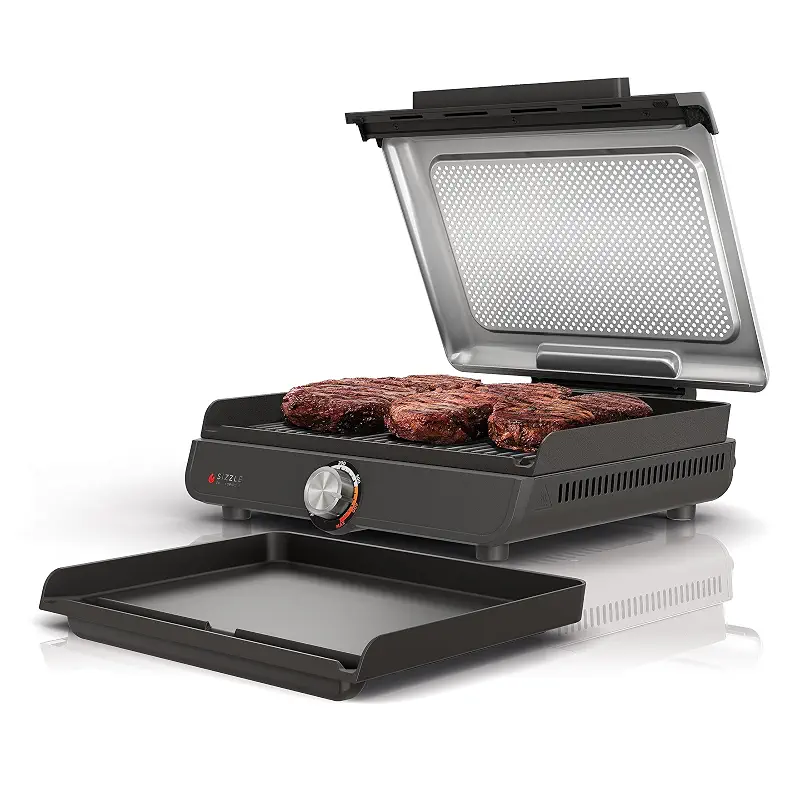
The Ninja Sizzle stands out for reaching 500°F, which is noticeably higher than most competitors in this category. That extra heat matters if char-grilled marks and searing are non-negotiable for your cooking. The interchangeable grill and griddle plates mean you're not locked into one cooking style; you can grill burgers one night and make pancakes the next morning without swapping appliances. Owners appreciate the edge-to-edge heating that eliminates hot spots, and the 14-inch cooking surface accommodates family-sized portions without batching.
The smoke-control system uses a perforated mesh lid to direct steam upward rather than suppress it completely, which is honest engineering (no grill is truly smokeless). The removable, dishwasher-safe lid and nonstick plates keep cleanup straightforward. One realistic caveat: owners note the unit makes expansion noise as it heats and cools, which isn't a defect but something to expect in a rental or apartment setting.
Where the Ninja pulls ahead of comparable models like the George Foreman Smokeless is raw temperature capability and the flexibility of two interchangeable plates. If you want both a grill and griddle function without buying separate appliances, this setup justifies the investment. The 7-minute preheat time is standard across electric grills; don't skip it if you want consistent results.
Pros
500°F maximum heat for deep char marks
Interchangeable grill and griddle plates included
Edge-to-edge even heating across full surface
Removable mesh lid dishwasher-safe
Cons
Unit expands and makes audible noise during operation
Requires 7-minute preheat before cooking begins
Key features
500°F maximum temperature with edge-to-edge heating system
Two interchangeable 14-inch plates: perforated grill and flat griddle
Perforated mesh lid reduces smoke and splatter with dishwasher-safe design
High-walled plates and grease catch for controlled drip collection
Compact 14-inch footprint fits family-sized portions without batching
#2 Pick
Best for Smoke Reduction
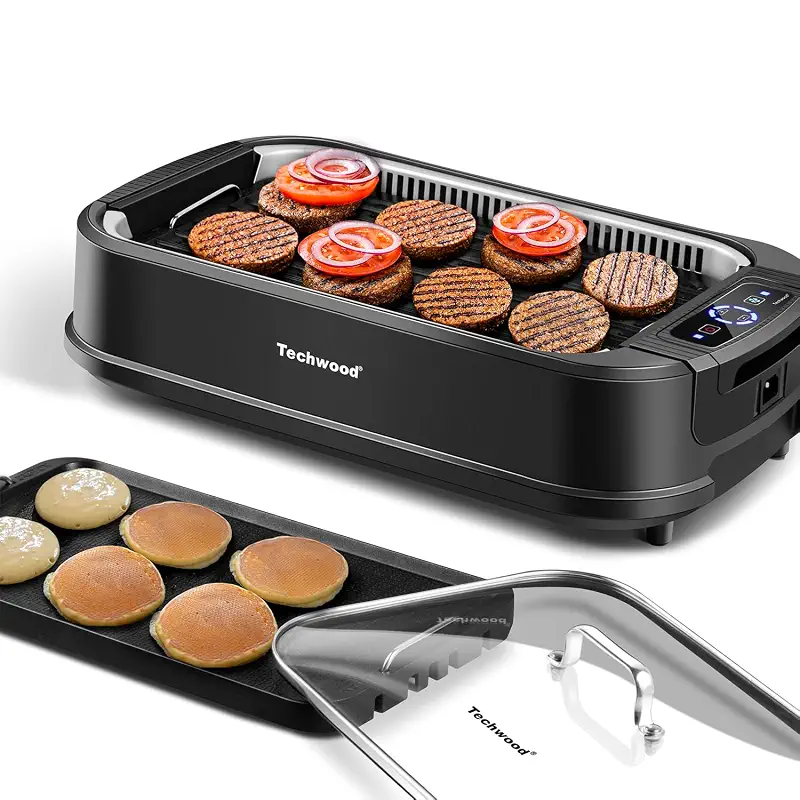
Techwood
Indoor Smokeless Grill, Techwood 1500W Electric Indoor Grill with Tempered Glass Lid, Portable Non-stick BBQ Korean, Turbo Smoke Extractor Technology, Drip Tray& Double Removable Plate, Black
4.4(2,011)
Advanced turbo fan and hidden airflow technology minimize kitchen smoke effectively.
Ideal for: Apartment dwellers and renters concerned about smoke reaching neighbors or triggering alarms.
Techwood's first model earned strong praise for its smoke-management approach. The hidden fan that runs the full width of the grill underneath (not just a small circular unit) pulls smoke downward and away more consistently than compact designs. Owners specifically note the ability to keep the fan running independently of the cooking element, which is useful for clearing lingering smell after you finish. The glass lid lets you monitor food without opening it, reducing smoke escape.
Temperature control spans 220°F to 450°F via LED digital interface, which is lower than the Ninja but still adequate for everyday grilling. One reviewer mentioned the unit heats up in about five minutes. The nonstick surface and angled drip pan with a center drain are smart engineering that makes fat collection less messy than older grill designs. The fan itself runs quietly according to buyers.
Compared to the Cusimax model, this Techwood version focuses heavier on the smoke extraction mechanism. However, owners note a potential durability concern: one reviewer's fan stopped working within the return period. This is a meaningful risk for a product where the fan is the core smoke-reduction technology. If reliability is a gamble, budget-conscious buyers might want to weigh this against the George Foreman or Cusimax for potentially longer-term durability.
Pros
Full-width fan underneath grill surface pulls smoke effectively
Independent fan control keeps clearing smoke after cooking stops
Glass lid visibility reduces need to open unit during cooking
LED digital temperature display with 220°F to 450°F range
Cons
Fan durability issues reported by some owners within warranty period
Lower maximum temperature (450°F) limits high-heat searing
Key features
Advanced airflow with full-width hidden fan for smoke extraction
LED digital controls with precise temperature range 220°F to 450°F
Tempered glass lid for monitoring and heat retention
Angled drip tray with center drain separates fat from heating elements
Non-stick cooking surface with removable, dishwasher-safe components
#3 Pick
Best for Speed and Simplicity
George Foreman
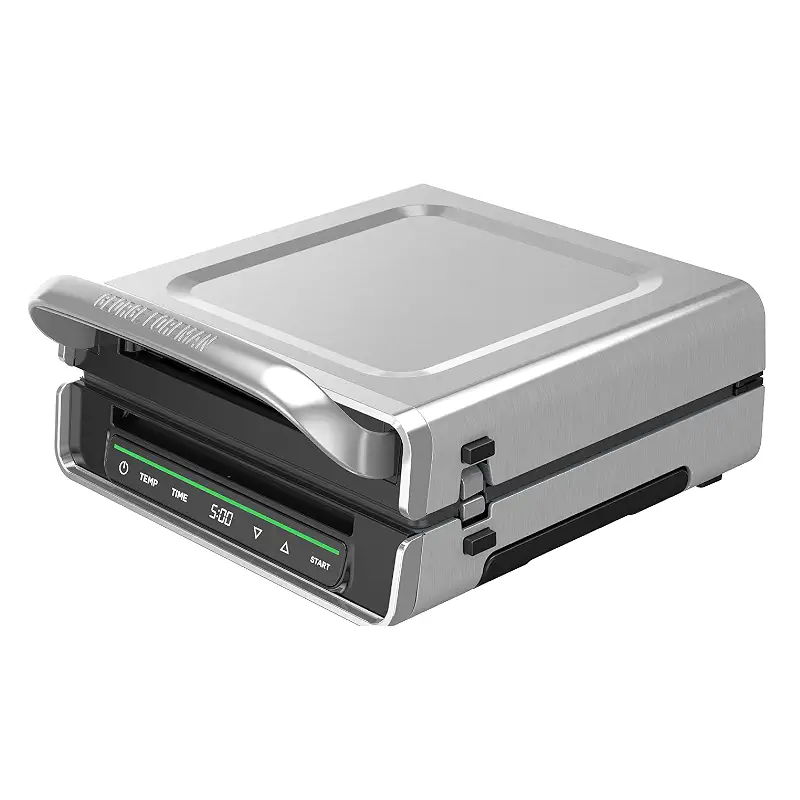
George Foreman Smokeless - Digital Smart Select, Family Size (4-6 Servings), Stainless Steel, GRD6090B
4.6(1,998)
Contact-grill design cooks burgers in six minutes with minimal complexity and solid reliability.
Ideal for: Busy families cooking burgers, chicken, and quick weeknight proteins on a predictable schedule.
George Foreman's smokeless model leverages the brand's decades of contact-grill expertise. The key advantage here is speed: burgers reach doneness in roughly six minutes (versus longer times on other models) because both heating surfaces press food simultaneously. This is genuinely useful for weeknight dinners when you're cooking for a family of four to six.
The touch-sensitive digital panel is straightforward without being overly complex, and owners consistently praise the removable, dishwasher-safe plates and grease tray as a major upgrade over older George Foreman designs where everything was permanently attached. The unique angled grilling surface directs fat downward before it can burn, which is the engineering reason behind the 85% smoke reduction claim. Reviewers report zero visible smoke when grilling lean hamburgers, which is a real result rather than marketing hyperbole.
Where this model trails the Ninja is maximum temperature: George Foreman tops out around 375-400°F (not specified in the manual, but inferred from burger cooking), which limits deep char on steaks. If your diet is mostly burgers, chicken, and ground-meat applications, the speed and simplicity make this a genuinely better choice than the Ninja. But steak lovers or anyone wanting high-heat searing should look elsewhere. The 3X faster cooking claim holds up in practice for contact-grill foods; it's not applicable to all foods.
Pros
Contact-grill design cooks burgers in roughly six minutes
Removable plates and drip tray are dishwasher-safe
Touch-sensitive digital controls with timer function
Angled surface directs grease away before burning
Cons
Lower maximum temperature limits deep searing on thick steaks
Timer stops at completion but does not auto-shut-off the unit
Key features
Contact-grill technology cooks food up to 3X faster than open grills
Touch-sensitive digital panel with time and temperature precision
Angled surface removes up to 50% fat from ground meat
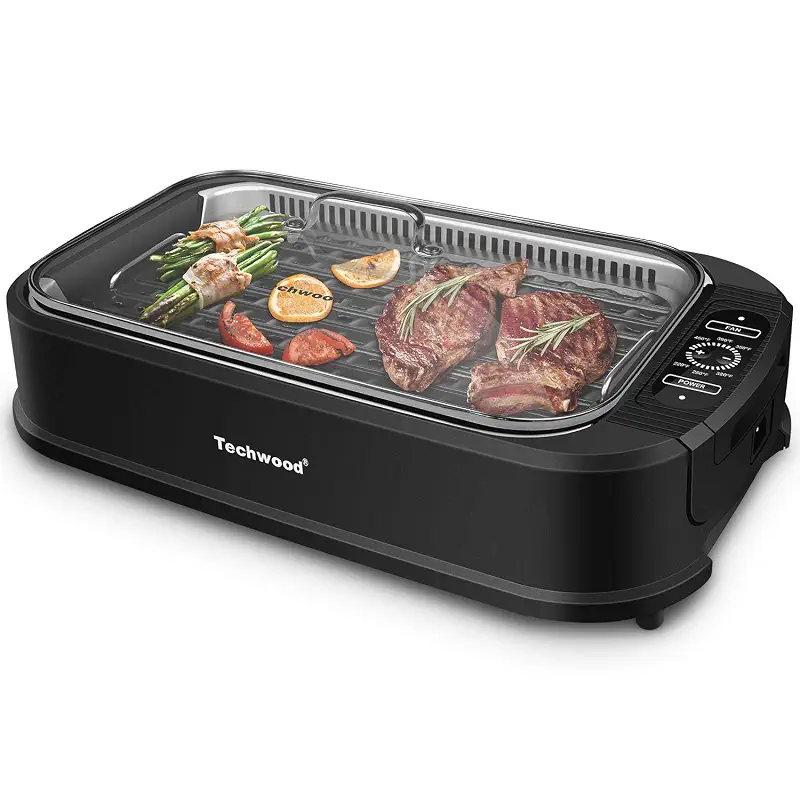
Ideal for: Couples, individuals, and small households grilling four or five times per week indoors.
This compact Techwood model emphasizes steady, repeatable performance over headline features. The 1500W heating system with LED temperature control (220°F to 450°F) is nearly identical to Techwood's larger smokeless model, but in a smaller footprint suited to single-serve or couple cooking. Owners who follow the initial seasoning instructions report excellent nonstick performance and beautifully grilled chicken, fish, and vegetables. The fan runs quietly during operation, which matters in an open-concept living space.
One honest review noted hot spots on the cooking surface that require rotating food halfway through, which is a real limitation but manageable with attention. Another owner mentioned the finish on the nonstick plate flaked after extended use despite gentle hand washing, suggesting the coating may not be as durable as premium industrial nonstick surfaces over years of daily use. That said, at this price point and usage frequency, most owners report satisfaction.
Compared to the larger Techwood model with the full-width fan, this design relies on a more compact smoke-extraction system. If you're cooking for two people regularly and don't need the industrial-strength fan, the space savings and lower power draw make sense. The glass lid and detachable components keep cleanup straightforward, and the instruction manual is detailed enough to guide first-time users through proper care.
Pros
Compact footprint ideal for small kitchens and apartments
Quiet fan operation during grilling
LED digital temperature control with responsive heating
Tempered glass lid speeds cooking and retains heat
Cons
Some surface hot spots require rotating food during cooking
Non-stick coating durability concerns after extended repeated use
Key features
Compact 1500W electric grill for one to two person servings
LED digital controls with 220°F to 450°F temperature range
Tempered glass lid with easy-grip handle design
Removable non-stick grill plate and detachable drip tray
Overheat protection automatically shuts off if internal temperature spikes
#5 Pick
Most Versatile Budget Pick
Cusimax
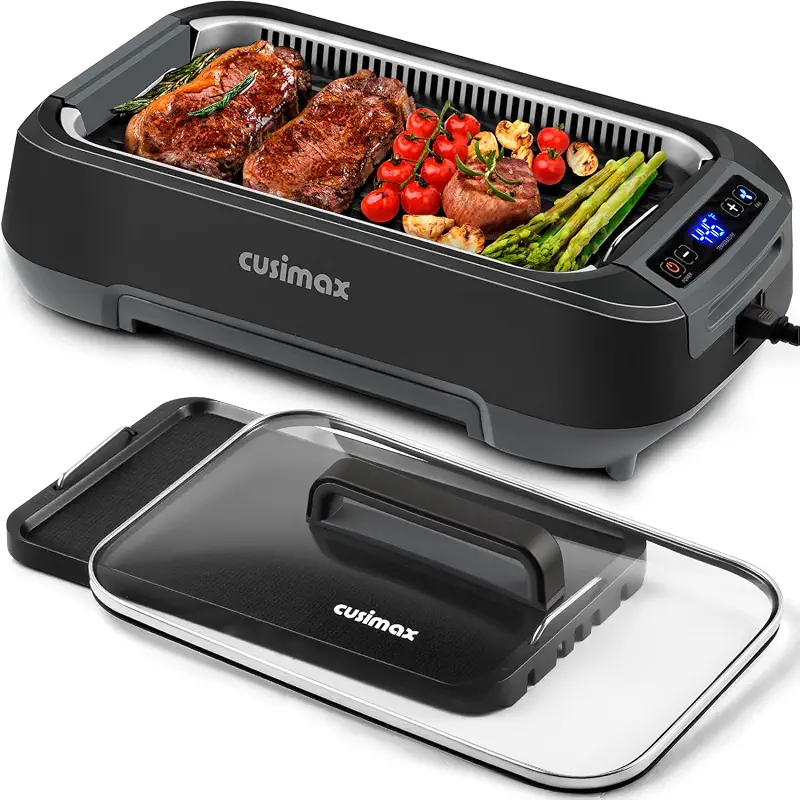
Smokeless Indoor Grill, CUSIMAX 1500W Electric Grill Korean BBQ Grill,Black | with Non-stick Removable Grill/Griddle Plates, Smart LED Display & Adjustable Temperature, Tempered Glass Lid, Easy Cleanup
4.4(106)
Two-in-one grill-griddle with smart LED display delivers variety at an accessible entry price.
Ideal for: First-time indoor grill buyers wanting dual cooking surfaces at an entry-level investment.
Cusimax enters the market as a newer brand with an aggressive two-in-one design and pricing. The removable grill and griddle plates give you the same interchangeability as the Ninja, but at a fraction of the cost. The upgraded turbo smoke extractor claims 95% smokeless effect, which is higher than most competitors' claims; owners backing this up report grilling lean chicken and pork with minimal visible smoke and no lingering kitchen odor. The glass lid, double-U heating tubes, and one-touch LED display round out the feature set.
Where the Cusimax takes a real trade-off: maximum temperature tops out at 446°F versus the Ninja's 500°F. For everyday proteins like chicken breasts, pork chops, and vegetables, this is more than sufficient. For ribeyes or thick steaks where you want dramatic char, the 54-degree gap matters. One reviewer noted difficulty cooking ground meats and small vegetables on the perforated grill plate because they fall through the vent holes on the sides, which is a design limitation worth knowing.
The newer review count (106 vs. 2000+) means fewer long-term durability signals compared to the best air fryer grill models that have been in market longer. Owners are enthusiastic about the value and ease of use, but I'd wait for broader ownership data before betting this will outlast a George Foreman or Ninja over five-plus years. For a first indoor grill or trial purchase, though, the dual-plate versatility and competitive smoke reduction make this a smart entry point.
Pros
Two interchangeable plates include both grill and griddle surfaces
One-touch LED display simplifies temperature adjustment
Turbo smoke extractor achieves strong smoke reduction with 95% claim
Compact design portable enough for RV or patio use
Cons
Maximum 446°F temperature lower than premium models like Ninja
Small food items fall through perforated grill vents on sides
Key features
Interchangeable grill and griddle plates for breakfast and dinner cooking
Turbo smoke extractor with 95% smokeless effect claim
Double-U heating tubes provide fast and consistent surface temperature
One-touch LED display with temperature range 212°F to 446°F
Detachable glass lid, removable components, and overheat protection
How to Choose an Indoor Smokeless Grill
Four trade-offs that actually matter when matching a indoor smokeless grill consumer reports to your kitchen.
Temperature Range and Cooking Goals
Maximum temperature directly affects what you can cook effectively. The Ninja and most competitors top out between 446°F and 500°F. If you grill mostly ground meats, chicken, and vegetables, 450°F is plenty. But steak lovers and searing enthusiasts should prioritize the 500°F models for better char development. Lower temperatures (under 400°F) limit your options. Consider your five most-cooked meals and ask: do I need a hard sear, or is even cooking enough? This one factor alone often determines which model earns its place on your counter.
Smoke Reduction Technology and Kitchen Reality
No indoor grill is truly smokeless. What matters is how much visible smoke escapes into your kitchen and whether the mechanism is reliable. Fan-based designs (Techwood, Cusimax) pull smoke downward via suction. Contact-grill geometry (George Foreman) prevents fat from burning in the first place, reducing smoke at the source. Perforated lids (Ninja) direct steam upward. Choose based on your kitchen ventilation and how sensitive your smoke detector is. If you live in a cramped apartment or above another unit, invest in the smokeless grill cleaning and care routine that the appliance manual recommends; a well-maintained unit performs far better than a neglected one. Apartment dwellers should note: these grills reduce smoke dramatically compared to stovetop grilling, but they don't eliminate it entirely.
Plate Design and Cooking Capacity
Interchangeable plates (Ninja and Cusimax) cost more upfront but let you grill and griddle without buying two appliances. Fixed plates simplify the design and reduce price. Perforated grill plates create authentic char marks but let small items fall through; solid griddles handle pancakes and diced vegetables but don't create grill lines. Family size typically means a 14-inch or 90+ square-inch surface that fits four to six servings without cooking in batches. Single-person or couple cooking benefits from compact models that use less counter space and heat faster. Match the surface to your actual meal frequency and household size, not an idealized version.
Cleanup, Durability, and Long-Term Investment
Removable, dishwasher-safe plates are a major convenience factor over permanently attached designs. The Techwood and Cusimax models emphasize easy disassembly. Non-stick coating durability varies; aggressive scrubbing or abrasive sponges degrades finishes faster than hand washing. Grease-catch systems matter: angled drips that separate fat before it touches heating elements (George Foreman) reduce the chance of smoke production over time. Check the warranty (typically one to two years) and read long-term owner feedback on whether the non-stick coating holds up after 50+ uses. Budget models sometimes show durability concerns after six months of daily use; premium brands have better track records but cost more. A smokeless grill versus outdoor bbq involves different maintenance entirely, so plan for indoor storage and regular seasoning per the manual.
Frequently asked
Quick answers to the questions readers ask most.
Are indoor smokeless grills actually smokeless?
No. They reduce visible smoke significantly (often by 85% or more) but cannot eliminate it entirely because moisture and fat particles must escape somewhere. A well-maintained grill with a working fan or smart design minimizes smoke enough that it won't trigger most smoke detectors or fill an apartment with BBQ odor. The key is proper preheat, following seasoning instructions, and keeping the grease tray clean so fat doesn't burn.
How long do indoor smokeless grills take to preheat?
Most models require five to seven minutes of preheating before cooking. The Ninja needs about seven minutes. Techwood and Cusimax typically five minutes. This isn't a defect: the heating system needs time to reach consistent temperature across the entire surface. Skip preheating and you'll get uneven cooking and fewer char marks. Plan accordingly for weeknight meals.
Can I use an indoor smokeless grill in an apartment?
Yes, with reasonable care. Models with strong smoke-reduction systems (Techwood with the full-width fan, George Foreman's angled design) work well in apartments, especially if you keep the grease tray clean and preheat fully. Open windows or run a nearby exhaust fan to help dissipate steam. Ground-floor units with good ventilation have the easiest time. Upper units and those with poor airflow should prioritize models ranked highest for smoke reduction.
What's the difference between a smokeless grill and an air fryer?
An air fryer uses high-speed convection heat and circulates air rapidly to cook and crisp food from all sides. A smokeless grill heats a flat or ridged cooking surface from below, mimicking outdoor grilling with char marks and browning. Grills are better for steaks, burgers, and seared proteins; air fryers excel at frozen foods and items needing crispness. Some appliances blend both technologies, but they're not interchangeable for all meals.
Do I need to season the grill plate before first use?
Yes. Most manuals include an initial seasoning process (usually coating the plate with a light oil and running the grill on low heat for five to ten minutes). Owners who skip this report sticking and poor non-stick performance early on. Those who follow the instructions see excellent food release and durability. It takes ten minutes and makes a real difference: don't skip it.