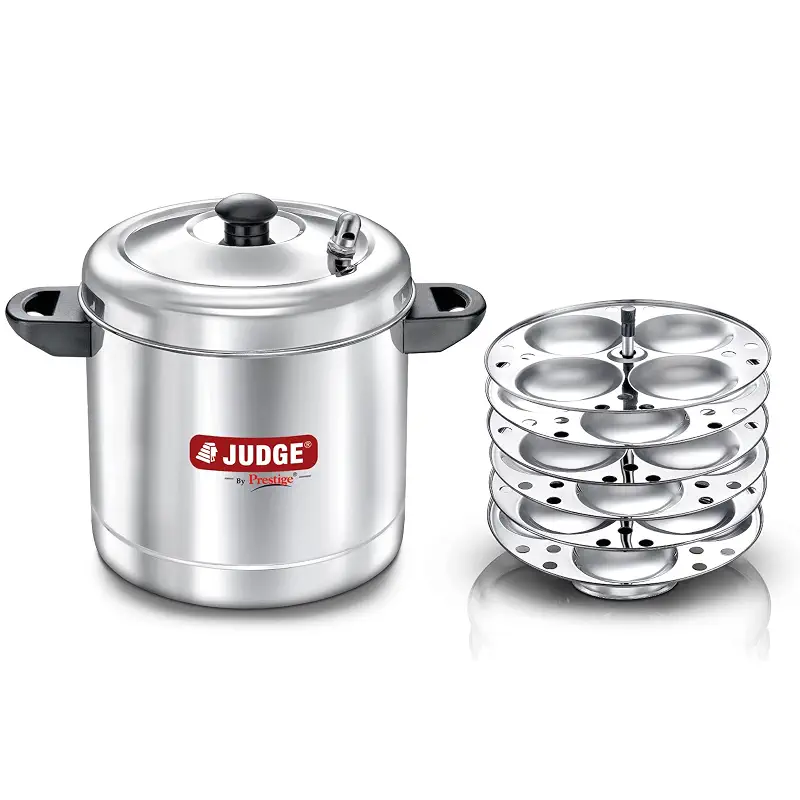
Ideal for: Families cooking idlis 2+ times weekly; hosts preparing for guests; kitchens where durability justifies the footprint.
The Judge Prestige stands out because it balances serious capacity with a build that owners trust over time. Six plates mean you're making 24 idlis in one batch, which matters for families or anyone who preps breakfast in bulk. The stainless steel feels substantial (heavy-gauge, not thin sheet), and the induction base opens up flexibility if you ever upgrade your cooktop. Handles that actually stay cool and a proper whistle for steam regulation round out the design.
Where this cooker earns its spot is durability. In a category where thin metal and broken handles are common complaints, buyers consistently report good experiences over weeks and months of use. A few buyers did receive damaged units (handles broken on arrival), but that reflects shipping, not design, and the vast majority praise the quality without reservation.
The main trade-off is size. With six plates, this cooker takes up real counter or cabinet space, and the larger footprint means slightly longer setup and cleaning. If your kitchen is tight or you only make idlis once a week, stepping down to a four-plate model might make more sense. But if you cook regularly or feed more than two people, this is the model that pays for itself in convenience and resilience.
Pros
Heavy-gauge stainless steel resists rust and warping
Six plates deliver 24 idlis per batch
Induction-compatible base fits multiple cooktop types
Stay-cool handles and whistle regulation for safe operation
Cons
Larger footprint requires dedicated storage space
Occasional shipping damage reported on arrival
Key features
Six stainless steel plates cooking up to 24 idlis per batch
Induction-compatible base compatible with gas and induction stoves
Heavy-gauge construction for long-term durability
Whistle steam vent and stay-cool handles for safe handling
#2 Pick
Best for Compact Kitchens
Judge
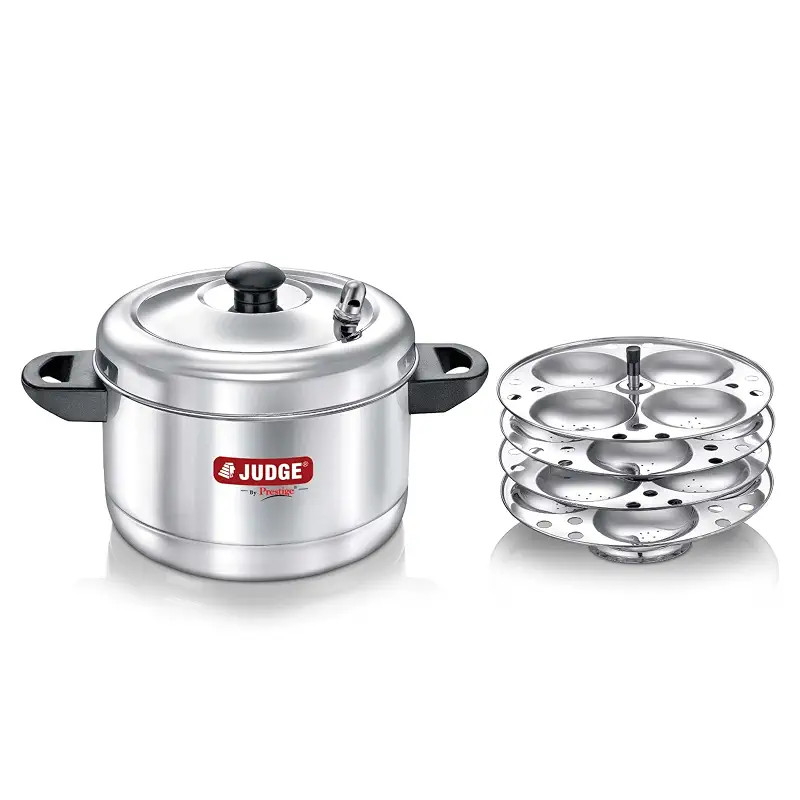
Judge by Prestige Stainless Steel Idli Cooker with 4 Plates
4.1(217)
Four-plate model with strong build and user-friendly operation. Ideal for smaller households and tight storage.
Ideal for: Small households; apartments with limited storage; home cooks making idlis 1–2 times weekly.
The Judge by Prestige four-plate cooker shrinks the footprint without cutting corners on build quality. At 16 pieces total (four plates plus supporting equipment), it fits the bill for one to two people cooking idlis regularly, or anyone whose kitchen doesn't have room for a six-plate powerhouse. Owners consistently praise how well-made it is (no thin metal, no obvious weak spots) and the compact size means setup and cleanup are genuinely quicker.
What strikes me about the buyer feedback is the consistency. Multiple reviewers mention gifting it and hearing back that it's compact yet sturdy, which is a hard combination to hit. Perma-Cool handles and straightforward assembly suggest Judge learned from making larger models and carried that discipline into this smaller design. The whistle alert keeps you from guessing when steam is ready.
Compare this to the larger Ksjone eight-liter model, and the difference is clear: this Judge is built for daily use without waste, while the Ksjone targets households that make huge batches. Some buyers noted a burnt plastic smell on first heat, which suggests careful seasoning or rinsing before first use will help. One low review raised vague concerns about convenience, but the overwhelming majority found it made life easier, not harder.
Fast setup and cleanup for regular weekday cooking
Whistle indicator for steam readiness
Cons
Limited capacity at 16 pieces total; not for batch cooking
Potential plastic smell on first heating requires seasoning
Key features
Four stainless steel plates cooking up to 16 idlis per batch
Compact design optimized for small kitchens and storage
Perma-Cool handles prevent burns during cooking
Whistle steam vent for precise heat control
#3 Pick
Best for High-Volume Cooking
Ksjone
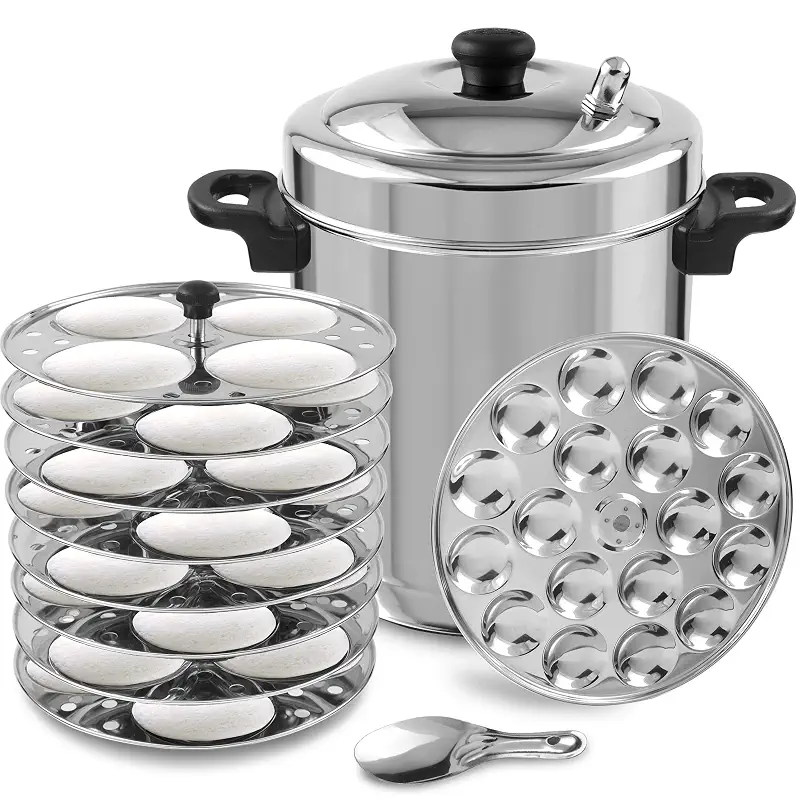
KSJONE 8 Liter Large Stainless Steel Idli Cooker with Whistle Indicator, Food Grade 8 Idli Plates For Cooker, Electric Pot, Insta Pot - 8 Idli Plates & 1 Mini Idly Plates, Makes 32 Idlis
4.8(7)
Eight-liter capacity with eight plates and bonus mini plate. Maximum output for large households or frequent batch cooking.
Ideal for: Large households; weekly batch cooks; kitchens with space for storage; multi-purpose cooking interests.
The Ksjone eight-liter model is built for kitchens where one batch of 16 or 24 idlis isn't enough. Eight plates plus a mini plate means 32 idlis plus extras in a single session, and the eight-liter capacity is genuinely large: this is cookware for three to four people or anyone who freezes idlis for the week. The stainless steel is food-grade and heavy-gauge, the cool handles prioritize safety, and a glass lid (rarer in this category) lets you monitor cooking without lifting.
Owners who've used it report satisfaction, though the sample size is small (only seven reviews at time of writing). What matters is the tone: buyers praise the size and say it does the job. One reviewer noted the packaging arrived sloppy and smelled bad, which is a logistics issue, not a product flaw, though it does suggest checking items carefully upon arrival. The whistle system works as intended, and the versatility (idlis, paddu, vegetables, pasta, noodles) appeals to cooks who want one vessel to do multiple jobs.
The honest caveat: at eight liters, this cooker demands cabinet space and counter real estate while cooking. Where the four-plate Judge suits a small kitchen, and the six-plate Judge works for families, the Ksjone is for households serious enough about idlis to dedicate storage. The mini plate, while clever, adds complexity some buyers skip entirely. If you're torn between this and the six-plate Judge, ask whether you actually need 32 idlis per session, or if 24 covers you.
Pros
Eight liters capacity with eight plates plus mini plate
Food-grade heavy-gauge stainless steel construction
Glass lid allows monitoring without lifting cover
Cool handles and whistle for safe, guided cooking
Cons
Significant storage footprint for larger cooker
Packaging and condition checks required upon arrival
Key features
Eight-liter capacity with eight full plates and one mini plate
Food-grade heavy-gauge stainless steel for durability
Glass lid for visibility during cooking
Cool handles and steam whistle indicator for safety
#4 Pick
Best Budget Option
T Tabakh
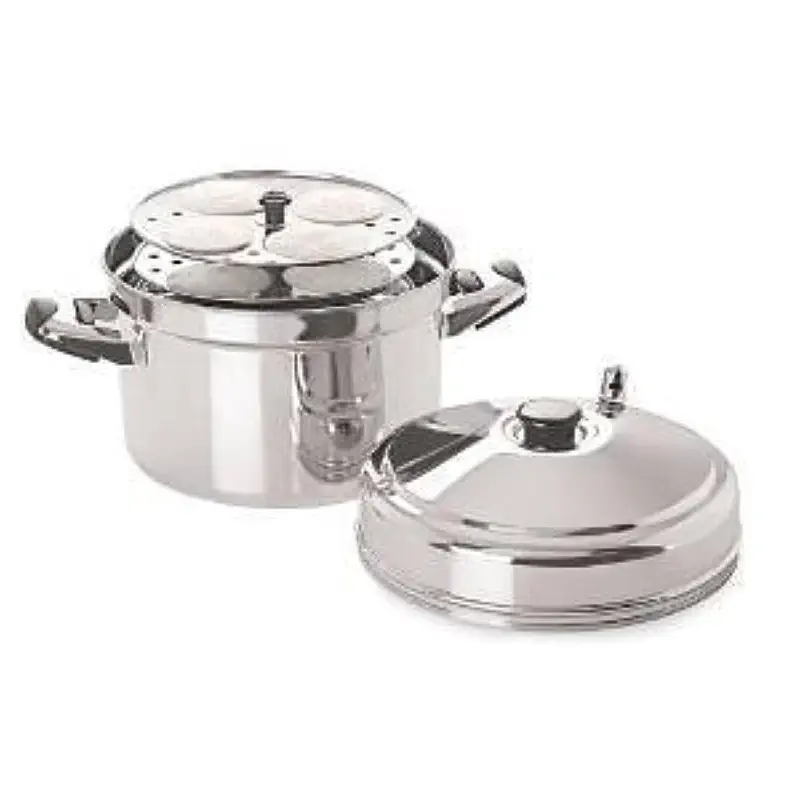
TABAKH IC-205 5-Rack Stainless Steel Idli Cooker with Strong Handles,Silver,Medium
4.1(261)
Five-rack cooker at an entry-level investment. Good for occasional cooks who prioritize savings over premium build.
Ideal for: Occasional cooks on tight budgets; trial users testing if idli-making fits their routine; those willing to replace in 1–2 years.
The Tabakh attracts buyers looking to spend less, and it does deliver the basics: five racks, stainless steel (claimed), sturdy handles, and made-in-India manufacturing. At this price point, you're trading build refinement for immediate affordability, and some buyers are happy with that trade-off.
However, the reviews paint a cautionary picture. Several owners report rust appearing after the first wash, thin metal that doesn't inspire confidence, black patches from incomplete plating, and lids that leak steam or don't seal properly. A couple of buyers describe the steel as cheap, and the recurring complaint about thin metal suggests this cooker cuts costs by using lighter-gauge stainless or lower-grade alloy. One reviewer specifically called it a health hazard due to rust, which is worth taking seriously. The five-rack design (20 idlis) sits between the four-plate and six-plate models, so it doesn't offset the durability concerns with unique capacity.
Compared to the Judge Prestige cookers, the Tabakh is dramatically less expensive, but buyer experience suggests you lose real quality, not just minor details, but things like rust resistance and consistent construction that affect longevity. If you're making idlis once a month as an experiment, this might be tolerable. If you cook them regularly, the Judge four-plate or six-plate will outlast this by years and cost less per use over time. The lid and steam regulation issues are serious enough that I'd recommend stepping up to a tested model rather than learning those lessons the hard way.
Pros
Five-rack capacity for up to 20 idlis per batch
Entry-level investment for budget-conscious buyers
Sturdy handles designed to prevent breaking
Made in India following traditional cooker design
Cons
Thin gauge metal prone to rust after minimal use
Lid sealing and steam leakage issues reported frequently
Key features
Five stainless steel racks cooking up to 20 idlis per batch
Sturdy handles for safe handling and transport
Traditional made-in-India construction and design
Basic whistle regulation for steam monitoring
#5 Pick
Most Versatile
Ksjone
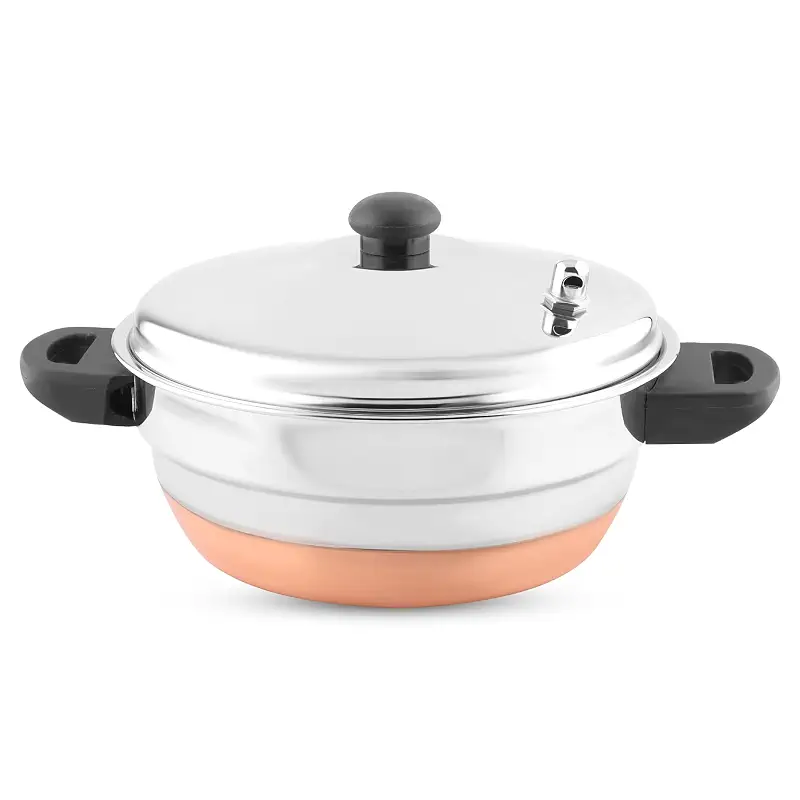
KSJONE All in One Copper Bottom Idli Cooker 4 pcs Multi Kadai with Stainless Steel lid, 2 idli Plates (10 Idlis) 1 Steamer and 1 Idli Spoon with Whistle, Silver
3.7(20)
Four-in-one multi-kadai with copper bottom, two plates, steamer, and spoon. Best for cooks experimenting beyond idlis.
Ideal for: Home cooks exploring regional steamed dishes; single-person or couple households; kitchens seeking one multi-purpose vessel.
The Ksjone copper-bottom model bundles variety into a compact package: two idli plates (10 idlis), a separate steamer, an idli spoon, and a 2.5-liter capacity. The copper bottom promises better heat distribution on gas stoves, and food-grade heavy-gauge stainless steel is the material standard. For a cook interested in dhoklas, patras, momos, or steamed vegetables alongside idlis, this one-cooker-for-many-tasks approach appeals.
Owners are cautiously positive. Most praise the quality and finish, with several noting it works well on induction. But weight comes up repeatedly: the cooker is noticeably light, which some interpret as thin metal (despite claims of heavy-gauge construction). One buyer mentioned the steel shakes when water boils, which suggests either a thinner base than advertised or slight warping risk under repeated high heat. Another noted complicated initial use and reliance on manufacturer guidance, which is a friction point compared to the plug-and-play simplicity of dedicated idli cookers.
Where this differs from the single-purpose Judge models is flexibility: you're not locked into idlis alone. But that versatility comes with trade-offs. The two-plate capacity (10 idlis) is the smallest in this lineup, making it better for one to two people or supplemental cooking rather than regular family batches. If steaming paddu or vegetables often sits in your cooking plans, the multi-purpose appeal sticks. If idlis are your main target and you want maximum output per session, the four or six-plate dedicated cookers deliver more straightforwardly.
Pros
Four-piece set including idli plates, steamer, and spoon
Copper bottom for improved heat distribution on gas
Food-grade heavy-gauge stainless steel construction
Compact 2.5-liter capacity fits small storage spaces
Cons
Noticeably lightweight construction raises durability questions
Steep learning curve and manufacturer guidance required initially
Key features
Four-in-one multi-kadai with two idli plates and steamer
Copper bottom for optimal heat distribution
2.5-liter capacity ideal for small households
Cool handles and whistle indicator for safe operation
How to Choose an Idli Cooker
Four trade-offs that actually matter when matching a idli cooker to your kitchen.
Plate Count and Batch Size
The number of plates directly controls how many idlis you make per session. Four-plate models (16 idlis) suit one to two people cooking weekly; six-plate models (24 idlis) fit families or frequent batch cooks; eight-plate models (32 idlis) are for households making idlis multiple times weekly or freezing batches. Consider your household size and cooking rhythm, not just the feature list. An idli cooker plate capacity comparison helps match cooker size to your actual consumption and storage habits, so you're not stuck with a cooker too large for your needs or too small to feed your family efficiently.
Stainless Steel Quality and Durability
Not all stainless steel is equal. Heavy-gauge (thicker) construction resists warping and rust far better than thin sheet metal. Look for cookers where buyers report durability over months of use, not just first impressions. Rust appearing after one wash is a red flag: it signals either low-grade alloy or incomplete plating. Food-grade stainless matters for health, but so does the gauge. Cookers from established brands like Judge tend to hold up longer, while budget options sometimes cut costs by using lighter metal that shakes or bends under steam pressure. This is one area where the best korean rice cooker category offers a useful lesson: premium brands invest in thicker construction and better finishes, and that approach translates directly to idli cookers as well.
Heat Source Compatibility
Check whether the cooker works on your stovetop. Induction-compatible models (with magnetic bases) work on gas, electric, and induction stoves, giving you flexibility if you upgrade. Gas-only cookers are fine if you never plan to switch, but induction-compatible adds resale value and future-proofs your purchase. A few budget models don't specify compatibility, which can mean surprises when you test them on an induction stove.
Handle Design and Steam Regulation
Cool or perma-cool handles prevent burns during cooking and handling hot idlis. Whistle indicators signal when steam pressure is sufficient to begin cooking, eliminating guesswork. Poor lid sealing causes steam to leak, extending cooking time and wasting energy. Handles that break in transit or after light use are dealbreakers: check buyer feedback for reports of broken handles on arrival or after normal use. Steaming idlis in cooker basics includes attention to proper lid fit and handle durability, since these directly affect both safety and cooking success.
Frequently asked
Quick answers to the questions readers ask most.
How do I know if my idli cooker is the right size for my household?
Count how many idlis you typically eat at one meal and multiply by the number of people. A family of four eating three idlis each needs 12 idlis per cooking session; a four-plate cooker (16 idlis) covers that with one extra. If you batch cook weekly and freeze, you might target 32 idlis, requiring an eight-plate model. Smaller households or occasional cooks often overestimate capacity needs; a four-plate cooker is more than enough for one to two people eating idlis weekly.
Can I use an idli cooker on an induction stove?
Only if the cooker has an induction-compatible or magnetic base. The product description will specify this. Most modern stainless steel cookers now include induction bases, but older or budget models may not. If you have or plan to get an induction stove, check the specs before buying. Induction-compatible cookers also work on gas stoves, so they're the safer choice if you're uncertain about your future cooktop plans.
Why does my idli cooker lid leak steam during cooking?
A leaking lid usually points to either a warped base, incomplete lid-to-bowl contact, or poor gasket seal. Thin stainless steel can warp under repeated high heat, causing steam to escape around the edges. Make sure you're filling the water to the marked level (not overfilling), place the lid firmly before heating, and avoid lifting the lid before the whistle sounds. If leaking persists, the cooker may have construction defects; better models like Judge rarely have this problem.
Is stainless steel or copper-bottom cookers better for gas stoves?
Copper-bottom cookers offer slightly better heat distribution on gas stoves, but heavy-gauge stainless steel alone performs well if the base is thick. The main benefit of copper is even browning on the cooker exterior and marginally faster heating. Plain stainless steel is simpler to maintain (no need to polish copper) and works reliably on gas. The difference is minor compared to choosing a sturdy build quality and proper plate count for your needs.
How do I prevent rust on my stainless steel idli cooker?
Dry the cooker completely after washing; standing water promotes rust, especially in seams or around handles. Use a soft cloth to dry the exterior and interior after every use. Avoid prolonged contact with acidic foods. If light rust spots appear, scrub gently with baking soda and water, then dry immediately. Heavy rust signals poor stainless steel quality or incomplete plating. Quality cookers from established brands rarely rust with normal care, while budget models sometimes rust within weeks despite good maintenance.