Best Herb Stripper for Fresh Herbs and Leafy Greens
Find the best herb stripper for your kitchen. Compare top-rated tools for stripping kale, thyme, basil, and rosemary. Read expert reviews and buyer feedback.
Verdict, analysis, and key features for each pick.
#1 Pick
Best Overall
Jiaedge
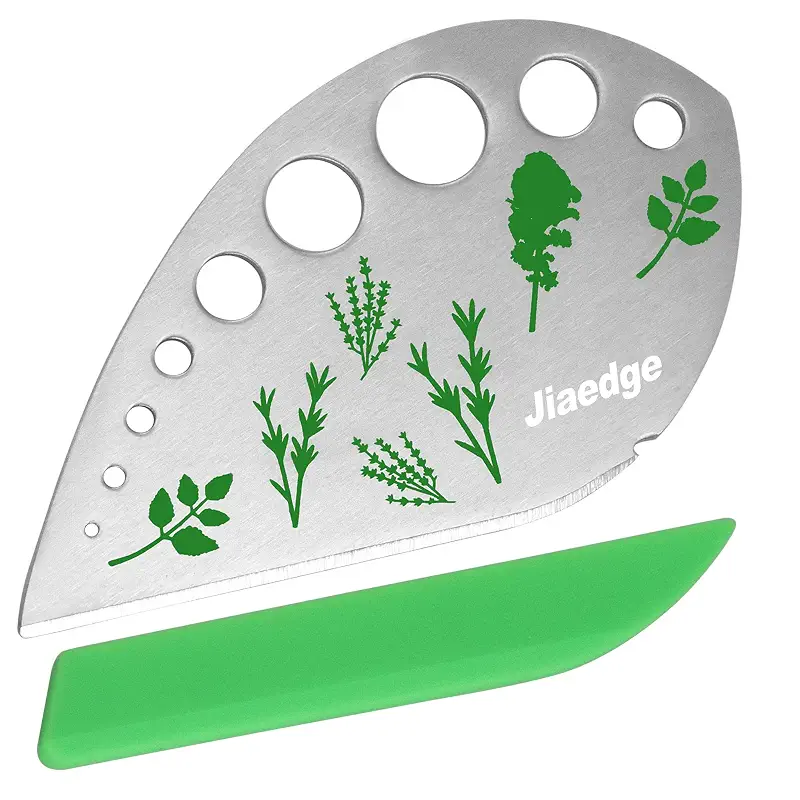
Herb Stripper, Jiaedge Green 9 holes Stainless Steel Kitchen Herbs Leaf Stripping Tool, Metal Herb Peeler for Kale, Collard Greens, Thyme, Basil, Rosemary Stripper
4.4(2,146)
Versatile 9-hole design strips herbs and cuts leaves with one compact tool.
Ideal for: Home cooks who work with a variety of fresh herbs and value time-saving in meal prep.
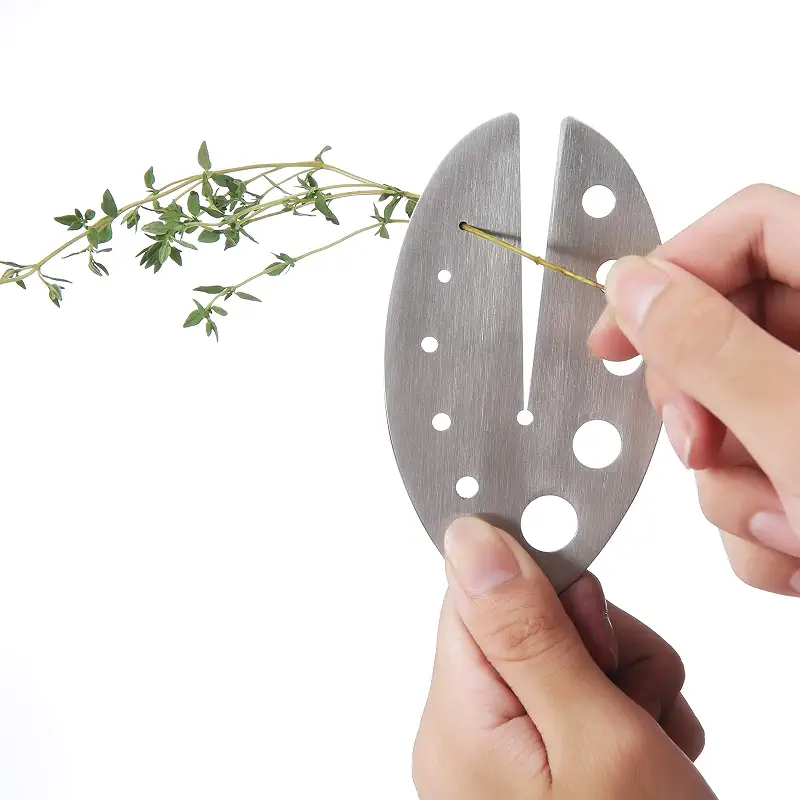
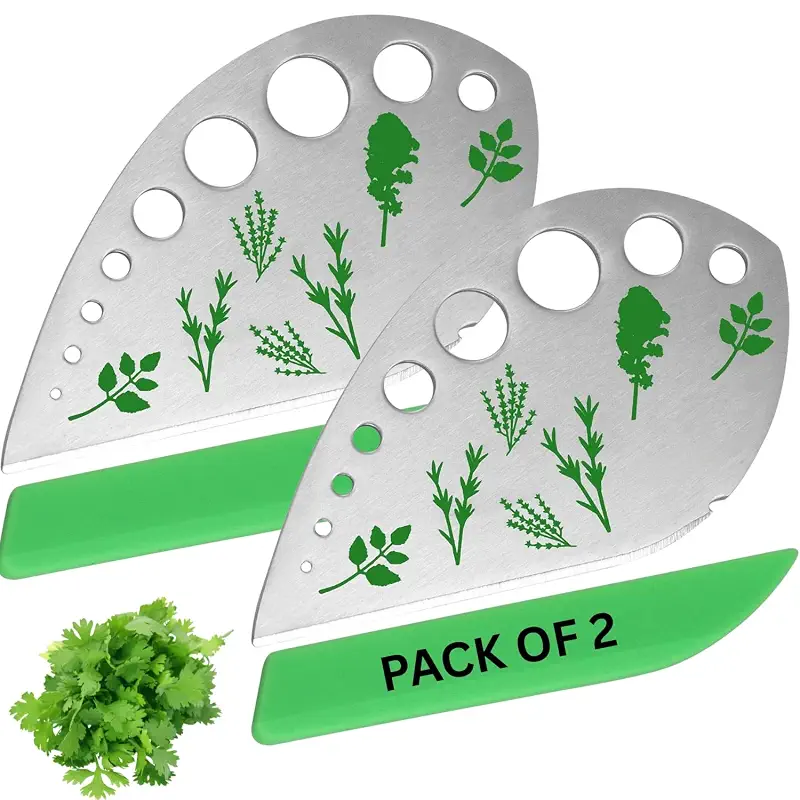
The Jiaedge takes a straightforward approach: nine precision holes in food-grade stainless steel, a protective cover, and a cutting blade for larger leaves. What makes this the standout choice is that it handles a genuinely broad range of herb sizes without requiring you to own multiple gadgets. Owners report it works well on everything from delicate thyme to heartier rosemary and basil, and the dual stripping-and-cutting function means you can finish herb prep in one step rather than reaching for a separate knife.
Where the Jiaedge leads is in raw versatility. It's sized well for hand control, doesn't take up much space, and the stainless steel build feels durable enough for years of use. The learning curve is minimal: you find the hole that fits your stem diameter, pull it through, and the leaves come off. Some owners do flag that with very fine herbs like thyme, you may need to experiment with which hole works best, but that's a minor friction point.
The one honest limitation is that it's not specialized. If you work exclusively with woody herbs like rosemary, or you process greens in high volume, a tool purpose-built for that job might edge it out. But for a home cook who wants one reliable stripper that handles cilantro, basil, kale, and thyme equally well, this is the pick.
Pros
Nine different hole sizes fit most common herbs
Dual stripping and cutting functionality in one tool
Durable 430 stainless steel construction
Comes with protective cover for blade safety
Cons
Requires trial to find the right hole for very fine stems
Cutting blade requires some effort to remove protective cover
Key features
Nine precision holes sized 3mm to 15mm for varied herb stems
2-in-1 stripper and cutting blade with protective cover
Food-grade 430 stainless steel, dishwasher safe
Compact ergonomic design fits standard kitchen drawers
Ideal for: Gardeners and cooks who process herbs regularly and prioritize long-term durability.
The DOMG strips down to essentials: a solid piece of 304 food-grade stainless steel with multiple hole sizes, no moving parts, no plastic blade cover. This is the tank of the category. Owners specifically praise the heft and the fact that it won't deform, crack, or stain like plastic tools do over time. If you're thinking in terms of a 10-year investment rather than a disposable gadget, this is the one to choose.
What separates the DOMG from the Jiaedge is material philosophy. Where the Jiaedge includes a plastic cover and cutting blade, the DOMG is stainless steel through and through. That means no plastic to break, stain, or harbor bacteria. Owners report it's particularly strong on fine herbs like thyme, where the weight and rigidity help you control the stem as you pull it through. The flat, compact design fits easily in a drawer and stays put.
The trade-off is specialization. This tool does one thing very well: strip leaves via hole insertion. There's no cutting blade, and it's lighter on the multi-hole versatility compared to some competitors. If your herb work is routine and focused on a few reliable species (thyme, rosemary, kale), that's a strength. If you want a tool that also chops or handles a very wide range of stem diameters, the DOMG asks you to accept a narrower mandate.
Pros
Pure 304 stainless steel, no plastic parts to degrade
Heavy construction stays rigid, won't deform over years
Compact and flat, stores easily in narrow kitchen spaces
Multiple hole sizes work well on thyme and delicate herbs
Cons
No cutting blade for chopping leaves after stripping
Heavier than some competitors, requires more hand strength
Ideal for: Budget-conscious home cooks wanting a two-in-one stripper and chopper without premium pricing.
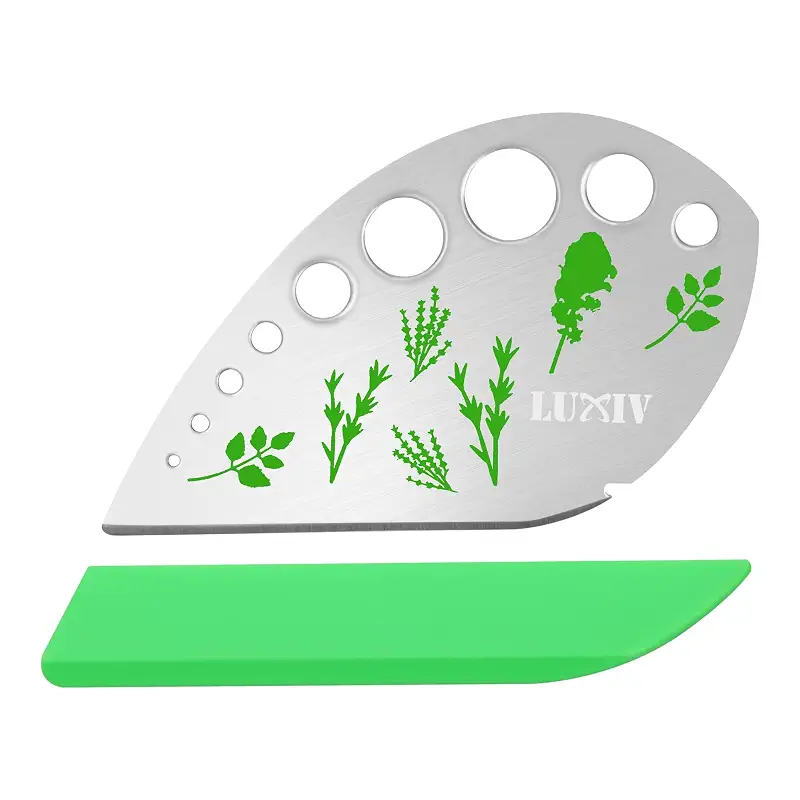
The Luxiv delivers the same core feature set as the Jiaedge (nine holes, stainless steel, cutting blade, protective cover) at a lower price point. For many home cooks, that's all the information they need. Owners consistently report it works well on the full spectrum of herbs, from cilantro to thyme to rosemary, and the blade edge handles post-stripping chopping without requiring a separate knife.
Where the Luxiv shines is consistency within a budget frame. The stainless steel feels solid, the holes are well-sanded (not rough), and the ergonomic shape doesn't demand much learning curve. One owner specifically noted they bought several as gifts for family members, and everyone found it useful. That kind of feedback suggests it performs reliably without requiring special technique or patience.
Compared to the DOMG, the Luxiv includes a cutting blade and plastic cover, which adds a small amount of maintenance (the cover can be snug to remove) but also gives you more tool in one purchase. For occasional cooks or those testing whether an herb stripper fits their workflow, the Luxiv is the low-friction entry point. You're not overinvesting if it turns out you don't use it as much as expected.
Pros
Nine hole sizes cover nearly all common herb stem widths
Ideal for: Gardeners and home cooks who process large quantities of kale, chard, and collard greens.
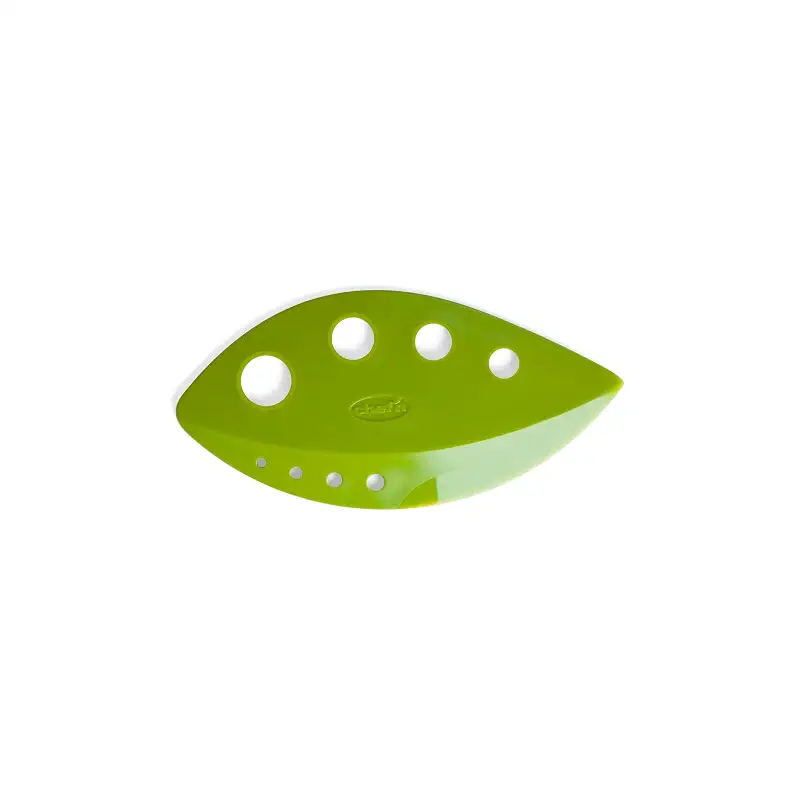
The Chef'n LooseLeaf takes a different design philosophy: one large hole sized specifically for hearty leafy greens, paired with a curved edge for chopping. Rather than competing on versatility like the multi-hole models, it specializes. If your primary use is processing kale by the pound or chard from your garden, this tool meets that need with elegant simplicity.
Owners praise how quickly it handles volume work. One reviewer stripped one pound of kale in about 60 seconds, stem-free and ready to store. The curved blade works well for rough-chopping greens post-stripping, and the whole tool is made from durable food-grade plastic that won't rust, feels lightweight in hand, and is virtually indestructible in a kitchen environment. It also has a safety advantage: the cutting edge is beveled but not sharp enough to cut skin, making it genuinely kitchen-safe.
The trade-off is clear: this is not a multi-purpose herb tool. It won't strip delicate thyme or basil the way the Jiaedge or Luxiv do. Where the Jiaedge or DOMG offer nine holes to choose from, the LooseLeaf has one. If your herb work is concentrated on greens, buy this. If you need to strip a variety of herb types, the LooseLeaf leaves you reaching for other tools.
Pros
Single large hole perfectly sized for leafy greens, no guesswork
Curved blade efficiently chops greens after stripping
Durable plastic construction won't rust or stain permanently
Safety edge won't cut fingers, suitable for helping kids in kitchen
Cons
Only one hole size, poorly suited for small-stemmed herbs like thyme
Limited to greens; doesn't handle woody herbs as effectively
Key features
Single optimized hole for kale, chard, collard greens, and similar
Curved cutting edge for post-stripping chopping and mincing
Food-grade plastic construction, lightweight and rust-proof
Compact leaf-shaped design stores easily, can hang on any hole
Ideal for: Home gardeners, cooks processing fresh herbs in bulk, and anyone harvesting multiple pounds at once.
The Boorika is built for serious herb work. Owners who process bulk quantities report that after a brief learning curve, they can strip four bags of basil in an hour where hand-picking would take three to four hours. That speed comes from design choices: heavier stainless steel, well-machined holes, and a sharp cutting blade on the back side. This is the tool that pays for itself if you're running a garden operation or cook regularly with fresh-harvested herbs.
What sets the Boorika apart in technique is owner feedback about how to use it effectively. The best results come from going stem-first, bottom-to-top, with a flicking motion. It's not a casual grab-and-pull tool; it rewards a deliberate, practiced approach. Once you develop that rhythm, the speed is genuinely impressive. Owners also note that drying leaves slightly before stripping and removing Y-junctions on branched stems (common in basil) prevents jams and flying-leaf mess.
The honest limitation is that this demands more from the user than the Chef'n or simpler models. The cutting blade is genuinely sharp, the tool has learning curve, and it can scatter leaves everywhere if you're not careful. Where the Luxiv or Jiaedge work well for occasional kitchen use, the Boorika is for people who've already decided they want to process herbs at volume and are willing to invest time in technique.
Pros
Fast flicking motion strips large herb quantities in minutes
Heavy-duty stainless steel handles repeated high-volume use
Four trade-offs that actually matter when matching a herb stripper to your kitchen.
Single Hole vs. Multiple Holes
Single-hole tools like the Chef'n excel if you work primarily with leafy greens or one consistent herb type. Multi-hole designs (Jiaedge, DOMG, Luxiv, Boorika) are worth the mental overhead if you routinely cook with cilantro, thyme, basil, and rosemary at different times. The trade-off is simplicity versus flexibility. If you're uncertain how much herb work you'll actually do, a multi-hole stripper gives you options without costing more.
Stainless Steel vs. Plastic
Stainless steel tools (DOMG, Luxiv, Jiaedge, Boorika) resist rust, won't stain, and last decades. Plastic (Chef'n LooseLeaf) is lightweight, safer for children to use, and won't degrade in the dishwasher. Neither is objectively better; it depends on your priority. Long-term cooks favor stainless. Home cooks who want something foolproof and hard to break lean plastic. Follow the herb stripper how-to guide for detailed technique on using whichever material you choose.
Cutting Blade Consideration
Several tools (Jiaedge, Luxiv, Boorika, Chef'n) include a cutting edge for chopping after stripping. If you already keep a sharp chef's knife within reach, the blade is redundant. If you want one tool that handles both stripping and mincing without reaching for another utensil, the integrated blade saves a step. The DOMG omits the blade entirely, which simplifies maintenance but means you'll need a separate knife for post-strip work.
Volume and Use Frequency
Occasional cooks should lean toward the Luxiv or Chef'n LooseLeaf: simple to use, forgiving if you don't have perfect technique, and affordable. Regular herb users who process kale by the pound or harvest from a garden should look at the DOMG for durability or the Boorika for speed. The Jiaedge sits in the middle: versatile enough for variety, durable enough for repeated use, without demanding specialized technique. Consider whether you're looking for a kitchen gadget or an actual time-saver, then match that to the tool's design.
Frequently asked
Quick answers to the questions readers ask most.
Will an herb stripper work on very fine herbs like thyme?
Yes, but thyme demands the right hole size. Most multi-hole strippers (Jiaedge, DOMG, Luxiv, Boorika) include holes sized 3-5mm, which fit thyme stems if you choose carefully. Owners consistently report success, though you may need to test a couple of hole sizes. The DOMG and Boorika seem especially reliable for thyme. The Chef'n single-hole design is less suited to very delicate herbs and works better on heftier greens.
Can I use an herb stripper on kale and collard greens?
Absolutely. Kale and collard greens are among the primary uses for these tools. The Chef'n LooseLeaf is purpose-built for large leafy greens and strips one pound of kale in under a minute. Multi-hole models also handle greens well, though the Chef'n's single optimized hole makes it the fastest for volume work. All five tools in this comparison work on kale; the question is speed and convenience for your use case.
Are herb strippers dishwasher safe?
All five tools in this comparison are dishwasher safe. Stainless steel models (DOMG, Jiaedge, Luxiv, Boorika) are particularly worry-free in the dishwasher and won't stain. The Chef'n plastic design is also fully dishwasher-safe and won't degrade in the top rack. Hand-washing is always gentler and extends blade sharpness, but none of these require hand-only care.
What's the difference between an herb stripper versus knife for prep work?
A knife requires you to hold the herb stem steady and carefully slice leaves one by one, or mincing by hand. An herb stripper lets you insert the entire stem into a hole and pull it through in one motion, stripping multiple leaves at once. For someone processing thyme or basil regularly, the stripper is genuinely faster after a brief learning curve. For occasional single-stem use, your knife is already there. The herb stripper versus knife choice depends on volume and whether prep speed matters to your cooking routine.
Do I need multiple hole sizes, or will one work for all herbs?
One hole works only if you specialize (like the Chef'n for greens). Most home cooks work with herbs of different stem thicknesses. Thyme is thin; rosemary and basil are thicker. Multi-hole strippers let you match the hole to the herb instead of fighting with a poorly fitting one. The learning curve is minimal: pick the hole that fits snugly but not tightly, pull, and the leaves come off. If you cook with varied herbs, multiple holes are worth it.