Best Herb Dryer: Top Picks for Drying Herbs & Spices
Compare the best herb dryers for drying fresh herbs, spices, and flowers. Find electric dehydrators and hanging racks that preserve flavor and quality.
Verdict, analysis, and key features for each pick.
#1 Pick
Best Overall
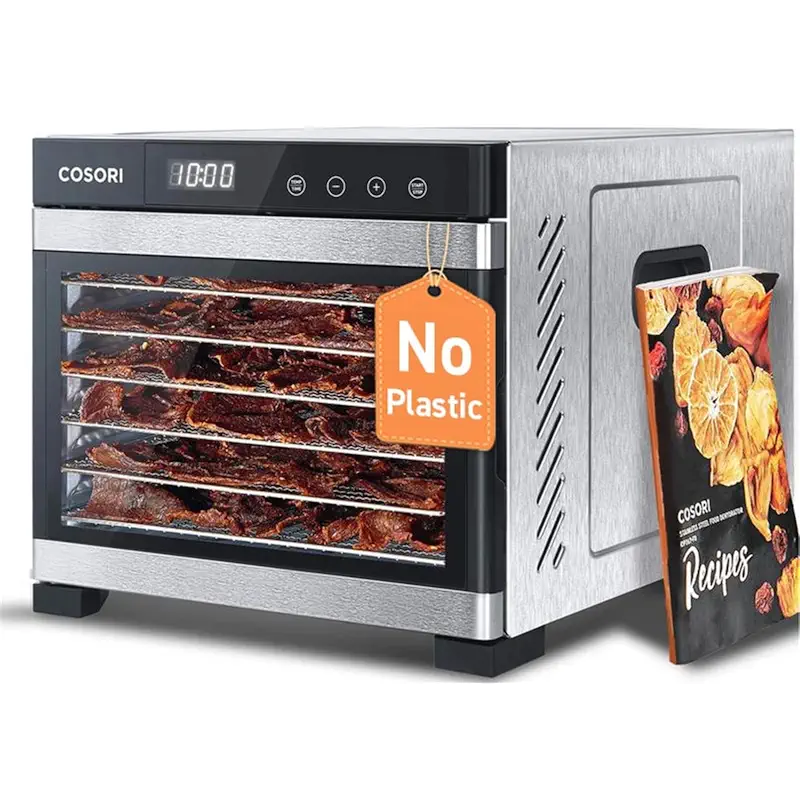
Cosori
Cosori Food Dehydrator, 6 Stainless Steel Trays with 6.5 ft² Drying Space | Extra Large, 95-165°F Precision Control, 600W Faster Drying, Horizontal Airflow, Quiet Operation under 48 dB, 48H Timer
4.7(21,484)
Powerful 600W motor, quiet operation, precise temperature control, and six stainless steel trays make this the go-to choice for serious herb preservation.
Ideal for: Serious home cooks, herb gardeners, and anyone planning regular large batches.
The Cosori stands out for its combination of capacity, speed, and reliability. The horizontal rear-mounted airflow system means you won't need to rotate trays halfway through: a real convenience when you're running batches overnight. At under 48 dB, it runs quietly enough to keep in a kitchen or office without becoming a distraction, and owners report consistent results across all six trays, whether drying delicate herb leaves or heartier items like mushroom slices.
The digital display lets you fine-tune temperatures from 95 to 165°F in one-degree increments, and the 48-hour timer covers everything from quick herb drying (typically 4 to 8 hours) to longer projects like jerky. Owners consistently praise how fast it works compared to older plastic-tray models; many report beef jerky done in 4 to 6 hours instead of 12+. The stainless steel construction feels durable, and trays stack neatly in a cabinet when not in use.
One practical note: some owners recommend buying silicone mats separately for sticky items like fruit leather, since moisture can make delicate herbs stick to bare metal. A few also mention the unit generates considerable heat on the countertop during extended runs, so positioning matters if you have counters sensitive to heat. Still, this level of performance and ease of use justifies its position as the best all-around option.
Pros
Rear-mounted fan ensures even drying without rotating trays
Quiet operation under 48 dB, suitable for overnight use
Large capacity with six stainless steel trays
Cons
Generates substantial heat on countertop during long runs
Sticky items may require separate silicone mats
Key features
600W motor with horizontal airflow system for even drying
Temperature range 95–165°F adjustable in 1°F increments
Digital timer up to 48 hours with quiet brushless motor
Six dishwasher-safe stainless steel trays, 6.5 sq ft drying space
Includes mesh screen, fruit roll sheet, and 50-recipe cookbook
#2 Pick
Best Space-Saving Hanging Rack
Desy & Feeci
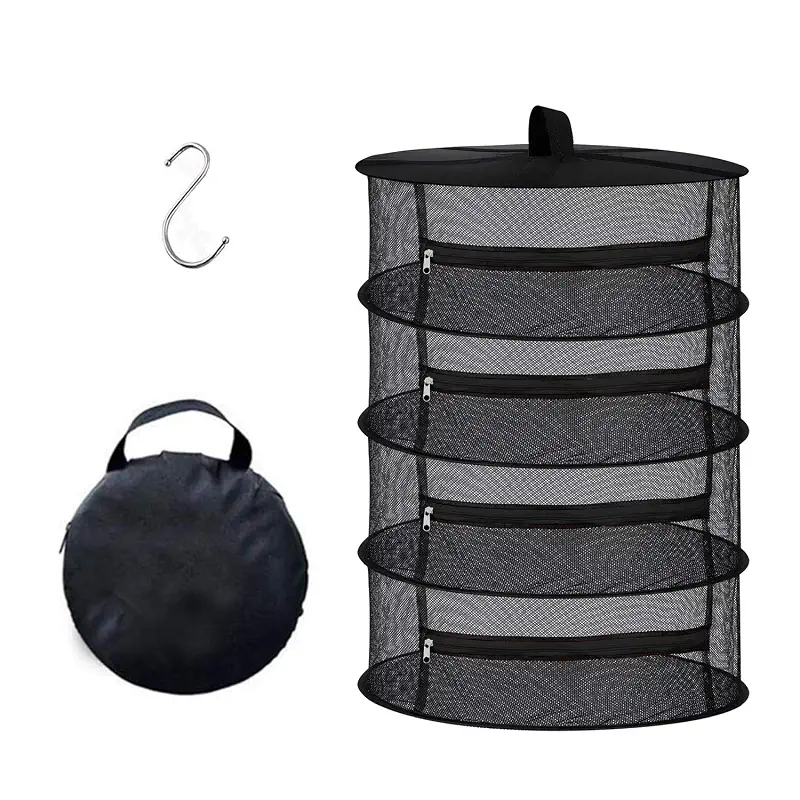
Desy & Feeci 4-Layer Herb Drying Rack - Collapsible Mesh Hanging Dryer Net for Herbs, Flowers, Tea, Fruits, and Vegetables - Includes S-Hook & Storage Bag (24" x 31")
4.6(4,154)
Vertical design with four mesh layers and zipper closures lets you dry large herb volumes indoors or outdoors while using minimal floor or shelf space.
Ideal for: Apartment dwellers, herb gardeners with outdoor space, and anyone wanting zero electricity bills.
The Desy & Feeci takes a fundamentally different approach: instead of electricity and heat, it relies on ambient air circulation in a vertical stack. Each of the four layers holds up to 2.2 lbs, and the breathable mesh allows air to flow around herbs from all sides, speeding drying compared to laying sprigs flat on a plate. The zipper closures on each layer keep insects and dust out, a real advantage if you're drying outdoors or in a garage.
Owners love how it stores: the entire unit collapses to a compact bundle that fits in the included storage bag, making it ideal for apartments, balconies, or kitchens where counter space is precious. At full height, it's about 31 inches tall and 24 inches in diameter, so it can hang from a ceiling hook, bathtub rod, or porch overhang. One reviewer who hangs it in a living room says it looks stylish enough to double as décor.
Compared to electric dehydrators, drying time depends on humidity and airflow in your space: typically 3 to 7 days indoors, faster in dry climates. The trade-off is obvious: you save energy and money on electricity, but you lose precise control and speed. The trays are also lighter-duty than stainless steel, so this isn't ideal for wet or sticky items. One owner noted the storage bag zipper ripped on first use, though the rack itself proved robust.
Pros
Collapses flat for storage in included bag
Zipper closures keep insects and dust away
Hangs from ceiling, hook, or rod: saves floor and shelf space
Cons
Drying time depends on ambient humidity and airflow
Not suitable for wet or sticky items like fruit leather
Key features
Four breathable mesh layers, 2.2 lbs capacity per layer
Zipper closures on each level to exclude insects and dust
Collapsible design folds flat for compact storage
Includes S-hook, garden shears, and storage bag
Portable and suitable for indoor, balcony, or outdoor use
#3 Pick
Best Compact Electric Model
Septree
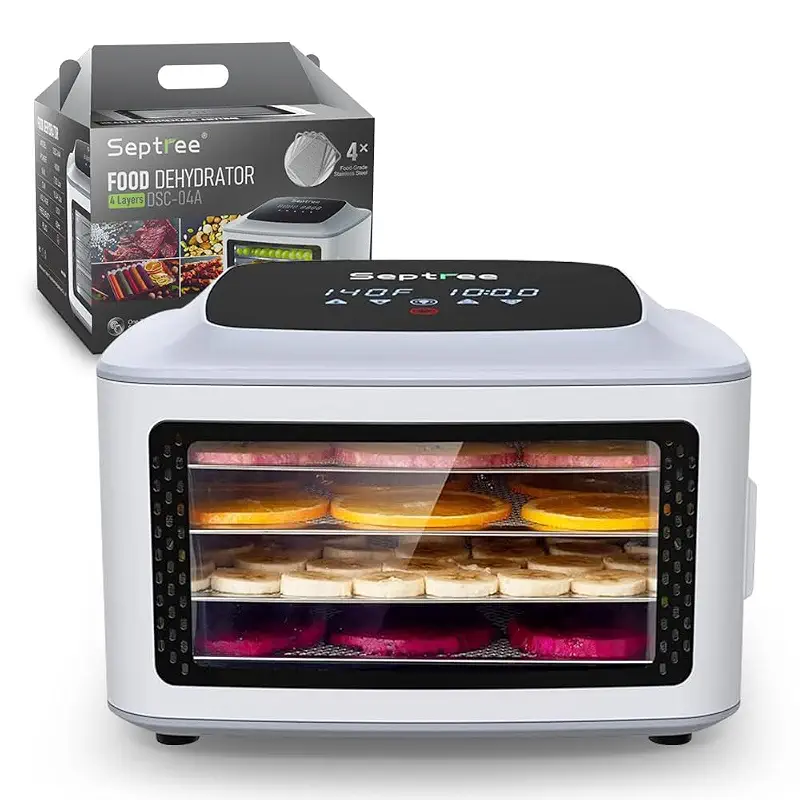
Compact Food Dehydrator, 4 Stainless Steel Trays Fresh Dryer Machine for Jerky Herbs Fruit Veggies Snacks, with Digital Timer | 190F Temperature Control, Great Size for Small Family
4.5(1,421)
Stainless steel interior, rapid drying, and small footprint make this ideal for apartments or small households without sacrificing performance.
Ideal for: Small households, apartment kitchens, or anyone wanting fast drying without a large footprint.
The Septree is smaller than full-size dehydrators but punches above its weight. At roughly the size of a compact microwave, it fits on most kitchen counters or easily tucks into a cabinet between uses. Despite the smaller footprint, it dries efficiently: owners report beef jerky done in 6 hours and apple slices in about the same timeframe, sometimes faster than larger models because less space means heat concentrates more effectively.
The digital display is straightforward, temperature runs from 70 to 190°F, and the machine remembers your last settings so you can repeat successful batches without reprogramming. All interior surfaces are 304 food-grade stainless steel, which means no plastic parts touching your herbs or other foods: a feature that appeals to anyone concerned about material longevity. The four trays are roughly 10 by 8 inches, giving adequate space without overwhelming small kitchens.
Where the Septree falls short compared to the larger Cosori is raw capacity (four trays versus six). If you're interested in specialized applications, a dehydrator for mushrooms or similar projects would benefit from the stainless construction here as much as any general-purpose unit. Owners do mention the included silicone mats can cause fruit leather to stick, so parchment paper works better. If you're drying mostly herbs and flowers rather than large batches of jerky, the compact size and efficiency make this a solid middle ground between hanging racks and larger electric units.
Pros
Rapid drying: jerky in 6 hours, fruit slices in 4–6 hours
Stainless steel interior and trays: no plastic contact with food
Compact size fits cabinets or small counters easily
Cons
Four-tray capacity is less than larger models
Included silicone mats not ideal for sticky items like fruit leather
Key features
Stainless steel interior with 304 food-grade trays
Temperature range 70–190°F with digital timer and memory function
Compact microwave-sized design for easy storage
Four stainless steel trays, roughly 12 square inches each
Includes recipe book, non-stick mats, and two storage containers
#4 Pick
Best for Hanging Bundles
Elesunory
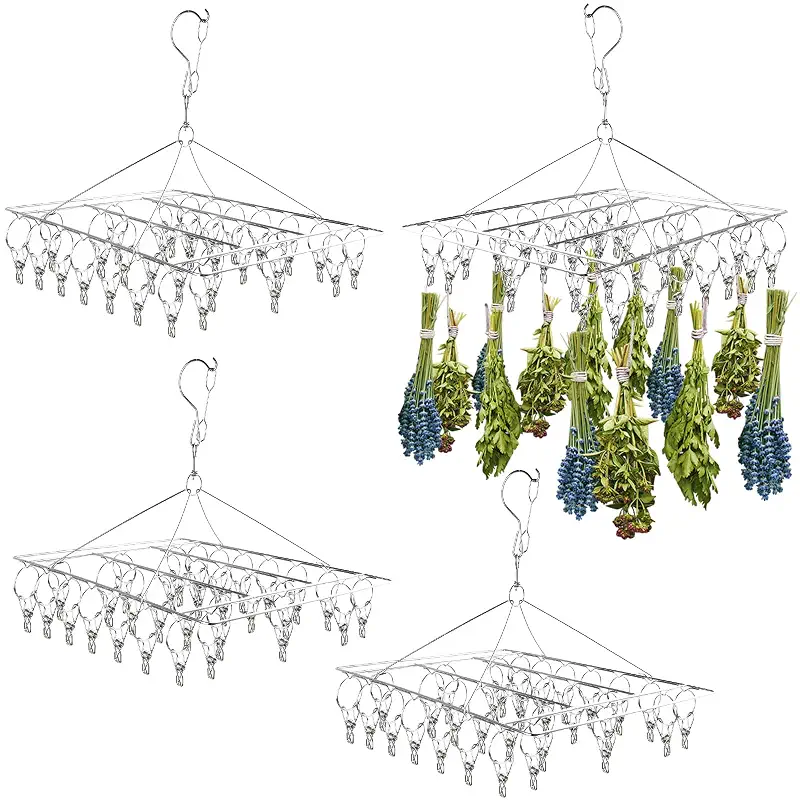
Herb Drying Rack for Drying Spices, Rustproof Dryer with 30 Hooks | 4 Pack, No Assembly Required, 360° Swivel Air Circulation, Space Saving Foldable, for Herbs Flowers Tea Balcony Outdoor Use
4.7(207)
Four rustproof racks with 30 spring-clip hooks per unit let you dry whole herb bundles vertically while taking minimal wall or corner space.
Ideal for: Gardeners with substantial herb harvests and dedicated drying spaces or growing tents.
The Elesunory uses a completely passive method: spring-loaded clips on sturdy stainless steel frames that you can stack or hang side-by-side. You simply clip stems or small bundles directly to the frame and let air circulation do the work. This is especially useful if you're harvesting whole sprigs of basil, oregano, rosemary, or other woody herbs: no need to strip leaves or lay them flat.
Owners report that the clips hold stems securely as they dry and shrink without dropping them, and the 360-degree swivel design promotes even air exposure. The stainless steel construction resists rust, and the set includes four racks, each with 30 clips, giving you enormous capacity for a vertical setup. Unlike mesh hanging racks, these don't enclose the herbs, so there's no dust or insect protection; they're better suited to indoor spaces or covered outdoor areas.
Where this differs from the Desy & Feeci mesh rack is flexibility: you can hang these individually, stack them vertically in a tent with a dehumidifier (as one garlic-curing enthusiast reported), or position them however works for your space. One reviewer noted the clips are on the smaller side for thick herb bundles, requiring a bit of creativity to position larger stems. If your primary goal is drying herbs and maintaining an organized, accessible setup (rather than portability) these racks excel.
Pros
30 clips per rack: high capacity for whole herb bundles
360-degree swivel promotes even air circulation
Rustproof stainless steel with sturdy, stable frame
Cons
Clips may be tight for very thick herb stems or bundles
Open design offers no protection from dust or insects
Key features
Four stainless steel racks with 30 detachable spring clips each
360-degree swivel base for directional air circulation
Rustproof construction with strong load-bearing capacity
Space-saving foldable design for compact storage
Multi-purpose: herbs, spices, flowers, tea, or laundry items
#5 Pick
Best Budget Electric Option
Cosori
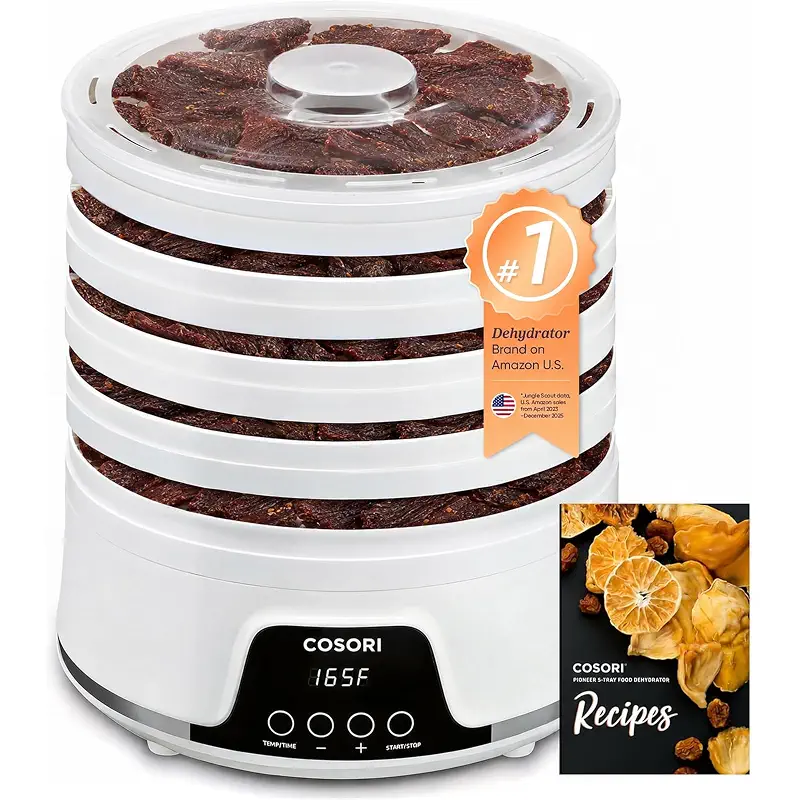
Cosori Food Dehydrator, 5 BPA-Free Trays, 165°F Temperature Control, 350W
4.5(4,429)
Five expandable trays, quiet 350W operation, and expandable-to-seven-tray capacity deliver solid performance at an entry-level price point.
Ideal for: Budget-conscious beginners and small households wanting reliable electric drying.
The Cosori Compact (the five-tray model) is pitched as a lower-cost alternative to the six-tray Cosori, and it serves that role well if your herb-drying volume is moderate. The 350W motor is quieter than larger units (under 47 dB) and owners consistently praise how quietly it runs. Temperature control spans 95 to 165°F in one-degree increments, and you can expand to seven trays by purchasing additional accessory trays, so you're not locked into five forever.
The BPA-free plastic trays are lighter than stainless steel and easier to handle, though some owners prefer solid materials for durability. The stackable design means you can adjust tray spacing using small tabs: handy if you're drying thick items like whole mushroom caps. Owners report excellent results on apples, pineapples, mangoes, and herbs; one reviewer even uses it to make herb spruce and cranberry simmer pots. Cleaning is easy, and the compact footprint doesn't dominate a small kitchen.
Compared to the larger Cosori six-tray model, you trade capacity and slightly higher wattage for a lower entry price and quieter operation. One reviewer did report a unit failing after just two uses, though this appears to be an outlier among hundreds of positive reviews. If you're new to dehydrating or have modest volume needs, this strikes a practical balance between hanging racks and premium electric units. The expandability means you can scale up later if your gardening or preserving ambitions grow.
Pros
Expandable to seven trays: scale up without replacing the whole unit
Very quiet at under 47 dB: suitable for overnight drying
Lightweight BPA-free trays are easy to handle and clean
Cons
Lower wattage (350W) means slightly slower drying than 600W models
Plastic trays less durable long-term than all-stainless construction
Key features
350W motor with temperature range 95–165°F in 1°F increments
Five large BPA-free trays, expandable to seven with accessories
Adjustable tray heights for thick-cut ingredients or easier storage
Automatic shutoff and overheat protection for safe operation
Digital display with timer up to 48 hours in 30-minute increments
How to Choose an Herb Dryer
Four trade-offs that actually matter when matching a herb dryer to your kitchen.
Electric Dehydrators vs. Hanging Racks
Electric models offer speed, precision, and year-round reliability: ideal if you process herbs regularly or live in humid climates. Hanging racks cost nothing to run and work beautifully if you have outdoor or well-ventilated indoor space, but drying times depend on weather and may take a week or more. The comparison between hanging racks versus dehydrators comes down to lifestyle: apartment dwellers often prefer racks; gardeners with large harvests usually choose electric units. Neither is objectively better; it depends on your space, climate, and volume.
Capacity and Your Harvest Volume
If you're drying a few handfuls of herbs a month, a compact electric dehydrator or simple hanging rack handles it easily. For large garden harvests or regular batches of jerky and fruit, invest in a model with at least four to six trays (electric) or multiple hanging racks. Remember that trays can be stacked close together or spaced out depending on how much air you need: thicker items like whole mushrooms benefit from extra space, while thin herbs dry fine packed closer.
Temperature Control and Drying Speed
Herbs typically dry best at lower temperatures (around 95 to 120°F) to preserve delicate flavors and color. Most modern electric dehydrators let you set precise temperatures in one-degree increments. Hanging racks skip temperature control entirely and rely on ambient conditions. If you plan to dry multiple types of food (herbs, jerky, fruit leather) choose an electric model with a range of at least 95 to 165°F. The drying fresh herbs guide covers specific temperatures and timings for common herbs. For more specialized needs, a top air fryer dehydrator can also handle dual-purpose cooking and preservation in one appliance.
Noise and Placement
Electric motors generate some noise, typically 45 to 60 dB depending on model and wattage. If you want to run your dehydrator overnight or in a shared living space, prioritize models under 48 dB. Rear-mounted or horizontal airflow systems tend to run quieter than bottom-up designs. Hanging racks produce no noise at all, making them ideal for bedrooms or noise-sensitive environments.
Materials and Durability
All-stainless-steel interiors and trays resist warping, discoloration, and odor retention better than plastic. If you're drying pungent items frequently (garlic, onions, peppers), stainless steel won't absorb and hold those smells. BPA-free plastic trays are lighter and easier to handle but may degrade faster with heavy use. Hanging racks in stainless steel resist rust far better than painted metal or plastic frames.
Frequently asked
Quick answers to the questions readers ask most.
How long does it take to dry herbs in an electric dehydrator?
Most fresh herbs dry in 4 to 8 hours at 95 to 115°F, depending on moisture content and thickness of leaves. Basil and oregano tend toward the faster end; thicker-leaved herbs like rosemary may take longer. Hanging racks typically take 3 to 7 days indoors, faster in dry or outdoor conditions. Your first batch is a good test to dial in timing for your specific herbs.
Can I dry multiple types of herbs at the same time?
Yes, but keep in mind that different herbs may need slightly different temperatures and times. Delicate herbs like cilantro and basil do best at lower heat (around 95–110°F), while tougher herbs like rosemary and thyme tolerate 120–130°F. If you're mixing types, use the lower temperature to avoid over-drying the delicate ones. Hanging racks have no temperature control, so they're more forgiving for mixed batches.
What's the best way to store dried herbs after drying?
Cool dried herbs completely before storing, putting warm herbs in jars traps moisture and can cause mold. Transfer to airtight glass jars or containers away from direct light and heat. A cool, dark cupboard or pantry is ideal. Most properly dried and stored herbs stay flavorful for 6 to 12 months. Label jars with the herb name and drying date so you remember what you have.
Do I need any special equipment or accessories for herb drying?
For electric dehydrators, the basic unit works fine on its own, though silicone mats or parchment paper help with sticky items. Hanging racks usually include everything needed (hooks, zippers, clips). Some people add small wire screens or cheesecloth to support very small leaves. A hygrometer (humidity meter) helps you understand your indoor drying environment, especially for passive racks.
Can I dry herbs from a grocery store or farmer's market, or should I only use homegrown?
Homegrown herbs are ideal because you control how they're grown and harvested. But store-bought herbs work fine if they're fresh and not wilted. Farmer's market herbs are usually fresher than supermarket varieties. Rinse all herbs gently before drying and allow them to air-dry on a towel first to remove excess surface moisture. Skip any herbs that look yellowed or damaged.