Kitchen & Dining · Gadgets
Best Hand Grinder for AeroPress
Find the best hand grinder for AeroPress brewing. Compare 5 top manual burr grinders with portable design, grind control, and durability for fresh coffee.
Affiliate disclosure: As an Amazon Associate I earn from qualifying purchases.
At a glance
3
Best for ConsistencyKINGrinder
4
Best Design & AestheticsChidori
5
Best Entry-Level OptionJavaPresse
Detailed reviews
The AeroPress Manual Coffee Grinder is engineered by the same team that designed the AeroPress itself, and that heritage shows in every detail. The titanium-coated conical burrs deliver consistent particle size across 60 settings, and the compact footprint actually slides into the AeroPress plunger for seamless travel. Owners consistently praise the premium feel: the magnetic crank, the satisfying mechanical feedback, the way each component locks together. One five-star reviewer compared it to owning a MacBook, and that precision engineering translates directly into cup quality; multiple buyers report noticeably better flavor clarity than they achieved with previous electric grinders.
The trade-off is effort and price. A two-star review flagged metal shavings appearing after just a few days of use, raising durability concerns that contrast sharply with the 12+ five-star reviews celebrating its longevity. The grind adjustment mechanism is also finer than some alternatives: dial changes are subtle, so you'll spend time dialing in your preferred setting. Compared to the Ceving, which emphasizes external adjustment simplicity, the AeroPress prioritizes tactile precision over speed. If you're willing to invest in a tool that feels like it will outlast your brewing career and you value the ritual of hand grinding, this is the one.
The included power drill adapter also bridges the gap: when your arm tires, you can attach it to a cordless drill for faster grinding. That flexibility, combined with the preset medium-fine tuning for AeroPress straight out of the box, makes this the obvious first choice for dedicated AeroPress enthusiasts.
Pros
- Titanium-coated burrs with 60 grind settings for precise dial-in
- Compact design fits inside AeroPress plunger for travel
- Optional power drill adapter speeds up grinding when needed
- Preset to medium-fine for AeroPress brewing
Cons
- High price point reflects premium positioning
- Grind adjustment is subtle; requires patience to dial in correctly
Key features (4)
- Titanium-coated Italian-made conical burrs for consistent grinding
- 60 adjustable grind settings from espresso-fine to coarse
- Ultra-compact metal body slides inside AeroPress cavity
- Dual-bearing hand crank for smooth, ergonomic operation
The Ceving Mini strikes the balance that appeals to most home brewers: solid grind quality at a price that won't sting. Its 40 external adjustment settings are easier to navigate than the AeroPress's dial, and ceramic conical burrs preserve flavor while generating less heat than steel alternatives. The glass catch cup is a nice touch, and at 325g it's genuinely portable. Owners report that once they find their preferred setting, the grinder delivers consistent results for pour-over, French press, and AeroPress alike, though fine-tuning between beans takes patience.
The limitations are real. At 30g capacity, you'll refill for larger brewing sessions, and the body can slip during grinding (one reviewer used a rubber band to steady it). Grind uniformity isn't quite as tight as the KINGrinder K7 or AeroPress option; some owners note fines in coarser settings. A three-star review noted difficulty reaching true espresso grind, though a five-star user dialed in setting 5 successfully. Where the Ceving excels is practicality: it's lighter to carry, easier on the wrist, and the external dial means fewer surprises when you swap between brewing methods.
If you brew AeroPress daily but don't obsess over microscopic grind variance, the Ceving delivers real value among the top coffee grinder under 500 picks that handle drip, French press, and espresso without the premium price tag. It's the grinder for travelers who don't want to sacrifice quality but also don't want to overthink it.
Pros
- 40 external grind settings are intuitive and quick to adjust
- Ceramic conical burrs preserve bean flavor with less heat
- Glass catch cup adds durability and premium feel
- Lightweight at 325g makes travel or commute effortless
Cons
- 30g capacity requires refilling for larger brewing batches
- Body can slip during grinding without a rubber band
Key features (4)
- 40 external adjustment settings for easy grind-size control
- Ceramic conical burrs generate minimal heat during grinding
- Glass catch cup with detachable design for simple cleanup
- Compact 6.7-inch height fits into backpacks and travel bags
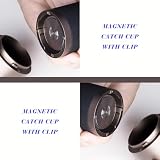
The KINGrinder K7 earns its reputation on technical execution. The upgraded 7-angle stainless steel conical burr and triple-bearing stabilization system keep the grinding shaft rock-solid, eliminating the wobble that plagues cheaper grinders and causes uneven particle size. Owners rave about the clarity of the resulting brew and note that the grind consistency rivals electric burr grinders. The top adjustment dial offers fine micro-adjustments, and the magnetic locking catch cup is secure and satisfying to use.
One owner compared it head-to-head with their KINGrinder P2 and found the K7 dramatically more efficient: 40 rotations produced better results with less physical effort. Another reviewer, an experienced coffee enthusiast, called it the best hand grinder they've used, noting the burrs actually shave beans rather than crack them. The learning curve is steeper than the Ceving's simple external dial; you'll want to understand the zero-out workflow before grinding. A three-star review mentioned astringency issues when adjusting between settings, suggesting the grind range works best once dialed in precisely.
Compared to the AeroPress grinder, the K7 trades some travel compactness for grinding efficiency: it won't fit inside an AeroPress, but it requires fewer rotations and less strain. If consistency and reduced effort matter more than ultra-portability, and you're comfortable investing in quality, the K7 is the grinder for serious home brewers who want cafe-level uniformity.
Pros
- 7-angle burr design delivers remarkably uniform particle size
- Triple-bearing stabilization eliminates wobble and inconsistency
- Efficient grinding requires fewer rotations than many competitors
- Magnetic catch cup with locking mechanism for secure collection
Cons
- Learning curve steeper than external dial adjustment systems
- Larger footprint compared to ultra-compact travel grinders
Key features (4)
- 7-angle stainless steel conical burr for enhanced cutting performance
- Triple-bearing shaft support maintains precise alignment during grinding
- Top adjustment dial enables fine micro-tuning across brew methods
- Premium aluminum alloy and stainless steel construction
The Chidori Manual Coffee Grinder appeals to those who believe tools should be as rewarding to hold as they are to use. The combination of CNC-machined 420 stainless steel conical burrs and a solid walnut wood handle creates a grinder that feels craft-made, not mass-produced. Owners consistently describe grinding as meditative and satisfying, which speaks to the overall design: this isn't just functional equipment, it's a ritual object. The 22g capacity is perfectly sized for 1–2 fresh cups, and at 100% cordless with no batteries or outlets, it's ideal for camping, hiking, and travel.
The downside is capacity and adjustment precision. The grind dial isn't marked with numbered settings like competing grinders; adjustment is purely visual from coarse to fine, so dialing in your perfect setting requires trial and error. One owner noted it took tweaking to lock in the right texture for their espresso machine, though once set, results are solid. A five-year user reported that a plastic internal component developed stress fractures, not a deal-breaker for the price, but a sign that long-term durability isn't guaranteed the way it is with the AeroPress grinder. The walnut handle, while beautiful, is a natural material that needs occasional care.
Where the Chidori wins is lifestyle fit: if you're drawn to manual coffee making, outdoor brewing, or simply want a grinder that's a pleasure to look at, this grinder delivers more emotional satisfaction than the purely utilitarian Ceving or KINGrinder. It's the grinder for people who grind daily and want the process itself to feel intentional.
Pros
- Walnut wood handle and aluminum body create premium, beautiful appearance
- CNC-machined stainless steel burrs deliver uniform, flavorful grind
- Ergonomic crank design minimizes hand strain during grinding
- 22g capacity precisely matches single AeroPress brew size
Cons
- Grind adjustment is unmarked; requires personal trial and error to dial in
- Internal plastic components may develop stress over multi-year use
Key features (4)
- CNC-machined 420 stainless steel conical burrs for precision grinding
- Solid walnut wood handle paired with aluminum alloy body
- 22g capacity optimized for single-dose brewing
- Portable, cordless design ideal for camping, travel, and office use
JavaPresse is the original crowd-pleaser in the hand grinder space. The ceramic conical burrs handle everything from espresso to French press, and the stainless steel construction resists rust and corrosion. The removable handle and compact footprint make it genuinely travel-friendly, and at this price point, it's hard to beat the value. Owners often report reaching for it daily for years without major issues.
The catch is grind consistency. Multiple reviews note that a single grind contains particles of widely varying sizes, especially at coarser settings; some users sift grounds to improve extraction, losing 20–60% of coffee in the process. A one-star disassembly review revealed that the central burr shaft wobbles slightly due to loose tolerances, not enough to make the grinder unusable, but enough to compromise uniformity compared to the KINGrinder K7. The ceramic burr can also develop stress fractures (one owner's broke after two months of heavy daily use), though JavaPresse's customer service reputation is stellar; they respond within minutes and send replacements or upgraded parts without hesitation.
Compared to the Ceving, the JavaPresse is more affordable but less refined; the Ceving's external dial is easier to manage than JavaPresse's bottom-knob adjustment. However, when you're shopping among best espresso grinder under 200 options, JavaPresse's track record of responsive customer support and proven longevity across tens of thousands of users makes it a genuinely safe first purchase. If you're new to hand grinding and want to test the waters without committing to premium pricing, this is it.
Pros
- Ceramic conical burrs suitable for espresso through French press
- 18 grind settings provide adequate control for most brewing methods
- Removable handle and compact size for easy storage and travel
- Exceptional customer service with rapid replacement or upgrade responses
Cons
- Grind consistency varies within a single batch; some fines present
- Central shaft can wobble slightly, affecting uniformity over time
Key features (4)
- Ceramic conical burr assembly tested for 5x durability vs. stainless steel
- 18 adjustable grind settings for multiple brewing methods
- Stainless steel body resists rust and corrosion during travel
- Removable hand crank and catch cup for compact packing
How to Choose a Hand Grinder for AeroPress
Burr Type and Grind Consistency
The heart of any grinder is its burrs. Conical burrs (found in all five options here) grind more evenly than blade grinders and generate less heat, preserving the delicate flavors in your beans. Ceramic conical burrs produce uniform particle size and run cool, but stainless steel versions with precision engineering (like the KINGrinder's 7-angle design) can deliver even tighter consistency. The burr type comparison for aeropress shows that consistency matters: uneven grounds extract unevenly, leading to sour or bitter cups. Look for reviews mentioning 'uniform grind' or 'minimal fines' to spot grinders that prioritize this. Premium options like the AeroPress and KINGrinder use additional bearing support to eliminate shaft wobble, which directly improves particle uniformity.
Grind Range and Adjustment Mechanism
AeroPress brewing works best with a fine-to-medium grind, but a versatile grinder should handle espresso-fine through French-press coarse. The AeroPress has 60 settings; the Ceving offers 40; the KINGrinder and JavaPresse provide 18 and 18. More settings aren't always better: what matters is how intuitively you can adjust. The Ceving's external dial is the quickest to tweak between beans; the KINGrinder's top dial and zero-out workflow require learning but reward precision. JavaPresse's bottom-knob adjustment is traditional but less intuitive. The aeropress grind size guide will help you understand what texture you're targeting, so choose an adjustment mechanism that matches your patience for dialing in.
Portability and Footprint
Hand grinders shine for travel, but they vary in compactness. The AeroPress fits literally inside the AeroPress plunger, making it the ultimate travel companion. The Ceving (325g) and JavaPresse (removable handle) are genuinely lightweight. The Chidori and KINGrinder are heavier and bulkier but still portable. Consider your use case: daily commute to the office favors the Ceving or JavaPresse; camping or international travel favors the AeroPress or Chidori; home-bound daily brewing lets you prioritize consistency over size. Weight matters less when the grinder lives on your counter; portability matters more when it lives in your backpack.
Grinding Effort and Hand Strain
Manual grinding requires physical effort, but grinders vary dramatically in how much cranking you'll do. The KINGrinder K7 is notably efficient: users report 40 rotations for a full dose, with smooth operation and minimal strain. The AeroPress requires more rotations but feels premium and satisfying. The Ceving and JavaPresse are lighter work than older designs but still demand 60–100+ turns for a full hopper. The Chidori strikes a middle ground with an ergonomic crank. If you have wrist, hand, or grip strength concerns, prioritize the KINGrinder or use the optional power drill adapter (available for the AeroPress). For everyone else, consistent effort over 1–2 minutes is part of the ritual.
Build Quality and Durability
Price often correlates with longevity. The AeroPress grinder feels like a lifetime investment; owners compare it to premium tools. The KINGrinder and Chidori project premium craftsmanship. The Ceving and JavaPresse are budget-friendly but rely on newer designs with fewer years of field testing. JavaPresse has the advantage of proven multi-year durability; their customer service is exceptional, so even if a ceramic burr fractures, replacement is swift and free. Stainless steel bodies resist corrosion better than aluminum during travel. Look for reviews mentioning longevity and durability: a grinder used daily for five years is a bargain compared to one that needs replacing after one year.
Our picks at a glance
3
Best for ConsistencyKINGrinder
4
Best Design & AestheticsChidori
5
Best Entry-Level OptionJavaPresse
Frequently asked
Can I grind fine enough for espresso with a hand grinder?
Yes, but it depends on the grinder. The AeroPress, KINGrinder K7, and Chidori all reach espresso-fine settings, though some users note that reaching true espresso grind is easier with electric burr grinders. The Ceving and JavaPresse can reach espresso settings, but reviews suggest you may need to dial down to the finest settings and accept that true espresso consistency takes practice. For pressurized portafilters, hand grinders work well. For bottomless baskets, expect more trial and error.
How long does it take to grind beans with a hand grinder?
Plan on 1–3 minutes depending on the grinder and quantity. The KINGrinder K7 is fastest: around 40 rotations for a single dose. The AeroPress, Chidori, and Ceving typically take 60–90 rotations. The JavaPresse can take 100+ rotations if you fill the hopper. For a single AeroPress brew (roughly 15–18 grams), expect 1–2 minutes with most of these grinders. It's part of the ritual, not a drawback.
Do ceramic or stainless steel burrs last longer?
Ceramic burrs preserve flavor and stay cool but can develop stress fractures under heavy use or if you accidentally grind something hard (a pebble in beans). Stainless steel burrs are tougher and less prone to chipping. JavaPresse's marketing claims their ceramic burrs last 5x longer than comparable stainless steel, though real-world failure rates vary by manufacturing quality. For daily use, either works; ceramic is slightly better for flavor, stainless steel is slightly more durable. The KINGrinder's premium stainless design and precision engineering offer excellent longevity.
Is it worth paying more for a premium hand grinder?
If you grind daily and care about flavor consistency, yes. The AeroPress and KINGrinder K7 deliver noticeably tighter grind uniformity and require less physical effort, making daily grinding a pleasure rather than a chore. If you grind occasionally or prioritize simplicity over perfection, the Ceving or JavaPresse offer excellent value. Think of it this way: you'll use this tool hundreds of times per year. A premium option that feels great and produces better coffee is worth the investment.
Can I use a power drill with these grinders?
The AeroPress includes an optional power drill adapter, making it easy to attach a cordless drill and grind much faster when your arm tires. Some owners report success using drills with other grinders like the Chidori, though it's not officially supported and may void warranties. Check the product listing or contact the manufacturer before attaching a drill to models other than the AeroPress.