Kitchen & Dining · Cookware
Best German Cookware Brands for Home Cooks
Find the best German cookware brands that blend precision engineering with everyday practicality. Compare Fissler, Zwilling, and other quality options here.
Affiliate disclosure: As an Amazon Associate I earn from qualifying purchases.
At a glance
1
Best for Daily Cooking & Easy CleanupSensarte
2
Best German-Made Heritage OptionFissler
3
Best Hybrid: Browning Power Plus NonstickHenckels
4
Best for German Brand PrestigeZwilling
5
Best Value for Complete CoverageCarote
Detailed reviews
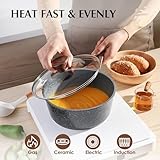
Sensarte's 13-piece collection hits the practical middle ground. The Swiss granite coating (built on ILAG technology) delivers solid nonstick performance without the toxins that have plagued older cookware lines, and owners consistently praise eggs sliding off the pan and rice cooking without scorching. The cast aluminum body heats quickly and evenly, the handles stay cool, and cleanup is genuinely effortless: just warm soapy water and a sponge.
Where this set shines is value-per-piece and beginner compatibility. You get a complete starter lineup (8-inch and 9.5-inch frying pans, saucepans up to 4.5 quarts, a sauté pan, and a casserole) without the learning curve that haunts stainless steel or the premium price tag of heritage German brands like Fissler or Zwilling. Owners note the pans feel substantial and not cheap, despite the lighter weight compared to thicker tri-ply sets.
The main trade-off: nonstick surfaces are inherently more fragile than stainless steel. Metal utensils will degrade the coating over time, and while buyers report 4+ years of daily use before real wear, this won't match the multi-decade lifespan of a quality German stainless set. The handles require assembly (your own screwdriver and about 5–10 minutes), which some find annoying but others appreciate as a quality control sign.
Pros
- Effortless cleanup with minimal oil needed
- Even heat distribution, no hot spots or burning
- PFOA/PFOS-free ceramic-granite nonstick coating
- Lightweight yet solid feel, not flimsy
Cons
- Nonstick coating degrades with metal utensils over time
- Won't brown or sear like stainless steel does
Key features (5)
- 13-piece set with frying pans, saucepans, sauté pan, and casserole
- Swiss ILAG nonstick coating: no PFOA, PFOS, lead, or cadmium
- Cast aluminum body with induction-compatible flat stainless base
- Tempered glass lids with steam vents; ergonomic bakelite handles
- Rivet-free interior design prevents food buildup
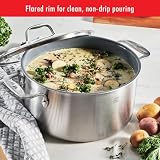
Fissler is the genuine article: a German cookware house with generations of pedigree, and the M5 Pro-Ply set reflects that lineage. The 5-layer bonded construction (18/10 stainless steel with multi-layer aluminum and steel core) heats fast and distributes it evenly across the surface. Owners rave about the balanced weight, ergonomic handles, and (most tellingly) the seamless, rivet-free design that leaves no crevice for food debris.
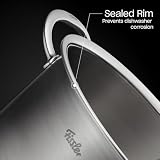
What sets this apart from lighter tri-ply competitors is the engineering philosophy: each piece is thicker (2.5–3mm) and more substantial, delivering better heat retention and virtually no warping even under heavy use. The sealed rim protects against corrosion, and German welding means handles stay rock-solid for decades. This is the set you buy once and inherit.
Compared to the Sensarte, the Fissler trades nonstick convenience for stainless steel's superior browning and searing. You'll brown meats and vegetables better, and the pan builds fond for deglazing sauces: impossible with nonstick. But you'll need fat to cook most things, and cleanup requires actual scrubbing, not a wipe. It's a professional-leaning tool, not a time-saving gadget. The 7-piece lineup (frying pan, saucepan, sauté pan, stock pot) is more minimal than some competitors, so you'll be buying à la carte if you want every size.
Pros
- 5-ply construction ensures even heat without hot spots
- Rivet-free seamless interior prevents food trapping
- German-engineered handles won't loosen; welded for longevity
- Stainless steel browns and sears beautifully
Cons
- Requires oil or butter; not forgiving like nonstick
- Heavier than nonstick or tri-ply alternatives
Key features (5)
- 7-piece set with stock pot, sauté pan, saucepans, and frying pan
- 5-layer bonded construction: 18/10 stainless with aluminum-steel core
- Sealed rim design protects against corrosion and dishwasher damage
- German-welded handles with no rivets; dual-handle design on stock pot
- Thickness ranges 2.5–3mm for excellent heat retention and warp resistance
Henckels' Paradigm set attempts something genuinely novel: a tri-ply stainless body with a raised stainless steel pattern across the interior, protecting an underlying ceramic nonstick layer. The idea is that you get restaurant-quality browning (the raised steel makes contact with the pan surface) while the recessed ceramic nonstick zones handle easy release and cleanup. In theory, it's the best of both worlds. In practice, owners confirm it works: scrambled eggs don't stick, steaks brown nicely, and you skip the scrubbing afterward.
The trade-off is that it's neither pure stainless steel nor pure nonstick. It doesn't brown with the same intensity as flat stainless steel because the raised pattern is selective, and the ceramic nonstick layer is more fussy than silicone-based nonstick; you still need fat, you still need to season it, and you can't abuse it with metal utensils. Early adopters love it for this reason: it forces good technique while rewarding it. But the learning curve is real: some owners report sticking problems when they skip the oil or use too much heat, suggesting that this hybrid demands more attention than either pure nonstick or pure stainless.
Compared to the Fissler, this is lighter and cheaper but less durable; compared to Sensarte, it's heavier and more hands-on but offers real browning. The 6-piece set (1.5-qt and 3-qt saucepans plus 6-qt Dutch oven) is smaller than some competitors, so it's more of a core collection than a complete system.
Pros
- Stainless steel surface delivers restaurant browning and searing
- Ceramic nonstick layer eases cleanup relative to pure stainless
- Tri-ply body heats evenly without hot spots
- Dishwasher safe; oven safe to 500°F
Cons
- Hybrid design requires learning curve and proper fat application
- Smaller set (3 pieces) compared to competitors; needs supplemental purchases
Key features (5)
- Tri-ply stainless steel body with raised steel interior pattern
- Non-toxic ceramic nonstick coating: free of PFAS, PFOA, PTFE, lead, cadmium
- 6-piece set: 1.5-qt saucepan, 3-qt saucepan, 6-qt Dutch oven with lids
- Oven safe to 500°F; induction compatible on all stovetop types
- Stay-cool ergonomic handles; tempered glass lids with steam vents
Zwilling J.A. Henckels is the cutlery company that learned to make cookware. The Spirit line carries that knife-maker precision into the kitchen: 3-ply construction (aluminum core sandwiched between stainless steel) with a ceramic nonstick interior. The set is larger than most: 10 pieces including two frying pans, multiple saucepans, a sauté pan, and a Dutch oven, so you're getting a complete system out of the box.
Owners consistently praise the even heating, the dripless pour rims (a small but real quality-of-life feature), and the fact that it's made in Germany, not China. The ceramic nonstick coating releases food cleanly, the handles are designed for oven mitts, and the glass lids let you monitor cooking. At one year of daily use, multiple owners report it still performs well: eggs don't stick, cleanup is easy, and the build feels substantial. Where the Sensarte focuses on ease for beginners, the Zwilling balances German craftsmanship with a more complete cookware package.
The caveat: Zwilling sits at a higher price point than Sensarte but lower than Fissler's full-bore stainless. Some buyers note that the nonstick coating can degrade after a year of dishwasher use (despite being labeled dishwasher-safe), suggesting that hand-washing would extend its life. And while the 3-ply construction is solid, it's thinner than Fissler's 5-ply alternative, so heat retention and warp resistance aren't quite in the same league. This is the middle-road German option: more heritage and prestige than a newcomer like Sensarte, but not the engineering depth of Fissler.
Pros
- Made in Germany with proven manufacturing standards
- 10-piece set covers most home cooking needs immediately
- 3-ply aluminum core heats quickly and evenly
- Dripless pour rims and tempered glass lids reduce spills
Cons
- Ceramic nonstick can degrade with repeated dishwasher cycles
- 3-ply construction lighter than premium 5-ply alternatives
Key features (5)
- 10-piece set with frying pans, saucepans, sauté pan, Dutch oven, and lids
- 3-ply stainless steel with 3mm aluminum core for rapid, even heating
- Ceramic nonstick coating: no PTFE or PFOA
- Dripless flared rims and large stay-cool handles for mitt compatibility
- Oven safe to 400°F; tempered glass lids with tight fit
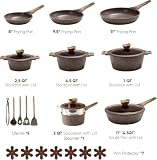
Carote delivers a deceptive amount of cookware for a price well below heritage German brands. The 26-piece set includes three frying pans, multiple stockpots and saucepans, a sauté pan, and a full suite of utensils and storage spacers: essentially everything a new kitchen needs without à la carte shopping. The textured exterior design photographs well, the wooden-look handles appeal to contemporary aesthetics, and the nonstick coating genuinely releases food without sticky cleanup.
Owners repeatedly highlight the value proposition: eggs slide off without oil, nothing sticks despite minimal fat, and the pans heat evenly. Multiple buyers note they've replaced older Calphalon or Costco sets with Carote and prefer the performance. The construction appears solid enough for daily use, and the silicone-sealed glass lids trap moisture and flavors effectively. If you're exploring cookware options beyond German brands, top korean cookware brands also offer similar nonstick versatility and value, though German heritage sets tend to prioritize durability over piece count.
The trade-offs are real, though. Some owners report discoloration on the exterior after cooking on high heat, and a few mention a black powdery soot on the bottom with certain stovetop types (particularly gas). There's also the nonstick durability question: this is budget-tier construction, not heritage engineering. It will outperform cheap nonstick by a margin, but it won't match the longevity of Fissler or even the Zwilling. Hand-washing extends life; dishwasher use degrades it faster. If you're a daily cook planning to own one set for 10+ years, look to the German brands. If you're refreshing a kitchen and want maximum utility per dollar, Carote punches above its price tier.
Pros
- 26 pieces covers every common cooking task immediately
- Nonstick coating releases food effectively with minimal oil
- Even heating across all pan sizes eliminates hot spots
- Textured design and wooden handles appeal to modern aesthetics
Cons
- Exterior discoloration and soot staining reported by some users
- Nonstick durability lower than heritage brands; degrades with dishwasher
Key features (5)
- 26-piece set with three frying pans, stockpots, saucepans, sauté pan, and utensils
- Reinforced nonstick coating with special texture design exterior
- Silicone-sealed tempered glass lids lock moisture and allow monitoring
- Induction compatible with even heat distribution across all pieces
- Includes ladle, spatulas, tongs, pasta server, steamer, and pan protectors
How to Choose German Cookware for Your Kitchen
Stainless Steel vs. Nonstick: The Core Decision
Stainless steel excels at browning, searing, and building fond for sauces: the hallmark of restaurant cooking. It's heavier, requires fat, and demands scrubbing, but it lasts decades. Nonstick prioritizes ease: minimal oil, effortless cleanup, beginner-friendly. It's lighter and faster to learn, but the coating eventually degrades and won't brown like steel. German cookware excels in both camps. If you make sauces, sear meat, or cook daily, stainless steel rewards technique. If you prioritize speed and hate scrubbing, nonstick delivers. Hybrid options like Henckels attempt both, but they require proper technique to shine.
Ply Layers, Heat Distribution, and What They Mean
A pan's construction directly impacts how it cooks. Single-ply heats unevenly; 3-ply (aluminum sandwiched between stainless) heats faster than 5-ply but won't retain heat as long; 5-ply (the Fissler approach) distributes heat most evenly and retains it longest, useful for precision cooking but overkill for casual weeknight dinners. German cookware construction basics shape durability too: thicker pans resist warping and last longer. Heavier construction costs more upfront but pays off over years of use. For daily cooking in an apartment, 3-ply handles every task. For serious sauce work or a kitchen you'll use for decades, 5-ply's precision matters.
Size and Piece Count: What You Actually Need
A 26-piece set looks comprehensive but includes many duplicates (three stockpots, five lids). A 7-piece German set from Fissler covers most cooking: two sizes of frying pan, saucepans, sauté pan, and a large pot. Start by listing the dishes you make weekly: if you sear meat, stew, and make rice, you need a large skillet, a Dutch oven, and at least two saucepans. Modular purchases beat bloated sets; buy your core four pieces and add specialized gear (cast iron, pressure cooker, wok) later. German brands excel at core pieces that earn their counter space through longevity, not novelty.
Budget Tiers and Long-Term Value
Entry-level nonstick (Sensarte, Carote) costs one-third to one-half of heritage German stainless steel (Fissler, Zwilling). If you cook five nights a week for ten years, that's 2,600 meals. A $500 German stainless set costs $0.19 per meal; a $200 nonstick set that lasts four years costs $0.10 per meal but requires replacement. German cookware construction means spending more upfront to spend less over time, and to gain precision in heat control. Budget for your real cooking frequency and willingness to maintain gear. Renters and casual cooks win with Carote or Sensarte. Daily cooks planning to stay put should lean toward Fissler or Zwilling. Henckels sits between, offering hybrid versatility without full heritage-brand durability.
Handle Construction and Oven Safety Limits
German cookware differs in handle attachments: rivets (common, visible on the inside) collect food but are bombproof; welding (seamless, German tradition) costs more but lasts longer. Stainless steel handles tolerate 400–500°F; nonstick handles max out at 300–350°F because the coating and bakelite degrade. If you finish dishes in the oven, confirm the set's temperature rating. Wooden-look handles (Carote, Sensarte) are bakelite and cool-to-touch but can't exceed 340°F. Stainless handles (Fissler, Zwilling) handle higher heat. For braising and finishing, stainless steel pays dividends.
Our picks at a glance
1
Best for Daily Cooking & Easy CleanupSensarte
2
Best German-Made Heritage OptionFissler
3
Best Hybrid: Browning Power Plus NonstickHenckels
4
Best for German Brand PrestigeZwilling
5
Best Value for Complete CoverageCarote
Frequently asked
Why are German cookware brands more expensive than budget alternatives?
German brands invest in thicker construction (5-ply vs. 3-ply), precision engineering, and longevity. Fissler and Zwilling use sealed rims, welded handles, and materials that resist corrosion for 20+ years. Budget sets prioritize immediate performance and eye appeal. German gear prioritizes durability and precision heat control. You're paying for decades of reliable performance, not marketing.
Is ceramic nonstick coating safer than traditional PTFE nonstick?
Modern ceramic coatings (used in Sensarte, Henckels, Zwilling) are PFOA and PTFE-free, meaning they don't release toxic fumes at normal cooking temperatures. Traditional PTFE (Teflon) is safe if the cookware isn't overheated, but ceramic offers peace of mind. Both wear out eventually; ceramic typically lasts 3–4 years with hand-washing, less with dishwasher use. Neither will last as long as stainless steel.
Can I use metal utensils on German nonstick cookware?
Most nonstick coatings (ceramic or PTFE) degrade quickly with metal utensils. Silicone, wood, or plastic utensils extend life significantly. Henckels' hybrid design is more forgiving because the raised stainless steel interior offers some scratch resistance, but even it benefits from soft utensils. German brands include wood or silicone tools for this reason: use them.
Are German-made cookware sets worth buying versus sets made elsewhere?
German manufacturing carries genuine standards for material quality and precision welding. Fissler and Zwilling deliver measurable durability advantages over mass-market alternatives. That said, Sensarte and Carote are produced outside Germany but perform well for their price tier. The difference is longevity and heat precision, not immediate cooking results. Buy German heritage if you cook daily and want a 20-year set; buy budget alternatives if you refresh every 4–5 years or cook casually.
What's the difference between tri-ply and best stackable cookware?
Tri-ply (three layers: stainless-aluminum-stainless) heats quickly and handles everyday cooking. Ply refers to the vertical cross-section; stackability refers to how sets are designed and stored. Some cookware nests efficiently (lids and handles allow compact storage); some takes up shelf space. When evaluating cookware, check if lids fit multiple pans and whether handles nest without wobbling. Best stackable cookware often uses universal lids and compact handles, saving cabinet real estate in small kitchens.