Best Fryer Filter Machine for Restaurants and Food Trucks
Compare top fryer filter machines for commercial kitchens. Find portable oil filtration carts with high-capacity tanks, fast flow rates, and stainless steel builds.
Ideal for: Mid-sized restaurants, food trucks, and small chains filtering 10-20 gallons daily.
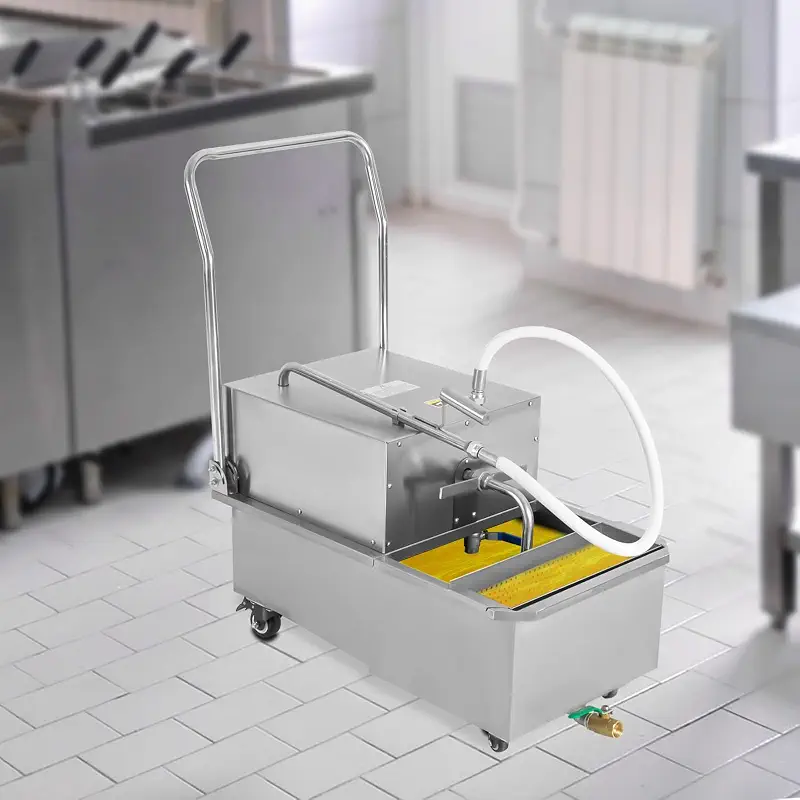
The Hasanen unit delivers core functionality that buyers consistently praise once setup issues resolve. The 550W motor and 20-micron filtration system remove debris effectively, and the 14.53-gallon tank handles typical daily filtering for mid-sized operations. The four-wheel mobile design with two locking casters means you can position it under fryers or roll it between stations without much fuss.
One thing to keep in mind: early customer feedback flagged durability concerns, with at least one buyer reporting equipment failure after a few months. That said, responsive customer service appears to address warranty claims. The 201 stainless steel construction is solid but less corrosion-resistant than premium 304 grade alternatives. If you need reliable oil turnover without excessive downtime and don't mind slightly more hands-on support if issues arise, this machine covers the basics well.
Compared to the Fohere option, the Hasanen prioritizes cost efficiency over premium materials; the trade-off is acceptable for smaller restaurants on a tighter budget.
Pros
14.53-gallon tank handles bulk filtering in one pass
Ideal for: Food trucks, small fast-casual restaurants, and kitchen operators filtering under 15 gallons daily.
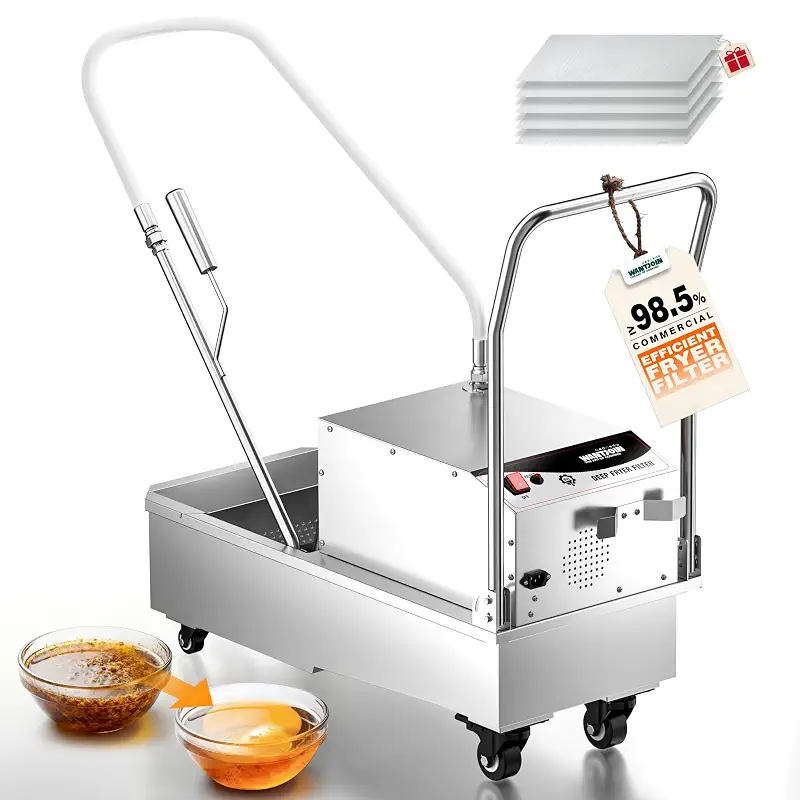
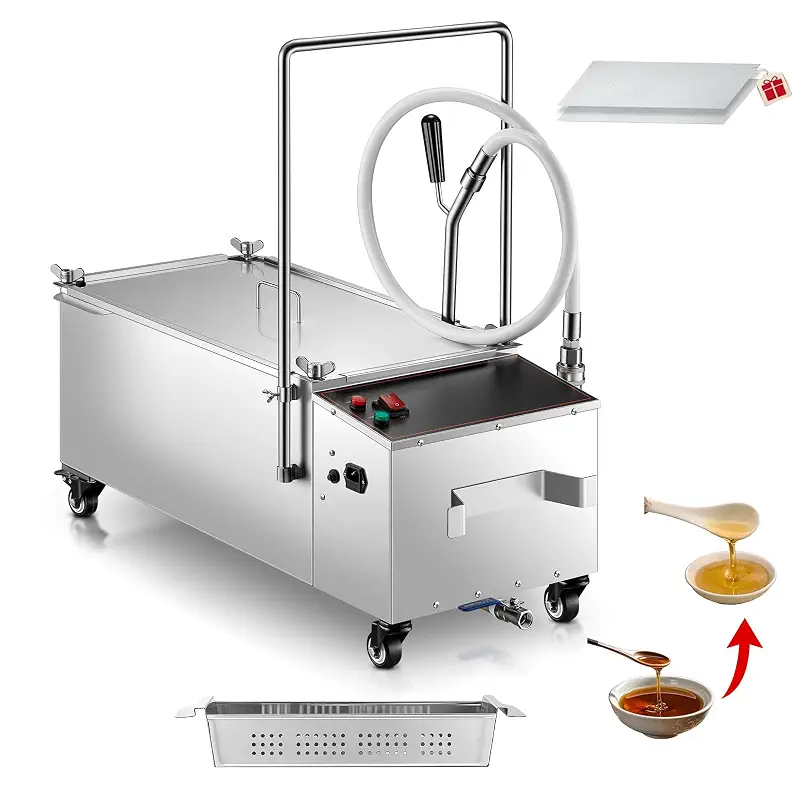
WantJoin's machine sits at a sweet spot for food trailers and smaller kitchens where space is at a premium. The 10.5-gallon tank is genuinely useful for operators who filter oil more frequently in smaller batches, and the 5.28 gallon-per-minute flow rate handles that schedule well. The triple-layer filtration (mesh, paper, and screen) reaches 98.5% purity at 20 microns, which matches or exceeds larger competitors. Heat-resistant silicone handles and built-in overheat protection show real attention to operator safety.
Buyers have been vocal about reliability: the few five-star reviews highlight how the triple-layer system keeps oil cleaner longer, and one customer reported swift warranty support when a hose failed. The real draw is customer service responsiveness. WantJoin explicitly offers one-on-one technical support and backs the machine for a full year. If you value responsive support and have a food truck or small-format restaurant, this model earns that trust.
Where the WantJoin differs from the KeruRome alternative is tank size: the KeruRome holds 14.5 gallons, making it better for high-volume daily filtering, but WantJoin wins on compact footprint and warranty depth.
One-year warranty with responsive one-on-one technical support
Cons
Smaller tank requires more frequent filtering in high-volume settings
Limited review history (only 4 customer ratings) compared to larger samples
Key features
Triple-layer filtration system achieves 98.5% impurity removal
550W motor at 1700 RPM produces 5.28 gal/min flow
10.5-gallon tank ideal for compact food-service spaces
Heat-resistant silicone handles with overload and overheat protection
#3 Pick
Best Premium Build
Fohere
Mobile Commercial Fryer Oil Filter Machine for Fast Food & Restaurants, 55L/14.5GAL Stainless Steel Deep Fryer Filter Cart with Wheels, Filters Oil at 8.45GAL/Min – Save Oil Cost & Labor Time
5.0(1)
Commercial-grade 304 stainless steel and multi-stage filtration for high-traffic kitchens prioritizing durability and uptime.
Ideal for: Full-service restaurants, hotel kitchens, and high-traffic operations filtering 20+ gallons daily.
The Fohere machine represents the premium end of this lineup, and the difference shows in material choices. The 304 stainless steel body resists rust and corrosion far better than 201-grade alternatives, a meaningful advantage in kitchens running hot oil day after day. The 4-stage filtration system (mesh, paper, and screen combined) delivers 98.5% removal at 20 microns. The 8.45 gallon-per-minute flow rate and 55-liter capacity mean you can handle large batches without stopping mid-service.
Safety features are comprehensive: a 6-foot high-temp silicone hose with anti-scald grip, splash-proof lid, automatic overload cut-off, and thermal fuse protection all reduce risk when moving hot oil. The compact 32.3" x 14.8" footprint fits under prep tables or along kitchen walls, which matters when space is scarce. The only caveat is that with only one review in the dataset, real-world durability over years of use remains unproven, though the engineering and materials suggest long service life.
Compared to the WantJoin, the Fohere trades compact size for larger tank capacity and heavier-duty materials; if durability and high-volume filtering are your priorities, the upgrade is justified.
Pros
Commercial-grade 304 stainless steel resists rust and daily wear
4-stage filtration system with 98.5% impurity removal efficiency
6-foot high-temp hose and splash-proof lid enhance operator safety
Cons
300W motor is lower-wattage than competitor models (though flow rate remains solid)
Minimal customer review history limits real-world durability feedback
Key features
304 stainless steel construction outperforms 201 grade in corrosion resistance
4-stage filtration reaches 98.5% purity at 20-micron density
8.45 gal/min flow with 55-liter tank for bulk oil processing
6-foot high-temp silicone hose with anti-scald grip and safety overloads
#4 Pick
Best for Noise-Sensitive Kitchens
Eypkaol
Fryer Filter Machine, 55L/14.5 Gal Mobile Frying Filter Cart Separator, 550W 110V Stainless Steel Commercial Oil Filler Truck, Cooking Oil Filtration System for Supermarket Restaurant Burger Stores
5.0(2)
Quiet 60-80 decibel operation with robust filtration and user-friendly mobility for hotels and upscale restaurants.
Ideal for: Upscale restaurants, hotels, and open-concept kitchens where noise and aesthetics matter.
The Eypkaol machine stands out for its noise profile: running at just 60-80 decibels, it's measurably quieter than competitors, a real advantage in open kitchens or noise-sensitive venues like boutique hotels or fine-dining prep areas. The pure copper motor runs smoothly without the grinding sound typical of budget units. The 550W motor and 14.53-gallon tank deliver 8.45 gallons per minute, matching the output of machines at higher price points.
Filtration precision is strong: the multi-layer system (filter grids, mesh, and paper) achieves 98% purity at 20 microns. Both customer reviews gave it a full five stars, citing how quickly oil stays clean and how easily the stainless body wipes down. The foldable handle and four rubber wheels (two with brakes) make positioning effortless. One element that sets it apart: pure copper drain valves resist corrosion better than standard brass, a detail that extends life in high-heat environments.
Where the Eypkaol trades against the KeruRome is noise and material refinement; the Eypkaol's quieter operation and copper valves cost more, but if your kitchen needs to minimize sound and you filter similar volumes, the peace matters.
Pros
Quiet 60-80 decibel operation reduces staff fatigue and noise stress
Pure copper drain valves resist corrosion in high-heat environments
98% filtration at 20 microns with 8.45 gal/min flow rate
Cons
201 stainless steel body less corrosion-resistant than premium 304 grade
Very small sample size (only 2 reviews) limits long-term durability data
Key features
Ultra-quiet 60-80 decibel motor with pure copper construction
14.53-gallon tank with 98% filtration at 20-micron density
Foldable U-shaped handle and four rubber wheels with brakes
Pure copper drain valves and cooling holes prevent overheating
#5 Pick
Best Long-Term Value
KeruRome
55 L /14.5 Gal Fryer Filter Machine 550W Stainless Steel Commercial Mobile Oil Filtration System, Oil Pump Flow 32L/min, Deep Fryer Oil Filter Cart for Restaurant Supermarket
4.0(6)
Solid mid-range performance with affordable replacement filters and proven cost savings across high-volume operations.
Ideal for: Budget-conscious fast-food chains, fried-chicken shops, and established restaurants running high-volume filtering schedules.
The KeruRome machine earns its place through straightforward reliability and low operating costs. The 550W motor processes 8.45 gallons per minute through a 14.53-gallon tank with 20-micron filtration, delivering 98% purity and the ability to reuse oil through 20+ cycles. This durability translates directly: buyers report oil lasting twice as long, which cuts replacement costs by up to 40% depending on your baseline spending.
The real advantage here is affordability of consumables. A satisfied customer specifically noted that replacement filters will be cheap, which matters if you're filtering multiple times per week. The 201 stainless steel body includes fuses, overload protection, and four wheels (two locking), covering essential safety and mobility. The machine's track record is solid: six reviews with one five-star rating highlighting how easy it is to keep clean and how well it performs day-to-day.
Compared to the Eypkaol, the KeruRome forgoes quiet operation and copper valves in favor of lower upfront cost and lower filter replacement spending. If your priority is minimizing total cost of ownership over three to five years, this model does the math well.
Oil reusability up to 20 cycles cuts replacement costs by up to 40%
Lockable wheels and unloading valve prevent spills during transfers
Cons
201 stainless steel corrodes faster than premium 304 alternatives
Lower motor wattage than some competitors, though flow rate remains competitive
Key features
550W motor delivers 8.45 gal/min at 20-micron filtration density
14.53-gallon tank with unloading valve prevents oil spills
Affordable filter replacements and 20+ oil reuse cycles reduce costs
Four wheels with brakes and 4.92ft power cord for kitchen flexibility
How to Choose a Fryer Filter Machine
Four trade-offs that actually matter when matching a fryer filter machine to your kitchen.
Tank Capacity and Flow Rate
Tank size and processing speed determine how often you need to filter and how much downtime your operation tolerates. A 10.5-gallon machine works well for food trucks filtering oil two or three times weekly; a 14.5-gallon unit suits restaurants with three or more fryers running continuously. Flow rate (measured in gallons per minute) tells you how long each cycle takes: 8.45 gal/min empties a full 14.5-gallon tank in under two minutes, allowing you to filter during a lunch rush without losing service time. Smaller operations can go slower; high-volume kitchens benefit from faster filtration.
Filtration Density and Multi-Stage Systems
Most commercial-grade machines filter down to 20 microns, removing 98% or more of food debris, carbon, and oil breakdown products. Some offer triple or four-stage systems (mesh, paper, screen, or grids in combination), which work slightly better than single-stage alternatives but require more frequent filter paper replacement. The trade-off is modest; both approaches keep oil clean enough to reuse 15-25 times before full replacement becomes cost-effective. Choose a multi-stage system if filtering frequency is high and oil quality directly affects your product taste. The best air fryer dehydrator, by comparison, uses similar multi-layer filtration principles to keep air-circulation systems clean.
Stainless Steel Grade and Durability
Two grades appear in this category: 201 and 304 stainless steel. The 201 grade is adequate for most kitchens but corrodes faster in high-heat, high-humidity environments; 304 resists rust significantly better and lasts longer with minimal maintenance. If your kitchen runs hot oil continuously or you plan to keep the machine for five-plus years, upgrade to 304. For smaller operations or those replacing equipment every few years, 201 is sufficient. Mobile versus stationary fryer filters also influences durability; portability adds wheel-and-joint stress, so materials matter more in mobile carts.
Mobility, Safety, and Operator Comfort
All models in this roundup include wheels and handles for movement, but locking mechanisms and hose length vary. Look for at least two locking casters (not just swivel wheels) to keep the cart stationary during filtering, preventing accidental rolling. Heat-resistant silicone handles on the outlet nose or hose guard against burns when handling hot oil. Overheat protection and thermal fuses are non-negotiable; they shut the motor down if the system gets too hot during continuous peak-hour use. Fryer filter machine maintenance becomes simpler with smooth interiors and accessible filter compartments, so choose machines that disassemble easily.
Total Cost of Ownership
Purchase price is only the first number. Calculate annual costs including replacement filter papers, hose eventual wear, and energy consumption over typical daily use. Machines allowing 20+ oil reuse cycles cut per-unit filtering costs significantly; a filter lasting two months of daily use is cheaper than one lasting one month. Warranty length and support responsiveness also factor in: a one-year warranty with responsive customer service reduces stress if early problems surface, while limited support can turn a repair into weeks of downtime. Like choosing the best ceramic air fryer for your kitchen style, selecting the right fryer filter machine balances initial investment against long-term savings.
Frequently asked
Quick answers to the questions readers ask most.
How often should I replace the filter paper?
Filter paper life depends on how much oil and debris pass through. In high-volume kitchens filtering daily, paper typically lasts 2-4 weeks before clogging. Lower-volume operations may stretch it to 6-8 weeks. Most machines include 5-10 sheets with purchase; replacement packs are affordable (typically $15-$30) and easy to install by hand. A clogged filter will reduce flow rate noticeably, signaling it's time to swap.
Can I filter oil that has been sitting for days?
Yes, but older oil degrades over time and collects moisture and dust in storage. A fryer filter machine will clean it, but oxidized or rancid oil should be discarded rather than refiltered. As a rule, filter oil within 24 hours of use for best results. If oil smells off, looks dark, or has been stored uncovered, replacement is more economical and safer than attempting recovery through filtration.
What is the difference between 201 and 304 stainless steel for kitchen equipment?
304 stainless steel contains more nickel and chromium, making it far more corrosion-resistant than 201 grade, especially in high-heat, oily, humid kitchen environments. 304 machines typically last 5-10 years with minimal rust; 201 models may show surface corrosion within 2-3 years of heavy use. 304 costs more upfront but saves money long-term in durability and cleaning labor. For food-safety compliance and professional settings, 304 is the preferred choice.
Do I need an electrical outlet near my fryers to use one of these machines?
Yes, all models require a standard 110V outlet. Most come with a 4-6 foot power cord, so positioning near an outlet matters. Plan your kitchen layout so the machine can reach an outlet without extension cords (which create tripping hazards). If outlet access is limited, consult your electrician about adding a dedicated outlet near your fry station before purchasing.
How much oil will a machine filter in one cycle?
Tank capacity determines cycle volume: 10.5-gallon machines filter that much per cycle, while 14.5-gallon units process 14.5 gallons in one pass. If you have 40 gallons of used oil, a 14.5-gallon machine requires three cycles. Most operators filter overnight or during slow periods to avoid service interruption. Higher flow rates (8+ gallons per minute) mean each cycle completes in under three minutes, reducing total downtime.