Best Food Processor India: Top Picks for Home Cooks
Find the best food processor in India for your kitchen. Compare compact choppers, versatile models, and budget options with expert recommendations and buyer insights.
Ideal for: Single cooks, small households, kitchens with limited counter space, daily vegetable prep.
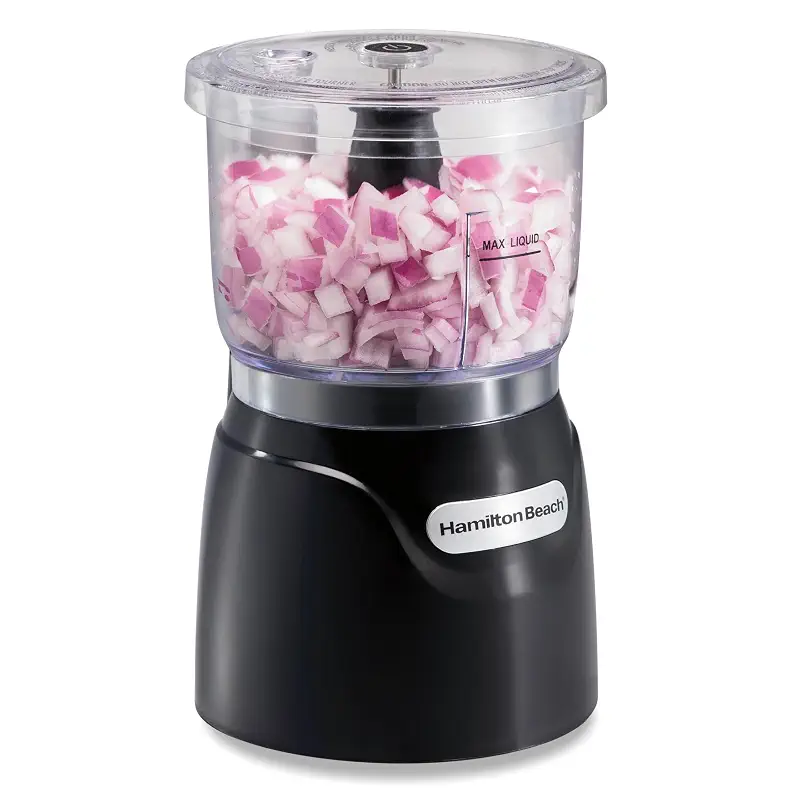
The Hamilton Beach 3-cup chopper does what it's designed to do exceptionally well: handle everyday vegetable prep without dragging out a full-size processor. The stack-and-press mechanism is refreshingly simple compared to twist-lock designs, and at this capacity, you'll rarely need multiple batches for a single meal unless you're prepping for a large gathering. Owners consistently report even chopping results and praise how quickly it handles onions, garlic, and herbs: exactly the tasks that eat up prep time in a busy kitchen.
Where this shines is storage and convenience. If your kitchen runs tight on counter and cabinet space, the compact footprint means it can sit out permanently without feeling intrusive, or tuck away easily. The 350-watt motor is honest about what it can tackle; it powers through soft vegetables and tender ingredients with ease. For harder items like nuts or meat, you'll see some reviews flagging that the motor struggles or can pulverize too aggressively if you're not careful with pulse timing, which makes control more important than with larger machines.
Compared to the Ninja PrecisionPro's 1000-watt motor and 9-cup bowl, the Hamilton Beach trades raw capacity and power for simplicity and footprint. If you cook for one or two people regularly or mostly chop vegetables, this works brilliantly. If you need to grind meat frequently or make large batches, you'll outgrow it quickly.
Pros
Compact design fits easily on countertop or in storage
Stack-and-press operation is intuitive and hassle-free
Powerful enough for quick, even vegetable chopping
Affordable entry point to electric chopping
Cons
Motor can pulverize soft foods too quickly without pulse control
Limited capacity means batch processing for larger meals
Key features
350-watt motor with stack-and-press lid mechanism
3-cup capacity, ideal for small households
Stainless steel blades chop, mince, and puree vegetables
Ideal for: Families, serious home cooks, meal-prep enthusiasts, those who value versatility over compactness.
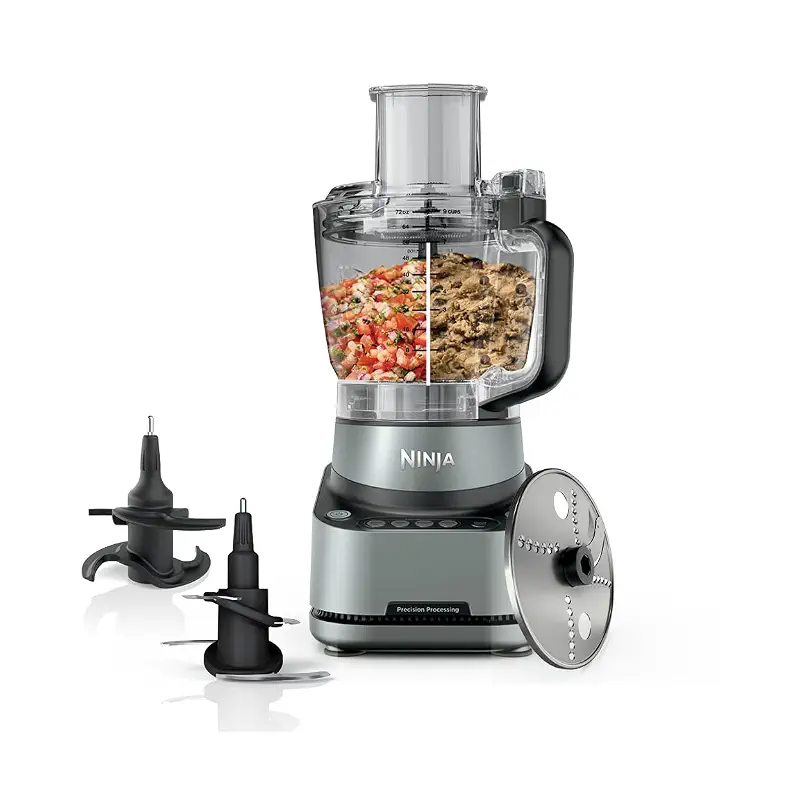
The Ninja PrecisionPro occupies the middle ground between compact choppers and commercial machines, and it does that job exceptionally well. The 1000-peak-watt motor handles the full range of processing tasks, chopping vegetables, shredding cheese, slicing cucumbers, grinding meat, mixing dough: without hesitation. The nine-cup bowl is genuinely useful for families; you can shred three zucchini in minutes or make salsa for a crowd without worrying about multiple batches. The reversible slicing/shredding disc and dough blade expand what you can do far beyond basic chopping.
What sets this apart is the Auto-iQ technology. Four preset programs take guesswork out of timing, which matters because food processors are easy to over-process if you're distracted. The suction-cup feet keep it anchored during heavy work, and the lid has a proper gasket so you can actually fill the bowl near capacity without leaks. Owners report the motor is surprisingly quiet compared to smaller models, and cleanup is straightforward since parts are dishwasher-safe.
The trade-off is footprint; it's noticeably larger than compact choppers and will dominate counter space if you leave it out. Some reviewers mention the flashing lights at the end of a cycle can be annoying if you're sensitive to visual stimulation. Where the Hamilton Beach demands pulse control to avoid over-processing, the Ninja's power means you need to watch timing more carefully with delicate ingredients, but that's a fair exchange for the extra capacity and blade options.
Pros
1000-watt motor handles tough ingredients effortlessly
Nine-cup bowl reduces batch processing for large meals
Auto-iQ presets remove guesswork from processing times
Suction feet keep machine stable during heavy use
Cons
Larger footprint requires dedicated counter or storage space
Flashing lights at cycle end may be distracting
Key features
1000-peak-watt motor with four Auto-iQ preset programs
9-cup processing bowl with large feed chute
Reversible slicing/shredding disc and separate dough blade
Stainless steel chopping blades for precise, even results
Ideal for: Home cooks who grind meat regularly, those concerned with food hygiene across ingredients, users prioritizing motor durability.
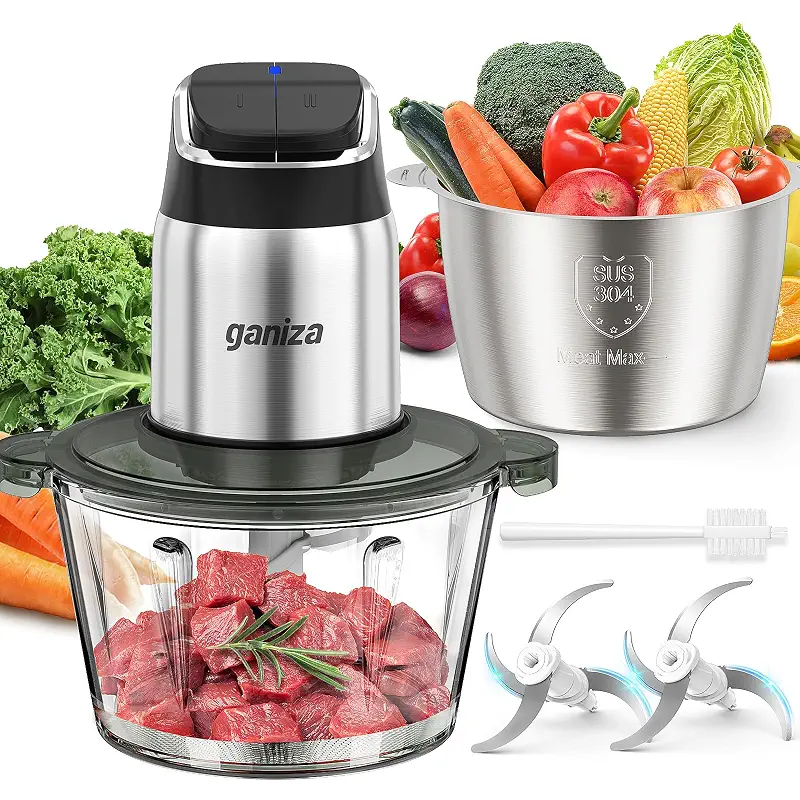
The Ganiza with dual bowls approaches the problem differently: instead of one bowl you compromise on, you get two (glass and stainless steel) so you can dedicate one to meat and the other to vegetables, eliminating cross-contamination concerns and the need to wash between batches. The full-copper motor is a real advantage; it's rated for 3x longer service life than regular motors, which matters if you're planning to use this machine frequently for grinding meat and other heavy work.
The standout feature for many owners is how well it handles ground meat. A large chunk of pork becomes fine ground meat in minutes without straining the motor, which puts it on par with a dedicated meat grinder but with better versatility. The two-speed system lets you control texture: single pulse for coarser chops, continuous for finer work. The patented overheat protection light is genuinely useful feedback; if the machine shuts down, you know why and can let it cool rather than guessing.
The drawback is that it's not as elegant or quiet as the Ninja, and the lack of preset programs means you're fully responsible for timing every batch. The removable blade safety feature is good, but it also means setup requires attention: handlers mention confusion at first with blade alignment, though that becomes routine quickly. If you compare this to the Cuisinart Mini, you get far more capacity and meat-grinding capability here, at the cost of needing more counter space and learning curve.
Pros
Dual bowls prevent cross-contamination between meat and vegetables
Full-copper motor rated for 3x longer lifespan than standard motors
Two-speed system for fine control over texture
Comes with two sets of blades for added versatility
Cons
No preset programs means user must control timing
Requires careful blade alignment during setup
Key features
450-watt motor with full-copper construction for durability
8-cup glass and 8-cup stainless steel bowls included
2-speed operation with sharp S-shaped stainless steel blades
Patented automatic stopping design with overheat protection light
#4 Pick
Best Value with Dual-Bowl Design
Ganiza
Ganiza Food Processors with 2 Bowls, 450W Meat Grinder Vegetable Chopper | 2-Speed Electric Food Chopper with 8 Cup Glass & 8 Cup Stainless Steel Bowls -Includes 2 Sets of Blades for Fruits/Meat/Nuts
4.4(7,493)
Capable dual-bowl processor with two-speed motor and generous accessories at an accessible price point.
Ideal for: Budget-conscious cooks who grind meat occasionally, small to medium households, those valuing hygiene separation.
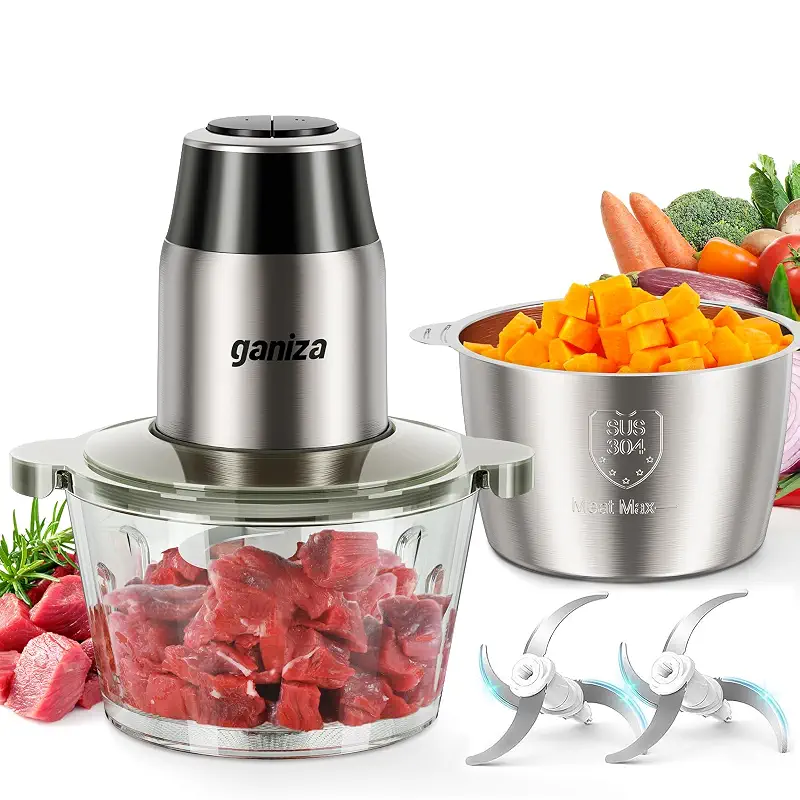
This Ganiza model shares the core dual-bowl philosophy with the previous entry but streamlines the feature set to arrive at a more entry-level price. You still get both glass and stainless steel bowls, two sets of blades, and the 450-watt full-copper motor, so the fundamentals are solid. The two-speed system gives you texture control, and reviewers confirm it handles meat grinding well: one owner made ground pork for multiple dishes in minutes without strain.
The difference from the B0DB1MZ4CJ model comes down to refinements: this version doesn't explicitly feature the overheat protection light, and the button design is less refined, though it still works reliably. For buyers who want the dual-bowl approach and meat-grinding capability but don't need premium touches, this trades those details for a lower price. Think of it as the practical workhorse version of the dual-bowl concept. The real-world performance on vegetables and salsa-making is just as strong: one owner made large batches of salsa with fresh tomatoes, onions, and cilantro in minutes.
Where the food processor capacity guide would help is determining whether 8 cups per bowl is enough for your household size and meal-prep frequency. Compared to the Ninja's 9-cup single bowl, you're getting less total capacity but the hygiene benefit of separation. If you often find yourself grinding meat and chopping vegetables in one session, this design makes cleanup easier than swapping blades in a single bowl.
Pros
Dual-bowl design at a lower price point than premium models
Full-copper motor with proven durability reputation
Two-speed control for texture variation
Strong performance on meat and fresh vegetable prep
Cons
Button design less refined than upgraded Ganiza model
No overheat protection light indicator
Key features
450-watt full-copper motor with 2-speed operation
8-cup glass bowl and 8-cup stainless steel bowl
Two sets of S-shaped stainless steel blades included
Automatic stopping design when motor is disengaged
#5 Pick
Best Mini for Herbs, Cheese, and Small Batches
Cuisinart
Cuisinart Mini Food Processor, Reversible Blade, 24-Ounce Capacity
4.6(24,718)
Lightweight 24-ounce processor with reversible blade for chopping and grinding: ideal for quick prep tasks and small kitchens.
Ideal for: Solo cooks, small households, apartment kitchens, those who value speed and easy cleanup over capacity.
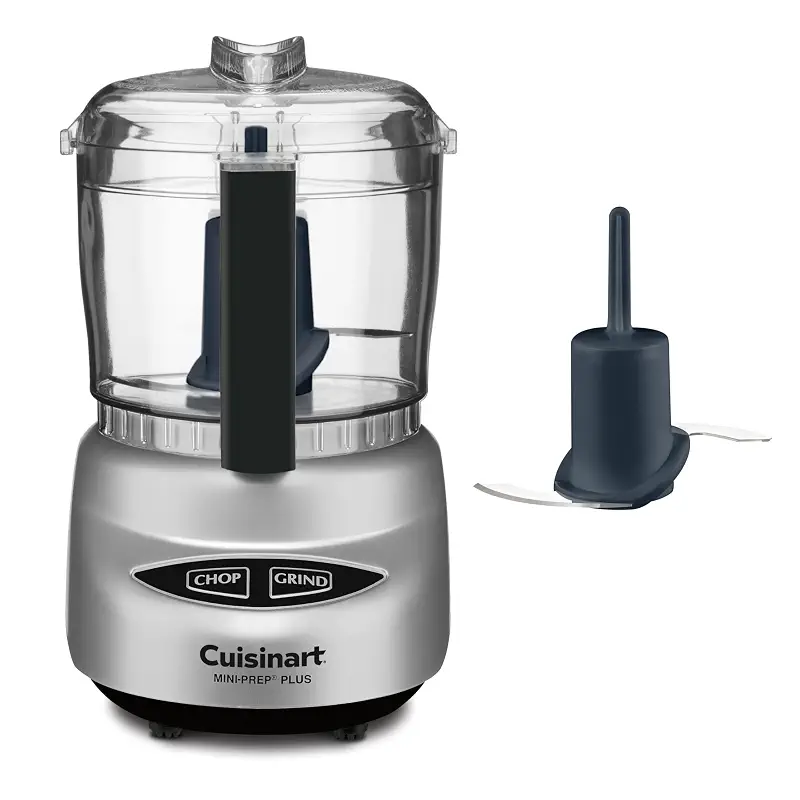
The Cuisinart Mini-Prep Plus is the smallest option here, and it owns that niche completely. The 250-watt motor and 24-ounce capacity are honest about scope; this is not a machine for grinding meat or processing three cups of onions. What it does brilliantly is handle the small, frequent tasks that come up during cooking: chopping a handful of herbs, grinding hard cheese, making a small batch of pesto or salsa, pulverizing a cup of oat flour. Owners who already own a full-size processor often say this mini becomes their workhorse precisely because it's faster to get out, run, and clean than dragging out the big machine.
The reversible blade design is clever: chop edge on one side, grind edge on the other, accessed by choosing the chop or grind button. You can hold the button down continuously or pulse; unlike older versions, there's no separate "run continuously" function, but reviewers confirm that holding for ten seconds is no burden. The lightweight plastic body and minimal parts mean cleanup takes seconds, and the small footprint makes it suitable for apartments and galley kitchens. Several owners mention they've owned the same unit for years with no decline in performance, which speaks to durability.
The cons are real: it's quite loud, the motor is less powerful than anything above, and you cannot emulsify unless you're using a thin liquid. The small oil-hole design doesn't accommodate thicker emulsions well. If you own a best food processor or use a blender for larger tasks, this complements rather than replaces. For solo cooks or couples doing light prep, it can be your only machine, but families doing regular large-batch cooking will want something with more capacity.
Pros
Extremely compact and lightweight for any kitchen
Reversible blade handles both chopping and grinding efficiently
Quick cleanup with dishwasher-safe bowl and lid
Proven long-term durability across many user years
Cons
High noise level during operation
Cannot accommodate thick emulsions through feed holes
Key features
250-watt motor with auto-reversing SmartPower blade
24-ounce work bowl with handle and two oil-feed holes
Reversible stainless steel blade for chop and grind functions
Dishwasher-safe bowl and lid for easy cleanup
How to Choose the Right Food Processor
Four trade-offs that actually matter when matching a food processor india to your kitchen.
Capacity: Balancing Size and Household Needs
Capacity matters more than specs. A 3-cup mini works perfectly for one person or a couple cooking daily, but feels cramped for a family of four making salsa for dinner. The nine-cup Ninja handles large batches easily, but if you live alone, you'll rarely fill it and it wastes counter space. Think about your most common use: are you chopping one onion for a single dish, or prepping vegetables for the week? The food processor capacity guide will walk you through sizing decisions based on household size and cooking frequency. Most kitchens benefit from either a compact everyday chopper plus a larger machine, or a mid-size workhorse like the Ninja that covers most needs in one device.
Motor Power and Processing Tasks
Motor wattage tells you what the machine can handle. A 250-watt motor (Cuisinart Mini) is fine for herbs, cheese, and soft vegetables but will struggle with nuts or frozen fruit. A 350-watt motor (Hamilton Beach) handles everyday vegetable prep confidently. A 450-watt motor (Ganiza) takes on meat grinding and tougher ingredients. A 1000-watt motor (Ninja) is overkill for single onions but essential if you frequently grind meat, mix dough, or process in large volumes. Match power to your tasks: light prep doesn't need a beast, but regular meat grinding does.
Blade Types and Food Processor Blade Types Guide
Different blades do different jobs. A chopping blade is standard for dicing vegetables and mincing herbs. A slicing/shredding disc handles cheese, carrots, and cucumbers with clean cuts. A dough blade is essential if you make pizza dough or pie crust regularly. A reversible blade (Cuisinart) does chopping on one side and grinding on the other but requires you to manually reverse. Understanding food processor blade types guide will help you determine whether a single machine covers your needs or if you need multiple blade options. The Ninja's separate dough blade is convenient if you bake; the Ganiza's dual sets of blades eliminate setup time between tasks.
Ease of Use and Storage
A processor you're annoyed to assemble or clean will sit in the cabinet. Stack-and-press designs (Hamilton Beach) are faster than twist-locks. Machines with dishwasher-safe parts save hand-washing time. Compact models store anywhere; larger machines need permanent counter space or a deep cabinet. Suction feet keep the machine from creeping across the counter during heavy work. Auto-preset programs (Ninja) reduce the chance of over-processing but mean less control; manual speed settings give you more precision. If you cook fresh every day, convenience matters; if you chop once a week, you can tolerate more setup.
Frequently asked
Quick answers to the questions readers ask most.
Can I use a mini food processor to grind meat?
Small choppers like the Hamilton Beach 3-cup and Cuisinart Mini struggle with meat because the motor lacks sustained power and the bowl fills quickly with mush. The Ganiza models with 450-watt motors handle ground meat well because the motor is stronger and blade design is optimized for it. If you regularly grind meat, choose a processor rated for that task, not a mini vegetable chopper.
What's the difference between pulsing and continuous processing?
Pulsing means pressing the button briefly in short bursts to control texture: you get a coarse chop instead of puree. Continuous means holding the button down until done. Most modern processors require you to hold the button; older models had a separate continuous setting. Pulsing gives you more control but requires attention; continuous is hands-off but risks over-processing.
Do I need a food processor if I have a blender?
They do different jobs. Blenders work best with liquids and soft ingredients, creating smooth purees. Food processors excel at dry or chunky tasks like chopping vegetables, grinding nuts, shredding cheese, or mixing dough. A blender cannot chop an onion evenly; a processor cannot make a smooth soup without adding liquid. Many cooks use both, or a processor alone for most tasks.
How loud are food processors?
Smaller motors tend to sound higher-pitched (louder-seeming) because the work happens in a smaller space. A 250-watt Cuisinart Mini is noticeably loud; a 1000-watt Ninja is louder in absolute decibels but often sounds less piercing because the larger bowl absorbs sound. Expect 80–90 decibels; wear earplugs if you're sensitive, or run it during daytime hours.
Are dual-bowl processors worth the extra cost and storage space?
If you frequently grind meat and chop vegetables in one cooking session, dual bowls eliminate cross-contamination and the need to wash between tasks, saving time. If you mostly chop vegetables or use the processor rarely, one bowl is simpler. The Ganiza models cost slightly more for dual bowls; whether that's worth it depends on your cooking habits and food-safety concerns.