Best Food Processor for Nuts: Top Picks for Grinding & Chopping
Find the best food processor for nuts. Compare mini and full-size models for grinding, chopping, and making nut butters. Expert reviews and buying guide.
Ideal for: Solo cooks and small households grinding nuts occasionally for recipes.
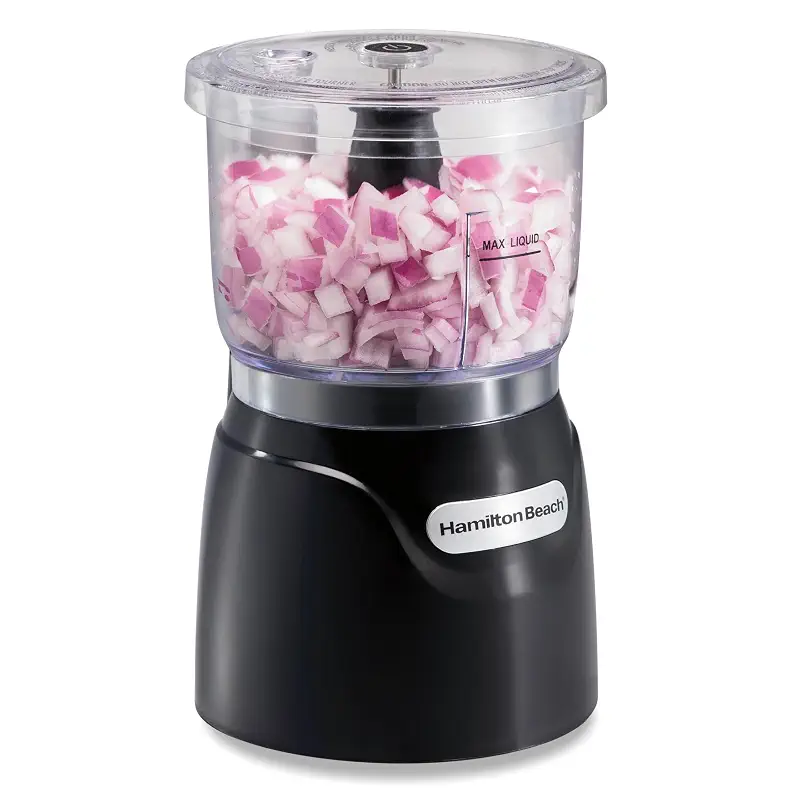
The Hamilton Beach shines for cooks who grind nuts in modest amounts: a handful of hazelnuts for dukkah, or walnuts for a single cake batch. The 350-watt motor punches harder than its wattage suggests, and buyers consistently report clean, even results on nuts within seconds. The stack-and-press lid design means no twist-locking frustration; you just place and push. For nuts specifically, that matters because overprocessing creates oil separation, and the quick pulse cycles this design encourages help you stop before reaching paste stage.
Where it falls short is capacity and versatility beyond nut work. At 3 cups, you'll process nuts in smaller batches than a full-size machine allows. The motor also struggles with prolonged grinding of very hard nuts like Brazil nuts or extended emulsifying tasks, so if you're grinding pounds of almonds for flour or making nut butter daily, you'll hit limits fast. It's also louder than some competitors, though buyers note the noise duration is brief enough not to intrude.
Compared to the Ninja Professional Plus, this trades raw power and capacity for footprint: ideal if your kitchen is tight or you cook for one or two people. If weekend entertaining or meal-prepping for a family is your norm, the Ninja's 9-cup bowl and 1000W motor justify the extra space.
Pros
Quick, even chopping in 2-3 second pulses
Compact size fits small kitchens and cabinets
Simple press-to-chop design, no assembly fuss
Cons
Small 3-cup capacity limits batch size for frequent nut use
Motor heats up quickly with hard ingredients or extended grinding
Key features
350-watt motor with press-and-release pulse control
3-cup stainless-steel bowl for everyday chopping
Stack-and-press assembly with no twist-locking mechanism
Oil dispenser holes in lid for emulsifying dressings
#2 Pick
Best for Precision Grinding
Cuisinart
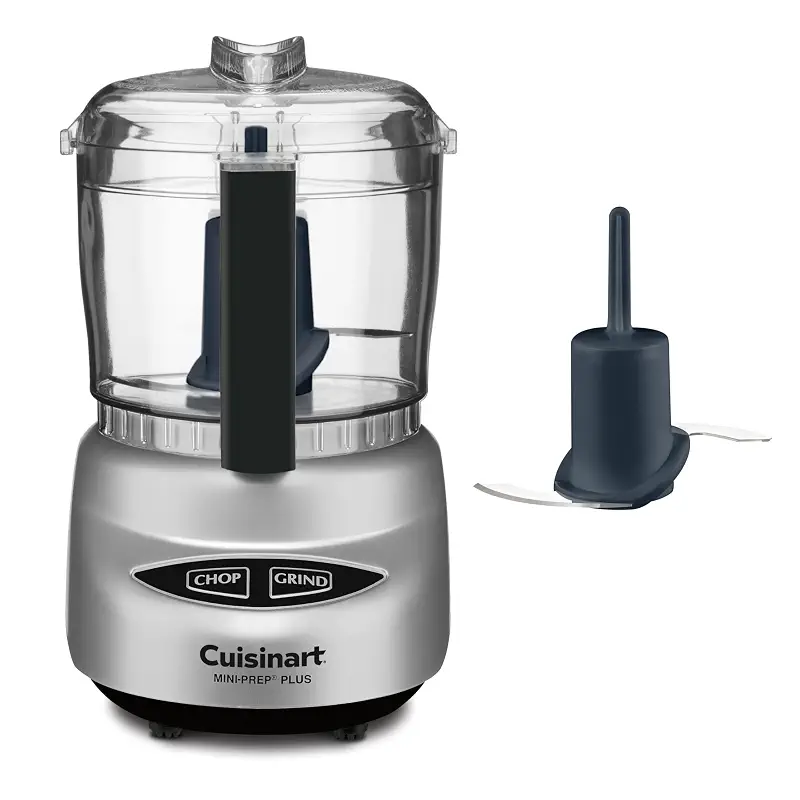
Cuisinart Mini Food Processor, Reversible Blade, 24-Ounce Capacity
4.6(24,718)
Reversible blade system lets you chop soft nuts cleanly or grind hard varieties by flipping the blade direction.
Ideal for: Home cooks making pesto, nut flours, or finely minced nuts with control over texture.
The Cuisinart Mini-Prep Plus stands apart because of its patented reversible blade: sharp edge on one side for chopping, blunt edge on the other for grinding. This two-mode design is particularly clever for nut work: the blunt side grinds almonds, walnuts, and hazelnuts without shattering them into splinters, while the sharp side handles softer nuts like cashews or pine nuts with precision. Buyers who've owned both this and full-size processors often return to this one for small nut jobs because the results are more controlled. The 250-watt motor is steady and predictable, not prone to the power surges that can suddenly pulverize nuts into paste.
The 24-ounce bowl is slightly larger than the Hamilton Beach, giving you a bit more room without the counter footprint of a full-size machine. However, noise is a consistent theme in reviews: some users wear earplugs, which speaks to the motor's pitch. The blade-locking system also requires precision on first use; if you don't seat the bowl correctly, the processor won't start, which can frustrate new users. And while the reversible blade is clever, the grind direction can't handle all nut butters reliably; reviews note some sticking when grinding nuts into paste for butter, so you may still need a blender for frappes or other smooth, emulsified preparations where a dedicated high-speed blender excels.
If you compare this to the Ganiza with its dual bowls and two-speed system, the Cuisinart wins on simplicity and noise levels, but the Ganiza offers more muscle for grinding meat and tougher nut applications. Choose this if precision and quiet operation matter more than pure power.
Pros
Reversible blade delivers sharp chopping or blunt grinding without blade swaps
Compact 24-ounce bowl ideal for single-batch nut grinding
Reliable 250W motor with steady, predictable operation
Cons
Motor produces loud, high-pitched sound during grinding cycles
Grind blade struggles with nut butters; may stick or overheat
Key features
Patented reversible stainless-steel blade with sharp and blunt edges
24-ounce dishwasher-safe bowl with secure bowl-locking system
250-watt motor with two-button chop and grind control
Includes spatula for easy ingredient scraping
#3 Pick
Best Dual-Bowl System for Mixed Tasks
Ganiza
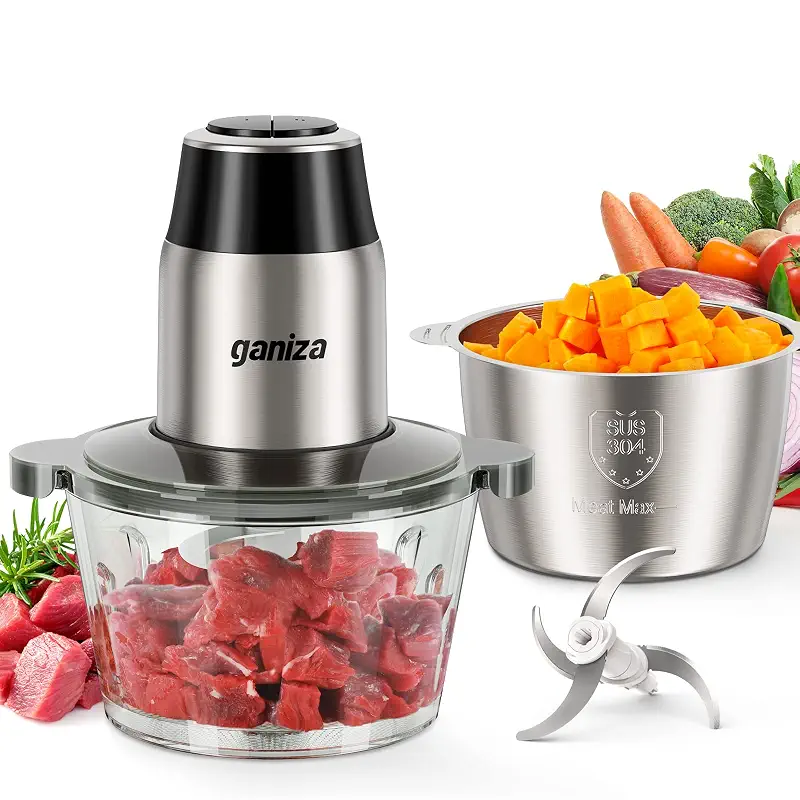
Ganiza Food Processors with 2 Bowls, 450W Meat Grinder Vegetable Chopper | 2-Speed Electric Food Chopper with 8 Cup Glass & 8 Cup Stainless Steel Bowls -Includes 2 Sets of Blades for Fruits/Meat/Nuts
4.4(7,494)
Two bowls and two blade sets let you grind nuts in one bowl while prepping vegetables in the other without cross-contamination.
Ideal for: Home cooks who grind nuts frequently and also process meat or vegetables separately.
The Ganiza's dual-bowl design solves a real problem for cooks who process nuts alongside meat or vegetables: hygiene separation without stopping to clean. You grind almonds in the glass bowl, swap it for the stainless-steel bowl, and chop onions: no risk of residual nut oils flavoring your savory prep. The 450-watt motor and two-speed system (low for delicate nuts, high for tough grinding) give you control that smaller choppers don't offer. For nut work specifically, the low-speed setting and quad-blade system grind almonds, walnuts, and pecans into consistent flour in 10-15 seconds, and buyers consistently praise the meat-grinding capability, which means this motor can handle any nut hardness you throw at it.
The real strength here is value: you get two complete bowl-and-blade sets for the cost of a mid-range full-size processor. The glass bowl is heavy and durable, and the stainless-steel bowl resists odor retention: a genuine advantage if you're grinding multiple nut varieties in one session. Setup and assembly are straightforward, though the lid is thin plastic and a few reviewers note it feels fragile.
Where it trails the mini Cuisinart is raw finesse: the high-speed setting can pulverize nuts into paste before you intend, so you need to pulse carefully. It's also louder than the Ninja and has an overheating protection system that shuts it down if you overwork it: a safety feature but also a limitation if you're grinding large quantities of nuts in succession. Compared to the smaller Hamilton Beach, this gives you way more capacity and dual-speed control, making it better for bulk nut-flour production or meal prep for a family.
Pros
Two bowls and blade sets eliminate cross-contamination between foods
450W motor with dual speeds handles hard nuts and meat with power
Glass and stainless-steel bowls resist odor and staining
Cons
Thin plastic lid feels fragile under daily use
Overheating protection system may interrupt extended grinding sessions
Key features
450-watt motor with dual-speed chop and grind settings
8-cup glass and 8-cup stainless-steel bowls with separate blade sets
Spring-loaded blades that stop immediately when motor is removed
Built-in overheating protection for safe, long-term use
Ideal for: Active home cooks grinding nuts in bulk for meal prep, baking, or entertaining.
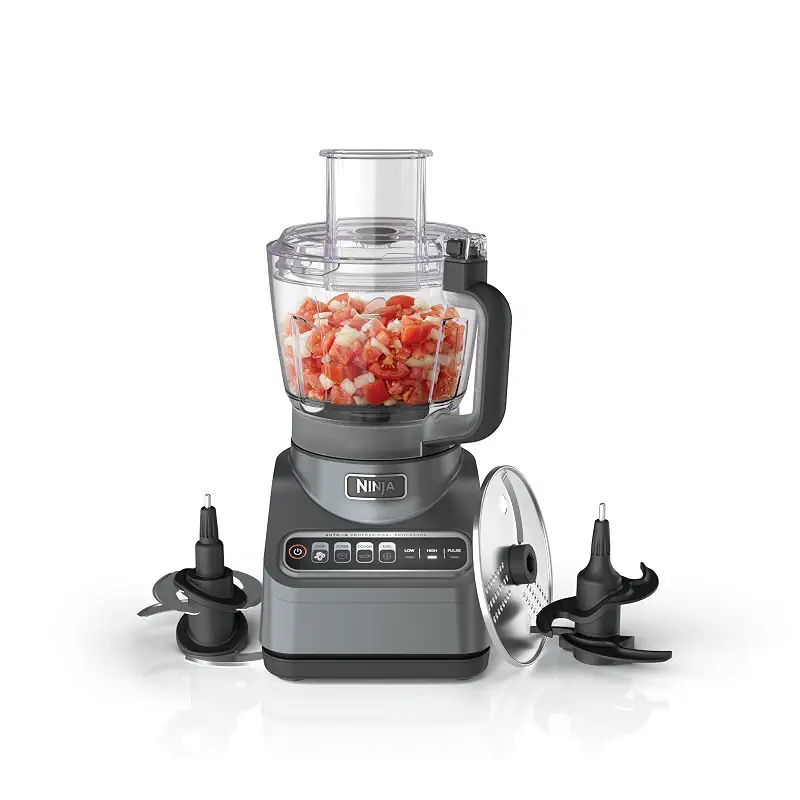
The Ninja Professional Plus is engineered for cooks who need raw horsepower and space. The 1000-peak-watt motor grinds almonds into flour or turns peanuts into butter faster than you'd expect from any under-$400 option, and the suction-cup feet keep it locked in place while grinding, preventing the creeping that plagues lighter models. The 9-cup bowl means you can grind 3-4 cups of nuts in a single session without stopping. The Auto-iQ presets are gimmicky for nut work (you'll mostly pulse manually) but the three interchangeable blades (chopping, slicing, and dough) give you flexibility beyond nuts if you're using this as your primary food processor.
Robustness is the Ninja's calling card. The stainless-steel blade assembly and all-plastic construction mean no metal crevices where nut oils get trapped and go rancid. Everything is dishwasher-safe. Buyers who jumped from a Cuisinart to this consistently report surprise at the difference in speed and consistency, particularly for nuts. One warning: the flashing lights and high motor noise can be jarring for some users, and the motor is genuinely loud when grinding hard nuts.
The trade-off is counter space and the learning curve on the pusher: it's subtle and easy to forget you've already seated it. Compared to the Ganiza's dual-bowl system, the Ninja sacrifices hygiene separation but gains overall power and a larger single bowl; if you're grinding nuts as your primary task rather than splitting prep between nuts and meat, this is the stronger pick. For serious nut butter makers or those baking almond flour weekly for a household, this is where simplicity meets capability.
Pros
1000-peak-watt motor grinds nuts faster than competing models
9-cup capacity reduces multiple batches to single grinding session
Suction-cup feet keep processor stable during high-speed grinding
Cons
Loud motor noise and flashing lights may be jarring to sensitive users
Subtle pusher design easy to forget or confuse with bowl interior
Key features
1000-peak-watt motor with four Auto-iQ intelligent preset programs
9-cup work bowl with gasket seal to prevent overflow
Three precision stainless-steel blades for chopping, slicing, and dough
Non-slip suction-cup base provides stability during extended grinding
#5 Pick
Best Budget-Friendly Compact Option
Black+Decker
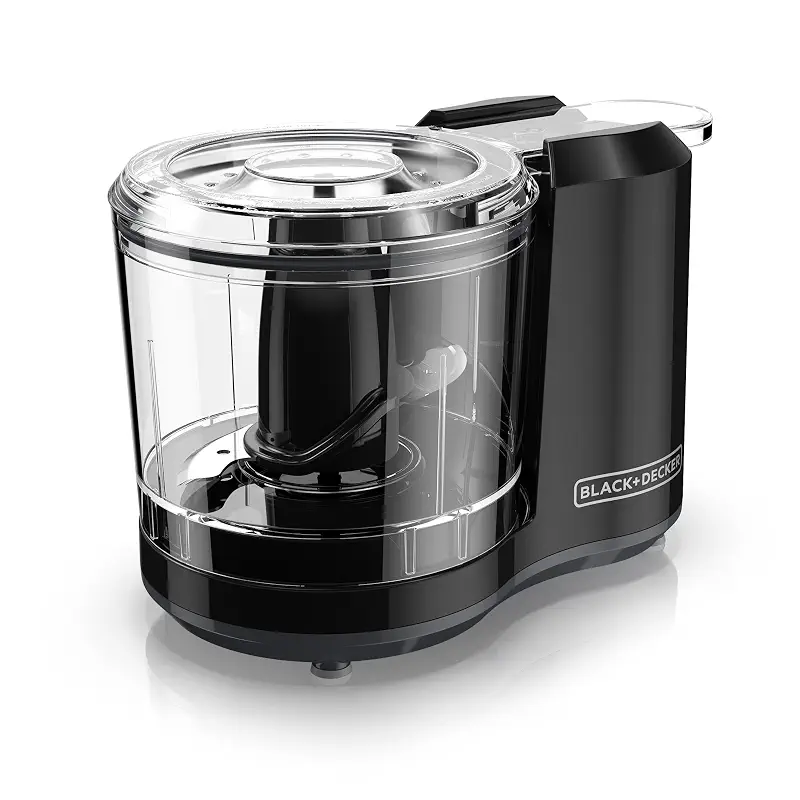
BLACK+DECKER 1.5-Cup Electric Food Chopper, One Touch Pulse, 150W Motor, Stay-Sharp Blade, Dishwasher Safe
4.6(23,141)
Affordable 1.5-cup chopper with sharp blades handles small nut quantities efficiently without breaking the bank.
Ideal for: Occasional nut choppers and studio-apartment dwellers with minimal storage.
The Black+Decker is the entry point for cooks hesitant to invest in a full-size processor or mini chopper. At 1.5 cups, it's the smallest in this lineup, but the 150-watt motor and bi-level stainless-steel blade are sharper and more efficient than the wattage suggests. Reviewers praise it for chopping small quantities of nuts (a handful of almonds for dukkah, walnuts for a single loaf) in 2-3 pulses. The one-touch pulse control is intuitive; just press and release. Oil holes in the lid let you drizzle while processing, which matters if you're grinding nuts into a vinaigrette or paste. Cleanup is genuinely fast because there are only a few parts, and everything removable goes in the dishwasher.
Limitations are real: the motor can't handle sustained grinding of hard nuts, and 1.5 cups fills fast if you're processing more than a small handful. If you grind nuts weekly or in quantities larger than a snack, you'll outgrow this quickly. It's also louder relative to its size, and some buyers report the plastic bowl scratching after repeated use, though most find durability acceptable for the price point. The grinding nuts into butter guide is not a strength here; the motor lacks the control and power that smaller choppers like the Cuisinart or Hamilton Beach offer.
Reach for this if you chop nuts sporadically, live in a tiny space, or want to test whether a dedicated nut processor makes sense before investing more. If you compare this to the Hamilton Beach 3-cup, you're trading $20-30 for less capacity and motor power, so unless space is genuinely critical, the Hamilton Beach delivers better long-term value for nut work.
Pros
Most affordable entry-level chopper in the lineup
Sharp bi-level blades deliver consistent results in small batches
Simple design with minimal parts for quick assembly and cleanup
Cons
1.5-cup capacity runs out fast for frequent nut processing
Motor struggles with sustained grinding of hard nuts or nut butter
Key features
150-watt motor with one-touch pulse control for on-demand chopping
1.5-cup capacity bowl with bi-level stainless-steel blades
Oil-dispenser holes in lid for emulsifying while chopping
Dishwasher-safe removable parts for easy cleanup
How to Choose a Food Processor for Nuts
Four trade-offs that actually matter when matching a food processor for nuts to your kitchen.
Motor Power and Blade Design
Nut grinding demands a motor that doesn't stall or overheat under resistance, and blades engineered for sustained cutting without shattering. Look for at least 250 watts if you're grinding nuts occasionally; 450+ watts if you're making nut flour or butter weekly. The blade geometry matters too: double-blade systems or reversible edges handle nuts more gracefully than single-blade choppers. Stainless steel is essential; it resists nut oil residue and stays sharp longer than coated blades. A grinding nuts into butter guide can show you technique, but equipment design (particularly blade angle and motor feedback) determines whether results are flour-fine or paste-thick.
Capacity and Batch Size
Mini choppers (1.5 to 3 cups) suit occasional nut use or solo cooks; they store easily and heat up quickly for small tasks. Mid-size models (8 cups) balance bulk processing with compact footprint, ideal for meal-prep cooks. Full-size processors (9+ cups) cut prep time if you're baking almond flour for a family or making nut butter weekly. Consider how often you grind nuts and in what quantities. If it's 2-3 tablespoons at a time, a 1.5-cup chopper works; if it's 2 cups per week, you need at least 8 cups to avoid multiple batches and motor overheating.
Noise Level and Motor Behavior
Grinding nuts generates noise (it's unavoidable) but some motors pitch higher or rumble louder than others. Smaller motors (150-250W) tend to whine; larger ones (450-1000W) produce deeper tones. Pulse control matters here: choppers with push-button or foot-pedal pulses let you grind in 1-2 second bursts, reducing total noise exposure. Read reviews mentioning noise specifically; if a unit prompts buyers to wear earplugs, you're looking at sustained high-frequency sound. Two-speed motors (like the Ganiza) also help: low speed is quieter and gives you finer control with delicate nuts.
Ease of Assembly and Cleanup
Stack-and-press designs (like the Hamilton Beach) assemble faster than twist-lock bowls, saving time before and after grinding. Reversible or interchangeable blades add flexibility but also complexity; you'll need to store extra parts and swap them intentionally. Dishwasher-safe removable parts are a practical win: nut oils cling to hand-washed surfaces, so the dishwasher's heat helps. Glass and stainless-steel bowls resist nut-oil staining and odor better than plastic, so if you're processing multiple nut varieties, material choice affects long-term usability. The mini versus full-size processor comparison shows that smaller units are easier to dry and store, while larger ones save time during cleaning by handling bigger batches in one session.
Durability and Warranty
Nut grinding is mechanically demanding: sustained blade resistance and high motor loads shorten appliance life. Look for units with copper or reinforced motors (longer lifespan), sealed blade assemblies (no nut particles lodging in seams), and warranties of at least 18 months. Some brands offer extended warranties for a few dollars more; if you're grinding nuts daily, that's worth it. Plastic bowls and lids are lighter but scratch and yellow over time; stainless-steel bodies withstand years of use without cosmetic wear. Read owner reviews mentioning year-two durability, not just first-month impressions, to gauge real-world longevity.
Frequently asked
Quick answers to the questions readers ask most.
Can I make nut butter in a food processor, or do I need a dedicated nut-butter maker?
You can make nut butter in a full-size or mid-size food processor (8+ cups, 450W+ motor), but it takes patience. The processor grinds nuts to flour stage quickly, but turning flour into smooth butter requires 5-15 minutes of continuous grinding, which heats the motor. Mini choppers struggle here because they overheat before the nuts release enough oil. A dedicated nut-butter machine uses slower, more sustained grinding. If you're making nut butter weekly, a full-size processor or the Ganiza's two-speed system is safer for motor longevity than a small chopper.
Why do some nuts turn into paste in my food processor while others stay chunky?
Oil content and density determine texture. Walnuts and almonds release oil faster, so they turn into paste quickly; hazelnuts and pistachios stay chunky longer. Motor power also plays a role: a 1000W motor will pulverize nuts faster than a 250W one, so you have less control over texture. To stay chunky, use pulse control in 2-3 second bursts, stop between pulses to check texture, and process fewer nuts at once (a less-packed bowl grinds more evenly). If consistency matters for your recipe, a processor with reversible or dual-speed blades gives you more precision than a single high-speed motor.
What's the difference between chopping nuts and grinding them?
Chopping produces coarse or fine pieces (used in baking, garnishes, or salads); grinding produces flour or powder (for flours, coatings, or butter). Choppers with sharp blades excel at chopping; grinders with blunt or specially angled blades handle grinding better because they crush rather than chop. Some processors have reversible blades (sharp on one side, blunt on the other) to handle both tasks. If you primarily chop nuts for texture, a standard chopper works fine. If you also grind for flour or butter, dual-mode or reversible-blade models like the Cuisinart offer more flexibility.
How often should I clean my food processor to prevent nut-oil buildup?
Clean immediately after use, especially if you've ground oily nuts like walnuts or macadamias. Nut oils oxidize and turn rancid within hours, and residue hardens on blade edges and bowl seams, trapping odor and affecting taste in subsequent batches. Rinse the bowl and blades with hot water as soon as you finish, then wash in soapy water or put dishwasher-safe parts in the top rack. Wipe the motor base with a damp cloth. If oil has already hardened, soak the bowl and blades in warm soapy water for 15 minutes before scrubbing. Stainless-steel and glass bowls resist oil staining far better than plastic, so they're worth the investment for frequent nut grinding.
Which food processor is best if I grind nuts and chop meat in the same session?
The Ganiza with its dual-bowl and dual-blade system is purpose-built for this: grind nuts in the glass bowl, swap to the stainless-steel bowl, and chop meat without cross-contamination. If you want a single-bowl option, the Ninja Professional Plus is powerful enough to handle both tasks sequentially, though you'll need to rinse between them to prevent nut oils flavoring your meat. Mini choppers like the Hamilton Beach or Cuisinart aren't ideal for meat grinding, so they don't solve the hygiene problem. If you alternate between nut and meat prep regularly, invest in a dual-bowl system or separate dedicate processors.