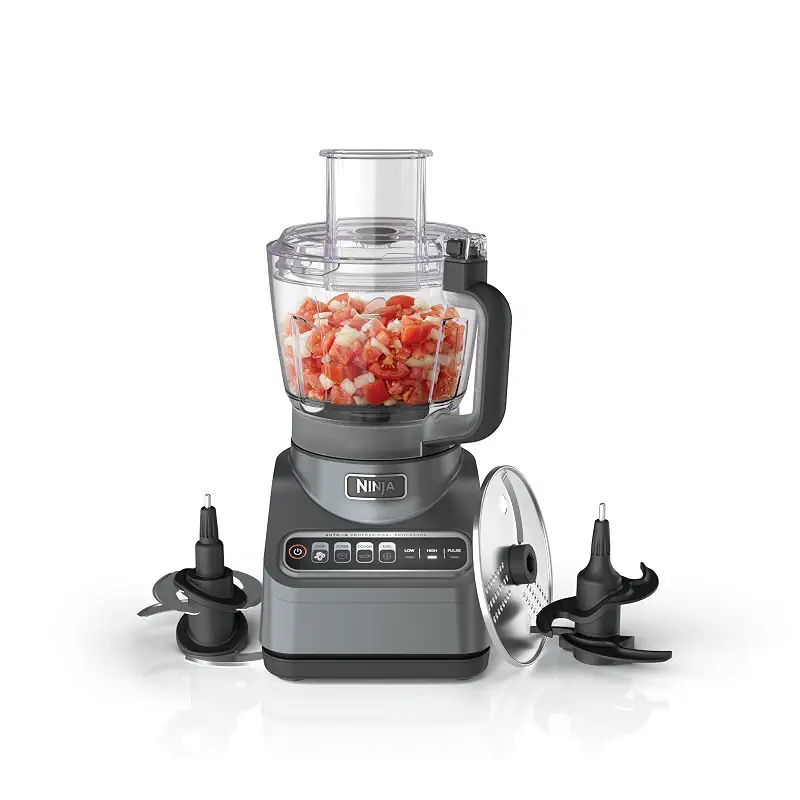
Ideal for: Home cooks who make peanut butter weekly and want a single-purpose processor built to last.
The Ninja Professional Plus stands out as a food processor for nut butter work because of its 1000-peak-watt motor (enough power to grind nuts into cream without straining) and the precision stainless steel blades that don't dull quickly under that kind of friction. The 9-cup bowl gives you room to work with larger quantities, which matters when you're processing nuts; smaller batches can splash and escape the blade path. The Auto-iQ presets include a dedicated pureeing function that's well-suited to the repetitive action of nut butter, though you'll likely use manual pulse control for the most fine-grained command over texture.
What sets this apart from the Ninja Mega Kitchen System is focused design: this processor doesn't try to be a blender too, so every engineering choice prioritizes the food processor work itself. The bowl lacks a center shaft hole on the bottom (a design choice that prevents leaking when you soak it), and the feed chute is low and stable, so vibration won't compromise the blade assembly during the steady grinding that peanut butter demands. Owners report that the suction-cup feet hold the machine absolutely still, even under load.
One legitimate caveat: the all-plastic construction means the bowl and lid can scratch with aggressive cleaning. Hand-wash the bowl if you're fussy about appearance, though it's technically dishwasher-safe. Also, this machine is loud, not unusually so for a 1000-watt processor, but if early-morning smoothie prep matters to your household, know what you're signing up for.
Pros
1000-watt motor handles dense nuts without strain or heat buildup
Precision stainless steel blades stay sharp through repeated nut-grinding sessions
An all-in-one blender and food processor combo with 1500 watts; excellent for peanut butter and much more, though you pay for features you may not need.
Ideal for: Multi-tasking kitchens where you blend frequently and also make peanut butter; apartment dwellers who want one appliance instead of two.
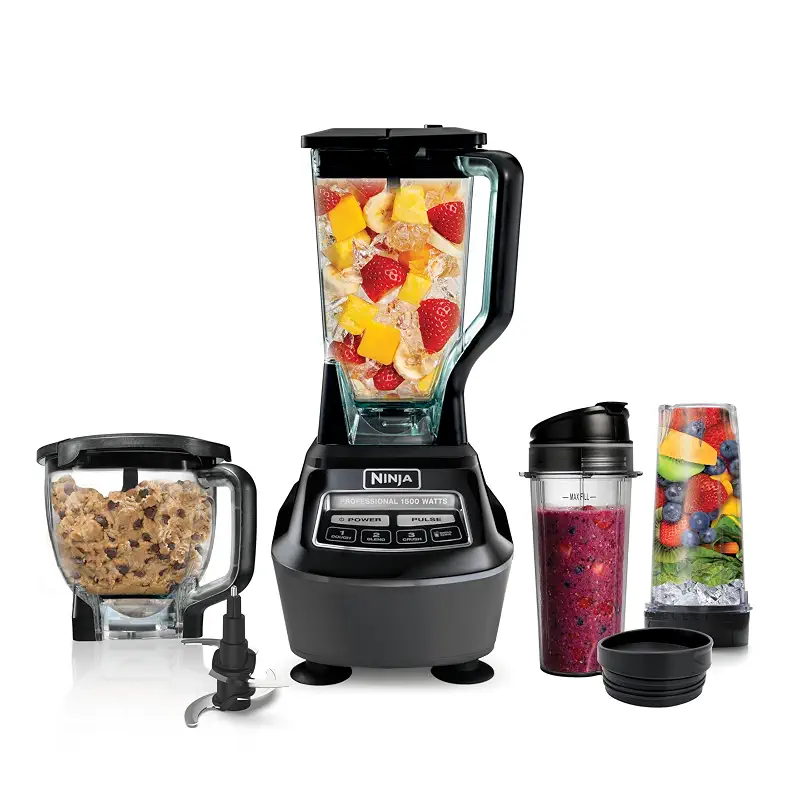
The Ninja Mega Kitchen System is a powerhouse (1500 watts, two-horsepower motor) and it will absolutely pulverize peanuts into butter without hesitation. The 8-cup food processor bowl is roomy enough for most batches, and the included dough blade and chopping blade both work, though the dough blade is less relevant for nut butters. The real strength here is versatility: you get a 72-ounce blender pitcher for smoothies, two single-serve blender cups, and the processor bowl, all on one motor base. If you regularly make smoothies, soups, and nut butters, this system eliminates the need for separate appliances.
Compared to the Ninja Professional Plus, this machine trades focused design for multi-purpose capability. The extra power (1500W versus 1000W) is nice, but for peanut butter specifically, you'll never notice the difference: 1000 watts is already overkill for nuts. What you're really paying for is the blender functionality and the smaller cups. The food processor bowl is also slightly smaller (8 cups versus 9), so you might batch once more if you're making large quantities.
The honest drawback: this system is very loud. Owners consistently mention that it operates at a volume level that alarms household members. If you're using the blender daily (which many owners do), noise becomes a daily reality. Also, because this is a combo unit, if the motor fails, you lose both functions at once. The Ninja Professional Plus separates risk.
Pros
1500-watt motor handles frozen fruit and dense nuts with equal ease
Includes large pitcher and single-serve cups; blender and processor in one base
8-cup processor bowl with dough blade and chopping blade included
Cons
Very loud operation; neighbors may notice even at mid-morning hours
Motor failure means losing both blender and processor functions simultaneously
Key features
1500-watt motor base with XL 72-ounce pitcher and Total Crushing Blades
8-cup food processor bowl with chopping and dough blades
Two 16-ounce single-serve Nutri Ninja cups with spout lids
Four functions: Blend, Mix, Crush, Single-Serve with separate speed controls
Stacked blade assembly for pitcher; all removable parts dishwasher safe
#3 Pick
Best Compact Choice
KitchenAid
KitchenAid 7-Cup Food Processor - KFP0718 | All-in-One Storage for blades and discs, Three Speed Control, 2-in-1 Feed Tube, Easy -Clean Work Bowl
4.5(7,842)
Quieter, lighter, and more affordable than larger rivals; 7 cups is tight for peanut butter but workable if you prefer smaller batches.
Ideal for: Small households or occasional bakers who prioritize quiet operation and compact kitchen footprint over processing power.
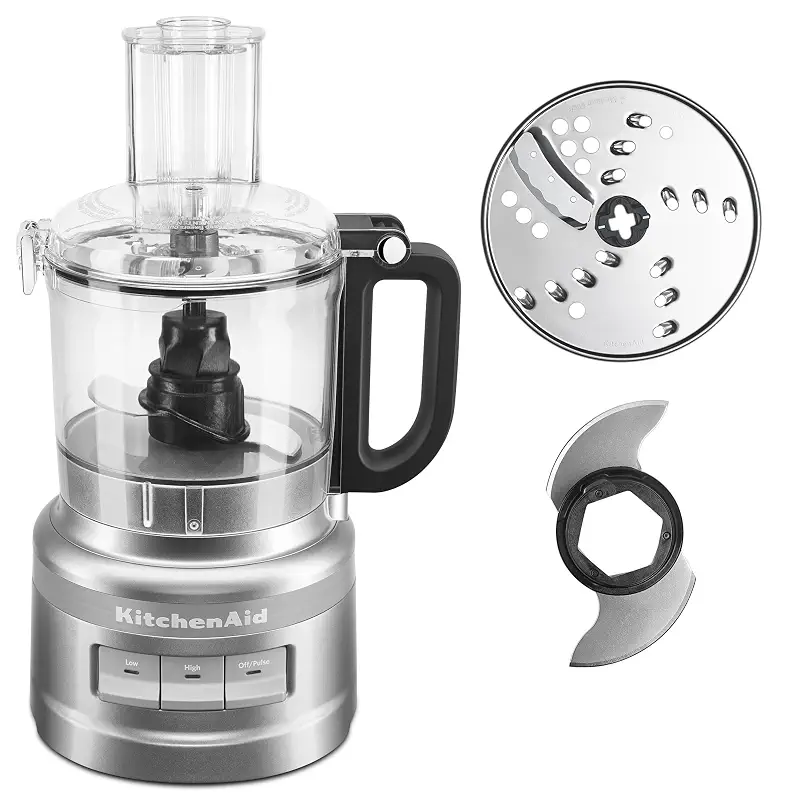
The KitchenAid 7-Cup is the smallest processor in this lineup, and that's both its strength and its limitation. For peanut butter, seven cups of capacity means you're likely processing one to two cups of shelled peanuts at a time, which is fine if you make it weekly in small batches. The motor is less powerful than the Ninjas: no published wattage, but owners consistently describe it as quieter and lighter-duty, so it won't deliver the effortless grinding that 1000+ watts provides. Instead, you'll need patience: run it longer on pulse, let the machine work without pushing it, and accept that it'll take a few minutes rather than two.
Where this processor wins is counter presence and kitchen noise. It's compact, has a refined KitchenAid aesthetic, and doesn't announce itself. The design is also thoughtful: all blades and discs nest inside the bowl for storage, the lid is straightforward, and the three-speed system (High, Low, Pulse) gives you real control without complexity. Compared to the Cuisinart Core Custom, this runs much quieter and with less imposing footprint, though the Cuisinart offers more capacity if you regularly batch larger amounts.
The honest limitation: this is a light-duty machine. If you're making peanut butter twice a week or more, this motor will wear faster than a 1000-watt alternative. Also, the smaller bowl means ingredients are closer to the walls, so you'll need to pulse and pause rather than let it run continuously. For occasional batches or a small household, it's pleasant. For serious nut-butter production, step up.
Pros
Compact size and quiet operation; fits easily under cabinets
Three-speed control with pulse for precision; easy to learn and use
All accessories store inside the bowl; neat kitchen aesthetic
Cons
7-cup capacity limits batch size; peanut butter runs take longer than larger machines
Less powerful motor means slower processing; not ideal for frequent, heavy use
Key features
Lightweight compact design with snap-and-go bowl assembly and latched lid
Multi-purpose blade and reversible medium slicing/shredding disc included
Three-speed control (High, Low, Pulse) with easy-press paddle buttons
feed tube handles varied ingredient shapes and sizes
All accessories nest inside bowl for convenient storage and cleanup
#4 Pick
Best Mid-Range Upgrade
Cuisinart
Cuisinart FP-110 Core Custom 10-Cup Multifunctional Food Processor, White and Stainless
4.5(136)
A serious step up from light-duty models; 10-cup capacity and 950 watts deliver smooth peanut butter without the premium price of 1500-watt systems.
Ideal for: Cooks who make peanut butter monthly and want solid power without paying for blender features they won't use.
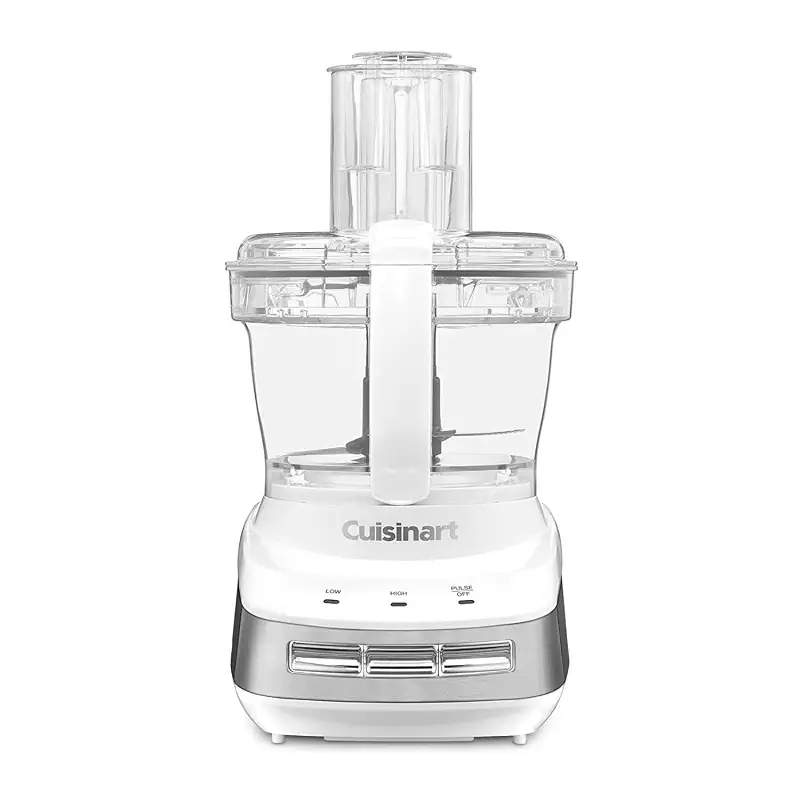
The Cuisinart Core Custom splits the difference nicely. It has 950 watts: less than the Ninja Professional Plus (1000W) but substantially more than the KitchenAid, and a 10-cup Tritan bowl, which gives you room to process up to three cups of peanuts in one batch. The motor is strong enough that you won't feel it straining, and owners who've moved from older Cuisinarts to this model report being pleasantly surprised by the improvement in speed and consistency.
The design philosophy is modular: the bowl sits on a removable hub, accessories nest together, and additional attachments (blender jar, dicing kit, etc.) can be swapped in later: great if you see yourself expanding the system over time. The control paddles (Mix, Low, High, Pulse) are straightforward, though this machine lacks the preset intelligence of the Ninjas; you're driving it manually, which actually gives more tactile feedback when grinding nuts.
Where it differs from the Hamilton Beach (the other 10-cup option in this lineup): Cuisinart uses a more traditional sealed-shaft design, whereas Hamilton Beach added a side scraper. For peanut butter specifically, the sealed-shaft design is slightly better because you're not relying on the scraper to keep nuts in the blade path during the grinding phase. The Cuisinart also runs a bit quieter than Hamilton Beach. The drawback is that the sealed-shaft bowl is more annoying to clean if you let peanut butter dry inside; soak it immediately or use warm water and the pulse function to loosen residue.
Pros
950-watt motor handles peanuts smoothly; stronger than light-duty models
10-cup capacity processes 2.5–3 cups of peanuts per batch comfortably
Ideal for: Occasional bakers on a tight budget; those who value proven durability over processing speed.
The Hamilton Beach 10-cup processor is the budget pick, and it earns that position honestly. At 450 watts, it's roughly half the power of a Ninja Professional Plus, which means peanut butter processing takes longer (five to eight minutes instead of two or three) but owners consistently report that it *gets there*. The appeal is longevity: multiple five-star reviews mention machines still running after 10+ years of regular use, which is rare in consumer food processors. This is not a fragile appliance; it's a straightforward, heavier-than-it-looks machine that prioritizes reliability over innovation.
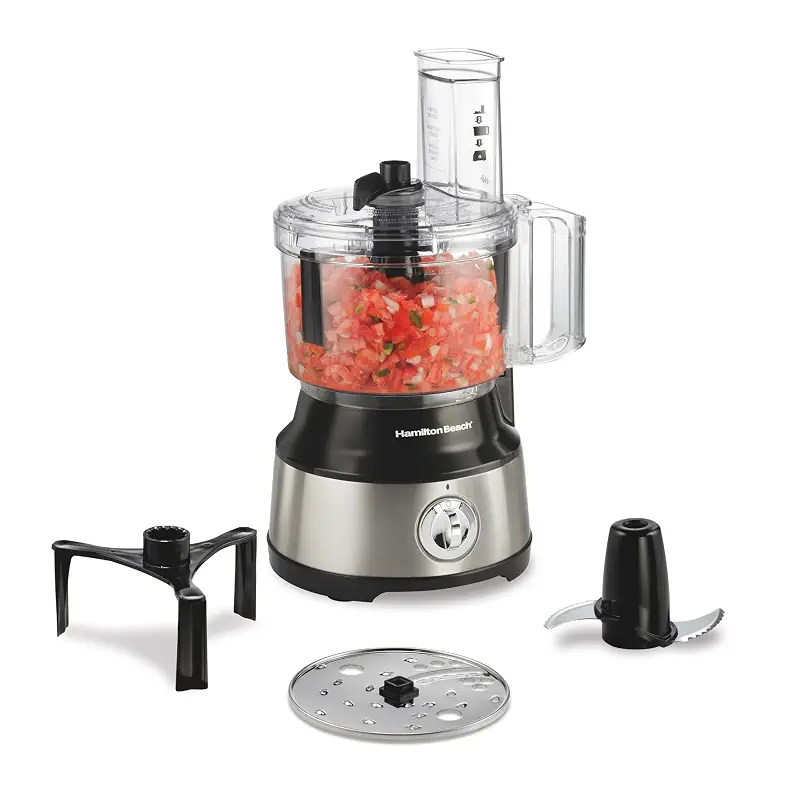
The built-in side scraper is genuinely useful for nut butters. As the machine grinds, you can activate the scraper to push nuts back toward the blade without opening the lid, which keeps friction and heat contained. This small feature matters when you're pushing a 450-watt motor to its limit. The 10-cup bowl also beats the KitchenAid's seven cups, so you're not batching as frequently.
Compared to the Cuisinart Core Custom, the Hamilton Beach trades power and speed for price and durability. The Cuisinart at 950 watts will finish a batch twice as fast, but the Hamilton Beach will likely outlast it. For occasional use (monthly batches), the Hamilton Beach is smart. For weekly peanut butter production, the extra time commitment gets tedious, and stepping up to a 950-watt or 1000-watt model is worth considering.
Pros
Proven 10+ year durability; owners report machines still running after decades
Built-in side scraper keeps peanuts in blade path without stopping the machine
10-cup capacity and 450-watt motor handle small-to-medium batches consistently
Cons
450-watt motor processes nuts slowly; batches take 5–8 minutes versus 2–3 in 1000W models
Less powerful motor runs hotter under sustained load; risk of fatigue over time
Key features
450-watt motor with two speeds (Low, High) and pulse for ingredient control
10-cup bowl with built-in side scraper for scraping without opening the lid
Stainless steel slicing/shredding disc and chopping/pureeing blade included
Large feed chute reduces pre-cutting and speeds up ingredient prep
Suction-cup feet stabilize machine; all removable parts BPA-free and dishwasher safe
How to Choose the Right Food Processor for Peanut Butter
Four trade-offs that actually matter when matching a food processor for making peanut butter to your kitchen.
Motor Power Matters More Than You'd Think
The motor wattage is the single biggest predictor of how easily a processor handles peanuts. At 450 watts, you're looking at five- to eight-minute batches with frequent pauses. At 950+ watts, the same batch finishes in two to three minutes, and the motor stays cooler. For weekly or more frequent peanut butter production, don't compromise below 900 watts unless you're genuinely occasional. The friction of grinding nuts generates heat; a more powerful motor distributes that load and keeps the machine from straining.
Bowl Size and Power Work Together
A seven-cup bowl with 1000 watts processes faster than a ten-cup bowl with 450 watts, because the smaller volume keeps ingredients closer to the blades. But seven cups is tight for peanut butter batches: you're limited to roughly one cup of shelled peanuts at a time. Eight to ten cups gives you breathing room: two to three cups of peanuts per batch without overflow or splashing. The sweet spot is 950+ watts paired with eight to ten cups, which is what you find in the Ninja Professional Plus, Cuisinart Core Custom, and Hamilton Beach models.
Blade Design and Materials Affect Durability
Stainless steel blades withstand the friction of nut grinding much better than hardened plastic. Look for processors that specify stainless steel chopping blades (not just the discs). The blade angle and edge geometry also matter: sharper, thinner blades cut through nuts more cleanly, while dull or thick blades generate more friction and heat. Ninja and Cuisinart both emphasize precision-ground stainless steel. Hamilton Beach and KitchenAid are less specific, though their blades are still capable.
Sealed Shaft versus Open-Center Designs
Some processors (like Cuisinart Core Custom) use a sealed shaft running up the center of the bowl; others (like Hamilton Beach) have a rotating center post that's more exposed. For peanut butter, sealed designs are slightly easier to clean because the nut oil doesn't pool around a shaft. But sealed designs are harder to clean if residue dries; you'll need to soak the bowl immediately. Open designs let water flow through more readily, but oil buildup can occur over years of use. Neither is ideal: just pick the trade-off you prefer.
Consider Making Peanut Butter at Home as Part of Your Workflow
If you're making peanut butter at home regularly, you're likely also chopping vegetables, slicing cheese, and mixing dough. Think about your full processor workload before choosing. A dedicated food processor (Ninja Professional Plus, Cuisinart Core Custom, Hamilton Beach, or KitchenAid) keeps risks separated: if one motor fails, you still have other appliances. An all-in-one blender-processor combo (Ninja Mega Kitchen System) saves counter space but means losing both functions if something breaks. Also, blender-processor hybrids tend to run much louder because they're designed for ice crushing in addition to food processing.
Frequently asked
Quick answers to the questions readers ask most.
Can I make peanut butter in a blender instead of a food processor?
Yes, but it's harder. Blenders are designed for liquids and soft ingredients; they have narrow, deep pitchers that can trap nut particles away from the blades, causing uneven grinding and heat buildup. A food processor's wide, shallow bowl and horizontal blade path are much better suited to the grinding action that nuts need. If you have a high-powered blender (1500+ watts), you can do it in small batches, but expect longer processing times and more frequent pausing to stir.
How much peanut butter does a food processor make in one batch?
A processor's capacity tells you the bowl volume, not the output. One cup of shelled peanuts (raw or roasted) yields roughly half a cup of peanut butter after oil is released. So a 9-cup bowl can comfortably process two to three cups of peanuts in one batch, yielding one to one-and-a-half cups of finished butter. Start small, taste, and adjust salt or sweetness before processing another batch.
Do I need to blanch or roast the peanuts first?
No, though many recipes call for roasted peanuts because they develop deeper flavor. Raw peanuts will also work: they'll take slightly longer to grind into butter and taste more earthy. Blanched versus skin-on doesn't matter for the processing itself; it's just a texture and flavor preference. If you use already-roasted peanuts from the grocery store, make sure they're unsalted, since you'll be adding salt to taste during blending.
How long should I run the processor to get smooth peanut butter?
Expect three to five minutes on a high-powered processor (950+ watts), using pulse mode to check texture every 30 seconds after the first minute. Lower-powered machines (450 watts) may take eight to ten minutes. Start with pulse, then switch to continuous once the peanuts begin releasing oil and binding together. Stop and scrape the sides if needed, especially on machines without a side-scraper feature. You'll feel the resistance drop noticeably when it's done.
Can a food processor handle making other nut butters (almond, cashew, etc.)?
Absolutely. Almonds and cashews are less oily than peanuts, so they actually process more easily and take slightly less time. Tougher nuts like walnuts or pecans take a bit longer because they have a higher ratio of solids to oil. The same power and bowl-size rules apply: 950+ watts and eight-to-ten-cup capacity will handle any nut butter comfortably. Start with the same pulse-and-check method you'd use for peanuts.