Kitchen & Dining · Espresso
Best Espresso Machine Under 300
Seven espresso machines sorted by grinder, steam wand, footprint and reliability reports, to help you match one to how you actually drink coffee.
Affiliate disclosure: As an Amazon Associate I earn from qualifying purchases.
At a glance
2
Large Water TankCasabrews
4
Familiar Brand PickDe'Longhi
5
Flexible Extractionatatix
Detailed reviews
We'd point buyers here when the goal is espresso shots with a minimum of fuss. It pairs a 20 bar pump and a 1350 W boiler with a built-in pressure gauge, a detachable 34 oz tank and a stainless-look body that leaves counter space free. Single and double filters, a portafilter and a tamper come in the box, so you can pull a shot the day it arrives.
Rich-tasting shots with good crema, simple assembly and only a small learning curve are what owners report. Milk is the weaker side: owners report a steam wand that heats milk without building much texture, and the portafilter, baskets and tamper feel light enough that regular users may want to upgrade them. Water leaking from the base of the tank has also been reported. Reliability is the open question, since owners also report units that stop working altogether. The machine also locks into overheat protection if you brew right after steaming milk, so milk drinks need a cooldown pause.
Pros
- Built-in pressure gauge for watching extraction
- Compact body leaves counter space free
- Rich flavor and good crema reported
- Simple setup with a gentle learning curve
Cons
- Some units reportedly stop working entirely
- Steam wand gives little milk texture
- Needs a cooldown after steaming milk
Key features (4)
- 20 bar pump with a 1350 W boiler
- Detachable 34 oz water tank
- One-cup and two-cup filters with portafilter
- Steam wand for lattes and cappuccinos
Set beside the CASABREWS Compact Espresso Machine, this model keeps the same 20 bar pump and 1350 W heater but brings a larger 43.9 oz detachable tank and a removable drip tray, which suits a household making several drinks a day. It ships with the usual one-cup and two-cup filters, a portafilter and a tamper.
Durability is the sticking point: owners report heating elements and steam wands failing within a year. On the plus side they describe good-tasting, rich espresso that is not bitter, a vintage look with a shiny faux stainless finish, and a steam wand that handles milk well. Owners also report that the machine is finicky about grind fineness, struggling to push water through a tightly packed or very fine puck, and that the steam dial can creep open mid-shot and bleed off pressure. We'd treat it as a fit for someone comfortable with a coarser grind who values the big tank more than predictability.
Pros
- Large 43.9 oz detachable water tank
- Vintage look with shiny finish
- Steam wand handles milk well
- Removable drip tray for easy cleaning
Cons
- Heating element failures reported within a year
- Finicky about grind fineness
- Steam dial can drift open mid-shot
Key features (4)
- 20 bar pump with a 1350 W heating system
- 43.9 oz removable water tank
- Removable drip tray
- Steam wand for microfoam and latte art
We think this is the friendliest on-ramp in the group for someone pulling a first shot: the workflow is add grounds and press a button, and the pressure gauge and pre-infusion step show what is happening without extra gear. It heats in about 30 seconds, holds 40 oz of water, shuts itself off after 25 minutes of inactivity and is only 5.5 inches wide, which is why we'd steer tight counters toward it.
Praise centres on rich crema, strong espresso, simple setup, easy cleaning and a sleek look. The caution is durability: owners report the machine breaking within several months of use. Pre-infusion and a pressure gauge are on its feature list, and it is 5.5 inches wide; the Casabrews Essential Stainless Steel Espresso Machine matches it on the durability worry, with heating element failures reported.
Pros
- Pressure gauge and pre-infusion step
- Heats in about 30 seconds
- Easy to use and clean
- Only 5.5 inches wide
Cons
- Durability complaints, with units failing within months
Key features (4)
- 20 bar Italian pump with 1350 W boiler
- Pre-infusion and real-time pressure gauge
- 40 oz tank with 25-minute auto shut-off
- Removable drip tray and steam wand
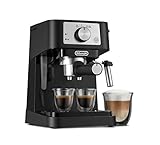
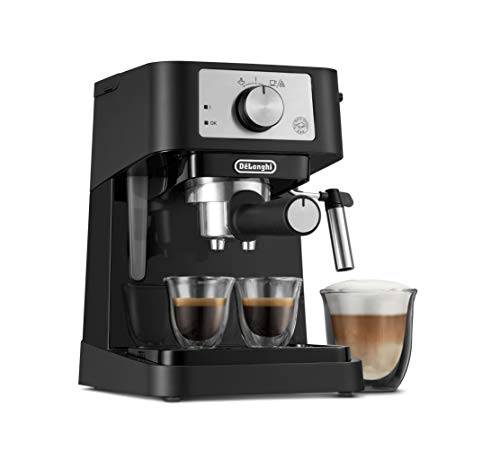
Built for people starting out, this machine uses a 15 bar pump and a stainless steel boiler, and the box includes a portafilter, a scoop that also tamps, plus two filters (single and double). The steam wand is manual, so milk texture depends on your technique; owners report the steamer is easy to handle and the cappuccino turns out well. It also comes apart readily for cleaning, wand included.
The 15 bar rating is lower than the 20 bar pumps on the atatix Espresso Machine 20 Bar and others here, but owners report great shots with no bitterness regardless. The watch-outs come from the owner feedback: water dripping at the wand while running, plus overflow from the reservoir, a pump that is slow to prime, water that does not always get hot enough, and breakdown within the first year or so. We'd choose it for the brand and the simple manual layout, and we'd keep the leakage and durability reports in mind.
Pros
- 15 bar pump with stainless steel boiler
- Easy steamer and simple setup
- Wand removes for thorough cleaning
- Great shots without bitterness reported
Cons
- Durability complaints, breakdowns within about a year
- Water leaks from wand and reservoir
- Inconsistent water temperature and slow pump priming
Key features (4)
- 15 bar pump with stainless steel boiler
- Portafilter with scoop-tamper and two filters
- Manual steam wand for milk texturing
- Two-level cup holder in a compact body
This is the machine for someone who wants control without a steep climb. Espresso mode runs automatic single and double shots, a manual mode lets you set the extraction time to change strength, and a temperature control system targets the 90-96°C range and preheats in about 30 seconds. The tank and drip tray detach for cleaning, silicone feet keep it from shifting, and the stainless top plate can warm cups. At 6.61 pounds it is the lightest machine here with a listed weight, well under the Breville Barista Express Espresso Machine.
Owners report easy use, rich espresso topped with good crema, smooth and creamy milk foam, quick heat-up and a compact body that suits even a dorm counter. Complaints are noise and vibration that can nudge a mug while it brews, directions that skip steps for newcomers, and a double-shot funnel that limits how much coffee fits. Reliability is the open point: owners report a unit that stopped heating properly, and a common complaint across the reliability reports is machines that stop working.
Pros
- Automatic single and double shot modes
- Manual extraction time for adjusting strength
- Temperature control and fast preheat
- Smooth, creamy milk foam reported
Cons
- Reliability reports include machines that stop working
- Noisy, with vibration that moves the mug
- Directions skip steps for newcomers
Key features (4)
- 20 bar system with NTC temperature control
- Auto and manual extraction modes
- Detachable water tank and drip tray
- ABS and stainless steel body with suction feet
The pitch here is speed and a clear read on what the pump is doing: a 1450 W heater with a stated 20s preheat, a visible pressure gauge and a selector knob with positions for brewing, hot water and steaming. That preheat is quicker than the 30 seconds quoted for the Chulux Slim Espresso Machine 20 Bar, and the footprint of 12.2 × 5.32 × 11.5 inches is similarly narrow. The 34 oz tank and drip tray detach for cleaning.
Smooth espresso topped with crema, fine steam foam for lattes and cappuccinos, simple cleaning and a quick warm-up all draw praise. On the downside, owners report that the machine looks like stainless steel but the tank and other parts are plastic, that a milk pitcher is not in the box, and that releasing the portafilter takes some fiddling. Like the CASABREWS Compact Espresso Machine, it asks you to let it cool after frothing before brewing again, or overheat protection engages.
Pros
- Stated 20s preheat
- Visible pressure gauge
- Fine milk foam for lattes
- Easy cleaning with removable tank
Cons
- Parts reported as plastic behind a stainless look
- Needs cooldown after frothing before brewing
Key features (4)
- 20 bar pump with 1450 W heating system
- Built-in pressure gauge
- 34 oz removable water tank and drip tray
- Selector knob for brewing, hot water and steaming
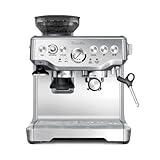
The Barista Express is the one machine here that goes from beans to espresso without a separate grinder: an integrated conical burr grinder with a grind size dial and adjustable dose, digital (PID) temperature control, low-pressure pre-infusion and a manual steam wand for hand-textured microfoam. A 67 oz tank and a half-pound bean hopper mean fewer refills, and the kit adds a 54 mm stainless portafilter, a steel milk jug, a dose-trimming tool and cleaning accessories.
Owners report excellent grinding, dials that work well, great shots and lattes, a look that earns praise, and easy cleaning because the machine signals when maintenance is due. The grinder can need a clean if it starts to grind poorly, and using the grinder and frother for every drink adds upkeep. Longevity reports run from years of daily service to a breakdown after a few years. It is also the biggest and heaviest pick at 22.09 pounds, so compact models such as the Aercana Espresso Machine 20 Bar suit tight counters better.
Pros
- Built-in conical burr grinder
- PID temperature control and pre-infusion
- Large 67 oz water tank
- Machine signals when cleaning is due
Cons
- Breakdowns after a few years reported
- Largest and heaviest machine of the picks
Key features (4)
- Integrated conical burr grinder with size dial
- Digital PID temperature regulation
- 67 oz tank and half-pound bean hopper
- 54 mm portafilter, milk jug and cleaning kit
Side by side
| Pick | Item weight | Water tank |
|---|
#1 Best Overall
Casabrews | 8.59 pounds | 34 oz |
#2 Large Water Tank
Casabrews | 8.14 pounds | 43.9 oz |
#3 Beginner-Friendly
Chulux | 7.8 pounds | 40 oz |
#4 Familiar Brand Pick
De'Longhi | 8.61 pounds | — |
#5 Flexible Extraction
atatix | 6.61 pounds | — |
#6 Fastest Heat-Up
Aercana | — | 34oz |
#7 Premium Pick
Breville | 22.09 pounds | 67 oz |
How to Choose an Espresso Machine
What do you give up at this level?
Every machine here is a trade, and the lineup shows the pattern. Most skip a built-in grinder and ask you to learn tamping and steaming, and only the atatix Espresso Machine 20 Bar (NTC control) and the Breville Barista Express Espresso Machine (PID) state any temperature control, so the shot depends on your technique as much as on the hardware. The Breville is the exception on grinders, which is also why it is the largest and heaviest.
These are the gaps to plan around before you buy.
- A separate grinder is needed unless one is built in
- Temperature control is stated on only two of the seven
- Steam wands that take practice to texture milk
- A cooldown pause between steaming milk and brewing on some models
Does a higher bar rating mean better espresso?
Not on its own. Most of these machines advertise a 20 bar pump, the Stilosa lists 15 bar, and the atatix Espresso Machine 20 Bar spells out the practical point: the pump is rated high, but the shot is held around 9-10 bar. What shapes the cup more is steady water temperature, a pre-infusion step (the Chulux Slim Espresso Machine 20 Bar has one) and a grind that suits the basket.
Owners of the Casabrews machines report that a coarser grind flows better through them, so grind adjustability is worth checking.
How much technique do you want to take on?
Milk is where effort shows. Every machine here froths with a steam wand, so texture comes from practice, and two of them need a cooldown between steaming and brewing. For a calm start, the Chulux Slim Espresso Machine 20 Bar is the pick to look at if easy operation is the priority, since its owner feedback centres on simple setup and straightforward use. Anyone who wants to dial in grind and dose personally will get more from the Breville Barista Express Espresso Machine.
For slimmer picks and narrow counters (the Chulux is 5.5 inches wide, the Aercana 5.32), our look at the best home espresso machine under 300 is the next place to go.
Our picks at a glance
2
Large Water TankCasabrews
4
Familiar Brand PickDe'Longhi
5
Flexible Extractionatatix
Frequently asked
Do I need a separate grinder?
For every pick except the Breville Barista Express Espresso Machine, yes: the others take ground coffee, so you will want a grinder with fine adjustment or a well-chosen pre-ground coffee. The Breville has a conical burr grinder built in, with dials for size and amount, which makes it the one to choose for beans to espresso in a single footprint. The trade-off is a much larger body.
Can I make a latte right after pulling a shot, and the reverse?
Shot first, then milk, is the easy order. Brewing after steaming is the catch on two models: the CASABREWS Compact Espresso Machine and the Aercana Espresso Machine 20 Bar both tell you to let the machine cool after frothing, or overheat protection engages. Plan milk drinks as shot first and steam second.
Which is the best espresso machine for a first-time buyer?
We'd start with the Chulux Slim Espresso Machine 20 Bar: operation is add grounds and press a button, with a gauge and pre-infusion alongside. Keep in mind that owners report units breaking within several months. The atatix Espresso Machine 20 Bar is the step-up, adding automatic single and double shots and a manual mode to grow into.