Kitchen & Dining · Espresso
Best Espresso Maker Under 500: Top Picks for Home Baristas
Find the best espresso maker under 500. Compare 20-bar machines, compact designs, and milk frothers for lattes and cappuccinos at home.
Affiliate disclosure: As an Amazon Associate I earn from qualifying purchases.
At a glance
1
Best Overall ValueNeretva
2
Best for BeginnersCasabrews
4
Best for SimplicityDe'Longhi
5
Best Digital ControlsChefman
Detailed reviews
The Neretva pulls genuine espresso shots with visible crema at a price that shocks experienced coffee drinkers. The 20-bar pump, LED temperature display, and pre-infusion function work together to extract flavor evenly, and owners consistently praise the richness of the shots once they dial in their grind. The learning curve is real: the machine demands clean grounds off the portafilter rim and won't tolerate an empty water tank, but buyers who read the instructions and spend time watching technique videos report shots that rival premium machines costing double the price.
The steam wand heats quickly and produces microfoam suitable for cappuccinos and lattes, though it requires practice to master. The compact footprint and strong suction cups keep the machine stable on any surface, and the stainless-steel construction feels durable for daily use. One legitimate drawback: the heating tray scores consistently low in reviews, and many owners simply use preheated cups instead.
Compared to the Casabrews, which offers a slightly larger water tank and pressure gauge, the Neretva trades a marginally bigger footprint for a lower entry price and quicker heat-up. If you're willing to dial in shots carefully and want maximum savings, this is the machine to start with.
Pros
- 20-bar pressure extracts rich crema and full coffee flavor
- LED temperature display aids in dialing brewing variables
- Heats up and pulls shots in under 4 minutes
- Compact, stainless-steel build fits tight kitchen spaces
Cons
- Learning curve steep; instructions assume some espresso knowledge
- Heating tray weak; most owners preheat cups separately
Key features (4)
- 20-bar pump pressure system with low-pressure pre-infusion function
- LED temperature display for real-time brewing feedback
- 1.5-liter water tank with removable design for easy refilling
- Stainless-steel portafilter with pressurized and non-pressurized baskets
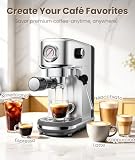
The Casabrews has earned its 8,000+ review count by being the machine that doesn't punish mistakes. The pressurized baskets forgive slightly loose tamping and coarser grinds, making it an honest choice for beginners who haven't yet invested in a grinder. The 20-bar pump, built-in pressure gauge, and thermoblock heating are real features, and owners report consistent, flavorful shots without the guesswork.
What sets this machine apart is its instruction clarity and customer support. The manual is detailed, infographics are easy to follow, and Casabrews responds to technical questions even outside warranty. The 34-ounce water tank is more forgiving than competing compact models, and the steam wand produces dense microfoam reliably: important if you want to practice milk drinks without frustration. One caveat worth noting: the steam wand must cool between frothing and espresso extraction, or the machine enters overheat protection. Plan a few minutes between milk drinks and shots if you're serving multiple people.
Where the atatix emphasizes precision temperature control and manual extraction options, the Casabrews prioritizes simplicity and reliability. If you're new to espresso and want a machine that handles both shop-quality shots and quick morning cappuccinos without requiring a PhD in coffee, this is the safer choice.
Pros
- Pressurized baskets tolerate coarser grinds and looser tamping
- Built-in pressure gauge offers visual feedback on extraction
- Excellent customer support responsive to technical questions
- Steam wand creates proper microfoam for milk drinks
Cons
- Machine requires cooldown between frothing and espresso shots
- Plastic-feeling portafilter and baskets feel less durable than metal equivalents
Key features (4)
- 20-bar Italian pump with built-in analog pressure gauge
- Pressurized baskets for single and double shots with forgiving tamping tolerance
- 34-ounce removable water tank reduces refilling frequency
- Thermoblock heating system reaching brew temperature in minutes
The atatix stands out for users who view espresso-making as a craft worth learning properly. The NTC precision temperature control system locks in a 90-96°C sweet spot and preheats in 30 seconds, which matters if you're exploring light and dark roasts and want consistent extraction across different bean profiles. The manual extraction function (a rarity in this price range) lets you override the automatic 28- and 42-second timers and stretch shots up to 102 seconds, opening the door to experimenting with ristretto and lungo-style drinks.
Owners praise the machine's compact design, suction-cup stability, and the quality of crema it pulls with properly dialed beans. The steam wand delivers focused, dry steam suitable for latte art, and the 44-ounce water tank is the largest in this lineup. Setup is straightforward, and customer service extends here too: one buyer reported a heating failure resolved with replacement within 24 hours.
The trade-off versus the Neretva is simplicity: the atatix demands more attention to grind, dose, and timing if you want to unlock its potential, but the payoff is shots that genuinely rival machines costing three times as much. Where the De'Longhi emphasizes preset convenience, this machine rewards the home barista who wants room to experiment and will benefit from pairing it with a best espresso grinder under 200 that lets you dial in beans precisely.
Pros
- NTC temperature control locks precise heat for consistent extraction
- Manual extraction mode enables ristretto and lungo experimentation
- 44-ounce water tank largest in category, minimizes refilling
- Focused steam wand suitable for milk latte art practice
Cons
- Learning curve requires understanding grind, dose, and timing
- Suction cups can be difficult to move once fully suctioned to countertop
Key features (4)
- NTC precision temperature control locked at 90-96°C brew sweet spot
- Dual-mode extraction: automatic 28-42 second shots or manual up to 102 seconds
- 20-bar pump system with 44-ounce water reservoir for extended brewing sessions
- Stainless-steel and ABS construction with four-point silicone suction-cup base
De'Longhi's claim as the worldwide sales leader isn't marketing: it reflects a philosophy of stripping away complexity in favor of reliability. The Thermoblock technology heats the machine in seconds without the warmup rituals other models demand, and the preset single and double espresso buttons deliver consistent volume automatically. No dials to turn, no gauge to interpret, no learning curve. You load the portafilter, press a button, and get espresso.
The adjustable two-setting steam wand (one for gentle heating, one for aggressive frothing) is more intuitive than floating valves, and owners report milk that steams properly without requiring YouTube tutorials. The compact stainless-steel design looks intentionally minimal, and the pressure gauge is chrome-finished, purely functional: a detail that signals this machine knows what it is.
The honest limitation is the 15-bar pump versus the 20-bar systems in competitors. This matters if you're chasing the deepest extraction and most visible crema; some buyers familiar with higher-pressure machines notice the difference. But for the everyday drinker making cappuccinos and lattes, the pressure is sufficient, and the consistency is superior to machines that demand dial-in work. Where the atatix appeals to precision seekers and the Casabrews to beginners building technique, this De'Longhi is for anyone who wants café drinks without becoming a home barista.
Pros
- 15-bar Italian pump delivers adequate pressure for balanced extraction
- Thermoblock heating reaches optimal temperature in seconds
- One-touch preset buttons eliminate guesswork on shot volume
- Adjustable two-setting steam wand simplifies milk texturing
Cons
- 15-bar pressure produces less visible crema than 20-bar competitors
- Adjustable presets not as customizable as manual extraction modes
Key features (4)
- 15-bar Italian pump with Thermoblock rapid heating technology
- Single and double espresso one-touch preset buttons with auto-shutoff
- Adjustable two-position steam wand for milk heating and microfoam creation
- Compact stainless-steel design with double-height trip tray for varied cup sizes
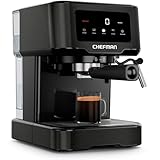
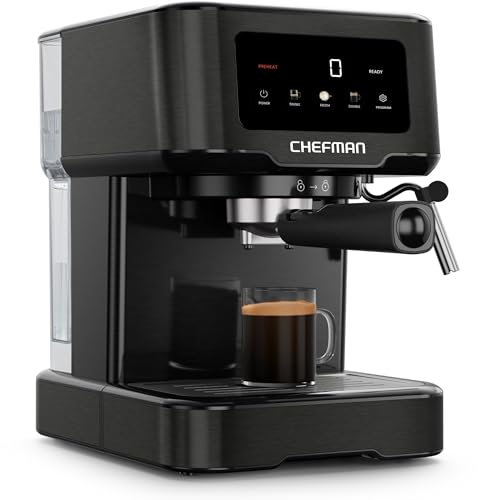
The Chefman CraftBrew brings touchscreen modernism to the espresso-machine counter, with a digital timer that lets you customize shot volume and a 1.5-liter water tank (largest in this lineup) that handles multiple drinks without refilling. The 15-bar pump is the same as De'Longhi's, but the execution differs: rather than preset buttons, you get a digital control panel where you can dial in longer or shorter shots, ristretto or lungo, tailored to your beans and preference.
Owners praise the sleek black finish and compact footprint, and the machine heats quickly. The steam wand froths milk reliably, and the removable water tank is genuinely convenient if you live in a small kitchen or apartment. An automatic descale alert after 500 brewing cycles nudges you toward maintenance before scale buildup becomes a problem.
The significant drawback, reported consistently in reviews, is noise: this machine is considerably louder during the pump cycle than the atatix or Casabrews. If you brew early in the morning while others sleep, plan accordingly. One buyer also reported a pump failure out of the box, so durability may be less consistent than machines with longer track records. Compared to the De'Longhi's preset simplicity, this machine trades automation for customization; whether that appeals depends on whether you want buttons you press or variables you adjust.
Pros
- Digital timer panel customizes shot volume for ristretto or lungo styles
- 1.5-liter water tank largest capacity, serves multiple drinks without refilling
- Sleek black finish and compact design fit modern kitchen aesthetics
- Automatic descale alert maintains machine health proactively
Cons
- Significantly louder than competing machines during pump operation
- Fewer owner reviews and longer track record than Casabrews or De'Longhi
Key features (4)
- 15-bar pump with digital timer for customizable shot volume and extraction time
- 1.5-liter removable water reservoir with auto-refill alert
- Built-in steam wand with two-setting frother for milk texturing
- Touch control panel with automatic 500-cycle descale reminder
How to Choose an Espresso Maker Under 500
Pump Pressure: 15-Bar vs 20-Bar
Espresso extraction happens best between 9 and 10 bars of actual pressure. A machine labeled 15-bar or 20-bar indicates maximum pump pressure, not brew pressure. The De'Longhi and Chefman use 15-bar pumps, which deliver adequate extraction for everyday drinks. The Neretva, Casabrews, and atatix use 20-bar pumps, which allow deeper flavor extraction and more visible crema. For most home baristas, this difference is noticeable but not dramatic. The trade-off is that 20-bar machines demand more precision in grind and tamping; 15-bar machines are more forgiving if your technique isn't perfect. Pump pressure explained: a higher-rated pump gives you more headroom to dial in variables without under-extracting.
Heating Speed and Temperature Control
Thermoblock technology (used in the De'Longhi) heats water on-demand and reaches optimal temperature in seconds. Boiler-based machines (Neretva, Casabrews, atatix) take longer but maintain stable temperature during back-to-back shots. The atatix's NTC temperature lock is the most precise in this lineup, locking in 90-96°C regardless of ambient temperature. If you make one drink at a time, thermoblock speed is convenient. If you're making cappuccinos for a group, a boiler's heat stability matters more. Digital displays (Neretva, atatix) show real-time temperature; pressure gauges (Casabrews, De'Longhi) give visual feedback during extraction. Both approaches work; choose based on whether you prefer numbers or analog cues.
Milk Frothing and Steam Wands
All five machines here have steam wands, but quality varies. The Casabrews, atatix, and Chefman deliver focused, dry steam suitable for microfoam and latte art. The De'Longhi's two-setting wand is intuitive for beginners. The Neretva's wand works but requires more practice. Steam wands get extremely hot: always use a rubber grip or damp cloth. One operational note: boiler-based machines (Neretva, Casabrews, atatix) need cooldown time after frothing before you can pull another espresso, or they trigger overheat protection. Thermoblock machines (De'Longhi, Chefman) don't have this limitation. Learning to froth milk is easier when you start with the right machine, but technique matters more than the equipment itself; expect a 2-3 week learning curve before you produce silky microfoam consistently.
Build Quality and Durability
Stainless-steel bodies (all five machines) resist corrosion and look sleek, but some models use plastic-feeling portafilters and baskets. The Casabrews and Chefman ship with plastic tampers and lighter-duty baskets; most owners upgrade to metal alternatives. The Neretva, atatix, and De'Longhi feel more cohesive out of the box. Water quality matters: if you have hard water, descaling every 2-4 weeks prolongs machine life. The Chefman includes an automatic descale alert; others leave it to you. Suction cups on the atatix and Neretva are very strong: place the machine on a mat if you move it frequently. For longevity, consistent maintenance and avoiding an empty water tank (which can introduce air into the pump) are critical across all models.
Our picks at a glance
1
Best Overall ValueNeretva
2
Best for BeginnersCasabrews
4
Best for SimplicityDe'Longhi
5
Best Digital ControlsChefman
Frequently asked
Do I need a separate burr grinder for these machines?
Ideally yes, especially if you want to unlock the potential of 20-bar machines. Pre-ground espresso from a can loses aromatics quickly. The pressurized baskets on the Casabrews tolerate coarser, pre-ground coffee better than non-pressurized baskets, so it's a more forgiving machine for beginners without a grinder. But once you're serious about espresso, a conical burr grinder (separate from your drip coffee grinder) becomes essential for dialing in shots properly.
What's the difference between pressurized and non-pressurized baskets?
Pressurized baskets have a valve that increases pressure within the basket, allowing looser tamps and coarser grinds to still pull a drink. Non-pressurized baskets demand proper tamping and a finer grind to restrict water flow enough to build pressure. Pressurized baskets are beginner-friendly and more forgiving. Non-pressurized baskets reward good technique with richer flavor and visible crema. Most machines in this guide ship with pressurized baskets; upgrading to non-pressurized (sold separately) is the next step for committed home baristas.
How often do I need to descale, and does it matter which machine I choose?
Every 2-4 weeks if you have hard water, less frequently if you use filtered or soft water. The Chefman alerts you automatically after 500 brew cycles; others require manual tracking. Use a commercial descaling solution (not vinegar) to avoid damaging the pump and heating element. All five machines handle descaling similarly, though the Casabrews and atatix have slightly more straightforward service protocols according to owner reports. Neglecting descale eventually clogs the pump and kills the machine.
Can I pull back-to-back shots for multiple people?
Yes, but with caveats. Thermoblock machines (De'Longhi, Chefman) let you pull consecutive shots without waiting. Boiler-based machines (Neretva, Casabrews, atatix) can pull 3-4 shots before needing a cooldown, but if you just frothed milk, you'll wait 5-10 minutes before the machine is ready to brew again. If you regularly make drinks for more than one person simultaneously, the De'Longhi's speed is an advantage. For solo drinkers or couples, any machine here works fine.
What should I do if the machine pulls thin espresso or barely any liquid comes out?
Usually three causes: the grind is too fine (water won't flow), the grounds aren't tamped evenly, or air is trapped in the pump (often from running the water tank empty). Try coarsening your grind slightly, use a distribution tool before tamping, and always keep the tank at least 1-2 inches full. If none of that works, run hot water through the group head for 30 seconds to purge air, then try again. This troubleshooting applies across all five machines.