Verdict, analysis, and key features for each pick.
#1 Pick
Best Overall Variety
Mumsung
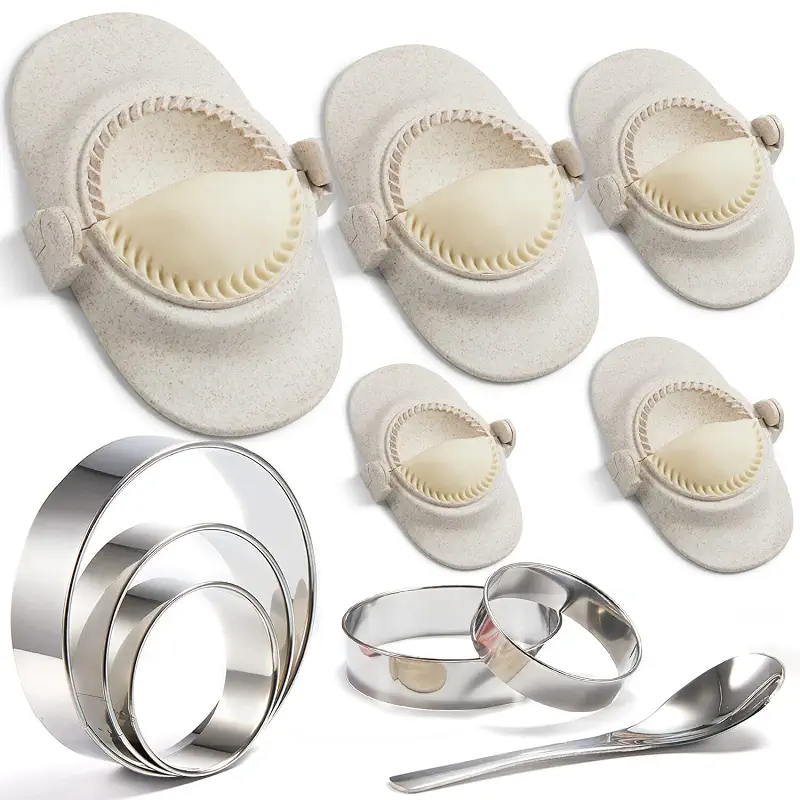
Empanada Maker Press, Large Dumpling Maker Set (6"/5"/4"/3"/2.6") | 5Sizes Extra Large Dumpling Maker Mold Set with Dough Cutter for Pierogi, Pastelitos, Calzone, Turnovers
4.5(1,533)
Five sizes in one set with durable plastic and stainless steel parts; ideal for cooks who want flexibility without breaking budget.
Ideal for: Home cooks who make empanadas regularly and want to experiment with multiple sizes.
The Mumsung set stands out because it gives you five different diameters in a single package: 6, 5, 4, 3, and 2.6 inches, plus a stainless steel dough cutter. That range means you can make everything from large family empanadas to small hand pies and dumplings without buying multiple tools. The food-grade plastic body is thickened and drop-resistant, and the deep crinkle design on the edges both looks professional and seals reliably. Buyers consistently report that dough doesn't stick once you dust the press lightly with flour, and the included cutter works well for pre-sizing dough circles.
Where it requires patience is in the learning curve. Several owners mention needing a few attempts to get the seal right and avoid leaks, especially if you overfill or use dough that's too wet. The included measuring spoon is generic and doesn't scale perfectly across all five sizes, so you'll adapt by eye or feel. Still, long-term users note that after a few batches, the technique becomes second nature.
Compared to single-size presses like the Cotey, the Mumsung trades some heft and pure durability for versatility and a lower entry price. If you plan to experiment with multiple filling styles or want to work with different dough recipes at different scales, this set is the most practical all-in-one choice.
Pros
Five sizes in one set covers small to extra-large
Food-grade plastic won't rust or degrade over time
Stainless steel cutter and spoon included
Affordable entry point for empanada making
Cons
Plastic is less durable than stainless steel over years
Learning curve on dough moisture and fill amounts
Key features
Five diameters from 2.6 to 6 inches in thickened plastic
Stainless steel dough cutter and serving spoon included
Deep crinkle edge design seals tight and looks professional
Dishwasher safe, easy cleanup with light flour dusting
#2 Pick
Premium Single-Size Option
Cotey
COTEY 6" Extra Large Empanada Maker Press, 2-in-1 Dough Cutter & Pie Mold | 6-inch Professional Dumpling Maker Mold for Authentic Empanadas, Pierogi, Ravioli, and Mini Pies. Heavy Duty Kitchen Tool.
4.2(1,659)
Heavy-duty stainless steel 6-inch press with cutting and sealing; built to outlast cheaper models.
Ideal for: Serious home cooks and small-business makers who want one premium 6-inch press for regular, high-volume use.
The Cotey 6-inch press is engineered as a single statement piece rather than a multi-tool set. It's made from food-grade stainless steel that doesn't bend, rust, or weaken even after hundreds of uses, and the two-sided design cuts a perfect dough circle on one end while crimping and sealing on the flip. That two-in-one approach saves a step compared to tools where you have to use a separate cutter. Owners praise the solid hinge feel and the way the press creates a uniform edge crimp without requiring excessive force.
The tradeoff is specialization: you get one size, so it's not ideal if you want to make both large empanadas and small dumplings in the same session. Also, a few reviewers report the handle can loosen slightly with repeated use and needs occasional tightening. One significant concern from buyers is inconsistent product quality in some shipments: a small number of presses arrived defective or undersized (closer to 5 inches than advertised 6 inches), though Amazon's return policy typically covers that.
Manual versus electric empanada makers each serve different rhythms: the Cotey is purely manual, so it suits batch cooks who enjoy a tactile process and want zero electricity dependency. Where the Mumsung set offers range on a budget, the Cotey delivers longevity and build confidence if you plan to press hundreds of empanadas over years.
Pros
Food-grade stainless steel won't rust or break
Two-in-one cutter and seal design streamlines prep
Solid hinge and handle design feel professional
Creates consistent edge crimp every time
Cons
Single 6-inch size limits versatility for smaller recipes
Handle can loosen slightly with frequent use
Key features
Heavy-duty stainless steel construction resists rust and wear
Two-in-one design cuts dough and seals edges in one motion
6-inch diameter ideal for restaurant-style empanadas
100% dishwasher safe for effortless cleanup
#3 Pick
Commercial-Grade Workhorse
Empamec
Empanada Maker EMPAMEC dough size diameter 5” (13 Cm) TO BE USED WITH WHEAT FLOUR (Harina de trigo) 5" (13 Cm) Makes 100 empanadas per hour. Close and stamp on a professional way.
4.0(36)
Industrial-strength press built for high-volume production; durable and consistent but specialized for business use.
Ideal for: Small-business owners, frequent batch makers, and home cooks who produce dozens of empanadas weekly.
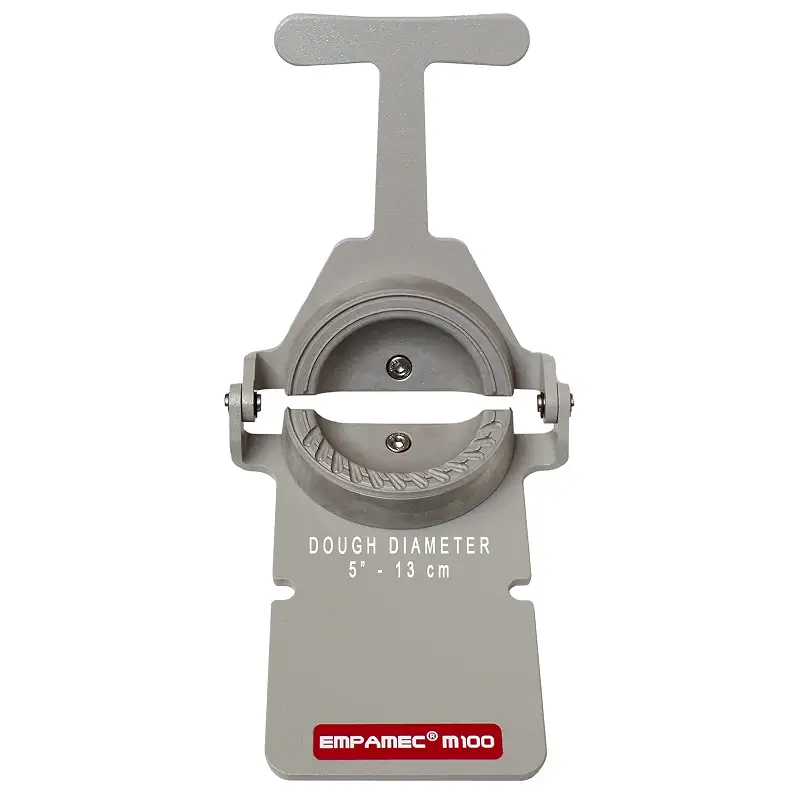
The Empamec press is designed for people making empanadas at volume: the brand positions it around 100 empanadas per hour, and buyers who run small food businesses or make batches weekly confirm its durability and consistency. Unlike the plastic options, this is a heavy-duty tool with substantial heft and solid metal construction that doesn't flex or fatigue even under sustained use. The 5-inch size is standard in commercial kitchens, and the shape always comes out uniform, which matters when you're selling or serving to groups and want every piece to look identical.
The caveat is that this tool is purpose-built for dough work and lacks the versatility of multi-purpose designs. It's larger and heavier than home kitchen presses, so it requires more counter or storage space. The price point and industrial aesthetic also signal that it's an investment for someone serious about empanada production, not an impulse kitchen gadget. A few buyers note this is overkill if you're just making one or two batches a year for family.
If you've worked your way up from the Mumsung or Cotey and find yourself making empanadas weekly or running a small catering operation, the Empamec's proven durability and speed justify the step up. It's the only tool in this lineup built explicitly for quantity work.
Pros
Industrial metal construction outlasts plastic long-term
Produces 100+ perfectly uniform empanadas per hour
Consistent shape and seal across high-volume batches
Heavy-duty build handles sustained weekly use
Cons
Larger footprint requires dedicated storage space
Single 5-inch size lacks versatility for different recipes
Key features
Industrial-grade metal body built for high-volume production
5-inch dough diameter standardized for commercial work
Produces 100+ uniform empanadas per hour with consistent sealing
Heavy-duty construction rated for weekly/daily business use
#4 Pick
Best Electric Machine
FineMade
FineMade Electric Empanada Maker Machine with Press Mold, Large Dumpling Maker, Pierogi Maker Press Machine, Make 4 Psc of 6 Inches Large Empanadas, Jamaican Beef Patties,Calzones, Pocket Pies
4.3(692)
Heats and cooks four 6-inch empanadas at once; takes the sealing and cooking steps out of your hands.
Ideal for: Busy home cooks who want hot, finished empanadas in 15 minutes with minimal cleanup.
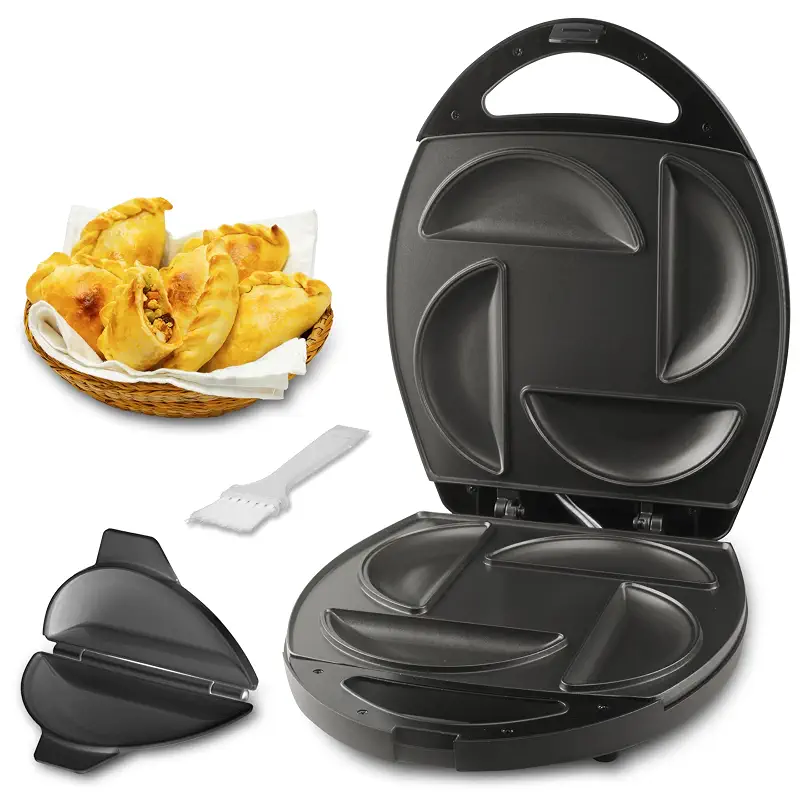
The FineMade electric machine does something none of the manual presses can: it cooks the empanada after it's sealed. You use the included press mold to shape and fill dough, then place four empanadas directly onto the heated cooking plates, and 15 minutes later they're golden and ready to eat. That's a substantial convenience gain if your goal is a finished, edible product without moving to a stovetop or oven. The machine reaches temperature quickly, the nonstick surface cleans easily with a single wipe, and temperature control lets you dial in browning level to your taste.
The downsides are significant for some cooks: the machine is electric (taking up counter space and requiring a plug), and uneven heating across the plates is a real issue a few owners report: the left and right edges brown faster than the center, leaving you with spotty results. Because the top and bottom seal together during cooking, if your dough isn't perfectly sealed or you overfill, the filling oozes out onto the plates and makes cleanup harder. The 1000W power draw also means you can't run it alongside other large appliances on a single circuit.
This is the only option in the lineup where the tool actively cooks your empanadas, not just shapes them. Compared to manual presses like the Mumsung or Cotey, you gain speed and convenience but lose control over dough texture and the freedom to choose your cooking method (frying, baking, boiling). It's best for cooks who want a single-step machine that handles both sealing and cooking.
Pros
Cooks four 6-inch empanadas in one 15-minute batch
Temperature dial lets you control browning and doneness
Nonstick plates and quick heating make it efficient
Compact size fits most kitchen cabinets
Cons
Uneven heating across plates can cause spotty browning
Overfilled empanadas leak filling onto plates during cooking
Key features
Electric cooking machine makes four 6-inch empanadas per batch
Temperature control dial for custom browning and doneness
Nonstick cooking surface for easy cleanup and food release
1000W heating heats up fast and cooks in 15 minutes
Ideal for: Cooks who want multi-size capability in stainless steel and prioritize durability over quick cleanup.
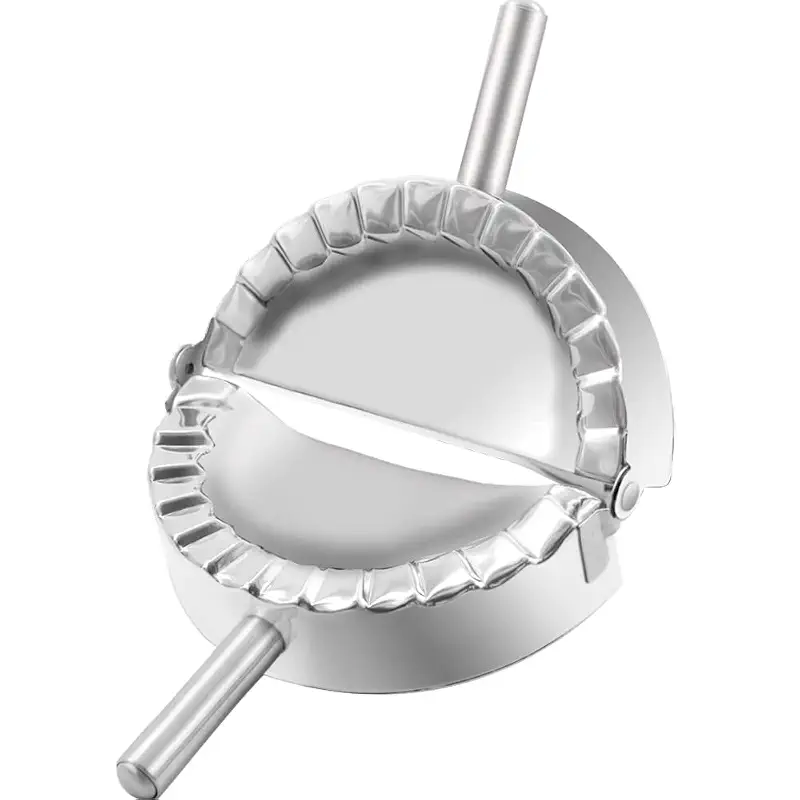
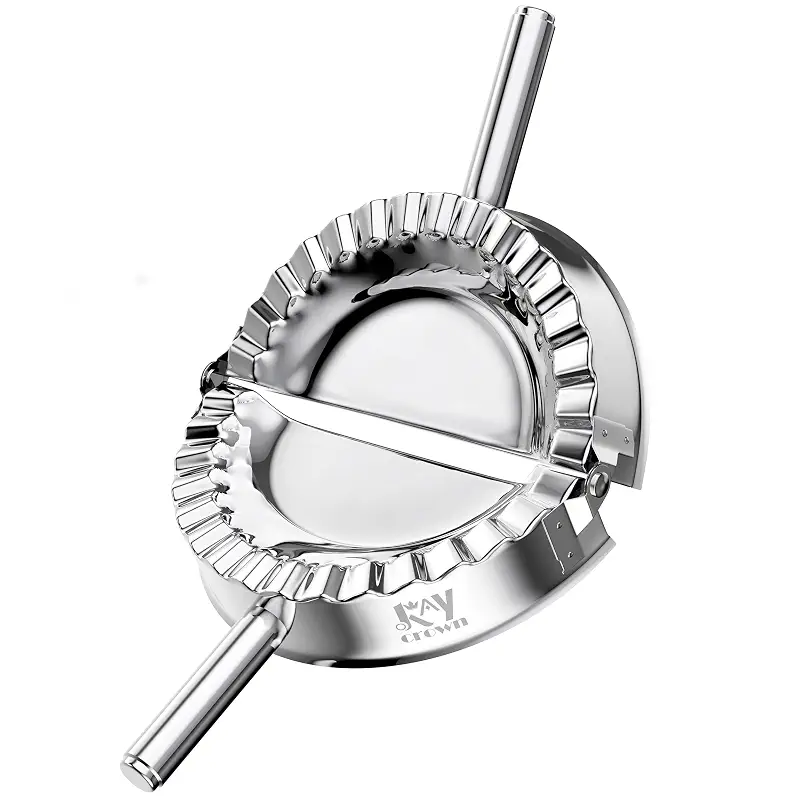
The Kaycrown set offers the multi-size flexibility of the Mumsung but in premium stainless steel rather than plastic, making it the pick for cooks who want both range and lasting build quality. The four sizes: 6, 4.75, 4, and 3.25 inches: cover empanadas down to dumplings and gyoza, and the 18/8 food-grade steel construction means no rust, no warping, and no weakening over years of use. The handles are longer than some presses, which gives you better leverage and control, and the outside edge is sharp enough to cut dough cleanly without a separate cutter.
The main limitation is weight and substance: stainless steel is heavier than plastic, which some cooks appreciate as a sign of durability but others find tiring during a long session of hand pressing. A few buyers also note that the press doesn't seal every single empanada perfectly on the first try: you need to apply firm, consistent pressure and sometimes brush the dough edge with water or egg to ensure a tight seal. Unlike the Mumsung's integrated cutter, you'll need to pair this with a separate rolling tool or knife to pre-cut dough.
Compared to the single-size Cotey, the Kaycrown gives you four options in stainless steel, so you get versatility without sacrificing metal durability. If you've determined that manual versus electric empanada makers suits your workflow, the Kaycrown is the stainless steel equivalent of the Mumsung: just with better longevity at a higher price.
Pros
Four stainless steel sizes from 3.25 to 6 inches
18/8 food-grade steel resists rust and corrosion
Longer handles provide better leverage and control
Sharp edge cuts dough cleanly without separate cutter
Cons
Heavier weight than plastic makes prolonged pressing tiring
Seal can be inconsistent without proper pressure and moisture
Key features
Premium 18/8 stainless steel won't rust, bend, or weaken
Four sizes from 3.25 to 6 inches for empanadas and dumplings
Longer handles for better grip and consistent pressure application
Sharp cutting edge eliminates need for separate dough cutter
How to Choose an Empanada Maker
Four trade-offs that actually matter when matching a empanada maker to your kitchen.
Manual Press vs. Electric Machine
The core question is how you want to cook your empanadas. A manual press (like the Mumsung, Cotey, Empamec, or Kaycrown) shapes and seals the dough, then you move to your preferred cooking method, frying, baking, or boiling. That gives you control over final texture and flavor. An electric machine like the FineMade handles both sealing and cooking in one unit, saving a step but locking you into its heating approach. Manual versus electric empanada makers each serve different kitchens: manual suits cooks who already have a frying routine or prefer baking; electric works best if you want a self-contained, minimal-effort tool that produces hot empanadas in 15 minutes with no stovetop transition.
Single Size vs. Multi-Size Sets
A single-size press (6 inches, like the Cotey or Empamec) is built for consistency and heft: you master one diameter and get the best seal and durability. Multi-size sets (the Mumsung with five sizes, or Kaycrown with four) let you make everything from small dumplings to large empanadas in the same session. Single-size tools are sharper and heavier; multi-size sets are more versatile but each individual press in the set is lighter. Choose single-size if you make mostly one style; choose multi-size if you like variety or want to experiment with different fillings and recipes at different scales.
Material: Plastic vs. Stainless Steel
Plastic presses (Mumsung, FineMade) are lighter, affordable, and won't rust, but they flex slightly under pressure and may fatigue over hundreds of uses. Stainless steel (Cotey, Kaycrown, and Empamec) doesn't bend, won't corrode, and maintains its edge sharpness indefinitely: ideal if you press empanadas weekly or run a small business. If you make a few batches a year for family, plastic is fine and saves money. If you're serious about consistency and durability, stainless steel justifies the premium. An empanada maker size guide can help you determine the right diameter for your typical dough and filling volume, so you don't end up with overstuffed or undersized results.
Ease of Sealing and Preventing Leaks
The most common complaint across all presses is filling leaking during cooking. This almost always comes down to three factors: dough moisture (if it's too soft or sticky, the seal breaks), fill amount (overstuffing prevents a tight seal), and consistent downward pressure when pressing. Every press in this lineup can seal successfully if you prepare your dough and filling correctly. Stainless steel presses like the Kaycrown and Cotey tend to seal more reliably because their rigidity doesn't flex, while plastic presses require you to be more deliberate about pressure. All owners agree: dust with a light flour, use slightly firm dough, and don't overfill.
Frequently asked
Quick answers to the questions readers ask most.
Can I use store-bought empanada discs with these presses?
Yes. Store-bought dough rounds work well, especially with multi-size presses where you can match the disc to the press diameter. Make sure the dough isn't too soft or thawed: if it's sticky, dust it with cornstarch or flour and let it chill for 10 minutes. The Cotey and Kaycrown users report good results with pre-made discs because the sharp edges cut cleanly and the stainless steel doesn't stick.
What's the best way to prevent dough from sticking to the press?
Dust the press lightly with flour or cornstarch before each empanada, especially if your dough is room temperature. Cold, firm dough sticks less than warm dough. Some cooks use a tiny bit of oil on their fingers to handle the dough before pressing, but flour is the most common fix. Make sure to brush any excess flour off the dough edge before you seal.
Are these presses dishwasher safe?
Most are. The Mumsung plastic presses, Cotey stainless steel, Kaycrown set, and FineMade machine all work in the dishwasher. The Empamec is hand-wash recommended to preserve its finish. Even dishwasher-safe models benefit from a quick hand rinse right after use to prevent dough from drying on the surface.
How many empanadas can I make per hour with a manual press?
Most home cooks manage 30-50 per hour once they get into a rhythm, depending on how thick they make the dough and how generous the filling is. The Empamec, designed for commercial use, claims 100 per hour because it's optimized for high-volume production. Speed improves with practice and muscle memory.
Do I need to seal the empanada edge with water or egg before pressing?
It helps but isn't always necessary. Brushing the dough edge lightly with water or beaten egg yolk before closing the press increases the seal strength, especially if your dough is drier. Some cooks skip this step for casual batches, but for anything you're frying (where leaks create a mess), a damp edge is worth the extra five seconds.