Kitchen & Dining · Small
Best Electric Omelette Maker for Quick Breakfasts
Find the best electric omelette maker for fast, fluffy omelets. Compare top models with nonstick surfaces, easy cleanup, and versatile cooking options.
Affiliate disclosure: As an Amazon Associate I earn from qualifying purchases.
At a glance
1
Best OverallHolstein Housewares
2
Best Budget-FriendlyElite Gourmet
3
Best Compact DesignSugarWhisk
4
Best Flip-Function DesignBaker's Friend
Detailed reviews
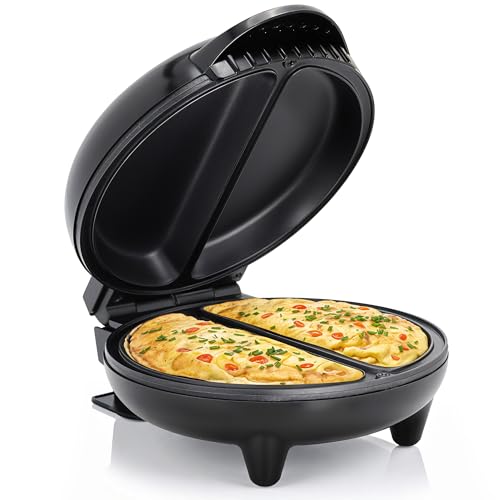
The Holstein Housewares model has earned its place through straightforward performance and volume of consistent user feedback. What stands out is how it removes variables: preheat lights tell you exactly when to start cooking, the two-section design lets you tailor each omelet to a different appetite, and the nonstick surface cleans up with a wipe. Users report that omelets emerge with a slightly different texture than stovetop cooking (more cake-like, browned on the exterior) but that consistency is precisely what appeals to home cooks tired of flat or unevenly cooked results.
The learning curve is genuine but manageable. Early reviews flagged timing inconsistency across units, though many owners have shared effective techniques (adding water to eggs, filling halfway with egg then adding solids, poking a small hole to release steam) that deliver restaurant-quality results. The design feels purposefully minimal: no power switch, no timer, no temperature dial. You plug it in, preheat, cook, and unplug. That simplicity works beautifully for weekday breakfast but means you're responsible for watching the cooking time yourself.
Compared to the Elite Gourmet and other dual-zone models, the Holstein prioritizes ease of use and build confidence for people who've never made an omelet. If you want a machine that performs the same way every time and don't mind the absence of manual controls, this is the strong choice.
Pros
- Preheat indicator light confirms ready-to-cook temperature
- PFOA-free nonstick coating releases food effortlessly
- Compact design stores easily in tight kitchens
Cons
- No power switch or timer; must plug and unplug manually
- Cooking time varies slightly between units based on reviews
Key features (4)
- Two-section design cooks two individual omelets simultaneously
- Stainless steel housing with anti-slip feet for stability
- Ready indicator light signals optimal cooking temperature
- Heats both top and bottom surfaces to eliminate flipping
For cooks uncertain whether an omelet maker fits their routine, the Elite Gourmet offers a low-risk entry point. At budget pricing, it includes the essentials: dual heating surfaces, preheat and ready indicator lights, 750W of power, and two 6.5-inch compartments that each accommodate a single omelet or snack pocket. Early reviews emphasize that it actually works: users report fluffy, evenly cooked results when expectations are properly calibrated to a compact, single-serve design.
The main trade-off emerges around capacity and timing precision. Because each section is sized for roughly one egg per side, users who want a hearty three-egg omelet divided between two people will need to split their mixture and manage cook time carefully (typically 5-7 minutes rather than the 10-12 minutes the manual suggests). A few owners noted that the exterior can brown quickly, requiring active monitoring to avoid overcooking. One reviewer discovered that flipping the omelet halfway through cooking improved texture and prevented burning: a technique that contradicts the simple "close lid and wait" promise but does yield better results.
Where the Elite Gourmet diverges from the Holstein is in control. You get indicator lights but no fail-safe timing, and the compartments are noticeably smaller. For a single person or couples making modest breakfast portions, that's fine. For families or anyone planning to batch-cook, the capacity limit becomes frustrating.
Pros
- Low entry price makes it accessible for first-time buyers
- Preheat and ready indicator lights guide cooking process
- Nonstick surface cleans easily with a paper towel wipe
Cons
- Small compartments limit filling and egg capacity
- Requires active monitoring to avoid exterior browning too fast
Key features (4)
- 750W power heats dual cooking surfaces evenly
- Two 6.5-inch sections make individual portions simultaneously
- Lightweight and portable for easy storage and transport
- Preheat and ready indicator lights for temperature confirmation
SugarWhisk markets this as a "fantastic kitchen companion" for small spaces, and the styling does deliver on that promise: a compact footprint with a vibrant color option that looks intentional on a countertop rather than tucked away. The ceramic nonstick coating is a genuine differentiator from traditional PTFE surfaces; owners report food releases cleanly and the surface doesn't degrade as quickly. Heating is brisk, and the preheated/ready indicator light signals when to begin.
But here's where candor matters: this omelet maker has significant limitations that early reviews didn't fully telegraph. One detailed one-star review, from someone who tested it across multiple days, flagged that the manual instructions are inaccurate, the device is extremely small (so small it won't comfortably serve two people at once) and ingredient prep is fussy (precooked or room-temperature fillings prevent raw centers). Another noted that adding more than one or two toppings causes spillover. A third found that the ceramic coating worked well initially but the overall capacity disappointed.
Compared to the AshGlen, which also emphasizes ceramic coating and compact design, the SugarWhisk has fewer positive long-term reviews and more user reports of size frustration. If you live alone, have very modest breakfast portions, and prioritize aesthetic fit on a tight counter, it's workable. But families or anyone wanting flexibility should consider the Holstein or Elite Gourmet instead.
Pros
- Ceramic nonstick coating is PFOA-free and durable
- Compact, vibrant design adds visual appeal to countertop
- Preheated/ready indicator light for temperature confirmation
Cons
- Very small capacity; holds only one to two ingredients
- Manual instructions are inaccurate, requiring trial and error
Key features (4)
- Ceramic nonstick coating resists traditional PTFE degradation
- Compact footprint for space-constrained kitchens
- Preheated and ready-to-cook indicator lights
- Makes two 6.5-inch individual omelets or pancakes
Baker's Friend distinguishes itself with an active flip design. Rather than a clamshell that sits flat, this model lets you flip the entire appliance to control which side cooks, giving you real-time agency over the cooking process. Owners praise this for precision: you can flip after 30 seconds, check doneness, flip again, and dial in exactly the texture you want. Cook times are notably faster (many users report 2-3 minutes total) because you're actively managing heat exposure on each side.
The trade-off is hands-on involvement. This isn't a set-and-forget omelet maker; you're rotating it like a George Foreman grill, watching the progress, and pulling the plug when ready. The capacity is modest but workable: one large egg with cheese and ham fits comfortably without spillover. One reviewer has purchased two units for two homes and raved about longevity and versatility (grilling, frying, making pancakes). However, a couple of reviews flagged that the nonstick surface peeled after several weeks of use, raising durability concerns that deserve weight against the initial enthusiasm.
If you compare this to the Holstein's hands-off simplicity, the Baker's Friend demands more engagement. If you enjoy the tactile control of stovetop cooking but want to avoid the splatter and skill required, this flip design splits the difference. The question is whether its durability will match the hype, given those peeling reports.
Pros
- Flip-function design lets you control heat on each side
- Cool-touch handle and non-skid feet improve safety
- Includes bonus recipe book with diverse meal ideas
Cons
- Nonstick surface reportedly peels after regular use
- Requires active flipping and monitoring, not truly hands-off
Key features (4)
- Flip-function design cooks both sides with manual control
- Red and green indicator lights signal preheating and readiness
- Compact footprint folds neatly for storage
- Includes brush and spatula tools plus recipe book
AshGlen positions itself as a multitasker: omelets, frittatas, quiches, pizza pockets, and snack pockets all fit the design promise. The ceramic nonstick coating is explicitly PFOA-free and marketed as longer-lasting than traditional PTFE, which aligns with the nonstick coating comparison guide many cooks consult when evaluating longevity. The dual-zone layout lets you prepare two completely different meals at once (one person's vegetable frittata while another's cooking a ham and cheese pocket) which is genuinely useful in mixed-diet households.
Owner feedback is sparse but positive: people praise the ease of use, quick results, simple cleanup, and the inclusion of an omelette maker cleaning guide-worthy design with minimal crevices. The compact footprint, cool-touch handle, and cord-wrap storage all reflect thoughtful design for real kitchens. One minor note from reviews: the device appears longer but the actual cooking compartment is smaller than expected, so managing portion sizes requires realistic expectations.
Where AshGlen differs from Baker's Friend is the absence of the flip mechanism: you close the lid and let both sides cook simultaneously, more like the Holstein. Compared to the Holstein itself, AshGlen's ceramic coating and explicit PFOA-free messaging may appeal to cooks worried about traditional nonstick longevity, though the smaller user base means fewer long-term durability reports.
Pros
- Ceramic nonstick coating is PFOA-free and heat-resistant
- Dual-zone design enables two different meals simultaneously
- Cool-touch handle and non-skid feet add safety and stability
Cons
- Cooking compartments smaller than external size suggests
- Relatively few long-term reviews compared to market leaders
Key features (4)
- Ceramic nonstick coating resists degradation and peeling
- Two 6.5-inch dual-zone compartments for individual meals
- Cool-touch handle and non-skid feet ensure safe operation
- Sleek design with vibrant finish and compact storage fold
How to Choose an Electric Omelette Maker
Nonstick Coating: Durability Matters
Most omelet makers use either traditional PTFE (Teflon-type) nonstick surfaces or newer ceramic coatings. PTFE works quickly and is budget-friendly, but some users report peeling after months of use. The nonstick coating comparison guide helps distinguish coatings by longevity and heat tolerance. Ceramic surfaces are PFOA-free and typically more durable, though they cost slightly more. If you plan to use your omelet maker daily, ceramic may be worth the step up. If it's occasional use, traditional nonstick is fine.
Size and Capacity: Know Your Portions
Omelet makers come in two broad categories: compact single-serve designs and larger dual-compartment models. Compact models fit one to two eggs per side and suit singles or light eaters. Larger dual-zone makers accommodate three eggs split between two sections, feeding two people adequately. If you're also shopping for breakfast equipment, comparing an electric omelet maker to a top non toxic waffle maker can help you decide whether both appliances fit your routine or if one primary tool suffices for most mornings.
Controls and Convenience
Some models use only indicator lights and require you to watch the timer yourself. Others include built-in timers or flip mechanisms that give you real-time control. Ask yourself: do you want to monitor cooking and flip actively, or do you prefer to load ingredients, close the lid, and walk away? Hands-off designs suit weekday mornings when you're rushed. Active-control models appeal to cooks who enjoy the tactile side of cooking. Neither is better; it depends on your temperament and schedule.
Cleaning and Maintenance Basics
Cleanup is one of the main reasons people buy omelet makers, so this matters. Nonstick surfaces should be wiped clean immediately after cooling: never scrub or use abrasive tools. Consult the omelette maker cleaning guide for detailed care; most models need only a soft cloth or paper towel wipe. Check whether the manufacturer allows soaking or advises against submerging the base. Some designs have crevices where egg residue hides; look for reviews mentioning ease of access. Built-in brushes or included spatulas are nice bonuses.
Versatility Beyond Omelets
Many models cook frittatas, quiches, pizza pockets, and even pancakes equally well. If you're someone who enjoys experimenting with breakfast, this versatility is worthwhile. If you're buying purely for weekday omelets, don't pay for features you won't use. Read owner reviews for real-world examples of what they've cooked successfully. Some users report surprising successes (frozen sausages, thin beef, even spinach dips) while others found the small compartments limiting for adventurous cooking.
Our picks at a glance
1
Best OverallHolstein Housewares
2
Best Budget-FriendlyElite Gourmet
3
Best Compact DesignSugarWhisk
4
Best Flip-Function DesignBaker's Friend
Frequently asked
Do electric omelet makers really make omelets as good as stovetop?
They make a different omelet, not a better or worse one. Electric models cook from both sides simultaneously, so the exterior browns and the texture becomes slightly more cake-like than a traditional thin, crepe-style omelet. If you like fluffy, puffed omelets, you'll prefer the electric version. If you prize tender, paper-thin folds, you might miss the stovetop technique. Most owners report they accept and enjoy the difference once they adjust expectations.
How much power do omelet makers use, and are they energy-efficient?
Most models draw 700-900 watts and cook in 5-10 minutes, making them relatively efficient compared to running a stovetop burner for 15-20 minutes. Because they use both heating elements simultaneously and preheat quickly, overall kitchen energy use is lower. If you make omelets daily, the small appliance cost is negligible compared to your overall electricity bill.
Can I make both a meat omelet and a veggie omelet at the same time?
Yes, if your model has dual compartments. Each section cooks independently, so you can customize fillings per side. This is one of the biggest advantages for families with different preferences. However, compartments are sized for one to two eggs each, so portions are modest. If you need larger omelets or different cooking times, you may end up cooking them sequentially anyway.
What's the lifespan of a nonstick omelet maker?
With careful use, most last 2-5 years. Ceramic nonstick surfaces generally outlast traditional PTFE, especially if you avoid metal utensils and never scrub aggressively. Some budget models show wear after 6-12 months of heavy use; higher-end models and those with ceramic coatings tend to hold up longer. Regular gentle cleaning extends lifespan considerably.
Do I need any special tools or accessories?
No. A rubber or silicone spatula is helpful for sliding omelets onto a plate, and many models include one. A light spray of cooking oil or nonstick spray before each use helps, though some newer ceramic models claim you can cook oil-free. You don't need special pans, timers, or gadgets. The simpler your approach, the longer your omelet maker will last.