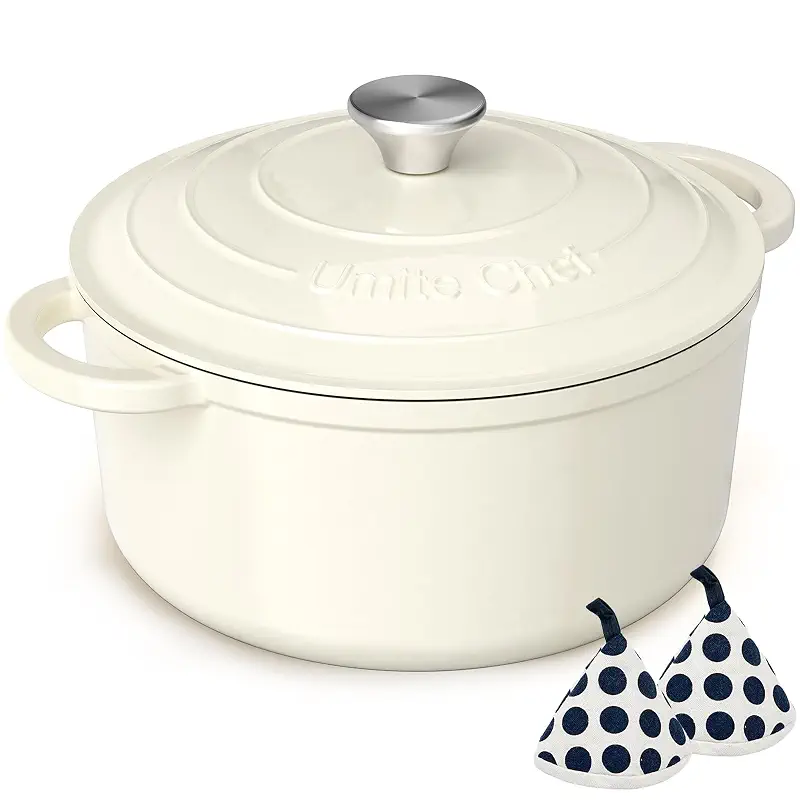
Enameled Cast Iron Dutch Oven - Umite Chef 5QT Pot with Lid & Cotton Potholders - Heavy-Duty Cookware for Bread Baking, Braising, Stews, Roasting(Cream White)
4.7(3,483)
Enameled 5-quart with excellent heat retention and easy cleanup at an accessible price point.
Ideal for: Home bakers starting out or upgrading, who want enameled convenience and bread-specific performance.
The Umite Chef Dutch oven earned its high ratings from bread bakers who appreciate both performance and practicality. The enameled interior makes sourdough release clean, and the cream-white color lets you see when the pot is truly clean. Owners report the pot heats evenly and holds that heat beautifully through a long preheat, which matters enormously for oven spring and crust development.
What sets this model apart is the lid design. The raised interior nodes collect condensation and redistribute it back onto the dough, mimicking a professional steam oven. The seal is tight enough that steam stays trapped during the critical first 15 minutes of baking. Several owners noted they hesitated to spend more on premium brands, then were pleasantly surprised by how well this pot performed.
The 5-quart capacity sits in a sweet spot for home bakers: large enough for a full-size boule without the dough touching the lid, but not so big that it's unwieldy or slow to preheat. One thing to keep in mind: cast iron demands respect around temperature shock. The pot needs 45+ minutes to cool naturally before washing, and quick transitions from hot to cold can crack the enamel. If you're impatient after baking, this requires discipline.
Pros
Tight-sealing lid with condensation nodes for even steam
Cream-white enamel interior reveals when pot is clean
Comes with cotton oven mitts and clear instructions
Cons
Requires careful cooling to avoid thermal shock damage
Heavier than nonstick cookware, demands strength to maneuver
Key features
5-quart enameled cast iron with self-basting condensation nodes
500°F oven-safe for high-heat bread baking and roasting
Induction-compatible base works on all cooktop types
Includes cotton potholders and user manual with care guidance
#2 Pick
Best for Sourdough Versatility
Lodge
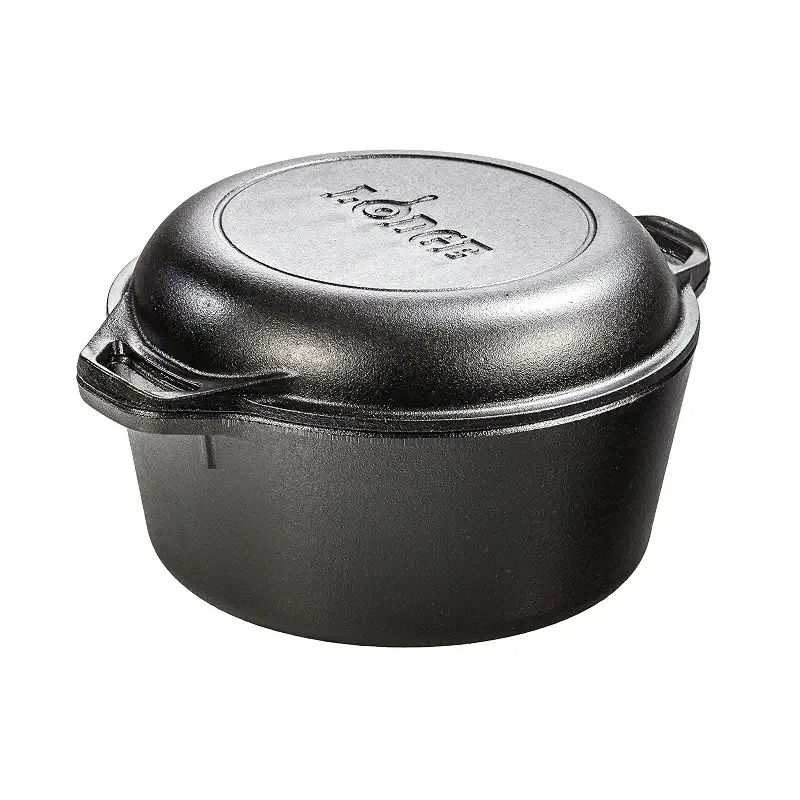
Lodge Cast Iron Double Dutch Oven, 2-in-1 Pot and Skillet Combo, 5 Quart | PFAS-Free & Non-Toxic Oven-Safe Cast Iron Dutch Oven with Loop Handle, Even Heat Retention, Ideal for Sourdough Bread Baking
4.7(15,313)
Bare cast iron 5-quart with dual-purpose lid that doubles as a standalone skillet.
Ideal for: Cast iron enthusiasts and experienced cooks who enjoy seasoning maintenance and want a multipurpose vessel.
Lodge's Double Dutch Oven puzzles some buyers at first, then becomes their favorite once they understand the design. The lid isn't just a lid; it's a 10-inch skillet that sits flat and acts as a secondary cooking vessel. For sourdough, this matters because you can sear meat for a braise in the lid, then use the main pot for braising, cutting stovetop steps in half.
Bare cast iron requires more hands-on seasoning than enameled options, but owners who commit to the maintenance find the payoff worth it. Lodge ships it pre-seasoned, so it's usable immediately, and the seasoning improves with every use. The heavyweight tradition here appeals to bread bakers who value heritage tools; cast iron improves over decades, not years.
For bread specifically, the bare iron surface can be finicky. Dough sometimes sticks until the seasoning is mature, and parchment paper becomes non-negotiable. One devoted user reported using parchment, preheating the pot and lid for 10-15 minutes, then baking with the lid on for perfect steam capture. The weight of the bare cast iron is actually an asset for heat retention, holding steady temperatures that even heating out scorched spots. Compared to the Umite Chef's enameled convenience, this model demands more attention but rewards it with a tool that lasts generations.
Pros
Dual-function lid works as skillet for searing and cooking
Made in USA with 125+ years of foundry expertise
Bare iron improves with use and outlasts enameled finishes
Cons
Requires regular seasoning and careful drying to prevent rust
Steep learning curve for home bakers unfamiliar with bare cast iron
Key features
5-quart bare cast iron pot with dual-handle skillet lid
Pre-seasoned with natural oil, PFAS-free cooking surface
Oven-safe for braising, baking, and outdoor campfire cooking
Heavy construction provides even heat distribution and excellent retention
#3 Pick
Best Complete Bread-Baking Kit
Crustlove
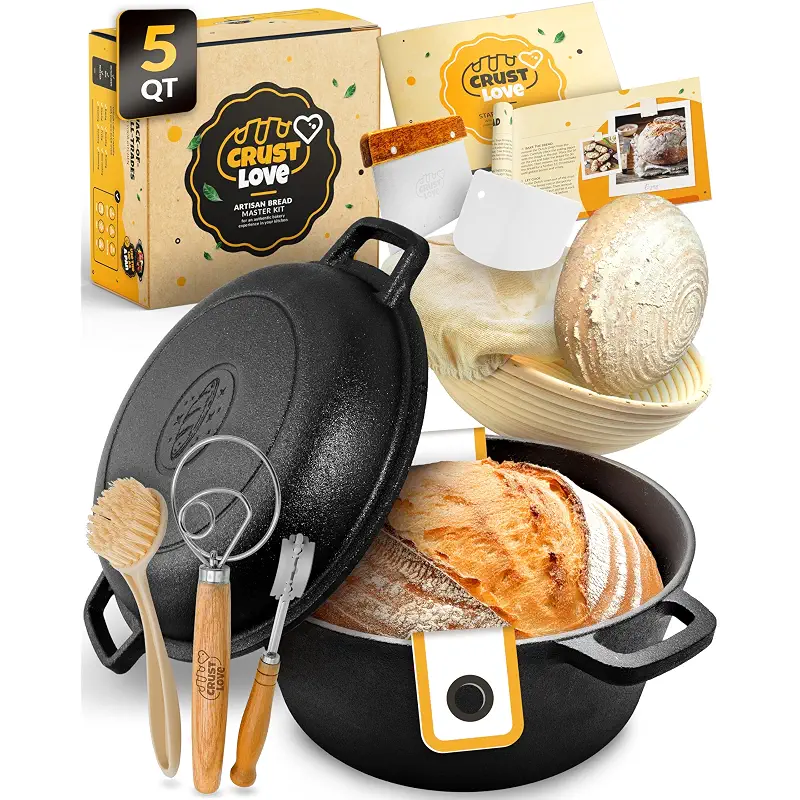
CRUSTLOVE 5 QT Pre-Seasoned Dutch Oven for Bread Baking with Lid and Kit | Dutch Oven for Sourdough Bread Baking and Supplies incl. Banneton, Bread Sling, Lame, Dough Whisk & Guide, Cast Iron Pot Set
4.7(698)
5-quart pre-seasoned pot bundled with banneton, lame, dough whisk, and recipe guide.
Ideal for: Beginner sourdough bakers who want everything in one purchase and don't mind bare cast iron seasoning.
Crustlove is the only option here that arrives as a complete sourdough setup, not just a pot. The kit includes a banneton basket for shaping, a bread lame for scoring, a dough whisk for mixing, parchment liners, and a recipe booklet in English and Spanish. For someone stepping into sourdough for the first time, this removes the paralysis of buying tools separately.
The 5-quart pot itself performs solidly for bread: the pre-seasoned bare cast iron holds heat well, the lid seals steam effectively, and owners report beautiful rise and crisp crusts. One reviewer, baking sourdough for the first time, noted the results felt far better than expected and swore she'd buy a second dedicated pot just for bread.
Where this kit shines is value per dollar. If you were to buy a bare cast iron Dutch oven plus quality banneton, lame, and booklet separately, the cost would exceed Crustlove's total. Where it falls short: some bakers prefer enameled interiors (bare cast iron requires parchment or careful seasoning), and the included dough whisk had durability issues for at least one owner. The barecast iron also means you're joining the seasoning-maintenance club rather than enjoying plug-and-play convenience. If you're attracted to the all-in-one philosophy, this beats buying tools one at a time.
Pros
Banneton basket, lame, whisk, and recipe guide included
Pre-seasoned bare cast iron at lower total cost than separate items
Complete setup removes decision paralysis for first-time bread makers
Cons
Bare cast iron requires seasoning maintenance and parchment paper for bread
Some accessory quality concerns; dough whisk durability noted as issue
Key features
5-quart pre-seasoned bare cast iron Dutch oven with lid
Includes banneton proofing basket, bread lame, dough whisk, and parchment liners
Recipe booklet with sourdough and traditional baking methods
Versatile for braising, roasting, and everyday slow cooking
#4 Pick
Best Premium Enameled Option
Mueller Home
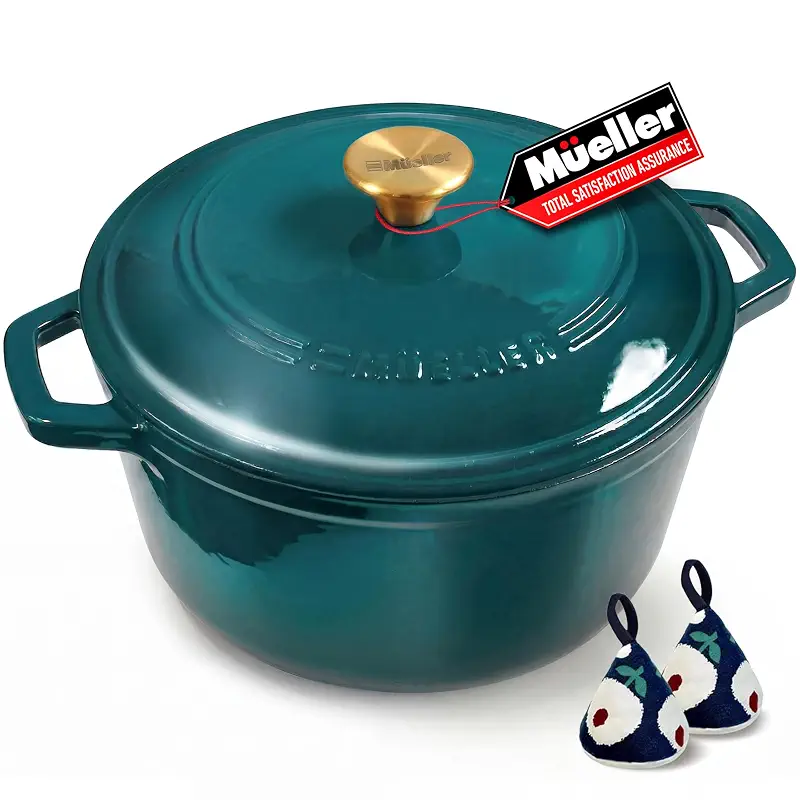
Mueller DuraCast 6 Quart Enameled Cast Iron Dutch Oven Pot with Lid | Sourdough Bread Baking, PFOA-Free, 500°F Oven Safe - All Cooktops incl. Induction, Braising & Slow Cooking, Emerald
4.7(4,578)
6-quart enameled cast iron with self-basting lid and high oven temperature rating.
Ideal for: Home cooks who bake bread regularly and also braise meats, roast large pieces, or cook for groups.
Mueller's DuraCast stands out for its 6-quart capacity and the interior self-basting nodes on the lid. This is the one to choose if you bake larger loaves, roast whole chickens, or make batch soups and want headroom beyond what a 5-quart provides. The extra quart matters for ambitious bakers who don't want dough touching the lid.
The enamel finish here is what Mueller emphasizes: PFOA-free porcelain that won't react with acidic ingredients and requires zero seasoning. After sourdough bakes, cleanup is genuinely fast: just warm soapy water. The 500°F oven-safe rating gives headroom for high-heat breads and finishing dishes under the broiler. Several owners raved about the emerald color (available in multiple shades) as beautiful enough to sit permanently on a stovetop or go straight to the table.
Compared to the smaller Umite Chef, this is a step up in capacity and refinement, and it performs equally well for bread. One owner called it indistinguishable in performance from luxury French brands at a fraction of the price. The trade-off is weight; 6 quarts of cast iron is genuinely heavy, and lifting it in and out of the oven demands a secure grip and respect for the load. If you have wrist issues or share cooking duties with someone smaller, the 5-quart Umite Chef might be smarter.
Pros
6-quart capacity gives room for large boules without dough touching lid
Self-basting interior nodes recirculate steam for superior crust development
PFOA-free enamel resists staining and won't react with acidic foods
Cons
Heavier than 5-quart models, harder to maneuver and store
Premium-tier pricing compared to smaller enameled alternatives
Key features
6-quart enameled cast iron with raised condensation-node lid interior
500°F oven-safe with stainless steel knob rated for repeated high-heat use
Works on gas, electric, ceramic, halogen, and induction cooktops
Available in 7+ colors including emerald, gray, and red
#5 Pick
Best Budget Enameled Choice
nuovva
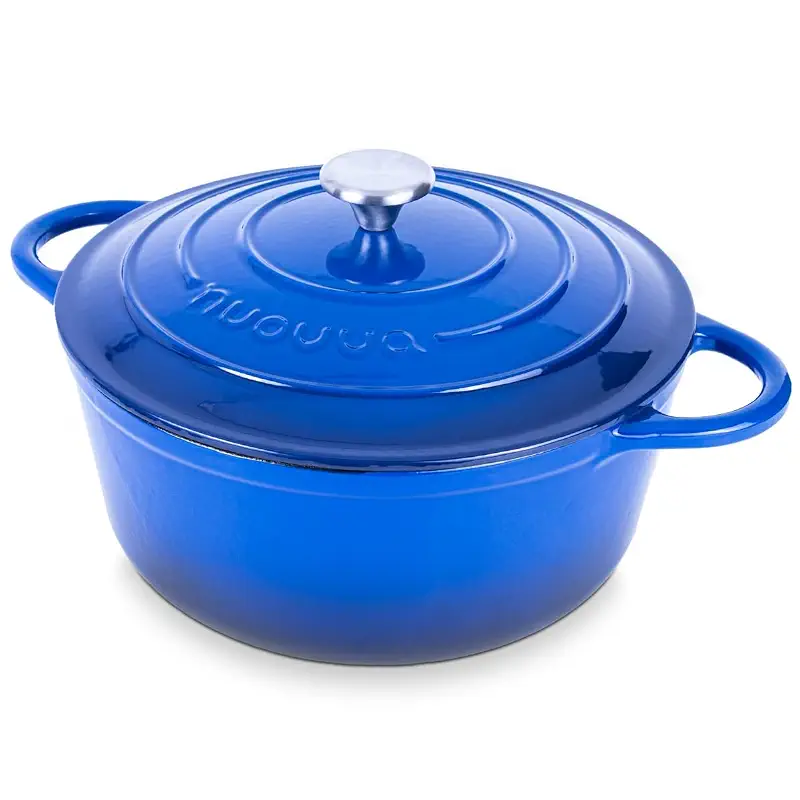
Nuovva Enamelled Cast Iron Dutch Oven Pot with Lid-6.4 Quart Non Stick Casserole Pot-Heavy Duty & Oven Safe up to 500° F for Bread Baking, Braising, Stews, Roasting - 28cm Dark Blue
4.6(7,080)
6.4-quart enameled Dutch oven with generous capacity and color variety at entry-level pricing.
Ideal for: Budget-conscious bakers who prefer enameled ease and want a larger capacity for family cooking.
Nuovva's enameled 6.4-quart pot offers the biggest capacity in this lineup while staying budget-friendly. The enamel finish eliminates bare cast iron maintenance, and the 500°F rating handles serious bread baking. Owners consistently praise the even heat distribution and the dramatic color options (sea glass, dark blue, red, gray) that add personality to the kitchen.
The interior enamel is smooth and naturally non-stick, and cleanup mirrors what buyers expect: warm water and mild soap, no scrubbing. For sourdough, the lid seals steam effectively, though one Australian baker flagged that the instruction manual limited oven temperature to 200°C (392°F) in her region, which falls below the 450°F+ that serious crust-building demands. This appears to be a regional safety note rather than a true limitation, but it underscores the importance of reading your manual.
One caveat: the lid reportedly wobbles slightly on the pot body. It's not a deal-breaker for function (the seal still traps steam) but it's worth knowing if you value a snug feel. Where this model trails the Mueller is in refinement. Mueller's self-basting nodes and premium enamel feel more polished. But if your budget is tight and you want enameled convenience with ample capacity, Nuovva delivers. The 6.4-quart size also makes it more manageable than Mueller's 6-quart because the slightly rounder shape feels less cumbersome to grip.
Pros
6.4-quart capacity at lower entry-level price than premium brands
Enamel finish requires no seasoning and cleans easily with soap and water
Wide color range (sea glass, blue, red, gray) fits various kitchen styles
Cons
Lid has slight wobble; doesn't sit as snugly as premium enameled models
Manual temperature restrictions in some regions may confuse buyers
Key features
6.4-quart enameled cast iron with matching cast iron lid
500°F oven-safe for bread baking, braising, and high-heat roasting
Smooth enamel interior resists staining and won't react with acidic foods
Robust double handles designed for safe lifting with oven mitts
How to Choose a Dutch Oven for Sourdough
Enameled vs. Bare Cast Iron
This is the first fork in the road. Enameled cast iron arrives ready to use; you wash it like any pot and move on. Bare cast iron demands seasoning maintenance but improves over years of use and lasts indefinitely. For enameled versus bare cast iron, ask yourself: do you enjoy hands-on kitchen maintenance, or do you prefer convenience? Enameled suits busy bakers; bare iron rewards those who love the ritual. Both perform beautifully for sourdough baking in dutch ovens when used correctly.
Size: 5-Quart vs. 6-Quart and Beyond
A 5-quart pot fits a standard 1-pound sourdough boule without dough touching the lid, which is critical for oven spring. A 6-quart gives headroom for larger loaves, whole roasted chickens, or batch cooking. If you bake solo loaves and braise occasionally, 5 quarts is enough and easier to manage. If you cook for groups, roast frequently, or bake larger shapes, jump to 6 quarts. Weight matters: 5-quart enameled is noticeably lighter than 6-quart, so factor in your strength and how often you'll lift it in and out of the oven.
Heat Retention and Oven Spring
Thicker cast iron walls hold heat longer and more evenly, which translates to better oven spring and crispier crust. All five options in this lineup use heavy-duty cast iron, so thermal performance is strong across the board. What differs is the lid design: models with raised interior nodes (Mueller, Umite Chef) actively recirculate steam back onto the dough, mimicking a professional steam oven. Smooth-interior lids (Lodge bare cast iron, Crustlove) still seal steam but don't redirect it as aggressively. If you're chasing that glossy, shattered crust, the self-basting interior matters.
Budget, Accessories, and Long-Term Value
Entry-level enameled options (Umite Chef, Nuovva) cost less upfront and require no maintenance beyond washing. Bare cast iron (Lodge, Crustlove) costs slightly more but comes pre-seasoned and improves with use; the Crustlove kit includes banneton, lame, and recipe guide, justifying its price if you're buying those tools anyway. Premium enameled (Mueller) feels refined but commands higher pricing. Think long-term: a Dutch oven you buy today should outlive your children. All five are built to last; the question is what features justify the cost for your baking style.
Frequently asked
Do I need to preheat the Dutch oven before baking sourdough?
Yes. Preheating for 45 to 60 minutes at 450°F is standard practice. The pot and lid must reach full temperature so the oven spring happens in the first few minutes, before the dough surface sets. A cold pot will produce a dense, flat loaf. Allow 5-7 minutes for heat to distribute evenly throughout the cast iron walls.
Can I use parchment paper in a Dutch oven for sourdough?
Absolutely. Parchment paper is your friend, especially with bare cast iron or if you're still building seasoning layers. Line the pot, place your shaped dough on the parchment, cover with the lid, and bake. The parchment prevents sticking and peels away cleanly once the crust sets. For enameled pots, parchment is optional but still helpful for easy release.
What temperature should I bake sourdough at in a Dutch oven?
Most recipes call for 450-500°F. All five Dutch ovens in this lineup are rated safe to 500°F. Start with the pot and lid on for the first 15-20 minutes to trap steam, then remove the lid to let the crust brown and darken. Check your specific recipe; some call for 475°F for a longer bake to develop deeper flavor.
How do I clean a Dutch oven after baking bread?
Enameled pots: let cool, then wash with warm soapy water and a soft sponge. Bare cast iron: rinse with hot water and dry immediately, then rub a light coat of oil while still warm. Never soak bare cast iron or put it in the dishwasher. For burnt-on residue, a gentle soak in hot soapy water (not overnight) loosens it, then scrub with a soft brush.
Can a Dutch oven crack from thermal shock?
Yes, enameled cast iron can crack if exposed to sudden temperature changes. Never pour cold water into a hot pot or move it from a hot oven directly to cold water. Let the pot cool naturally for 45+ minutes before washing. Bare cast iron is more forgiving but still benefits from gradual cooling. This is the biggest maintenance rule to prevent costly damage.