Kitchen & Dining · Small
Best Doughnut Maker: Top Mini Donut Machines for Home Baking
Find the best doughnut maker for your kitchen. Compare top-rated mini donut machines that bake fluffy, delicious donuts at home without deep frying.
Affiliate disclosure: As an Amazon Associate I earn from qualifying purchases.
At a glance
2
Best for Bulk BakingBaker's Friend
3
Best for Bigger BitesBaker's Friend
4
Best for Quick ResultsDSP
5
Best for High-Volume ProductionLaven Birch
Detailed reviews
The DASH Express hits the sweet spot between space-saving design and practical output. It preheats in minutes and delivers soft, cake-style donuts that appeal to families and experimentation-minded cooks. The nonstick coating truly works: most owners report minimal sticking even without spray, and cleanup is genuinely effortless with just a damp paper towel. One real limitation: the bottom cooks slightly hotter than the top, so flipping halfway through produces more even browning. Some owners work around this by accepting slight color variation, while others embrace the flip as part of the rhythm. The seven-donut batch means you'll cycle through if feeding a crowd, but for daily snacking or meal prep, that's actually ideal: fresh batches every few minutes without overwhelming your counter or requiring recipe calculation. Compared to the larger Baker's Friend 12-donut model, this trades volume for speed and simplicity.
Pros
- Preheats and bakes in under five minutes total
- Genuinely nonstick surface, easy daily cleanup
- Compact footprint fits tight kitchen spaces
Cons
- Bottom heats hotter than top, uneven browning possible
- Seven-donut batches require multiple rounds for crowds
Key features (4)
- Seven mini donuts per batch with dual nonstick heating surfaces
- Fast preheat time and four to six minute bake cycle
- Compact, lightweight design ideal for small kitchens and storage
- No on/off switch; plug-in operation with passive heating control
Baker's Friend's 12-donut machine cuts baking time in half if you're feeding a group or prepping ahead. Five minutes total yields a full dozen, which matters when you're hosting or stocking a freezer for the week. Owners consistently praise the nonstick performance and note that preheating with the green-light signal is straightforward. The trade-off is bulk: this appliance claims more counter real estate than the DASH, and the slightly longer bake cycle means patience is part of the rhythm. One caveat worth noting: reviews flag that timing matters: bakers should not wait for the green light to fully fade, as some models run hot and will scorch donuts if you delay. A piping bag or squeeze bottle makes filling the wells cleaner than free-pouring batter. Where the DASH Express focuses on speed and simplicity, this model prioritizes throughput for families or small events.
Pros
- Twelve mini donuts per batch doubles throughput efficiency
- Consistent nonstick release across all wells
- Even baking with PFOA-free nonstick coating
Cons
- Longer preheat and bake cycle than compact models
- Larger footprint requires more dedicated counter space
Key features (4)
- Double-sided nonstick surfaces cook 12 mini donuts evenly
- PFOA-free coating meets food-safety standards
- Red and green indicator lights signal heating and readiness
- Compact width despite 12-donut capacity
If mini donuts feel too bite-sized, this Baker's Friend model strikes a different balance: six donuts at three inches each provide a more satisfying handful while still avoiding deep-fry complexity. The larger format appeals to kids' parties and adults who want real dessert rather than a single-pop treat. Owners note that the 3-inch size is perfect for portion control and decorating: much easier to frost or glaze than truly tiny donuts. Bake time runs six to seven minutes, slightly longer than the 12-well version, but cleanup remains a wipe-down operation. One legitimate drawback is batch volume: six donuts means more batches if you're feeding many people, which mirrors the DASH Express limitation but with bigger individual pieces. The aqua finish is a plus for countertop aesthetics. Where the Baker's Friend 12-donut model emphasizes quantity, this one prioritizes size and presentation for smaller gatherings or a more leisurely baking experience.
Pros
- Larger 3-inch donuts feel more substantial and filling
- Easy cleanup with included silicone spatula
- Heats quickly with straightforward red and green light indicators
Cons
- Six-donut batches mean more rounds for bigger groups
- Slightly longer bake time than smaller models
Key features (4)
- Six 3-inch mini donuts per batch; bigger than standard mini size
- Nonstick coating with included silicone spatula for easy removal
- Red and green heating indicators for preheating and readiness
- Compact footprint with attractive aqua finish
The DSP Mini delivers the quickest turnaround of any model reviewed here: three-minute bake time versus four to seven minutes for competitors. That speed advantage compounds if you're making multiple batches: a household that wants donuts for breakfast can cycle through faster. The nonstick surface and wipe-clean design are solid. However, reviews flag a critical issue with temperature control: some units run too hot, browning the outside while leaving the center underbaked, or conversely, baking unevenly across the six wells. Owners have reported needing to unplug and replug mid-bake to manage heat, which defeats the convenience promise. DSP's customer service team is responsive according to reviews, but the heating inconsistency is a real concern. Six-donut capacity matches the Baker's Friend 3-inch model but without the larger size advantage. If you score a unit that heats evenly, this is an excellent speed pick; if heat control is problematic, the experience frustrates quickly. The DSP works well when it works well, but thermal variance is a legitimate gamble.
Pros
- Fastest bake cycle at approximately three minutes per batch
- Simple plug-and-go operation with light indicators
- Easy wipe-clean nonstick surface
Cons
- Heating temperature inconsistency across units; some run too hot
- Small six-donut capacity limits throughput for groups
Key features (4)
- Six mini donuts per batch with fast three-minute bake cycle
- Red and green indicator lights guide heating and readiness
- Premium nonstick coating for easy release and cleanup
- Compact design fits small countertops and storage
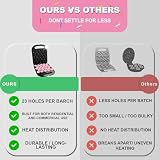
The Laven Birch 23-well machine is in a different category: it's built for production. Bakers report cycling through hundreds of donuts in a few hours, with four to five minute bake times once you establish a rhythm. This is genuinely useful for school fundraisers, café pop-ups, or ambitious home bakers who enjoy the process as much as the product. The nonstick release is reliable, and cleanup remains straightforward. The important caveat is size expectation: reviewers consistently note the donuts are micro-small, roughly 1.5 to 2 inches, so this is one-bite territory rather than a hearty portion. Some buyers felt the description oversold the donut size and returned units; others found the tiny format perfect for party favor bags or school-lunch boxes. The footprint is genuinely large: this isn't a compact counter accessory but a serious appliance. One report flagged structural failure (came apart mid-use on the second cycle), though that appears isolated. Compared to compact home models, this sacrifices everyday kitchen integration for industrial output; it's a commitment to a specific use case rather than a casual weekend tool.
Pros
- Twenty-three donuts per cycle saves time for large gatherings
- Fast heating and efficient nonstick release at scale
- One-touch operation works for beginners and small businesses
Cons
- Donuts are 1.5 to 2 inches; much smaller than expected by some
- Large footprint requires dedicated counter or storage space
Key features (4)
- Makes twenty-three mini donuts in a single four to five minute cycle
- Fast-heating system with red and green light indicators
- Premium nonstick surfaces for easy release and commercial-grade use
- One-touch locking operation; designed for volume production
How to Choose the Right Donut Maker
Capacity and Batch Size
Donut makers range from 6 to 23 wells per cycle. If you're baking for yourself or small family meals, 6 to 7 donuts is ideal: fresh batches every few minutes without waste. For entertaining or meal prep, 12-well machines cut your total baking time in half. The 23-well model is production-focused and makes sense only if you're running a bake sale, feeding a large gathering, or genuinely enjoy repetitive baking cycles. Smaller batches also mean you can experiment with flavors (one batch chocolate, the next vanilla) without committing to dozens of identical donuts.
Donut Size and Portion
Most models make true bite-sized mini donuts, roughly 1.5 to 2 inches in diameter. A few, like the Baker's Friend 3-inch option, deliver larger portions that feel more substantial. Tiny donuts work for kids' parties, lunch-box snacks, and decorating projects; larger sizes suit adults and dessert-focused occasions. Check reviewer photos and size comparisons before committing: perception of 'mini' varies widely, and disappointment about size is a common theme in returns.
Bake Time and Temperature Control
Cycle times range from 3 to 7 minutes depending on the model. Faster isn't always better if it comes with heating inconsistency: some machines run hot and brown exteriors before centers cook through. The best models use red and green indicator lights to signal when preheating is complete, reducing guesswork. When cleaning donut maker nonstick pans, ensure they cool fully before wiping, as thermal shock can affect nonstick coating longevity. Read reviews for evidence of even browning; uneven results suggest temperature-control issues that affect every batch.
Nonstick Performance and Cleanup
All modern donut makers claim nonstick surfaces, but real-world performance varies. Owners consistently praise models where donuts release cleanly with zero spray, while others require initial nonstick coating to avoid sticking. PFOA-free nonstick is standard now and worth confirming if chemical safety matters to you. Cleanup is uniformly simple across good models (a damp cloth wipe after cooling) but the nonstick quality determines whether baking feels friction-free or fussy.
Counter Space and Storage
Compact models weigh a few pounds and fit into most kitchen cabinets; production-volume machines are heavy and bulky. Measure your available counter space and storage before choosing. If space is tight, choose a model under 10 inches wide and under 5 pounds. Lightweight machines are also easier to relocate for entertaining or testing before committing to a permanent shelf.
Our picks at a glance
2
Best for Bulk BakingBaker's Friend
3
Best for Bigger BitesBaker's Friend
4
Best for Quick ResultsDSP
5
Best for High-Volume ProductionLaven Birch
Frequently asked
Do I need to use nonstick cooking spray in my donut maker?
Most modern donut makers have reliable nonstick coatings and don't require spray if preheated properly. Owners report excellent release with just a light wipe between batches. Some reviewers use spray once or twice when new, then stop. If donuts consistently stick, check that your machine fully preheats (green light signal) and that batter isn't too wet, which can increase sticking. Spray is optional, not essential.
What kind of batter works best in a donut maker?
Boxed cake mix is the easiest starting point and yields fluffy, evenly cooked donuts. Simply mix according to package directions and fill the wells. Homemade batter works too but benefits from a slightly thicker consistency: thin batters can overflow or bake unevenly. Brownie mix, banana bread batter, and zucchini bread also work well. Use a piping bag or squeeze bottle to fill wells neatly and avoid over-filling, which causes batter to seep out during baking.
How long do homemade donuts stay fresh?
Freshly baked donuts are best within a few hours but keep in an airtight container for 1 to 2 days at room temperature. For longer storage, freeze cooled donuts in a freezer bag for up to 2 weeks. Reheat in a toaster oven or microwave before serving. Many owners make batches ahead and freeze them for quick breakfasts or snacks throughout the week, which is one of the real perks of home donut baking.
Can kids safely use a donut maker?
Donut makers get very hot during use, so adult supervision is essential for young children. Older kids (8+) can assist with filling wells under guidance, but removing donuts and handling the hot machine should be an adult task. The nonstick wells and straightforward operation make supervised use fun and educational, but treat the appliance like you would an oven or toaster in terms of safety protocols.
Why are my donuts cooking unevenly or burning on the outside?
Uneven cooking usually means your machine runs hotter than expected or the preheat cycle wasn't long enough. Wait for the green light indicator to fully stabilize before adding batter. If the top browns much faster than the bottom, try flipping donuts halfway through (use a toothpick to gently rotate). If outsides char while centers stay raw, your specific unit may have temperature-control issues: check the return policy and contact customer support if this happens consistently.