Kitchen & Dining · Cookware
Best Donabe Pots for Home Cooking: Authentic Japanese Clay Cookware
Find the best donabe pots for authentic Japanese cooking. Compare traditional clay hot pots for soup, stew, and rice from top brands.
Affiliate disclosure: As an Amazon Associate I earn from qualifying purchases.
At a glance
1
Best Budget-Friendly OptionOkllen
2
Best for Communal MealsKotobuki
3
Best Authentic Japanese CraftIppinka
4
Best for Traditional Japanese MealsTikusan
5
Best Compact Option for Small Familieslake tian
Detailed reviews
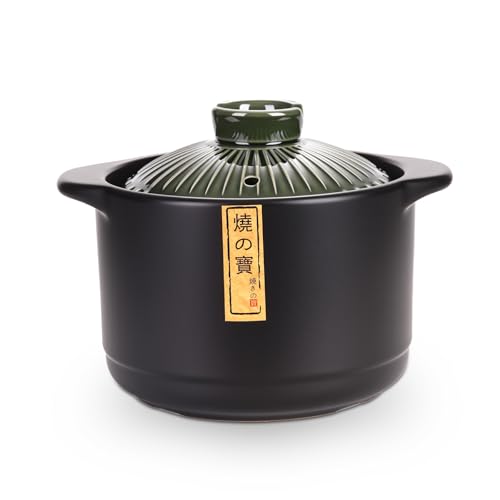
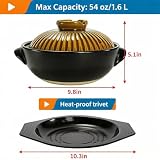
The Okllen large ceramic bowl hits a sweet spot for cooks new to donabe or those wanting to test the category without a major investment. At a fraction of the cost of authentic Banko-ware, this Korean-made piece still uses high-fired premium clay free of lead and cadmium, and buyers consistently report it performs as well as pots costing significantly more. The 54-ounce capacity works for small families or individual portions, and the double handles plus heat-resistant trivet make it safer to move between stove and table.
What sets this apart is its flexibility: it works on gas, electric, and ceramic cooktops, plus ovens and microwaves. The smooth glazed interior cleans easily, and the design includes a lidded air vent to control splashing. Where traditional donabe lean heavily on stovetop use, this one adapts to modern kitchens without fuss.
The trade-off is size and authenticity. Buyers note it runs on the smaller side if you're cooking for four or more, and this is not an authentic Banko-ware piece like the Tikusan or Ippinka models. For a first donabe or occasional use, though, this delivers excellent value and proves the cooking method works before you commit to a premium Japanese import.
Pros
- Works on gas, electric, ceramic stoves, and ovens
- Premium food-safe clay at accessible entry price
- Double handles and trivet for safe, easy handling
- Straightforward cleaning and maintenance
Cons
- Smaller 54-ounce capacity limits cooking for larger groups
- Not compatible with induction cooktops
Key features (5)
- 9.8-inch diameter, 54-ounce capacity Korean ceramic construction
- Oven, microwave, gas, and electric stovetop compatible
- Double handles with heat-resistant serving trivet included
- Lead-free, cadmium-free, arsenic-free clay firing
- Vented lid design to prevent boil-over and splattering
Kotobuki's 11-inch donabe is built for the traditional nabemono experience: a tabletop gathering where diners share from a central pot. At this size, it comfortably serves 4 to 5 people, and the handcrafted gray mishima design reflects generations of Japanese pottery craft. Made in Japan with proper Banko-ware clay, it conducts heat efficiently and develops a patina of use over time that collectors appreciate.
Owners report strong performance for winter hot-pot dinners and nabeyaki udon, and the communal ritual aspect resonates with buyers seeking authenticity. The included instructions (in Japanese) detail pre-use treatment with flour and water to seal the clay, which takes care and attention but ensures longevity. Buyers who followed that guidance report the pot lasting years without cracking.
Compared to the Okllen, this is a genuine import and a step up in size and heritage. However, hand-washing only and the Japanese-only instructions can trip up newcomers unfamiliar with donabe care. If you're willing to study the prep steps and value tradition and scale, this delivers what Kotobuki has built its reputation on.
Pros
- Authentic Banko-ware made in Japan with gray mishima design
- Generous 11-inch diameter ideal for communal one-pot meals
- Efficient heat retention and even cooking throughout
- Handcrafted aesthetic serves as tabletop centerpiece
Cons
- Hand-wash only; instructions provided only in Japanese
- Requires flour-and-water pre-treatment before first use
Key features (5)
- 11-inch diameter Banko-ware earthenware, made in Japan
- Serves 4–5 people with traditional gray mishima pattern
- Direct flame, electric, and oven compatible, not induction
- Pre-use flour sealing treatment locks in durability
- Handcrafted aesthetic enhances table presentation
Ippinka brings Banko pottery credentials that go back centuries to Mie, Japan, the heartland of this craft. The 2300-milliliter capacity (roughly 8.5 cups) positions it between entry-level and heavy-duty, and the black finish pairs traditional functionality with understated elegance. What elevates this pot is its far-infrared ray (FIR) technology in the clay, which manufacturers claim deepens flavors and cooks food more evenly than conventional ceramic.
Buyers who self-identify as Japanese praise it as authentically made and report exceptional results with pot soups and stews. The heat retention is notable: food stays hot for extended service, which fits both family meals and entertaining. At 2300ml, it's large enough for three to four people without requiring a full table setup like the Kotobuki.
Where this differs from the Tikusan (another Banko-ware option) is the FIR claim and the mid-sized capacity, making it a middle path between the Okllen's budget friendliness and full-scale communal pots. It's hand-wash only and the oven body can reach only 360 Celsius, so some baked gratins are off-limits. For cooks seeking proven Japanese craft and willing to hand-care for their cookware, this delivers authenticity and thoughtful design.
Pros
- Authentic Banko-yaki from Mie, Japan with far-infrared cooking
- 2300ml capacity serves 3–4 people comfortably
- Exceptional heat retention for prolonged table service
- Black glaze with elegant, durable finish
Cons
- Hand-wash only; not dishwasher safe
- Body limited to 360 Celsius; lid not oven-safe
Key features (5)
- Authentic Banko-yaki pottery from Mie, Japan with FIR clay
- 2300ml (8.5-cup) capacity ideal for 3–4 servings
- Far-infrared cooking enhances flavor and nutrient retention
- Direct flame, electric, and oven compatible, not induction
- Black finish with traditional Japanese design aesthetic
Tikusan occupies the high-end, Japan-made space where serious cooks invest in a pot they plan to use weekly for years. This Banko-ware piece is hand-thrown and carries the authenticity that buyers seeking genuine Japanese cookware specifically look for. The 51-fluid-ounce capacity (7 go) falls between mid-sized and large, making it suitable for four-person meals without the full communal-table footprint of the Kotobuki.
Owners rave about the quality and design: one noted it's "definitely worth the value" and "not those Chinese knock offs." The handcrafted glaze comes through in feedback, and cooks report it performs beautifully for chicken stews, rice, and traditional Japanese soups. Heat retention matches the higher price tag, and the weight signals serious pottery. Buyers do note the pot is expensive relative to budget options, and one raised a concern about lid-and-body glaze mismatch, which underscores that hand-made pieces vary slightly in finish.
Compared to the Ippinka, Tikusan is larger and more established in Japanese cooking communities. Both are premium Banko-ware, but Tikusan's reputation centers on its use in traditional Japanese households. Gas stove only; induction is not an option. For cooks who own best stackable cookware alongside a dedicated donabe collection, this premium pot marks a commitment to specialized, intentional cooking rather than multi-purpose versatility.
Pros
- Authentic hand-thrown Banko-ware made in Japan
- Premium craftsmanship with proven long-term durability
- Excellent heat retention and even cooking performance
- Ideal size for 4-person traditional nabemono dinners
Cons
- Gas stovetop only; no induction compatibility
- Premium price point reflects authentic craft
Key features (5)
- Hand-thrown Banko-ware pottery made in Japan
- 51-fluid-ounce (7 go) capacity for 4-person meals
- Gas direct-flame cooking with superior heat retention
- Premium handcrafted glaze with traditional design
- Durable clay construction built for decades of use
The lake tian ceramic pot takes a practical approach: it delivers donabe benefits in a smaller footprint suited to one- or two-person households or cooks with tight kitchen storage. At 2.1 quarts (2 liters), it's the smallest in this lineup and handles rice, soup, stew, and slow-cooked dishes without monopolizing counter or cabinet space. The green earthenware glaze is visually appealing, and the anti-spill lid with a small steam hole prevents the boil-over hassles that plague some clay pots.
What stands out for everyday practicality is its flexibility: it works on gas, electric, ceramic, and glass cooktops, plus the oven. That makes it more adaptable than Tikusan or Kotobuki's gas-only limitation, and buyers report the smooth glazed interior resists sticking, making cleanup straightforward: no arduous hand-scrubbing. Owners note food cooks faster and stays hot longer than stainless steel, and one camper even used it over open flame without cracking, which speaks to durability under stress.
The trade-off is size. This is not a pot for four-person entertaining, and it lacks the heritage cachet of authentic Banko-ware. Instructions come in Chinese only, which can confuse first-time users. For solo cooks or couples seeking a compact, healthy ceramic vessel that fits modern kitchens without fuss, this delivers strong value.
Pros
- Compact 2.1-quart size ideal for small households
- Works on gas, electric, ceramic, and glass cooktops plus oven
- Smooth glazed interior resists sticking and cleans easily
- Anti-spill lid design prevents splashing and locks moisture
Cons
- Limited to solo or two-person servings; not for larger groups
- Instructions provided in Chinese only
Key features (5)
- 2.1-quart (2-liter) ceramic capacity with green glaze finish
- Gas, electric, ceramic, glass stovetop and oven compatible
- Anti-spill design with steam hole and raised rim
- Food-safe, lead-free clay with smooth non-stick glaze
- Stackable design maximizes kitchen storage efficiency
How to Choose a Donabe Pot
Stovetop Compatibility Matters
Not all donabe work on all heat sources. Gas and electric stovetops are standard, but induction cooktops are incompatible with clay pots: the electromagnetic field doesn't transfer heat to ceramic. If you have an induction cooktop, verify the product specs explicitly say it works with your setup, or choose a model the seller confirms safe for induction. Kotobuki, Tikusan, and Ippinka are gas-only. Okllen and lake tian support both gas and electric. Oven use varies too: lake tian bodies can handle standard baking temperatures, while Ippinka tops out at 360 Celsius.
Size and Serving Capacity
Donabe come in three practical ranges. Entry-level (Okllen at 54 oz) suits solo cooks or two-person meals. Mid-sized pots (lake tian at 2.1 quarts, Ippinka at 2.3 quarts, Tikusan at 7 go) feed three to four people comfortably. Large communal pots (Kotobuki at 11 inches) handle four to five diners and shine for tabletop entertaining. Think about your typical meal size and whether you want a pot that doubles as a table centerpiece. Smaller pots also mean faster heating and less counter clutter.
Authentic Banko-Ware vs. Budget Alternatives
Authentic Banko-ware, made in Japan's Mie prefecture from specific clay types, commands a premium. Kotobuki, Ippinka, and Tikusan are true Banko pieces with centuries of craft tradition behind them. Okllen and lake tian are well-made ceramic pots that deliver the core benefits (heat retention, flavor enhancement, even cooking) without the heritage price tag. If you're investing in a donabe versus ceramic cookware for the first time, a budget model lets you learn the care routine (seasoning, hand-washing, air-drying) before committing to a premium piece. Experienced Japanese cooks often favor Banko-ware for subtle flavor differences and durability that outlasts decades.
Pre-Use Preparation and Care
This is non-negotiable: before your first use, follow the donabe seasoning and curing guide specific to your model. Many pots require flour-and-water boiling to seal the porous clay and prevent mold or odor. Kotobuki's instructions detail this step. Ippinka and Tikusan expect it too. Hand-wash only is the rule for authentic Banko-ware; lake tian and Okllen may tolerate dishwashers but hand-washing extends their life. Never place a cold pot directly on high heat, and avoid thermal shock by letting hot pots cool before washing. Proper care transforms a donabe into a multi-decade investment.
Aesthetic and Dining Experience
A donabe isn't just cookware; it's part of the meal. Gray mishima, black glazes, and green finishes each set a different table mood. If you entertain often or value visual presentation, the handcrafted appearance of Banko-ware (Kotobuki, Ippinka, Tikusan) elevates the dining experience. Budget pots like Okllen and lake tian are functional and clean-looking but lack the artisanal appeal. Think about whether your pot will spend life in the cupboard or routinely travel from stove to table.
Our picks at a glance
1
Best Budget-Friendly OptionOkllen
2
Best for Communal MealsKotobuki
3
Best Authentic Japanese CraftIppinka
4
Best for Traditional Japanese MealsTikusan
5
Best Compact Option for Small Familieslake tian
Frequently asked
Can I use a donabe on an induction cooktop?
No. Donabe are made of clay, which doesn't respond to electromagnetic induction. If you have an induction cooktop as your primary heat source, a traditional donabe won't work. Check with the manufacturer for any specialized induction-compatible clay pot alternatives, though they are rare and often compromise the authentic cooking experience.
What is the difference between a donabe and a regular ceramic pot?
Donabe are specifically engineered Japanese clay vessels with porous, heat-retentive earthenware that distributes warmth evenly and holds it longer than standard ceramic. This promotes slow, even cooking and keeps food hot at the table. Regular ceramic pots may lack the same heat-retention properties and are often not designed for direct flame cooking. Authentic Banko-ware clay also imparts subtle flavor benefits and develops character over time.
Do I need to season a donabe before using it for the first time?
Yes. Most donabe require a pre-use flour-and-water boiling treatment to seal the porous clay and prevent mold, odors, and staining. The exact steps vary by manufacturer, but generally involve filling the pot 80% with water, bringing it to a boil, stirring in flour, and simmering for 5–10 minutes before cooling and drying. Always check your pot's instructions; skipping this step can lead to problems down the line.
Is a donabe safe for use on a gas stove?
Yes, gas is ideal for donabe. Direct flame works beautifully with clay pots. However, place the pot on a heat diffuser or trivet if your stove has very high, uneven flames, to prevent cracking from thermal shock. Electric and ceramic cooktops also work well with most donabe; always verify your specific model's heat-source compatibility before purchase.
How long does a donabe last if I care for it properly?
A well-maintained donabe can last decades or even centuries. Authentic Banko-ware pieces are often passed down through generations. The key is hand-washing (no dishwasher), avoiding sudden temperature changes, allowing it to air-dry completely before storage, and following any seasoning or maintenance steps from the maker. Over time, a good donabe actually improves as the clay develops patina and absorbs subtle flavors from regular cooking.