Kitchen & Dining · Cookware
Best Cutting Board for Shun Knives: Wood & Plastic Options
Find the ideal cutting board for Shun knives. Compare hinoki wood, synthetic, and Japanese cypress boards that preserve blade sharpness and quality.
Affiliate disclosure: As an Amazon Associate I earn from qualifying purchases.
At a glance
1
Best Overall: Premium Japanese HeritageShun
2
Best for Longevity: Thick Hinoki Construction光大(Kodai)
3
Best for Professional Protection: Synthetic PerformanceHayate Yoshihiro
4
Best for Lightweight Use: Thin Premium HinokiYamasan Kyoto Uji
5
Best Value: Zwilling MIYABI Single-Piece HinokiZwilling
Detailed reviews
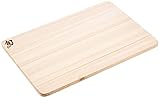
Shun itself designed this board with its knives in mind, and that partnership shows. The hinoki wood is medium-soft, which means it yields slightly as your blade passes through, absorbing impact energy that would otherwise transmit to the edge. This is the core value: your knives won't dull as quickly because the wood "gives" rather than resists. The board also carries the natural fragrance of Japanese cypress and comes with Shun's backing, including free sharpening and honing support.
Owners consistently praise the aesthetic appeal and how well it handles everyday vegetables and lighter prep work. The hinoki scent fades over time but returns after washing, which many find pleasant. Where this board asks for trade-offs: it stains more readily than end-grain hardwood alternatives, it's not ideal for raw meat (the soft fibers trap juices), and the lifespan is shorter than denser boards: expect to refinish or replace it after several years of daily use. The board is also lightweight enough to slide on smooth countertops if you don't anchor it.
We'd reach for this first if you cook primarily with Japanese knives and want a board endorsed by the manufacturer itself. If durability and minimal maintenance matter more than heritage, a sturdier end-grain board might serve you better.
Pros
- Soft wood designed to preserve Shun knife edges
- Forest Stewardship Council certified sustainable sourcing
- Backed by Shun with free sharpening support
- Lightweight and compact for storage
Cons
- Stains easily and requires preventive dampening before use
- Shorter lifespan than harder wood or synthetic boards
Key features (4)
- Medium-soft hinoki cypress wood with natural knife-friendly elasticity
- Double-sided design for versatile prep and presentation
- Medium size (15.75" × 10.75") fits compact kitchens
- Sustainably sourced with natural fragrance
This Kodai board operates on the same soft-wood principle as other hinoki options, but thickness is the differentiator. The substantial 1-inch construction resists warping better and provides deeper reserve before the surface becomes too scored to use comfortably. What stands out in owner feedback: users report the board actually "heals" itself when soaked in water: those knife marks and small gouges visibly diminish over time, something thinner boards can't claim.
The board also resists staining better than expected for hinoki. Multiple owners mention pouring boiling water over discolored areas and watching stains disappear after air-drying in shade. This suggests either superior treatment or a denser cut of hinoki than some competitors offer. The cypress scent is pronounced and pleasant, and the lightweight-yet-sturdy balance means it's easy to handle despite the thickness.
Where it differs from the Shun option: Kodai is not affiliated with any knife brand, so there's no bundled sharpening service. Availability can also be inconsistent on Amazon (the manufacturer directs buyers to their own seller link to ensure authenticity). If you want a hinoki board that lasts longer and bounces back from cosmetic wear, this is worth the extra effort to source.
Pros
- Thicker construction resists warping and deepens usable lifespan
- Self-healing properties reduce visible knife marks over time
- Superior stain resistance for hinoki wood
- Lightweight yet sturdy with consistent flatness
Cons
- Smaller review pool means less long-term ownership data available
- Sourcing direct from manufacturer can be less convenient than standard Amazon checkout
Key features (4)
- Thick hinoki cypress (1 inch) resists warping and heavy wear
- Self-healing surface that minimizes persistent knife marks
- Ultra-lightweight for easy handling despite substantial thickness
- Natural cypress scent with water-resistant properties
This Yoshihiro board pivots away from wood entirely, using a proprietary soft plastic (LDPE) formulated to absorb blade impact while staying inert: no fibers shed into food, no water absorption, no staining or odor. The design philosophy is knife-first: it was engineered to minimize stress on high-carbon steel blades, which is exactly what Shun knives are made from. Owners report their edges need less frequent steeling and sharpening after switching to this board.
The practical advantages run deep. It's heavier and thicker than wood boards, which means it stays perfectly flat and never moves on the counter: a stability that solo wood boards struggle to match. It runs through the dishwasher without damage, cleans easily, and produces less noise during chopping. The medium size (17.3" × 9.8") provides generous working space. The downside is aesthetic: it looks clinical, like a commercial kitchen tray. And because it's plastic, some cooks worry about micro-particles in food (though there's no evidence this occurs with proper care).
If you're also shopping for a top kiritsuke knife, you'll want a board that matches that blade's precision, and this synthetic option delivers the stability such a delicate profile demands. Compared to hinoki boards, you sacrifice the sensory pleasure (no scent, no warm wood feel) but gain durability, stability, and zero maintenance.
Pros
- Engineered specifically to protect high-carbon steel knife edges
- Stays perfectly flat and stable without sliding or tippling
- Dishwasher-safe and requires minimal maintenance
- Thicker, heavier construction provides superior working surface
Cons
- Lacks aesthetic appeal and traditional kitchen feel of wood
- Premium price point reflecting professional-grade engineering
Key features (4)
- Soft LDPE plastic engineered for high-carbon steel blade retention
- Heavy, stable construction that remains flat under cutting pressure
- Medium size (17.3" × 9.8") with elongated design for working space
- Dishwasher-safe with odor and stain resistance
Yamasan sources from Tono Hinoki, one of Japan's three most prized cypress varieties, and constructs this as a single solid piece (no glue). The thin profile (0.59 inches) keeps it exceptionally light while the carefully selected grain delivers that coveted Japanese aesthetic. It's positioned as a premium alternative to the Shun option, with emphasis on heritage materials and zero synthetic additives.
Owners love the lightweight handling (particularly helpful for anyone with mobility concerns) and the refined appearance. The cutting feel is described as smooth and controlled, and the board's natural aromatic oils provide water resistance without requiring oil applications. Unlike some hinoki boards, this one doesn't require constant oiling maintenance, which appeals to cooks who want beauty without fuss. The trade-off: thickness is the enemy of durability. A thinner board warps more easily and reaches "too scored to use" faster than a substantial piece.
Where this differs from the Kodai board: Yamasan prioritizes thinness and light weight over longevity-through-mass. One owner reported splitting within a month, though they also noted improper packaging as a factor. If your kitchen setup demands a lighter board and you're willing to accept a shorter lifespan in exchange for ease of handling, this is a strong aesthetic choice. But daily heavy-use cooks should consider the thicker Kodai instead.
Pros
- Exceptionally lightweight for easy maneuvering and storage
- Single-piece construction from premium Tono Hinoki variety
- Natural oils provide water resistance without additional oiling
- Refined Japanese craftsmanship and refined grain appearance
Cons
- Thin profile reduces lifespan and makes warping more likely
- Premium pricing for a board with shorter expected durability
Key features (4)
- Single-piece Tono Hinoki from Gifu Prefecture, Japan's premium variety
- Ultra-thin (0.59") construction for lightweight handling
- PFAS-free with natural aromatic oils for water resistance
- Refined grain and craftsmanship reflecting traditional Japanese woodworking
Zwilling, a storied German cutlery house, sources single-piece hinoki cypress specifically to complement its MIYABI knife line. The "no glue" construction matters: it eliminates the delamination risk that plagues laminated boards. The wood is naturally antibacterial and water-resistant, and the single-piece approach means it's denser and more stable than you'd expect from such lightweight hinoki. One owner reported five years of reliable use, which is substantial for this wood type.
The board handles daily vegetable and fruit work beautifully, with owners praising the smooth cutting experience and minimal blade wear. The juice groove is a practical detail that others omit. The board does require a gentle, controlled cutting technique: you can't hack away; you have to let your sharp knife do the work, which is exactly how Shun blades are designed to perform. Some owners found knife marks developed, which is natural for soft wood, but the clear grain and craftsmanship mean those marks don't look like degradation so much as patina.
The caveat: a few owners experienced cracking along edges after light use, suggesting wood movement or stress concentration at thin points. If you compare this to the hinoki and plastic board comparison resources available, you'll see plastic doesn't face this risk, but wooden boards universally do: it's a material trade-off, not a defect unique to this product. This board strikes the middle ground: authentic craftsmanship without the premium price of Yamasan, and better longevity than typical thin hinoki.
Pros
- Single-piece construction eliminates glue-joint delamination risk
- Naturally antibacterial and water-resistant hinoki wood
- Proven five-year-plus longevity in daily use
- Juice groove adds practical versatility
Cons
- Soft wood still develops visible marks with regular use
- Isolated reports of edge cracking suggest wood-movement sensitivity
Key features (4)
- Single-piece hinoki cypress from tree periphery, no glue
- Medium size with integral juice groove for fish and meat prep
- Naturally antibacterial and water-resistant wood
- Made in Japan with refined fit and finish
How to Choose the Right Board for Shun Knives
Wood vs. Plastic: The Core Trade-Off
The fundamental choice is material philosophy. Soft wood boards (hinoki, cypress, end-grain hardwoods) absorb impact and coddle blade edges, which is why they're preferred by Japanese knife makers. Plastic boards engineered for knife use offer superior stability, easier cleaning, and longer lifespan, but they lack the sensory connection many cooks value. Neither is objectively superior; it depends on whether you prioritize blade preservation (wood wins) or long-term durability and maintenance ease (plastic wins). The soft wood cutting boards explained in detail show that both protect edges effectively, but through different mechanisms.
Size and Weight Considerations
Shun knives are often lighter Japanese tools, which means they pair well with lightweight boards. A heavy 20-pound board feels cumbersome if you cook with a nimble 6-inch knife. Conversely, thin, lightweight boards can slide on smooth countertops unless anchored. Consider your counter space: a 15-inch board fits apartment kitchens where a butcher block won't. And weight matters if you're handling the board frequently; some cooks load theirs into a dishwasher or move it between work stations. The medium and large sizes in this lineup accommodate both compact and spacious kitchens.
Staining and Long-Term Appearance
Wood boards will develop patina. Minor discoloration is cosmetic; deep staining changes how the board looks and can harbor odors. Hinoki resists staining better than softer domestic woods, and thicker boards bounce back from wear better than thin ones. If you prefer your board to look pristine indefinitely, plastic is your answer: it won't stain or absorb odor. But if you view darkening marks as character, or if you're willing to occasionally oil or sand your board, wood boards age beautifully. Boiling water and lemon treatments can restore hinoki appearance when needed.
Maintenance and Care Routine
Hinoki boards require hand washing and air-drying away from direct heat and sunlight. They benefit from occasional dampening before use to resist staining, and some benefit from food-safe mineral oil to refresh the finish. Plastic boards go through the dishwasher and demand no special treatment. Zwilling and other single-piece boards explicitly should never enter a dishwasher. If your kitchen routine has no room for hand-washing protocol, synthetic boards eliminate that friction. If you enjoy the ritual of caring for wood tools, that maintenance is part of the appeal. Be honest about which fits your life.
Knife Compatibility: Sharp Blades Thrive on Soft Surfaces
Shun offers both lighter Japanese-style knives and heavier German-influenced designs. Soft wood boards are optimized for lightweight, very sharp blades: the kind that benefit most from impact absorption. If you own best yanagiba knives alongside your Shun collection, soft wood becomes even more important, since sashimi blades are among the most delicate and edge-sensitive in any kitchen. The mechanism is elasticity: the wood yields as the blade passes, reducing shock transmission to the edge. Heavier, tougher knives are more forgiving on harder surfaces. Match your board softness to your knife style. A super-sharp 6-inch Shun santoku is wasted on a glass or marble board (which will dull it instantly), but thrives on hinoki or engineered plastic.
Our picks at a glance
1
Best Overall: Premium Japanese HeritageShun
2
Best for Longevity: Thick Hinoki Construction光大(Kodai)
3
Best for Professional Protection: Synthetic PerformanceHayate Yoshihiro
4
Best for Lightweight Use: Thin Premium HinokiYamasan Kyoto Uji
5
Best Value: Zwilling MIYABI Single-Piece HinokiZwilling
Frequently asked
Will a soft wood board dull my Shun knives faster than a harder board?
No, it's the opposite. Soft wood actually preserves edges longer by absorbing impact. Hard surfaces like marble, glass, or bamboo transmit shock directly to the blade edge, causing accelerated dulling. Shun knives benefit from soft surfaces because the wood yields slightly as the blade cuts, reducing the stress that dulls high-carbon steel. This is why Japanese knife makers pair their blades with hinoki or other soft-wood boards.
Do hinoki boards stain easily, and can the stains be removed?
Yes, hinoki stains more readily than hard woods because of its soft, open grain. Dark spots and discoloration do develop with use. However, they can be minimized by dampening the board before use and cleaning immediately after, and removed by pouring boiling water over the area and letting it air-dry in shade. Lemon or light sanding also restores appearance. If you want a board that never discolors, plastic is a better choice.
How long do hinoki cutting boards last with daily use?
Thin hinoki boards (under 0.75 inches) typically last 2-4 years with daily use before becoming too scored or warped to use comfortably. Thicker boards (1 inch or more) can last 5-10 years or longer if maintained properly. The lifespan depends on how aggressively you chop, whether you refinish the surface periodically, and how well you follow care instructions like hand-washing and air-drying both sides evenly.
Is a plastic cutting board safe, and will particles end up in my food?
Engineered soft-plastic boards designed for knife use are food-safe and don't shed particles into meals when properly maintained. These boards are formulated to resist excessive scoring and aren't damaged by normal cutting. Avoid placing hot pans directly on them, as heat can degrade the surface. Food-grade plastic boards have been used in professional kitchens for decades without safety concerns.
Can I use the same board for raw meat and vegetables?
Hinoki boards, despite being naturally antibacterial, trap meat juices in their soft grain. For food safety, reserve hinoki boards for vegetables, fruits, bread, and cheese. Plastic boards are better for raw meat because liquids don't absorb into the material and the board cleans thoroughly in a dishwasher. If you own only one board, plastic gives you more flexibility.