Best Cutting Boards for Brisket: Large Butcher Blocks for Meat
Find the best cutting board for brisket. Compare large butcher blocks with juice grooves, from bamboo to teak. Perfect for carving turkey and BBQ prep.
Verdict, analysis, and key features for each pick.
#1 Pick
Best Overall Size and Value
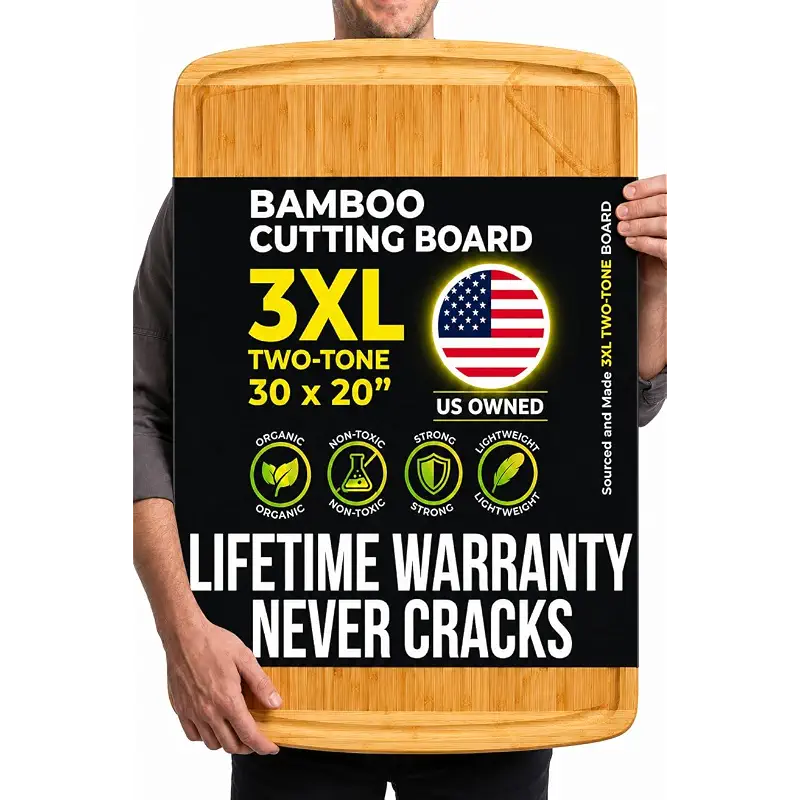
Greener Chef
ENORMOUS 30 x 20 Organic Extra Large Cutting Board with Lifetime Replacements – Wood Bamboo Chopping Board - Wooden Butcher Block Cutting Board for Carving Turkey, Grilling Brisket and BBQ
4.7(3,940)
Massive 30x20 organic bamboo with deep juice channels, lifetime replacement promise, and exceptional price for the footprint.
Ideal for: Home cooks and pit masters needing maximum workspace without premium pricing.
This board covers ground no other option here matches. At 30 by 20 inches, it's genuinely massive, and owners report using it as a secondary prep surface that spans their entire cooktop or sink. For brisket work specifically, that scale means you're never fighting space while trimming the point from the flat, and the juice gutter runs the full perimeter with a pour spout to direct liquids cleanly into a pan rather than across your counter.
The thickness and bamboo construction feel substantial. Buyers describe it as sturdy enough for daily punishment, and the smoothness of the reverse side makes it functional as a serving platter between carving sessions. One owner noted the board sits securely over stove grates because the grooved side grips the metal, a practical detail that speaks to real-world use.
Where this board trades against teak vs. bamboo cutting boards is material cost and maintenance load. Bamboo requires more regular oiling to keep its finish, and a few owners mention lingering fish smell after filleting. Storage is also the honest drawback: 30 by 20 doesn't fit most kitchen cabinets, so many buyers keep it on the counter or leaning against a wall. That said, at this price point and size, the value proposition is hard to beat for a household that carves poultry or brisket regularly.
Pros
Enormous 30x20 surface fits full briskets with room to spare
Deep perimeter juice groove with pour spout minimizes counter mess
Bamboo construction resists warping under regular heavy use
Lifetime replacement guarantee adds confidence
Cons
Requires frequent oiling to maintain finish and prevent odor absorption
Storage challenge due to exceptional size and weight
Key features
30x20 inch organic bamboo construction with deep juice reservoir
Pour spout on corner channel for controlled liquid drainage
Hand grip grooves on smooth reverse side for safe handling
Built to span cooktops, sinks, or function as secondary prep station
#2 Pick
Premium Teak for Long-Term Investment
Sonder Los Angeles
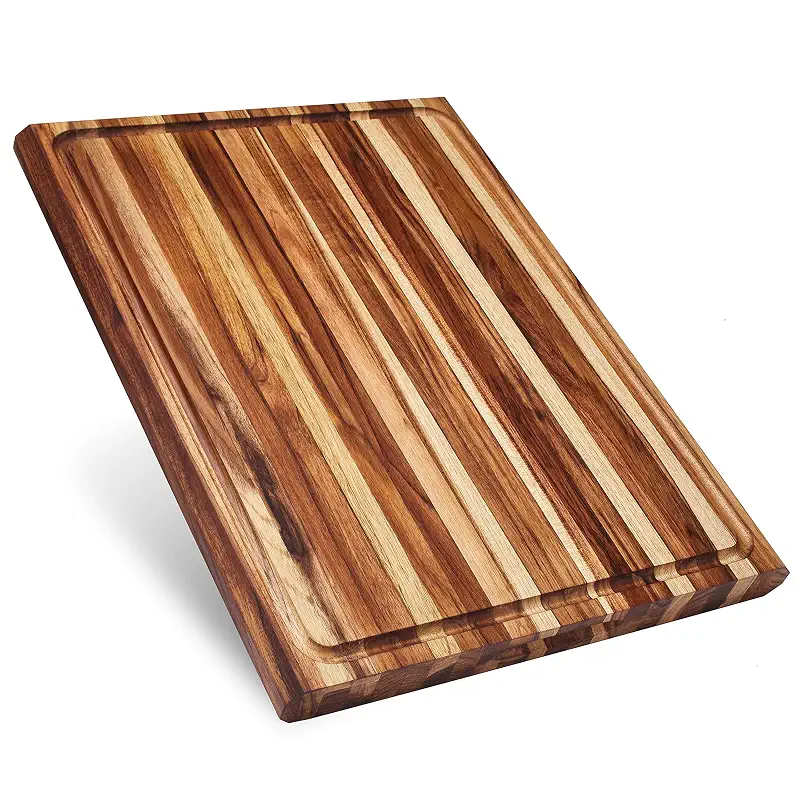
Sonder Los Angeles Highland Teak Wood Extra Large Cutting Board 23x17x1.5" | Non-toxic, Edge Grain, Juice Groove, Built-in Handles, Gift Box Included, Heavy Duty BBQ Board, 13 lbs
4.8(1,060)
Expertly crafted 23x17 teak with oil-resistant properties, premium gift packaging, and proven durability across multiple owner generations.
Ideal for: Serious home cooks and professionals seeking heirloom-quality teak that doubles as kitchen décor.
Sonder Los Angeles builds this one with the kind of attention that justifies the premium price. Edge-grain teak naturally resists water penetration and warping, which matters over years of brisket trimming and cleanup cycles. The brand's own customer (a repeat buyer across five different Sonder boards) describes the Highland as reaching a level of finish and presence that transforms kitchen prep into something that feels intentional rather than utilitarian. That matters if this board spends its life on your counter as both tool and centerpiece.
The 23 by 17 dimension sits between the other teak option here and the massive bamboo board, offering a practical middle ground. The juice groove holds 5 fluid ounces, deep enough to contain a standard brisket rest without overflow. Teak's natural oils make cleanup simpler than bamboo; hand-washing with mild soap usually suffices, and the wood doesn't hold odors the way softer woods do. Compared to the New M Way teak option, Sonder's reputation for consistent quality across batches and long-term support seems stronger based on owner testimonials.
The tradeoff is cost. Premium teak commands higher prices than bamboo or utility-grade woods. But if you plan to use this board three times a week for a decade, the per-use cost flattens significantly. Gift packaging also signals this is the choice if presentation matters.
Pros
Premium teak naturally resists water, stains, and warping
Edge-grain construction balances durability with knife-friendliness
Deep 5 fl oz juice groove contains most meat rests without overflow
Includes elegant gift box for immediate presentation
Cons
Significantly higher investment than bamboo alternatives
Smaller footprint (23x17) limits brisket-specific workspace versus 30x20 bamboo
Key features
Premium edge-grain teak with high natural oil content for water resistance
Deep juice groove holds 5 fl oz of liquid; natural surface resists staining
.5 inch dimensions; 13 lbs provides stability without excessive heft
Food-safe, BPA-free, arrives ready to give as heirloom-quality gift
#3 Pick
Best for Commercial-Volume Meat Prep
New M Way Teak Wood
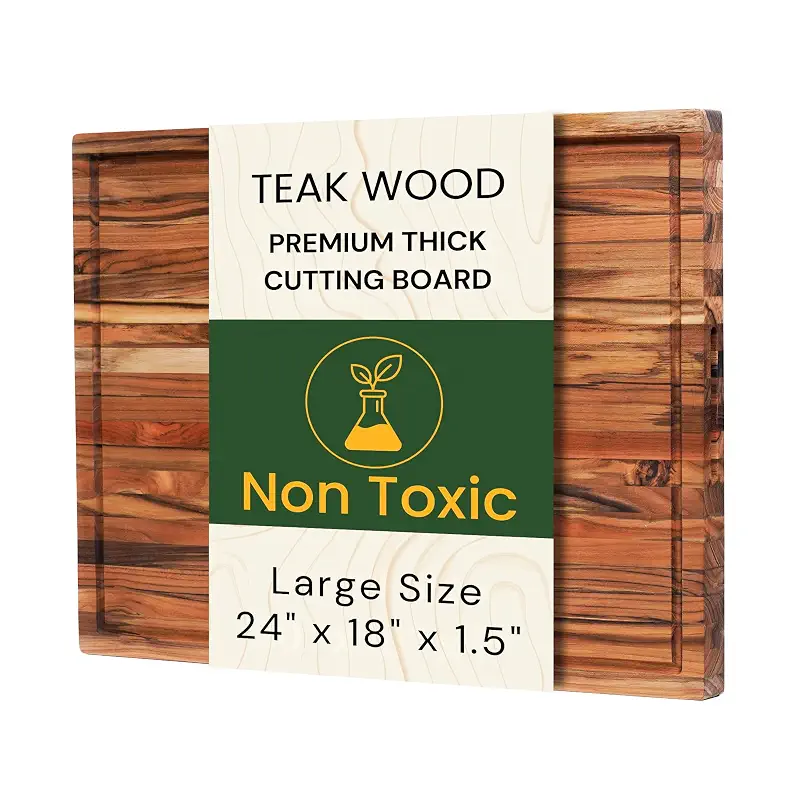
Extra Large Teak Wood Cutting Board 24x18 Inch for Meat, Brisket & Professional Kitchen Prep, 1.5" Thick Edge Grain Butcher Block with Deep Juice Groove & Handle, Non-toxic Board by New M Way
4.4(55)
Massive edge-grain teak with robust 1.5-inch thickness and professional-grade juice groove for serious butchery.
Ideal for: Home cooks and semi-professional prep stations seeking teak mass without the Sonder price premium.
New M Way sizes this board at 24 by 18 inches with a full 1.5-inch thickness, creating a footprint that falls between Sonder's 23x17 and the Greener Chef's 30x20. For brisket specifically, that's enough workspace to lay out a full packer flat without crowding, yet it remains manageable to lift and clean. The thickness and teak construction promise to resist the kind of abuse that lighter boards warp under: heavy cleavers, daily trimming, and resting meat that hasn't cooled fully.
Owners praise the build quality and the way the board maintains its appearance over time with regular conditioning. One buyer treats it as a multi-use centerpiece, keeping it on the counter and using it daily for cutting tasks. However, buyer signals also flag a legitimate concern: some owners report warping or curvature after relatively short use, and at least one reviewer noted it feels thinner than expected despite the stated specs. This suggests inconsistent batch quality, which is a meaningful caveat when investing in premium teak at this level. Compared to Sonder's reputation for consistency, New M Way's smaller review count and mixed durability feedback introduce risk. The juice groove design is solid, but not as proven as the other options here.
Still, when this board hits the mark, owners love the weight, the honey-gold grain, and how it elevates a kitchen prep station to something gallery-worthy.
Pros
inch dimensions provide professional butcher-shop scale for whole briskets
Robust 1.5-inch thickness and 15.8 lbs weight ensure stability under heavy use
Edge-grain teak with natural oil content resists moisture and discoloration
Honey-gold grain creates impressive visual presence on counter or serving table
Cons
Some buyer reports of warping or curvature appearing after moderate use
Fewer long-term owner reviews than Sonder or Greener Chef boards
Key features
Colossal x1.5 inch edge-grain teak for commercial-scale prep
Deep juice groove designed to contain blood and meat liquids
Weighs approximately 15.8 lbs; non-slip base prevents counter movement
Transitions from meat cutting station to charcuterie or serving centerpiece
#4 Pick
Best for Meat Carving and Holding
Bambüsi
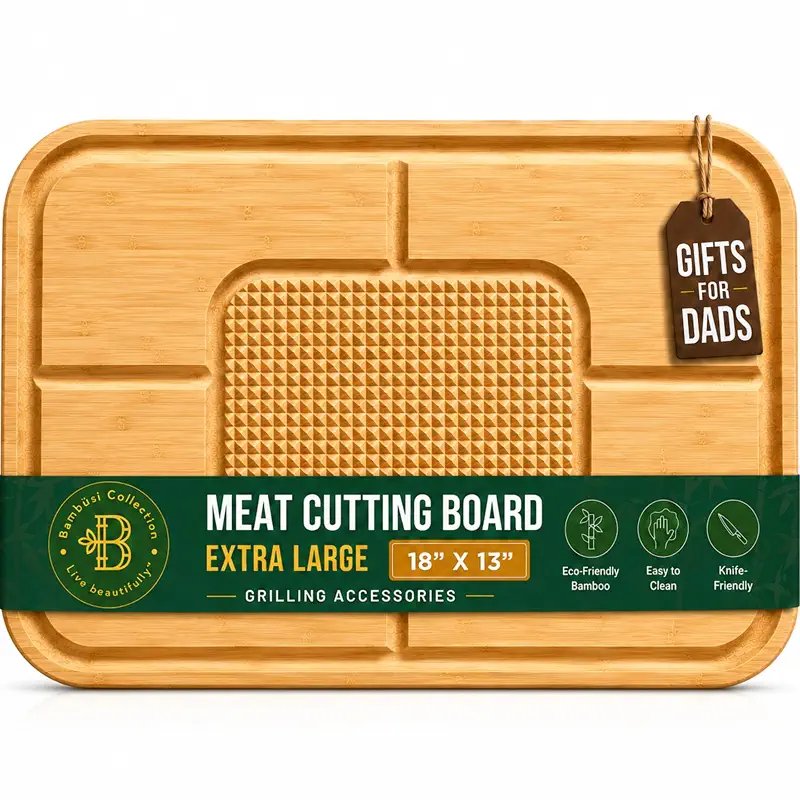
Meat Cutting Board - Extra Large Bamboo Carving Board, 18 x 13 Thick Butcher Block with Deep Juice Groove, Non Slip Center, Reversible Board for Steak, Brisket, Turkey, BBQ Prep Grilling Gifts for Men
4.3(33)
18x13 reversible bamboo with textured pyramid grip center for turkey and brisket carving, deep juice groove, and dual-purpose design.
Ideal for: Home cooks who carve turkey and large poultry regularly and want one reversible board for mixed kitchen tasks.
Bambüsi built this one specifically for carving sessions, and the pyramid-textured center is the key differentiator. Those raised ridges grip meat firmly so a whole turkey or brisket doesn't slide and rotate under your knife. For holiday carving or large presentations, that's a real problem-solver. The board flips to a smooth side for everyday vegetable work or charcuterie, which means one tool covers both occasions without smudging your charcuterie spread with meat drippings.
The 18 by 13 footprint splits the difference between practical and convenient; it's bigger than most daily boards but smaller than the massive 30x20, making it easier to store on a shelf or hang. The deep juice groove runs the perimeter and has cross-channels that direct liquids toward the edges, a design that works well for fattier meats. Owners consistently praise the grip feature for keeping poultry steady and the ability to flip for vegetable prep.
The trade-off is bamboo's higher maintenance and the learning curve on those spikes. One reviewer noted that the textured center makes it harder to cut all the way through meat in some situations, and cleaning the pyramid ridges is more fussy than a flat surface. Compared to smooth teak boards, bamboo will require more regular oiling and doesn't have the same water resistance. It's also the smallest board here, so for a full brisket flat, you might run out of room faster than on the teak or 30x20 bamboo.
Pros
Textured pyramid center securely holds meat during carving, prevents sliding
Deep perimeter groove plus internal channels contain and direct meat juices
Reversible design: ridged side for carving, smooth side for vegetables and serving
18x13 size balances workspace with reasonable counter and storage footprint
Cons
Textured center adds cleaning complexity and can restrict cutting angles
Bamboo construction requires more frequent oiling than premium teak
Key features
Reversible bamboo: carving side with pyramid grip ridges, smooth side for prep
Deep juice groove with cross-channels that funnel liquids to perimeter
18x13 inch dimensions; thick butcher-block construction resists warping
Dual-purpose design serves as both carving station and daily-use chopping board
#5 Pick
Best Built-In Stability and Durability
Socisen
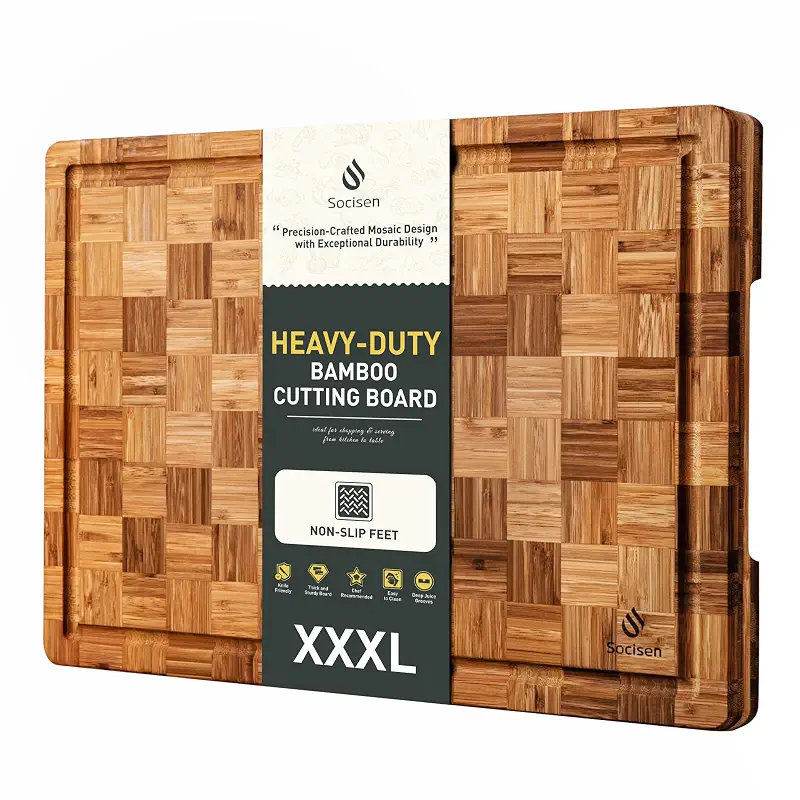
XXX Large Bamboo Cutting Board with Non Slip Feet and Over Sink Butcher Block Chopping Board Nice Solid Thick Wooden Juice Groove Huge Big XXl xlarge Best Hardwood Kitchen Counter Organic
4.6(780)
XXL bamboo with 5-layer construction, non-slip rubber feet, hand-finished edges, and proven long-term performance at accessible price.
Ideal for: Home cooks seeking reliable bamboo construction with non-slip stability at mid-range pricing.
Socisen engineered this board to stay put. The non-slip rubber feet eliminate the slide-and-shift frustration that makes smaller boards feel unstable mid-cut. That feature alone (especially paired with the weight of a 5-layer thick bamboo slab) creates a cutting surface that feels locked in place, letting you focus on knife work rather than board management. For brisket trimming where precision matters, that psychological comfort translates into real efficiency.
The 5-layer splicing technique and hand-finishing by artisans points to manufacturing care. Owners across dozens of reviews praise the build quality, the way it resists scratching, and how the juice groove actually contains liquid instead of overflowing. One buyer explicitly contrasted this board against thinner plastic alternatives, noting the weight difference and control it provides. The board also comes pre-oiled and includes sandpaper for initial finishing, so setup out of the box is more thoughtful than most competitors.
Where this sits against teak vs. bamboo cutting boards is material cost and long-term maintenance. Bamboo will dull knives faster than premium teak, and it requires regular oiling to maintain finish. However, at this price point, Socisen delivers close to the value of Greener Chef at a different size. The XXL footprint isn't quite 30x20, but it's substantial enough for most brisket work. If you need the absolute largest board and don't want to pay the Sonder premium, compare this against the Greener Chef; if you want proven stability and non-slip technology, Socisen's rubber feet are the technical edge.
Pros
5-layer bamboo construction is twice as thick as standard boards, resists warping
Non-slip rubber feet keep board firmly anchored during aggressive cutting
Hand-sanded and finished by artisans; includes mineral oil and finishing paper
Deep juice groove actually contains meat rests without overflow
Cons
Bamboo dulls knives faster than teak; requires regular oiling for appearance
Slightly smaller footprint than Greener Chef 30x20 for brisket-specific workspace
Key features
XXL bamboo with 5-layer splicing and non-slip rubber feet for stability
Hand-sanded finish and food-grade mineral oil included; no burrs or splinters
Juice groove design contains drippings; comfortable grip handles on long sides
Sustainable FSC-certified bamboo finished to resist staining and odor retention
How to Choose a Cutting Board for Brisket and Large Meat
Four trade-offs that actually matter when matching a cutting board for brisket to your kitchen.
Size and Footprint Matter Most
Brisket is unforgiving about board dimensions. A full packer typically runs 12 to 16 inches across at the thickest point, so you need at least 20 inches of clear space to lay it flat without edges hanging over. The 30x20 bamboo board gives you the most margin for trimming fat and maneuvering a knife without self-correction. A teak board covers most briskets, but a 23x17 option starts feeling tight if you're working the point and flat simultaneously. If you also carve turkey or roast poultry regularly, a smaller reversible board like the 18x13 works as a secondary tool but shouldn't be your only option for full-packer trimming.
Juice Groove Purpose and Design
Not all grooves are equal. A shallow channel might catch some liquid, but a resting brisket or just-carved turkey will overflow onto your counter if the trough is undersized. Look for grooves at least 0.5 inches deep that run the full perimeter: the Sonder holds 5 fluid ounces, the Greener Chef adds a pour spout for directed drainage, and the Socisen includes cross-channels that funnel liquid toward the edges. For brisket specifically, you're managing rendered fat and meat juice, so depth and drainage design directly affect how clean your workspace stays during rest and carving.
Teak vs. Bamboo: Material Trade-offs
Teak resists water penetration and naturally resists staining and odor retention; it requires less frequent oiling and cleanup is simpler. Bamboo is harder and denser, which dulls knives faster over time, and it absorbs liquids more readily, meaning more consistent maintenance is necessary. However, bamboo costs less and is sustainable. For a board that lives on your counter year-round as both tool and centerpiece, teak's low-maintenance finish is worth the investment. For a working board you'll stash between uses, bamboo delivers great value. Neither is wrong: it's about lifestyle and usage frequency.
Stability and Counter Safety
A 15 to 16 pound board that doesn't move is safer and more efficient than a lightweight one that slides. Non-slip feet (like Socisen's rubber pads) or heavy weight combined with grooved undersides keep the board anchored. This becomes critical when you're applying pressure with a sharp knife near hot meat or a finished brisket that's still warm. Test weight and foot design if possible; a board that requires one hand to hold it in place while you cut with the other defeats the purpose of having a large surface.
Frequently asked
Quick answers to the questions readers ask most.
Can I use a wooden cutting board for raw brisket safely?
Yes, if you treat it correctly. Wood has natural antimicrobial properties that inhibit some bacteria growth. The key is proper maintenance: wash immediately after raw meat contact with hot soapy water, dry thoroughly, and oil regularly to seal the surface. Don't let meat juices sit; rinse the board as soon as you finish trimming. Boards with juice grooves contain liquids, reducing cross-contamination risk compared to flat surfaces. Most professional kitchens use wooden cutting boards for raw meat when maintained properly.
How often should I oil a wooden cutting board?
At minimum, monthly if used regularly; weekly or bi-weekly for boards in heavy rotation. After washing, if the wood looks dry or dull, it's time to oil. Use food-grade mineral oil or specialized cutting-board conditioners. Apply a thin coat, let it soak for 10 to 15 minutes, then wipe away excess. This rehydrates the wood fibers, prevents cracking, and resists staining and odor absorption. Teak requires less frequent oiling than bamboo because its natural oil content is higher, but consistency still matters.
Will a bamboo board warp or crack if left near a stove or in a hot kitchen?
Bamboo can warp if exposed to extreme heat or humidity swings, especially if it absorbs moisture on one side while heat dries the other. However, a thick, well-constructed bamboo board (especially 5-layer construction) resists warping far better than thinner boards. Store it flat or hung, not standing upright, and avoid placing it directly over a heat source while the stove is in use. Some owners successfully use boards as stovetop covers temporarily, but don't leave them there indefinitely. Teak is more heat and moisture resistant, so it's a safer choice if your board will spend time near active heat.
Can I put a wooden cutting board in the dishwasher?
No. Dishwasher heat and water pressure warp wood, swell the fibers, promote mold and mildew growth, and strip natural oils that protect the surface. Hand-wash with mild soap and warm water, dry immediately with a towel, and let it air-dry completely before storing. Proper hand-washing takes two minutes and extends board life significantly. This is non-negotiable for both bamboo and teak.
What's the difference between edge-grain and face-grain construction?
Edge-grain boards are made by orienting wood fibers vertically, creating a harder, more durable surface that's gentler on knife edges. Face-grain boards lay fibers horizontally, creating a softer cutting surface that dulls knives faster but is slightly more forgiving if the board cracks. All the teak boards here are edge-grain; all the bamboo boards are too, since bamboo's natural structure aligns that way. Edge-grain is the standard for cutting boards because it balances durability with knife care. If a listing doesn't specify, assume face-grain and avoid it for serious meat work.