Find the best cookware material for Indian cooking. Compare stainless steel kadai, cast iron, and triply options for curries, frying, and traditional recipes.
Ideal for: Home cooks seeking durable everyday kadai for curries, frying, and stir-fries on gas or induction.
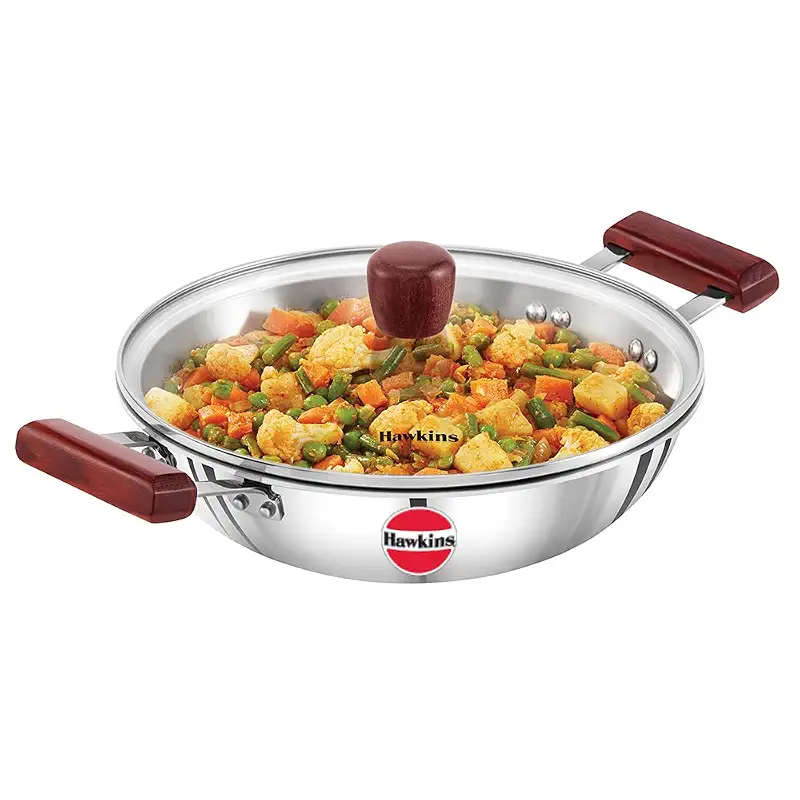
The Hawkins triply deep fry pan is built for everyday Indian cooking with a construction that solves stainless steel's biggest complaint: food sticking. The three-layer design pairs food-grade 18/8 stainless steel on the cooking surface with aluminum in the middle for heat distribution and magnetic stainless on the base. Owners report the pan heats evenly, cooks dal and curries without burning on the bottom, and handles deep-frying with less oil needed than thinner alternatives. The curved sides and extra depth suit the rolling motion of traditional kadai cooking, and the no-drip rim works for left or right-handed pouring.
The weight is noticeable, which buyers see as a trade-off. It's heavier than non-stick or single-layer aluminum, but that mass contributes to the heat retention and steady temperature control. Hand-washing is preferred to preserve the finish, though some owners report dishwasher use without issue.
Where lighter stainless pans force you to manage heat and timing carefully, this triply construction gives you a wider margin for error. Compared to cast iron, it requires no seasoning and handles acidic curries and tomato-based dishes without concern. For households cooking four to five servings regularly, the 2.5-litre capacity fits family meals without requiring two batches.
Pros
Even heat distribution prevents hot spots and burning
Food release improves without non-stick coating
Induction and gas compatible with flat bottom
Cons
Heavier than aluminum or non-stick alternatives
Lid knob durability concerns noted in some reviews
Key features
Triply stainless steel with food-grade 18/8 cooking surface
Rounded curved sides designed for traditional kadai cooking
No-drip flanged rim for left and right-handed pouring
Flat bottom induction-friendly base with eight stainless steel rivets
Tempered glass lid included
#2 Pick
Best for Serving and Storage
Craftone
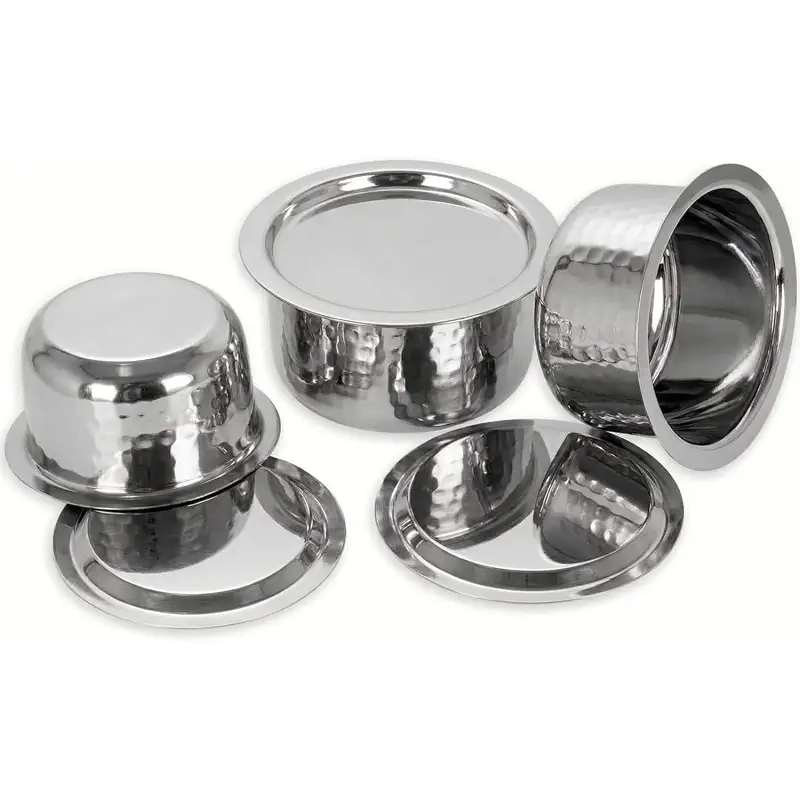
Stainless Steel Hammered Cookware Set of 3 with Lids – Induction & Gas Stove Safe Tope Set – Indian Cooking Pots for Serving & Storage – Durable Metal Saucepan Set (33, 47 & 60 oz)
4.7(6)
Elegant stainless steel topes with nesting design and hammered finish for cooking, serving, and refrigerator storage.
Ideal for: Small households and cooks who value serving from stovetop and direct refrigerator storage.
The Craftone set of three stainless steel topes solves a real kitchen problem: Indian cooking often means moving food from stovetop to table to fridge in the same vessel. These pots are designed for that transition. The hammered finish adds visual warmth without sacrificing function, and the flat bottoms ensure compatibility with induction and gas. Owners note they heat quickly on the stove, maintain temperature well once food is in, and clean easily by hand or dishwasher.
The trade-off is capacity and cooking performance. The three sizes (33, 47, and 60 oz) are smaller than traditional full-family kadai pots, so they work best for small households, portioning, or heating pre-made dishes rather than cooking large curries from scratch. Some buyers mentioned initial hesitation about thinner walls, but actual use showed they perform adequately for simmering and reheating, though not for sustained high-heat frying or charring.
If you cook for one or two people and value the ability to cook, serve, store, and reheat in one vessel, this set eliminates dishes and saves cabinet space. The nesting design is genuinely useful. Unlike the Hawkins kadai, which anchors itself as a dedicated cooking piece, these topes encourage a workflow that moves food directly to the table or fridge without transferring.
Pros
Nesting design saves significant cabinet space
Heated food transitions directly to serving or storage
Quick heat-up on stove top with even warming
Cons
Small capacities not suitable for cooking family meals
Thinner walls limit sustained high-heat cooking
Key features
Food-grade stainless steel with mirror-polished hammered finish
Three sizes: 33 oz, 47 oz, and 60 oz with tight-fitting lids
Induction and gas compatible with flat bottoms
Nesting stackable design for storage efficiency
Dishwasher safe with hand-wash preferred for spots
#3 Pick
Best Budget Option
Sumeet
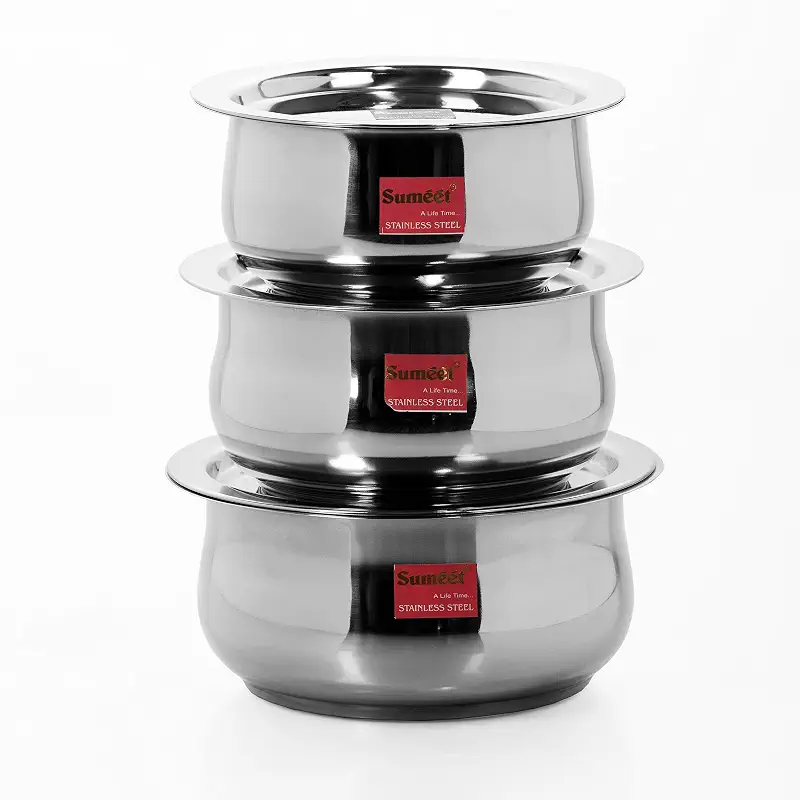
Sumeet Stainless Steel Cookware Set With Lid, 1.6, 2.1 Liters, 3 Piece (Steel)
4.1(4,509)
Affordable three-piece stainless steel set for storage and reheating, light and easy to handle.
Ideal for: Budget-conscious cooks reheating leftovers and storing portions, not primary cooking.
The Sumeet cookware set offers entry-level pricing for stainless steel topes designed primarily for storing leftovers and reheating rather than cooking from scratch. The belly shape with sloped sides and flat bottom accommodate induction and gas use. Owners appreciate the lightweight build and stackable storage, and several note the quality is solid for the cost. The nesting design makes these practical for small kitchens where space is at a premium.
Reviews flag a consistent weakness: the bottoms are thin, which means food burns easily during active cooking on a stove or induction burner. This isn't a durability failure, but a design limitation. Buyers who bought these expecting to cook curries and dal from scratch reported disappointment; the pots excel at reheating and storing. The material is dishwasher safe, which reduces hand-washing effort compared to cast iron or preseasoned surfaces.
Compared to the Hawkins triply pan, the Sumeet set sacrifices active cooking performance for portability and storage. If your workflow is batch cooking once weekly and reheating portions daily, these topes work fine. But for cooking curries through, especially those requiring oil and spices to bloom together, a heavier-bottomed vessel like the Hawkins delivers better results.
Pros
Lightweight and easy to handle for reheating
Compact nesting design maximizes small kitchen storage
Dishwasher safe simplifies cleanup
Cons
Thin bottoms prone to burning during active cooking
Not ideal for cooking curries or dal from scratch
Key features
Stainless steel belly-shape pots in three sizes: 1.6, 2.1 litres
Flat bottoms compatible with induction and gas
Included lids for each pot with compact stacking
Lightweight construction for easy handling
Dishwasher safe exterior finish
#4 Pick
Best Cast Iron
Tramontina
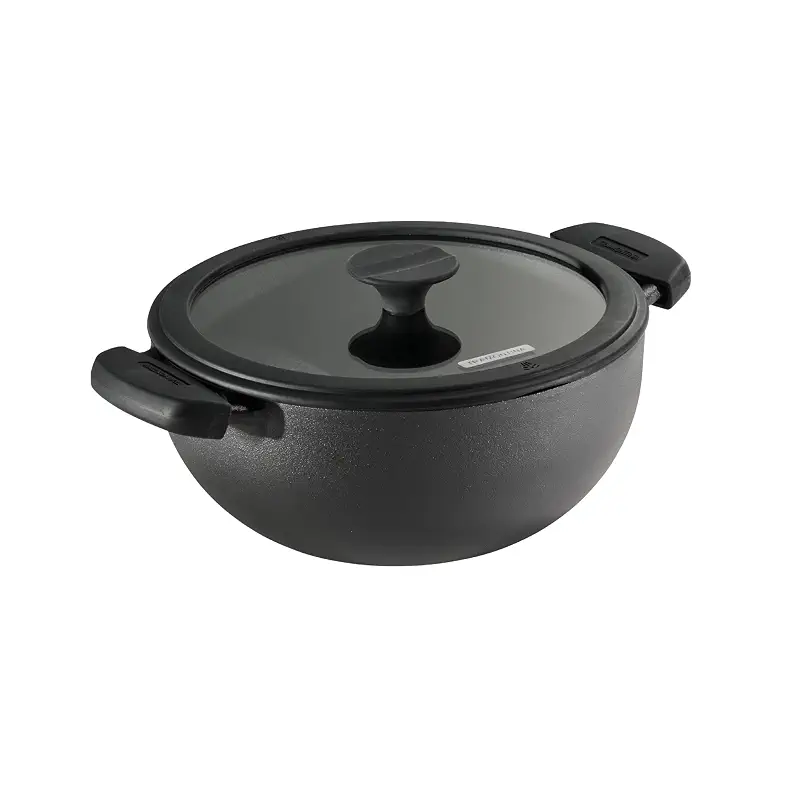
Tramontina Utsava Pre-Seasoned Cast Iron 3.9-Quart Kadai with Lid | Kadhai Pot for Indian Cooking
4.2(114)
Heavy-duty cast iron kadai with pre-seasoning and glass lid for superior heat retention and traditional cooking.
Ideal for: Cooks who prepare daily Indian meals and are willing to season and maintain cast iron regularly.
The Tramontina Utsava cast iron kadai brings traditional cooking performance to modern kitchens. Cast iron's greatest strength in Indian cooking is heat retention: it gets exceptionally hot, holds that temperature evenly, and doesn't cool quickly when you add cold ingredients. This is invaluable for cooking curries, stir-fries, and deep-fried items because the food stays in contact with steady, high heat. The stone-ground polished interior comes pre-seasoned, and owners report the finish improves over time as you cook, building a natural non-stick layer. The 3.9-quart size suits family cooking without being unwieldy.
Cast iron demands regular maintenance that stainless steel does not. Owners must season the pan regularly with oil, typically between uses, to build and maintain the protective coating. If you skip this step, rust appears quickly. The weight is substantial, which some find tiring during extended cooking, though others appreciate the stability it provides. Unlike stainless steel, cast iron reacts with acidic foods like tomatoes or vinegar if left to sit, so you need to clean immediately and reseason.
Where the Hawkins triply is a set-it-and-forget-it workhorse, cast iron requires attentiveness but rewards it with performance you cannot replicate in stainless steel. If you cook Indian food daily and enjoy the ritual of caring for cookware, or if heat retention is your priority, this kadai excels. For occasional cooks, the maintenance overhead is a real drawback.
Pros
Exceptional heat retention and even temperature distribution
Pre-seasoned and improves with use over time
Works on induction, gas, electric, and ceramic stovetops
Cons
Requires regular seasoning and immediate cleanup after use
Reacts with acidic ingredients if not cleaned promptly
Key features
Heavy-duty cast iron with high-precision DISAMATIC casting
Stone-ground polished smooth interior pre-seasoned with natural oil
Tempered glass lid with silicone rim and stainless steel knob
Heat-resistant silicone sleeves on handles rated to 450°F
Oven-safe to 450°F without lid, 350°F with lid
#5 Pick
Premium Triply Option
Artisenia
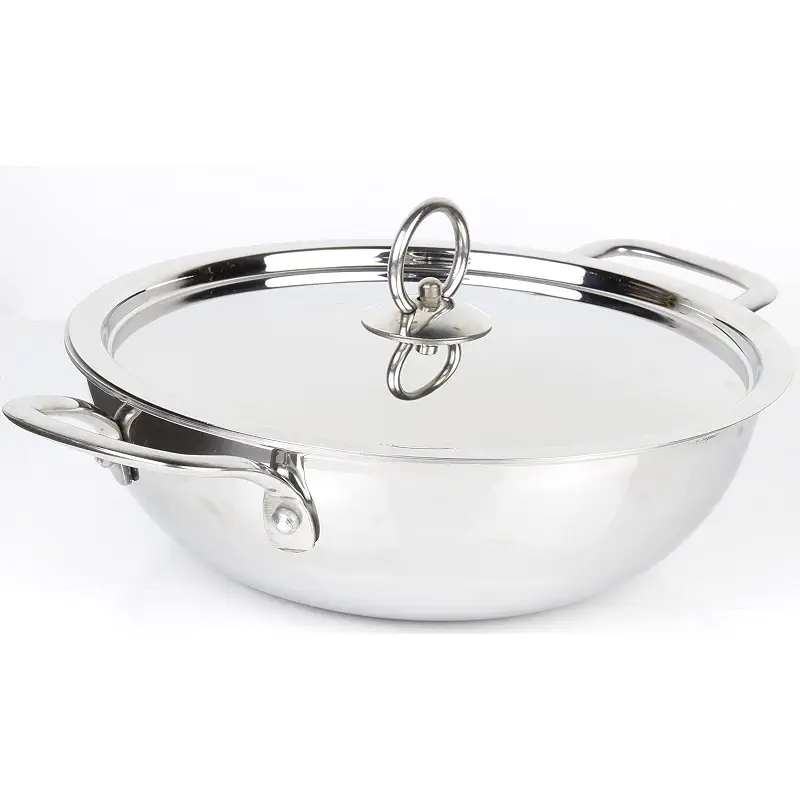
Triply Stainless Steel Kadai with Steel Lid | Everyday Pan, Stir Fry Pan with Triply Base, Saute Chef’s Pan with Glass Lid, Multipurpose Stewpot Skillet, Diameter: 24 cm, Capacity: 2.5 L (2.64 Quart)
4.4(56)
High-quality triply kadai with thick bottom and steel lid, designed for even cooking without sticking.
Ideal for: Cooks seeking premium triply construction with emphasis on heat retention and smooth non-stick performance.
The Artisenia triply kadai competes directly with the Hawkins but emphasizes sturdiness through a thick bottom and three-layer construction. The 18/8 food-grade stainless interior, aluminum core, and magnetic stainless base create the same heat-distribution advantage. Owners report excellent quality, food that doesn't stick during cooking, and a smooth interior without rough edges that trap residue. The steel lid fits snugly and includes a steam-release vent, giving you control over moisture escape during simmering and steaming.
Variability in capacity claims and lid design have surfaced in reviews. The product listing states both 2.5 litres and 1.8 litres as capacity, and some buyers received units that didn't sit flat on glass cooktops after heating. One review mentioned the lid differing from product photos. The weight and thickness are advantages for heat control but introduce handling demands similar to the Hawkins.
Compared to the Hawkins, this pan prioritizes heat retention and bottom thickness over the curved sides optimized for rolling kadai motion. If you cook more Western-style curries or stews that benefit from a heavier bottom and vertical walls, the Artisenia delivers. If traditional Indian stir-frying dominates your cooking, the Hawkins' curved sides and deeper profile may suit you better. The triply bottom cookware explained in detailed guides will help you understand the durability advantage both of these share over single-layer pans.
Pros
Heavy triply bottom prevents hot spots and burning
Smooth interior without edges or rough lines
Steel lid with vented design for moisture control
Cons
Capacity and specifications inconsistent across product descriptions
Some units reported not sitting flat on glass cooktops when heated
Key features
Triply stainless steel with 18/8 food-grade inner surface
Aluminum core layer for even heat distribution
Magnetic stainless steel base for induction compatibility
Steel lid with steam-release vent and heat-resistant handle
Heat-resistant stainless steel side handles rated for continuous use
How to Choose the Right Cookware Material for Indian Cooking
Four trade-offs that actually matter when matching a cookware material for indian cooking to your kitchen.
Stainless Steel vs. Cast Iron vs. Triply
Stainless steel offers convenience: no seasoning, dishwasher safe, and food doesn't discolor from metal reactivity. But plain stainless steel conducts heat unevenly, creating hot spots where food burns unless you manage temperature carefully. Triply construction solves this by adding an aluminum core sandwiched between stainless layers, distributing heat evenly while keeping the easy-care benefits of stainless. Cast iron delivers unmatched heat retention and improves over time, but demands regular seasoning and immediate cleanup after acidic dishes. For most home cooks, triply stainless steel balances ease of care with the heat control that curries and stir-fries reward. When comparing options, stainless steel vs cast iron comes down to how much maintenance you'll embrace. Triply answers that question by giving you cast iron's heat performance without cast iron's upkeep.
Size and Capacity Matter
A 2.5-litre kadai suits family cooking of four to five people for most curries, dal, and stir-fries. Smaller sets (under 2 litres) work for couples or single households, or for portioning and reheating. Larger pots (4+ litres) suit batch cooking or households over six. Deep versus shallow also matters: traditional curved-sided kadai (like the Hawkins) accommodate the rolling, flipping motion of Indian stir-frying and deep-frying. If you also prepare rice alongside curries, a best pan to cook rice serves that workflow differently than a kadai; rice pots have tighter lids and straighter sides for steaming, while kadai excel at the vigorous motion of stir-fries. Measure your stovetop space and typical meal portions before choosing, since a pan that's too small forces multiple batches and defeats the purpose.
Heat Source Compatibility
Most modern cookware works on gas and electric stoves. Induction requires a magnetic base, which all triply and cast iron options include. If you own an induction cooktop now or may upgrade later, ensure the pan has a flat bottom and is labeled induction-compatible. Single-layer aluminum and copper don't work on induction, so stainless steel or cast iron become necessary. Glass and ceramic stovetops benefit from pans with smooth, flat bottoms that won't scratch; cast iron's rough exterior can drag, so handle with care. Check your stovetop type before buying, as some older cookware won't perform on newer induction surfaces.
Maintenance and Longevity
Stainless steel and triply cookware are low-maintenance: hand-wash or dishwasher safe, no seasoning required. Cast iron needs regular seasoning (applying oil and heating to build a protective layer) and immediate cleanup, especially after cooking acidic foods. Over many years, this maintenance keeps cast iron performing better, while stainless steel degrades less but doesn't improve. Triply bottoms resist warping and maintain flat bases longer than single-layer pans. If you cook daily, triply stainless steel demands the least effort. If you cook occasionally, cast iron's longer lifespan and improving performance offset the maintenance burden for some cooks.
Frequently asked
Quick answers to the questions readers ask most.
Is triply cookware worth the extra cost compared to single-layer stainless steel?
Yes, if you cook regularly. Triply's aluminum core distributes heat evenly, reducing burnt spots and hot spots that single-layer stainless struggle with. This is especially valuable in Indian cooking, where spices need to bloom evenly and food shouldn't burn on the bottom. The extra cost is recouped in better cooking results and longer lifespan. For occasional reheating, single-layer works fine.
Can I use acidic ingredients like tomato or tamarind in cast iron kadai?
Yes, but with care. Cast iron reacts with prolonged contact with acid, which can damage seasoning and impart a metallic taste. Cook acidic curries in cast iron, but don't let them sit in the pan after cooking. Clean immediately, dry thoroughly, and apply a light coat of oil to reseal the surface. Limit acid exposure to active cooking rather than storage or reheating in the same pan.
What is the difference between a kadai and a regular frying pan?
A traditional kadai has a curved bottom and deeper, rounded sides designed for the rolling, flipping motion used in Indian stir-frying and deep-frying. Regular frying pans have flatter bottoms and straighter sides, suited to sliding and flipping foods. Kadai shape contains splatter better, holds more volume at the sides, and makes it easier to toss ingredients. If you cook Indian food often, a true kadai shape improves both technique and safety.
Can stainless steel cookware go in the dishwasher?
Most modern stainless steel and triply cookware are dishwasher safe on the exterior. Hand-washing is often preferred to preserve polish and prevent spotting from hard water minerals. Cast iron should never go in the dishwasher, as the harsh environment strips seasoning. Check the product instructions, but assume hand-washing preserves finish and longevity best for all cookware types.
Do I need to season new stainless steel or triply cookware before use?
No. Stainless steel and triply pans are ready to use straight from the box. Wash with warm soapy water, dry completely, and start cooking. Cast iron comes pre-seasoned but benefits from one or two additional coats of high-quality seasoning (like beeswax-based products) before first use to accelerate the non-stick buildup.