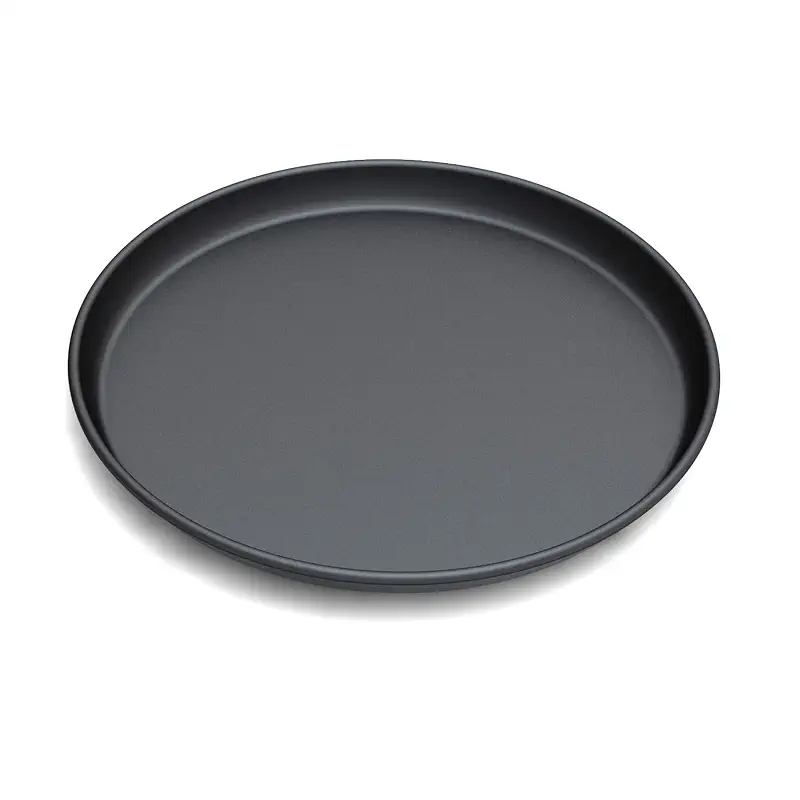
Ideal for: Budget-conscious buyers wanting to crisp pizza or thin reheat items occasionally.
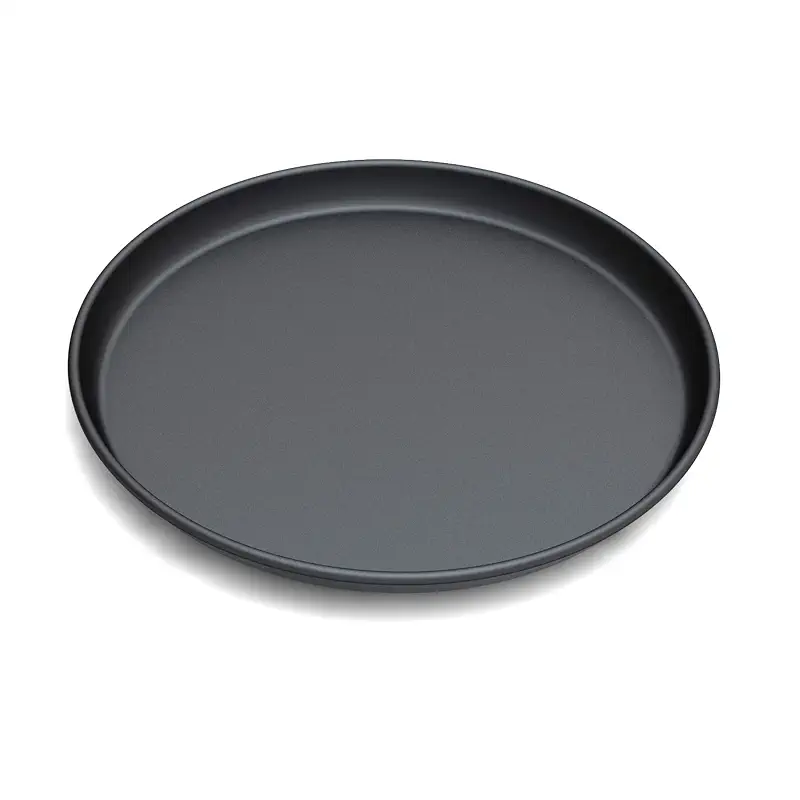
This 10-inch crisper pan works by absorbing microwave energy and transferring heat from below, more like a skillet than direct radiation. It's the entry point if you want to try the crisper-pan approach without major investment. Owners report strong success reheating pizza and reasonably good results on chicken nuggets and eggs when you follow the preheat step.
The catch is real: results vary sharply by food type and thickness. Several buyers found frozen fries and tater tots dried out rather than crisped, while others praised it for thinner items like spring rolls and pizza. The pan gets very hot, and cooking times are unpredictable, which means you'll need patience and a willingness to experiment. One reviewer had a model with an exposed metal band on the bottom that wouldn't fit safely in the microwave, so quality control appears inconsistent.
I'd reach for this if you mostly reheat pizza or thin proteins in dorm rooms or offices where space is tight and you want something that costs less than a countertop toaster oven. Skip it if you expect consistently crispy results on everything or if you're doing serious meal prep.
Pros
Very affordable entry point for crisper cooking
Compact 10-inch size fits most microwave interiors
Non-stick surface cleans easily with paper towel
Cons
Results highly variable depending on food thickness and type
Requires careful preheating and frequent monitoring
Key features
10-inch susceptor-style pan with non-stick coating
Preheating step required for crispy browning effect
Dishwasher safe and compact storage footprint
Best for pizza, eggs, and thin frozen proteins
#2 Pick
Best Performing Crisper Pan
Maconee
MACONEE 12inch Universal Microwave Crisper Pan/Microwave Cookware Crispy Plate Fry Pan, Microwave Cooker for Reheat Frozen Pizza, Chicken Nuggets French Toast with Crisp Effect!
4.2(871)
Larger 12-inch crisper with consistent browning and sturdy construction, earning strong praise for pizza and leftover reheating.
Ideal for: Home cooks who reheat leftovers frequently and want consistent crispy results.
Step up to this 12-inch version and you get notably more consistent results. The panel is heavier and thicker than the budget model, and owners consistently report success crisping pizza crusts, spring rolls, and even BBQ ribs without the dried-out edges that plagued the smaller pan. One reviewer praised it so highly they started gifting it to adult children. The nonstick surface cleans almost effortlessly, and the pan stores vertically in a cupboard to save counter space.
Warping is the recurring complaint: several owners report the pan warped on first use, though they note it hasn't worsened and the pan still functions. This is a known trade-off with thin-material heat-conductive pans, and some users find it acceptable while others would prefer a version that stays perfectly flat. There's also no lid, so bacon or foods that splatter require hand monitoring and microwave cleanup afterward.
Compared to the budget crisper pan, this trades up in consistency and size but introduces a durability wildcard. Where the smaller pan works for college dorms or light use, the 12-inch is the pick for households reheating regularly and wanting more reliable browning.
Pros
Heavier construction delivers more consistent crisping results
12-inch size accommodates larger pizzas and portions
Easy nonstick cleanup with minimal effort required
Cons
Pan may warp on first use despite continued functionality
No lid means splatter cleanup required for bacon and similar foods
Key features
12-inch susceptor pan with premium nonstick surface
Heavier gauge material for more reliable heat transfer
Stores vertically in cabinet to minimize footprint
Designed for pizza, ribs, spring rolls, and reheated leftovers
#3 Pick
Best Glass Baking Dish Set
M Mcirco
M MCIRCO 8 Piece Deep Glass Baking Dish with Lids, BPA free,Gray | Rectangular Glass Bakeware Set, Baking Pans for Lasagna, Casserole Dishes, Microwave, Oven, Freezer, Dishwasher
4.4(8,412)
Four-piece borosilicate glass set with tight-fitting plastic lids, versatile for microwave, oven, and freezer storage.
Ideal for: Home cooks cooking casseroles, stews, and roasted vegetables in microwave or conventional oven.
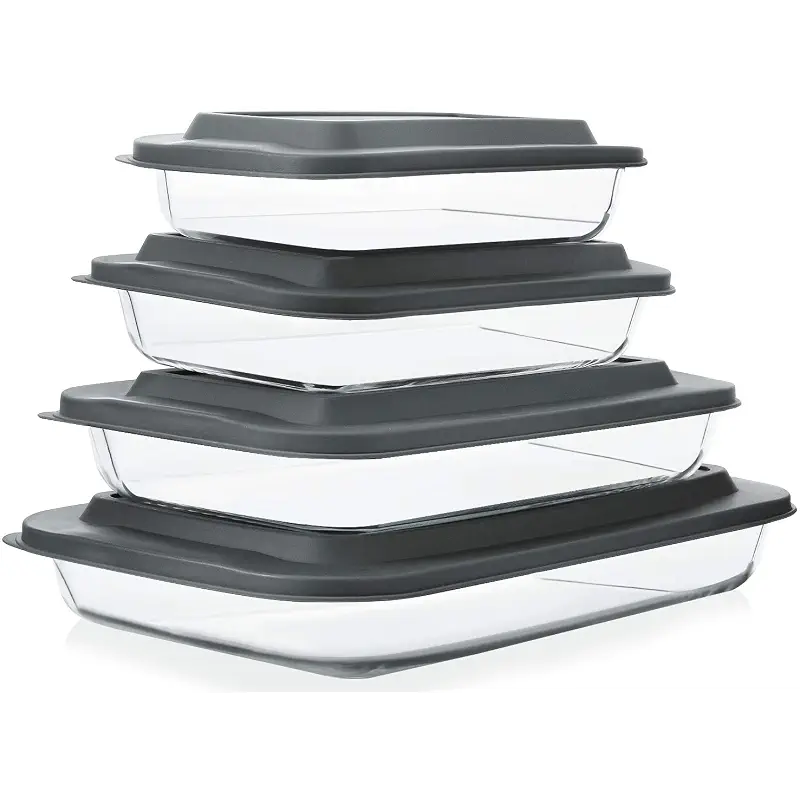
If you want cookware that moves seamlessly between cooking, serving, and storage, this glass baking dish set covers ground the crisper pans cannot. You get four different sizes (1 to 3.2 quarts) in borosilicate glass, each with a matching tight-fitting plastic lid. Owners rave about using the smallest dish for steaming asparagus or corn in the microwave, the middle sizes for casseroles and roasting, and the versatility of having covers built in. The glass is thick and feels durable; the nesting design saves storage space; and the handles are rounded and heat-safe.
There are real drawbacks. The lids fit so tightly that removing them requires significant hand strength, which frustrates buyers with arthritis or limited grip, and even able-bodied reviewers spent 5-10 minutes wrestling one lid off. Shipping damage is another factor: borosilicate glass is fragile, and several owners received cracked or shattered pieces despite Amazon's return process. The dishes are also shallower than traditional Pyrex (2.1 inches deep at most), so they won't work for tall lasagnas or deep roasting. These are not crisper pans and won't brown food the way a convection element would.
Pick this set if you cook complete casseroles and stews in the microwave and value storage lids, or if you want one tool that moves between microwave, oven, and fridge. The crisper trays versus baking dishes choice comes down to whether you're reheating leftovers for crispness or cooking raw ingredients for a meal.
Pros
Borosilicate glass is microwave, oven, freezer, and dishwasher safe
Four matching tight-fitting lids keep food fresh in storage
Four different sizes let you match portion to meal type
Cons
Lids extremely tight and difficult to remove by hand
Ideal for: Solo cooks, travelers, or small households cooking complete microwave meals in limited space.
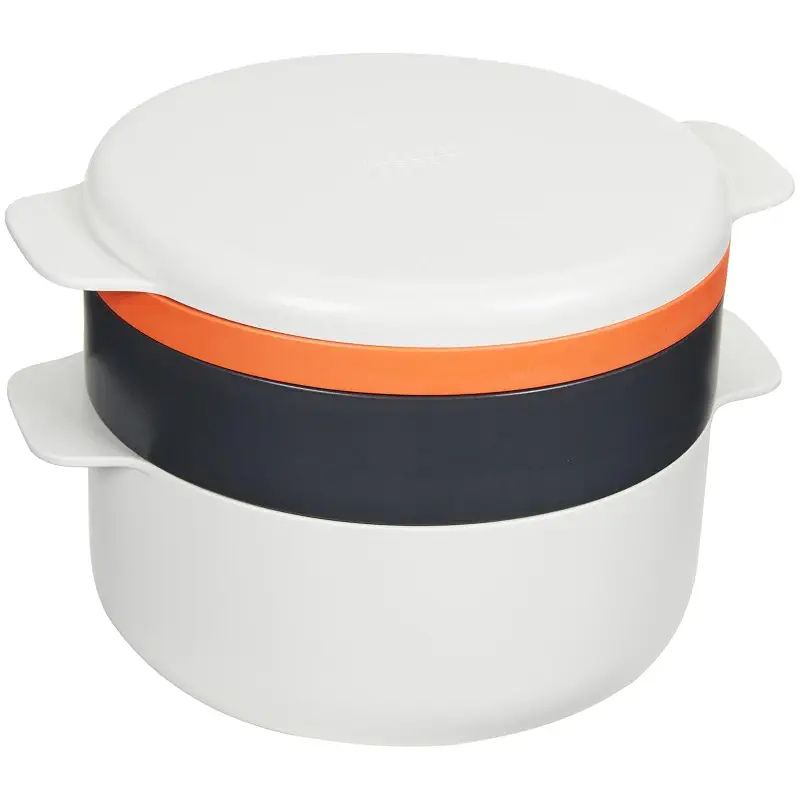
This is the ticket if you want to cook an actual meal in the microwave, not just reheat or crisp. The system stacks vertically so you can cook pasta in the base pot, steam vegetables in the basket above, and brown bacon or sausage on the griddle simultaneously, then pause to add or swap pieces as timing requires. A flight attendant reviewer used it constantly for hot meals in hotel rooms; another praised it for cooking pasta without splatter. The four pieces are stackable, the lid doubles as a serving plate or griddle base, and everything washes in the dishwasher. Owners highlight the durability and the quick cleanup.
Size is the real constraint: this set is built for one to two people, and several owners note it's too small for family cooking or larger portions. One reviewer wished it were 50% smaller for solo travel but acknowledged the trade-off; another noted their family outgrew it. The learning curve is present too. Without detailed cooking charts included, you'll experiment to dial in rice and pasta times on your specific microwave, though past buyers report the effort is worth it once you find your rhythm.
Compare this to the glass baking dish set: the baking dishes let you go shallow and wide for casseroles and reheating, while the stackable system lets you cook multiple components at once in a compact footprint. Pick the stackable if meal prep in constrained spaces (dorms, small kitchens) is your priority.
Griddle, steamer, and pot interchangeable for cooking variety
Lid doubles as serving plate and griddle base for versatility
Cons
Small 2-liter capacity limits portions for larger households
Cooking times require experimentation without detailed guides
Key features
Four-piece system: 2-liter pot, steamer, griddle, reversible lid
Stackable design saves space and enables parallel cooking
Integrated handles on pot and lid for safe microwave removal
Dishwasher safe, no splatter with pasta or soups
#5 Pick
Best Personal-Sized Ceramic Dishes
Home Beets
Oval Au Gratin Baking Dishes for Oven Safe and Microwave Cooking and Baking, 4 Pc. Set, Heat Resistant Ceramic with Handles for Serving, Small Mini Casserole Dish, 8" x 5", 16 oz, Matte Black
4.7(1,058)
Four-piece ceramic au gratin set in individual 8-by-5-inch portions, ideal for single-serve baking or plating at table.
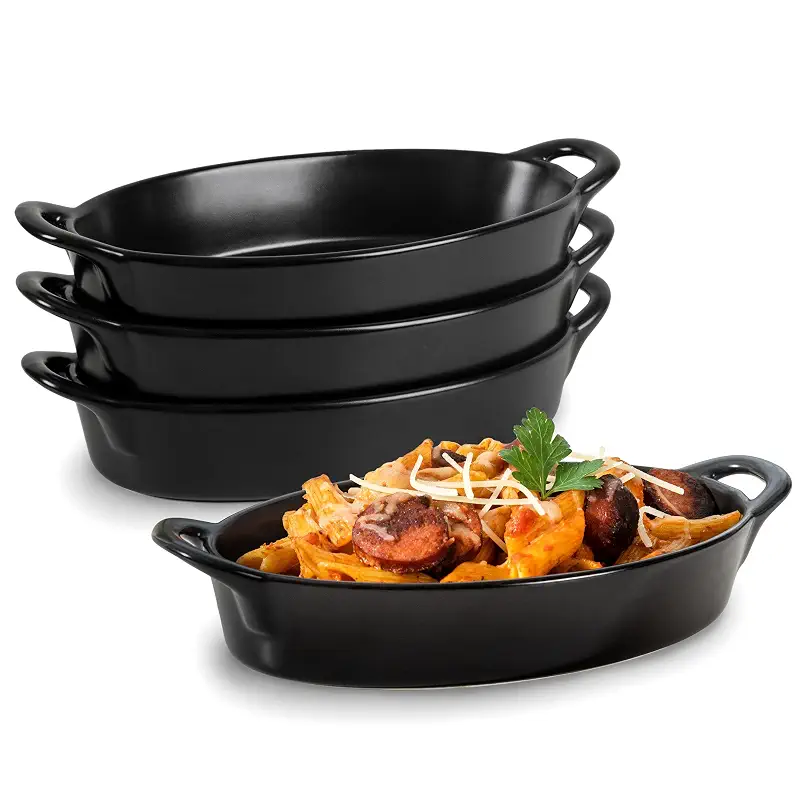
Home Beets' oval ceramic dishes solve a specific problem: you want to cook and serve individual portions in the same vessel without dirtying separate plates. Each piece holds 16 ounces, seats one person comfortably, and works in both microwave and conventional oven. Owners use them for cottage pies, mac and cheese, apple cobbler for two, and cheesy pasta sides. The matte black ceramic looks modern, the handles make them safe to carry from microwave to table, and cleanup is fast. The non-stick surface performs better than cast iron without the seasoning hassle.
The size is both strength and limitation: 16 ounces is a snack or modest side, not a full entree for most appetites. One Spanish-language reviewer criticized them as too small for main dishes. There are also no lids, so you can't store food directly in these dishes in the fridge or freezer, and reheating leftovers means transferring to another container first. Because of that, they're less flexible for the meal-prep-and-store workflow the glass baking dish set enables.
Where the glass baking dish set offers storage-in-the-same-container and the stackable system offers meal-prep compactness, these ceramic dishes shine at presentation and individual portion control. If you cook for two, like plating food in front of guests, or want a stylish vessel for appetizers and sides, these earn their place. The stackable cookware targets efficiency; these target elegance.
Pros
Ceramic non-stick surface cooks and cleans easier than cast iron
Convenient carry handles let you serve directly from microwave
Attractive matte black design complements modern kitchen aesthetics
Cons
No lids means no direct fridge or freezer storage
16-ounce capacity suits sides or small portions, not full entrees
Key features
Set of four 8-by-5-inch oval ceramic dishes, 16 ounces each
Oven and microwave safe, dishwasher safe ceramic construction
Integrated carry handles for safe removal and table serving
Non-stick surface resists chipping and staining with regular use
How to Choose Cookware for Your Convection Microwave
Four trade-offs that actually matter when matching a cookware for convection microwave oven to your kitchen.
Crisper Pans vs. Baking Dishes
Your first choice is between crisper trays versus baking dishes. Susceptor-style crisper pans like the Maconee models work by absorbing microwave energy and transferring heat from the bottom, creating browning similar to a skillet. They excel at pizza crusts and thin reheated items but are single-use vessels. Glass or ceramic baking dishes let you cook raw ingredients or full casseroles, store leftovers in the same container with lids, and move between microwave, oven, and freezer. Pick a crisper if your main goal is browning leftovers; choose baking dishes if you cook complete meals or need storage lids.
Material Safety in Convection Microwaves
Convection microwaves heat differently than standard microwaves, so material choice matters. Borosilicate glass, ceramic, and heat-safe plastic (BPA-free) are reliable across oven, microwave, and stovetop. Metal trims or exposed metal bands can cause arcing or safety failures, so inspect carefully. The microwave-safe cookware materials you choose should be labeled for convection use, not just standard microwave. Avoid melamine plastic or dishes with metallic glazes, and always verify the manufacturer's temperature ceiling for your specific convection model.
Size and Capacity Match Your Cooking Style
Measure your microwave interior before ordering. A 12-inch crisper pan won't fit if your turntable is 10 inches. Similarly, stackable systems like the Joseph Joseph set are compact but limit portion size to one or two servings, while large glass baking dish sets need cabinet space for nesting storage. If you cook for a family or batch-prep meals, larger rectangular dishes work better. If you're in a dorm, small kitchen, or travel frequently, compact stackable systems or smaller 10-inch crisper pans save space.
Account for Preheat Time and Learning Curve
Crisper pans require a preheat step (usually 2-3 minutes on high) before food goes on, which adds total cooking time. Stackable microwave cookware systems need experimentation to dial in rice and pasta times on your specific wattage microwave. Glass baking dishes and ceramic au gratin pans have more straightforward, predictable cooking. If convenience and speed matter most, glass and ceramic require less setup. If you enjoy hands-on cooking and have time to test, crisper pans and stackable systems reward patience with better flavor and texture.
Durability and Build Quality Considerations
Borosilicate glass is fragile in shipping and can shatter if dropped or thermal-shocked, though it lasts years once in your kitchen. Ceramic and heat-safe plastic are more durable against accidental impact. Crisper pans with thin construction may warp on first use, though warping doesn't always stop them from working. Read reviews for consistent warp reports, and factor replacement cost into your decision. Stackable plastic systems and ceramic dishes resist warping and are dishwasher safe, making them low-maintenance long term.
Frequently asked
Quick answers to the questions readers ask most.
Can I use metal cookware in a convection microwave?
Most convection microwaves can tolerate limited metal (like handles or trim) if it's smooth and not touching the walls, but exposed metal bands or edges may cause arcing. Crisper pans with metal susceptor bases are designed for microwave use, but verify your model manual first. When in doubt, stick to glass, ceramic, or plastic labeled microwave-safe to avoid damage or food safety risks.
Why does food come out soggy instead of crispy?
Standard microwave heating penetrates food directly and releases moisture, creating sogginess. Crisper pans redirect microwave energy into the pan itself, so heat comes from below like a skillet. However, thin frozen foods (fries, tater tots) often dry out before crisping, while pizza and thicker items crisp best. Preheating and using cooking oil on the pan surface also help. Glass and ceramic dishes won't crisp at all without a convection oven element; they're for cooking, not browning.
Are convection microwave baking dishes different from standard microwave dishes?
Not significantly. Most borosilicate glass and ceramic dishes work in both standard and convection microwaves. The real difference is that convection microwaves have a heating element that browns food, while standard microwaves do not. Any microwave-safe cookware (glass, ceramic, BPA-free plastic) will work in a convection model, but you'll only get browning if your model has an active convection or grill mode and you enable it.
Do crisper pan lids come with these products?
Most standalone crisper pans do not include lids, which can be a drawback for cooking foods that splatter (bacon) or storing leftovers. Glass baking dish sets include tight-fitting plastic lids, and the stackable systems include a reversible lid that doubles as a serving plate. If splatter control is important, choose a set with a lid or purchase one separately.
What's the best cookware for dorm rooms or small kitchens?
Compact crisper pans (10-inch) and stackable microwave systems take minimal space and store vertically or in a cabinet. A single crisper pan is most affordable; a stackable system lets you cook multiple components at once. Both are ideal for rentals where you cannot install appliances. Glass baking dish sets nest compactly but need more cupboard room due to four pieces plus lids.