Kitchen & Dining · Small
Best Coffee Pot for Hard Water: Top Drip Makers Compared
Find the best coffee pot for hard water. Compare top-rated drip coffee makers with built-in filters and descaling features to protect your machine.
Affiliate disclosure: As an Amazon Associate I earn from qualifying purchases.
At a glance
1
Best Overall for Hard WaterNinja
2
Best for Heavy Mineral ContentCuisinart
3
Best Versatility for Minimal ScalingNinja
4
Best Budget Option with Maintenance ControlCuisinart
5
Best for Single-Serve and Full-Pot FlexibilityHamilton Beach
Detailed reviews
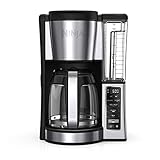
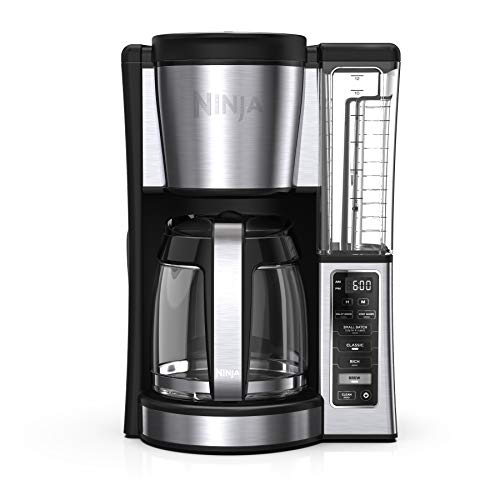
The Ninja Fresh Brew stands out because it pairs drinkable coffee with genuine hard-water convenience. The removable 60-ounce reservoir lets you fill from filtered water sources at the sink, avoiding mineral-heavy tap water pouring directly into the machine. More importantly, the dedicated clean setting handles descaling with a button press, which buyers consistently praise as effortless compared to manual vinegar cycles.
Owners who deal with mineral buildup report the machine maintains even brew temperature through its hotter brewing technology, meaning mineral scaling doesn't degrade performance as quickly as it does in cheaper competitors. The small-batch function (1-4 cups) ensures consistent flavor whether you're brewing a single morning cup or a full carafe, and the pause-and-pour feature lets you grab coffee mid-cycle without the usual drip mess on the warming plate.
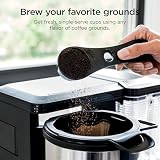
The permanent filter does require paper filters if you want to avoid sediment, which some see as an extra step but others appreciate for cleaner coffee. Early reviewers noted the reusable mesh filter lets fine particles through, so switching to #4 paper filters delivers noticeably better results: a meaningful consideration in hard-water areas where mineral particles can compound the grittiness problem.
Pros
- Dedicated clean cycle with one-button descaling activation
- Removable water reservoir for filling from filtered sources
- Hotter brewing temperature prevents mineral buildup from cooling coffee
- Small-batch setting brews 1-4 cups without diluting flavor
Cons
- Permanent mesh filter produces some sediment; paper filters recommended
- Plastic construction throughout; no stainless steel interior
Key features (4)
- Automatic clean-cycle button for descaling hard water mineral deposits
- 60-ounce removable water reservoir fills independently of machine
- Hotter brewing technology with custom brew-strength options
- Small-batch function ensures consistent extraction for 1-4 cups
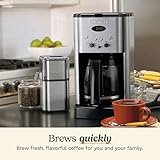
The Cuisinart addresses hard water through sheer heating power. Reviewers across multiple sources note this machine reaches proper brewing temperature where many competitors fall short, which matters because mineral deposits insulate heating elements and reduce efficiency. The adjustable warming-plate temperature (low, medium, high) lets you compensate for scaling buildup by keeping the plate hotter without burning coffee.
The gold-tone permanent filter needs paper filters to prevent grounds, but the bigger advantage is the built-in charcoal water filter that reduces mineral content before it even reaches the brew chamber. This dual approach (filtration plus aggressive heating) gives hard-water users two lines of defense. One long-term owner reported using this exact model daily for a decade, which speaks to durability under mineral stress.
Compared to the Ninja Fresh Brew, the Cuisinart requires manual descaling with vinegar and water (no auto-clean button), which takes extra effort but actually works well if you follow the routine. Buyers in mineral-heavy regions report running the clean cycle every few months keeps performance stable. If you're also exploring specialty options, the best turkish coffee maker operates on different brewing principles altogether, relying on stovetop heat rather than electric heating elements that scale up with minerals. The 14-cup capacity suits larger households, though the water-fill opening is narrow: a minor inconvenience that doesn't affect performance.
Pros
- PerfecTemp heats water to proper brewing temperature despite mineral scaling
- Built-in charcoal water filter reduces mineral content before brewing
- Adjustable warming-plate temperature compensates for buildup
- Proven 10+ year durability in mineral-heavy conditions
Cons
- Requires manual vinegar descaling; no automatic clean cycle
- Narrow water-fill opening can be awkward when pouring
Key features (4)
- PerfecTemp technology reaches proper brewing temperature consistently
- Charcoal water filter removes mineral content from tap water
- Three adjustable warming-plate temperatures: low, medium, high
- 14-cup glass carafe with dripless spout and secure handle
The Ninja Specialty Coffee Maker tackles hard water differently by letting you brew smaller portions more frequently, which reduces mineral contact time with the heating element. The six brew sizes (cup, XL cup, travel mug, multi-serve tumbler, half carafe, full carafe) mean you're not overfilling and then watering down a small portion. Owners report the machine maintains hot temperatures across all sizes, which helps counteract mineral buildup's cooling effect.
Where this model diverges from the other Ninja is the specialty brew concentrate function, which appeals to hard-water users who want to avoid extended contact between water and heating coils. Brewing concentrated shots then adding milk reduces the volume of hard water passing through the machine per serving. The removable 40-ounce water reservoir still lets you control water sources, though it's smaller than the Fresh Brew's.
Compared to the Cuisinart, this machine requires manual descaling (no auto-clean button), and the glass carafe is thinner: more prone to breakage if you have cracks in your countertop or are rough with cleanup. The built-in frother is fun but not essential for hard-water management; it's a bonus feature if you enjoy cappuccinos and lattes.
Pros
- Six brew sizes reduce mineral contact by letting you brew smaller portions
- Specialty concentrate function minimizes extended heating time
- Built-in fold-away frother for café-style drinks without plumbing
- Removable water reservoir and dishwasher-safe components simplify cleaning
Cons
- No automatic descaling; requires manual vinegar cycles
- Thinner glass carafe more prone to breakage than competitor models
Key features (4)
- Six brew-size options from single cup to full 10-cup carafe
- Specialty brew concentrate mode reduces extended heating time
- Fold-away frother for hot or cold frothed milk alternatives
- 40-ounce removable water reservoir with convenient sink-fill access
The Cuisinart Brew Central appeals to buyers who want proven reliability without paying for automation. It's the stripped-down version of the company's hard-water strategy: solid heating, manual temperature adjustment, and a design that's been refreshed since 2000 (reviewers report the original model lasted 24+ years). The permanent gold-tone filter accepts paper filters, and the built-in charcoal water filter provides basic mineral reduction like the larger Cuisinart model.
The three-setting warming plate (low, medium, high) gives you leverage against mineral scaling: turn it to high if you notice coffee cooling faster than it should, which happens when deposits build up. At 12 cups, it occupies less counter space than the 14-cup Cuisinart but still serves small families. One long-term owner switched from a leaking competitor to this model and called it "the BEST coffee pot I've ever used" after months of daily use.
Where this trails the Ninja Fresh Brew is the lack of a dedicated clean cycle: you must remember to run vinegar descaling every few months. Compared to the Ninja Specialty, it's simpler but also more work if you forget. The 1-4 cup setting does exist, so you can brew smaller batches, though the machine doesn't automatically adjust as elegantly as premium models. For tight budgets, this hits the sweet spot between capable and affordable.
Pros
- Durable design with 20+ year track record in hard-water homes
- Built-in charcoal water filter reduces mineral content
- Adjustable warming plate lets you compensate for mineral scaling
- 1-4 cup setting brews small batches efficiently
Cons
- No automatic descaling; requires manual vinegar maintenance
- Smaller capacity (12 cups) limits serving flexibility
Key features (4)
- Proven durability with 20-year-old models still in daily use
- Charcoal water filter included; built-in filter-change reminder
- Three warming-plate temperature settings for mineral-scaled conditions
- 1-4 cup setting maximizes flavor in small batches
The Hamilton Beach 2-Way Brewer solves hard-water problems through compartmentalization. Each brewing side has its own water reservoir, meaning you can fill the single-cup tank with filtered water from a pitcher while filling the carafe tank with tap water if needed. More practically, it lets you run descaling on just one side at a time, which is faster than treating the entire machine and reduces downtime.
Owners note the single-serve side brews in about three minutes, which limits mineral contact time compared to full-carafe brewing. The reusable gold filter on the single-serve side cleans easily, and many reviewers actually prefer the mesh filter for its low waste. The carafe side accepts paper filters if you want finer sediment removal. Both sides have bold and regular brew-strength settings, though you can't adjust temperature: it defaults to hot enough to overcome minor mineral scaling.
Compared to the Ninja Fresh Brew, this machine lacks automatic descaling and a removable main reservoir, so you do pour water directly into the carafe tank. It's less elegant but still adequate if you use filtered water. Compared to the Cuisinart models, it offers more single-serve convenience, though it doesn't reach the premium heating temperature of the PerfecTemp line. For households where some people drink one cup and others drink full pots, the separate-tank design prevents one person's hard-water buildup from affecting the other's brew.
Pros
- Separate water tanks allow independent descaling of each brew side
- Single-serve brews in 3 minutes, limiting mineral contact time
- Dual reusable filters reduce waste and simplify cleaning
- Bold and regular brew-strength options on both sides
Cons
- No automatic descaling or removable main reservoir
- Default brewing temperature cannot be adjusted for mineral compensation
Key features (4)
- Dual water reservoirs with separate fill indicators for each brew side
- Single-serve brews in 3 minutes to minimize mineral exposure
- Reusable gold filters on both sides; paper filters compatible
- Bold and regular brew-strength settings for customized flavor
Choosing a Coffee Maker for Hard Water
Why Hard Water Damages Coffee Makers
Mineral deposits (calcium and magnesium) accumulate on heating elements and in brew chambers, reducing efficiency and eventually damaging internal components. The buildup insulates the heating element, making it work harder to reach brewing temperature, which lengthens brew time and sometimes produces lukewarm coffee. Hard water also interferes with extraction, leaving coffee tasting flat or bitter. Machines designed for hard water address this through aggressive heating, easy descaling access, or filtration that reduces mineral content before water enters the system. The best protection combines two or more approaches, heating power, filtration, and accessible maintenance cycles.
Water Filtration for Hard Water
Built-in charcoal filters reduce mineral content and chlorine taste but require regular replacement every 2-3 months in hard-water regions. Removable water reservoirs let you fill from external filtered water sources (pitcher filters, refrigerator dispensers, or bottled water), bypassing tap water minerals entirely. Some machines include both features. If your tap water is extremely hard (over 300 parts per million), consider using a separate pitcher filter before filling any machine's reservoir. This dual-layer approach prevents mineral accumulation from causing problems before your machine's internal filter can help.
Automatic vs. Manual Descaling
Machines with automatic clean cycles (button activation) simplify maintenance and ensure consistency: you don't forget or guess when to descale. Manual descaling with vinegar and water takes 30-45 minutes but costs nothing and gives you control over frequency. In hard-water areas, expect to descale every 1-2 months if you use tap water, or every 3-4 months if you use filtered water. Manual machines work fine if you set calendar reminders; automatic machines suit busy households or those prone to forgetting. Both approaches work; the real cost difference is convenience and discipline, not final coffee quality. For comparison, enthusiasts exploring alternative methods might look at a top turkish coffee maker, which operates on a stovetop and sidesteps electric heating-element scaling entirely.
Heating Power and Brew Temperature
Machines that reach proper brewing temperature (195-205°F) overcome mineral scaling that slows heat transfer. If your machine brews at only 185°F, mineral buildup makes the problem worse. Premium models with PerfecTemp or hotter-brewing technology maintain temperature even as deposits accumulate. Budget machines sometimes run cooler, so check buyer reviews from hard-water users: if reviewers mention temperature dropping over time, mineral scaling is likely an issue. Adjustable warming plates (low, medium, high settings) give you flexibility to compensate: turn the heat up as scaling develops.
Machine Size and Brew Frequency
Smaller machines (single-serve or 10-cup) limit hard-water exposure per use compared to 14-cup brewers. Brewing one or two cups means minerals have less contact time with heating elements. If your household drinks fewer than six cups daily, a compact machine with multiple brew sizes or single-serve capability reduces mineral buildup without sacrificing convenience. Larger families benefit from full-carafe machines paired with frequent descaling routines. There's no one-size-fits-all answer; match the machine's capacity to your actual daily consumption.
Our picks at a glance
1
Best Overall for Hard WaterNinja
2
Best for Heavy Mineral ContentCuisinart
3
Best Versatility for Minimal ScalingNinja
4
Best Budget Option with Maintenance ControlCuisinart
5
Best for Single-Serve and Full-Pot FlexibilityHamilton Beach
Frequently asked
How often should I descale a coffee maker in hard-water areas?
In very hard water (over 200 ppm), descale every 1-2 months if using tap water directly. Moderate hard water (100-200 ppm) requires descaling every 2-3 months. If you use a pitcher filter or fill from filtered sources, extend the interval to 3-4 months. Watch for signs like slower brewing, cooler coffee, or a gurgling sound: these indicate mineral buildup and signal descaling time. Machines with automatic clean-cycle reminders simplify this tracking.
Can I use vinegar to descale all coffee makers?
Yes, white vinegar and water (1:1 ratio) works in nearly all drip coffee makers. Run the solution through the brew cycle once, let it sit for 15 minutes, then run the cycle again. Follow with two full cycles of plain water to rinse. Some manufacturers specify their own cleaning solutions, but vinegar is cheaper and effective if you follow the steps. Do not use vinegar in machines with electronic timers or displays if the manual warns against it, though most modern models tolerate vinegar fine.
Will a built-in charcoal filter eliminate hard-water problems?
Charcoal filters reduce chlorine and some sediment but don't fully soften water or remove all minerals. They extend descaling intervals but don't eliminate the need for it. Think of built-in filters as a helper, not a complete solution. For severe hard water, combine the machine's filter with an external pitcher filter or fill from a refrigerator dispenser. This two-stage approach gives you the most protection and longest machine life.
Why does my coffee maker brew slower over time in hard water?
Mineral deposits coat the heating element and spray head, reducing water flow and heat transfer. The machine works harder to push water through blocked jets, which slows brew time and often cools the final coffee. This is why descaling coffee makers guide is so important: it removes these deposits and restores normal flow. If your machine suddenly brews 25% slower than it did new, descaling will almost certainly restore speed and temperature.
Are stainless-steel coffee makers more resistant to hard-water damage?
Material (plastic vs. stainless steel) is less important than internal heating design. A plastic-exterior machine with aggressive heating and easy descaling access handles hard water better than a stainless-steel machine with poor temperature control. Focus on whether the machine reaches proper brewing temperature, includes or accepts filters, and allows simple descaling rather than external aesthetics. Durability comes from maintenance and design, not shell material.