Kitchen & Dining · Espresso
Best Coffee Maker Under 150: Top Drip & Single-Serve Picks
Find your perfect coffee maker under 150. Compare drip, pod, and programmable options with expert analysis and buyer guidance.
Affiliate disclosure: As an Amazon Associate I earn from qualifying purchases.
At a glance
1
Best Overall ValueBlack+Decker
3
Best for Single-Serve SpeedKeurig
4
Best for Hot Coffee All MorningCuisinart
5
Best Budget-Friendly Simple BrewerBlack+Decker
Detailed reviews
The Black+Decker Drip Coffee Maker with Vortex holds the strongest track record in this roundup. Owners consistently report units lasting five to eight years or longer with no maintenance beyond regular coffee maker descaling and cleaning. The programmable 24-hour delay brew means you can set it before bed and wake to a fresh pot, and the vortex brewing system ensures even saturation of grounds for balanced flavor. The sneak-a-cup feature works well for most users, though a few note the carafe fit can make it slightly temperamental.
What makes this model stand out against higher-priced alternatives is simplicity paired with durability. Several owners mention they've replaced fancier machines costing much more, including espresso machine under 200 dollars picks with real pressure systems, and returned to this Black+Decker because it just works. The heating element holds up better than many competitors, and the washable brew basket cuts down on filter costs over time. The main trade-off is the 2-hour auto shutoff; if you're still sipping after that window, you'll need to reheat or flip the switch back on.
This machine is best for households that drink coffee throughout the morning and value no-fuss reliability over bells and whistles. If you're comparing this to the Ninja Fresh Brew, the Black+Decker edges ahead for pure longevity and simplicity, while the Ninja offers more brew customization and a longer warming window.
Pros
- Owners report 5-8+ years of reliable daily use
- Programmable 24-hour delay brew for morning convenience
- Washable brew basket reduces filter costs
- Heats water to proper brewing temperature consistently
Cons
- Auto shutoff after 2 hours limits warming time
- Sneak-a-cup feature inconsistent on some units
Key features (5)
- 12-cup Duralife glass carafe with easy-grip handle and measurement markings
- Vortex brewing system for even ground saturation and balanced flavor
- 24-hour programmable delay brew with QuickTouch digital controls
- Sneak-a-Cup technology and 2-hour auto shutoff with safety
- Washable brew basket compatible with standard paper filters
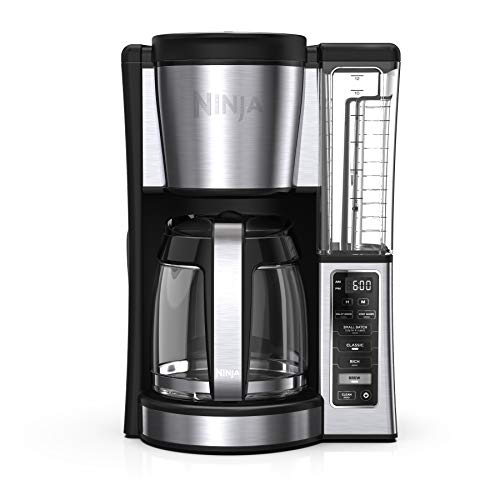
The Ninja Fresh Brew stands out for its engineering focus on flavor consistency. The hotter brewing technology and dual brew modes (classic or rich) let you dial in strength without adjusting the amount of grounds. The small-batch function is genuinely useful: brewing 1–4 cups doesn't dilute the result like traditional drip brewers, which matters if you're making single servings on weekdays but full pots on weekends.
Owners who've used both this and cheaper alternatives report the Ninja produces noticeably better-tasting coffee, especially with the rich setting. The 4-hour warming plate (adjustable) is a real advantage over machines that cut off after two hours. Setup and daily use are straightforward, though the removable water reservoir adds one extra piece to clean. Some coffee snobs note it doesn't match French press or moka pot quality (which is fair) but for a drip machine, it's well-engineered. If you're serious about beans and brewing, pairing this with the best espresso grinder under 200 means you can grind fresh for both drip and pour-over methods.
Compared to the Black+Decker above, the Ninja trades some simplicity for taste and flexibility. If you're a regular coffee enthusiast but still want a drip brewer's ease, this is the better pick. The downside: it's less proven for durability over 5+ years, so the warranty and how Ninja handles repairs matter more than with Black+Decker's track record.
Pros
- Dual classic and rich brew strengths for flavor control
- Small-batch setting prevents diluted taste in 1–4 cup brews
- Adjustable warming plate keeps coffee hot for up to 4 hours
- Removable water reservoir simplifies filling and cleanup
Cons
- Permanent mesh filter requires paper filters for best taste
- Larger footprint than entry-level machines
Key features (5)
- Dual brew strengths with custom flavor extraction and hotter boiler
- Small-batch mode for 1–4 cups ensures consistent strength
- 12-cup glass carafe with drip-free pour spout design
- Adjustable warming plate temperature and 24-hour programmable delay
- Removable 60-oz water reservoir and included measuring scoop
The Keurig K-Express addresses what single-serve users actually want: speed and simplicity. It heats almost instantly from a cold start: crucial if you're not someone who leaves it on all morning. The strong button works as advertised, giving a noticeably bolder cup without a longer brew time. The 42-ounce removable reservoir means you can brew up to four cups (8 oz each) before refilling, which beats most compact single-serve machines.
Where the Keurig differs from the two drip brewers above: it's pod-based, so you're limited to available K-Cup brands and flavors, or you buy a reusable filter cup separately to use ground coffee. Some reviewers point out that the 12-ounce setting produces thinner coffee than a full 14-cup pot's consistency: which is the trade-off of the format. The auto-off after five minutes is energy-efficient but means you need to remember to turn it on if you want it ready (unlike programmable drip machines).
The K-Express won't replace a drip machine if you need to serve multiple people at once, but for one or two people on a work-from-home schedule or small apartment, it saves counter space and brewing time. Compared to the Ninja above, this brewer is more compact and requires zero setup fuss, but you lose the ability to brew a full pot for guests. Durability reports are mixed; some owners get 2–3 years of daily use before the delay-brew feature or heating element fails, so it's less of a long-term investment than the Black+Decker.
Pros
- Instant heat from cold start: no pre-warming delay
- Strong button delivers noticeably bolder flavor
- Compact footprint fits tight counters and dorm rooms
- Auto-off after 5 minutes saves energy
Cons
- Pod-dependent ecosystem limits flavor variety without extra filters
- No programmable delay brew on this entry model
Key features (5)
- K-Cup pod compatible single-serve brewer with 3 cup-size options
- Strong brew button for bold, full-flavored coffee without extra steps
- 42-ounce removable water reservoir for up to 4 brews per fill
- Travel-mug friendly with removable drip tray up to 7.4 inches tall
- Quick heat-up and 5-minute auto-off for energy efficiency
The Cuisinart PerfecTemp is engineered around a simple insight: most people don't just want hot coffee; they want it to stay hot. The adjustable warming plate (low, medium, or high) lets you set the ideal temperature for your taste, whether you like it scalding or just warm enough to sip comfortably. Owners consistently praise the coffee's heat compared to other machines in this price range, which matters if you're the type who takes 30 minutes to finish a cup and can't stand lukewarm coffee.
The brew-strength control (regular or bold) works reliably, and the 1–4 cup mode boosts flavor when making smaller batches. A permanent gold-tone filter saves you money on disposables, though some users prefer paper filters for cleaner taste. Setup is straightforward, and the backlit LCD clock is easy to read. The main caveat: a few owners report the clock running fast on earlier units (particularly China-manufactured versions), so there's a quality-control variation to be aware of, though current units seem to have addressed this.
Where this differs from the Ninja: the Cuisinart focuses on heat retention rather than brew flavor customization. It's also larger, which fits households that need 14 cups on weekends but can brew smaller amounts during the week. If you compare this to the Black+Decker, you're paying more for the adjustable warming control and larger capacity, not necessarily a longer lifespan, but many owners report 7–10 years of daily use, so durability is there. Some households keep one of these on the main counter and add the best white coffee maker as a stylish secondary brewer for the dining room or office space.
Pros
- Adjustable warming plate (low/medium/high) keeps coffee at your ideal temperature
- 14-cup capacity for larger households or entertaining
- Brew-strength control and 1–4 cup mode for flexible brewing
- Many owners report 7–10 years of reliable daily use
Cons
- Permanent filter requires practice for best results with grounds
- Water fill opening is somewhat narrow and requires care
Key features (5)
- 14-cup glass carafe with gold-tone permanent filter basket
- Adjustable warming plate temperature control (low, medium, high settings)
- Regular and bold brew-strength control for flavor customization
- 1–4 cup mode for smaller batches without diluted taste
- 24-hour programmable delay brew and backlit LCD display with decalc reminder
Black+Decker's simpler offering strips away programmable features entirely. No clock, no auto shutoff, no timer: just flip a switch and it brews. For many households, this is actually an advantage: fewer electronics means fewer things to break, and owners report consistent performance over years of use. The vortex showerhead design ensures even saturation of grounds, so the brewing quality doesn't suffer despite the stripped-down interface. The non-drip carafe pour spout is genuinely better than older drip designs, and the sneak-a-cup feature works reasonably well here.
The trade-off is that you must remember to turn it off when you leave. Several owners mention this burned them on safety concerns, leaving a hot machine running for hours by accident. If you're organized or work from home where you can monitor it, this isn't an issue. Compared to the programmable Black+Decker model above, you lose the convenience of delay brew and auto shutoff, but save money and get a machine with a slightly longer ownership record for sheer simplicity. It's also a natural comparison to the Ninja: same 12-cup capacity, but the Budget model requires more active management and offers no flavor customization, yet costs significantly less and appears equally durable.
This machine works best for kitchens where simplicity and low cost matter more than convenience features, or as a backup/second brewer for offices or gathering spaces where people remember to turn things off.
Pros
- Simple on/off switch with zero complicated electronics
- Vortex technology delivers even ground saturation
- Non-drip carafe spout and sneak-a-cup feature included
- Owners report 5+ years of durable daily use
Cons
- No automatic shutoff: requires manual power-down
- Sneak-a-cup feature occasionally unreliable on full pots
Key features (5)
- 12-cup capacity with vortex showerhead for even saturation
- Simple on/off switch with no digital controls or programming
- Non-drip carafe pour spout prevents spills during pouring
- Removable dishwasher-safe filter basket for easy cleanup
- Keep-hot carafe warming plate maintains coffee temperature
How to Choose a Coffee Maker Under 150
Brewing Capacity vs. Your Daily Routine
The jump from single-serve to 12-cup machines matters more than specs suggest. A single-serve pod brewer like the Keurig works best if you drink one or two cups and leave, or if you're the only coffee drinker in your household. A 12-cup drip machine suits families or anyone who sips steadily for hours: you fill once and enjoy from the same pot. The 14-cup Cuisinart appeals to households that entertain or need to brew larger batches on weekends but want flexibility for smaller weekday brews. Consider your typical morning: are you grabbing one cup before rushing out, or settling in with a thermos for three hours?
Programming, Delay Brew, and Shutoff Features
Programmable delay brew is valuable if you want to wake up to a ready pot: you set it the night before and it starts automatically at your time. Automatic shutoff (usually 2–4 hours) is a safety feature, especially if you're forgetful or have a busy schedule. However, it frustrates people who sip coffee slowly. The simple on/off machines have no shutoff, so you must turn them off manually. Decide whether you'd use delay brew more than once a week; if not, a manual switch might save you money. If you're always rushing in the morning, programmable start is worth the extra cost.
Brew Strength and Temperature Control
Most machines brew at roughly the same temperature, but adjustable warming-plate settings and bold/regular brew modes make a real difference. If you drink coffee over an hour or more, a high warming-plate setting keeps it at your ideal temperature without burning. Brew-strength controls in machines like the Ninja and Cuisinart let you choose bold or regular without changing your ground-coffee amount. This matters if you're picky about taste or if different household members prefer different strengths. Single-serve machines like the Keurig often struggle with consistency because smaller volumes brew faster: a real concern if you're sensitive to flavor.
Durability and Long-Term Value
The most important factor many buyers overlook: how long a machine actually lasts. Owner reviews reveal that some models routinely last 5–8 years or more with proper maintenance, while others fail within 2–3 years. Simpler machines with fewer electronics (like the basic Black+Decker) tend to outlast feature-rich models. If you plan to use a machine daily for many years, the upfront cost difference between a budget model and mid-range option pays back quickly. Read reviews from owners who've had the machine for 2+ years, not just first-week reviews, to get a realistic sense of durability.
Filter Type and Ongoing Costs
Reusable permanent filters cost nothing beyond the initial purchase but require consistent cleaning and may leave fine grounds in your coffee. Paper filters create cleaner cups and are more convenient but add a small recurring cost. Some machines come with permanent filters but work better with paper filters: the reviews will tell you. If you care deeply about a clean, gritless cup, plan to use paper filters even if the machine includes a reusable option. Factor this minor cost into your decision if you're comparing very similar machines.
Our picks at a glance
1
Best Overall ValueBlack+Decker
3
Best for Single-Serve SpeedKeurig
4
Best for Hot Coffee All MorningCuisinart
5
Best Budget-Friendly Simple BrewerBlack+Decker
Frequently asked
Can I use ground coffee with a Keurig pod machine?
Yes, if you buy a My K-Cup reusable filter separately (sold as an accessory). You fill it with your own ground coffee and snap it into the Keurig instead of a pod. This works but requires more cleanup than using pods, and some users find the mesh filter leaves fine grounds in the cup. If you plan to use mostly ground coffee, a traditional drip brewer is more convenient and less expensive overall.
How often do I need to descale my coffee maker?
Every 1–3 months, depending on your water hardness and how often you brew. Hard water (mineral-heavy) needs more frequent descaling; soft water can go longer. Signs include slower brewing, cooler coffee, or strange tastes. Most machines include a clean cycle; you run a mixture of water and white vinegar through it, then flush with plain water. Descaling is one of the most common reasons machines fail early, so it's worth the small effort.
Why is my coffee maker producing cooler coffee than it used to?
Usually mineral buildup in the heating element. Descaling with vinegar or a commercial coffee-maker cleaner solves this in most cases. If descaling doesn't help, the heating element may be failing, which typically means replacement (and often replacement of the whole machine at this price point). Running descaling cycles regularly prevents this problem before it starts.
Is a 12-cup or 14-cup machine better for small households?
If you're a solo drinker or couple, a 12-cup machine brews enough for your morning without waste. A 14-cup machine is useful only if you entertain regularly or brew large batches. Both offer small-brew modes (1–4 cups) on premium models, which make smaller pots without diluting taste. For everyday use by two people, 12 cups is ample and takes up less counter space.
What's the difference between a reusable filter and paper filters?
Permanent reusable filters (usually gold-tone mesh) are washable and free after the initial purchase, but they're harder to clean and often leave fine grounds in your cup. Paper filters produce a cleaner, gritless cup and are convenient: you just toss and replace. The trade-off is a small cost per use and more trash. Most owners prefer paper filters for taste, even on machines that include reusable ones, so budget for occasional paper-filter purchases.