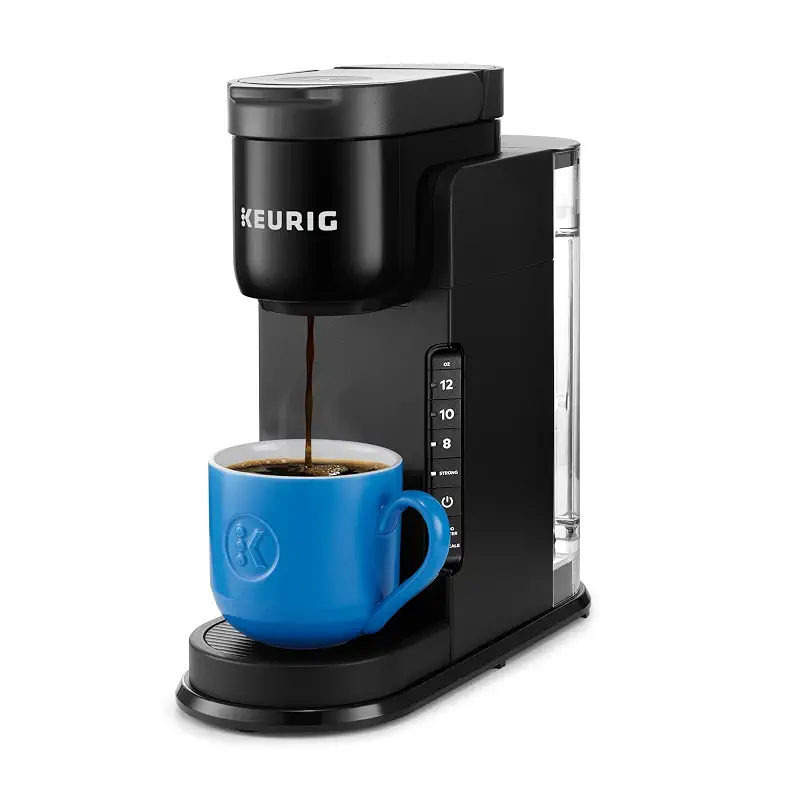
Ideal for: Budget-conscious drinkers who brew one cup at a time and accept limited machine lifespan.
The Keurig K-Express is Keurig's most approachable model, and for households that value convenience and speed above all else, it delivers. Owners consistently praise how quickly it heats and brews, the removable reservoir that doesn't clutter the counter, and the Strong button that adds meaningful flavor punch to K-Cup pods. The footprint is genuinely small, which matters in tight kitchens.
That said, early reviews surface a real concern: durability. Multiple owners report machines failing after 12 months of regular use, with clogging and non-responsiveness being common failure modes. One thoughtful review traces this to the machine's aggressive brew speed, which can produce weaker initial coffee and potentially stress the internals over time. If you're willing to accept a machine that may need replacing every year or two, the low upfront cost makes it forgivable. For buyers seeking a workhorse that lasts, the Ninja Coffee Maker offers more proven longevity.
The K-Express also ships internationally in some listings but uses 110V only, so it won't work in Australia, the UK, or other 220–240V regions. This is a critical detail if you're outside North America.
Pros
Compact footprint fits tight kitchen spaces
Quick heat-up and brew time under 2 minutes
Strong button adds meaningful flavor intensity
Affordable entry point for pod brewing
Cons
Reports of durability issues within 12 months
Plastic reservoir and budget-feel construction
Key features
3 cup sizes: 8, 10, or 12 oz with one-button brew
42 oz removable reservoir supports up to 4 brews before refill
Strong Brew button for bolder coffee extraction
Auto-shutoff after 5 minutes reduces energy waste
#2 Pick
Best for True Espresso Lovers
Lavazza
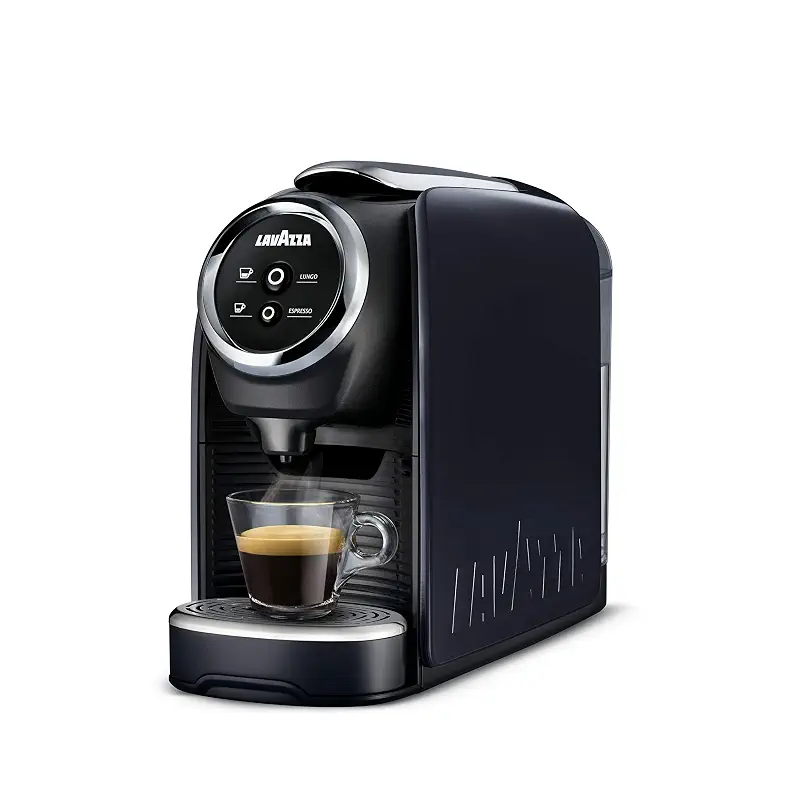
Lavazza BLUE Classy Mini Single Serve Espresso Coffee Machine LB 300, 5.3" x 13" x 10.2" 2 Coffee selections: simple touch controls, 1 programmable free dose and 1 pre-set
4.4(2,511)
Compact, elegant single-shot espresso machine with consistent crema and Lavazza pod compatibility.
Ideal for: Espresso fans who prioritize consistent crema and quick, hands-off shots over manual customization.
The Lavazza BLUE Classy Mini wins over espresso purists who don't want a full manual pump setup but refuse to compromise on shot quality. Owners rave about the crema (thick, silky, and persistent) and the machine's ability to pull a balanced shot every time. At 5.3 inches wide, it's a genuine space-saver, which explains why it shows up in hotel rooms and small offices. The heating and pressure system (9 bars) does the heavy lifting so even beginners pull respectable espresso on the first try.
Compared to the Aercana's 20-bar semi-automatic design, the Lavazza trades some manual control for simplicity and consistency. If you want to learn latte art and dial in your own shots, the Aercana is your machine. If you want guaranteed, fuss-free espresso every morning, Lavazza wins. The trade-off is pod dependency; you're locked into Lavazza's ecosystem, though the quality and variety of pods are genuinely strong.
One quirk: the water-tank insertion is described as fiddly by owners, and the waste-bin doesn't have a full sensor, so you'll need to remember to empty it periodically. Neither is a dealbreaker, but they're worth knowing.
Pros
9-bar pressure system produces thick, café-quality crema
Heats up and ready to brew in 20 seconds
Smallest footprint among espresso machines tested
High-quality Lavazza pods with multiple flavor profiles
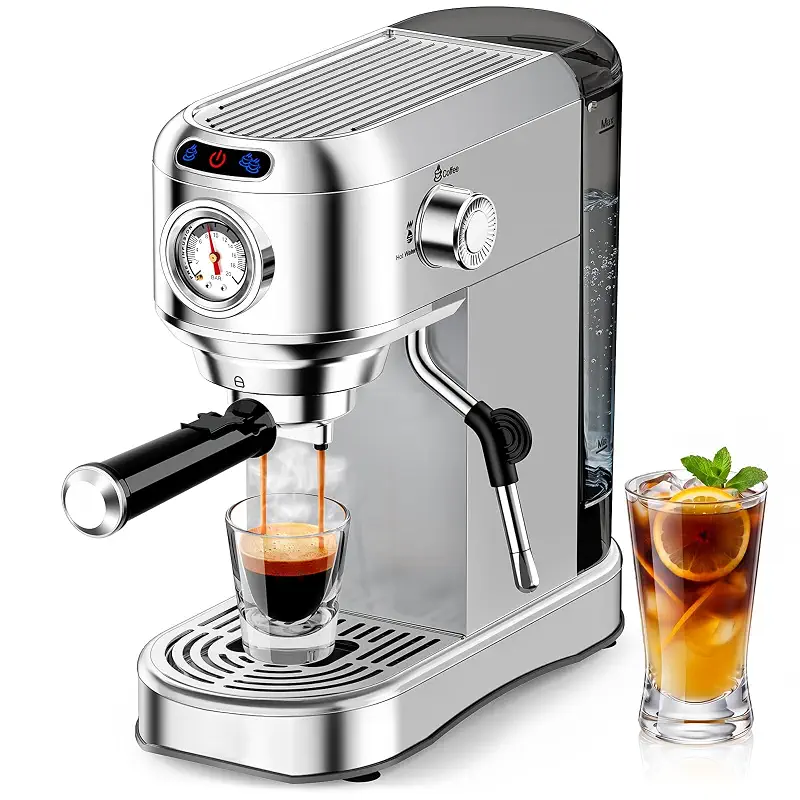
Ideal for: Hands-on coffee enthusiasts willing to learn steam-wand technique and dial-in shots.
The Aercana Espresso Machine targets home brewers who want to develop real barista skills. The 20-bar pump, visible pressure gauge, and manual steam wand mean you're steering the shot, not just pushing a button. Owners who embraced this responsibility report excellent espresso with balanced acidity and rich crema, plus the satisfaction of frothing silky microfoam for lattes and cappuccinos.
However, one critical complaint emerged during research: material misrepresentation. A buyer unboxed the machine expecting stainless steel and found plastic housing throughout. While the specs claim stainless, the actual build uses plastic in areas where durability matters. This is a defect in the product description, not necessarily the machine's fault, but it's a dealbreaker for buyers seeking true café-grade build quality. The Ninja Coffee Maker, by contrast, focuses on carafe brewing and bypasses this complexity entirely: a smart choice if you want versatility without the pressure-gauge learning curve.
Setup and cleaning require attention; the espresso basket and group head need regular maintenance. If you're willing to learn and commit to upkeep, the machine rewards you. If you want set-it-and-forget-it reliability, this isn't it.
Pros
20-bar pump allows precise pressure control during extraction
Manual steam wand produces silky microfoam for latte art
Built-in pressure gauge helps troubleshoot and optimize shots
Compact footprint for a semi-automatic espresso machine
Ideal for: Households that brew different volumes and styles throughout the week and value durability.
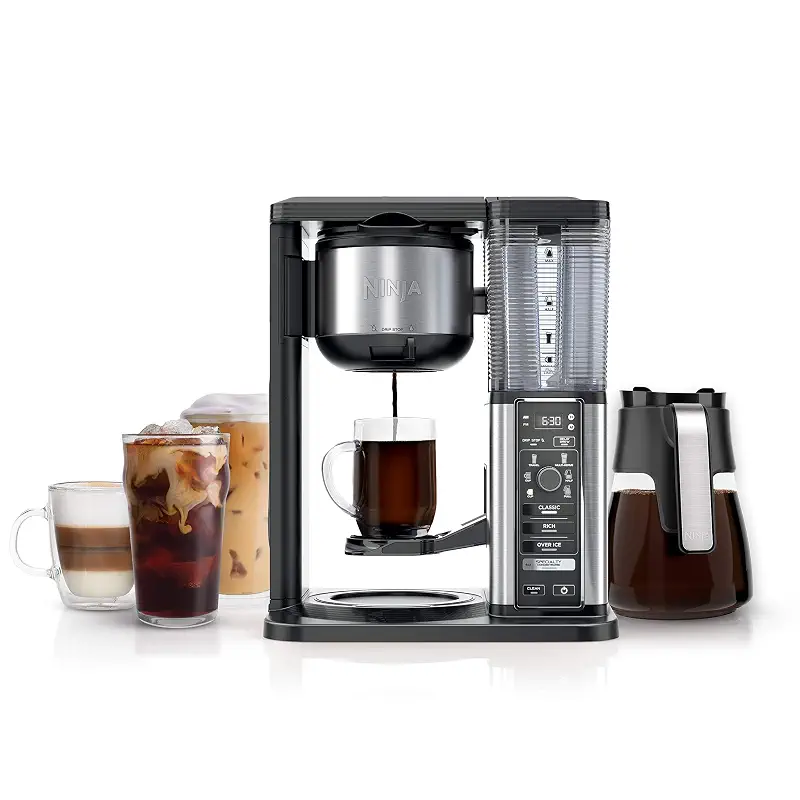
The Ninja Coffee Maker stands out as a genuine Swiss Army knife for households that can't decide on one brewing method. Need a single cup before work? Done in minutes. Hosting? Brew a full 10-cup carafe. Want iced coffee that doesn't taste watered down? The Over Ice setting adjusts temperature and brew strength to compensate for melting ice. Want a latte? The fold-away frother froths milk (including plant-based options) without taking permanent counter real estate.
Owners report exceptional longevity: one reviewer documented eight months of 4–5 daily uses with zero performance degradation, a far cry from typical pod-machine durability. The glass carafe is durable, the permanent filter saves money versus disposables, and the removable water tank is genuinely convenient. The built-in scoop removes measuring guesswork, and the drip-stop feature prevents the annoying coffee splatter that plagues cheaper machines.
The Lavazza BLUE Classy Mini excels at fuss-free espresso, but the Ninja covers more ground: it's a carafe machine for mornings with family, a single-serve option for solo days, an iced-coffee specialist, and a frother all in one. The learning curve is slightly steeper (four brew styles, eight sizes, programmable settings), but the manual is thorough and owners find the complexity worthwhile.
Pros
Four brew styles including Over Ice and cold brew options
Six brew sizes from single cup to full 10-cup carafe
Built-in fold-away frother for hot and cold milk frothing
No pods required; uses standard ground coffee filters
Cons
Larger footprint than single-serve or espresso machines
More controls and settings than simpler brewers
Key features
MultiStream brew technology saturates grounds for even extraction
Fold-away frother creates microfoam without dedicated wand hardware
Permanent reusable filter reduces waste and per-cup cost
Glass carafe with drip-stop feature prevents mid-brew mess
Ideal for: Households with mixed brewing preferences and tolerance for the K-Duo's complexity.
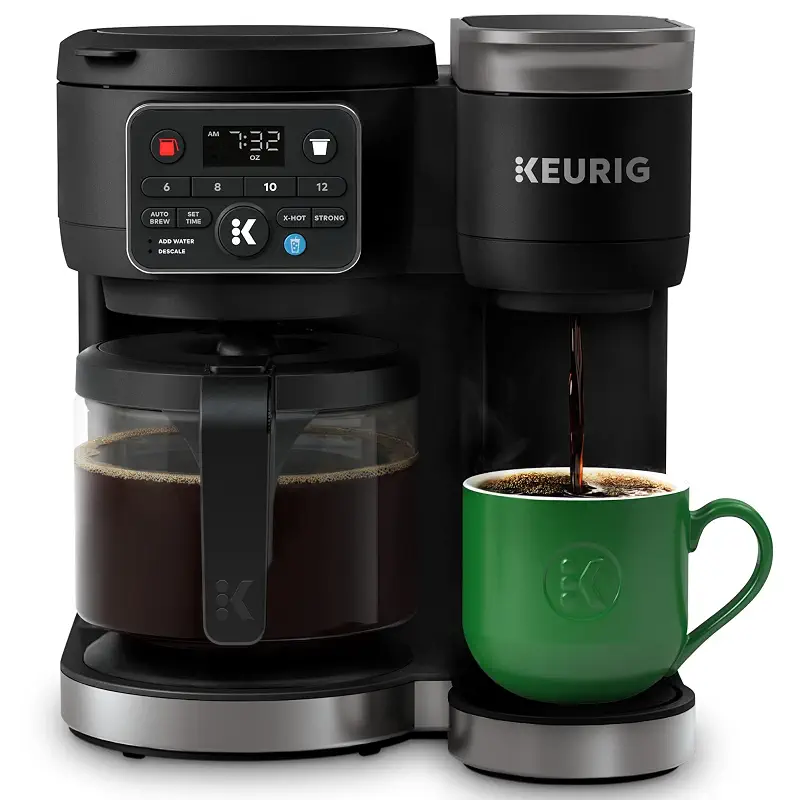
The Keurig K-Duo Hot & Iced Gen 2 appeals to households split between pod convenience and traditional carafe brewing. The single-cup side accepts K-Cups with Strong Brew and Brew Over Ice options; the carafe side takes ground coffee and brews 6–12 cups. A single 72 oz reservoir feeds both sides, minimizing refills. Owners praise the no-leaking carafe and the flexibility to serve one person or a crowd without switching machines.
But early reports reveal significant reliability concerns. One owner documented three replacement machines in eight months, each lasting 17–25 days before Error 8 and water-detection failures appeared. Keurig's support response (refusing refunds and requiring machines be returned before replacements ship) compounded the frustration. While some buyers report smooth operation for years, the failure rate is troubling enough to warrant caution. The Ninja Coffee Maker avoids these pitfalls by using proven heating and filtration architecture rather than complex electronic error-detection systems.
The K-Duo is also larger than simpler brewers, so it demands real counter commitment. If you're willing to accept the reliability gamble in exchange for pod-and-carafe flexibility, it delivers. If durability is your priority, the Ninja's track record is more reassuring.
Pros
Dual-sided design supports both K-Cups and ground coffee
Programmable auto-brew timer prepares carafe up to 24 hours ahead
MultiStream technology ensures even extraction on carafe side
Large 72 oz shared reservoir reduces daily refilling
Cons
Early failure reports and Error 8 messaging in some units
Larger footprint than single-serve or carafe-only machines
Key features
K-Cup single-serve side with 6, 8, 10, or 12 oz options
Carafe side brews 6–12 cups with ground coffee
Brew Over Ice and Extra Hot settings for temperature control
Front-facing digital control panel with programmable timer
How to Choose a Coffee Machine Under $300
Four trade-offs that actually matter when matching a coffee machine under 300 to your kitchen.
Single-Serve Pod vs. Ground-Coffee Carafe
Pod machines (Keurig, Lavazza) excel at convenience and consistency but lock you into specific brands and generate plastic waste. Ground-coffee brewers (Ninja) offer flexibility (any coffee brand works) and cost per cup is lower once you buy a grinder. The pod versus carafe brewing decision hinges on your morning routine. If you're always in a rush and alone, a pod brewer saves time. If you enjoy experimenting with different roasters or brewing a pot for others, a carafe brewer rewards you. Hybrid machines like the Keurig K-Duo try to split the difference but add complexity and (in some models) reliability risk.
Brew Style and Flavor Outcomes
Different machines produce noticeably different coffee. Pod brewers spray water through grounds quickly, prioritizing speed over extraction depth: the result is convenient but sometimes thin. Traditional carafe brewers (like the Ninja) use multiple water streams or pour-over principles to saturate grounds more evenly, pulling richer flavor and body. When considering espresso versus drip coffee, remember that these represent fundamentally different extraction methods. Each produces excellent results, but they're not interchangeable experiences. Espresso machines apply pressure to extract concentrated shots with crema, which can then be frothed into lattes, while drip brewers rely on gravity and time to pull a milder, larger cup.
Counter Space and Kitchen Layout
A single-serve pod brewer or compact espresso machine (Lavazza at 5.3" wide) barely encroaches on the counter. A Ninja or Keurig K-Duo requires real estate: roughly 12–13 inches wide and 10+ inches tall. Measure your available space before committing, and remember that you'll want clearance around the machine for water-tank removal, carafe swapping, or milk pitcher access. Some owners keep brewers under-cabinet to reclaim space, but that often requires power-cord routing and reduces accessibility. If aesthetics matter, a best white coffee maker might blend seamlessly into your countertop décor, whereas a stainless or black machine can feel industrial depending on your style.
Durability and Long-Term Cost
Cheap machines sometimes fail within 12 months; reliable ones last 3–5 years or more. Owners report the Ninja holding up through years of heavy daily use, while some single-serve pod brewers show stress after a year. Factor in replacement costs over time: a $50 machine that dies after 12 months actually costs $600/year if you keep replacing it, whereas a $250 machine that lasts five years costs $50/year. Also weigh consumables. K-Cup pods run $0.60–$1.00 per cup, while ground coffee often costs $0.15–$0.30 per cup when bought in bulk.
Ease of Cleaning and Maintenance
Pod machines are easiest: pop out the used pod, rinse the filter basket, and you're done. Carafe brewers require more steps (removing the ground-coffee basket, rinsing the carafe) but most parts are dishwasher safe. Espresso machines demand discipline: group-head backflushing, steam-wand purging, and descaling schedules keep them running smoothly. If you're a minimalist who skips cleaning chores, choose the simplest machine. If you enjoy tinkering and maintenance, an espresso machine rewards that attention.
Frequently asked
Quick answers to the questions readers ask most.
Can I use any coffee brand in a pod machine?
No. Keurig machines accept K-Cup pods from hundreds of brands, but you're limited to that pod format. Lavazza BLUE machines use proprietary Lavazza Blue pods only. This pod-lock is the trade-off for convenience. If you want to switch coffee roasters freely, ground-coffee machines (like the Ninja) give you unlimited choice: just buy any brand and brew.
What's the real difference between espresso and drip coffee?
Espresso applies 9–20 bars of pressure to force hot water through finely ground coffee in seconds, producing a concentrated shot with crema. Drip coffee uses gravity or gentle brewing to slowly saturate coarser grounds over minutes. Espresso tastes bolder and smaller; drip is milder and larger. You can make espresso shots and then add steamed milk for lattes, but the machines that brew each are different. Choose espresso if you want café-style drinks; choose drip if you want a big morning cup.
How often should I descale my machine?
Descaling frequency depends on water hardness. Hard water (high mineral content) requires descaling every 1–3 months; soft water every 3–6 months. Descaling removes mineral buildup that clogs heating elements and reduces coffee quality. Most machines alert you when it's time. Use a manufacturer-approved descaling solution or white vinegar. Neglecting this step is the leading cause of premature machine failure, so treat it as routine maintenance.
Are cheaper machines worth the risk, or should I spend more upfront?
It depends on your usage. Light users (1–2 cups per week) can accept a shorter lifespan; heavy users (5+ cups daily) benefit from durability. A $100 machine lasting one year is the same annual cost as a $250 machine lasting 2.5 years. Read owner reviews for longevity signals. Machines with thousands of reviews and strong durability feedback (like the Ninja) typically outlast budget outliers that show failure patterns within months.
Do I need a separate grinder, or can I use pre-ground coffee?
Pre-ground coffee works fine in carafe brewers and espresso machines, though flavor degrades within a week of grinding as grounds oxidize. If you brew occasionally, pre-ground is convenient. If you brew daily and care about flavor, investing in a grinder unlocks fresher coffee and lower per-cup cost since whole beans are cheaper than pre-ground. Most carafe machines don't require a grinder: they accept any grind size.