Verdict, analysis, and key features for each pick.
#1 Pick
Best Overall
Baratza
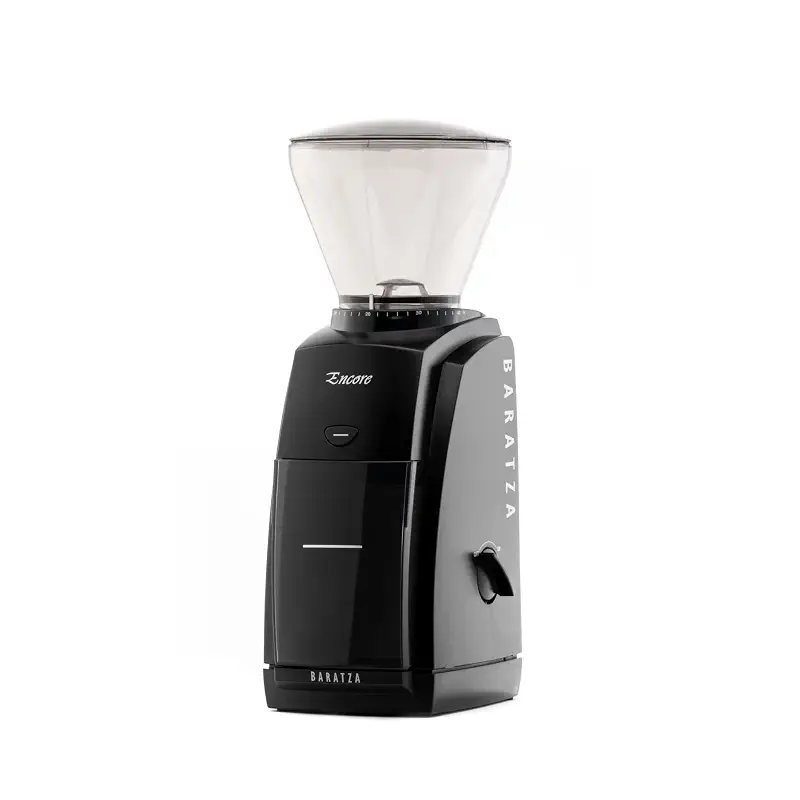
Baratza Encore Coffee Grinder ZCG485BLK, Black | Beginner-friendly grinder with powerful motor and 40mm conical steel burrs for consistent, brew-ready performance
4.2(16,594)
A workhorse entry-level burr grinder that handles Chemex with reliable consistency and serviceable parts: proven by thousands of daily users.
Ideal for: Home brewers seeking reliable, versatile performance without the noise or learning curve of digital controls.
The Baratza Encore is the consensus choice for good reason. Its 40mm conical burrs produce a grind uniform enough for pour-over, and the 40 settings give you plenty of room to dial in that sweet middle ground between the flour-fine espresso range and the coarse French press zone where Chemex lives. Owners report the grind quality remains consistent after years of heavy use, which speaks to the burr engineering and the gear-drive motor design.
What makes this grinder genuinely useful for Chemex is the ability to fine-tune. You're not locked into wide jumps between settings; the incremental adjustments mean you can chase the perfect extraction without starting over. The pulse button on the front lets you grind in short bursts if you want micro-control, though most Chemex brewers find a single grind cycle works fine. One detail that separates the Encore from cheaper models: Baratza sells replacement burrs and internal components separately, so wear-and-tear doesn't mean buying a new grinder.
The tradeoff is that it's not the quietest, and static buildup in the grounds container is real: a minor inconvenience that users quickly develop routines around. It also sits at a specific price point; the Breville Smart Grinder Pro, by contrast, offers more settings and digital precision, but the Encore's mechanical simplicity and proven track record make it the safer first choice for most home brewers.
Pros
40 conical burrs produce uniform grind across brew methods
Easy to locate replacement burrs and internal parts
Pulse button allows precise short grinds for Chemex fine-tuning
Cons
Static discharge creates ground-coffee mess in collection chamber
Motor noise is noticeable in quiet kitchens
Key features
40mm commercial-grade conical burrs engineered for espresso to French press
40 grind settings with mechanical adjustment ring for tactile control
Compact footprint; fits easily on standard counters without dominating space
Fully serviceable: burrs, motors, and gaskets available as separate parts
#2 Pick
Best for Travel & Backup
Ceving
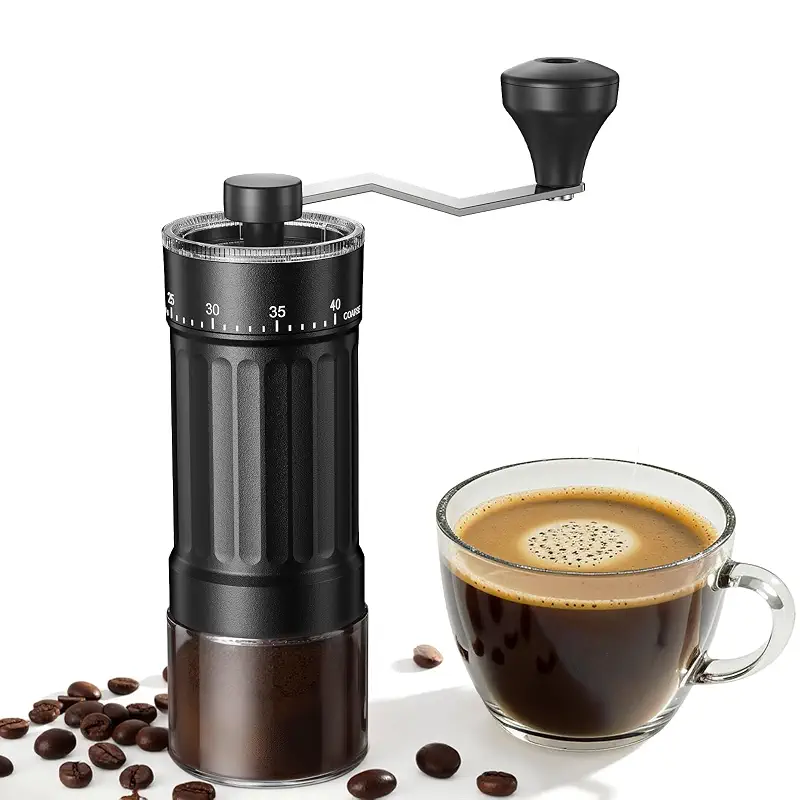
CEVING Mini Manual Coffee Grinder With 40 Adjustable Settings, Black | Portable Hand Coffee Bean Mill with Ceramic Conical Burrs, 30g Capacity, Ideal for Travel, Camping, French Press, Pour Over
4.3(1,856)
A compact manual grinder with ceramic burrs and 40 external settings: ideal for Chemex brewing away from home or as a backup when power fails.
Ideal for: Travelers, campers, and morning ritualists who value silence and portability over powered speed.
The Ceving mini manual grinder flips the workflow entirely. Instead of a motor doing the work, your hand does: which means silence, portability, and independence from electricity. For Chemex enthusiasts who travel, camp, or want a reliable backup, this opens options that electric models simply can't match. The ceramic conical burrs produce a grind that reviewers consistently describe as uniform, and the 40 external adjustment settings (a genuine strength of manual grinders) let you dial in Chemex coarseness with precision.
The 30-gram bean capacity is modest, but that's exactly what you need for a single Chemex brewing session anyway. Where this model shines is consistency within that narrow use case: weigh your beans, grind them fresh, and brew. Owners report that the adjustment mechanism is intuitive once you get the feel for it, and the lack of static (a problem that plagues electric grinders) means cleaner handoff to your brewer.
Compared to the Baratza Encore, you trade powered convenience for portability and reliability in any environment. The manual grind does take time (roughly 15 to 20 seconds per dose for most users) but that ritual is part of the appeal for many. The ceramic burrs generate less heat than steel, which some coffee enthusiasts believe preserves bean flavor better. The drawback is effort; if you're grinding daily for a household, the manual approach becomes a chore rather than a ritual.
Pros
Ceramic burrs produce heat-free grind preserving coffee oils and flavor
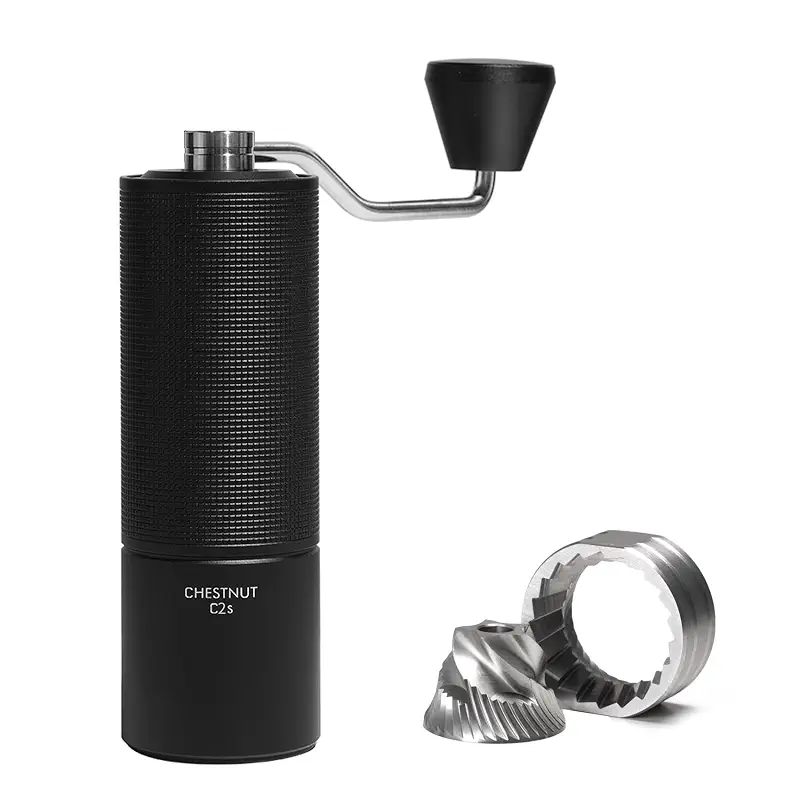
A premium hand grinder with stainless-steel build and dual-bearing burr positioning: the manual choice for serious home brewers who enjoy grinding daily.
Ideal for: Daily coffee drinkers who value precision, durability, and the tactile pleasure of hand-grinding over electric convenience.
The Timemore Chestnut C2S is hand-grinding for people who don't want hand-grinding to feel like work. The full stainless-steel unibody construction (an upgrade over earlier plastic-topped models) gives it substantial heft and durability, while the 38mm conical burrs with double-bearing positioning ensure the grind stays consistent through years of use. For Chemex, the roughly 36 adjustable levels provide more than enough granularity to hit the sweet spot without endless trial-and-error.
What separates this from cheaper manual grinders is the ergonomic execution. The handle turns smoothly, and momentum keeps it spinning even after you release: a detail that makes the grinding feel less laborious. The compact 52mm body is easy to grip, and reviewers across multiple languages praise how light the grinding effort feels compared to other hand mills. The 25-gram capacity suits Chemex perfectly: grind once, brew. No leftover beans in the chamber.
Where the Ceving mini beats the Timemore is portability and price; where the Timemore wins is build quality and grinding experience. The grind adjustment mechanism can be fiddly (it's a threaded collar at the bottom of the chamber) but once you dial it in for a bean batch, you're set. Some users grind a small test batch to confirm the setting before committing. The glass collection cup (not plastic) is a small luxury that keeps the package feeling premium. Compared to the electric Breville across the lineup, you lose programmable dosing but gain reliability and a meditation-like ritual.
Pros
Full stainless-steel construction withstands daily grinding and travel wear
38mm conical burrs with dual-bearing positioning deliver consistent particle size
Smooth handle rotation with momentum; minimal hand fatigue per dose
Cons
Bottom-mounted adjustment collar is fiddly and requires disassembly to change grind
25-gram capacity requires separate bean storage rather than hopper convenience
Key features
CNC-machined stainless-steel unibody construction; weighs 700 grams for substantial feel
38mm conical burr with 36 adjustment levels for espresso-to-French press range
Double bearing central-axis positioning minimizes burr wobble and drift
Glass collection cup and included carrying bag for home and travel use
#4 Pick
Most Precise for Chemex
Breville
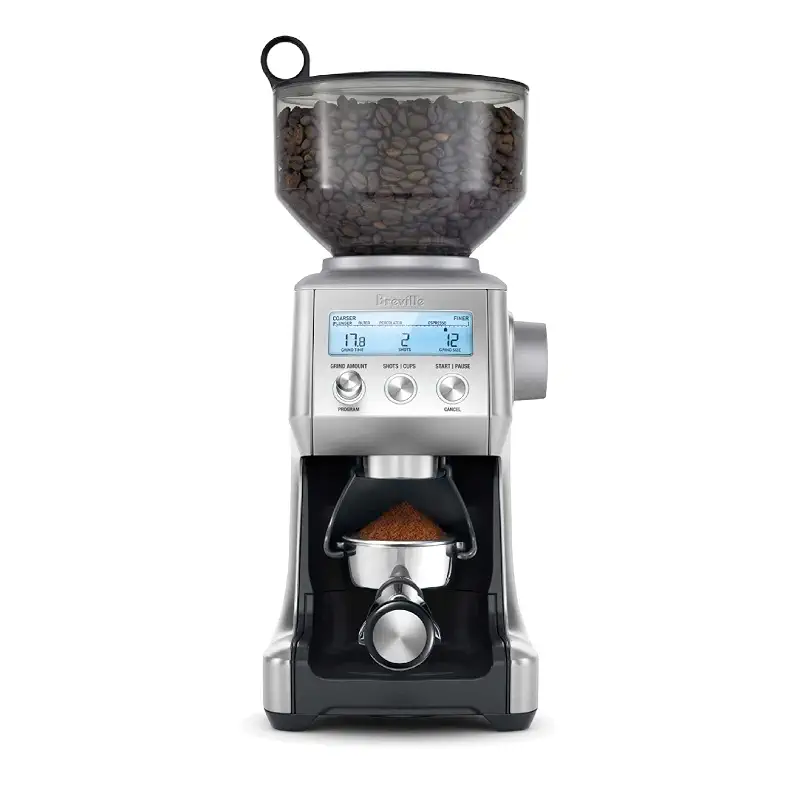
Breville BCG820BSS Smart Grinder Pro, Brushed Stainless Steel | Grind coffee and espresso beans precisely with programmable conical burr grinder including 60 settings for any brew method
4.5(6,980)
A digital burr grinder with 60 settings, programmable timing, and programmable burr adjustment: the most granular control available for dialing Chemex to perfection.
Ideal for: Tech-minded coffee enthusiasts who want programmable precision and the flexibility to expand into espresso later.
The Breville Smart Grinder Pro is built for people who want science applied to coffee. The 60 grind settings, combined with adjustable timing in 0.2-second increments, let you dial in not just *what* fineness you want but *how much* of it. For Chemex, this precision is meaningful: you can program it to grind exactly the weight of beans you use every morning, then press a button and walk away. The LCD display shows you the setting, time, and number of cups or shots selected, removing guesswork.
The conical burrs produce a grind as consistent as any electric model in this price range, and the removable hopper means you can keep one loaded with beans for drip and swap it for a second hopper if you also brew espresso. The portafilter cradles (two sizes included) are useful if you ever expand into espresso, though for Chemex-only brewers they're decorative. The real power is in the adjustable internal burr mechanism: there are five additional burr positions beyond the factory default, which effectively expands the grind range to cover specific brew methods more finely.
The Encore offers simplicity and proven durability; the Breville offers precision and programmability. Trade-offs exist: the Breville motor can bind up under heavy load (though this is rare and easily recoverable), and the included catch container doesn't seal perfectly against the output chute: most owners grind directly into their brew vessel instead. For Chemex specifically, the Encore's 40 settings are genuinely sufficient, so you're paying for flexibility you may never use. That said, if you want the most control and enjoy the tech interface, the Breville justifies the cost.
Pros
60 grind settings with 0.2-second timing increments enable granular dialing
Programmable cup/shot counts eliminate weighing and guesswork daily
Ideal for: Budget-conscious brewers seeking solid burr-grind performance for pour-over and drip without paying for brand premium.
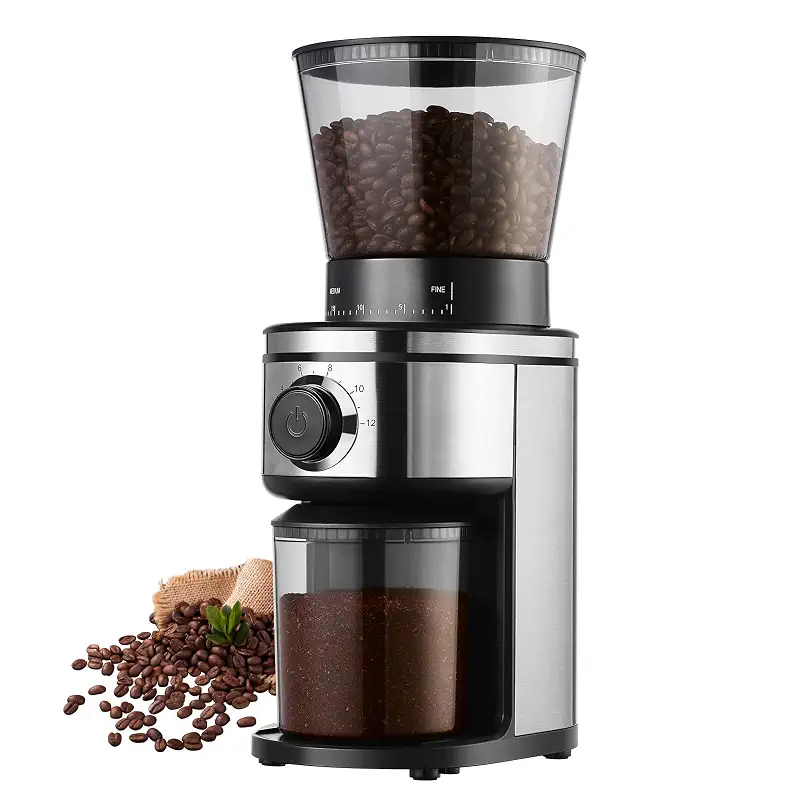
The Ollygrin offers competent burr grinding at a price that doesn't demand justification. The 40mm stainless-steel conical burrs are identical in size to the Baratza Encore's, and owners report consistent grind quality across pour-over, drip, and French press ranges. The 30 grind settings cover Chemex territory comfortably, and the auto-locking hopper system is a convenience feature that prevents beans from spilling when you remove it.
What makes this grinder noteworthy for the price is the 10-ounce bean capacity (larger than the Encore's hopper) and the gear-reduction motor that promises slower grinding action and less heat generation. For someone building their first proper brew station on a tight budget, this grinder performs its core job well. The included brush and lift-off upper burr make cleaning straightforward, and the friction clutch is designed to protect gears if a stray stone makes it past sorting.
Where the Ollygrin falls short of the Baratza Encore is in build reputation and parts availability. Baratza has decades of standing in specialty coffee and a proven track record of customer support. Ollygrin is newer and less established in reviews. The grinder also performs less consistently on extremely fine espresso grinds, though Chemex doesn't demand that range. Some users report a faint plastic smell initially, which fades. For Chemex-focused brewing and light espresso experimentation, the Ollygrin is a sensible entry point: just don't expect the durability legacy of the Encore at a lower price.
Pros
Large 10-ounce hopper reduces refilling frequency during multiple brewings
30 grind settings provide sufficient range for Chemex and most brew methods
Gear-reduction motor operates quieter than high-speed alternatives
Cons
Newer brand with limited long-term durability data compared to established competitors
Replacement parts less readily available than Baratza ecosystem
Key features
40mm stainless-steel conical burrs engineered for uniform grind consistency
30 adjustable grind settings with rotary dial; 2-12 cup capacity selector
Auto-locking hopper system prevents bean spill during removal and storage
Friction clutch and overheating protection safeguard motor and burr assembly
How to Choose a Grinder for Chemex Brewing
Four trade-offs that actually matter when matching a coffee grinder for chemex to your kitchen.
Grind Consistency Matters Most
Chemex brewing depends on a medium-coarse, uniform grind. If your grinder produces a wide range of particle sizes (large chunks mixed with fine powder) the water will flow unevenly through the grounds, resulting in under-extracted (weak) or over-extracted (bitter) coffee. Burr grinders, whether conical or flat, create more uniform particles than blade grinders. The best electric options for Chemex (Baratza Encore, Breville Smart Grinder Pro, Ollygrin) all use 40mm or 38mm conical burrs, which produce grind consistency that specialists actually measure. For manual grinders, ceramic conical burrs (found in the Ceving and Timemore) deliver similarly reliable uniformity without heat generation that might damage bean oils.
Setting Range and Adjustment Precision
Chemex requires a grind finer than French press but coarser than espresso. Your grinder needs enough settings within that range to dial in your specific beans, brewer, and taste preference. The Baratza Encore's 40 settings and the Ollygrin's 30 settings both provide sufficient granularity for Chemex; the Breville's 60 settings and adjustable internal burr simply offer more flexibility than you strictly need. Manual grinders often excel here: the Ceving and Timemore each offer 40 external adjustment levels, allowing you to dial between clicks if you want micro-fine control. Look for a grinder where Chemex-range adjustments sit comfortably in the middle of the dial, not pushed to extremes.
Daily Workflow and Convenience
Electric grinders save time and effort; manual grinders demand ritual and arm strength but reward you with silence, portability, and independence from power. If you brew Chemex every morning for a household, an electric burr grinder like the Encore or Breville pays for itself in convenience. If you brew Chemex once or twice weekly, or travel frequently, or want a backup for power outages, a manual grinder like the Timemore or Ceving becomes attractive. Some brewers keep both: a fast electric grinder for weekday drip and an hand mill for weekend pour-over meditation. Bean capacity also matters: the Ollygrin's 10-ounce hopper lets you grind multiple Chemex batches without refilling; manual grinders' small 25-30g capacity mirrors a single Chemex dose.
Build Quality and Parts Support
Baratza's reputation in specialty coffee is earned partly through parts availability. If your Encore burrs wear out in five years, you can buy a replacement burr set and restore it; the same is difficult with newer brands. The Timemore Chestnut's stainless-steel construction and dual-bearing design suggest longevity, and it's gained a loyal following. The Breville comes with a 2-year warranty and serves a broad market, so support is accessible. The Ollygrin and Ceving are newer players, which means fewer long-term reviews and less established service channels. For Chemex, where grind consistency drives flavor, choosing a grinder with a track record or strong warranty reduces risk. The chemex grind size guide can help you dial in your chosen grinder once it arrives, and the manual versus electric grinder comparison explores the durability and maintenance differences further.
Frequently asked
Quick answers to the questions readers ask most.
What grind size should I use for Chemex?
Chemex works best with a medium-coarse grind, roughly equivalent to sea salt or coarse sand. On the Baratza Encore, most users find settings between 18 and 24 ideal; on the Breville Smart Grinder Pro, settings in the 40s work well. Start with your grinder's mid-range and adjust finer if the coffee tastes weak, coarser if it tastes bitter. The exact number varies by bean origin, roast, and personal taste, so dial by flavor, not by following a preset.
Can I use an espresso grinder for Chemex?
Yes, but it's overkill. Espresso grinders are engineered to produce extremely fine, consistent particles for high-pressure extraction. Chemex doesn't need that fineness. The Breville Smart Grinder Pro can handle both espresso and Chemex because it has a wide enough setting range, but a simpler grinder like the Encore works just as well for Chemex alone and costs less. If you only brew Chemex, choose a grinder optimized for pour-over rather than a dual-purpose espresso model.
Is a conical burr grinder better than a flat burr grinder for Chemex?
Both conical and flat burr grinders can produce excellent Chemex grinds. Conical burrs are more forgiving of small temperature changes and easier to clean, which is why all five grinders in this roundup use them. Flat burrs can theoretically produce slightly more uniform particles, but the difference is negligible for pour-over brewing. Choose based on availability, price, and brand reputation rather than burr shape.
Should I grind beans in bulk or grind just before brewing?
Grind just before brewing. Coffee grounds lose flavor and aroma within minutes of grinding as volatile compounds evaporate. Even if your grinder produces a perfect Chemex grind, it tastes best when the grounds are fresh. Store whole beans in an airtight container at room temperature (not the freezer unless you plan to leave them there long-term), and grind only what you need for each brew session.
Why does my Chemex coffee taste bitter even though the grind looks right?
Bitterness usually signals over-extraction, which can happen even with the right grind size if the grinds are too fine overall or if you're brewing for too long. Try adjusting your grinder one setting coarser and keeping your brew time consistent (typically 4 to 5 minutes for Chemex). If the coffee still tastes off, check that your water temperature is between 195 and 205 degrees Fahrenheit and that you're using the correct coffee-to-water ratio (roughly 1 gram of coffee to 16-17 grams of water). Grind consistency (uniformity across particles) matters as much as grind size itself.