Find the best chutney grinder for grinding spices, herbs, and wet pastes. Compare electric grinders with dual bowls, safety features, and easy cleanup.
Ideal for: Home cooks making fresh chutneys, Indian spice blends, and wet pastes; busy kitchens needing quick small-batch grinding.
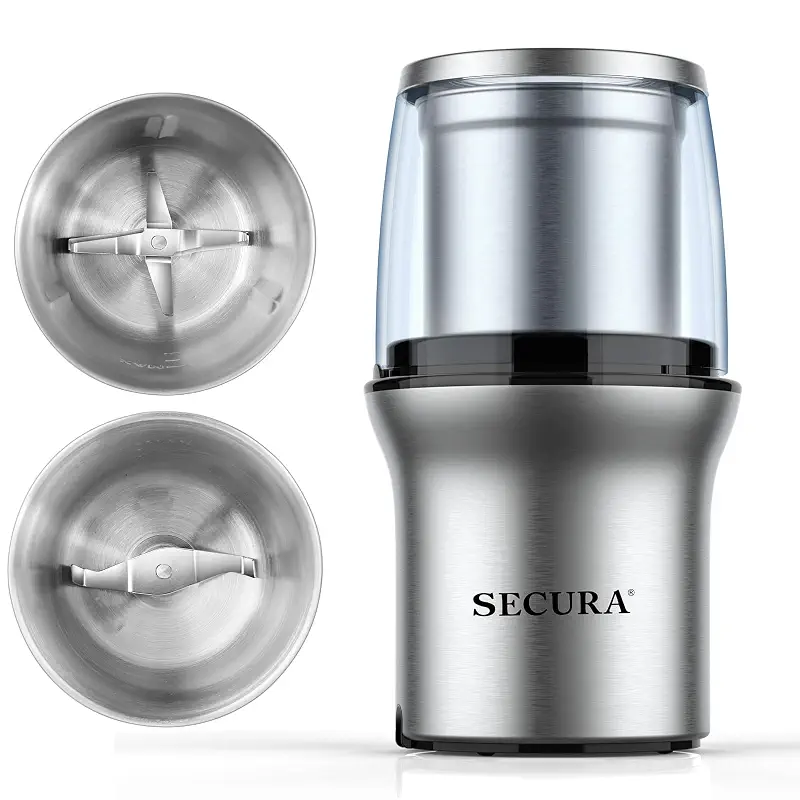
The Secura offers what serious chutney makers want: a 200W motor that doesn't struggle with wet ginger-garlic paste, separate stainless steel bowls for dry spices and wet grinding, and a transparent lid so you can see your consistency building. The pulse-control design (press and hold) lets you dial in texture rather than hunt through speed settings. Owners who make chutney regularly praise how the motor handles fresh herbs, ginger, and garlic without stalling or overheating, and the removable bowls mean no flavor cross-contamination.
The build does have limits. Hard spices like cinnamon and cloves can stress the motor if you grind prolonged amounts; the manual explicitly warns against them. A few owners reported durability issues after extended use, and some criticized the thin stainless steel on the bowls. The plastic lid is functional but will wear if you remove it repeatedly. Despite these trade-offs, the Secura's consistent performance for wet chutney work and affordable entry point make it a strong pick for home cooks who grind regularly.
Cleanup is straightforward: both bowls go in the dishwasher, and the cord wraps neatly for storage. Many owners use it for multiple tasks (spice blends, wet herb pastes, baby food purées) without complaint, which speaks to its real-world versatility in the kitchen.
Pros
Handles wet grinding (ginger-garlic paste, fresh herbs) without struggling
Removable stainless steel bowls prevent flavor bleed between uses
Transparent double-lid design lets you monitor texture in real time
200W motor grinds consistently without prolonged overheating
Cons
Hard whole spices like cinnamon can stress the motor if overloaded
Plastic lid will wear with repeated removal; thin bowl construction noted in reviews
Key features
200W motor with pulse-control on/off operation for texture control
Two removable stainless steel bowls for separate wet and dry grinding
Double-lid design with built-in splash protection and visibility window
Safety lock activates motor only when bowl is properly seated
Dishwasher-safe bowls and integrated cord storage
#2 Pick
Best for Hard Spices & Nuts
Cuisinart
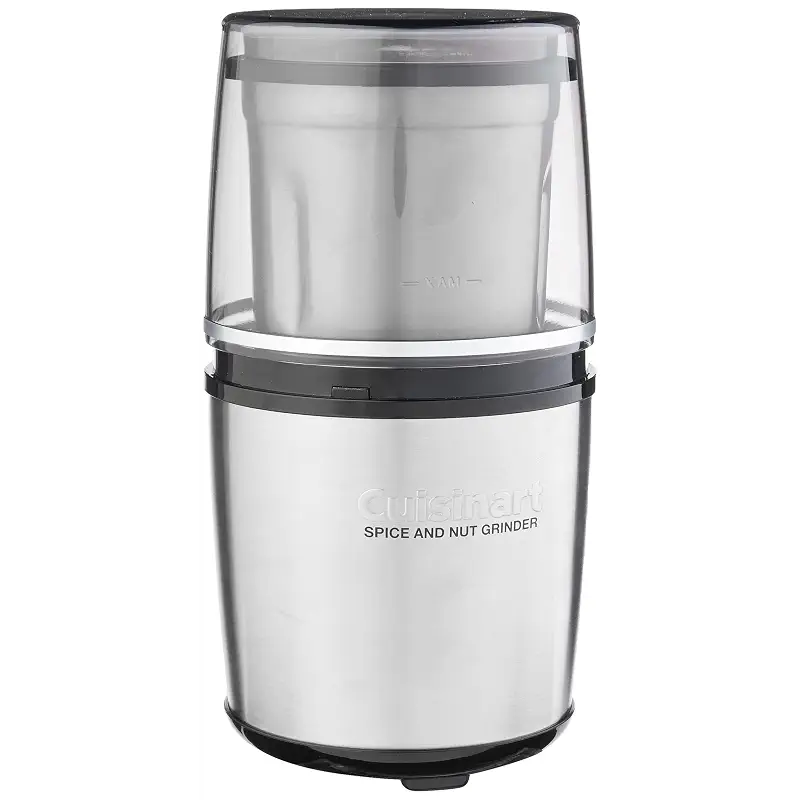
Cuisinart Spice and Nut Grinder, Push-Top Lid for On/Off, Dishwasher Safe | Electric grinder with heavy-duty motor, stainless steel blades, push-top operation & compact, easy-to-clean design, SG-10
4.3(4,393)
Heavy-duty blade design and proven longevity make this the pick for grinding tough whole spices without compromise.
Ideal for: Cooks who grind hard whole spices daily; makers of dry spice blends, nut flours, and masala powders.
The Cuisinart Spice and Nut Grinder has earned a strong reputation over years of daily use. Its blade design is purpose-built for whole spices, nuts, and seeds, not a coffee grinder retrofitted for spices. The 200W motor pulverizes hard cinnamon, cloves, nutmeg, and peppercorn in seconds without struggle, and owners report years of reliable grinding without overheating or motor fatigue. The push-top lid operation is dead simple: press and hold, release to stop. No guessing, no timers.
Where it differs from the Secura is the single-bowl approach. There's no separate wet-grinding bowl, which makes it less ideal if you're grinding fresh ginger-garlic paste regularly; the stainless steel bowl can allow liquid to seep through the bottom and potentially reach the motor housing. Owners who've tried wet grinding report mixed results. The 90-gram capacity is smaller than some competitors, so you'll need multiple runs for large batches. Cleanup requires care: the rubber seal ring in the lid is easy to lose in the dishwasher.
If your chutney work leans toward dry spice grinding, masala blends, and nut powders, this grinder excels and will outlast many lighter-duty models. The motor stays quiet and cool, and owners consistently report it lasting multiple years of daily use.
Pros
Purpose-built blade design pulverizes hard spices without stalling or overheating
Proven multi-year longevity with daily heavy use reported across reviews
Simple push-top control with no complex settings to slow you down
Dishwasher-safe bowl and lid for easy cleanup between spices
Cons
Single bowl limits wet grinding; liquid can seep to motor if overloaded
Smaller 90-gram capacity requires multiple batches for large quantities
Key features
Heavy-duty stainless steel blades engineered specifically for spice and nut grinding
200W motor maintains consistent speed under load without thermal shutoff
Push-top lid operation activates motor instantly with pressure, stops instantly with release
90-gram bowl holds adequate spices; extra storage compartment in lid cap
Nonslip rubber feet prevent shifting during grinding; 18-month warranty included
#3 Pick
Best for Compact Kitchens
Shardor
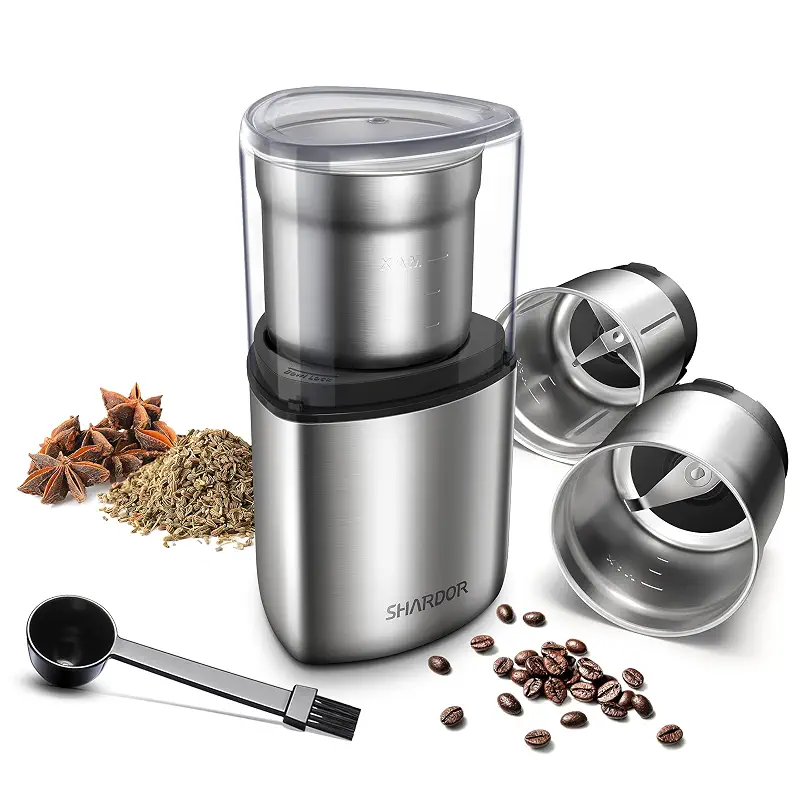
SHARDOR Electric Coffee Grinder Herb Blade Grinder Spices Grinder with 2 Removable Stainless Steel Bowls, Silver
4.2(713)
Space-saving triangular design with dual bowls and quiet operation fits tight quarters without compromising chutney work.
Ideal for: Apartment dwellers, small kitchens, occasional grinders of spices and fresh pastes; those prioritizing countertop footprint.
The Shardor Electric Coffee Grinder (silver model) brings dual-bowl convenience into a footprint that won't dominate a small counter or apartment kitchen. Its distinctive triangular prism shape is more aesthetic than practical, but owners praise the compact size and ability to store it easily. The 200W motor is present, the two stainless steel cups separate wet and dry work, and the one-touch press-and-hold control keeps operation simple.
Compared to the Cuisinart, the Shardor sacrifices some hard-spice grinding power for a smaller overall size. A few owners reported the motor burning out after relatively light use, which raised durability concerns. Others found the grinding less uniform on tough whole spices like cumin and coriander, with some chunks remaining unground even after extended pressing. The motor can also run hot if you grind fine powders for extended periods, a trade-off of the compact design.
Where the Shardor excels is in versatility for the space-constrained kitchen: ginger-garlic paste, fresh herbs, coffee, seeds, and nut butters all work reliably. The removable stainless steel cups are easy to clean, and the non-slip base prevents creeping during operation. If you grind occasionally rather than daily, and your space is at a premium, this model delivers solid mid-range performance without the footprint of larger alternatives.
Pros
Compact triangular design saves counter and storage space without bulk
Dual removable stainless steel bowls for wet herb and dry spice separation
Simple one-touch press-and-hold control for intuitive texture adjustment
Non-slip base provides stable grip during grinding; quiet operation noted by owners
Cons
Motor durability concerns reported; some units burned out after limited uses
Inconsistent grinding on hard spices; some whole pieces remain unground
Key features
Compact triangular prism stainless steel body saves kitchen counter space
200W motor with one-touch press-and-hold operation for coarse to fine grinding
Dual removable stainless steel cups: 2-blade for dry, 4-blade for wet ingredients
Safety lid design prevents motor operation until lid is fully seated
Dishwasher-safe cups and easy water-rinse cleanup; non-slip rubber base
#4 Pick
Best Wet & Dry Grinder for Indian Cooking
BalajiUSA
Wet & Dry Grinder 200 w-110v Stainless Steel Electrics Spice Grinder With 2 Stailess Steel Jars Grinds Spices, Coffee,Dry Fruits & Chutneys For USA & CANADA
3.9(56)
Dedicated wet-and-dry design with separate jars and 200W power handles chutney, masala, and paste work without compromise.
Ideal for: Indian home cooks, chutney makers, spice paste creators; anyone prioritizing wet grinding without motor strain.
The BalajiUSA Wet & Dry Grinder stands apart because it's engineered specifically for the Indian grinding tradition, making fresh chutneys, ginger-garlic paste, and wet spice blends without the motor strain that generic grinders experience. The two separate stainless steel jars come with different blade configurations for wet and dry work, a design philosophy that matches the Secura but goes further in acknowledging wet grinding as a primary function rather than an afterthought.
Owners who make authentic chutneys and pastes report smooth results without the risk of liquid seeping into the motor. The 200W motor doesn't struggle with coconut, tomato, and herb pastes, and the 110V design means no converter needed in North America. Small batch capacity is intentional: you grind just what you need for today's cooking, which means fresher results. One owner specifically noted the ability to make smooth ginger-garlic paste without excess water, a critical feature for traditional chutney work.
The trade-off is limited review volume and less brand recognition in Western kitchens compared to established names like Cuisinart. The compact size, while ideal for small portions, requires multiple runs for larger batches. Compared to the Shardor option, the BalajiUSA prioritizes wet grinding reliability over space-saving design. If your cooking centers on fresh chutneys, masalas, and traditional Indian pastes, this grinder's purpose-built approach offers the performance you need.
Pros
Dedicated wet and dry jars prevent motor stress and liquid seepage during paste grinding
110V US/Canada voltage requires no converter; reliable small-batch processing
Smooth results grinding ginger-garlic paste and coconut-based chutneys without excess water
Separate blade configurations optimize wet and dry grinding efficiency
Cons
Smaller capacity requires multiple runs for large quantities; limited brand presence and fewer reviews
Limp blade design noted in reviews; occasional cleaning difficulty around blade attachment
Key features
200W motor with separate wet and dry grinding jars for authentic chutney work
110V electrical standard for USA and Canada with no voltage conversion needed
Stainless steel construction throughout prevents rust and corrosion in wet use
Ideal for: Daily grinders of mixed ingredients; home cooks needing wet and dry capability, coffee, spices, nuts, and fresh herbs.
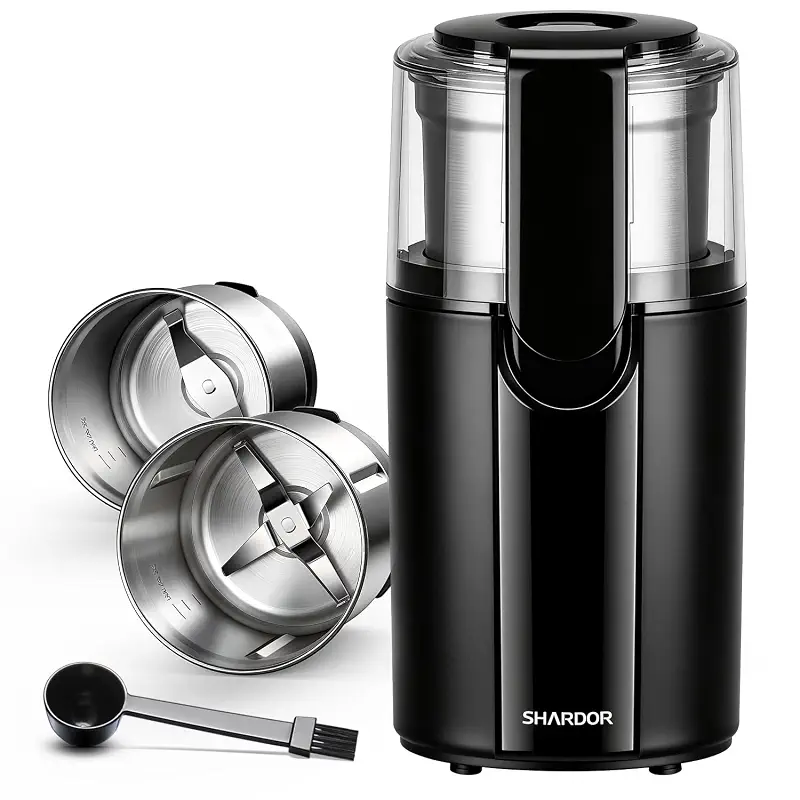
The Shardor Coffee Grinder Electric (black model) refines the dual-bowl concept with a larger capacity cup and a 200W motor that handles consistent daily grinding. The two removable stainless steel bowls serve the same wet-dry split as the silver Shardor, but owners report better grinding uniformity across hard spices like peppercorns and bay leaves. The press-and-hold control remains intuitive, and the motor powers through nuts, seeds, and fresh herbs without the hesitation some competitors show.
Noise is a consideration here. Early units were loud enough that Shardor's customer service offered replacements, and updated models run quieter. Owners appreciate the responsiveness of the brand's support team when issues arise. The motor can generate heat during extended fine-powder grinding, though this is more a sign of intensive use than a defect. Some reviewers noted inconsistent blade contact in the cup assembly, suggesting loose tolerances, though this seems rare in current production.
Where this model stands out from the BalajiUSA is capacity and ease of use: the larger cups handle bigger batches without multiple runs, and the press-and-hold operation is faster than toggle switches. Compared to the silver Shardor, the black model edges ahead on motor consistency and buyer feedback on longevity. If you grind daily for multiple purposes (coffee one morning, chutney paste the next) this versatility and responsive support make it worth the slight motor-heat consideration.
Pros
Larger capacity dual-bowl system handles bigger batches without multiple runs
200W motor grinds hard spices and soft herbs uniformly with consistent power
Responsive customer service with documented replacement support for early units
Simple one-touch operation; removable dishwasher-safe cups for quick cleanup
Cons
Motor generates heat during prolonged fine-powder grinding; early units ran loud before updates
Some blade assembly tolerance issues reported; motor can stall on extremely hard whole spices
Key features
200W motor with ample capacity dual removable stainless steel bowls for wet and dry work
Two grinding cups with 2-blade and 4-blade configurations for spices, coffee, herbs, and pastes
Press-and-hold one-touch control for intuitive grinding; stop instantly when released
Large bowl capacity reduces batching for spices, nuts, and grains; dishwasher-safe construction
Non-slip base and safety lid design prevent accidents; supported by responsive brand customer service
How to Choose a Chutney Grinder
Four trade-offs that actually matter when matching a chutney grinder to your kitchen.
Wet vs. Dry Grinding Capability
The most important consideration for chutney work is how well a grinder handles moist ingredients without leaking or burning out. True chutney grinders include separate bowls with different blade configurations: a 2-blade or double-blade cup for hard dry spices, nuts, and seeds; a 4-blade cup for fresh ginger, garlic, herbs, and coconut. Dedicated wet-and-dry models like the BalajiUSA are engineered to keep liquid away from the motor housing. If you're choosing between a single-bowl design and a dual-bowl model, remember that wet and dry grind using different blade speeds and pressures. A grinder designed for only one risks motor strain or seepage when you switch tasks.
Motor Power and Consistency
Most quality chutney grinders run 200W, enough to pulverize whole spices and fresh paste without excessive heat buildup. What matters more than wattage is how the motor handles load. A grinder with consistent power won't stall when you press ginger-garlic paste or hard cinnamon; it slows slightly, then continues. Watch for reviews mentioning whether the motor stays cool during daily use or requires rest periods. Some compact models trade power for size, which means longer grinding times or uneven results on tough spices. If you grind daily, choose a motor rated for continuous duty rather than intermittent, which prevents premature burnout.
Control Method and Texture Precision
Chutney consistency is personal. Some cooks want a silky paste; others prefer a coarser spice powder. Press-and-hold (pulse) control gives you precise feedback: longer presses yield finer texture, short bursts keep things coarse. Toggle switches and pre-set speed levels are simpler but less intuitive for fine tuning. Models with a transparent lid let you monitor the grind without stopping, so you can stop when the texture is right rather than guessing. This matters most if you make varied chutneys or spice blends where consistency is crucial to the final dish.
Cleaning and Maintenance
Removable bowls that go in the dishwasher save time and reduce the risk of water entering the motor. Fixed bowls require careful hand-brushing around the blades and crevices, which is tedious and leaves residue. Check whether the rubber seal ring in the lid is easy to replace (many get lost in dishwashers). Stainless steel cups won't rust or absorb odors the way plastic or aluminum can, which is essential when you're alternating between cumin, coconut, and garlic. After grinding fresh pastes, you should be able to rinse the cup and bowls quickly; if cleanup takes ten minutes, you won't use the grinder as often. Grinding fresh chutneys properly also means keeping the motor cool by avoiding back-to-back runs: give the grinder a rest between batches.
Capacity and Batch Size
Chutney grinders intentionally have smaller bowls than full food processors: typically 90 to 250 grams per run. This is an advantage, not a limitation: small capacity means you grind fresh ingredients just before use, yielding vibrant flavor and texture. However, if you make large batches of masala or preserve chutneys for the week, frequent runs become tedious. A mid-size model (150–200 grams) balances fresh small-batch work with the option to process reasonable quantities. Compact grinders prioritize space savings at the expense of capacity; evaluate whether your counter space or cooking volume makes that trade-off worthwhile.
Frequently asked
Quick answers to the questions readers ask most.
Can I grind wet ingredients like ginger-garlic paste in any electric grinder?
Not safely in all grinders. Single-bowl coffee grinders and spice mills aren't engineered for wet work; liquid can seep through the bottom and damage the motor. Dedicated chutney grinders or wet-and-dry models include sealed bowl designs and motor housings to handle moist ingredients. If your grinder has a single fixed bowl and no liquid-barrier design, test with just a few tablespoons of paste and watch for moisture around the motor base. Models with removable, sealed stainless steel cups are much safer for regular wet grinding.
How do I prevent my grinder from overheating when grinding chutneys?
Overheating usually happens when you run the motor continuously without breaks. Pulse grinding (press, release, repeat) lets the motor cool between runs and prevents paste from heating from friction. Keep batches small: don't overstuff the bowl past the max line. If the motor sounds strained or smells warm, stop immediately and let it rest 10–15 minutes before the next batch. Avoid grinding oily ingredients like coconut or sesame paste for extended periods; these generate more friction and heat. If your grinder has a thermal protection switch, it will shut off automatically if temperature rises too high, but it's better to avoid overheating in the first place.
What's the difference between a grinder with a 2-blade and 4-blade cup?
The 2-blade cup has a simple double blade optimized for dry, hard ingredients like whole spices, nuts, and coffee beans. It creates a coarse-to-medium grind efficiently. The 4-blade cup has four blades in a cross pattern, which chop and blend soft, moist ingredients like fresh herbs, ginger, garlic, and tomatoes into smooth pastes without leaving chunks. Using the wrong blade for the job slows grinding or produces uneven texture. Models offering both blades let you grind fresh chutneys with the 4-blade and make dry masala powders with the 2-blade in the same day without flavors mixing.
Are stainless steel bowls essential, or is plastic acceptable?
Stainless steel is strongly preferred for chutney work. Plastic bowls absorb odors and stains from turmeric, ginger, and tomato paste, which linger even after washing and can taint future batches. Stainless steel won't absorb flavor or odor and is less likely to crack or degrade with repeated wet grinding. Plastic also risks micro-plastic particles breaking off during grinding, especially if you use the bowls daily. If cost is tight, entry-level models with plastic bowls work for occasional dry spice grinding, but for regular chutney and paste work, stainless steel bowls are worth the extra investment.
How often should I replace the blades in my chutney grinder?
Most quality grinder blades last years with daily use. They dull gradually, so you'll notice grinding slowing down before they stop working entirely. If your grinder takes noticeably longer to pulverize spices or leaves unground chunks, the blades may have dulled. Many models allow blade replacement without buying a new grinder: check the manufacturer's spare parts list. For extended life, rinse blades immediately after wet grinding and dry thoroughly to prevent corrosion. Hard spices like cinnamon and cloves, when ground in large quantities, wear blades faster than softer ingredients. If you grind very hard spices daily, budget for blade replacement every 2–3 years, though many users report 5+ years of trouble-free operation with normal use.