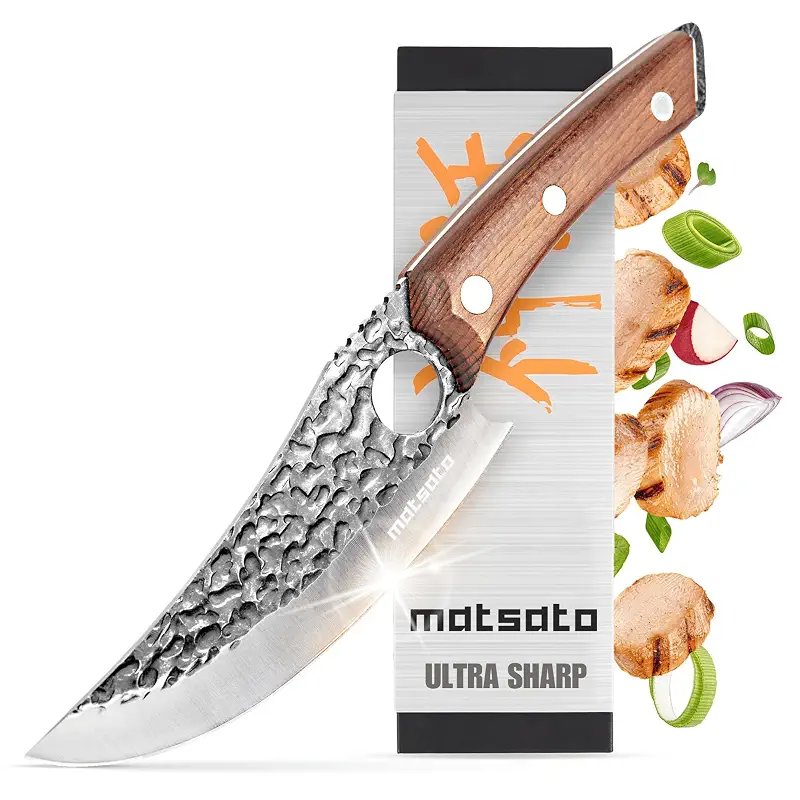
Ideal for: Home cooks who want one sharp, balanced knife for daily meal prep across vegetables, herbs, and lighter proteins.
The Matsato Chef Knife lands at a practical intersection where Japanese blade quality meets a manageable 6.3-inch profile. Owners consistently praise its sharpness out of the box, and the curved blade geometry works well for the push-and-rock motion most home cooks use for vegetables and proteins. The balanced weight keeps fatigue down during longer prep sessions, which matters if you're working through multiple dishes.
What trips up a small portion of buyers is inconsistency in shipping sharpness. Some knives arrive razor-ready, while others need a quick touch-up before they're truly useful. This isn't a flaw with the blade steel itself, but rather a quality-control issue at packaging. Hand-washing is non-negotiable if you want the edge to last, and the maker is explicit about that. For everyday chopping, slicing, and light prep work, this knife punches above its category, though it won't replace a dedicated carving knife if you smoke brisket regularly or a fillet knife for butchery.
Compared to the Cutluxe offerings, which target specific jobs like meat carving, the Matsato stays true to being a generalist. It's the knife you reach for most mornings.
Pros
Japanese stainless steel holds edge well between sharpenings
Curved blade profile suits rocking chop motion naturally
Balanced weight reduces hand fatigue during prep
Cons
Sharpness inconsistency between units at shipment
Hand-wash only; dishwasher not an option
Key features
6.3-inch Japanese stainless steel blade with curved geometry
Balanced weight and grip for controlled daily chopping
Hand-polished edge requires no immediate sharpening for most
Hand-wash and dry for rust prevention and longevity
#2 Pick
Best Meat Carving Set
Cutluxe
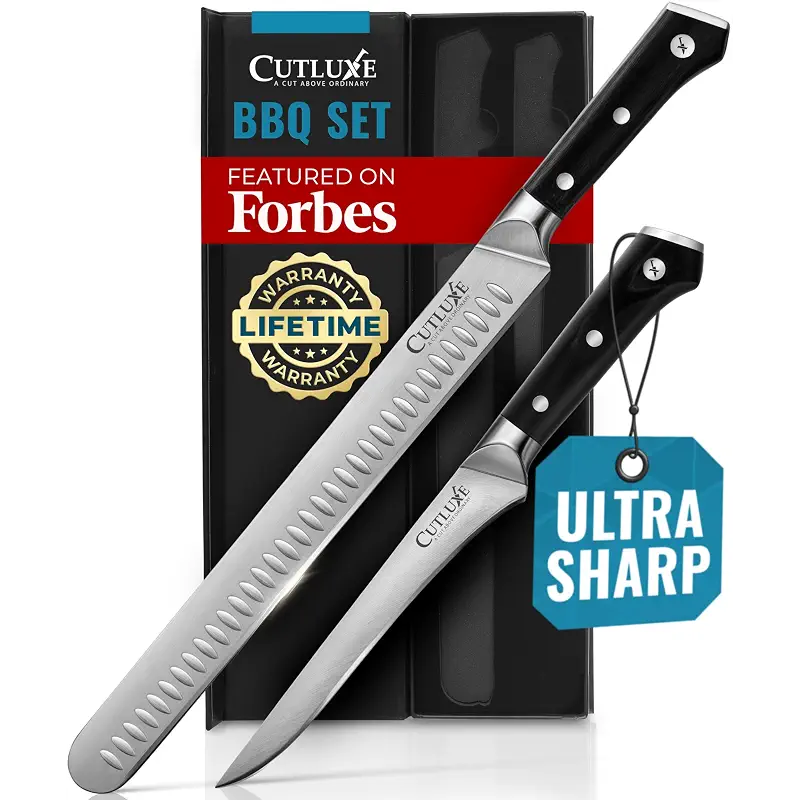
Cutluxe Carving Knife Set, Brisket Slicing & Boning Knife for Meat & BBQ | Razor Sharp German Steel, Full Tang Ergonomic Handle – Grilling Gift for Men, Artisan Series
4.8(1,524)
Two-knife set with a 12-inch carving blade and 6-inch boning knife for serious BBQ and roast work.
Ideal for: BBQ enthusiasts, competitive smokers, and home cooks who regularly carve whole smoked meats or large roasts.
The Cutluxe Carving Set arrives as a paired system: the 12-inch brisket slicer for long, clean cuts through large smoked meats, and the 6-inch boner for trimming and detail work. Owners who cook whole briskets, turkeys, or smoked shoulders report that the length and thin profile of the carving knife make a visible difference in presentation. The granton dimples (those small hollows along the blade) actually reduce friction and prevent meat from clinging to the blade mid-slice, which is real when you're working with proteins.
The full-tang construction means these aren't flimsy; they're hefty enough to feel professional without being unwieldy. German steel at 56+ Rockwell hardness holds a fine edge, and the ergonomic pakkawood handle sits comfortably even during longer carving sessions. One caveat is storage: the 12-inch blade won't fit standard knife blocks, so you'll rely on the included sheath or wall magnets. A few owners mention the sheath quality can be finicky, with internal linings coming loose, though this doesn't affect the blades themselves.
Where this set differs from the Matsato chef's knife is specialization. If you're smoking meat regularly or carving roasts for family gatherings, this investment justifies itself immediately. For vegetable-forward cooking, you won't use the carver as much.
Pros
12-inch blade length glides through brisket in single passes
Granton edge reduces meat drag and sticking
German steel at 56+ Rockwell stays sharp across many uses
Cons
Long blade requires dedicated storage (sheath or magnetic strip)
Sheath lining can detach from internal construction over time
Key features
Two-knife set: 12-inch carving blade and 6-inch boning knife
Full-tang German steel construction with granton dimples
56+ Rockwell hardness for edge retention on tough meats
Ergonomic pakkawood handles with triple rivets for stability
#3 Pick
Best Fillet and Trim Knife
Hoshanho
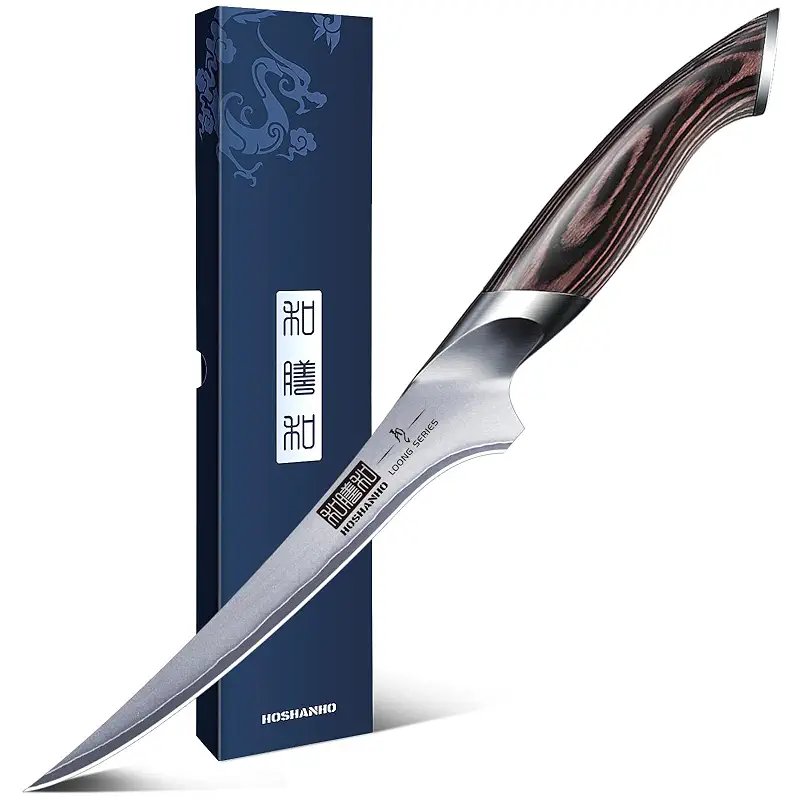
HOSHANHO Fillet Knife 7 Inch, Super Sharp Japanese Fish Boning Knife | Professional High Carbon Stainless Steel Filleting Knives for Meat Poultry Cutting
4.7(4,188)
Thin, flexible Japanese blade designed for precision fish filleting, meat trimming, and detail butchery work.
Ideal for: Home cooks and home butchers who fillet fish, trim fat, and need precision on delicate proteins without waste.
The Hoshanho Fillet Knife's 7-inch length and flexible blade solve a specific problem: getting clean cuts along bones and removing skin and fat without waste. The high-carbon Japanese steel (10Cr15CoMoV) is harder than softer fillet knives, which means it won't flex as dramatically but will hold an edge longer. The 15-degree bevel on each side gives a sharper angle than European chef's knives, and owners consistently report it arrives surgical-sharp out of the box, often sharper than premium brands they own.
The real strength here is versatility within precision work. Yes, it excels at filleting whole fish, but owners also use it for trimming fat from brisket, butterflying chicken breasts, and skinning proteins. The pakkawood handle feels premium and resists corrosion, and the weight is light enough that your hand stays fresh during extended prep. One trade-off: the blade has enough stiffness that it won't flex as dramatically as a very soft fillet knife, so if you're working around complex bone structures, some techniques may feel different.
Compared to the broader Matsato chef's knife, the Hoshanho is narrower and sharper for surgical cuts. Compared to the Cutluxe carving knives, it's the opposite end of the spectrum: thin and flexible rather than long and sturdy. This is the knife you buy if detail and minimal waste matter more than volume.
Pros
Arrives surgical-sharp and holds edge longer than softer blades
Thin 7-inch profile ideal for precision around bones
Light weight and balance reduce hand fatigue during detail work
Cons
Stiffer blade won't flex as dramatically as traditional fillet knives
Requires hand-washing and careful storage to maintain sharpness
Key features
7-inch flexible blade in high-carbon Japanese stainless steel (10Cr15CoMoV)
15-degree bevel per side for surgical sharpness and precision cuts
Lightweight with durable pakkawood handle for extended prep comfort
Includes protective plastic sheath for safe storage and transport
#4 Pick
Best Premium Carving Knife
Cutluxe
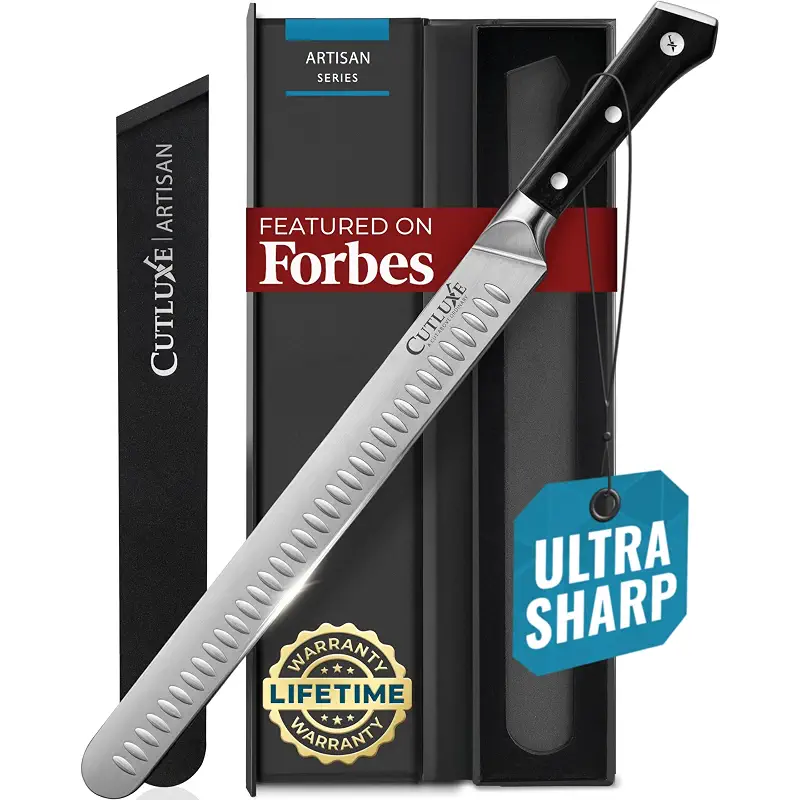
Cutluxe Brisket Knife, 12" Carving & Slicing Knife for Meat & BBQ | Razor Sharp German Steel, Full Tang Ergonomic Handle, Sheath Included – Grilling Gift for Men
4.8(7,433)
12-inch single-blade carver with professional German steel and full-tang design for restaurant-quality meat slicing.
Ideal for: Home chefs and BBQ enthusiasts who carve whole smoked meats and roasts and want professional performance.
The Cutluxe Brisket Knife is the larger sibling to their carving set, focused entirely on the 12-inch carving task. It's a single-purpose tool, which means every design decision centers on making long, clean cuts through smoked meats. The high-carbon German steel (56+ Rockwell) and hand-sharpened 14-16 degree edge arrive ready to slice, and owners report that the blade glides through brisket with almost no resistance. The weight and balance sit just right: heavy enough that gravity assists the cutting motion, light enough to maintain control through a full carving session.
The full-tang pakkawood handle is triple-riveted for absolute stability, and unlike some carving knives that feel slippery when hands are wet, this one sits solid in your grip. Storage comes with a sheath, though as with the carving set, some owners flag that the sheath lining can shift. If carving is occasional, this might be overkill, but if you smoke meat regularly or carve roasts at family dinners, the difference between a sharp 12-inch carver and a regular chef's knife becomes obvious on plate.
Where the Cutluxe single carver differs from the Hoshanho fillet knife is purpose: this isn't for detail work or precision trimming. It's for volume slicing of large cooked proteins. If you're between this and the Matsato chef's knife for everyday use, pick the Matsato; if carving is your main event, this earns the space.
German steel at 56+ Rockwell maintains sharpness across many uses
Full-tang construction feels substantial and balanced in hand
Cons
Single-purpose blade not ideal for everyday meal prep
Large size requires dedicated storage space and technique
Key features
12-inch high-carbon German steel blade at 56+ Rockwell hardness
Hand-sharpened edge at 14-16 degrees for effortless slicing
Full-tang pakkawood handle with triple rivets for rock-solid stability
Comes with protective sheath and lifetime warranty against defects
#5 Pick
Best Vegetable and All-Purpose Nakiri
Paudin
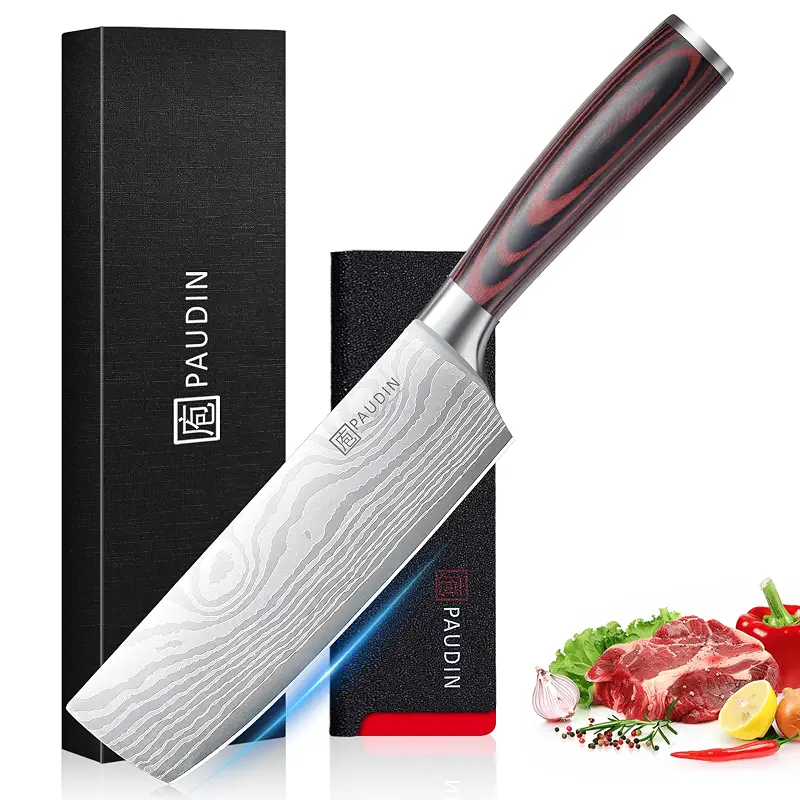
PAUDIN Nakiri Knife - 7" Razor Sharp Meat Cleaver and Vegetable Kitchen Knife, High Carbon Stainless Steel, Multipurpose Asian Chef Knife for Home and Kitchen with Ergonomic Handle
4.6(4,821)
Flat-profile 7-inch nakiri designed for efficient push-cutting of vegetables and soft proteins without slipping.
Ideal for: Home cooks focused on vegetable prep who want a blade designed for push-cutting and precision dicing without slipping.
The Paudin Nakiri attacks the vegetable-prep problem from a different angle than a curved chef's knife. The flat, rectangular blade and tall profile let you use a downward push motion rather than a rocking chop, which means you're less likely to accordion delicate slices or squash softer vegetables. Owners who work with butternut squash, sweet potatoes, and other tough vegetables report that this nakiri does what other knives take much longer to accomplish. The blade height also doubles as a scoop: after dicing, you can use the flat to slide food from board to pan.
The 5Cr15Mov steel is the same hardness (56+) as the premium carving knives, and it arrives razor-sharp with a wave pattern that's both functional (reduces food drag) and visually striking. Ergonomically, the handle balances the thin blade well, and at a lighter weight than a chef's knife, your hand stays fresher through extended prep. The caveat is that this isn't a cleaver for breaking down bones or cutting through really hard squash rinds; the blade is designed to slice and dice, not smash. Hand-washing is essential, and the wave pattern means it needs a bit more care to clean thoroughly.
Compared to the Matsato chef's knife, the nakiri wins on vegetables; compared to the fillet knives, it's a different task altogether. If you're prepping raw poultry or need a chopper knife style comparison covering all profiles, the nakiri's push-cut geometry excels for soft proteins where you want clean, undamaged cuts.
Pros
Flat profile eliminates accordion effect on delicate slices
Tall blade serves as scoop for transferring chopped food
Lightweight at 56+ hardness keeps hand fresh and edge sharp
Cons
Wave pattern requires more thorough cleaning after use
Not designed for hard squash rinds, bones, or smashing tasks
Key features
7-inch flat-profile nakiri blade in high-carbon stainless steel (5Cr15Mov)
56+ Rockwell hardness with wave pattern for friction reduction
Ergonomic pakkawood handle balanced at the pinch point for control
Tall profile doubles as scoop for transferring diced ingredients
How to Choose a Chopper Knife
Four trade-offs that actually matter when matching a chopper knives to your kitchen.
Understand Blade Profile and Task
A curved chef's knife rocks through herbs and vegetables; a flat nakiri uses push-cuts for clean slices without squishing; a thin fillet blade glides along bone with minimal waste; a long carving knife makes single-pass slices through large cooked meats. Before buying, picture your most common kitchen job. If you're slicing vegetables and proteins for weeknight dinners, a 6- to 8-inch chef's knife covers 90 percent of needs. If you smoke brisket regularly, a dedicated 12-inch carver pays for itself in presentation alone. If you fillet fish or trim delicate proteins, a thin flexible blade beats a chef's knife every time. When choosing a best knife to cut raw chicken, consider whether you need the blade for that specific task regularly or only occasionally; if it's weekly prep, a dedicated fillet or boning knife earns its place; if it's rare, your chef's knife will suffice.
Steel Type and Edge Retention
Japanese stainless steel tends to hold a finer edge longer than softer European steel, but it can be more brittle if mishandled. German steel is more forgiving and easier to maintain. High-carbon stainless (56+ Rockwell hardness) stays sharp longer than lower-hardness alternatives. For home use, anything in the 54-58 Rockwell range is solid. Softer blades (50-54 Rockwell) dull faster but are easier to sharpen at home. Harder blades (58+) stay sharp longer but require proper technique if you're sharpening by hand. Read owner reviews for real-world edge retention; many buyers report how long a knife stays sharp before needing maintenance, which tells you more than spec sheets.
Hand Washing and Storage Matter
Every quality chopper knife in this lineup requires hand-washing and drying immediately after use. Dishwashers damage even premium blades through temperature swings and banging. Dry the knife with a cloth right after washing, then store it on a magnetic strip, in a sheath, or blade-down in a knife block. Leaving a wet knife in a drawer or on the counter invites corrosion and edge damage. A chopper knife sharpening guide will cover maintenance tools and techniques, but prevention through proper storage is your first line of defense. If you're not comfortable with hand-washing dishes, reconsider whether a premium blade makes sense for your lifestyle.
Blade Length and Your Counter Space
A 6-inch knife fits most drawers and cutting boards. A 12-inch carving blade requires dedicated storage and open cutting surface space. If your kitchen is compact or your knife block is full, a longer blade creates headaches. Try holding different lengths in a store if possible, or order from brands with good return policies if you're unsure. Weight matters too: a heavier blade (like the Cutluxe carvers) feels substantial but can tire your hand in extended prep, while a lighter blade (like the Hoshanho fillet knife) lets you work longer without fatigue. Match the blade length and weight to your actual grip strength and available workspace.
Budget Versus Specialization
Entry-level chopper knives cost $30-60 and work fine for casual cooking. Mid-range blades ($60-120) offer noticeably better steel, edge retention, and comfort. Premium knives ($120+) usually aren't worth the extra investment for home use unless you cook professionally or carve meat regularly. A single versatile chef's knife under $70 often outperforms a drawer full of cheaper blades. If you carve whole meats or fillet fish regularly, a specialized $100+ blade saves time and delivers better results. Otherwise, start with one good mid-range chef's knife and add specialty knives only if you actually need them.
Frequently asked
Quick answers to the questions readers ask most.
Can I use a chopper knife in a dishwasher?
No. Dishwashers expose blades to temperature swings, harsh detergents, and banging that damages even premium steel. Hand-wash and dry immediately after each use. This isn't a suggestion; it's the only way to preserve sharpness and prevent corrosion. Every chopper knife manufacturer, from Matsato to Cutluxe to Hoshanho, explicitly states hand-wash only.
How often do I need to sharpen a chopper knife?
Frequency depends on steel hardness and how often you cook. High-carbon Japanese blades (56+ Rockwell) may stay sharp for 2-3 months of daily home use. Softer blades dull in weeks. Before investing in sharpening tools, use a honing steel after every few uses; this realigns the edge without removing metal and extends the time between real sharpenings. Most home cooks sharpen 2-4 times per year if they maintain properly.
What's the difference between a chef's knife and a nakiri?
A chef's knife has a curved blade and rocks through food; a nakiri has a flat profile and uses push-cuts. Nakiris excel at vegetables and soft proteins because the flat blade doesn't accordion slices. Chef's knives handle more tasks overall. For a chopper knife style comparison covering all profiles, consider your cooking focus: if vegetables are your main task, a nakiri wins; for general prep, a chef's knife is more versatile.
Is a fillet knife useful for non-fish tasks?
Yes. The thin, flexible blade works well for trimming fat from brisket, butterflying chicken breasts, and removing skin from any protein. It's precision-focused, so it won't replace a chef's knife for everyday chopping, but if you buy it for fish and find yourself using it for meat trimming, that's normal and valuable.
Do I need both a chef's knife and a carving knife?
Not necessarily. A good chef's knife handles everyday prep, vegetables, and light slicing. A carving knife becomes essential if you smoke brisket regularly or carve whole roasts. Many home cooks never use a carving knife. Buy what matches your actual cooking: if you carve meat once a year, stick with your chef's knife; if you smoke every weekend, a dedicated 12-inch carver is worth the investment.