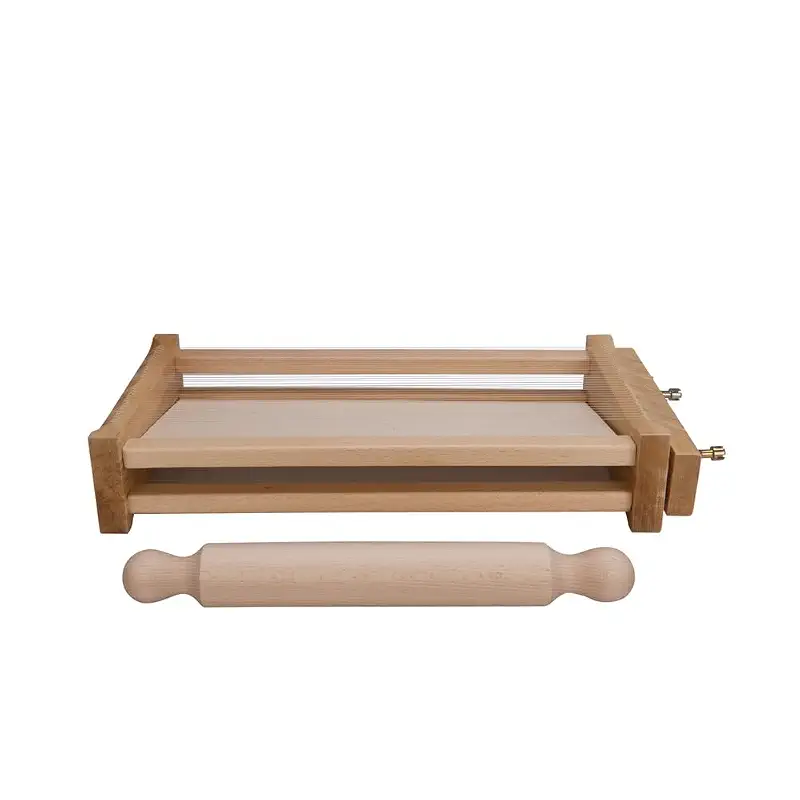
Ideal for: Home cooks who value Italian authenticity and straightforward, low-maintenance pasta making.
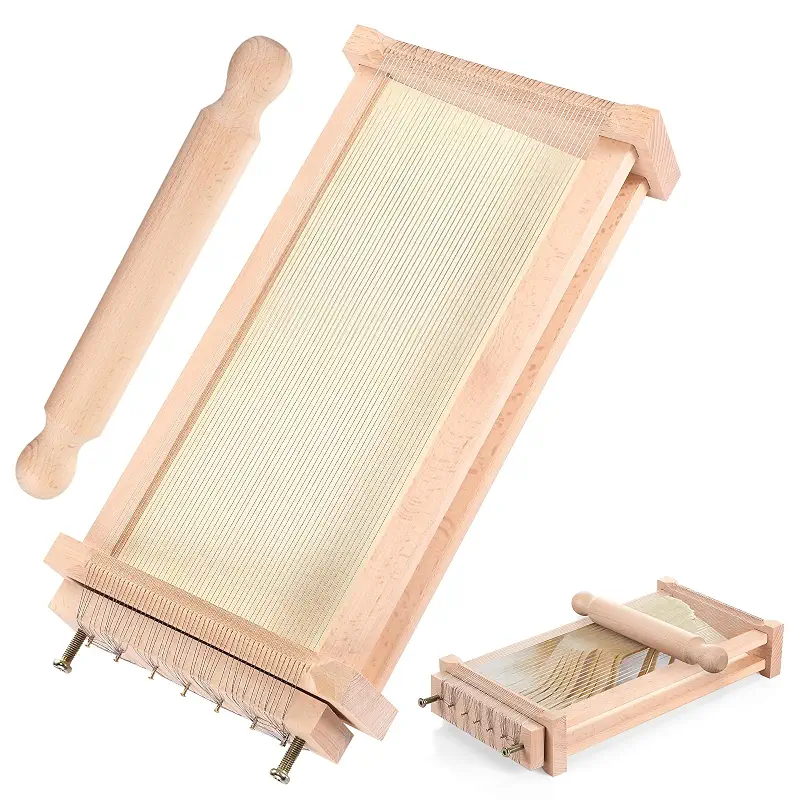
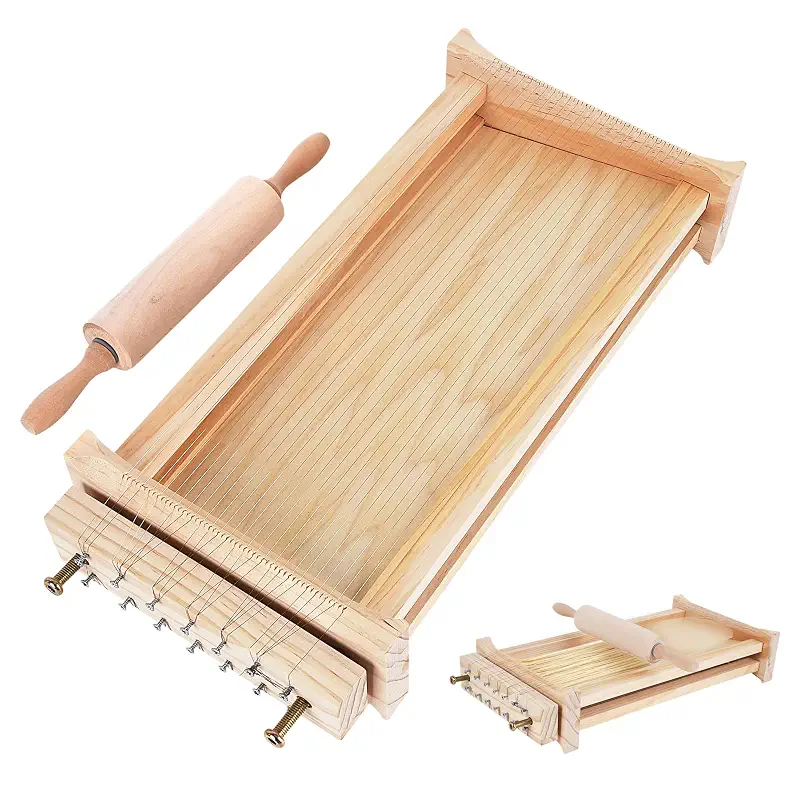
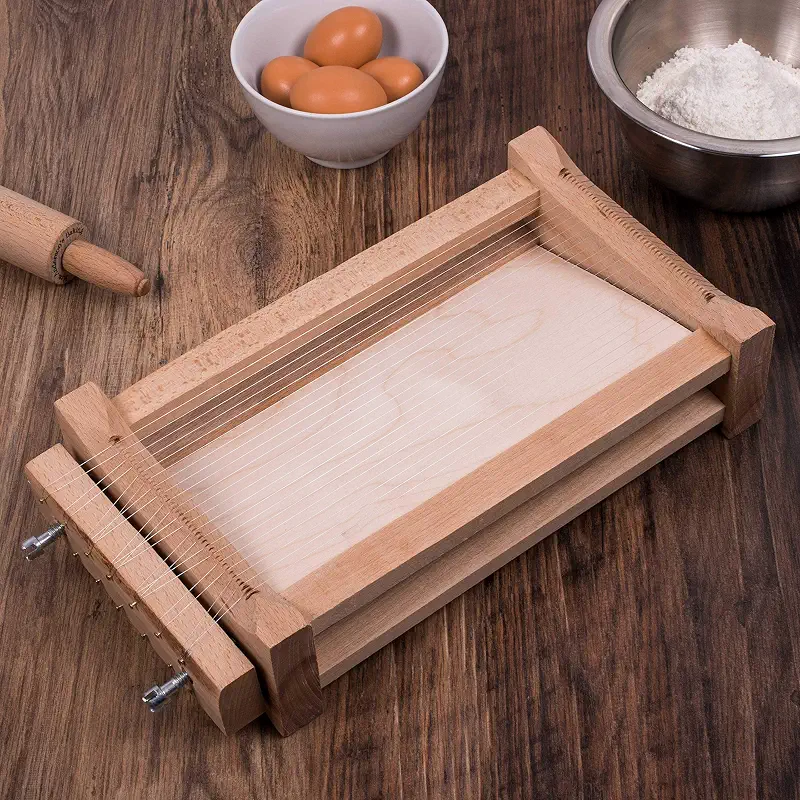
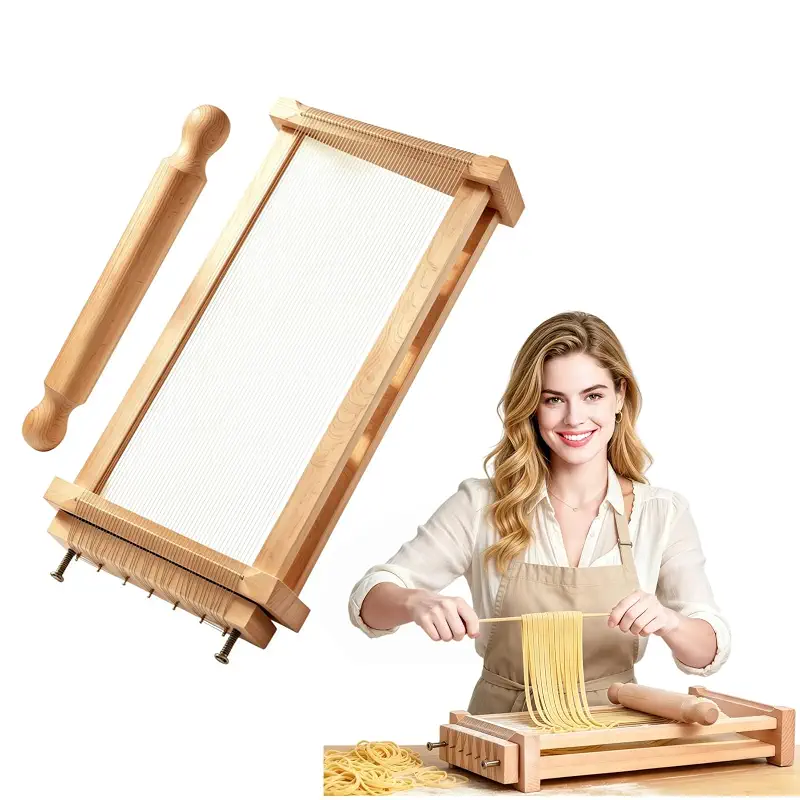
The Eppicotispai is the straightforward choice if you want a tool that simply works and stays out of your way. It's handmade in Italy, built from natural hardwood, and the double-sided string setup (with tight and looser gauges) lets you cut both square-profile spaghetti and wider fettuccine without flipping anything around. Owners consistently report that once the strings are tensioned correctly, the cutting is clean and the pasta uniform. The real strength here is durability and usability: the frame can be slackened when not in use to reduce string wear, and cleanup is genuinely minimal because dried dough dust just taps out onto the counter.
One catch is that some units ship with inconsistent string tension: a few reviewers had middle strings that wouldn't tighten fully, leading to ragged cuts in that zone. This appears to be a quality-control spread rather than a design flaw, but it's worth being aware of. There's also a learning curve if you're new to the tool; most buyers note that watching videos before your first use helps a lot. Compared to the newer Anicuta model, this Eppicotispai leans on simplicity and proven reliability over upgrades like thicker wire or more cutting stations.
If you've traveled to Italy or taken a cooking class there, this is the version that will feel most familiar. It's the one people order to recreate that memory, and that emotional fit often matters as much as the specs when a tool is this handmade and culturally specific.
Pros
Authentic Italian handcrafted construction
Dual-sided strings with two cutting widths
Easy to relax and retighten string tension
Minimal cleanup, dried dough falls away easily
Cons
Some units arrive with uneven string tension
Requires learning curve and practice with technique
Key features
Natural hardwood frame with adjustable stainless steel strings
Dual-sided design cuts spaghetti and fettuccine widths
Tension bolts allow relaxing strings when not in use
Includes rolling pin for pressing dough through wires
#2 Pick
Best Value
SiliFine
Silifine Pasta Guitar Chitarra Cutter Rolling Pin, Wood Color, Wood | Guitar String Cutting Board for Spaghetti Lasagna, Italian Tool, Handmade Pasta Maker, Cooking Gift for Grandma, Mom
4.5(59)
Well-balanced performer with beech wood and dual-width cutting at a mid-range price point.
Ideal for: Everyday home cooks seeking reliable Italian pasta-cutting without premium pricing.
The SiliFine is a solid middle-ground option that delivers authentic chitarra performance without premium pricing. It's also made in Italy using beech wood and stainless steel strings, and the dimensions are similar to other traditional models, not too large for apartment kitchens, not so small that you feel cramped rolling out dough. The two-sided design gives you thin strands on one side and wider fettuccine-style cuts on the other, and buyers report the strings stay true and make clean cuts once properly tensioned.
The big advantage over the Cooking on Mars model is consistency: SiliFine has far fewer negative reviews about manufacturing defects or loose strings out of the box. Users describe it as 'robust' and note that the included rolling pin is functional (though some still opt to swap it for their own). Where this sits versus the higher-end Anicuta is in string durability: the Anicuta boasts 50% thicker stainless steel wire designed to handle tougher dough without deforming. For a home cook making pasta a few times a month on standard dough, SiliFine's strings will last just fine.
One owner mentioned not being able to find a replacement cord, which suggests the bolts and tensioning hardware are proprietary, something to weigh if you think you'll need spares down the line.
Pros
Beech wood and stainless steel construction
Consistent string tension and cutting performance
Two cutting widths for spaghetti and fettuccine
Compact size fits most kitchen spaces
Cons
Proprietary hardware may complicate future repairs
Rolling pin quality varies, users often swap it out
Key features
Beech wood frame with 18/8 stainless steel strings
Overall size 47 x 23 x 8 cm fits standard counters
Dual-width strings: 0.08-inch and 0.2-inch spacing
Includes rolling pin with basic pasta recipes
#3 Pick
Best for High-Volume Pasta Making
Anicuta
Chitarra Pasta Cutter With Pasta Roller Double-Sided Cutter 0.24in | Traditional Italian Pasta Maker, Homemade Pasta Tools Stainless Steel Cutting Wire Durable And Deform-Resistant
4.4(8)
Premium dual-station design with thickened strings cuts 24 noodles per press for faster, more efficient batches.
Ideal for: Serious home cooks and family pasta nights requiring consistent high-volume output.
The Anicuta stands out if you're serious about output and consistency. Each side independently cuts 24 strands at once (roughly double the yield of traditional models) and the strings are 50% thicker 18/8 stainless steel, engineered to resist deformation even when you're rolling with real pressure on thick dough. The 0.24-inch (6mm) standard cutting width suits both Italian tagliatelle and Asian hand-pulled noodles, so versatility is baked in. Owners consistently praise the build quality and the speed difference; families planning dinner for guests or someone who makes pasta twice a week will feel this efficiency.
One buyer's experience is instructive: the tool works beautifully once tensioned, but the included rolling pin is delicate and wobbled after one batch. They switched to their own heavier pin and reported everything clicked. That's not a flaw with the chitarra itself but a sign that if you're using it for volume, investing in a sturdy rolling pin of your own is money well spent. Compared to the Eppicotispai, which feels like the heritage choice, Anicuta pushes toward engineering precision and user convenience: it's the bridge between traditional and modern without betraying the core method.
If you're using a chitarra versus electric pasta machine as a deliberate choice, the Anicuta reinforces why: you get speed and control without motors, noise, or the compression that can squeeze out delicate dough.
Pros
Dual-station design cuts 24 strands per side per press
Ideal for: Budget-conscious buyers willing to accept quality-control variability and potential adjustment.
The Cooking on Mars is the lowest-priced option here, and you get what you pay for: which is sometimes good and sometimes a headache. Made in Italy from beechwood and 18/8 stainless steel, it has the right materials and the design is sound: dual-width strings cut both 2mm square spaghetti (62 strands) and 5mm tagliatelle (32 strands). Some owners report very happy results, calling it a 'wonderful' tool and noting that the two-sided design is genuinely useful.
But the quality-control spread here is brutal. Multiple reviewers received units with strings already falling off, bolts that were impossible to tighten, unsanded wood with splinters, and a frame that wouldn't sit flat. Others reported strings arriving tangled or requiring complete re-assembly. This isn't consistent failure; it's inconsistent shipping and manufacturing inspection. One owner who'd used a chitarra in Italy said this felt like a pale imitation: smaller, less stable, not refined. A few buyers also noted the included rolling pin was missing or substandard.
The risk with a budget buy in this category is that you'll get a defect and either spend hours troubleshooting or return it. Compare this to the SiliFine, which is marginally more expensive and has far fewer negative reports. Unless you're comfortable with the possibility of a rebuild project, I'd spend the extra on the value pick.
Pros
Dual-width strings cut both square and ribbon pastas
Beechwood and stainless steel materials are sound
Affordable entry price for curiosity-driven buyers
Some units arrive ready to use and work well
Cons
Inconsistent quality control with defects on arrival
Strings often arrive loose, tangled, or fall out of frame
Key features
Beechwood frame with 18/8 stainless steel strings
Dual-sided design: 62 narrow strands or 32 wider strands
Compact 14.57 x 7.87 x 3.35-inch footprint
Bolt-tensioning system with string-relaxing feature
#5 Pick
Best Newer Entry
Kyansun
Beechwood Chitarra Pasta Cutter, Dual-Width Stainless Steel Strings | Spaghetti and tonnarelli cutting widths, manual operation, pasta board surface, rolling pin included, for family meal prep
5.0(2)
Premium beech wood and dual-width strings from a brand prioritizing longevity and ease of use.
Ideal for: New buyers who want manual pasta-making simplicity with modern sustainability messaging.
The Kyansun is a newcomer with limited owner feedback (only two five-star reviews) but what they reveal is telling. First-time chitarra users report it was 'way easier than expected,' and seasoned pasta makers note the beechwood resists the warping they experienced with cheaper plastic alternatives (though this is a wooden tool, not plastic: likely a comparison to lower-grade polymer-inlay designs from older imports). The 18.9 x 8.66 x 3.1-inch size is standard for the category, and the dual-width strings deliver both 0.1-inch spaghetti and 0.23-inch tonnarelli.
Because review volume is very small, treat this as a emerging option rather than a proven standby. The brand clearly positions itself around durability and thoughtful design: 'sustainably sourced' beechwood and emphasis on no electricity or noise, which aligns with chitarra's whole appeal. One review specifically mentions it outperforming plastic cutters 'for decades,' a confidence claim that suggests the manufacturer believes in material longevity. If SiliFine or Eppicotispai go out of stock, this is a reasonable next step, especially if you value the marketing around sustainability and manual-operation simplicity.
However, with only two reviews, you're taking a chance on durability claims and long-term performance. The Anicuta, by contrast, has more owner data to draw from and a trackable reputation.
Pros
Sustainably sourced beechwood construction
Dual-width strings for spaghetti and tonnarelli cuts
Straightforward manual operation, no electricity or motors
Attractive design marketed as a housewarming gift
Cons
Very limited owner feedback and long-term performance data
Brand reputation is newer compared to established competitors
Key features
Premium natural beechwood resists warping and damage
Dual-width stainless steel strings for two pasta sizes
18.9 x 8.66 x 3.1-inch size fits standard kitchen spaces
Manual rolling-pin operation, no electricity required
How to Choose a Chitarra Pasta Cutter
Four trade-offs that actually matter when matching a chitarra pasta cutter to your kitchen.
Material and Build Quality
Every chitarra worth buying starts with wood and stainless steel. The wood (typically beech, birch, or hardwood) needs to resist warping and moisture. Stainless steel strings should be 18/8 gauge or better. What separates a $40 unit from a $80 one is often how well the wood is finished and whether the bolts and tensioning hardware are robust. A wobbly frame or strings that won't stay tight are red flags. Read reviews for mentions of splinters, flat seating, or bolt issues. Italian-made tools carry more prestige but aren't inherently better; some Taiwan and European imports are equally solid. What matters is consistent craftsmanship, not the country of origin alone.
Dual-Width Strings and Cutting Surfaces
All five finalists here offer two different string spacings: one for thin spaghetti (usually 0.08–0.1 inch) and one for wider ribbon cuts like fettuccine or tonnarelli (0.2–0.24 inch). This flip-the-board design is standard and lets you make two different pastas without buying two tools. Some higher-end models, like the Anicuta, boost output by cutting 24 strands per side per press instead of 12–16. If you make pasta once a month, basic dual-width is enough. If you're feeding a big family or making it twice weekly, the double-capacity models save real time. Consider your actual cooking frequency when weighing output claims.
String Tension and Assembly
Virtually all chitarra models require you to adjust string tension via bolts on the back. This is normal and intentional: it's how you tune the tool to your dough thickness and your rolling technique. Tighten too much and strings can snap; too loose and dough won't cut cleanly. Every brand includes instructions, but first-time users should watch a video demonstration, seeing a working chitarra in action removes confusion. One common shipping issue is strings arriving loose or tangled out of the box. This isn't necessarily a defect; it's protection against vibration damage. Just know you may need 15–30 minutes to thread and tension them on arrival. Premium models arrive pre-strung and verified.
The Rolling Pin and Using a Chitarra Pasta Cutter
Most chitarra sales include a rolling pin, but quality varies wildly. Some are solid and last; others are flimsy and fail after one use. Owners often swap them for a heavier pin they already own. For consistent results when using a chitarra pasta cutter, you want moderate downward pressure, not a hammer, not a feather. The included pin is a bonus, not the limiting factor. If you're buying a tool in this category, assume you may need your own pin and budget accordingly. A decent wooden or stainless-steel rolling pin costs $15–30 and becomes a permanent kitchen tool.
Storage and Maintenance
A chitarra needs almost no upkeep beyond a dry wipe after each use. Never soak it; wood and water don't mix. Tighten bolts quarterly if stored long-term. The strings can be relaxed before storage to reduce tension wear: most models allow this by backing off the bolts. Stack it flat or hang it if you have wall space. Clean dough usually just flakes off when dry. A soft brush or cloth handles any residue. Because this tool has zero moving parts and no electricity, it will outlive electric pasta machines if you treat the wood well. Store in a cool, dry place and it'll work for decades.
Frequently asked
Quick answers to the questions readers ask most.
Do I need a special rolling pin for a chitarra, or can I use my regular one?
You can use any rolling pin you already own. The included pin is often lightweight plastic and wears quickly. Many owners prefer a heavier wooden or stainless-steel pin for better control and pressure distribution. Test your current pin first: if it works, there's no need to buy new. The goal is steady, moderate downward force, not extreme weight.
How do I know if my chitarra strings are tight enough?
Strings should feel taut but not guitar-string tight. When you pluck them gently, they'll hum slightly. The real test is the dough: roll a thin sheet of pasta over the strings and press with your rolling pin. If the dough cuts cleanly into uniform strands, tension is correct. If strands tear or bow without cutting, tighten the bolts a quarter-turn on each side and try again. Adjust incrementally to avoid over-tightening and breaking the wire.
Can I make a chitarra versus electric pasta machine choice if I don't have much counter space?
Yes, a chitarra is actually space-efficient. Most models are around 18–19 inches long and just 8–9 inches wide. They stack flat in a cabinet or hang on a wall hook. An electric pasta machine needs power, takes up similar footprint space, and often weighs more. If counter space is tight, a chitarra is the better fit because you use it, then put it away. No permanent appliance footprint.
Is there really a learning curve, or can I use it on my first try?
There's a small learning curve, but not a steep one. The first batch might yield irregular strands; by the second or third time, your dough thickness and rolling tempo will click. The key is using well-floured dough of the right thickness: too wet and it clogs, too dry and it tears. Watching a two-minute video before you start removes most confusion. It's easier than, say, learning to knead by hand, and more forgiving than adjusting a pasta machine.
What type of dough works best with a chitarra?
A standard egg-pasta dough (tipo all'uovo) works perfectly: flour, eggs, a pinch of salt, no water. Roll it to about 2–3mm thick, dust generously with flour on both sides, drape it over the strings, and press with your rolling pin. The dough should be firm enough not to stick but pliable enough to cut smoothly. If you're using whole-wheat or specialty flours, expect drier, more brittle dough: still cuttable, just less forgiving. Avoid very wet doughs; they clog the strings.