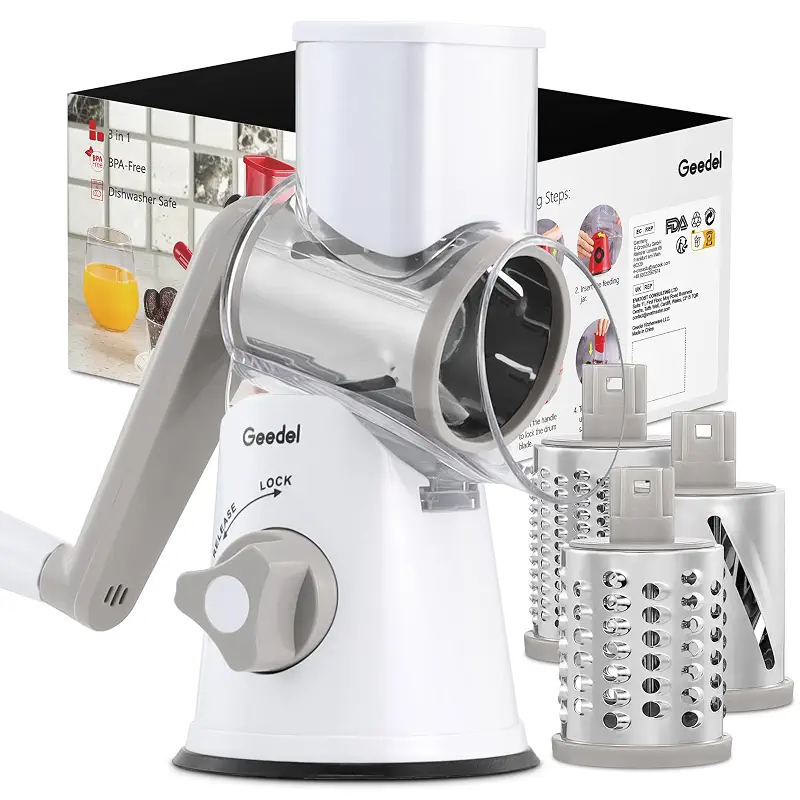
Ideal for: Home cooks who grate cheese several times a week and value speed and easy cleanup.
The Geedel rotary grater trades the manual effort of box graters for a simple cranking motion that covers mozzarella in seconds. Three interchangeable blades (coarse, medium, and fine) let you choose shred size, though most cooks reach for coarse when working with soft cheeses. The detachable design makes cleanup genuinely simple: most parts rinse clean in under 30 seconds, and everything fits in the dishwasher.
What sets this model apart is the suction base. Once locked onto a clean counter or cutting board, it stays put while you work, which means both hands are free to feed cheese and turn the crank. That's a real comfort advantage over box graters, where you're often steadying the tool with one hand while grating with the other. The transparent barrel also lets you see when you're getting close to refilling, so you're less likely to overstuff and jam.
The main trade-off is that suction bases work only on smooth, flat surfaces. A textured or cracked countertop, or certain tile patterns, won't hold a seal. Some reviewers noted the grater slipped when they moved quickly or didn't prep the surface first. If your counter is uneven, this rotary model won't anchor as reliably as a box grater sitting flat.
Pros
Rapid cranking action cuts grating time in half
Powerful suction base locks to smooth countertops
Detachable parts assemble and disassemble in seconds
Transparent barrel prevents overfilling and jamming
Cons
Suction base won't grip textured or uneven countertops
Limited capacity for large batch cooking
Key features
Hand-crank mechanism with three interchangeable stainless steel blades
Strong suction base for hands-free operation on smooth surfaces
Fully detachable design for quick assembly and dishwasher cleaning
Food-grade ABS barrel with measurement guides
#2 Pick
Best Versatility: Multiple Surfaces and Storage
OXO
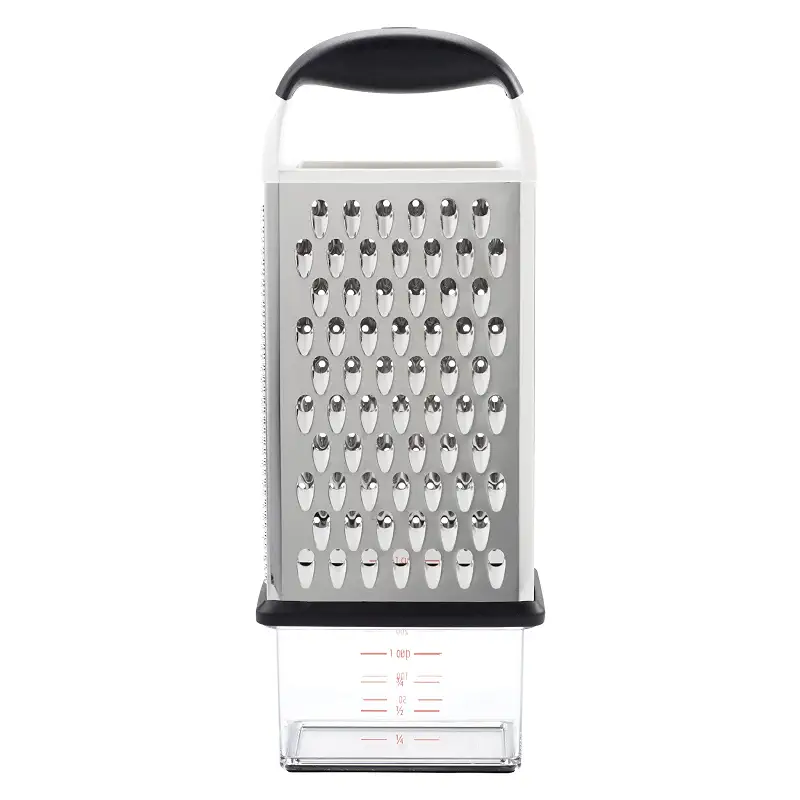
OXO Good Grips 4-Sided Box Grater for Cheese & Vegetables with Container | Stainless Steel Grating Surfaces, Non-Slip Handle, Detachable Container, Cheese, Vegetables, Zesting, Multi Purpose Grater
4.7(7,617)
Four distinct grating surfaces and a detachable measuring container make this box grater the kitchen workhorse for cheese and vegetables.
Ideal for: Cooks who grate multiple ingredients weekly and prefer a compact, multipurpose tool.
OXO's box grater is the workhorse of this lineup. Four surfaces (coarse, medium, fine, and slicing) give you genuine flexibility: use the coarse side for mozzarella shreds, the slicing edge for thin cheese layers, and the fine side for zest or harder cheeses. Unlike rotary models, there's no learning curve. You hold it, push food across, and watch shreds fall. It's intuitive and requires no maintenance beyond a rinse.
The detachable container with measurement markings and lid solves a real problem. Rather than grating onto a cutting board and sweeping everything into a bowl, shreds drop directly into a small plastic vessel that snaps onto the grater's base. That's handy for portion control or if you're prepping ahead and want to refrigerate what you've grated. The container isn't large enough for a full block of mozzarella, but it works well for the two to four ounces most recipes call for.
Where this grater sacrifices compared to the Geedel is effort. Pushing semi-soft mozzarella against a flat surface requires more hand pressure and wrist motion than cranking a rotary handle, and that can lead to fatigue on longer jobs. The box design also means you're holding the grater steady while working, which takes one hand. For daily single-serving grating, that's fine; for batch cooking, a rotary might feel easier.
Pros
Four distinct surfaces handle cheese, vegetables, zest, and slicing
Detachable container with measurement markings saves cleanup time
Compact size fits easily in standard kitchen drawers
Durable stainless steel surfaces stay sharp for years
Cons
Requires hand pressure and wrist effort to push soft cheese
Container capacity is small for large batch jobs
Key features
Four stainless steel surfaces for coarse, medium, fine grating and slicing
Detachable measuring container with snap-on lid and volume markings
Slim profile designed to fit standard kitchen drawers
Non-slip handle and base for safe, stable operation
#3 Pick
Best for Hard Cheeses: Microplane-Style Blades
Zyliss
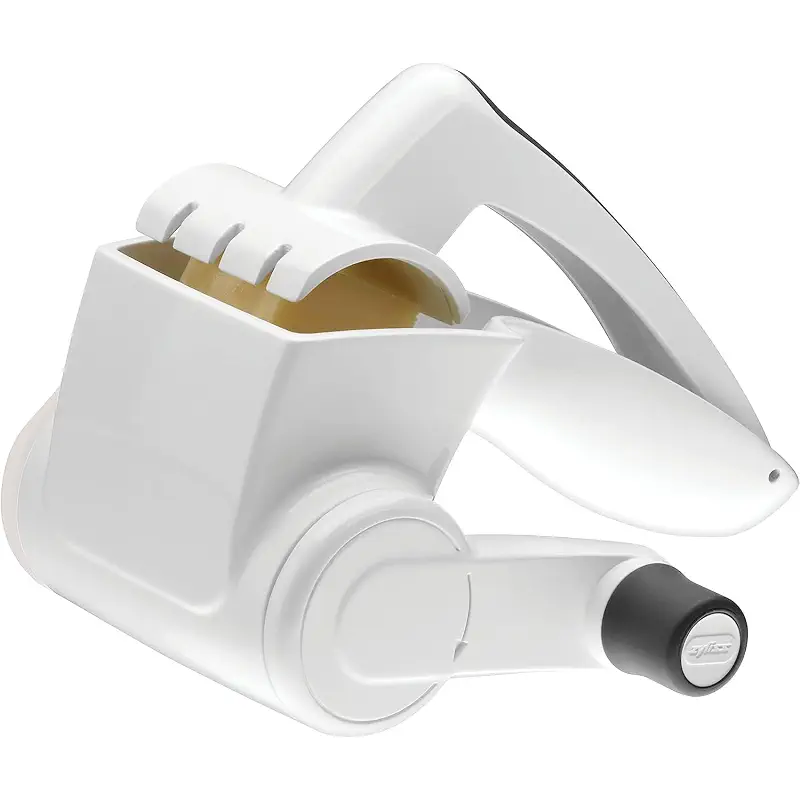
Zyliss Classic Rotary Grater, NSF-Certified Restaurant Cheese Grater | Handheld Rotary Grater for Cheese, Grate Vegetables, Chocolate and Nuts, Compact and Easy to Disassemble
4.4(15,310)
NSF-certified rotary grater with acid-etched microblades excels at hard Parmigiano-Reggiano but demands careful handling and technique.
Ideal for: Home cooks and enthusiasts who shred aged Parmigiano-Reggiano or hard aged cheddar multiple times a week.
The Zyliss rotary grater uses the same acid-etched microblades found on professional Microplane graters, which produce impossibly thin, elegant shreds from hard aged cheeses. If you're shredding aged mozzarella or Parmigiano-Reggiano regularly, this grater will impress you with the quality and texture it delivers. The microblades also require less downward pressure than conventional teeth, so your forearm doesn't tire as quickly.
Compared to the Geedel, the Zyliss feels lighter and more delicate in hand. The cylinder is smaller, which means fewer shreds per rotation, so the process takes longer. Reviewers who switched from Microplane praised the Zyliss for its sturdier feel, though they also warned that the handle and shaft still flex under load, and rough twisting motions can eventually break the side arm. It's not a tool for careless cooks or children; you need to apply smooth, consistent torque and let the microblades do the work.
For soft mozzarella, this grater is overkill and arguably counterproductive. Soft cheese clogs the microblades and requires aggressive pressure that the frame isn't designed to withstand. It's the rotary versus box grater comparison that matters here: choose this only if hard cheeses dominate your cooking.
Pros
Acid-etched microblades produce thin, elegant cheese shreds
Requires less downward pressure than conventional rotary graters
NSF-certified for food safety and restaurant use
Folds compact and disassembles easily for cleaning
Cons
Flexible frame and shaft break if twisted carelessly or forcefully
Not suitable for soft cheeses like fresh mozzarella
Key features
Acid-etched microblades similar to professional Microplane design
Compact, foldable body for drawer storage and portability
Dishwasher-safe components with easy hand disassembly
Ambidextrous design works for left and right-handed users
#4 Pick
Best Single-Purpose Option: Sharp Etched Teeth
OXO
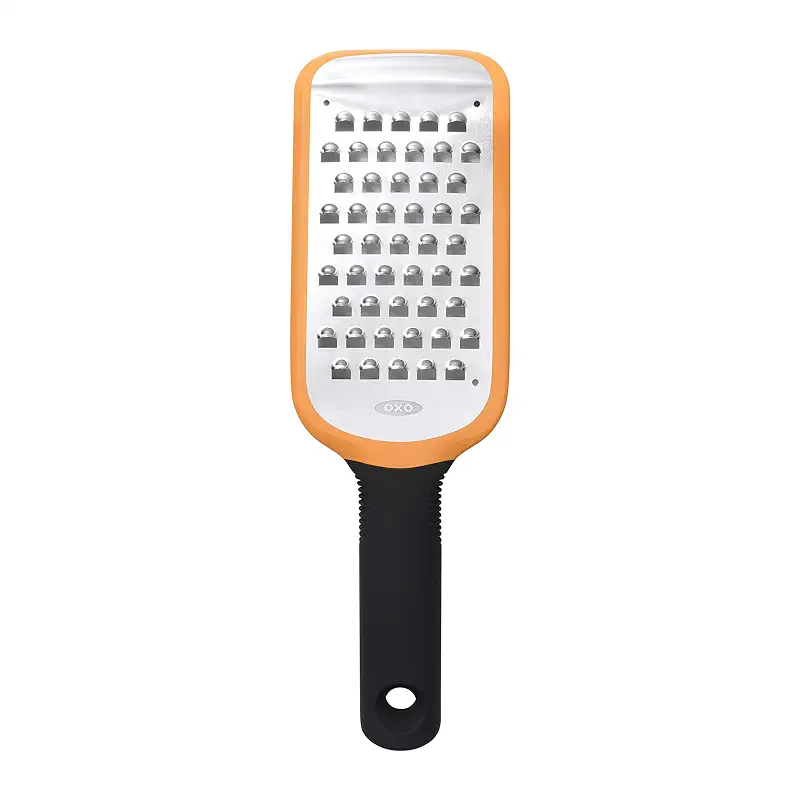
OXO Good Grips Etched Coarse Grater with Handle, Orange | Coarse Kitchen Grater, Sharp Etched Teeth, Non-Slip Handle, Hard Cheese, Vegetables, Chocolate, Easy Grip
4.7(6,335)
One-sided coarse grater with protective cover and non-slip foot delivers consistent results for semi-soft cheeses without the complexity of box graters.
Ideal for: Cooks with limited drawer space who primarily grate semi-soft cheeses and want a simple, protective design.
OXO's single-surface etched grater takes the opposite approach from the four-sided box model. Instead of juggling multiple surfaces, you get one sharp, flat plane optimized for semi-soft cheeses, vegetables, and zest. The etched stainless steel teeth are sharp enough to handle mozzarella without squishing it, and the design makes it nearly impossible to accidentally grate your knuckles since there's only one active surface.
The protective cover is a genuine safety feature that box graters can't match. When you're done grating, you snap the plastic guard over the teeth, which means the sharp surface is safely contained in a drawer or cabinet. The non-slip foot anchors the grater to your cutting board, so you're not chasing it across the counter. That stability is especially valuable when you're working one-handed with a hunk of mozzarella.
The trade-off is specialization. You're buying a tool that does one job well rather than five jobs adequately. If you regularly zest citrus, shred chocolate, or slice vegetables, a box grater offers more flexibility. But if mozzarella and a handful of other soft cheeses are your main target, this focused tool eliminates decision paralysis and takes up less cabinet real estate than the OXO box model.
Ideal for: Budget-conscious cooks seeking a full-featured box grater with container and a sturdy feel.
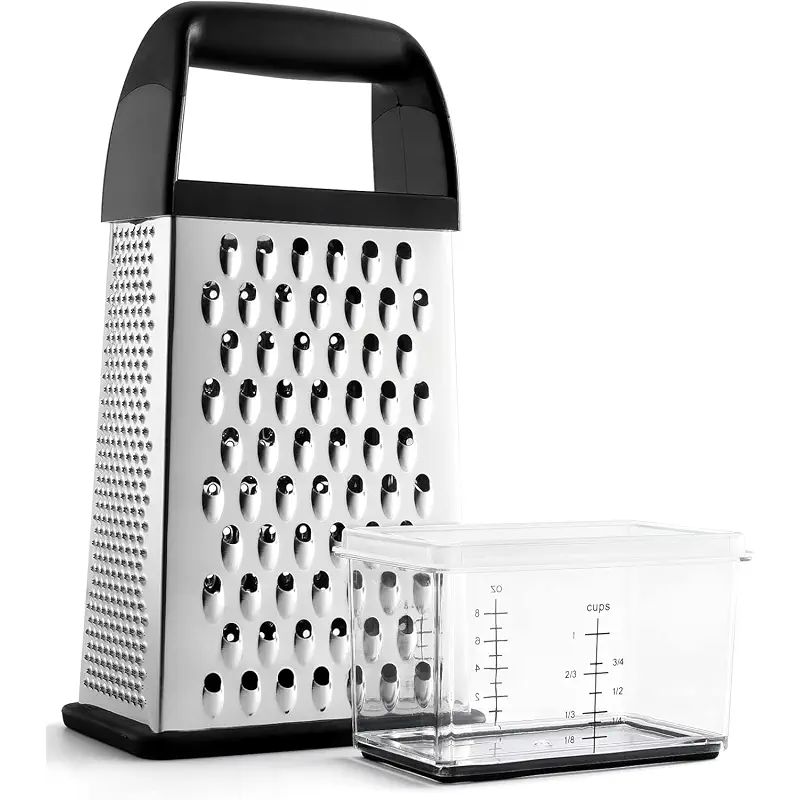
Urbanstrive's box grater competes directly with the OXO model at a lower price point. It offers the same core features: four grating surfaces, a detachable measuring container, and a non-slip base. The stainless steel construction (95 percent, with 5 percent TPE rubber) is solid, and reviewers consistently praise the generous size of the grater itself, which makes reaching into the barrel and cleaning out corners much easier than with compact competitors.
Where this grater shines is the included container and lid. Like the OXO, it nests inside the grater for space-efficient storage, and it's marked with volume measures so you know when you've reached a cup or half-cup of grated cheese. The rubber base genuinely grips your counter, preventing the grater from sliding while you work. For mozzarella and other soft cheeses, this stability matters more than the suction base on rotary models because you're applying pressure with your hand.
The one caveat: reviewers noted the steel feels thinner than vintage graters, and a few units arrived with dents. It won't crumple if you step on it, but it's not built like a restaurant workhorse. The sharpness of the grating surfaces seems adequate now, though long-term durability is unclear from the available feedback. For the price, this is a sensible choice if you already own rotary graters and want a backup box option, or if you're hesitant to spend more on the OXO.
Pros
Large, accessible barrel makes cleaning and refilling straightforward
Included measuring container and lid reduce clutter in storage
Non-slip rubber base prevents sliding during grating
Four grating surfaces cover cheese, vegetables, zest, and slicing
Cons
Thinner steel construction than vintage box graters may reduce longevity
Some units arrived with minor dents or cosmetic damage
Key features
304 stainless steel construction (95 percent) with TPE rubber base
Four grating surfaces for coarse, medium, fine, and slicing applications
Detachable container with measurement markings and snap-on lid
Generous barrel size for comfortable hand and ingredient access
How to Choose the Right Cheese Grater for Mozzarella
Four trade-offs that actually matter when matching a cheese grater for mozzarella to your kitchen.
Rotary vs. Box: Which Design Suits Your Kitchen?
Rotary graters (hand-crank models) are faster and easier on the hand for soft cheeses like mozzarella, but they need a flat surface and one-handed grip. Box graters sit flat, require both hands to hold steady, and demand more physical effort but work on any surface. A rotary versus box grater comparison hinges on your counter space, cooking frequency, and whether you prioritize speed or versatility. If you grate daily, rotary saves fatigue. If you grate occasionally and want four surfaces in one tool, box graters offer flexibility. First-time buyers often start with box models because they're intuitive and affordable.
Soft vs. Hard Cheese: Blade Type Matters
Soft mozzarella clogs easily and sticks to standard metal teeth, so coarse or medium surfaces work best. Hard cheeses like aged Parmigiano-Reggiano benefit from fine surfaces or microblades, which produce thin, elegant shreds. Check the product features to confirm the grater offers coarse options if mozzarella is your main target. Etched or acid-etched blades are sharper and require less pressure than punched-hole designs, reducing the risk of squishing soft cheese. If you work with both soft and hard cheeses regularly, a four-sided box grater with varied surfaces (like OXO or Urbanstrive options) covers all your needs in one tool.
Stability, Storage, and Cleanup
A suction base on rotary graters anchors them to smooth countertops, leaving both hands free to work. Box graters with non-slip feet stay put when you apply downward pressure. If your counter is textured or uneven, non-slip feet are more reliable than suction. For storage, rotary models fold compact, while box graters fit in drawers if slim. Detachable containers on box graters nest inside for space savings. Dishwasher-safe components matter if hand-washing sharp tools bothers you. All five options here clean quickly, but rotary graters disassemble more thoroughly, which appeals to cooks who want zero food debris in crevices.
Hand Fatigue and Effort
Hand-crank rotary graters distribute effort over a full arm motion, reducing fatigue on longer jobs. Pushing cheese across a box grater requires sustained downward pressure and wrist extension, which tires some cooks. Microblades (like the Zyliss model) require less downward force than conventional teeth, but they demand precise, smooth technique. If you have arthritis, shoulder tension, or know you'll be grating a large block, a rotary grater is gentler. Box graters work fine for small, everyday portions. Consider your own cooking habits: occasional single servings? Box. Multiple times a week, larger batches? Rotary.
Frequently asked
Quick answers to the questions readers ask most.
Can I use these graters for mozzarella that's frozen?
Partially frozen mozzarella (fridge-cold, not solid) works with any of these tools, but completely frozen cheese is too brittle and hard. Soften mozzarella in the fridge for 10-15 minutes before grating if it came straight from the cold. Rotary and box graters both struggle with rock-hard cheese; microblades and etched surfaces handle cold mozzarella better than punched-hole designs because they cut rather than tear.
Why does mozzarella stick and clump when I grate it?
Mozzarella sticking and clogging solutions start with temperature. Warm mozzarella (above 55°F) gets sticky; cold mozzarella shreds cleanly. Use low-moisture varieties when possible, which are less prone to clumping than fresh mozzarella. Coat the grater with a light brush of oil or cooking spray before you start, which helps shreds release. If clumping happens mid-job, stop and freeze the grater for 5 minutes, or wipe the surface with a dry paper towel between passes.
How do I maintain sharp grating surfaces over time?
Hand-wash grater blades rather than using a dishwasher if you want to extend sharpness. Scrub gently in the direction of the holes with a soft brush to dislodge food debris. Never use abrasive scouring pads or steel wool on stainless steel surfaces; they cause damage and dull blades faster. Air-dry the grater upright so water doesn't pool near the base. Store it in a drawer away from other metal tools that might ding or knock against the surfaces.
Are rotary graters safer than box graters for your hands?
Yes, rotary graters are generally safer because the crank handle moves your hand away from the spinning cylinder, and a food pusher guides cheese without finger contact. Box graters require you to move your hand across the active surface, which increases the risk of scraping knuckles if you lose focus or rush. That said, all graters have sharp teeth; awareness and slow, controlled motions matter more than tool choice.
What's the best way to store a cheese grater after each use?
Allow the grater to air-dry completely before storing to prevent mold or rust. Rotary models should snap back together once dry. Box graters fit in standard kitchen drawers if slender, or hang on a wall-mounted rack. If your grater came with a protective cover or container, use it; these guard against accidental cuts and prevent the blades from picking up odors in a crowded drawer. Keep graters away from damp areas and handle with care, as impacts can dent thin steel or crack plastic components.