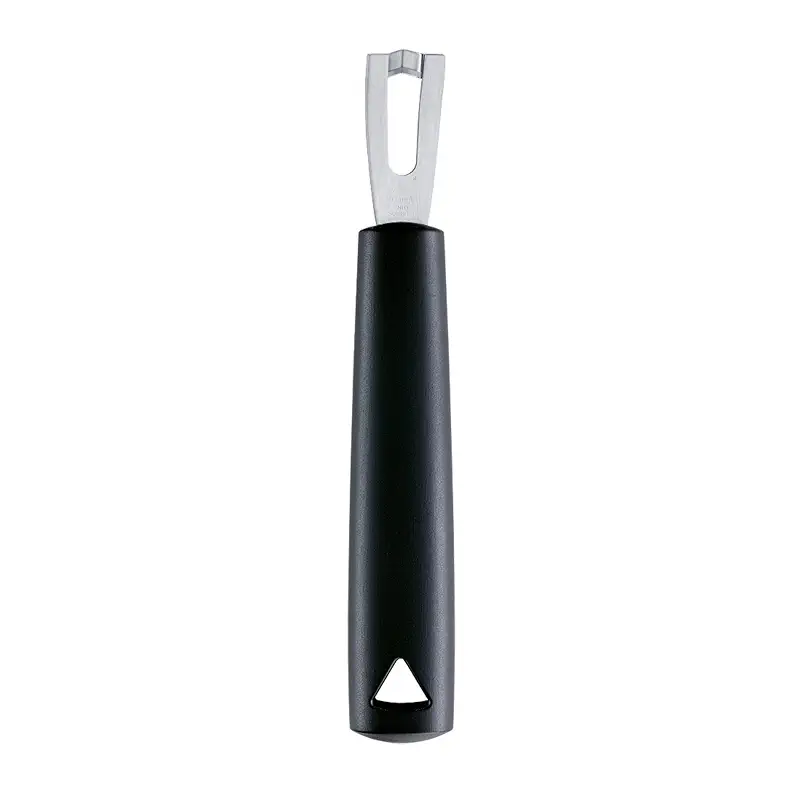
Ideal for: Cocktail enthusiasts and bartenders who prioritize clean, precise citrus twists for drinks.
The triangle Channel Knife stands out for its deep V-shaped blade and precise edge geometry. Made in Solingen, Germany, it's forged from 100% stainless steel and hardened to a level that buyers consistently notice when they first use it. The GreenGrip handle (98% bio-based plastic with 40% wood content) is a thoughtful touch if sustainability matters to you, though the real value lies in how sharp this blade stays through repeated use.
Owners report that the channel cuts long, consistent citrus peels without tearing or requiring the kind of aggressive pressure that leads to hand fatigue or slips. Bartenders specifically praise it for creating the thick, elegant twists that hold up when twisted into a drink. It takes a little practice to find the right angle and pressure, but once you do, the cuts come out reliably. The deep blade also means you get more pith on the back side of the peel, which can actually be an advantage if you're expressing oils over a cocktail.
The one caveat: it's a specialist tool. If you want a 2-in-1 zester-and-channel-knife combo, you'll want to look elsewhere. This does one job extremely well, and the price reflects that focus. For home bartenders and culinary enthusiasts who make garnishes regularly, the investment pays off quickly.
Pros
Deep V-shaped blade cuts without tearing
Forged German stainless steel holds sharpness
Sustainable GreenGrip handle with wood content
Consistent performance across repeated use
Cons
Single-purpose tool, no zester function
Requires practice to master technique
Key features
German-forged stainless steel blade hardened for lasting sharpness
Deep V-shaped channel creates thick citrus peels for bar garnish
Sustainable GreenGrip handle made from 98% bio-based plastic
Long-term durability from family-owned toolmaker since 1946
#2 Pick
Best for Style
Viski
Viski Channel Knife, Citrus Zester and Orange Peeler Tool, Walnut Wood and Stainless Steel Bar Tool for Cocktail Garnishes, Perfect for Home Bars, Craft Cocktails and Bartender Gifts, Set of 1
4.5(1,449)
Walnut wood handle and stainless steel blade make this a beautiful barware addition, though the narrow cut requires practice to master.
Ideal for: Home bartenders and entertaining-focused cooks who value visual appeal on bar carts or kitchen displays.
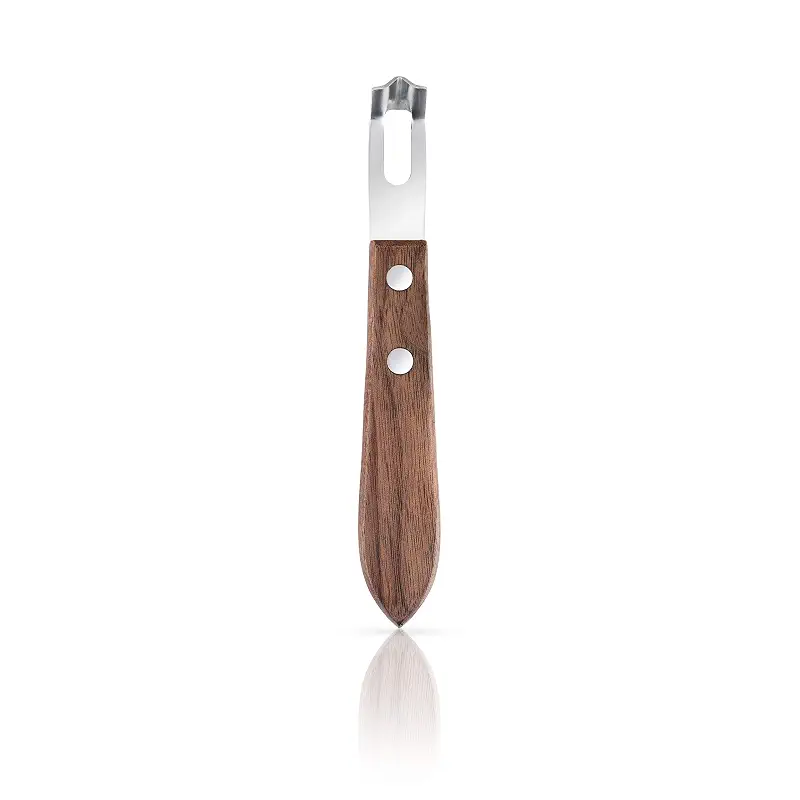
The Viski Channel Knife prioritizes aesthetics alongside function. The polished walnut handle with dual rivets gives it a craft-bar presence, and owners who care about how their tools look on a bar cart consistently note its visual appeal. It sits comfortably in the hand and the curved blade is stainless steel, so corrosion isn't a concern in humid bar environments.
Where this knife differs from the triangle is in cut width. Reviewers split on this: some appreciate the narrow channel for thin, delicate garnishes, while others find it produces a peel so narrow it's fragile when working with a cocktail pick or skewer. If you're making James Bond-style martini twists (the broad, visible kind), this won't deliver that. It works better for thin zest on desserts or for drinks where a thinner peel is the goal.
One real drawback: the walnut handle needs occasional care. A few owners noted the wood deteriorating with water exposure. Treating it with food-grade mineral oil helps preserve it, but that's an extra step some users don't expect. Compared to the OXO's soft-grip construction, this is higher-maintenance. That said, if you love the look and don't mind the upkeep, the cut quality is solid once you get the angle right.
Pros
Polished walnut handle with refined bar aesthetic
Dual rivets for durability and visual weight
Curved blade produces clean, thin citrus ribbons
Stainless steel resists corrosion
Cons
Narrow cut can be fragile for thick garnish applications
Wood handle requires occasional mineral oil treatment
Key features
Walnut wood handle with dual-rivet construction for durability
Ideal for: Home cooks and casual bartenders who want zesting and channel functions without buying multiple gadgets.
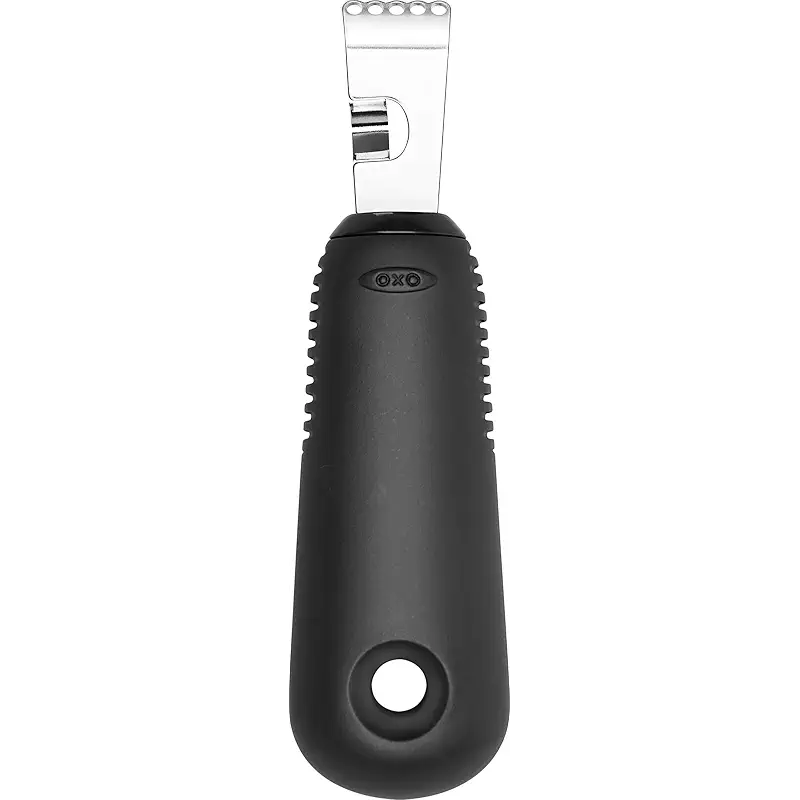
The OXO Good Grips is the workhorse of this lineup. It combines a multi-hole zester on one end and a channel knife on the other, so you get two tools in one compact package. With over 5,000 reviews and a 4.7 rating, it has earned trust through sheer volume of everyday use. The soft, non-slip handle is OXO's signature design, and it matters when you're putting pressure on a citrus fruit to get the zest through the holes.
Owners consistently mention that the holes are genuinely sharp out of the box: one reviewer admitted to cutting their knuckle on first use, which tells you the teeth are not blunt decoration. The channel side works similarly to the triangle and Viski, creating twists for cocktails and garnishes. What sets this tool apart is versatility: if you're zesting lemons for baking three times a week, the holes do that job fast. For cocktail twists, you flip to the channel side. It's especially useful in home kitchens where counter space is limited and buying five single-purpose tools isn't practical.
The trade-off: it's a jack-of-all-trades, master-of-none situation. Neither the zester holes nor the channel are as specialized or premium as buying dedicated tools. The channel cut is narrower than some competitors, and the zester holes require steady pressure and a steep learning curve for beginners. Hand washing is recommended to avoid pith buildup in the teeth, though it's officially dishwasher safe. For casual home entertaining and everyday cooking, it punches well above its price point.
Pros
Two tools in one compact design saves counter space
Sharp stainless steel holes for efficient zesting
Soft-grip handle is comfortable for extended use
Excellent value compared to buying separate tools
Cons
Zester holes and channel are narrower than specialist alternatives
Pith buildup in teeth requires careful cleaning
Key features
2-in-1 tool combines hole zester and channel knife in one body
Sharp stainless steel head resists rust and dulling
Soft, non-slip handle fits comfortably in wet conditions
Dishwasher safe; works on top rack for easy cleanup
#4 Pick
Best for Professional Bartenders
A Bar Above
A Bar Above Channel Knife, Black Ergo Handle Gold Blade, Citrus Peeler | Stainless Steel Garnish Tool, Lemon Zester, Chef Tool, For Drink Presentation and Cocktail Garnish, Fruit Peeling, Great Pick
4.5(694)
Gold-plated stainless steel blade and black ergonomic handle designed by bartenders for precision and speed in high-volume settings.
Ideal for: Bartenders and chefs who prioritize speed, control, and professional aesthetics in garnish work.
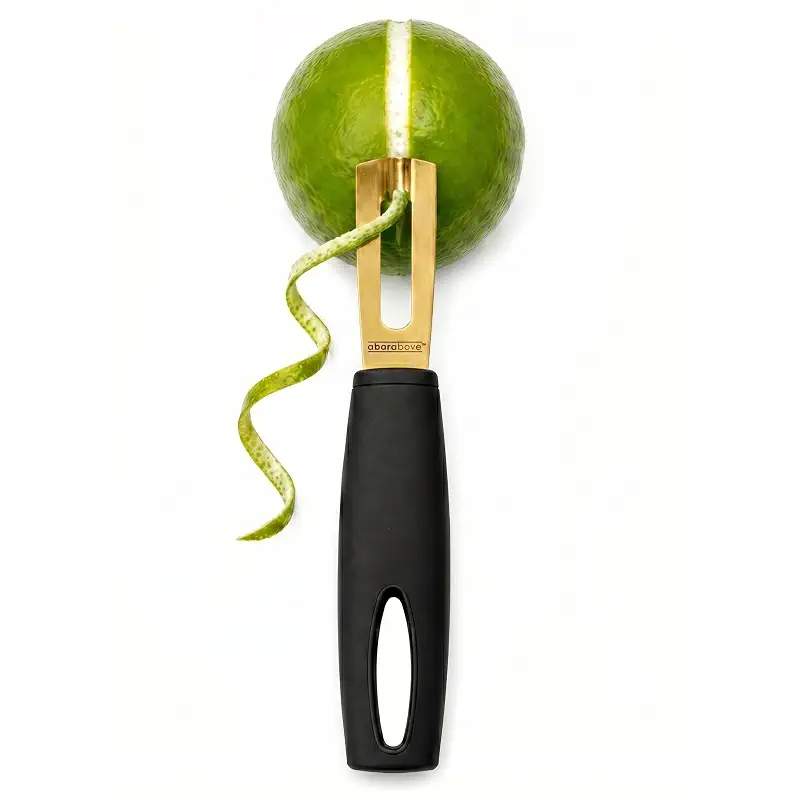
A Bar Above channels its bartender roots into every design choice with this channel knife. The gold-plated stainless steel blade is a thoughtful touch that resists corrosion in wet bar environments and looks intentional, not gaudy. The black ergonomic handle supports the contoured grip without the wood-maintenance concerns of the Viski or the simpler plastic of the OXO.
Where this tool shines is in speed and repeatability. Owners who work behind the bar or in fast-paced kitchens report that the angled blade and contoured grip make it possible to produce garnishes quickly without sacrificing precision. The gold finish holds up well through repeated use and washing. One reviewer who had tried a competitor's channel knife (Mercer Culinary) returned it immediately and praised this one for the sharpness difference; that kind of side-by-side feedback from actual users is worth noting.
The cut width sits in the middle ground, producing a ribbon wider than the Viski but narrower than some other options. If you're comparing this to the triangle Channel Knife, the A Bar Above trades the deep German forging for a lighter, faster tool designed for extended bar shifts. One owner did mention uncertainty about long-term edge retention, which is fair for any tool; only time will tell. For professional settings or serious home entertaining where aesthetics and speed both matter, this is the pick over the OXO's utilitarian approach.
Pros
Gold-plated blade resists corrosion and looks intentional
Ergonomic black handle designed for extended use
Angled blade and grip enable fast, repeatable cuts
Stainless steel construction holds up in wet bar environments
Cons
Long-term edge retention unclear from limited owner feedback
Premium positioning may not justify cost for casual home use
Key features
Gold-plated stainless steel blade resists corrosion and wear
Ergonomic black handle with contoured grip for control
Designed by career bartender for professional bar and kitchen use
Dishwasher safe and built for high-volume service
#5 Pick
Best Budget Option
smrtcol
Channel Knife for Zesting Stainless Steel Bar Tool with Wood Handle, Curved Blade for Lemon/Orange Twists Cocktail Garnish Tool for Bartenders & Home Mixologists
4.0(19)
Entry-level channel knife with wood handle and curved stainless steel blade; works adequately but edges are sharper on higher-priced alternatives.
Ideal for: Occasional home bartenders and budget-conscious buyers willing to trade sharpness for lower cost.
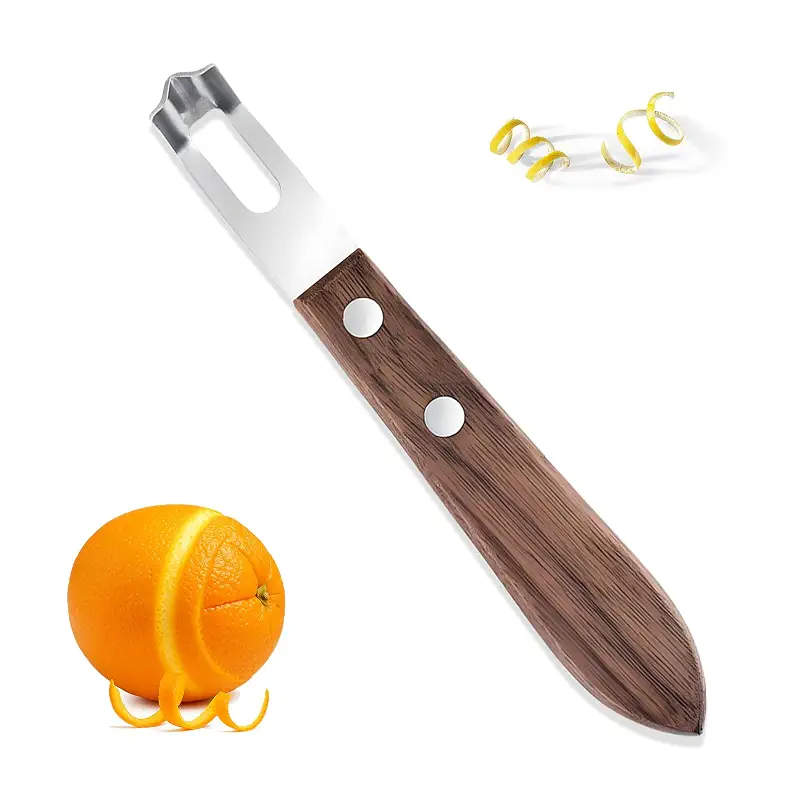
The smrtcol Channel Knife is the most affordable option here, and that shows in both the user experience and the feedback. It has an extra-thick stainless steel blade (rust-resistant, which is good) and a double-riveted hardwood handle that feels solid. For someone curious about channel knives before investing in premium gear, or for an occasional home user, it's a reasonable trial.
The catch: reviewers consistently note that sharpness is the bottleneck. One owner reported needing significant effort and pressure to get clean zest, and the blade sometimes removed flesh along with the peel on thinner-skinned fruits. Another reviewer said it works better on thicker-peeled citrus like oranges, which is a real limitation if you want flexibility. A couple of five-star reviews mention it working fine for martinis or decorative carrot slicing, so it's not a total miss, but the sharpness difference between this and the triangle or A Bar Above tools becomes obvious when you hold them side by side.
Compared to the OXO's broader appeal across zesting and channel work, this one is a narrower bet. If you regularly work with thick-peeled citrus and don't mind applying pressure, you might get away with it. If you're drawn to the aesthetics of a wood handle but want better edge performance, the Viski delivers more reliability for a modest upcharge. For home cooks deciding between a budget channel knife and investing in a best knife to cut raw chicken or other kitchen staples that see daily rotation, remember that specialty tools like this one don't justify premium spending unless you use them weekly.
Pros
Extra-thick stainless steel blade resists rust
Double-riveted hardwood handle feels solid and looks nice
Works well on thick-peeled fruits like oranges
Lowest entry price in the lineup
Cons
Blade sharpness lags premium alternatives; requires more effort
Tends to remove flesh on thin-skinned fruit like limes
Double-riveted hardwood handle for durability and aesthetic
Curved blade design for natural citrus contouring
Hand wash recommended; compact size for easy storage
How to Choose a Channel Knife
Four trade-offs that actually matter when matching a channel knife to your kitchen.
Single-Purpose vs. Multi-Tool
Channel knives come in two flavors: dedicated single-purpose blades (like the triangle and Viski) or 2-in-1 tools combining a zester and channel in one handle (like the OXO). If you're zesting lemons for baking three times a week and making cocktail garnishes once a month, the 2-in-1 makes sense. If you're serious about bar work or regularly use channel knife zesting technique for consistent garnish output, a dedicated channel knife will sharpen your work and your speed. Single tools also tend to have deeper, more aggressive blades, while combo tools prioritize compromise.
Blade Geometry and Cut Width
Not all channel blades are created equal. A deep V-shaped channel (like the triangle) cuts thick, visible ribbons of peel that hold up when twisted into a drink and stay intact when you express oils over the surface. Narrower channels (like the Viski and smrtcol) produce thinner ribbons that are more delicate and better for fine zest work or dessert plating. Thicker peels break less easily during service; thinner peels give you more visual subtlety. Think about what you actually garnish, then choose accordingly.
Handle Material and Maintenance
Soft-grip rubber (OXO) offers comfort and low maintenance but looks utilitarian. Polished wood (Viski, smrtcol) looks beautiful on a bar cart but needs occasional food-grade mineral oil to prevent deterioration. Ergonomic black plastic (A Bar Above) balances durability with professional aesthetics and requires no special care. Gold-plated blades resist corrosion better than bare stainless in humid bar environments, but they're an aesthetic choice as much as a functional one. Consider your dishwashing routine and storage space when deciding.
Sharpness and Edge Retention
This is where price differences matter most. German-forged tools like the triangle hold a razor edge through months of use. Budget options like the smrtcol work but require more pressure and won't stay as sharp. Professional tools from A Bar Above sit in the middle. If you're making garnishes daily or multiple times per week, invest in better steel. If it's once or twice monthly, a budget option won't wear out before you do. Test edge quality in early uses: if you're cutting citrus easily without thinking about pressure, the blade is sharp. If you're working hard, the tool isn't worth keeping.
Space and Multi-Purpose Considerations
Small kitchen or bar cart? The OXO's 2-in-1 footprint saves drawer space and works for both zesting and garnish prep, making it practical for tight quarters. If you have room and you specialize, a dedicated channel knife like the A Bar Above performs faster and cleaner. Restaurants and high-volume bars almost always choose specialist tools; home kitchens usually prefer versatility. The exception: if you're serious about the best knife for cutting chicken breast or other professional knives, adding one premium channel knife to your collection makes more sense than buying multi-tools that do nothing exceptionally well.
Frequently asked
Quick answers to the questions readers ask most.
Can I put a channel knife in the dishwasher?
Most channel knives marketed here are officially dishwasher safe, but hand washing preserves sharpness longer. The high heat and abrasive cycles dull blades faster than gentle hand cleaning. For the OXO and A Bar Above, top-rack placement is safer. Wood-handled tools like the Viski benefit from hand washing to protect the handle from water damage. If dishwasher use is non-negotiable, rinse immediately after use to prevent pith and citrus oil from hardening in crevices or rivets.
What's the difference between a channel knife and a microplane zester?
The channel knife versus microplane represents different cutting philosophies. A channel knife creates thick or thin ribbons and long peels ideal for twists in cocktails and decorative plating. A microplane produces fine, powdery zest perfect for baking, desserts, and finishing dishes. Channel knives work best on thicker-peeled fruit like oranges and lemons; microplanes excel at limes and grapefruit. Many professional kitchens keep both because they serve different purposes at different stages of prep.
How do I get long, clean citrus twists without tearing?
Angle the blade at 45 degrees to the fruit's surface and use steady, moderate pressure rather than aggressive force. Let the blade do the work; a sharp channel knife cuts through peel cleanly if you're not fighting it. Start at one end of the fruit and drag toward the other in one continuous motion, rotating as you go. Thicker-peeled fruits (navel oranges, thick-skinned lemons) are more forgiving than thin limes. Practice on a practice fruit first to find the angle that works for your blade and hand position.
Do expensive channel knives stay sharp longer?
Generally, yes. German-forged stainless steel (like the triangle) and premium brands (A Bar Above) hold edges longer than budget alternatives because they use better alloys and hardening processes. A $30 tool and a $60 tool might both cut citrus on day one, but the expensive one will still cut easily after 50 uses. If you garnish daily or weekly, the premium tool pays for itself in reduced effort and better results. For occasional use, a mid-range option is the better value.
Can I use a channel knife on vegetables besides citrus?
Yes. Owners report success using channel knives on thick-peeled carrots to create decorative slices (dragging from bottom to top produces a star or flower pattern when sliced). Cucumbers, zucchini, and beets all work. The main limitation is that the blade needs to be sharp enough to bite through the skin without crushing the flesh underneath. Softer vegetables like ripe avocado won't work well. Harder vegetables with tougher skins benefit more from a sharp blade, so budget tools may disappoint on produce outside citrus.