Best Champagne Bottle Opener for Easy, Safe Cork Removal
Find the best champagne bottle opener for safe, effortless cork removal. Compare lever, twist, and vacuum styles to open sparkling wine with confidence.
Ideal for: Frequent champagne drinkers, those with arthritis or weak grip, anyone who values safety and elegant design.
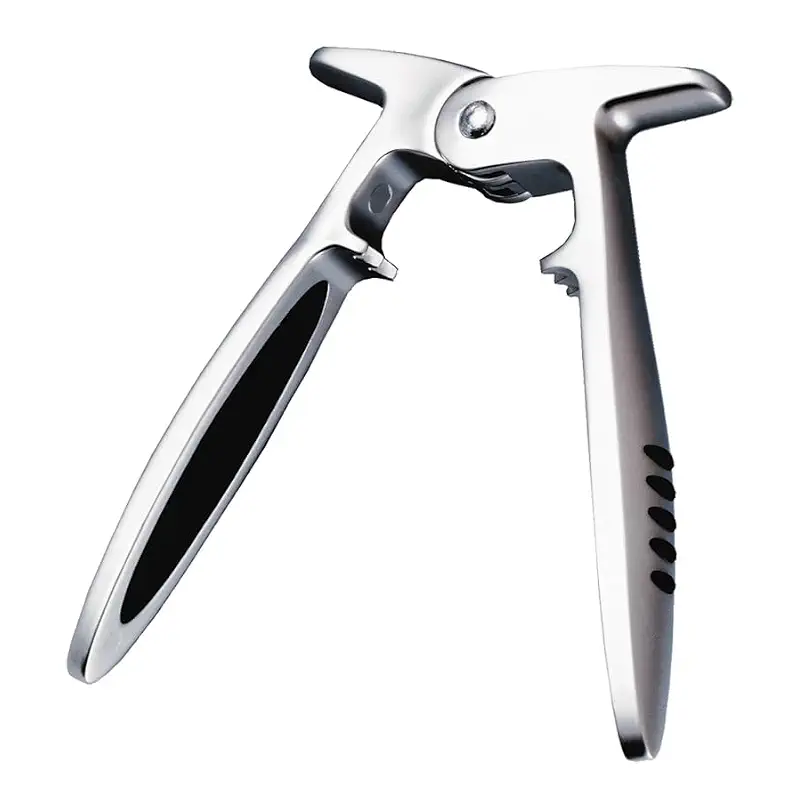
The Franmara Swiftturn has earned its reputation through genuine user consistency. Buyers with weak grip strength, arthritis, and aging hands repeatedly report that this opener lets them open bottles independently for the first time in years. The mechanism is straightforward: you squeeze the teeth into the cork, work the eyelet back and forth to snap the wire cage, then twist the opener and bottle in opposite directions. This dual-action approach (rather than pure force on the cork) is what makes it accessible to people across a wide range of hand abilities.
The build quality stands out in this category. Unlike some plastic-handled competitors that crack or weaken over time, the metal construction on the Franmara holds up to regular use. The rubber grip perforations deliver real non-slip feel, and the satin nickel finish looks intentional rather than utilitarian. What some buyers describe as a learning curve on first use resolves quickly once you understand the sequence.
One honest limitation: a few owners note that a simple towel-and-twist method can work almost as well if you're only opening a bottle or two a year. But for anyone entertaining regularly or dealing with hand fatigue, this opener pays for itself in reduced friction and increased confidence. If you're comparing this to something like the Vacu Vin pliers-style approach, the Franmara prioritizes gentleness and control over raw speed.
Pros
Lever mechanism requires minimal hand strength
Metal construction resists cracking and lasts years
Slip-resistant grip and premium-looking finish
Works consistently across most cork types
Cons
Slight learning curve on first or second use
Requires two-handed technique and coordination
Key features
Lever-based extraction with wire cage breaker and cork capture
Durable all-metal frame with rubber-perforated handle grip
Prevents cork projectiles and eye injuries
Compact 4.5-inch design for easy storage and handling
#2 Pick
Best for Arthritis and Hand Weakness
Dreamfarm
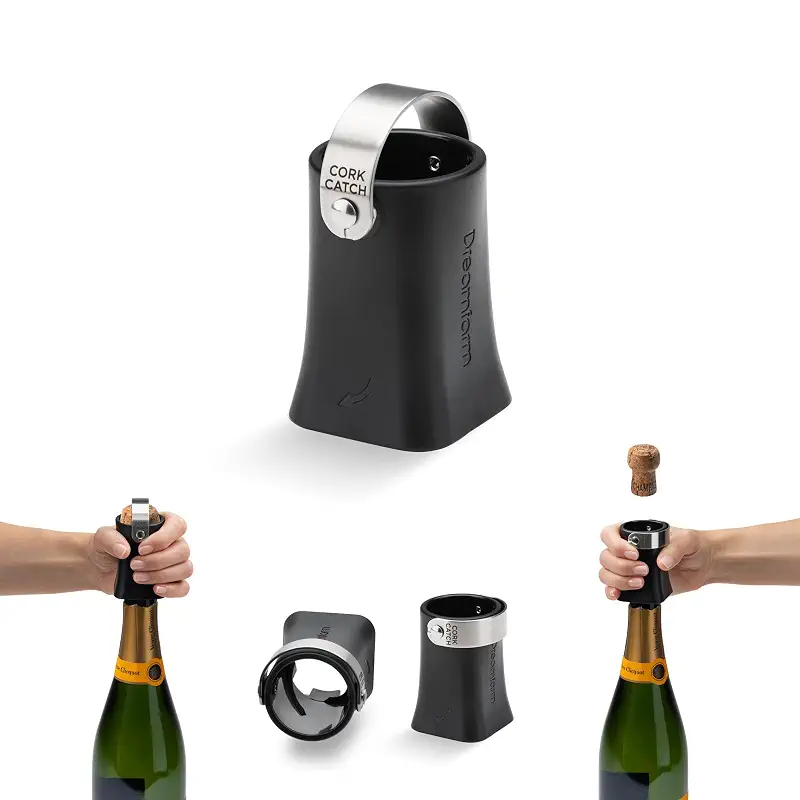
Dreamfarm Champop Champagne Bottle Opener Easy Twist Cork Popper | Effortlessly pops open sparkling wine and prosecco with stainless steel catcher for safe indoor and outdoor use
Ideal for: People with arthritis, carpal tunnel, aging hands, or anyone who prefers turning over squeezing.
The Dreamfarm Champop addresses a specific pain point: people with arthritis or hand weakness who can't manage the squeezing or twisting that traditional openers demand. Its internal-thread mechanism works by simply screwing the opener onto the cork, then twisting it into the bottle. A few turns and the cork pops into a stainless steel safety loop. The beauty of this approach is that it's repetitive, low-torque motion rather than sudden grip-and-yank strength.
Buyers with severe arthritis report this opener changed their relationship with champagne entirely. Unlike the Franmara, which asks your hands to coordinate multiple actions, the Champop says "turn, and let physics do the work." Gas-release vents slow the cork's ejection, making it genuinely safe indoors without feeling restrictive. The flip-down position also lets you shoot the cork straight up at parties, which adds a bit of theater back to the experience.
The honest caveat here is real: it doesn't work reliably on every cork type. Some natural corks grip differently, and plastic closures on smaller bottles sometimes fail to thread cleanly. One buyer found it didn't work on Mumm bottles and reverted to a knife. This isn't a flaw in execution, but rather the trade-off of specialization: the twist mechanism excels on standard cork sizes but struggles with outliers. If you drink mostly mainstream champagne or prosecco, you'll be fine. If you're opening random bottles, the Franmara offers safer odds.
Ideal for: Bartenders, event planners, frequent entertainers, anyone who values speed and one-motion extraction.
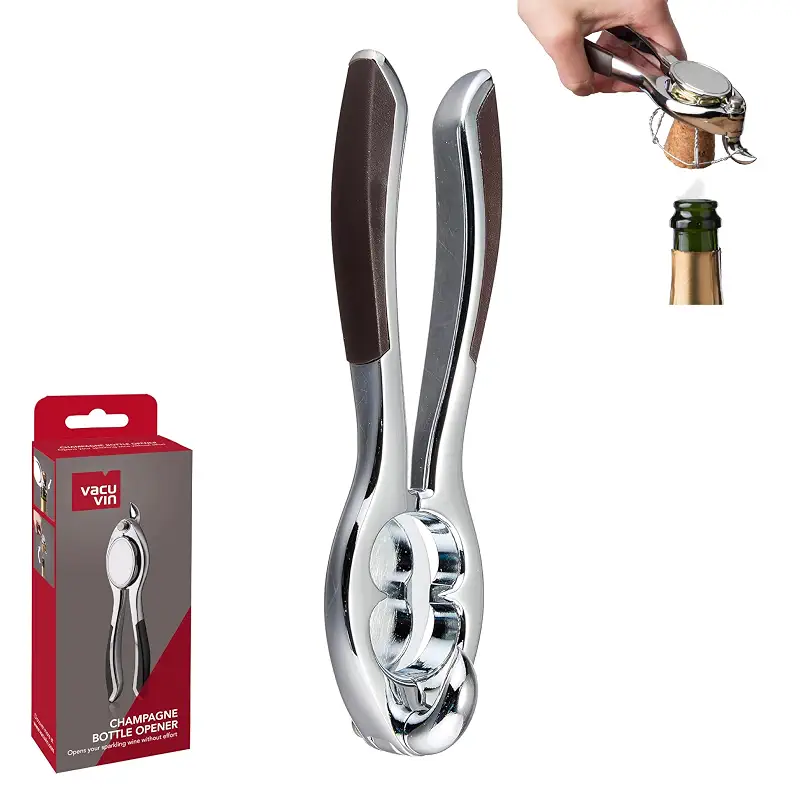
The Vacu Vin takes a completely different approach from the lever and twist styles. It's a pincer-like tool: you hook the cage, twist, and pull in one fluid motion. This is the opener you'll see in bars and upscale restaurants because it handles dozens of bottles per shift without fatigue. The entire cork and foil assembly comes out intact, leaving no cleanup on the bottle rim.
For people who open champagne frequently at parties or small events, this speed is genuinely valuable. No multi-step sequencing, no learning curve once you watch the YouTube video (which Vacu Vin sensibly includes). The stainless steel construction feels refined, and it's compact enough to slip into a bar caddy or party basket. When entertaining, proper barware extends beyond just the opener: complementary tools like the best serving utensils make the entire champagne experience feel polished and intentional.
The real limitation is the one that Vacu Vin itself acknowledges: there's a learning curve, and some owners find it fiddly on first tries. One buyer reported outright failure and returned it. Unlike the Franmara (which works almost the same way every time) or the Champop (which is visually obvious), the Vacu Vin requires you to understand the exact hook-twist-pull sequence. Once you do, it's fast and reliable, but if your hands are weak or arthritic, the twisting component may feel harder than the Franmara's gentler mechanism. It's the professional's choice, not necessarily the most forgiving for occasional users.
Pros
Removes cage, foil, and cork simultaneously in seconds
Stainless steel construction feels durable and refined
Professional-grade performance and appearance
Compact and portable for bar or catering settings
Cons
Requires technique practice and video tutorial to master
Twisting motion may challenge weak or arthritic hands
Key features
Pliers-based mechanism that hooks cage and extracts cork in one pull
Removes foil, cage, and cork simultaneously without extra steps
Stainless steel construction with ergonomic handle design
One-handed operation possible once technique is learned
#4 Pick
Best Budget Option
Hakuna
HAKUNA Champagne Bottle Opener - Zinc Alloy Sparkling Wine Cork Puller - Bar Jar Cork Puller - Champagne Corkscrew -Kitchen Sparkling Wine Bottle Opener - Best Gift Accessories
4.5(117)
Lever-pull design at an entry-level price; solid performance for occasional use without premium cost.
Ideal for: Occasional champagne drinkers, gift-givers, those prioritizing affordability over premium materials.
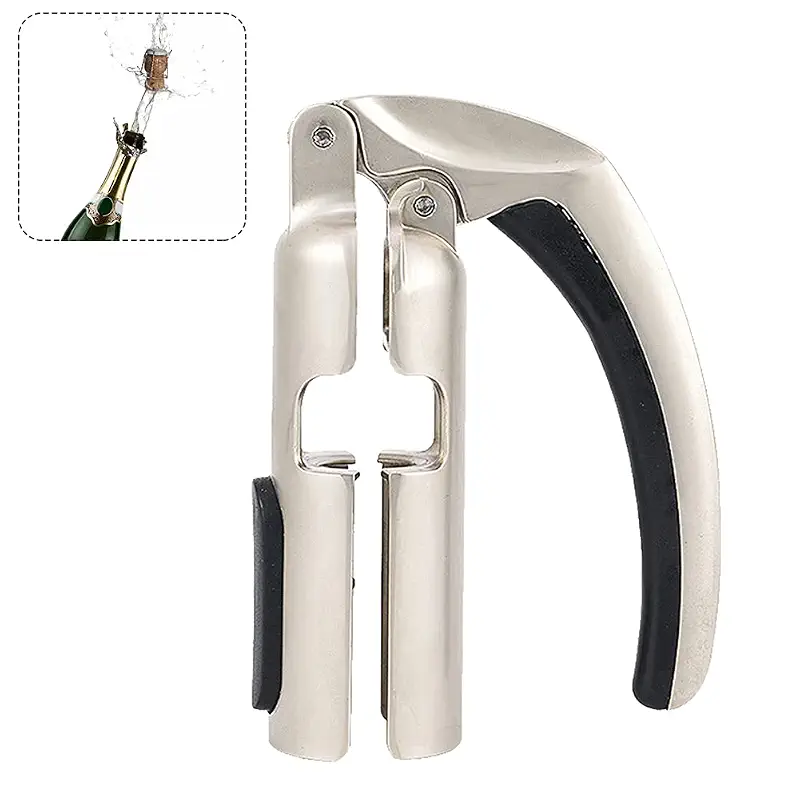
The Hakuna opener distills the lever concept to its essentials: zinc alloy and ABS plastic construction, ergonomic handle, and a straightforward pull mechanism. It opens champagne quickly (about three seconds, by one owner's count) and costs significantly less than the Franmara premium models or the Vacu Vin specialty tool. For someone who opens bubbly four or five times a year, this delivers the same result without the investment.
Buyers praise its ease of use and find it practical for both home and bar settings. The compact size means it lives in a drawer without taking up space. One owner reported it worked reliably for about 18 months of heavy use (four bottles monthly), suggesting decent durability at the price point. The metal finish doesn't look flimsy, and early adopters appreciate that it's a no-nonsense tool rather than a designer piece.
Where it differs from the Franmara is reliability across unusual cork types and long-term durability. One buyer mentioned it doesn't work consistently on plastic corks or specialty bottles like Cooks champagne. The zinc alloy can fatigue after repeated use if you're opening more than a few bottles weekly. If you're comparing this to the champagne opener types comparison article you'll find here, this lever style sits between the Dreamfarm (specialized for weak hands) and the Vacu Vin (professional speed). It's the generalist's budget pick, not the specialist's tool.
Pros
Lever-pull mechanism works quickly with moderate effort
Compact and affordable for casual entertaining
Metal construction feels solid for the price
Portable and easy to store in a bar drawer
Cons
Zinc alloy may fatigue after heavy repeated use
Less reliable on plastic corks or oversized bottles
Key features
Zinc alloy and ABS lever-pull opener with ergonomic handle
Opens champagne in approximately three seconds per bottle
Compact hand-sized design suitable for home, bar, and travel
Entry-level price point without sacrificing basic functionality
#5 Pick
Best for Those with Mobility Issues
Frandilo
Champagne Bottle Opener, Bar Jar Cork Puller, Zinc Alloy Sparkling Wine Cork Puller with Ergonomic Handle, Durable Bottle Opening Tool for Wine Lovers(SIZE:Opener)
5.0(5)
Zinc alloy pull-lever design with comfortable grip; excellent for users with carpal tunnel or reduced hand mobility.
Ideal for: Those with carpal tunnel, mobility limitations, elderly users, anyone seeking controlled, low-force cork extraction.
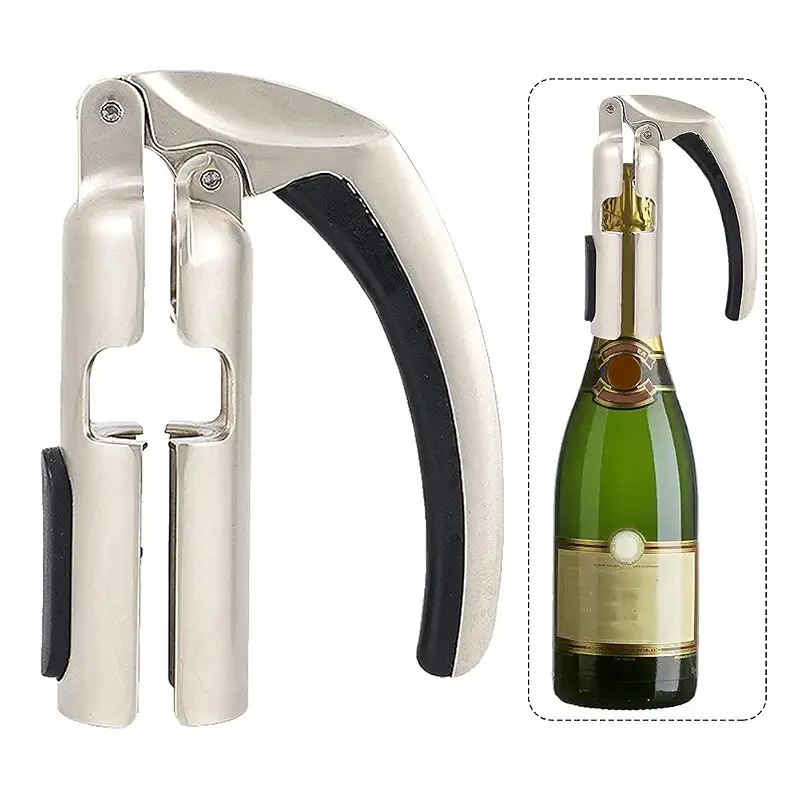
The Frandilo opener is purpose-built for people whose hands struggle with traditional bottle-opening tasks. The zinc alloy construction combined with an oversized, ergonomic handle gives users with carpal tunnel, arthritis, or general mobility challenges a tool that doesn't aggravate pain during use. Multiple reviewers with specific hand conditions report this opener performs when others fail or cause discomfort.
The leverage-based pull mechanism is straightforward: you seat it on the cork and press the handle down. The mechanical advantage means you're not relying on grip strength or wrist torque, just downward pressure. For someone with mobility issues, that distinction matters tremendously. One buyer with carpal tunnel noted it was "the easiest opening I've experienced in a long while." The grip design specifically prevents the cork debris and liquid spray that mess-prone openers create, which adds dignity to the experience.
Because it's a newer entry with only a small number of reviews, we don't yet have long-term durability data like the Franmara offers. However, early adopters emphasize the solid, non-flimsy feel. It opens most corked bottles reliably, not just champagne, which broadens its utility. If you're choosing between this and the Champop (which also targets weak hands), the Frandilo uses a pull-down motion rather than twisting, so it suits people who can't rotate their wrists easily. The Franmara lever mechanism is more proven over time, but this option delivers comparable hand-friendly results at a lower price point.
Pros
Large ergonomic handle reduces strain on weak or painful hands
Pull-down lever requires only hand-opening force, not rotation
Zinc alloy construction feels substantial and durable
Works on various cork types and bottle styles
Cons
Limited long-term user data compared to established models
Fewer reviews may mean less predictability on unusual cork sizes
Key features
Lever-based pull mechanism with substantial zinc alloy body
Oversized, ergonomic handle designed for comfortable gripping
Extracts cork cleanly without debris spray or mess
Works on champagne, wine, and various corked bottles
How to Choose a Champagne Bottle Opener
Four trade-offs that actually matter when matching a champagne bottle opener to your kitchen.
Understand Your Opening Method
Champagne openers fall into three primary mechanisms: lever-pull (you squeeze or press to extract), twist-on (you rotate the tool onto the cork), and pliers-style (you pinch and twist in one motion). Each requires different hand strength and coordination. Lever openers suit most people and work across cork types. Twist openers like the Champop excel for those with weak grip but limit you to standard corks. Pliers openers are fastest for high-volume entertaining but have a steeper learning curve. Understanding champagne opener types comparison helps you match the mechanism to your hand ability and drinking frequency.
Hand Strength and Mobility Considerations
If you have arthritis, carpal tunnel, aging hands, or reduced grip strength, mechanism choice becomes critical. Avoid openers requiring sustained squeezing or heavy twisting torque. The Franmara lever, Champop twist, and Frandilo pull-down options all minimize hand strain compared to traditional corkscrews. Test the opening technique in your mind: can your hands perform that motion comfortably, repeatedly, without pain? If twisting aggravates your wrists, cross out twist openers. If gripping hurts, prioritize pull-down or lever styles. Don't settle for a tool that requires workarounds or causes discomfort.
Cork Type and Bottle Compatibility
Most champagne and prosecco bottles use standard natural cork sizes, but variations exist. Cooks champagne, some half-bottles, and specialty closures may resist certain opener designs. Twist-based openers are pickiest about cork diameter and material. Lever and pliers openers handle a wider range. If you drink mostly mainstream champagne, any opener here works. If you open random bottles or prefer experimental wines, choose a lever or pliers style for broader compatibility. Check buyer reviews for the specific brands and bottle types you drink most often.
Safe Champagne Opening Technique
Safety (preventing cork projectiles and eye injuries) matters as much as ease. Openers with wire cages or cork catchers (the Franmara and Champop) physically contain the cork. Pliers openers remove the entire cage assembly. Manual methods require a towel for protection. Whatever opener you choose, point the bottle away from faces and eyes, keep a hand on the cork to control release, and never aim a bottle at someone during opening. Practicing safe champagne opening technique on your first bottle reduces the risk of spills, injuries, or startled guests.
Build Quality and Long-Term Durability
Openers with metal frames (Franmara, Vacu Vin, Hakuna, Frandilo) outlast plastic-handled versions. All-metal construction resists cracking and maintains grip texture over years of use. If you open bottles more than twice a month, invest in stainless steel or zinc alloy rather than entry-level plastic hybrids. A opener that fails after 18 months costs more per use than a quality version lasting 5 years. Read reviews specifically mentioning durability and long-term performance; plastic handle cracks and metal fatigue are the most common complaints. Premium materials protect your investment.
Frequently asked
Quick answers to the questions readers ask most.
What makes champagne openers different from regular wine corkscrews?
Champagne bottles are pressurized, making the cork dangerous and difficult to extract with standard corkscrews. Champagne openers use levers, twist threads, or pliers to reduce hand strength required and control cork release. Many include wire cage breakers (since champagne foil and cage remain on the bottle) and cork catchers to prevent projectiles. Regular wine bottles lack this pressure and don't require such elaborate safety features.
How do I know if an opener will work on my champagne bottles?
Standard champagne, prosecco, and cava bottles use natural corks that fit most openers here. Plastic closures and unusual cork diameters (some half-bottles, specialty brands) are the exception. Check buyer reviews for the specific brands you drink. Lever and pliers openers handle wider cork ranges. Twist openers are pickiest. When in doubt, lean toward lever-based tools for maximum compatibility.
Is a champagne opener safe to use indoors?
Yes, if you choose one with a cork catcher or safety mechanism. The Franmara's wire eyelet and the Champop's stainless steel loop both capture corks before they become projectiles. Pliers openers are safe because they control cork release by design. Manual towel-and-twist methods are also safe indoors if executed with care. Always point the bottle neck away from faces, and keep one hand on the cork to guide its exit.
Will these openers work on prosecco or sparkling wine, or only champagne?
All the openers here work on champagne, prosecco, cava, and most corked sparkling wines. They're designed for pressurized bottles with natural cork closures. Prosecco and cava corks are often slightly different sizes, but standard openers handle them fine. Avoid specialty bottles with plastic corks or unusually tight cages until you verify compatibility in reviews. The mechanism works across all traditional sparkling wines.
How much hand strength do I actually need to use these openers?
It varies by type. Twist openers like the Champop require the least grip strength: just steady turning. Lever openers need moderate hand strength to squeeze or press, but much less than manual twisting. Pliers openers demand a firm grip and some wrist rotation. If you have weak hands or arthritis, prioritize twist-on or pull-down lever styles. Many buyers with arthritis report that even mid-range openers like the Franmara provide meaningful relief compared to manual opening.