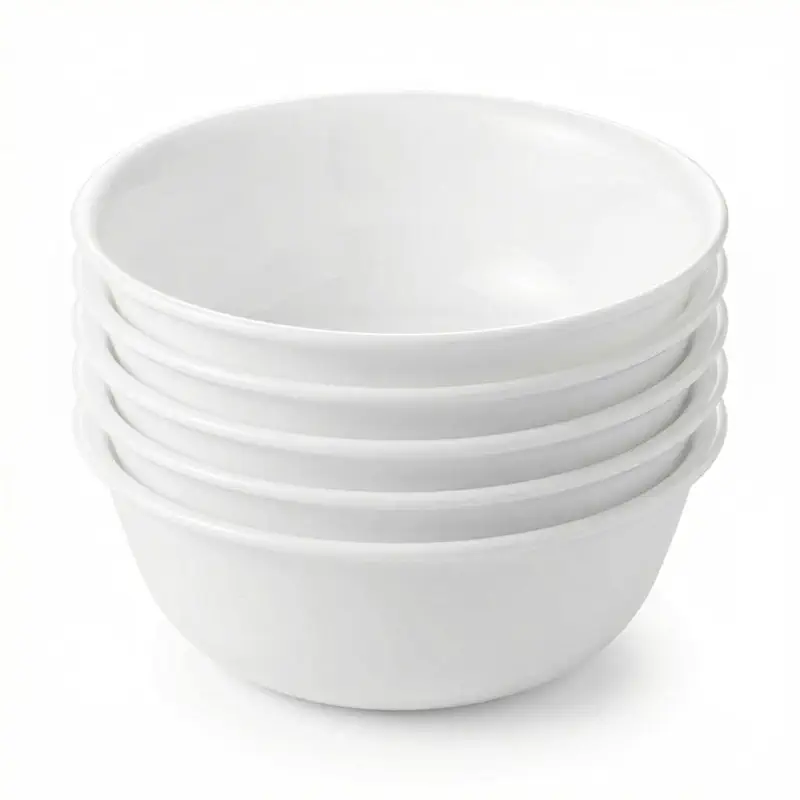
Ideal for: Busy households wanting durability without fuss, small kitchens needing efficient storage.
Corelle's triple-layer vitrelle glass has built a cult following that spans decades, and the 28-ounce version shows why. Buyers consistently praise the durability: these bowls shrug off everyday impacts that would chip cheaper glass, and the lightweight construction means your hands and cabinet don't bear unnecessary weight. The capacity sits in a sweet spot: large enough for hearty soups and salads without feeling oversized for cereal or oatmeal. Stacking is exceptionally efficient, a real advantage if your kitchen storage is tight.
What sets these apart from ceramic alternatives is the material itself. Vitrelle glass is non-porous, so food residue and staining are rare; cleaning happens effortlessly in the dishwasher, and the smooth surface resists the scratching that can make older ceramics look worn. Microwave and freezer safe add flexibility.
The one genuine trade-off: they get hot in the microwave, and you'll need oven mitts when removing them. The classic white minimalist design is intentional (it blends into any kitchen) but if you're drawn to color or pattern, other cereal bowl options offer more visual interest. Buyers with young children and those who value longevity and low-maintenance tableware find this set most rewarding.
Pros
Triple-layer glass resists chips and cracks reliably
Exceptional stackability maximizes cabinet space
Easy cleaning with no staining or residue buildup
Lightweight for comfortable everyday handling
Cons
Gets very hot in the microwave; requires oven mitts
Minimal color or design variety; classic white only
Key features
28-ounce capacity with triple-layer vitrelle glass construction
Set of 6 bowls in timeless white, chip and crack resistant
Dishwasher, microwave, and freezer safe for full flexibility
Compact stacking design saves significant cabinet space
Non-porous surface prevents staining and food residue absorption
#2 Pick
Best Budget-Friendly Ceramic
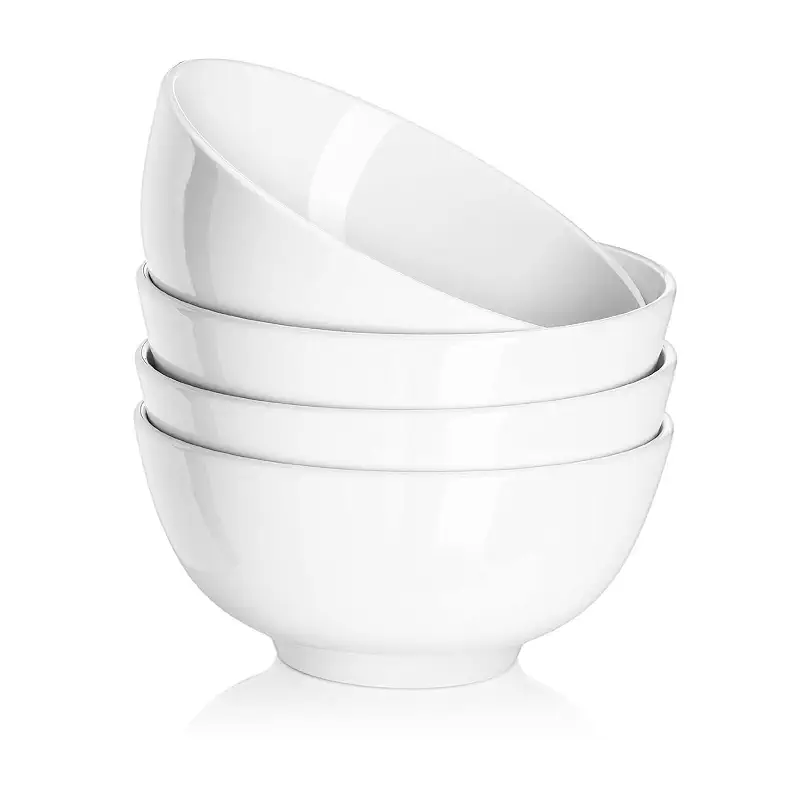
Dowan
DOWAN 22 OZ White Ceramic Bowls Set of 4 - Perfect for Soup Bowls for Kitchen, Cereal Bowl, Ramen Bowl, Microwave Safe for Oatmeal, Fruit,Salad and Rice Bowl - Dishwasher & Microwave Safe
4.7(12,954)
Solid 22-ounce porcelain bowls that deliver everyday reliability at an accessible price point.
Dowan's ceramic bowls trade some of the premium polish of higher-end options for straightforward durability at a lower cost. The 22-ounce capacity is practical: deep enough for soup and hearty breakfast portions, without tipping into serving-bowl territory. Buyers report that the porcelain feels heavier and sturdier than cheaper ceramic alternatives, and the smooth glaze resists scratching and holds up well through hundreds of dishwasher cycles.
The main appeal is value: you get four bowls in a set that can be supplemented affordably if you want more. Unlike the Corelle option above, these are true ceramic, which some kitchens prefer aesthetically. They stack neatly and take both dishwasher and microwave use in stride.
Two caveats matter here: porcelain retains heat aggressively in the microwave, and multiple buyers mention burning their hands reaching for bowls removed from high-power settings: this isn't unique to Dowan, but it's worth remembering. Second, the glaze can feel slippery when wet with soap, raising the risk of dropping them in the sink. They're also more prone to breakage from falls than vitrelle glass, so if durability through occasional mishaps is your priority, the Corelle option might better suit your household.
Pros
Honest value: four quality bowls at accessible price
Sturdy porcelain feels substantial without being heavy
Smooth glaze resists scratches and microwave staining
Dishwasher and microwave safe with straightforward care
Cons
Porcelain heats intensely in microwave; caution required
Wet glaze can be slippery; increased risk of dropping
Key features
22-ounce capacity (20-oz usable) in food-safe porcelain
Set of 4 bowls with smooth, anti-scratch glaze interior
Fired twice at 1280°C for hardness and chip resistance
Lightweight yet durable with stackable design for storage
Dishwasher, microwave, freezer, and oven safe
#3 Pick
Best Design Statement
Le Tauci
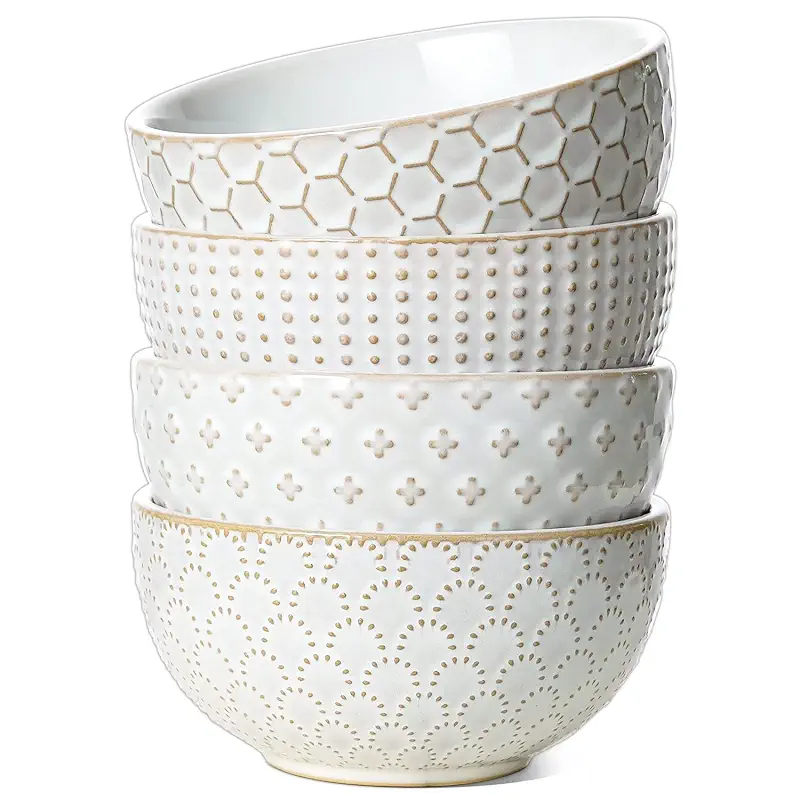
LE TAUCI Cereal bowls 26 oz, Ceramic Soup Bowl for Kitchen, Embossment Stoneware Bowl for Pho, Chip, Fruits, Salad, Noodle, Ramen, Suit For Housewarming - 6 Inch, Set of 4, Arctic white
4.8(1,600)
Embossed ceramic bowls that balance visual charm with practical size and durability for everyday use.
Le Tauci's 26-ounce bowls stand out because they look intentional on the table. The exterior embossment gives each bowl subtle texture and pattern variation, creating a farmhouse or artisan aesthetic that transforms an ordinary meal into something worth paying attention to. This design choice isn't purely visual: the texture provides a tactile grip advantage for users with arthritis or hand weakness, as multiple buyers noted. The inner surface stays smooth and glazed for easy cleaning.
Capacity-wise, 26 ounces hits a solid middle ground: substantial enough for soup or ramen without feeling like you're eating from a mixing bowl. The ceramic is chip-resistant and durable through regular dishwasher use, and buyers report that the bowls feel premium without the premium price tag of some artisan ceramics.
Compared to the Dowan bowls, the Le Tauci option costs slightly more but delivers stronger design identity and that tactile embossed feature. The trade-off: if minimalist aesthetics are your goal (as with the Corelle or Mora lines) this textured look may feel too rustic or busy. These bowls demand a kitchen where style matters as much as function.
Pros
Unique embossed exterior adds visual and tactile interest
Textured finish improves grip for arthritic or weak hands
26-ounce capacity balances portion size and practicality
Sturdy ceramic resists chips and holds up through regular use
Cons
Embossed design limits appeal in minimal or modern kitchens
Texture can trap dust if stored open; requires careful stacking
Key features
26-ounce capacity with 6-inch diameter, embossed stoneware exterior
Set of 4 bowls with smooth interior glaze, textured outer surface
Lead-free and cadmium-free ceramic clay, Amazon Climate Pledge Friendly
Dishwasher, microwave, oven, and freezer safe
Stackable design with embossment pattern that prevents sliding
#4 Pick
Best Premium Ceramic
MORA
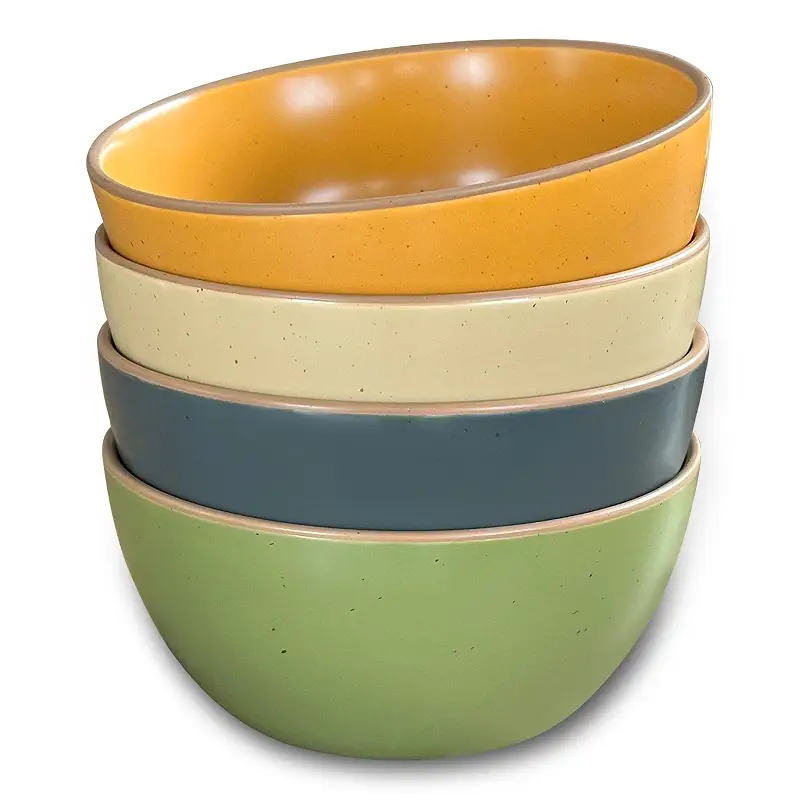
Mora Ceramic Artisan Matte Bowls For Kitchen 28oz - Bowl Set of 4 - For Cereal, Salad, Pasta, Soup, Dessert etc - Dishwasher, Microwave, and Oven Safe - For Breakfast, Lunch and Dinner - Safari Colors
4.8(2,929)
High-end ceramic bowls with crystallized matte glaze and reinforced clay that justify their premium positioning.
Mora's 28-ounce bowls represent the design-forward end of the cereal bowl spectrum. The artisan positioning isn't marketing hyperbole. Mora uses proprietary Paladin Clay (claimed to be 20% stronger than standard ceramic) and a crystallized matte glaze engineered to resist scratches from cutlery. The matte finish alone sets these apart visually; they feel refined without being fussy, and the safari color options (earth tones that shift slightly depending on lighting) appeal to buyers who think about how their dinnerware shapes the overall kitchen aesthetic.
The brand philosophy emphasizes mindful eating (each bowl carries the Latin name "Mora," meaning to pause) which resonates with the growing segment of buyers who see dinnerware as part of intentional living. The lead-free, all-natural glaze is a meaningful feature for health-conscious households. Build quality is genuinely excellent, and the bowls stack beautifully while feeling substantial in hand.
Where Mora differs from the budget-friendly Le Tauci option is refinement: the glaze is smoother, the weight more considered, and the color palette more curated. If you're comparing this to the Corelle option, Mora trades glass's heat-resistance for ceramic's visual warmth and the tactile satisfaction of eating from something that feels crafted. The cost is the real barrier: these bowls cost more upfront than any other option here, so they suit buyers who view dinnerware as a long-term investment in daily experience rather than a consumable.
Pros
Crystallized matte glaze resists scratches from cutlery
Paladin Clay construction claims 20% greater durability
Thoughtfully curated safari earth-tone color palette
Lead-free all-natural glaze with health-conscious focus
Cons
Premium price point limits accessibility for budget shoppers
Color shifts slightly with lighting; may not photograph as expected
Key features
28-ounce capacity with refined matte ceramic finish in safari colors
Set of 4 bowls made with proprietary Paladin Clay reinforcement
Crystallized glaze engineered to resist scratches under 1000 grams pressure
Dishwasher, microwave, freezer, and oven safe
U.S.-based customer service with free replacement guarantee on defects
#5 Pick
Best Large Capacity Value Set
Malacasa
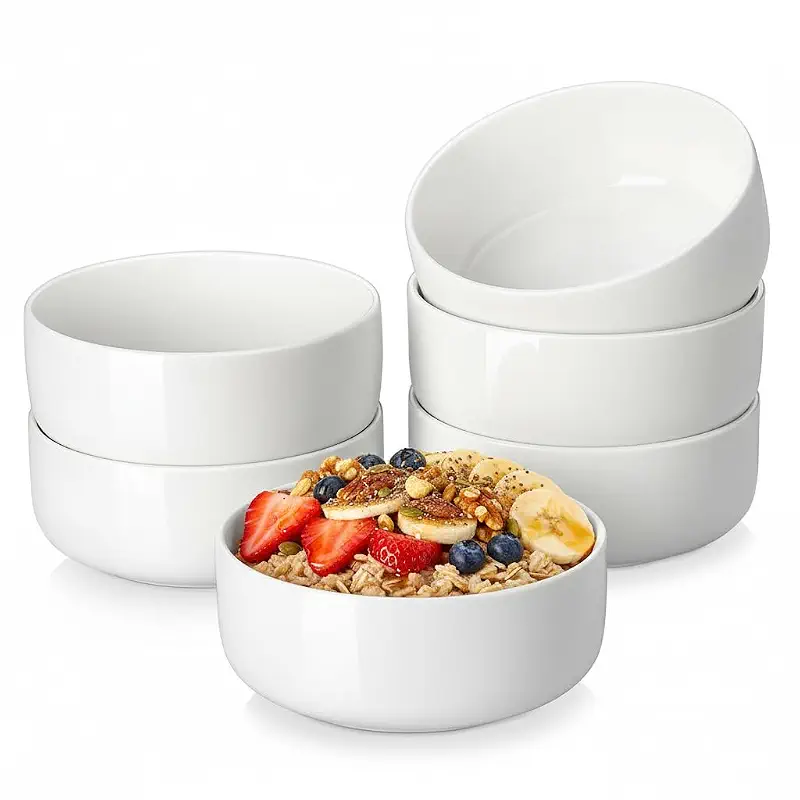
MALACASA 24 OZ Cereal Bowls Set of 6, Ceramic Soup Oatmeal Bowls, White | Porcelain Bowls for Daily Use, Kitchen Cereal, Soup, Oatmeal, Yogurt, Breakfast, Dishwasher Microwave Oven Safe, Series LUNA
4.6(791)
Six 24-ounce ceramic bowls with excellent stacking and smart design touches at a solid mid-range price.
Malacasa's LUNA series offers the largest set size here (six bowls instead of four) which translates to genuine value for households that entertain or have multiple children. The 24-ounce capacity slots perfectly between breakfast bowl and soup bowl, and buyers praise the thoughtful details: the unglazed terracotta-colored base prevents sliding (a small thing you notice immediately), and the upper rim stays cool enough to hold comfortably even after microwave use, unlike some ceramics that conduct heat aggressively.
The porcelain is fired at an exceptionally high temperature (2912°F versus standard 2000°F), which explains the durability buyers report through hundreds of dishwasher cycles. The GLIDECOAT glaze technology keeps staining and residue from accumulating, and the off-white Scandinavian aesthetic works in most kitchens without demanding a design commitment.
Where this set compares to the Le Tauci option: similar price, but Malacasa gives you six bowls versus four, and prioritizes understated elegance over embossed texture. The unglazed base is a practical advantage the Le Tauci lacks. One buyer mentioned an overly concave bottom that pools soup, but this was an outlier: most feedback emphasizes solid construction and practical size. If you're torn between ceramic versus glass bowls or sizing for your household, this set's quantity and thoughtful design make it a strong middle choice.
Pros
Six bowls per set maximizes value for larger households
Unglazed base prevents sliding without affecting table placement
Upper rim stays cool in microwave for safe handling
GLIDECOAT glaze resists staining and residue buildup
Cons
Concave interior bottom can pool liquids in some servings
Off-white color offers limited visual variety compared to other lines
Key features
24-ounce capacity (5.8-inch diameter) in ivory white porcelain
Set of 6 bowls fired at 2912°F for enhanced hardness
Unglazed terracotta base prevents sliding and table movement
GLIDECOAT glaze technology minimizes staining and food residue
Dishwasher, microwave, oven, and freezer safe with lead-free construction
How to Choose the Right Cereal Bowls
Material: Glass vs. Ceramic
The choice between ceramic versus glass bowls shapes durability, heat retention, and how the bowl feels in your hand. Vitrelle glass (Corelle's proprietary material) is non-porous, resists staining, and won't scratch easily: ideal if you want a bowl that looks brand-new for years. Ceramic and porcelain offer warmth and visual richness; they feel more artisanal and allow for pattern and texture, but require more careful handling and can retain microwave heat intensely. Glass bowls are lighter and stack more efficiently; ceramics feel more substantial and grounded. Consider your kitchen aesthetic, how often you use the microwave, and whether you prioritize storage space or design statement.
Capacity and Size
Cereal bowl capacity ranges from 20 to 28 ounces, and this matters more than it sounds. A 20-ounce bowl works for light breakfasts and snacks but feels cramped for soup or generous portions. A 26-28 ounce bowl handles ramen, salads, and hearty soups without spillage risk, though it may feel oversized for a simple cereal serving. Consider what you actually eat most often: if you rotate between breakfast cereals, soups, and salads, aim for the middle ground (24-26 oz). If you lean heavily toward soup or noodle dishes, go larger. The cereal bowl sizing guide helps you estimate portion fit before buying.
Durability and Daily Wear
Buyers report that higher-firing temperatures in ceramics (2912°F versus standard 2000°F) result in noticeably harder, longer-lasting bowls that resist chipping through regular dishwasher use. Vitrelle glass is exceptionally chip-resistant but will shatter catastrophically if dropped on hard floors. Glazes matter: smooth, well-applied glazes resist scratches and staining far better than rough or thin finishes. Look for mentions of chip-resistance testing and high-temperature firing in product specifications. If you have young children or a history of dropped dishes, prioritize chip-resistance; if durability through hundreds of dishwasher cycles matters most, choose ceramics with proven glaze integrity.
Design and Kitchen Integration
Minimalist white or off-white bowls blend into any kitchen and feel timeless; embossed or patterned ceramics make a design statement and work best in farmhouse, boho, or eclectic kitchens. Matte finishes feel more refined and hide fingerprints better than glossy glazes. If your existing dinnerware is plain and modern, a textured bowl might clash; if you're building a cohesive look, choose bowls that echo your plates and serving dishes. Premium ceramic lines with earth tones and artisan finishes justify their cost if aesthetics influence how often and how much you enjoy meals.
Storage and Stackability
Cabinet space shapes the practical choice more than many buyers realize. Vitrelle glass bowls stack with near-perfect efficiency, taking minimal shelf room. Ceramic bowls stack well too, but uneven stacking can create wobbling towers if the base isn't flat or the glaze inconsistent. Check product reviews for stacking complaints; many buyers specifically praise or criticize how neatly a set nests. If you're working with tight kitchen storage, the space savings from a highly stackable design can be a deciding factor between otherwise similar options.
Frequently asked
Why do ceramic bowls get so hot in the microwave while glass bowls don't?
Ceramic and porcelain absorb and conduct heat much more readily than glass, so they heat up along with the food inside. Vitrelle glass conducts heat slowly, keeping the bowl relatively cool even when the contents are steaming. If you microwave frequently, budget extra time for cooling or use oven mitts. Some ceramic brands engineer thicker walls or special glazes to slow heat transfer, but ceramic will always get hotter than glass in the microwave.
Are lead-free ceramic bowls actually safer than older dinnerware?
Yes. Lead leaches from poorly formulated glazes, especially when acidic foods (tomatoes, vinegar, citrus) sit in the bowl. Modern manufacturers explicitly test for lead and cadmium; products marketed as lead-free and cadmium-free have been verified safe. Older ceramic dinnerware from the 1980s and earlier may contain unsafe lead levels. If you're replacing vintage dishes, the upgrade to certified lead-free ceramics is a genuine health benefit for regular users.
Can I use cereal bowls in the oven, or just the microwave?
Most cereal bowls rated as oven-safe can handle temperatures up to 350-400°F, making them suitable for reheating in a conventional oven or warming before serving. Check the product specifications; bowls marked as oven-safe are always microwave-safe, but not all microwave-safe bowls can go in the oven. The material and glaze stability differ between the two heating methods, so don't assume: verify with the manufacturer.
How do I remove metal marks or scratches from ceramic bowls?
Metal marks (gray streaks from forks or spoons) are usually surface residue, not actual scratches, and come off with a soft cloth or gentle scrubbing. True scratches won't disappear, but they don't affect bowl function or safety. High-quality ceramics with crystallized or reinforced glazes are engineered to resist scratching under normal use, so metal marks should be rare if the glaze is well-formulated. If scratches appear early and frequently, the glaze quality may be lower than expected.
What's the best way to store cereal bowls to prevent chips and damage?
Stack bowls neatly in a cabinet with consistent support underneath each stack: avoid uneven shelving that creates wobbling. Place a soft cloth or paper towel between every few bowls if you're concerned about glaze-on-glaze friction. Keep stacks moderate in height (no more than 8-10 bowls) to reduce pressure and breakage risk from falling. Avoid overcrowding shelves, which forces hasty removal and increases drop risk. Ceramic bowls are more fragile than glass, so gentler handling and deliberate storage pay off over years of use.