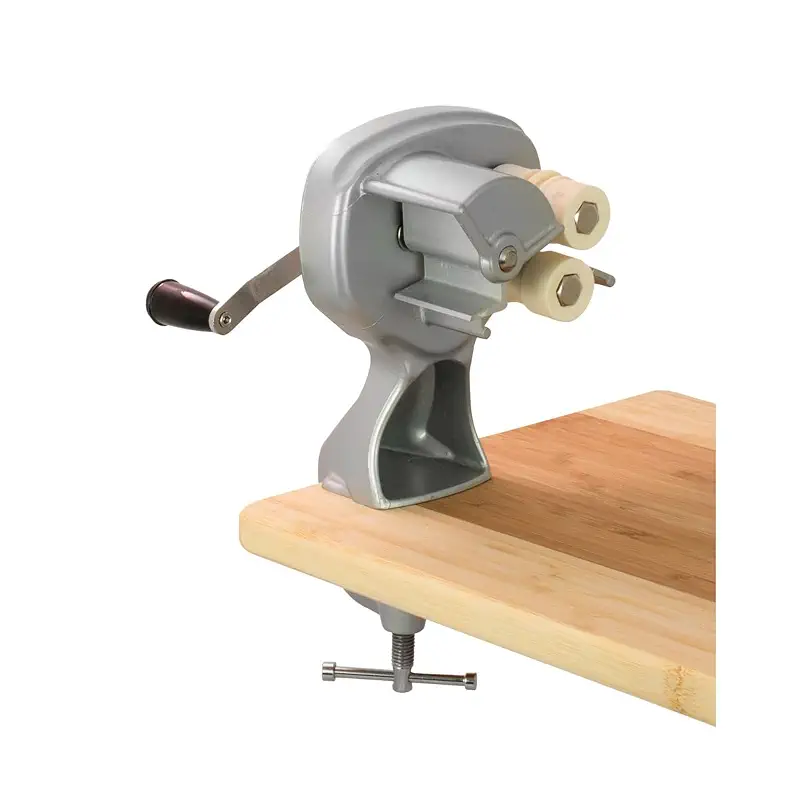
Ideal for: Experienced cooks and pasta enthusiasts who value durability and aren't intimidated by a learning curve.
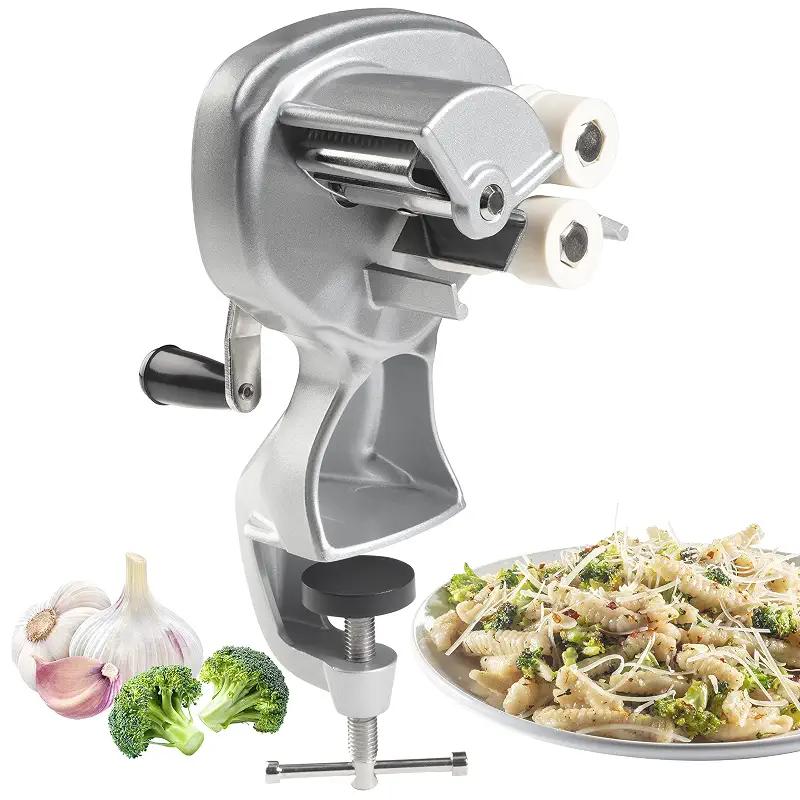
Fante's has been making pasta tools since 1906, and this machine carries that pedigree. The non-stick cast aluminum body and wooden rollers resist dough cling better than plastic alternatives, and the table clamp secures firmly to countertops up to 1.365 inches thick. Owners consistently report that dough consistency is the key (firm, not sticky) and when you dial that in, the machine produces uniform cavatelli with deep ridges that grip sauce. The handle does loosen over time and requires occasional retightening, but that's a minor maintenance task, not a flaw.
Where this machine excels is reliability. It has no moving parts that fail; the nonstick surface cleans easily with warm water and a soft brush. The learning curve exists (as it does with all cavatelli makers), but experienced pasta cooks find it faster than hand-rolling. Compared to newer plastic-heavy competitors, the Fante's prioritizes durability over aesthetic updates, which appeals to cooks who treat tools as long-term investments.
The footprint is compact, and the no-electricity design means it works anywhere: kitchen counter, RV, or table. If you're willing to invest modest time in getting your dough right, this machine rewards consistency with reliable results batch after batch.
Pros
Cast aluminum body resists corrosion and lasts decades
Wooden rollers reduce dough sticking compared to plastic
Sturdy table clamp holds firm during consistent cranking
Compact footprint fits small kitchens and portable setups
Cons
Handle nut loosens periodically and needs tightening
Requires firm dough; too-soft dough clogs and sticks
Key features
Non-stick cast aluminum construction with wooden rollers
Table clamp secures to countertops up to 1.365 inches thick
Hand-crank operation; no electricity required
Produces uniform ridged cavatelli with consistent sauce-holding texture
#2 Pick
Best for Authentic Italian Design
O'creme
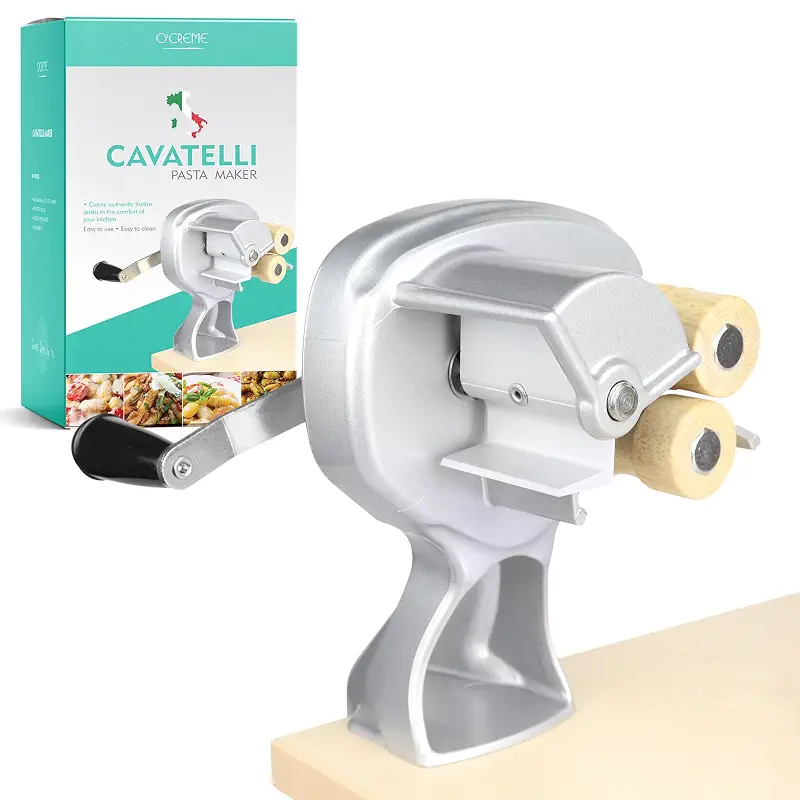
O'Creme Wooden Roller Cavatelli Pasta Maker – Original Italian Pasta Roller Machine – Non-Stick Coating Wooden Rollers Gnocchi Maker Pasta Attachment – Easy to Clean and Precision Cut
4.2(92)
Premium wooden roller machine with genuine Italian construction that delivers restaurant-quality pasta once you master technique.
Ideal for: Dedicated home cooks drawn to traditional Italian tools who enjoy the learning process.
O'creme's wooden roller cavatelli maker draws on traditional Italian design and build quality that appeals to purists. The natural wooden rollers and sturdy metal frame create a machine that feels built to last, and the non-stick coating helps pasta release cleanly. Owners who take time to understand dough moisture and strip thickness report it produces beautifully shaped cavatelli at impressive speed: faster than hand-rolling, even for experienced cooks.
The learning curve is real. Collection angle, dough dryness, and strip width all affect whether cavatelli separate cleanly or clump. But once you internalize those variables, the machine becomes almost effortless. One owner mentioned using it for fifty years before the original wore out, suggesting the build quality supports decades of use. The wooden rollers require gentler handling and air-drying rather than aggressive scrubbing, but that's a small price for equipment designed to outlast trends.
Compared to the Fante's, this machine appeals more to cooks who want a machine that feels crafted and works within a narrower dough spec. The clamp-and-crank rhythm is satisfying, and the results are undeniably professional. Expect to spend a few batches dialing in technique before you hit your rhythm.
Pros
Natural wooden rollers with non-stick coating reduce sticking
Premium metal frame and food-grade materials built for longevity
Produces consistently shaped cavatelli once technique is refined
Authentic Italian design appeals to pasta-making purists
Cons
Steep learning curve; dough consistency and width are critical
One review reported handle breaking after several weeks of use
Key features
Natural wooden rollers with non-stick coating and sturdy metal frame
Authentic Italian design for traditional pasta-making experience
Requires firm, well-floured dough for optimal separation
Hand-crank mechanism produces cavatelli in seconds per strip
#3 Pick
Most Popular Choice
CucinaPro
Cavatelli Maker Machine with Easy to Clean Rollers, Makes Authentic Gnocchi | Precision Cutter & Recipes Included, Homemade Pasta Set is Great for Italian Cooking, Kitchen Gift, Must Have Essential Tool
4.2(1,205)
The bestseller with over 1,200 reviews; handles high-volume batches smoothly once you dial in dough texture.
Ideal for: Home cooks making regular or bulk batches who want speed and don't mind refining their technique.
CucinaPro has sold more cavatelli makers than any other brand here, and the volume of feedback reveals a machine that works reliably when conditions are right. Owners report it excels at speed and volume: one reviewer doubled a recipe and cranked out enormous quantities in a short session. The wooden rollers (despite early marketing photos showing plastic) perform well, and many cooks appreciate that the machine moves quickly through dough if the moisture is correct.
The tradeoff: CucinaPro is less forgiving than the Fante's or O'creme if your dough isn't perfectly calibrated. Too stiff and it cuts rectangles instead of ridging them; too soft and it clogs. But the payoff is obvious in the reviews: once you hit the sweet spot, this machine is fast and fun to operate, especially with helpers. The nut holding the handle does work loose (a common note across several reviews), but a washer solves that permanently.
Where this differs from the Fante's is tolerance for beginner error. Fante's nudges you more gently back on track, while CucinaPro rewards precision. Where this differs from O'creme is price and American distribution. CucinaPro is easier to source and return. If you're making large batches regularly or cooking with kids, the speed and feedback loop make this compelling.
Pros
Proven design with strong owner satisfaction across high volume of reviews
Fast pasta production once dough consistency is correct
Wooden rollers provide smooth operation without sticking
Great for family cooking and batch preparation
Cons
Handle nut loosens with use and needs periodic tightening
Requires dough in narrow moisture range; too soft causes jamming
Key features
Wooden roller mechanism proven across 1,200+ customer reviews
Fast operation for high-volume pasta batches
Table clamp design for steady, hands-free positioning
Works best with dough kept on the drier side for clean separation
#4 Pick
Best for Versatility
Tagliapasta
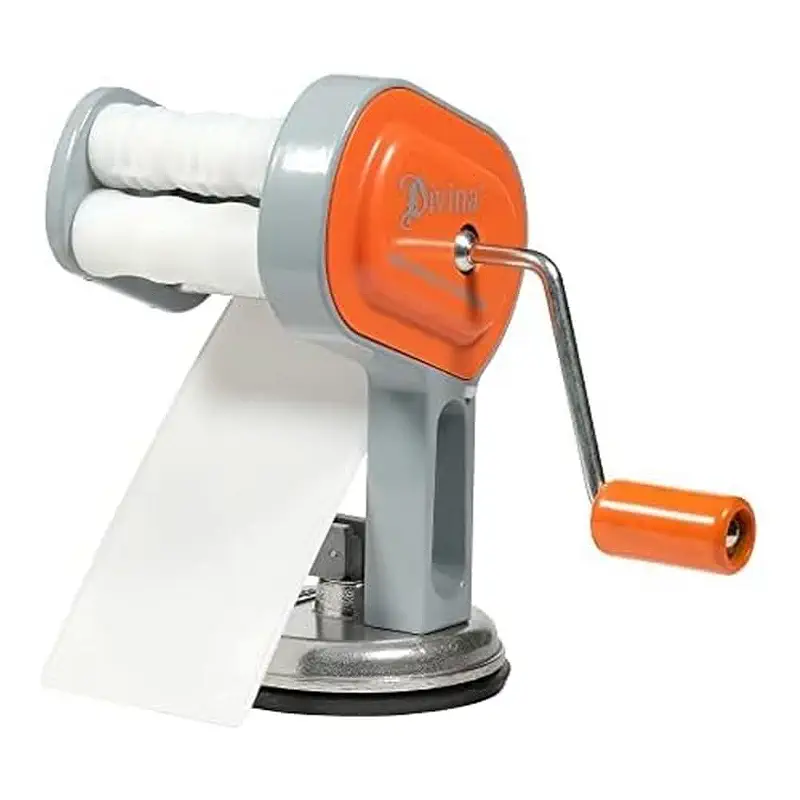
Tagliapasta Demetra-Divina machine for Sardinian cavatelli, orecchiette, gnocchi and gnocchetti
4.2(259)
Three-format Italian machine that makes cavatelli, orecchiette, and gnocchi, all from one robust aluminum frame.
Ideal for: Cooks wanting to explore multiple pasta shapes with one sturdy, Italian-made machine.
Tagliapasta's Demetra-Divina stands alone in offering three distinct pasta shapes from a single machine, making it the choice if you want variety without buying multiple tools. The suction-cup clamp (operated by a small lever) holds differently than traditional table clamps, and reviewers note it grips best on smooth, non-porous surfaces. The aluminum construction with food-grade plastic components feels sturdy, and the machine has earned consistent five-star reviews from Italian, German, and French owners: a sign of solid international build quality.
The dough spec is narrow: semolina flour at half the weight of water, kneaded 8-10 minutes, then rested 30 minutes. Owners emphasize not deviating from this ratio; too-soft dough defeats the machine. Once your dough is right, the crank turns smoothly and the shapes drop cleanly. The versatility appeals to cooks who want to explore orecchiette or Sardinian gnocchi without committing to separate machines, but it also means the design is optimized for none of the three shapes quite as tightly as a single-purpose machine would be.
Compare this to the CucinaPro if you're choosing between versatility and single-format specialization. The Tagliapasta is heavier and requires more counter space, but the suction-cup design works on any smooth surface your kitchen offers, not just clamped tables.
Pros
Makes three distinct pasta formats: cavatelli, orecchiette, gnocchi
Robust aluminum frame with food-grade plastic components
Suction-cup clamp works on smooth surfaces without table clamping
Consistent five-star international reviews suggest reliable durability
Cons
Suction cup requires smooth, non-porous surface for secure hold
Dough ratio must be precise; even slight moisture changes affect results
Key features
Three pasta formats in one machine: cavatelli, orecchiette, gnocchi
Food-grade aluminum and plastic construction made in Italy
Suction-cup clamp works on smooth countertops and work surfaces
Requires precise semolina-and-water dough ratio for best results
#5 Pick
Best Value Starter Set
bangminda
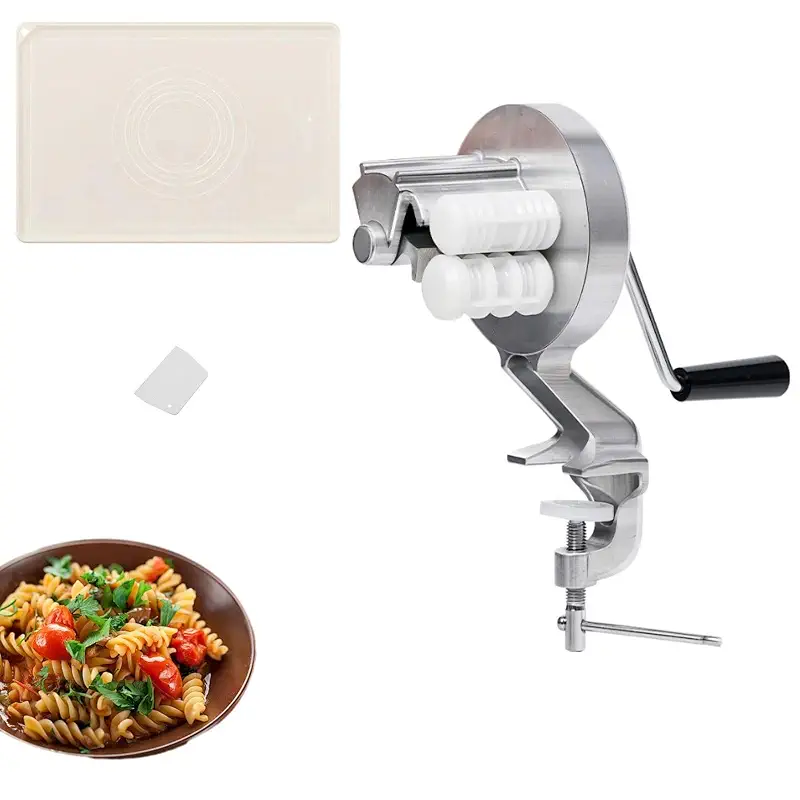
Cavatelli Maker Set, 3 Piece Pasta Set with Scraper and Mat, Makes Authentic Cavatelli and Shell Pasta
3.9(7)
Budget-friendly three-piece set with scraper and mat; entry-level performance with jerky cranking and plastic rollers.
Ideal for: Budget-conscious beginners testing the hobby without significant financial commitment.
Bangminda's cavatelli maker set arrives as a complete package (the machine, a dough scraper, and a kneading mat) which appeals to beginners who want everything in one box. The stainless-steel construction and dishwasher-safe parts promise low maintenance. The price point is significantly lower than the other machines here, making it a natural pick if you're skeptical about committing to the hobby.
The downside is evident in owner feedback: the plastic rollers and jerky cranking action don't match the smooth, reliable operation of the wooden-roller machines. One reviewer explicitly compared it unfavorably to machines used in Italy and then returned it. Another noted the action is not smooth and doubted the ability to operate as fast as traditional models. Without instructions included (owners had to consult YouTube), the beginner setup loses some advantage; you're on your own to figure out dough consistency and feeding technique.
Where this differs from the other machines is not just price but the build quality gap that opens up once you start using it. For someone testing whether they'll even enjoy making cavatelli, it's a reasonable starting point. But if you plan to use this weekly or make larger batches, one of the wooden-roller machines will deliver better results and less frustration. This is best treated as a trial machine, not a long-term investment.
Pros
Complete starter set includes scraper and kneading mat
Stainless-steel construction resists corrosion
Dishwasher-safe parts for convenient cleanup
Lowest entry price point of all options
Cons
Plastic rollers and jerky cranking feel less smooth than wooden alternatives
No included instructions; buyers must seek video guides online
Key features
Three-piece set with cavatelli maker, scraper, and silicone mat
Stainless-steel frame with food-grade, dishwasher-safe components
Hand-crank operation with plastic rollers and simple mechanism
Budget-friendly entry point for testing cavatelli-making interest
How to Choose a Cavatelli Maker
Four trade-offs that actually matter when matching a cavatelli maker to your kitchen.
Dough Consistency Matters Most
Every cavatelli maker you'll encounter (from budget models to premium Italian machines) depends entirely on dough texture. Too soft or sticky, and the dough clogs the rollers and refuses to separate. Too stiff, and the machine cuts rectangles instead of curling them into ridges. Most owners report success with a medium-firm dough that feels almost difficult to knead but becomes smooth after 8-10 minutes of work. Let your dough rest 30 minutes, then flour your rolled strips generously before feeding them through. This is the single biggest variable controlling success, so before you blame the machine, adjust your dough first.
Roller Material and Build Quality
Machines with wooden rollers and cast aluminum or metal bodies resist dough sticking far better than plastic-roller alternatives and last decades with minimal maintenance. Wooden rollers require gentle cleaning (air-dry rather than scrubbing hard), but they develop a seasoned patina over time and improve with use. Plastic rollers are cheaper upfront but feel jerky in operation and don't provide the same nonstick performance. If you plan to make cavatelli regularly, investing in a wooden-roller machine pays off within a few months of weekly use.
Clamp Style and Counter Fit
Traditional table clamps grip the edge of your work surface and hold the machine steady as you crank. They work on countertops, tables, or cutting boards between roughly 0.75 and 1.5 inches thick. Suction-cup clamps grab smooth, non-porous surfaces without table thickness restrictions but require a smooth surface to seal properly. Some machines tilt or angle differently depending on clamp style, affecting where cavatelli drop as they come out. Test your setup's height and angle before you commit: you want the pasta dropping into a waiting bowl, not bouncing across the counter.
Single Format vs. Versatility
Most cavatelli makers focus only on cavatelli (and sometimes gnocchi). A few machines offer orecchiette, smooth gnocchi, or ridged gnocchetti from interchangeable discs or rollers. If you're drawn to exploring different pasta shapes, the cavatelli maker setup guide will help you get started, and buying a multi-format machine saves counter space. But single-format machines are typically optimized better for their one shape, so you trade versatility for performance.
Speed and Volume Potential
Wooden-roller machines with smooth cranking action let you produce cavatelli faster than hand-rolling, turning a batch into a fun group activity. If you're making large quantities for freezing or feeding a crowd, pay attention to owner reports of how quickly the machine moves through dough strips. Plastic-roller machines tend to have jerky action that slows you down and tires your hand. Speed compounds over a 2-pound batch: smooth operation saves real time.
Frequently asked
Quick answers to the questions readers ask most.
Do I need special flour to make cavatelli?
Semolina flour is traditional and produces firm, slightly chewy cavatelli that hold sauce well. Many owners mix semolina with 00-grade or all-purpose flour for a softer texture. The key is dough consistency, not flour type: as long as your final dough is medium-firm and not sticky, you'll succeed. Whole wheat flour works too if you adjust hydration accordingly.
How do I prevent the dough from sticking to the machine?
Flour your dough strips generously before feeding them through. Keep unused dough covered with plastic wrap so it doesn't dry out or get tackier from air exposure. If dough does stick inside the rollers, stop cranking, carefully peel it back out, re-roll it into a fresh log, and continue. Wooden rollers resist sticking better than plastic; cast aluminum machines perform better than cheap steel.
What's the difference between a cavatelli maker and a gnocchi board?
A cavatelli maker automatically cuts and curls dough into ridged shells as you crank; you just feed it dough strips. A gnocchi board is a flat surface with ridges that you manually roll individual gnocchi across with a fork to create grooves and indent one side. A cavatelli maker is faster and produces uniform sizes; a gnocchi board gives you more control over individual shape but requires hand work for each piece. Some machines handle both tasks.
Can I freeze fresh cavatelli?
Yes. Lay freshly made cavatelli on a parchment-lined baking sheet, freeze for 2-3 hours until solid, then transfer to freezer bags for up to three months. Cook from frozen; add them directly to boiling salted water without thawing. Cooking time may be 1-2 minutes longer than fresh pasta. Freezing doesn't noticeably affect texture or flavor for cavatelli.
How often do I need to clean and maintain my cavatelli maker?
Clean your machine immediately after use with a soft brush or cloth under warm running water. Never immerse it fully, as water can seep into crevices and promote rust. Dry it thoroughly with a towel. Wooden rollers may develop a light flour patina, which is normal and actually helps prevent sticking over time. Check that the handle nut is snug every few uses; it naturally loosens with repeated cranking. A light coat of food-grade mineral oil on the frame once yearly keeps it protected.