Kitchen & Dining · Cookware
Best Cast Iron Griddle for Gas Stove: Top Picks for Home Cooks
Find the best cast iron griddle for your gas stove. Compare reversible models, premium options, and compact picks with expert guidance on heat retention and durability.
Affiliate disclosure: As an Amazon Associate I earn from qualifying purchases.
At a glance
3
Best for Outdoor GrillingUtheer
4
Best for Compact SpacesLodge
Detailed reviews
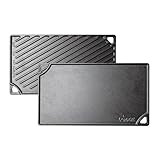
We'd reach for this model first if you're new to cast iron griddles or want a proven everyday performer. The 16.75-by-9.5-inch footprint spans most home stove burners, giving you room to cook a full breakfast or sear multiple steaks without crowding. Owners love that it comes pre-seasoned and ready to use straight from the box, though many take the extra step of seasoning it again to build a smoother nonstick surface faster. The reversible design lets you flip between the flat side for eggs and pancakes and the ridged side for burgers and vegetables, so you're not locked into one cooking style.
The weight (a solid characteristic of cast iron) means excellent heat retention and durability, but it also demands respect on glass-top stoves and care when carrying while hot. Buyers report that the center cools slightly faster than the edges, a quirk you learn to work around by placing slower-cooking items in the middle or letting it preheat fully over low heat before cranking the flame. One owner noted corner tipping on uneven burner grates; a folded piece of foil under the edge solved it. Compared to the Pro-Grid model below, this one trades a bit of cooking surface for a lighter footprint and lower entry cost, making it the smarter pick if you have limited counter and storage space.
Cleanup is straightforward if you do it while the griddle is still warm: scrape with a metal spatula, wipe with an oiled paper towel, and you're done. The more you use it, the better the seasoning develops, and owners consistently report that foods stop sticking after just a few uses.
Pros
- Reversible flat and ridged surfaces expand cooking options
- Excellent heat retention and even cooking across surface
- Pre-seasoned and ready to use right from box
Cons
- Heavy cast iron requires careful handling on glass cooktops
- Center zone runs slightly cooler than the edges during cooking
Key features (4)
- Reversible dual-sided design: flat griddle and ridged grill surface
- Spans two burners at 16.75 x 9.5 inches for ample cooking space
- Pre-seasoned cast iron with naturally improving nonstick finish
- Induction compatible and oven safe up to 500 degrees
If you cook for crowds or want the most surface real estate, the Pro-Grid is the step up in Lodge's lineup. At 20 by 10.5 inches, it covers more burner space and gives you separate cooking zones (one end hotter than the other) which owners actively use to their advantage. A professional-caliber cook might sear a steak on the hot side while warming tortillas on the cooler end, all without moving to a second pan. The build quality is noticeably heavier and more substantial than the standard reversible model, and owners report that it heats more evenly across the entire surface when given proper preheat time.
One buyer with three years of ownership noted that the griddle is now so well-seasoned that nothing sticks to it, and cleanup takes only a quick brush with hot water. The ridged side's grooves do require a plastic scrubbing brush rather than a metal one if you care about preserving seasoning, and meaty dishes (burgers, steaks) leave more stuck-on bits that need attention. Where this trades off against the Best Overall pick is weight and stovetop real estate: you'll need a range hood running full blast to manage smoke when searing meats, and the size may overwhelm compact kitchens.
Compared to the budget Ewfen model, this Lodge commands a higher investment but delivers the superior seasoning, warranty backing, and heat distribution that justify the premium for daily users.
Pros
- Largest cooking surface: 20 x 10.5 inches for batch cooking
- Even heat distribution with separate hot and cool zones
- Professional-grade seasoning and durability that improves over years
Cons
- Heaviest option; requires careful handling and a sturdy stove
- Grooved side is more labor-intensive to clean than flat griddles
Key features (4)
- Extra-large 20 x 10.5 inch cooking surface with dual burner coverage
- Reversible grill and griddle sides with reinforced cast iron construction
- Lifetime limited warranty against manufacturing defects
- Traditionally seasoned with vegetable oil, PFAS and PTFE-free
This griddle stands apart because it's designed primarily for outdoor gas and charcoal grills rather than stovetops, making it the pick if you want to expand your grill's capability without buying a whole new cooktop. At 25 by 16 inches, it's sizably larger than the Lodge stovetop models and sits flat on most grill grates. The cast iron is pre-seasoned with a nonstick coating (a feature that separates it from traditional bare cast iron) and buyers highlight that it resists sticking even during a first use, something that takes weeks or months to achieve on Lodge's uncoated surface.
The three reinforced support ridges on the underside are meant to prevent the warping that can plague large griddles in high-heat situations, and early reviewers confirm it holds flat. One owner used it inside a 20-by-40 offset smoker over hot charcoal and reported even heat, tremendous heat retention, and no peeling or warping after multiple uses. The built-in grease trough is functional and makes cleanup easier than traditional skillets. However, a dissenting review flagged a critical issue: the nonstick coating appears to sacrifice heat retention compared to bare cast iron, and temperatures dropped dramatically when food was added, preventing proper searing. This suggests the nonstick surface may work best at moderate temperatures for breakfast items rather than seared meats.
If you use a rolling grill frequently or camp often, this is a solid choice; if you need true restaurant-sear performance on a stovetop, the bare-iron Lodge models deliver more reliably.
Pros
- Nonstick coating minimizes food sticking without seasoning buildup
- Reinforced base prevents warping under intense grill heat
- Detachable handles and grease trough for outdoor convenience
Cons
- Nonstick surface sacrifices some heat retention versus bare cast iron
- Sized for grills; not ideal for smaller home stovetops
Key features (4)
- Large 25 x 16 inch surface for outdoor grills and offset smokers
- Pre-seasoned cast iron with durable nonstick ceramic coating
- Three reinforced support ridges prevent deformation and warping
- Built-in grease trough with detachable side handles for transport
We'd choose this griddle if counter and storage space are at a premium, or if you live in an apartment where a two-burner griddle feels too ambitious. At 11 inches square, it's more maneuverable than the double-burner reversible models and handles most single-burner or smaller cooktop setups. Unlike the reversible models, this one is flat on both sides with no grill ridges, which means no grooves to scrub and a cleaner profile for everyday cooking. Owners rave about its performance on smash burgers, pancakes, grilled cheese, and even pizza crust, all with minimal sticking once seasoning develops.
The square shape is notably more efficient than round pans (you lose fewer corners and maximize surface area) and the low edges make it easy to slide a spatula underneath foods. One buyer moved up from a warped nonstick griddle and reported even heating and fast cleanup once they learned the cast iron care routine. The weight is manageable for most cooks, though buyers with arthritis or grip issues note that the heft becomes a concern. Where this differs from the reversible models is versatility: you get the griddle surface on both sides, so if you want grill marks, you'll need a separate pan or grill press. For a reversible griddle comparison and to understand which style fits your cooking style, consider how often you actually use the grill side versus the flat surface.
Compared to the Ewfen reversible model at the same price point, this Lodge trades reversibility for a more refined seasoning quality and longer track record of durability.
Pros
- Compact 11-inch square fits single burners and small cooktops
- Flat surface on both sides: no grooves to clean
- Square shape maximizes cooking surface versus round pans
Cons
- No grill ridges; requires a separate grill press or pan for char marks
- Heavy cast iron can be difficult for users with weak grip or arthritis
Key features (4)
- 11-inch square flat griddle fits single burners and compact kitchens
- Pre-seasoned cast iron ready to use, improves with each use
- Low spatula-friendly edges and assist handle for easy flipping
- Works on gas, electric, induction, grill, and campfire
If you're hesitant to invest heavily in cast iron or want to test whether griddle cooking fits your routine, this Ewfen model offers reversible versatility at a lower price point than the Lodge options. The 16.7-by-9.5-inch size and dual flat/ridged design mirror the Lodge Best Overall, and early buyers confirm that it heats evenly and performs well for smash burgers, cheesesteaks, and breakfast items. The cast iron is pre-seasoned and PFAS-free, ticking the same safety boxes as more expensive competitors.
However, a notable structural flaw emerged in reviews: the griddle features drainage holes on both sides, ostensibly to drain grease during outdoor grilling, but on a stovetop these holes let rendered fat drip directly onto your burners and cooktop. This design oversight is a significant frustration if you plan to use it indoors, and it's unclear from the product description whether the holes are present. One reviewer had to abandon indoor use for this reason. The griddle also lacks integrated handles, which some users find awkward when moving it hot from burner to oven. Build quality is sturdy and heat retention is respectable, and owners who used it outdoors or accepted the drainage limitation were satisfied with the cooking performance.
Where the Lodge Pro-Grid and reversible models have refined their designs over decades, this budget option hasn't fully solved the indoor-use puzzle. For cleaning up residual debris and grease stains between uses, a top griddle scraper keeps the surface smooth and extends seasoning life. If you plan to use this exclusively outdoors on a gas grill, it's a reasonable bargain; for stovetop cooking, the drainage holes make the Lodge reversible griddle a wiser long-term choice.
Pros
- Reversible flat and ridged surfaces at an entry-level price
- Sturdy cast iron with even heat distribution
- Pre-seasoned and ready to use out of the box
Cons
- Drainage holes leak grease onto stovetops during indoor cooking
- No integrated handles; difficult to move safely when hot
Key features (4)
- 16.7 x 9.5 inch reversible griddle and grill surface
- Pre-seasoned cast iron, PFOA and PTFE-free construction
- Spans two burners on gas stoves, compatible with induction
- Drainage holes designed for outdoor grilling (unsuitable for stovetops)
How to Choose a Cast Iron Griddle for Gas Stove
Size and Burner Fit
Measure your stovetop burner spacing before ordering. Most home gas stoves have burners spaced 4 to 5 inches apart, and double-burner griddles (around 16–20 inches long) bridge that gap. If you have a compact cooktop or primarily cook for one or two people, an 11-inch square griddle like the Lodge square model fits a single burner and tucks away easily. Larger griddles offer more cooking surface but demand more counter real estate and careful handling on glass-top stoves. Consider whether your everyday cooking leans toward batch pancakes and sausage (bigger is better) or solo omelets and quesadillas (compact wins).
Reversible vs. Flat: Cooking Style Matters
A reversible griddle comparison shows that dual-sided designs (flat on one side, ridged on the other) give you grill marks and flat-top versatility in one tool. However, the ridged side requires more cleaning effort because grooves trap grease and fond. If you primarily cook pancakes, eggs, and seared meats without fussing over char lines, a flat griddle like the Lodge square is simpler to maintain and just as effective. Reversible models shine if you frequently entertain and want the option to sear steaks and warm tortillas simultaneously on different zones.
Heat Retention and Even Cooking
Cast iron's superpower is heat retention, but thickness and quality matter. Heavier griddles with reinforced construction (like Lodge's Pro-Grid and standard reversible models) retain heat longer and cook more evenly across the surface. Lighter or thinner options may struggle to maintain temperature when you add cold food, leading to stewing instead of searing. Allow 10–15 minutes of preheat time over medium-low heat to ensure the entire surface reaches temperature evenly and to prevent food from sticking during the first use.
Seasoning, Care, and Durability
Lodge cast iron arrives pre-seasoned with vegetable oil and is ready to cook on immediately, though many owners season it again by baking it in a 450-degree oven a few times. The more you cook with it, the smoother and more nonstick the surface becomes. Never soak it; wash with hot water and a brush while warm, dry immediately, and apply a light coat of oil. Cast iron is durable enough to pass down generations if cared for properly. Nonstick coatings like those on the Utheer griddle eliminate some maintenance but may sacrifice heat retention: bare cast iron seasoned naturally delivers superior sear crust for steaks and burgers.
Our picks at a glance
3
Best for Outdoor GrillingUtheer
4
Best for Compact SpacesLodge
Frequently asked
Can I use a cast iron griddle on a glass-top stove?
Yes, but with care. Cast iron is heavy and can damage glass if dragged or dropped. Lift and slide it gently, or pivot it slowly across the surface. Avoid placing it on the edge between burners where uneven support can crack the glass. Many owners cushion the transition with oven mitts and move slowly. If your griddle rocks on uneven burner grates, slide a thin folded piece of foil under one edge to stabilize it.
How do I prevent food from sticking to a new cast iron griddle?
Sticking is normal on new cast iron until seasoning develops. Use a small amount of oil or butter, preheat thoroughly over medium-low heat for 10–15 minutes, and avoid moving food until it has browned and released naturally. For pancakes and eggs, many owners let the surface heat until water beads and evaporates instantly. As you cook and care for the griddle over weeks, the seasoning layer thickens and sticking diminishes dramatically. Most owners report that foods stop sticking after just a few uses.
Is cast iron safe to cook on without special seasonings or oils?
Completely safe. Cast iron is made from iron and oil: no synthetic coatings, PFOA, PTFE, or PFAS. Lodge seasons all its griddles with vegetable oil at the factory, making them ready to use straight from the box. Any cooking oil works for maintenance seasoning. The more you cook, the darker and smoother the natural seasoning becomes, and it only improves over time. Unlike nonstick cookware, cast iron becomes safer and better the longer you own it.
What's the difference between a reversible griddle and a flat griddle?
A reversible griddle has two cooking surfaces (flat on one side and ridged on the other) letting you sear steaks and flip pancakes without switching pans. A flat griddle has no ridges, so cleanup is faster and there are no grooves to scrub, but you can't make grill marks without a separate grill press. Reversible models offer more versatility; flat models simplify maintenance. Choose based on whether you actually use both surfaces or prefer straightforward single-style cooking.
How much space do I need for a two-burner griddle?
A standard two-burner reversible griddle spans roughly 16–20 inches long and 9–10 inches wide, so you'll need two adjacent burners with at least 4–5 inches of spacing between them. Check your stove's burner layout before ordering. If space is tight, a single-burner compact griddle (11 inches square) fits one burner and stores easier. Most owners find a two-burner griddle fits naturally on home gas stoves, but apartment and condo kitchens may be constrained.