Verdict, analysis, and key features for each pick.
#1 Pick
Best Overall
EanOruus
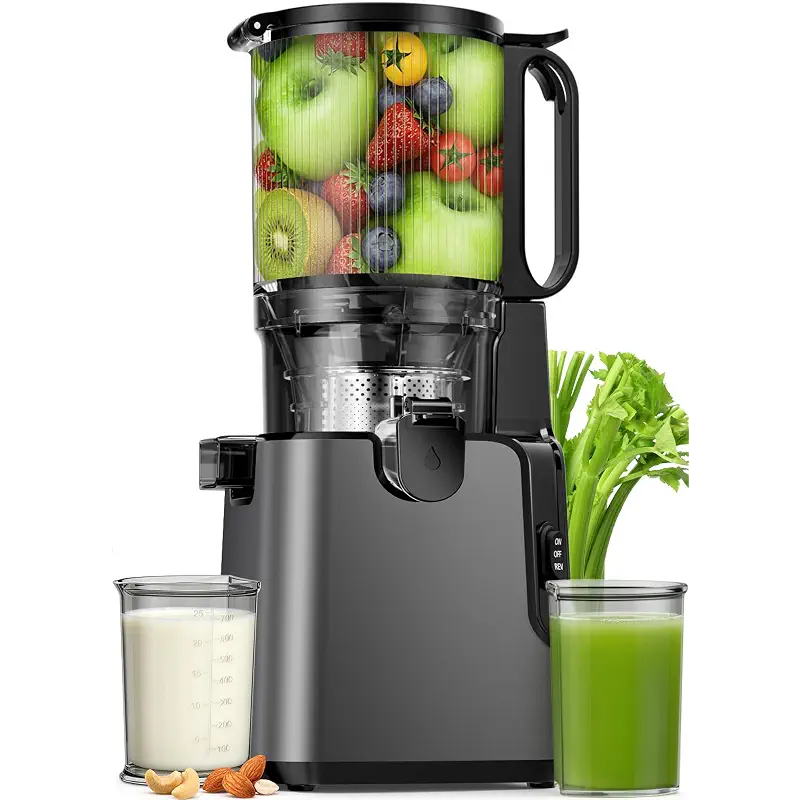
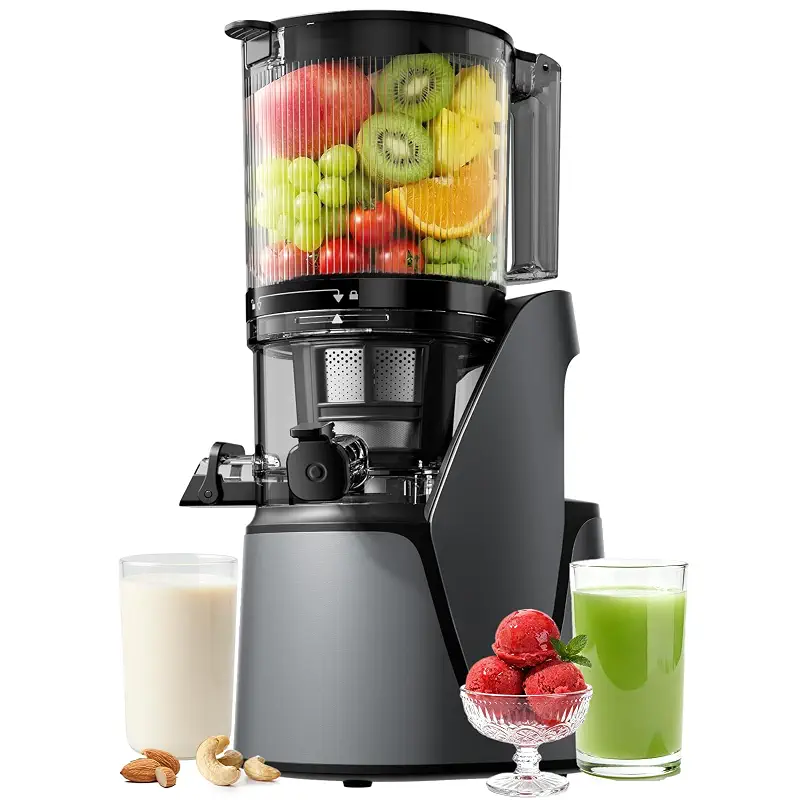
EanOruus Juicer Machines, 3-in-1 Cold Press Juicer, Premium Gray | Makes Juice, Nut Milk & Sorbet, 6.5" Extra Large Chute, 100oz Large Capacity, AC Motor
4.4(2,580)
Cold press machine with large capacity and versatility; handles carrots beautifully while offering nut milk and sorbet modes.
Ideal for: Home juicers who make fresh juice daily and want nut milk and sorbet options without premium-tier pricing.
The EanOruus cold press delivers what serious home juicers want: a 6.5-inch feed chute that swallows whole carrots, an AC brushless motor engineered for daily use, and dual strainers that shift between juice extraction and nut milk creation. Owners consistently report dry pulp, minimal foam, and juice quality that rivals machines costing twice as much. The 100-ounce hopper means you can load multiple days' worth of produce at once, a real asset for meal-prep routines.
Early users did flag a locking assembly that required a couple of firm presses to engage fully on first use, and one detailed review caught a squeaking sound during initial operation that resolved after the machine settled in. These aren't widespread patterns: most owners report quiet, seamless juicing after a short break-in. The plastic smell mentioned in initial unboxing faded with washing.
Compared to the Breville Juice Fountain Plus, this machine prioritizes nutrient retention and capacity over lightning-fast operation, making it the pick for anyone who values cold-pressed quality and doesn't mind the slightly slower 55-RPM approach.
Pros
6.5-inch chute accepts whole carrots without cutting
Produces consistently dry pulp with excellent juice yield
Dual-function strainers for juice, nut milk, and sorbet
Cons
Assembly locking may need firm engagement on first uses
Cold press speed slower than centrifugal machines
Key features
Cold press extraction at 55 RPM with AC brushless motor
6.5-inch wide feed chute for whole carrot processing
100-ounce hopper capacity for meal-prep efficiency
Interchangeable strainers for juice, nut milk, and sorbet
Minimal foam production with dry pulp output
#2 Pick
Best for Speed
Breville
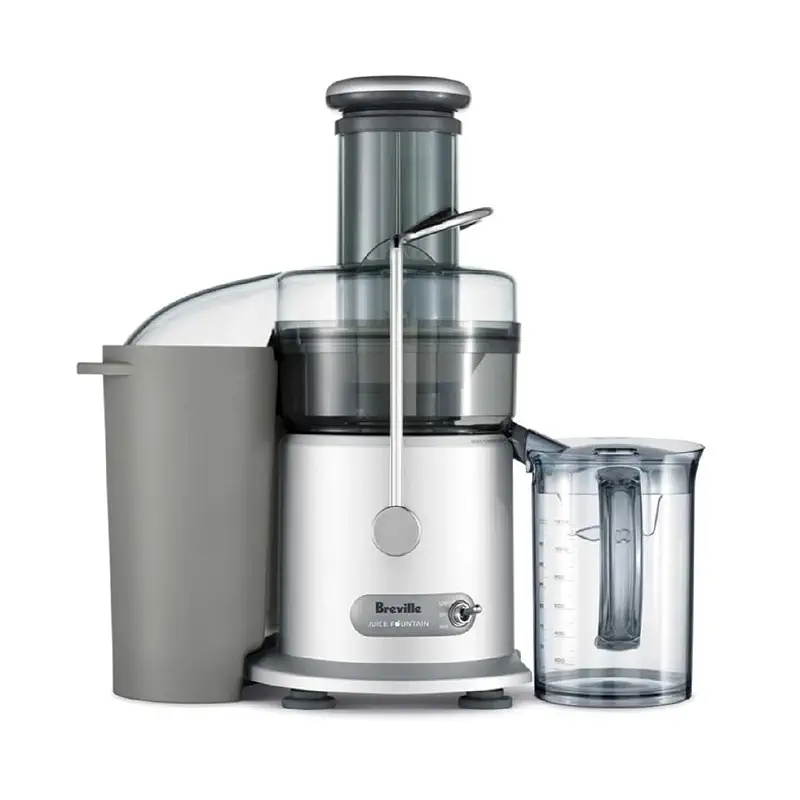
Breville JE98XL Juice Fountain Plus, Silver | Juice whole fruits and vegetables with dual-speed centrifugal juicer with a 850W motor and 3-inch wide chute
4.5(16,769)
Fast centrifugal juicer with proven durability; decades-old design refined for quick carrot and vegetable extraction.
Ideal for: Daily juicers who want results in minutes and appreciate straightforward design over multifunctionality.
The Breville Juice Fountain Plus is built on a philosophy: get the juice out fast and keep the machine simple. Its titanium-reinforced disc and Italian micro-mesh filter spin at speeds that deliver juice in seconds, making it the choice for people who don't want to watch the machine work. The 3-inch wide chute fits whole apples and bunches of celery, though large carrots may still need a quick halve. The integrated froth separator actually works: owners specifically praise the reduction in foam when juicing citrus and softer fruits.
This machine's longevity is documented. The lengthy buyer reviews include a owner of a 40-year-old ACME juicer (the design ancestor) who found the Breville faster, easier to clean, and capable of handling the volume needed for a sustained juice cleanse. Its pulp container holds significantly more than older models, and there's a warning light that tells you when it's time to clean. The learning curve is real (assembly and feeding technique matter) but once you understand the machine, it runs reliably.
Where the EanOruus takes the cold-press approach, the Breville sacrifices some nutrient preservation for speed and simplicity. If you're juicing to start your morning, not optimizing every micronutrient, this is faster.
Pros
Produces juice in seconds with 850W motor power
Pulp separator keeps machine running longer between cleanups
Built-in froth separator reduces foam effectively
Proven durability with decades of design refinement
Cons
Centrifugal speed generates heat that may affect nutrient content
Learning curve on assembly and produce-feeding technique
Key features
850W motor with dual-speed control for hard and soft produce
3-inch wide chute for minimal prep of whole carrots
Titanium-reinforced disc with Italian stainless-steel mesh filter
Ideal for: Beginners testing their juicing habit and home cooks focused on carrots, apples, and citrus over greens.
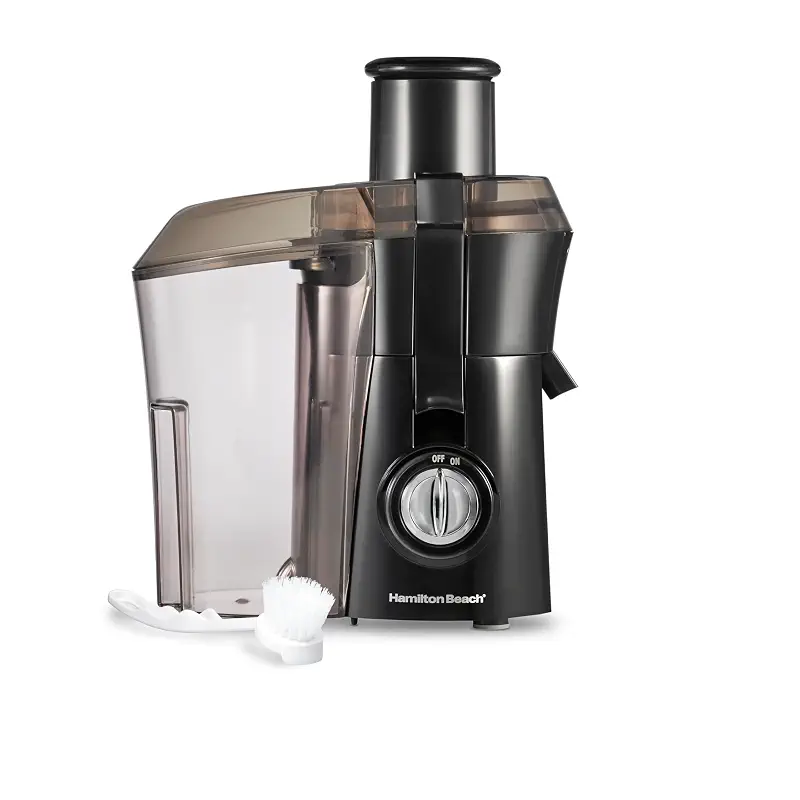
The Hamilton Beach Centrifugal Juicer is positioned as the accessible entry point, and it delivers on that promise. An 800-watt motor, 3-inch feed chute, and an 80-ounce pulp bin give you essentially the same working principles as far pricier machines. The three-year warranty backs the quality claim. Dishwasher-safe parts (pulp bin, juice bowl, lid, pusher) mean cleanup is genuinely low-friction, something that directly affects whether people actually stick with juicing long-term.
Buyers comparing this to much more expensive machines report surprisingly little difference in daily results, especially for carrots and celery. One reviewer who owned an older Breville noted this Hamilton Beach works much better for similar or lower cost. The wide mouth and stable footprint make it reliable on kitchen counters. The trade-off is the same one all centrifugal machines accept: the high-speed spinning generates heat and oxidation, so the juice won't last as long in the fridge as cold-press alternatives.
Like the Ypone masticating model below, this machine won't extract as much juice from leafy greens: carrots and harder produce are where centrifugal shines. If you're primarily juicing root vegetables and citrus, not doing intensive green-juice cleanses, this machine justifies its lower cost.
Pros
800W motor handles hard carrots and apples efficiently
3-inch chute reduces prep time significantly
Dishwasher-safe parts make ongoing cleanup easy
Three-year warranty covers manufacturing defects
Cons
Centrifugal extraction introduces heat and oxidation
Produces wetter pulp than masticating alternatives
Key features
800-watt motor with extra-large 3-inch feed chute
80-ounce pulp bin capacity for extended juicing sessions
Dishwasher-safe removable parts for hassle-free cleanup
Stainless-steel micro-mesh filter for pulp separation
Compact footprint with stable rubber base
#4 Pick
Best for Nutrient Preservation
Ypone
Juicer Machines with 5.8" Large Chute, 2-in-1 Cold Press Juicer for Whole Vegetables Fruits 400W, Masticating juicer Easy to Clean Juice Extractor Machine for Making Nut Mike, Juice, Premium Gray
4.3(2,836)
Masticating cold press with 55-RPM slow extraction; maximizes juice yield and nutrient retention from carrots and leafy greens.
Ideal for: Regular juicers prioritizing nutrient preservation and juice shelf-life over speed; works well for carrot, celery, and green-juice routines.
The Ypone represents the sweet spot for buyers who want cold-press benefits without Nama or Hurom pricing. Its 5.8-inch feed chute is the widest in this lineup: whole carrots, apples, and celery stalks fit easily, which translates to genuine time savings during prep. The 400-watt motor runs at 55 RPM, the same slow-squeeze-and-grind approach used by premium models. Dual 0.3mm mesh strainers reduce clogging and leave minimal residue, and owners report juice yields approaching 99%, with pulp coming out notably dry.
The machine runs quietly (one owner contrasted it favorably to their previous blender) and breaks down into just three main parts, making cleanup genuinely faster than competitors with more complex assemblies. Buyers who moved from Ninja and NutriBullet juicers specifically noted how much easier cleaning became. The frosted titanium gray design looks premium on counters without the premium price tag.
Where the Hamilton Beach centrifugal machine excels at speed, the Ypone trades those seconds for nutritional preservation. One review noted the pulp is drier than their previous juicer, confirming the extraction efficiency. A handful of reports in other languages mentioned the pulp being wetter than expected or the machine being noisy, though the majority describe it as quiet and efficient. This is the pick if you're juicing daily greens and want your juice to taste fresher longer in the fridge.
Pros
5.8-inch feed chute is largest in this group
55-RPM cold press avoids heat damage to nutrients
Produces dry pulp indicating high juice extraction
Runs quieter than comparable centrifugal machines
Cons
Slower operation requires more time per batch than centrifugal
Some reports of wetter pulp in occasional units
Key features
Masticating motor at 55 RPM for minimal heat and oxidation
5.8-inch wide feed chute for whole vegetable processing
Dual-layer 0.3mm mesh strainers reduce clogging
400-watt motor with three-speed operation settings
Easy-clean design with removable mesh and brush included
#5 Pick
Most Versatile with Speed Control
Juilist
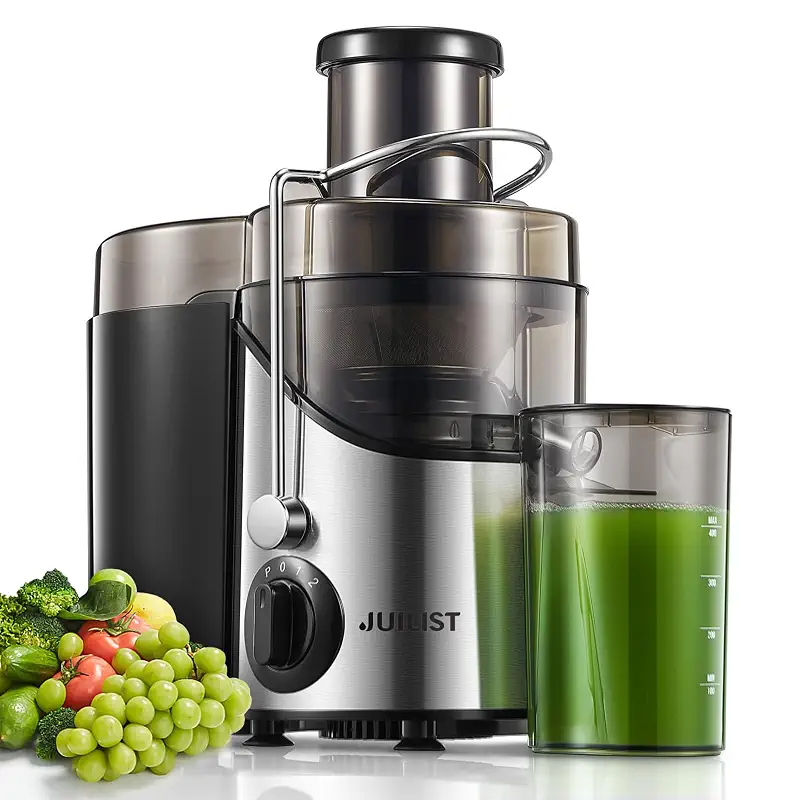
Juicer Machines, Juilist 3" Wide Mouth, Max 800W, 3-Speed 400W Easy-Clean | Max power 800W
4.3(6,521)
Three-speed centrifugal juicer optimized for varied produce; adjustable speeds let you match machine power to carrot type and ripeness.
Ideal for: Regular carrot juicers who want speed-control flexibility and don't want to compromise on motor power or juice yield.
The Juilist brings granular control to the centrifugal juicer category. Its three-speed system (low for soft fruits, high for carrots and celery, pulse for maximum) lets you tailor extraction to what you're juicing, not the other way around. The 800-watt motor reaches maximum speed quickly, and Juilist claims a 26% juice-yield advantage over competing 800W machines based on lab testing: that's meaningful when you're processing pounds of carrots weekly.
Owners consistently report strong carrot performance. One reviewer who uses it primarily for carrots noted the motor handles the task without struggle, a direct contrast to past machines whose motors burned out. The non-slip suction cups keep the machine stable during high-speed operation, and the visible window lets you monitor progress. Parts are dishwasher-safe, and most buyers say cleanup is straightforward despite the number of pieces.
Compared to the Hamilton Beach, the Juilist adds flexibility through its speed settings without proportionally raising price. However, it remains a centrifugal machine, so nutrient heat and oxidation concerns apply the same way they do to the centrifugal versus cold press juicers debate. The trade-off is speed and control versus the slow-extraction approach the Ypone uses. If you juice carrots almost daily and want to adjust technique based on freshness, this machine's three speeds give you that option.
Pros
Three-speed settings optimize extraction for different produce types
Claims 26% higher juice yield than competing 800W models
Non-slip suction cups stabilize machine during operation
Visible window shows juicing progress in real time
Cons
Centrifugal design still introduces heat and oxidation
More parts to disassemble and clean than simpler models
Key features
800-watt maximum power motor with three adjustable speeds
3-inch wide feed chute for whole carrot and apple processing
Stainless-steel cutting disc with micro-mesh filter basket
Double safety lock and automatic overheat protection
Visible window and compact design for counter visibility
How to Choose the Right Carrot Juicer
Four trade-offs that actually matter when matching a carrot juicer machine to your kitchen.
Cold Press Versus Centrifugal: Speed and Nutrition Trade-Offs
The centrifugal versus cold press juicers decision is the first fork in the road. Centrifugal machines (Breville, Hamilton Beach, Juilist) spin at high speed, extracting juice in seconds but generating heat that can degrade heat-sensitive vitamins. Cold press and masticating models (EanOruus, Ypone) squeeze produce slowly at 55 RPM, preserving more nutrients and creating juice that stays fresh longer in your refrigerator. If you juice daily and care about juice lasting multiple days, cold press wins. If you want juice ready before your coffee finishes brewing, centrifugal is faster. Most casual home juicers find centrifugal machines perfect for carrots and citrus; daily green-juice devotees lean toward cold press.
Feed Chute Width and Prep Time
The difference between a 3-inch and 6-inch feed chute translates directly to prep work. The Ypone's 5.8-inch and EanOruus's 6.5-inch chutes swallow whole medium carrots without cutting; the Breville, Hamilton Beach, and Juilist at 3 inches require at least a quick halve. If you juice three or four times a week, that small daily reduction in knife work adds up. For occasional juicers, it's negligible. For daily routines, a wider chute becomes a quality-of-life feature worth paying for.
Capacity and Cleanup Complexity
The EanOruus's 100-ounce hopper is built for meal-prep batches; you load once and fill multiple glasses. The Ypone's 5.8-inch chute and large capacity also support batch juicing. Smaller-capacity machines (Breville, Hamilton Beach, Juilist) work better for single or couple servings. Equally important: more parts mean longer cleanup. The Ypone and Hamilton Beach break down into fewer pieces and have simpler filters than the Breville or Juilist. If cleanup friction stops you from juicing regularly, simpler assembly matters more than saving two minutes per batch.
Motor Power and Carrot Handling
All five machines handle carrots, but motor wattage and design affect ease. The Juilist's 800-watt motor with three-speed control lets you dial in power for different carrot densities. Cold-press motors (EanOruus, Ypone at 400 watts) work slower but more thoroughly, never overheating. Centrifugal 800W machines (Hamilton Beach, Breville, Juilist) power through hard produce instantly. For exclusively carrot and apple juicing, 800W centrifugal is overkill; for mixed produce including fibrous greens and dense roots, the extra power prevents choking and burnout.
Frequently asked
Quick answers to the questions readers ask most.
Will any of these machines clog when juicing carrots?
Cold-press machines (EanOruus, Ypone) are engineered to handle tough fibers and rarely clog; their slow speed and grinding action work carrots without strain. Centrifugal models can handle carrots fine, but feeding at an even pace and not overstuffing the chute prevents backup. The Ypone's dual-layer mesh strainers specifically reduce clogging risk. If you're juicing exclusively carrots and celery, clogging isn't a realistic concern with any of these five machines.
How much pulp ends up in the juice?
Cold-press machines (EanOruus, Ypone) leave almost no pulp in the juice; owners report foam-free, smooth results. Centrifugal machines (Breville, Hamilton Beach, Juilist) do separate most pulp, though a small amount may appear in the juice, especially when juicing leafy greens. The Breville's froth separator reduces visible foam. If you dislike any texture in your juice, cold press is the safer choice.
Can these machines make nut milk or sorbet?
Only the EanOruus explicitly includes interchangeable strainers for nut milk and sorbet creation. The Ypone can technically make nut milk if you modify technique, though it's not designed for it. All five are pure juice extractors by primary function. If nut milk or sorbet is important to you, the EanOruus's versatility justifies its higher price.
How long does fresh carrot juice stay good in the fridge?
Cold-press juice (EanOruus, Ypone) stays fresh 72 hours or longer because the slow extraction avoids oxidation. Centrifugal juice (Breville, Hamilton Beach, Juilist) oxidizes faster and typically tastes best within 24 hours. If you're batch-prepping a week's worth, cold press preserves flavor and nutrition noticeably longer. Many owners who switched to cold press cite improved taste and fridge longevity as the deciding factor.
Are these machines loud?
Centrifugal machines are inherently louder than cold-press models because high-speed spinning is noisier. Owners describe the Breville and Hamilton Beach as about as loud as a vacuum cleaner: tolerable for a few minutes. The Juilist is similarly loud but fans praise its acceptable noise for a centrifugal. Cold-press machines (EanOruus, Ypone) run much quieter, with owners often comparing them favorably to blenders. If early-morning juicing matters and noise sensitivity is high, cold press wins.