Kitchen & Dining · Small
Best Burr Grinder for AeroPress
Find the best burr grinder for AeroPress brewing. Compare top manual grinders with consistent grinding, portability, and precision for fresh coffee.
Affiliate disclosure: As an Amazon Associate I earn from qualifying purchases.
At a glance
2
Best for Pour-Over EnthusiastsKINGrinder
3
Best Budget-Friendly PickJavaPresse
4
Best for Minimal EffortRsoilch
5
Best for Precision AdjustmentsCeving
Detailed reviews
The AeroPress Manual Coffee Grinder arrives pre-tuned specifically for AeroPress brewing, which removes guesswork from your first cup. The titanium-coated conical burrs and all-metal construction feel genuinely robust in hand, and owners consistently praise how the magnetic crank clicks into the grinder body for compact travel. That precision matters: with 60 grind settings versus competitors offering 40 or 18, you get finer incremental control to chase the exact texture each bean demands.
The design trades speed for quality. Hand-crank effort is notably higher than some alternatives, and if you're grinding for 30g doses multiple times daily, your forearm will feel it. But that resistance comes from the grinder's refusal to compromise on burr pressure and consistency. Compared to budget models, this keeps fines to a minimum and produces more uniform particle size across a full hopper.
Owners do flag occasional durability concerns around the handle connection after weeks of heavy use, and the cost is steep. If your main concern is making the best possible cup from an AeroPress and you brew once or twice daily, this investment pays back in cup quality. For casual weekend brewers or anyone who values portability above all, the Rsoilch or Ceving models may offer better value.
Pros
- Sixty adjustable grind settings for precise dialing in
- Italian-made titanium-coated burrs deliver exceptional consistency
- Magnetic handle stores inside AeroPress for true portability
- Preset to medium-fine, ready for AeroPress on arrival
Cons
- Requires significant hand-crank effort compared to competitors
- Premium price reflects the engineering but demands commitment
Key features (5)
- Italian-made titanium-coated conical burrs with 60 grind settings
- All-metal construction with magnetic hand crank that nests inside the grinder
- 25g capacity catch cup, ideal for single AeroPress doses
- Ergonomic dual-bearing handle ensures smooth, consistent grinding
- Compatible with optional power drill adapter for faster grinding
KINGrinder's K7 distinguishes itself through a seven-angle stainless steel conical burr design that cuts rather than crushes beans, which owners note produces particularly clean, bright flavors in pour-over brewing. The triple-bearing stabilization keeps the central shaft rock-solid during grinding, minimizing the wobble that plagues cheaper manual grinders and results in finer consistency across your dose.
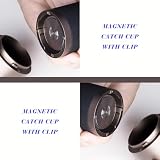
The workflow shines here: a top-mounted adjustment dial lets you see and lock your grind size before you crank, and the magnetic catch cup with locking mechanism won't slip mid-grind. Cleanup is straightforward, and the all-aluminum and stainless steel build feels durable for daily use, outperforming the blade grinders dismissed by burr grinder under 50 picks for their inconsistent extraction.
Where it falls short for AeroPress specifically is a narrower sweet spot between settings. Owners report a sharp transition between grind sizes, meaning you'll dial in at "setting 70 for medium-fine" but small clicks up or down noticeably change extraction behavior. This precision is a strength for pour-over tuning but can make AeroPress brewing feel like walking a tightrope if you're adjusting mid-week as beans age. Unlike the AeroPress grinder, this one demands more hand-crank effort at coarser settings, though less than competitors at finer grinds.
Pros
- Seven-angle burrs cut beans for cleaner, brighter extraction
- Triple-bearing shaft stabilization minimizes wobble during grinding
- Top-mounted dial with locking mechanism for secure setting control
- Efficient grinding with less effort required at finer settings
Cons
- Narrow adjustment window between grind sizes can feel touchy
- Not specifically optimized for AeroPress like some competitors
Key features (5)
- Seven-angle stainless steel conical burr for cutting, not crushing
- Top-mounted adjustment dial with locking catch cup
- Triple-bearing stabilization for solid shaft centering
- Aluminum alloy and stainless steel construction for durability
- Designed for quick disassembly and brush cleaning
JavaPresse has sold more manual grinders than almost any competitor, and that volume reveals both genuine strengths and real limitations. The ceramic conical burr is competent at most grind sizes, and the stainless steel body resists rust better than cheaper alternatives. For AeroPress, the 18 grind settings provide enough range to dial in a workable dose, and the removable handle stows away compactly.
But reviews consistently flag consistency issues, particularly at coarser settings where fines proliferate. The central rotor housing can wobble, leaving the burr cone slightly off-center and causing uneven grinding. Some owners report losing 40-60% of their grounds to fines when sifting for pour-over, though this matters less for AeroPress since the paper filter catches particles. A few users have experienced plastic component breakage after weeks of daily use, though JavaPresse's customer service responds quickly with replacements.
Where the AeroPress grinder commands a premium price, JavaPresse competes on accessibility and value. Paired with an AeroPress for someone new to fresh-ground coffee, this combination costs half as much and still produces noticeably better coffee than pre-ground. Compared to the Rsoilch or Ceving models, JavaPresse trades some build refinement for established brand recognition and proven long-term reliability through massive owner feedback.
Pros
- Ceramic conical burr handles AeroPress grind sizes effectively
- Removable handle and catch cup for compact storage and travel
- Proven through tens of thousands of real-world brews
- Lightweight stainless steel body won't rust or corrode
Cons
- Grind consistency varies, with fines appearing at coarser settings
- Plastic components can fatigue after weeks of heavy daily use
Key features (5)
- Ceramic conical burr rated to last five times longer than steel
- Eighteen adjustable grind settings from espresso-fine to coarse
- Removable handle and catch cup for travel portability
- Stainless steel construction resists rust and corrosion
- Disassembles easily for cleaning with included brush
Rsoilch's approach emphasizes ease of use and eco-friendly construction. The all-metal, plastic-free design means no components to crack or degrade over time, and the hand crank operates smoothly with noticeably less forearm strain than heavier grinders. For someone making one or two AeroPress cups daily, this grinder minimizes the friction between wanting coffee and drinking it.
Owners praise the consistent grinding at pour-over and AeroPress settings, and the 32g hopper holds almost exactly enough beans for a single good cup. The stainless steel burr grinds evenly without generating the heat that can degrade coffee flavor in faster electric models, and the compact footprint fits easily in a backpack or camping kit.
The trade-off is grind range and precision. While it handles AeroPress fineness adequately, it doesn't offer the 60-setting fine-tuning of the AeroPress grinder or the cutting-edge clarity of the KINGrinder. For darker roasts, a few owners note the grinder can feel lazy, requiring deliberate crank pressure to keep beans moving. If you're grinding for espresso, most reviewers advise against this model. Weigh this against the AeroPress grinder: that one demands more effort but rewards you with finer adjustment control and premium durability.
Pros
- Smooth hand crank requires minimal effort for daily use
- All-metal plastic-free construction eliminates component failure points
- 32g capacity perfectly sized for single AeroPress brew
- Stainless steel burr maintains bean quality without heat
Cons
- Limited grind range compared to 40-60 setting competitors
- Lacks micro-adjustment precision for dialing in darker roasts
Key features (5)
- All-metal all-stainless design with zero plastic components
- Smooth hand crank with ergonomic grip and low resistance
- Stainless steel conical burr with multiple fine settings
- 32g bean capacity sized for single-serve brewing
- Tool-free disassembly for quick cleaning and maintenance
Ceving's distinctive external adjustment ring (visible as a dial on the grinder's side) offers forty discrete settings you can see and tweak without disassembling anything. This approach appeals to coffee tinkerers who like experimenting across the grind spectrum and noting which setting pairs best with each bean. The ceramic conical burrs preserve coffee flavor better than stainless steel, and the glass catch cup adds both durability and a premium feel.
At only 325g and roughly the size of a tapered cup, this grinder packs down smaller than competitors and suits office drawers, camping kits, and tight countertops. Grinding two scoops takes 15-20 seconds with minimal effort, making it practical for weekday morning routine. Owners consistently note the consistent, uniform grind it produces, not perfect, but markedly better than blade grinders and comparable to grinders costing twice as much.
However, the 30g capacity is the smallest in this lineup, meaning if you brew a larger AeroPress serving or grind for multiple cups, you'll refill frequently. A few owners report the grinder body can twist in hand if grip isn't firm, and at the finest settings, the ceramic burr won't pull true espresso fineness that a pressurized portafilter demands. Still, for travel and AeroPress brewing, it outperforms the JavaPresse on consistency. For someone making manual vs electric for aeropress comparisons, this grinder sits at a natural price point between budget and premium models.
Pros
- Forty external grind settings for precise incremental adjustments
- Ceramic conical burr delivers more uniform particle than stainless steel
- Glass catch cup adds durability and eliminates plastic parts
- Ultra-compact 325g form factor fits travel bags and small spaces
Cons
- Smallest capacity at 30g, requiring refills for larger AeroPress doses
- Body can twist in hand without firm grip on ceramic burr
Key features (5)
- Forty external adjustable grind settings with visible dial ring
- Ceramic conical burr preserves coffee flavor without heat generation
- Glass catch cup for durability and premium feel
- Ultra-portable 325g design, just 6.7x2.3x7.4 inches
- Three-part disassembly for thorough cleaning with included brush
How to Choose a Burr Grinder for AeroPress
Grind Consistency Matters More Than You Might Think
AeroPress's 45-second brew cycle and micro-filtration mean uneven grounds show up immediately as astringency or weak body. A quality burr grinder (manual or electric) keeps particles within a narrow size range so water extraction stays balanced. Ceramic and stainless steel conical burrs both work well for AeroPress; the difference is heat generation. Manual grinders never heat your beans, which is why many owners report better cup clarity versus electric models, even budget electrics. Look for grinders with at least three bearing points (ideally triple) to stabilize the central shaft and prevent wobble that creates fines.
Dial Range: How Many Settings Do You Actually Need
Sixty settings sounds impressive, but most brewers dial in one of five sweet spots (espresso-fine, pour-over, medium, French press, cold brew) and stay there. For AeroPress, you typically hover between settings 15 and 35 on an 18-setting dial or 30 and 50 on a 60-setting grinder. The advantage of more settings is micro-tuning as beans age through the week or switching between different roast levels without grinding twice. If you brew one coffee method daily, forty settings offers enough wiggle room without overwhelming choice. If you experiment across brewing styles, sixty settings gives the finest control. Manual versus electric for AeroPress both work; the deciding factor is usually how much hand-crank effort you're willing to invest.
Portability and Capacity Trade Across the Lineup
Smaller grinders weigh less and pack tighter but require refills if you're brewing for two or grinding multiple times before cleanup. A 32g capacity handles one excellent AeroPress cup; a 25g hopper makes you load twice. Travel and camping favor minimal footprint, so the Ceving or Rsoilch make sense. Home daily use tolerates a grinder sitting on the counter, so the larger hoppers on the AeroPress or KINGrinder don't hurt. All five models here disassemble for cleaning, but all-metal designs (Rsoilch) eliminate plastic fatigue points that threaten ceramic or stainless burr housings after months of heavy grinding.
Hand-Crank Effort and Your Morning Routine
Don't underestimate this factor. Grinding 18g of beans can take 45 seconds with an easy crank or 2+ minutes if the grinder resists. For one quick coffee before work, easy-turning models like the Rsoilch or Ceving keep the ritual pleasant. For someone who grinds in large batches or before dawn when forearm fatigue feels real, the smooth Rsoilch crank beats the mechanical resistance of heavier burr designs. The AeroPress grinder's effort level discourages bulk grinding but ensures grind uniformity; it's a deliberate trade-off the maker embraced. Try before buying if you can, since hand size and grip strength vary significantly across users.
Our picks at a glance
2
Best for Pour-Over EnthusiastsKINGrinder
3
Best Budget-Friendly PickJavaPresse
4
Best for Minimal EffortRsoilch
5
Best for Precision AdjustmentsCeving
Frequently asked
Can I use a manual grinder for espresso in addition to AeroPress?
Most manual grinders here can reach espresso fineness, but consistency suffers at the finest settings. A pressurized portafilter (which many espresso gadgets use) masks inconsistency better than a bottomless basket. The AeroPress grinder and Ceving offer the finest control. JavaPresse and Rsoilch reviewers note their grinders struggle with true espresso grind uniformity. If espresso is your primary brew, an electric burr grinder will serve you better. For occasional espresso shots alongside AeroPress, any of these five will work adequately.
How often should I clean my manual burr grinder?
After each grind, use the included brush to remove loose grounds from the catch cup and burr chamber. Deep cleaning (disassembling the burrs and wiping with a dry cloth) once weekly prevents oil buildup from darker roasts. Avoid water unless the grinder is fully disassembled and dried completely afterward: moisture can rust metal components and degrade burr sharpness. All five grinders here disassemble without tools, making maintenance straightforward.
Do manual grinders really taste better than electric ones?
Not because of the mechanism, but because manual grinders generate zero heat during grinding. Electric burr grinders can warm beans slightly, which accelerates oxidation and masks subtle flavor notes. Manual grinding preserves those delicate compounds, and owners frequently report cleaner, brighter coffee after switching from electric to manual, especially with lighter roasts and pour-over methods. For AeroPress specifically, the paper filter also highlights any differences in burr sharpness and consistency, so the upgrade often feels noticeable.
Which grinder is most durable for daily heavy use?
The AeroPress grinder and KINGrinder both feature all-metal construction designed for years of daily grinding; owners report no significant wear after years of use. The Rsoilch's plastic-free all-metal design eliminates common failure points. JavaPresse's plastic components (the rotor housing) can fatigue after months of heavy grinding, though customer service replaces them. The Ceving ranks lower for durability under extreme daily use but remains solid for weekend and travel use. Budget ten years of reliable service from the AeroPress or KINGrinder, three to five years from the others.
Can I attach a drill to speed up grinding?
The AeroPress grinder officially supports an optional power drill adapter, which turns hand grinding into seconds of electric-like speed. Other grinders in this lineup are not designed for drill attachment and may damage the shaft or burr mechanism if you attempt it. If speed is critical and drilling isn't an option, the Rsoilch and Ceving offer the smoothest hand-crank action, letting you grind faster with less fatigue than heavier models.