Kitchen & Dining · Gadgets
Best Brisket Knife for Clean, Effortless Meat Slicing
Find the best brisket knife for smoking, BBQ, and roasting. Compare German steel, Japanese steel, and full-tang carving knives with expert reviews.
Affiliate disclosure: As an Amazon Associate I earn from qualifying purchases.
At a glance
4
Best Budget FriendlyBright Hobby
5
Best Precision EdgeHoshanho
Detailed reviews
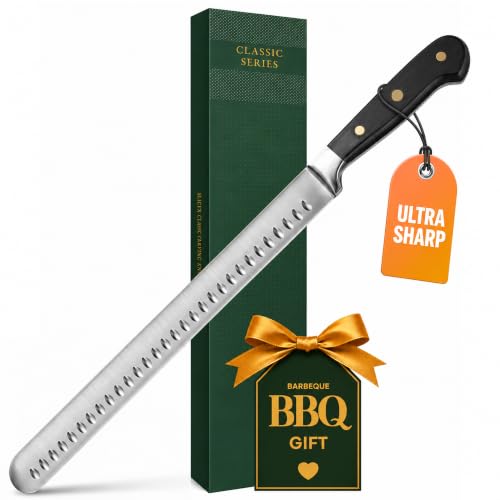
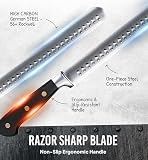
The Cutluxe 12-inch brisket knife lands here because it delivers on the core promise: clean slicing without forcing or tearing. The high-carbon German steel holds its edge well, the full-tang construction means no flex or weakness over time, and the grip is comfortable enough for longer carving sessions. Owners report slicing through fat and muscle with almost no resistance right out of the box, and the sheath is robust enough for drawer storage or a knife roll.
This knife balances professional-level results with a price point that doesn't require you to justify the purchase to a spouse. The 56+ Rockwell hardness specification matters here; it means the blade stays sharp longer than budget alternatives and sharpens cleanly when needed. If you're comparing this to a premium brand at twice the cost, the performance gap narrows faster than the wallet gap widens.
One honest caveat: the sheath on some units shows wear over time (inner lining can detach), and the lifetime warranty doesn't cover it. Hand washing is non-negotiable if you want edge retention. For a home cook who treats knives with care, neither of those limitations is a deal-breaker.
Pros
- Glides through brisket, ham, and roasts with one smooth stroke
- Holds its sharp edge through multiple uses before honing
- Full-tang design with comfortable grip and good balance
Cons
- Sheath quality inconsistent; inner material can come loose
- Hand wash only; dishwasher damage not covered by warranty
Key features (4)
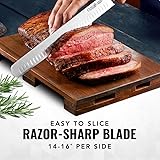
- 12-inch German steel blade hand-sharpened to 14-16 degrees per side
- 56+ Rockwell hardness for sustained edge retention between sharpenings
- Full tang with triple-riveted pakkawood handle for stability and comfort
- Includes storage sheath and lifetime warranty against material defects
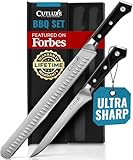
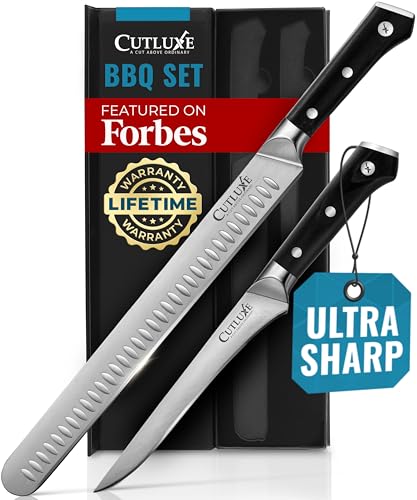
This set pairs the same 12-inch carving knife as the Cutluxe solo option with a smaller 6-inch boning knife, giving you versatility for different tasks without buying twice. The boning knife handles prep work (trimming silver skin, separating meat from fat pre-cook) while the larger blade handles the post-cook slicing. Both knives share the same German steel, Rockwell hardness, and granton edge technology.
Where this makes sense: if you smoke or roast enough meat to justify two dedicated blades, or if you're outfitting a kitchen from scratch and want tools built to the same standard. Owners report surprising quality for the price; several mention comparing these directly to well-known premium brands and finding these hold their own on sharpness and balance.
Compared to buying the Cutluxe single knife and then adding another knife later, this set locks in value and ensures both blades work well together. The 6-inch boning knife isn't as essential as the slicer if your budget is tight, but having it means you're not using your main slicing blade for trim work.
Pros
- Two full-tang German steel knives for less than two premium singles
- 12-inch blade handles full slicing; 6-inch excels at prep trimming
- Both granton-edged to resist meat sticking and reduce drag
Cons
- 12-inch length requires storage space; doesn't fit standard knife blocks
- Boning knife adds cost if your main need is slicing alone
Key features (4)
- Dual set: 12-inch carving knife and 6-inch boning knife with matching German steel
- Granton hollow-edge on both blades to prevent meat adhesion and drag
- Full-tang construction with ergonomic handles on both knives for control
- Includes protective storage box and lifetime warranty
The Wüsthof Gourmet 14-inch is longer and thinner than the Cutluxe offerings, which changes how the knife works. That extra reach lets you slice large roasts and prime ribs with fewer passes, and the thinness of the stamped blade (compared to forged full-tang construction) actually helps here: it means less resistance and a more delicate cut line. Wüsthof's two-century pedigree means the steel quality is verifiable and the blade holds an edge that justifies the premium price.
Owners describe it as a "meat sword" in the best way: imposing and surgical. The hollow edge is a minor feature that does prevent some sticking. One common note: the handle is synthetic polypropylene rather than pakkawood, which some find less warm to the hand over long use, and the plastic sheath is thin (an honest weakness for the price).
This outclasses the Cutluxe set on edge-retention longevity and brand heritage, but costs significantly more. If you sharpen knives yourself and want one that stays true between sharpenings, or if you cook frequently enough that the extra length justifies the investment, this is the one. The Bright Hobby option and Hoshanho both deliver solid results at lower cost, so the question is whether Wüsthof's reputation is worth the difference to you.
Pros
- 14-inch blade covers large roasts in single strokes without forcing
- High-carbon stainless steel holds edge longer between sharpenings
- Two-century Wüsthof heritage and limited lifetime warranty
Cons
- Synthetic handle feels less premium than pakkawood over extended use
- Thin plastic sheath is cheap for the knife's price point
Key features (4)
- 14-inch laser-cut stamped blade for precision and thinner, more flexible steel
- High-carbon stainless steel with hollow edge to prevent meat adhesion
- Synthetic polypropylene handle resistant to heat, fading, and impact
- Hand-wash recommended; limited lifetime warranty from 200-year-old German maker
The Bright Hobby 12-inch hits a price point that makes it easy to justify if you're skeptical about spending big on a specialty knife. The German steel and 56+ Rockwell hardness match the Cutluxe, and reviewers consistently report that it arrives sharp enough to cut arm hair and holds that edge through multiple briskets. The full-tang design and ergonomic handle mean no flex or surprise weaknesses.
Where this differs from the Cutluxe: the brand carries less name recognition and fewer reviews, so you're taking a slightly smaller leap of faith. But the feedback that exists is strong: owners buy multiple Bright Hobby knives after their first experience, which is the best vote of confidence a budget blade can get.
Compared to the Wüsthof, you're trading edge-retention longevity and brand heritage for immediate sharpness and price. The Hoshanho next to it uses Japanese steel instead of German, which some cooks prefer for a finer edge at the cost of slightly more frequent honing. If you're new to brisket slicing or you cook meat infrequently, the Bright Hobby removes cost as a barrier to entry without feeling like a compromise.
Pros
- German steel with 56+ Rockwell hardness arrives razor-sharp
- Full-tang design and balanced weight for controlled slicing
- Entry-level price removes hesitation for test buyers
Cons
- Less brand recognition means fewer long-term use reports than established names
- Packaging and presentation are minimal compared to premium competitors
Key features (4)
- 12-inch full-tang German steel blade with 56+ Rockwell hardness rating
- Non-slip handle designed for comfort during extended carving sessions
- Razor-sharp edge from the factory with granton-style geometry
- Lifetime warranty against material and workmanship defects
The Hoshanho brings Japanese steel craft to the brisket knife category, and the difference shows in edge geometry. The 15-degree angle (compared to 14-16 degrees on most German-steel blades) is a minor specification that translates to a sharper, more surgical line. Owners describe using this knife like watching a hibachi chef: the blade does the work without requiring downward pressure. For brisket specifically, that finer edge matters because it cuts through the bark cleanly and separates fat from muscle without tearing fibers.
The sub-zero treatment of the Japanese 10Cr15CoMoV steel is a manufacturing detail that improves hardness and edge retention. This knife also excels at slicing fruits (watermelons, tomatoes) and isn't just a one-trick specialty tool. The ergonomic handle is specifically designed to reduce hand fatigue, which matters if you're slicing a full brisket or multiple roasts.
Where it sits in the lineup: sharper out of the box than the Bright Hobby and Cutluxe, but requires slightly more frequent honing because Japanese steel's finer edge dulls faster than German steel's thicker edge. If you sharpen your knives regularly or you prioritize that surgical first cut, this edges out other options. Compared to the Wüsthof, you're trading heritage and proven longevity for immediate precision at a lower price.
Pros
- 15-degree Japanese steel angle produces sharper, more surgical edge than German steel
- Sub-zero heat treatment improves hardness and initial sharpness retention
- Excellent balance and ergonomic design reduces hand fatigue during extended use
Cons
- Finer edge dulls faster than German steel; requires more frequent honing
- Storage challenges; 12-inch length doesn't fit most standard knife blocks
Key features (4)
- 12-inch Japanese 10Cr15CoMoV high-carbon steel blade at 15-degree angle
- Sub-zero treated steel for enhanced hardness and cutting precision
- Ergonomic pakkawood handle designed to minimize hand pressure during slicing
- Full-tang construction for balance and durability; suitable for meat and large fruits
How to Choose the Right Brisket Knife
Blade Length and Your Cutting Style
Length determines how much meat you can cut in a single stroke. A 12-inch blade works well for most home briskets; 14 inches covers larger prime ribs or whole briskets without repositioning the knife. Longer blades also let you use a gentle pulling motion instead of downward pressure, which produces cleaner slices and requires less fatigue. The trade-off is storage: longer blades need drawer or block space most standard knife blocks won't provide. Consider the size of meat you typically cook and your available storage before choosing.
Steel Type: German vs. Japanese
German steel (like high-carbon stainless) is forged thicker, holds its edge longer between sharpenings, and forgives occasional neglect. Japanese steel is typically hardened to a finer angle, produces a more surgical edge, and stays sharper initially but dulls faster and requires more frequent honing. If you sharpen regularly or cook meat weekly, Japanese excels. If you sharpen infrequently or want an edge that lasts months, German is the safer choice. The brisket knife blade length & hollow edge specifications also affect cutting resistance: granton (hollow) edges reduce drag by preventing meat from sticking to the blade.
Full-Tang vs. Stamped Construction
Full-tang knives have metal running through the entire handle, making them heavier, more balanced, and structurally stronger over years of use. Stamped blades are thinner, lighter, and more flexible: which is actually an advantage for long slicing motions because they reduce resistance. A full-tang knife feels more premium and lasts longer with heavier use; a stamped blade from a quality maker (like Wüsthof) performs beautifully for occasional entertainment carving. For everyday meat prep, full-tang offers durability; for special occasions, stamped handles the job just fine.
Edge Sharpness and Maintenance
Most quality brisket knives arrive sharper than you need, but retention varies. German steel at 56+ Rockwell hardness stays sharp through multiple uses. Japanese steel at a finer angle starts sharper but dulls faster. Hand washing is non-negotiable for all of them: dishwashers damage both edge and handle. A whetstone or honing steel takes 5 minutes every few months and keeps your investment cutting like new. If maintenance feels like a burden, choose German steel and invest in a honing steel. If you enjoy caring for tools, Japanese steel rewards that attention with a finer edge. How to slice brisket flat and point guides you through technique that also protects blade edge from unnecessary wear.
Budget and Brand Heritage
A $40-$60 quality German-steel knife outperforms a $150 knife you don't sharpen regularly. Budget options from newer brands arrive sharp and hold their edge well enough for monthly meat cooking. Premium heritage brands (like Wüsthof) charge for two centuries of craftsmanship and edge-retention guarantees, not novelty. Mid-range picks offer the sweet spot: proven steel quality, affordable enough to replace without regret, and reliable enough to keep using for years. Choose the tier that matches how often you actually cook and how much maintenance you'll do.
Our picks at a glance
4
Best Budget FriendlyBright Hobby
5
Best Precision EdgeHoshanho
Frequently asked
What is the ideal blade length for a brisket knife?
Most home cooks find 12 inches ideal for standard briskets and roasts. A 12-inch blade spans most cuts without repositioning, lets you use smooth pulling motions instead of sawing, and stores in a drawer or magnetic block without excessive overhang. If you regularly cook prime ribs or full briskets for groups, 14 inches covers larger cuts with fewer passes. Anything shorter than 10 inches becomes a carving knife instead of a true brisket knife and loses the advantage of single-stroke slicing.
Should I hand wash or can I use a dishwasher?
Hand wash only. Dishwashers use high heat and harsh water jets that degrade both the blade edge and handle finish. Soap and warm water take 30 seconds and keep your knife sharp and looking new for years. Dishwashers are the primary reason quality knives dull prematurely and handles crack or fade. If hand washing feels inconvenient, a quality knife isn't the right choice: save money and buy a less expensive option you'll actually maintain properly.
Do I need a honing steel or whetstone?
A honing steel (10 minutes every few months) realigns the edge and extends the time between true sharpening. A whetstone or professional sharpening (annually or as needed) actually removes metal and restores the blade. You don't need both immediately, but a honing steel is easier and enough for most home cooks. If you cook meat weekly or use the knife frequently, a 1000-grit whetstone costs $20 and takes 5 minutes to restore the edge when honing stops working. YouTube has clear tutorials; it's simpler than it sounds.
Can I use a brisket knife for other tasks like carving turkey or slicing ham?
Yes, absolutely. A 12-inch brisket knife is equally effective for turkey, ham, prime rib, pork loin, and other large cooked meats. Some owners also report excellent results on large fruits like watermelons and tomatoes. It's a single-purpose blade that does one thing very well, but that thing covers most meat-slicing scenarios most home cooks encounter. If you only eat brisket once a year, use it for Thanksgiving turkey and holiday ham to justify the counter space.
What does Rockwell hardness mean and why does 56+ matter?
Rockwell hardness measures steel's resistance to denting and dulling. Higher numbers mean the steel stays sharp longer and sharpens to a finer edge. A 56+ Rockwell blade (typical of quality German steel) holds its sharpness through multiple briskets and maintains a usable edge for months with normal care. Lower-hardness knives dull faster and require more frequent maintenance. For a brisket knife, 56+ is the minimum to justify the investment; anything below that dulls too quickly to compete with entry-level options from established brands.