Kitchen & Dining · Bakeware
Best Bread Proofing Box: Top Picks for Home Bakers
Find the best bread proofing box for sourdough and dough fermentation. Compare foldable models, XL capacity, and temperature control features for consistent results.
Affiliate disclosure: As an Amazon Associate I earn from qualifying purchases.
At a glance
1
Best Overall for Serious BakersKombella
2
Best Value for Compact KitchensGiyudot
3
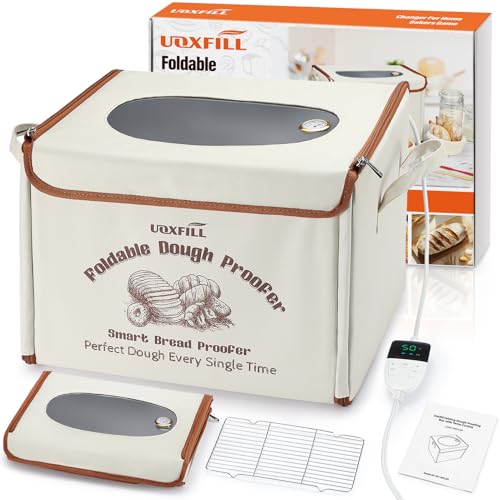
Best for Set-and-Forget Timer ControlUoxfill
4
Best Extra-Large with Audible AlertsInnovifyHub
5
Premium Pick for Multi-Purpose FermentationBrod & Taylor
Detailed reviews
The Kombella XL stands out because it solves real problems. The 23.6-inch length fits two full loaves, multiple starters, and larger mixing bowls all at once: critical when you're scaling up weekend baking or running a small sourdough side business. The three-sided heating (left, right, bottom) eliminates the cold spots that plague single-source warmers, and owners report the NTC sensor holds temperature to within a degree across a full 48-hour ferment. The six-layer honeycomb insulation feels genuinely sturdy when you unfold it, not flimsy like some fabric competitors.
Where it differs from the Giyudot and Uoxfill models is in build quality and precision. The control panel is clearer, the timer increments by single hours (not jumps of six), and the foldable design actually compresses to less than four inches without losing rigidity. Owners with experience across multiple brands often gravitate back here for long cold-weather stretches when consistency matters most.
The learning curve is minimal: most users spend one setup cycle bending the temperature sensor into the right position, then it's smooth sailing. Counter space while it's unfolded is the real trade-off; this isn't a unit you leave out if your kitchen is tight.
Pros
- Extra-large interior fits two loaves plus jars simultaneously
- Three-sided balanced heating eliminates cold spots
- NTC sensor maintains temperature within 1°F consistency
Cons
- Requires significant counter space while in use
- Higher entry investment compared to compact models
Key features (4)
- 23.6-inch length with capacity for multiple proofing vessels
- NTC precision control from 68°F to 122°F with 48-hour timer
- Three-sided heating system with honeycomb 6-layer insulation
- Folds flat to less than 4 inches for storage in cabinets
The Giyudot owns the durability and user-satisfaction crown, and for good reason. This box holds temperature reliably, feels well-built for the price point, and folds into almost any cabinet. The 12×12×12 square footprint is genuinely compact compared to the XL Kombella, making it realistic for apartments and smaller kitchens where a permanent countertop appliance would be resented.
The dual-view window (flips front or top) is a smart design choice. Fermentation jar on the countertop? Face the window forward to monitor your starter without disturbing the environment. Proofing a bowl in the box? Pivot it to the top to check height without opening the lid. Owners report this flexibility alone justifies the purchase versus rivals locked into a single view angle. The 5-layer insulation is noticeably thinner than the Kombella's honeycomb structure, yet reviewers consistently hit their temperature targets: a sign that good enough insulation paired with responsive heating beats overkill construction.
One genuine limitation: the box can only hold one large bowl or a handful of jars, not both simultaneously. If you're regularly batching multiple doughs, you'll run ferments sequentially, not in parallel. Compared to the larger Kombella and InnovifyHub models, this trade-off is the price of portability.
Pros
- Proven reliability across nearly 500 verified buyer reviews
- Dual-view window adapts to starter jars or proofing bowls
- Compact 12×12×12 footprint fits most kitchen cabinets
Cons
- Limited simultaneous capacity: typically one bowl or a few jars
- 5-layer insulation less robust than premium competitors
Key features (4)
- 12×12×12-inch compact footprint for space-conscious kitchens
- Temperature control 50–113°F with NTC sensor and 48-hour timer
- Dual-view window positions front or top for flexible monitoring
- 5-layer insulation with stainless steel shelf to prevent bottom burn
The Uoxfill compresses the essential controls into five temperature presets (50, 68, 77, 86, 104°F) and five timer tiers (6, 12, 18, 24, 48 hours). This constraint actually speeds up daily use: no scrolling through 74 fractional degrees, no endless menu-diving. Set it and your dough is done. Owners report that the 77°F preset hits the sweet spot for most sourdough bulk fermentation, and 104°F works well for quicker doughs when time is tight.
The interior is spacious at 15.7×11.8×11.8 inches, close to the Kombella's footprint but slightly more compact. The hygrometer built into the top lets you eyeball humidity without a second tool, and the included metal rack prevents your bowl from sitting directly on the heating element: a small detail that prevents unwanted cooked bottoms. The three heating zones (front, back, bottom) distribute warmth similarly to pricier models.
Compared to the Giyudot's dual-view flexibility, this unit lacks the adaptive window design. And one buyer reported a faulty hygrometer that always read 80°F, a potential quality-control gap to monitor. The waterproof interior wipes clean easily, but the sparse timer increments mean if you need exactly 14 hours, you're either overshooting or undercooking by two hours.
Pros
- Simple five-temperature preset system: no micro-adjustments needed
- Spacious 15.7-inch interior accommodates multiple mixing bowls
- Built-in hygrometer shows humidity without opening the lid
Cons
- Timer only offers five fixed duration options, limiting flexibility
- Hygrometer function inconsistent across units based on buyer reports
Key features (4)
- Three-sided heating (front, back, bottom) for uniform warmth
- Temperature presets at 50, 68, 77, 86, 104°F with timer choices
- Spacious 15.7×11.8×11.8-inch interior with metal shelf included
- Built-in hygrometer window and waterproof interior for easy cleanup
The InnovifyHub XL takes the largest footprint in this lineup and adds a feature the others skip: an audible buzzer alarm when the timer counts down. For bakers juggling multiple projects or easily distracted by other kitchen tasks, this beep is a game-changer. It eliminates the silent fade-out problem where you simply forget to check the box.
The temperature range extends to 130°F, notably higher than most competitors capped at 113–122°F. This matters if you're experimenting with high-heat fermentation, tempering chocolate, or making specialty items beyond bread. The 24-hour timer is shorter than the 48-hour options elsewhere, but the one-touch °C/°F switch means you won't fumble between cookbooks written in different unit systems.
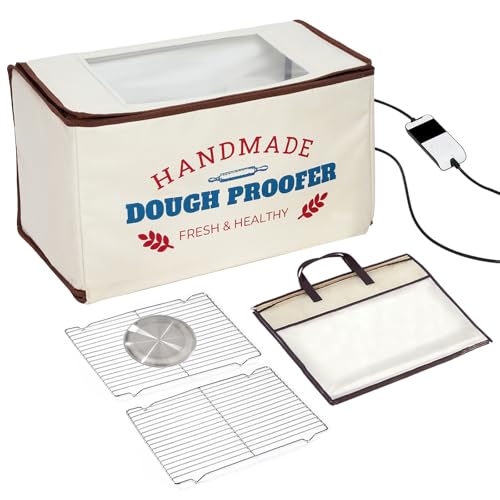
Owners report that the 3-sided heating keeps two large cambro dough bins or multiple bannetons warm evenly. The included storage bag is a thoughtful touch: fewer people fold their box every session. One reviewer noted the sensor probe can slip back through the grommet after repeated setups, a design flaw that doesn't affect the majority but suggests less manufacturing polish than the Kombella. Compared to the foldable versus permanent proofing options available elsewhere, this model lands firmly in the foldable-but-large camp, claiming more counter real estate than its compact rivals.
Pros
- Audible beep alarm prevents over-proofing from forgotten timers
- Extended range up to 130°F for advanced fermentation experiments
- Spacious interior fits two large mixing bowls or multiple bannetons
Cons
- Temperature sensor design can slip during repeated setups
- 24-hour timer is shorter than 48-hour options in competing models
Key features (4)
- Extra-large capacity with 3-sided heating front, back, and bottom
- Temperature precision 50–130°F with one-touch °C/°F conversion
- 24-hour timer with built-in audible alarm and countdown display
- 5-layer insulation with NTC sensor and stainless steel rack included
The Brod & Taylor Folding Proofer commands a premium price that many buyers initially balk at: then embrace after living with it for a season. What justifies the cost is engineering depth: the heating plate never feels more than barely warm to the touch, the insulation maintains temperature without aggressive heating cycles, and the three-year warranty (extended with registration) signals confidence in longevity that rivals rarely match.
This unit does double duty as a slow cooker and yogurt maker, capabilities that make financial sense if you ferment regularly across categories. The optional accessory shelf (sold separately or bundled) lets you proof two trays of rolls or four loaves simultaneously, expanding capacity without expanding footprint. The water tray humidity control is straightforward, and the viewing window on top reads clearly.
Compared to the foldable versus permanent proofing debate, the Brod & Taylor splits the difference: it folds to just 2.75 inches (slimmer than most competitors) yet unfolds to solid, rigid construction that feels nothing like fabric. The 18×14.5×10-inch open footprint is moderate, fitting a 10×14-inch focaccia pan and bowls alongside a starter jar.
The real caveat is price sensitivity. You're paying for decades-proven design and the brand's manufacturing discipline, not experimental features. If a proofer sits unused in your cabinet most of the year, this investment will sting. But bakers who use one weekly report they wouldn't replace it: a testament rare in kitchen appliances.
Pros
- Exceptionally precise temperature hold with minimal overshooting
- Dual function as slow cooker and yogurt maker adds versatility
- Premium build quality and 3-year warranty reflect engineering confidence
Cons
- Highest price point by significant margin among all options
- Accessory shelf sold separately, adding to total cost
Key features (4)
- Folds to 2.75 inches yet unfolds to rigid, professional-grade structure
- Precise temperature control 70–120°F with optional humidity water tray
- Dual-mode operation: bread proofing and slow-cook fermentation
- Fits 10×14-inch pans or multiple bowls; optional shelf available separately
How to Choose a Bread Proofing Box
Size and Capacity: Batch Baking or Single-Loaf Proofing
Your workflow determines the footprint you need. If you're making one sourdough loaf weekly, the Giyudot's 12×12×12 compact size fits starter jars plus a single proofing bowl. But if you're making multiple loaves, holiday batches, or running a small baking side project, the Kombella XL or InnovifyHub larger models let you proof two loaves or multiple bowls in parallel: a genuine time-saver. Compact kitchens often force a trade-off between capacity and storage; foldable versus permanent proofing is a choice between convenience and always-ready access. Most buyers land somewhere in the middle: a medium-sized foldable box that lives in a cabinet until the weekend baking starts.
Temperature Precision and Range
Look for NTC sensor technology, which continuously monitors air temperature rather than relying on a fixed heating element. The standard range (68–122°F) covers nearly all bread fermentation needs, though some bakers experimenting with advanced techniques appreciate the extended range up to 130°F. One subtle detail: temperature humidity control basics matter because insulation quality directly affects how well the box holds your set temperature. Premium models with six-layer honeycomb insulation (like the Kombella) waste less heat, meaning more stable long ferments. Budget options with five-layer insulation work fine but may fluctuate a few degrees, which is still within tolerance for most doughs.
Heating Distribution and Insulation
Single-source heating (usually bottom-only) creates cold spots where your dough rises unevenly. Three-sided heating (front, back, and bottom) costs more but delivers the uniform warmth that prevents flat-bottomed loaves. Owners of three-sided models consistently report better oven spring and more predictable final shape. Insulation thickness ranges from five layers (standard) to six-layer honeycomb (premium), a difference that compounds on long, cold ferments. If you're in a climate where winter kitchen temperatures dip below 60°F, invest in the better insulation; if your house stays 68–72°F year-round, standard insulation handles your needs.
Timer Flexibility and User Interface
Some models lock you into fixed timer increments (6, 12, 18, 24, 48 hours), while others let you set any duration within a range. Fixed options speed up daily use for bakers with repeatable recipes; custom timing suits experimental bakers juggling multiple fermentation schedules. One underrated feature: audible alarm alerts. If you're prone to forgetting timers, the beep function (available on select models) prevents over-proofing disasters. Consider also whether you prefer physical buttons or digital touch controls: neither is objectively better, but personal preference for tactile feedback matters when you're half-asleep setting a timer at 6 a.m.
Storage and Durability
A true foldable design collapses to less than four inches and fits in a standard kitchen cabinet without awkward repositioning. Check buyer photos to see how well each model actually compresses; some 'foldable' boxes are stiffer and take up more space than promised. Durability hinges on zipper quality (stainless steel is more reliable than plastic), fabric construction (waterproof interiors resist mold and staining), and warranty backing. The Brod & Taylor's three-year extended warranty signals manufacturers' confidence; budget models often come with one-year basic coverage. If you plan to use a proofer several times weekly for years, the upfront premium pays dividends in longevity.
Our picks at a glance
1
Best Overall for Serious BakersKombella
2
Best Value for Compact KitchensGiyudot
3
Best for Set-and-Forget Timer ControlUoxfill
4
Best Extra-Large with Audible AlertsInnovifyHub
5
Premium Pick for Multi-Purpose FermentationBrod & Taylor
Frequently asked
Can I use a bread proofing box for things other than bread dough?
Yes. Most proofing boxes work well for yogurt fermentation, kombucha brewing, chocolate tempering, and cheese making: any process requiring stable, gentle warmth. The Brod & Taylor even explicitly functions as a slow cooker. Pizza dough, pancake batter, and any yeasted product benefits from controlled proofing. The temperature range (typically 50–130°F) covers nearly all food fermentation needs. Just ensure the interior is clean and dry between uses, especially if switching from bread to yogurt, since residual flour can affect non-bread ferments.
How much temperature difference should I expect between the display setting and the actual air temperature inside the box?
Most modern proofing boxes hold within 2–3°F of your set temperature, a margin acceptable for bread baking. Some buyers report the display reads slightly higher than the actual interior air temperature, particularly near heating elements. Place a secondary thermometer inside your box for the first few sessions to learn your unit's pattern. Once you understand the offset (e.g., 'setting 75°F gives me 77°F inside'), you'll adjust automatically. Premium models with superior insulation and NTC sensors typically show tighter tolerance than budget alternatives.
Do I need to add water to maintain humidity, or can I just set the temperature?
Temperature alone works for most bread proofing: dough naturally holds its surface moisture in a closed box. Adding a water tray (included with most models) prevents the dough surface from drying and forming a skin, helpful for delicate doughs or very long ferments. For yogurt or other ferments with higher humidity sensitivity, the water tray is more critical. Start without water for bread, then experiment; if your crusts are developing cracks before baking, add a small water dish next ferment.
What's the difference between a foldable fabric box and a hard-sided proofer?
Foldable fabric boxes collapse to a few inches for storage, ideal for space-conscious kitchens. Hard-sided models stay rigid and take up permanent counter or cabinet space but often feel more durable and professional. Most home bakers choose foldable for flexibility; commercial bakers or those with dedicated fermentation areas opt for hard-sided units. Fabric boxes are typically quieter and less expensive; hard-sided options offer better long-term durability and often include larger capacities. Performance-wise, quality foldable and hard-sided models are competitive if insulation and heating systems are comparable.
How do I prevent mold or odors inside my proofing box?
After each use, wipe down the interior with a damp cloth and leave the lid open to air-dry completely: do not fold a damp box away. If you use a water tray, empty and dry it before storage. If odors develop, wipe the interior lightly with a dilute white vinegar solution, then air-dry again. The waterproof lining on most modern boxes resists mold well; the main risk is trapping moisture by folding before drying. Check your manual for whether the fabric panels are removable and machine-washable; some premium models allow this, extending the proofer's lifespan.