Kitchen & Dining · Small
Best Gluten Free Bread Machine
Seven machines compared on programmable cycles, heating, loaf size and counter footprint, so you can match one to how you bake.
Affiliate disclosure: As an Amazon Associate I earn from qualifying purchases.
At a glance
2
Best for Small KitchensElite Gourmet
3
Best for BeginnersKitchenarm
4
Colorful AlternativeElite Gourmet
Detailed reviews
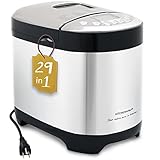
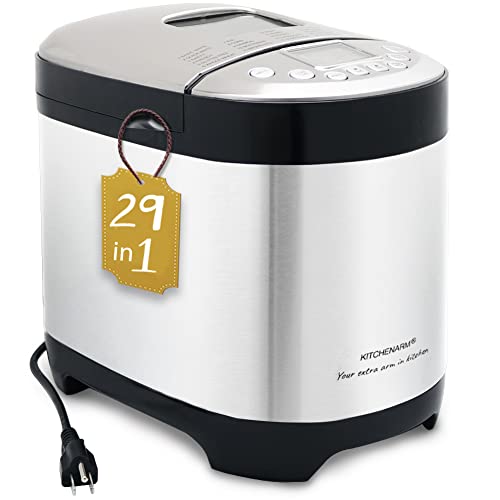
This is the machine we would point gluten-free bakers toward first, mainly because of how much of the process you can steer. Alongside a gluten-free menu among its 21 bread programs, the Home Made menu lets you set knead, rest, rise and bake times cycle by cycle, and you can keep up to four personalized menus of your own. For gluten-free batter, where mixing and rise timing decide how the loaf sets, that control is worth more than a long preset list.
It also remembers the menu, loaf size and crust color from the last bake, so a recipe you have dialed in becomes a one-press job. Owners report loaves that bake consistently well, a manual and recipe book that are easy to follow, and simple cleanup, though they note that dough rising over the pan makes cleaning harder. Three loaf sizes, three crust colors, a 15-hour delay timer and a one-hour keep-warm round it out, and the 2-year warranty is a reassuring extra.
Pros
- Cycle-level control for custom gluten-free recipes
- Easy-to-follow manual and recipe collection
- Loaves reported as consistently well baked
- Straightforward cleanup reported
Cons
- Dough overflow makes cleaning harder
Key features (4)
- 29 automatic menus including gluten-free, whole wheat, rye and sourdough
- Home Made menu with adjustable knead, rest, rise and bake times
- Saved menu, loaf size and crust settings for one-press repeat bakes
- Three loaf sizes, three crust colors and a 15-hour delay timer
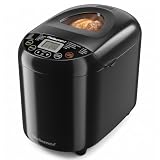
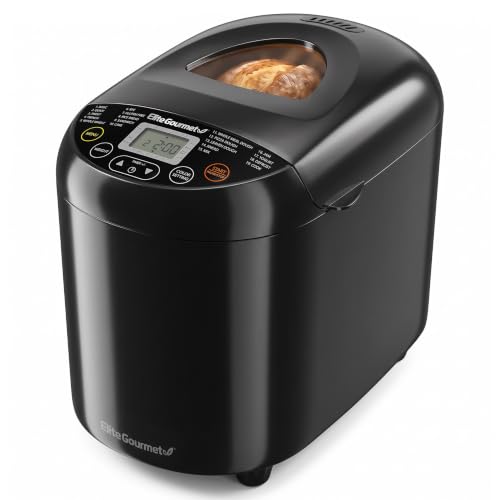
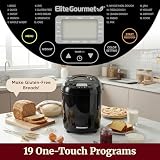
At 4.88 pounds, this is the lightest machine in the lineup by the listed specs, and its compact footprint suits apartments and smaller counters. It offers 19 one-touch programs including gluten-free, three loaf sizes from 1 to 2 pounds, a 15-hour delay timer and a 60-minute keep-warm. Owners report that it kneads, proofs and bakes well, that crust color is easy to set, and that cleanup means fewer dishes than baking by hand.
It leans on presets, whereas the Kitchenarm Smart Bread Machine lets you rebuild a cycle stage by stage, so it suits bakers who want the machine to make the decisions. Owners also raise concerns: a common complaint is that the machine broke within the first couple of months, loaves sink during baking, and the recipe book contains inconsistencies such as swapping cups and ounces. Loaf size splits opinion too, with a recurring note that loaves come out small for bigger households.
Pros
- Lightest unit of the lineup
- Gluten-free among 19 one-touch programs
- Fewer dishes and easy cleanup reported
- Ceramic pan with simple controls
Cons
- Owners report early breakdowns
- Loaves can collapse during baking
- Recipe booklet draws complaints
Key features (4)
- 19 one-touch programs including gluten-free, wheat, rye and pizza dough
- 15-hour delay timer paired with a 60-minute keep-warm function
- Compact, energy-saving body for apartments and small kitchens
- Ceramic-coated bread pan with automatic kneading, rising and baking
Everything about this model is pitched at first-timers: 19 preset menus, 11 of them for bread (gluten-free included), seven for non-bread items such as cake, jam and yogurt, and a fully programmable Home Made menu. A recipe book with 57 recipes is included, and it works with most pre-packaged bread mixes, which takes the guesswork out of early bakes. Owners report excellent results with gluten-free baking, a thorough recipe book and manual, quiet running and easy cleanup.
Kitchenarm's larger sibling, the Kitchenarm Smart Bread Machine, adds more menus, but this one keeps the same cycle-level programming at 8.6 pounds against its 9.6. The white body with a stainless steel lid and chamber also looks lighter on a counter. Like its sibling, it saves loaf size, crust color and menu for the next bake, and it carries a 2-year warranty.
Pros
- Programmable Home Made menu for custom recipes
- Recipe book and manual praised as thorough
- Gluten-free baking results reported as excellent
- Quiet running reported by owners
Key features (4)
- 19 preset menus covering bread, cake, jam, yogurt and dough
- Fully programmable Home Made menu with adjustable cycle times
- Support for most pre-packaged bread mixes, saving ingredient hunting
- White body with stainless steel lid and chamber
Functionally this is the same machine as the black Elite Gourmet Programmable Bread Maker 2 Lb, with an identical feature list in a mint finish: 19 one-touch programs including gluten-free, loaf sizes from 1 to 2 pounds, a 15-hour delay timer and a 60-minute keep-warm. At 14 × 9.75 × 11 inches, it stays compact enough for a small counter, and owners mention that suction-cup feet help keep it steady.
Owners report that bread turns out great, that it is easy to use and beginner-friendly, and that it mixes fresh-milled wheat recipes successfully, so it can also handle more rustic baking. The instructions get mixed reactions, with the recipe booklet praised on one side and criticized on the other. A common complaint is durability: owners report breakdowns after around half a year, and loaves that fall flat. The Kitchenarm Bread Machine, with its programmable Home Made menu, is the one to look at if you want more room to adjust a gluten-free recipe.
Pros
- Compact footprint for small counters
- Gluten-free among 19 one-touch programs
- Works with fresh-milled wheat recipes
- Beginner-friendly operation reported by owners
Cons
- Owners report breakdowns after months of use
- Recipe booklet draws mixed reactions
- Small loaves limit bigger households
Key features (4)
- 19 one-touch programs including gluten-free, rye, pizza dough and jam
- 1, 1.5 and 2 pound loaf sizes for small or hungry households
- 15-hour delay timer with a 60-minute keep-warm function for morning bread
- Mint finish with compact dimensions suited to apartment kitchens
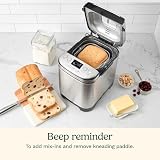
The Cuisinart's 12 programs include a dedicated gluten-free one, and its vertical metal non-stick pan bakes 1, 1.5 or 2 pound loaves in three crust shades. A 13-hour delay start with a 60-minute keep-warm, a viewing window with an interior light, and an alert that tells you when to remove the kneading paddle before the final rise make it easy to supervise. Owners report that it is easy to use, that first loaves come out well, and that the compact size fits on counters and in cupboards.
Its limited 3-year warranty runs longer than the 2-year terms on the Kitchenarm Smart Bread Machine and the Kitchenarm Bread Machine, which matters because owners also report durability trouble: rubber feet breaking early on, and loaves collapsing after baking. Noise splits opinion, with one side finding it quiet and a common complaint being loud beeps. Vertical pans also make a taller, narrower loaf, which is worth knowing if you prefer wide sandwich slices.
Pros
- Dedicated gluten-free program among 12
- Longest warranty of the lineup
- Viewing window with interior light
- Compact size fits counters and cupboards
Cons
- Owners report feet breaking and failures
- Loaves can collapse after baking
- Loud beeps draw noise complaints
Key features (4)
- 12 programs including a dedicated gluten-free option and artisan dough
- Vertical metal non-stick pan for 1, 1.5 or 2 pound loaves
- 13-hour delay start with a 60-minute keep-warm function for fresh mornings
- Audible alert to remove the paddle before the final rise
Gluten-free is one of 17 programs here, alongside basic loaves, cake, whole wheat, jam and yogurt, and a 2 pound loaf size sits next to 1 and 1.5 pound options and three crust settings. The 600W motor and 360° heat distribution target an evenly baked crust, and the maker lists quiet operation at just 50 decibels. A non-stick pan, 15-hour delay timer, keep-warm of up to an hour and overheat protection round out a practical feature set.
Next to the Neretva Bread Machine it is the more modest size, but its 13.78 × 11.42 × 10.04 inch body takes less counter room. Owners report great-tasting bread, easy cleanup and consistent results. Practical notes from owners: make sure the kneading paddle is pressed fully onto its shaft before starting, and expect the bake setting to need a double-check to confirm it has started. Opinions on the manual and recipes vary, with one side finding them helpful and the other finding them hard to follow.
Pros
- Gluten-free among 17 programs
- 600W motor with 360° heat distribution
- Non-stick pan cleans easily
- Three loaf sizes and three crust settings
Cons
- Manual and recipes draw confusion complaints
- Bake setting can be tricky to start
Key features (4)
- 17 programs including gluten-free, quick bread, jam and yogurt
- 1, 1.5 and 2 pound loaves with light, medium or dark crust
- 600W motor paired with 360° even heat distribution for baking
- 15-hour delay timer, keep-warm function and automatic overheat protection
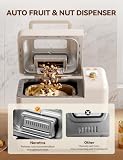
This is the largest machine of the group, with a 2.2 pound capacity and a 15.76 pound body measuring 16.14 × 12.6 × 14.96 inches. What sets it apart is the pair of heaters above and below the loaf pan, the only such layout named among these seven, which suits gluten-free batter that can turn gummy when heat does not reach the center. Fifteen menus include gluten-free, a ceramic pan and viewing window make it easy to monitor, and a detachable dispenser releases fruit and nuts at the right moment.
Owners report good-tasting loaves, consistently well-baked results and an attractive retro look. The picture is less settled on the rest: noise and mixing performance draw complaints, the manual is described as unclear, and owners report breakage and mechanical failure. Where the Osipoto 2LB Bread Maker is lighter and easier to store, this model is for larger households that bake bigger loaves and have room for the machine.
Pros
- Heaters above and below the loaf pan
- Largest loaf capacity of the lineup
- Detachable fruit and nut dispenser
Cons
- Breakage and mechanical failure reports
- Mixing and noise complaints from owners
- Recipe manual described as unclear
Key features (4)
- 15 menus including gluten-free, plus three crust colors
- Dual top and bottom heaters for surrounding bake
- Ceramic bread pan with a lid viewing window
- Package with measuring cups, spoons, glove and paddle tool
Side by side
| Pick | Item weight | Item dimensions |
|---|
#1 Best Overall
Kitchenarm | 9.6 pounds | 14.2 × 10.2 × 12 inches |
#2 Best for Small Kitchens
Elite Gourmet | 4.88 pounds | 11.89 × 9.45 × 13.98 inches |
#3 Best for Beginners
Kitchenarm | 8.6 pounds | 13.98 × 9.17 × 11.7 inches |
#4 Colorful Alternative
Elite Gourmet | — | 14 × 9.75 × 11 inches |
| #5 Longest Warranty | 11.02 pounds | 10.25 × 13.25 × 11.25 inches |
#6 Everyday Pick
Osipoto | 11.68 pounds | 13.78 × 11.42 × 10.04 inches |
#7 Largest Capacity
Neretva | 15.76 pounds | 16.14 × 12.6 × 14.96 inches |
How to Choose a Gluten Free Bread Machine
Does a dedicated gluten-free program matter?
Yes, and it is the first thing we check. Wheat dough depends on long, vigorous kneading, while gluten-free batter has nothing to build up and can lose its structure if worked too hard, so a program written for it mixes less and gives the rise more time. All seven machines here list a gluten-free setting, but how much else you can change differs. The Cuisinart Bread Maker 2 Lb. has a dedicated gluten-free program among its 12, which makes it a simple pick if you want one button to cover the job.
How much control over rise and bake times do you need?
A preset is one fixed timing, and a flour blend that suits it may need a longer rise or a shorter mix in the next recipe. Machines with a programmable menu let you set each stage and save the result. The Kitchenarm Smart Bread Machine goes furthest, letting you set knead, rest, rise and bake times and keep up to four menus of your own, while the Kitchenarm Bread Machine gives you the same cycle-level Home Made menu in a lighter body.
Rise is the stage where gluten-free batter is least forgiving, which is why a custom menu matters more than a long list of presets. If rise control is your main worry, the bread proofer picks cover that side of the process.
Which heating and pan features help avoid gummy loaves?
Gluten-free loaves tend to turn gummy in the middle when heat does not reach the center. In this group, the Neretva Bread Machine is the one with heaters above and below the pan, and the Osipoto 2LB Bread Maker lists 360° even heat distribution. Pan shape matters too: vertical pans make taller, narrower loaves that may bake less evenly with wet batter, which is worth knowing with the Cuisinart Bread Maker 2 Lb. Features worth looking for:
- Heat from above and below the pan, or an even-heat design
- A non-stick or ceramic pan that releases sticky batter cleanly
- Kneading that reaches the corners of the pan
- An alert to remove the paddle before the final rise
- A viewing window to check the batter early
What loaf size and footprint suit your kitchen?
Gluten-free bread goes stale quickly, so a machine that bakes smaller loaves on demand can serve you better than one that makes more than you finish. Most of these bake loaves from 1 to 2 pounds, while the Neretva Bread Machine reaches 2.2 pounds and is also the heaviest at 15.76 pounds. For tight counters or storage you move in and out, the Elite Gourmet Programmable Bread Maker 2 Lb is the lightest at 4.88 pounds.
Our picks at a glance
2
Best for Small KitchensElite Gourmet
3
Best for BeginnersKitchenarm
4
Colorful AlternativeElite Gourmet
Frequently asked
Can a regular bread machine make gluten-free bread?
It can, but results are better with a gluten-free program or a menu you can program. A wheat cycle kneads and rises in ways meant for gluten, which can leave gluten-free batter dense. If a machine lacks a gluten-free setting, a programmable menu like the one on the Kitchenarm Bread Machine lets you shorten the mix and set the rise yourself.
Why did my gluten-free loaf collapse or turn gummy?
The usual causes are letting the dough rise too high before baking, running a wheat cycle instead of the gluten-free one, adding too much liquid, and leaving the loaf in the pan after baking so steam softens the crumb. Even heat also helps, and the Neretva Bread Machine, with heaters above and below the pan, is the pick built around that.
Do I need xanthan gum or psyllium husk?
Gluten-free flour needs a binder to hold the crumb together, and xanthan gum and psyllium husk are the usual choices, so check whether your flour blend already contains one. Weighing flour instead of scooping it also gives more repeatable loaves in any machine.