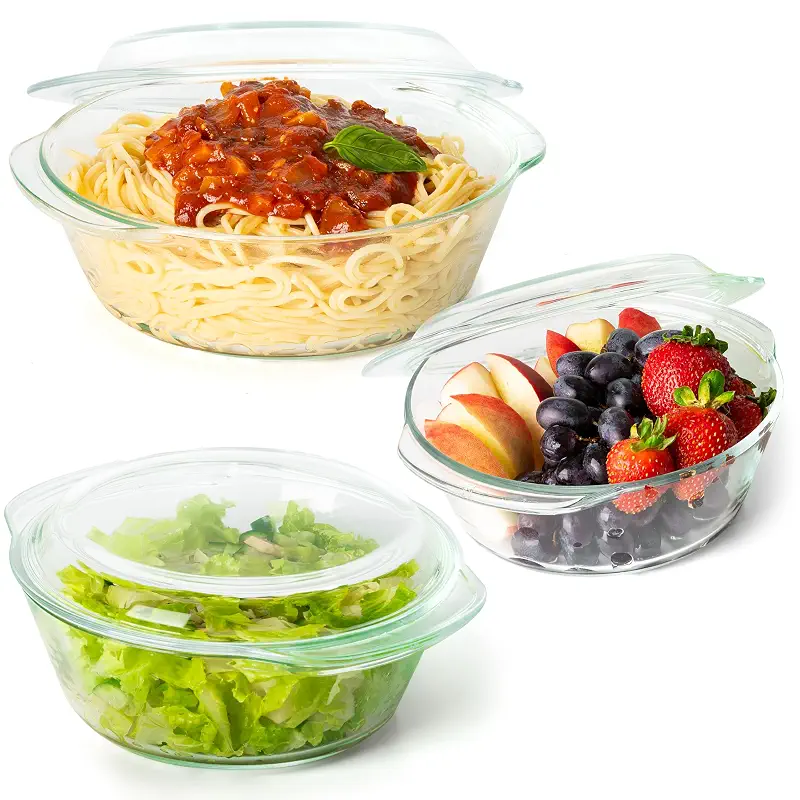
Ideal for: Budget-conscious cooks seeking an entry-level glass casserole set for storage and light baking.
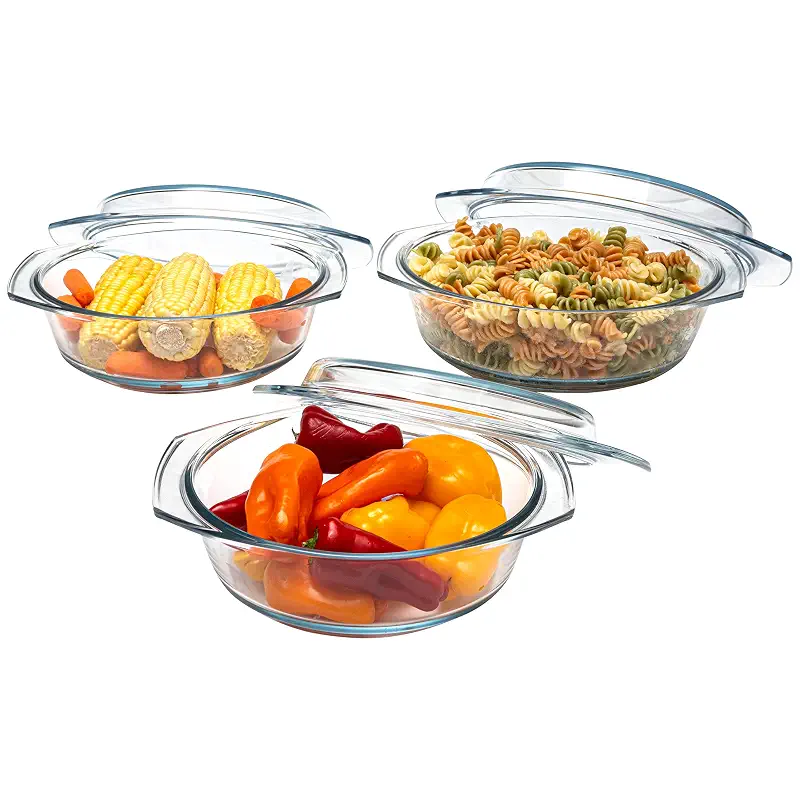
The Moss & Stone set hits on value and versatility. You get three round dishes (1 qt, 1.5 qt, 2 qt) with matching lids, so you're covered for sides, main dishes, and leftovers without buying pieces separately. The lids double as shallow serving bowls, which adds practical function beyond just keeping food fresh. The transparent glass lets you monitor baking progress, and the design includes molded handles for safer carrying.
However, durability concerns surface in the reviews. One buyer reported a bowl cracking without obvious cause while sitting empty in a sink, shortly after minimal use and outside the return window. Another experienced shattered pieces after gentle handling. These aren't isolated complaints: they suggest manufacturing variability in the borosilicate quality or tempering process. If you're looking for a set that will survive years of daily use, the Simax options offer more peace of mind, though at a higher cost.
This set makes sense if you want to test whether glass cookware fits your kitchen routine before investing more, or if you primarily use these for cold storage and gentle reheating rather than high-heat baking.
Pros
Three nested sizes cover most household portions
Lids stack and work as shallow serving bowls
Dishwasher, microwave, and oven safe
Cons
Durability concerns with unexplained cracks in some units
Lower thermal shock resistance than European alternatives
Key features
Three-piece borosilicate glass set with fitted glass lids
Molded handles on each casserole for safe carrying
Oven safe, microwave safe, dishwasher safe, and freezer friendly
Flat-topped lids enable efficient fridge stacking
#2 Pick
Best for Daily Cooking
Simax
Simax Casserole Dish Set with Lid, Round Glass Cookware, Borosilicate Glass, Made In Europe 1 Qt, 1.5 Qt and 2 Qt Baking Dishes, Set of 3
4.6(623)
European-made three-piece set with superior durability and tight-fitting lids; the workhorse choice for serious cooks.
Ideal for: Daily home cooks wanting reliable glass casseroles that won't shatter or disappoint under regular kitchen use.
Simax holds a meaningful edge in build quality, and owners feel it from the moment they unpack the box. The glass has more weight and substance than budget alternatives, with a barely visible blue tint that signals the high-borosilicate formula. Lids fit snugly without rattling, and they're engineered with flat tops so you can stack dishes vertically in the fridge or layer things on top without worry. One longtime cook and restaurant owner explicitly steered away from the well-known American brands, saying modern Pyrex is now heavy and klutzy by comparison, and the Simax set handles everyday stress far better.
Made in the Czech Republic with cadmium and lead-free recycled glass, this set resists thermal shock across a wide temperature range (572°F down to -40°F). Buyers report owning 9 or more units because they trust them so completely. One reviewer noted that after switching from Pyrex, there were zero regrets; another contrasted the superior quality with the old familiar brand.
Where it differs from the budget Moss & Stone option is durability certainty. You're paying a bit more upfront, but you're also paying for engineering that won't crack when you move a hot casserole from oven to counter. Against the large-format roaster, this set is better for everyday portions, while those exploring best stackable cookware might find the nested design of these casseroles equally useful for both glass and traditional metal options.
Pros
Czech-made borosilicate glass resists extreme temperature swings
Tight-fitting flat-top lids stack efficiently in storage
Proven durability through years of regular use by owners
Cons
Some units arrived with minor defects (chipped lid, unclear glass)
Slightly higher cost than budget alternatives
Key features
Lab-grade borosilicate glass with high thermal shock resistance
Set includes 1 qt, 1.5 qt, and 2 qt round casseroles with lids
Czech Republic manufacturing with recycled glass formula
Oven, microwave, freezer, and dishwasher safe to 572°F
#3 Pick
Best for Large Batch & Holiday Cooking
Simax
Simax Roaster Dish With High Lid Set, 8 Quart Glass Baking Dish | Borosilicate Glassware, Microwave Safe, Oven Safe, Dishwasher Safe, Large Casserole
4.7(332)
Eight-quart roaster with dome lid: ideal for bread baking, turkey roasts, and family-sized portions with visibility.
Ideal for: Home bakers, holiday cooks, and anyone preparing large single-batch meals or artisan bread.
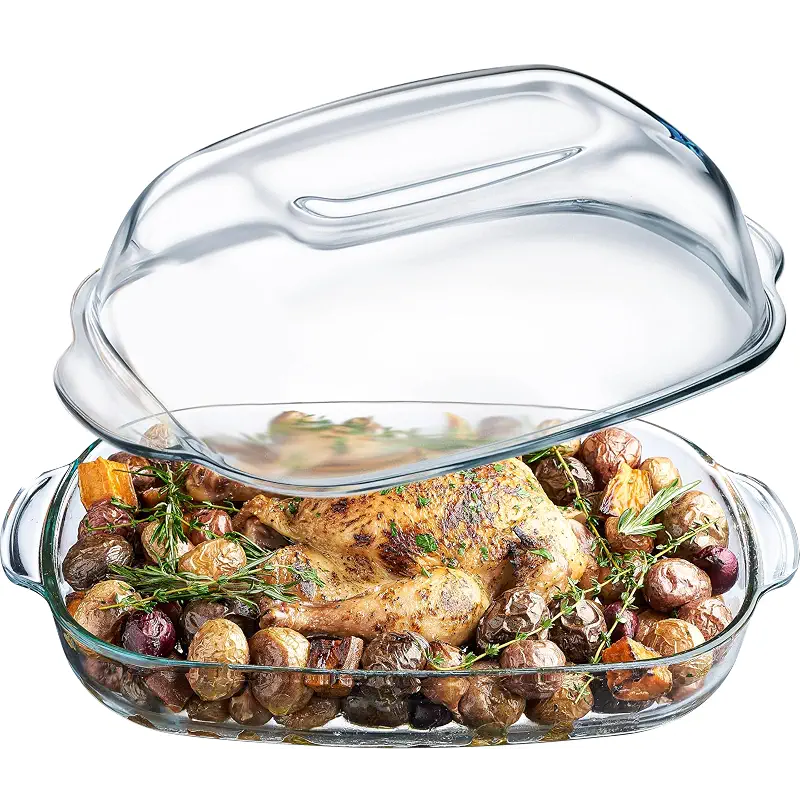
This Simax roaster opens up cooking possibilities you can't achieve with standard-sized casseroles. The 8-quart capacity fits whole chickens, leg of lamb, or large artisan loaves with room to rise and brown. Bread bakers in particular praise it; you can monitor oven spring and browning without lifting the lid, and the glass doesn't require preheating like a cast-iron Dutch oven. Several buyers use it specifically for sourdough and high-hydration doughs that need steam and height. The dome lid can also flip and serve as a roasting pan or shallow serving dish, multiplying its uses.
Compared to the three-piece casserole set, this single large dish trades versatility for capacity. Where the casserole set lets you prep multiple dishes at once, the roaster consolidates big projects into one vessel. The European manufacturing and thermal properties match the smaller Simax set, so durability expectations are high. Owners report using it repeatedly at 500°F for bread without concern, and cooling it down quickly without cracks.
One important note: this is heavier and bulkier than the casserole set, so it demands more cabinet space and requires careful handling when full.
Pros
Eight-quart capacity accommodates whole birds and large loaves
Dome lid enables bread-baking steam while allowing visibility
Withstands rapid temperature changes up to 500°F
Cons
Requires significant storage space and is heavy when full
Overkill for smaller households or single-portion meals
Key features
Eight-quart Czech-made borosilicate glass roasting pan with dome lid
Temperature range from 572°F to -40°F with high thermal shock resistance
Lid doubles as roasting pan or serving dish for flexibility
Microwave, oven, dishwasher, and freezer safe
#4 Pick
Best Stovetop & Simmer Pot
Simax
Simax 48 Oz Borosilicate Glass Saucepan With Lid - Microwave, Stove and Dishwasher Safe Potpourri Pot and Serving Dish
4.4(678)
Forty-eight-ounce glass saucepan with lid: perfect for simmering, stovetop cooking, and decorative serving.
Ideal for: Cooks making small-batch soups, stovetop potpourri, heated beverages, and anyone who values watching food cook.
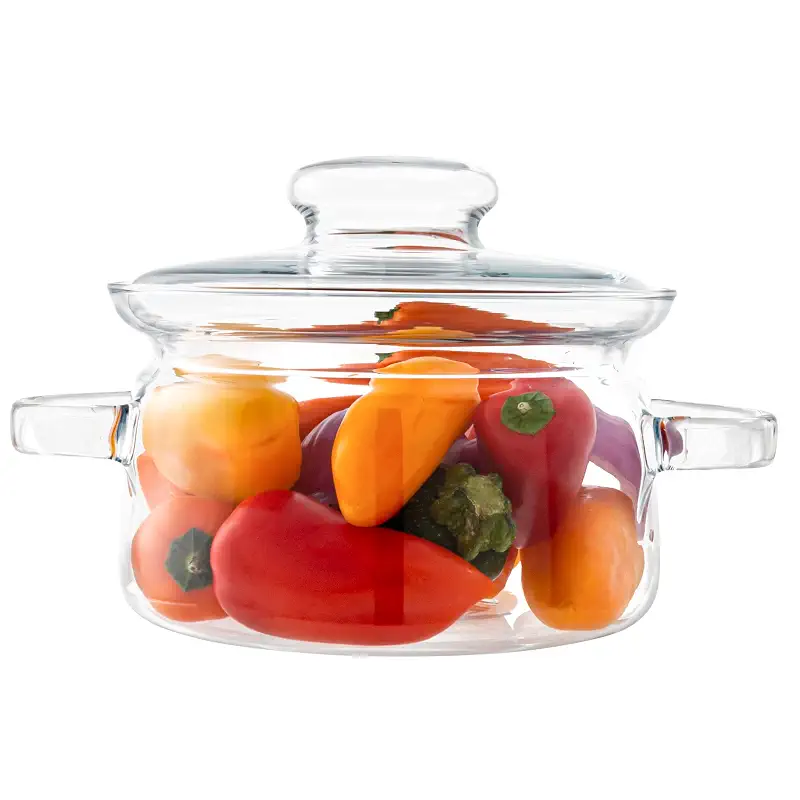
This Simax saucepan brings the transparency advantage to stovetop and simmer work. The 48-ounce size is right-sized for small batches of soup, heating milk, steaming vegetables, or simmer pots (mulled cider and wine are favorite uses across reviews). Unlike metal pots, you watch aromatics unfold and monitor doneness without constantly lifting the lid. The integrated handles stay relatively cool during stovetop use, though they do heat in the oven, so care is warranted. One buyer successfully uses it at high heat for bread-baking steam and rapid heating without thermal shock issues.
Simax's European borosilicate formula gives this pot the same shock resistance as the casserole and roaster lines. However, some owners report the glass feels thinner than expected, and a small number of failures (pot shattering during boiling) suggest you should avoid thermal extremes: don't take a hot pot straight to cold water, and heat gradually. Compared to the large roaster, this pot is lighter and more nimble for daily stovetop work, but it lacks the height needed for bread baking or whole chickens.
The real trade-off is capacity and intended use. If your stovetop work is mostly single-servings or small-batch simmering, this is ideal. If you're roasting or batch-baking, the roaster is better.
Pros
Integrated handles designed to stay cool on stovetop
Perfect size for simmer pots, small soups, and baby food
Oven, stovetop, microwave, and dishwasher safe
Cons
Glass thickness is noticeably thin, raising fragility concerns
Some reports of unexpected shattering during normal boiling
Key features
Forty-eight-ounce borosilicate glass saucepan with lid and handles
Transparent glass body for monitoring cooking progress without lifting
Cadmium and lead-free Czech-made glass rated to 572°F
Safe for stovetop, oven, microwave, refrigerator, and dishwasher
#5 Pick
Best for Small-Scale Stovetop Cooking
Miecux
Glass Cooking Pot - 2L/67oz Glass Saucepan Heat-Resistant Borosilicate Glass Handmade Cookware Set stovetop Pot - Safe for Pasta Noodle, Soup, Milk, Tea,salad (2L/67OZ)
4.3(510)
Budget-friendly two-liter glass saucepan with measurement markings; lightweight and good for tea, noodles, and light simmering.
Ideal for: Budget shoppers doing occasional stovetop tea, noodles, or light simmering who prioritize affordability over durability.
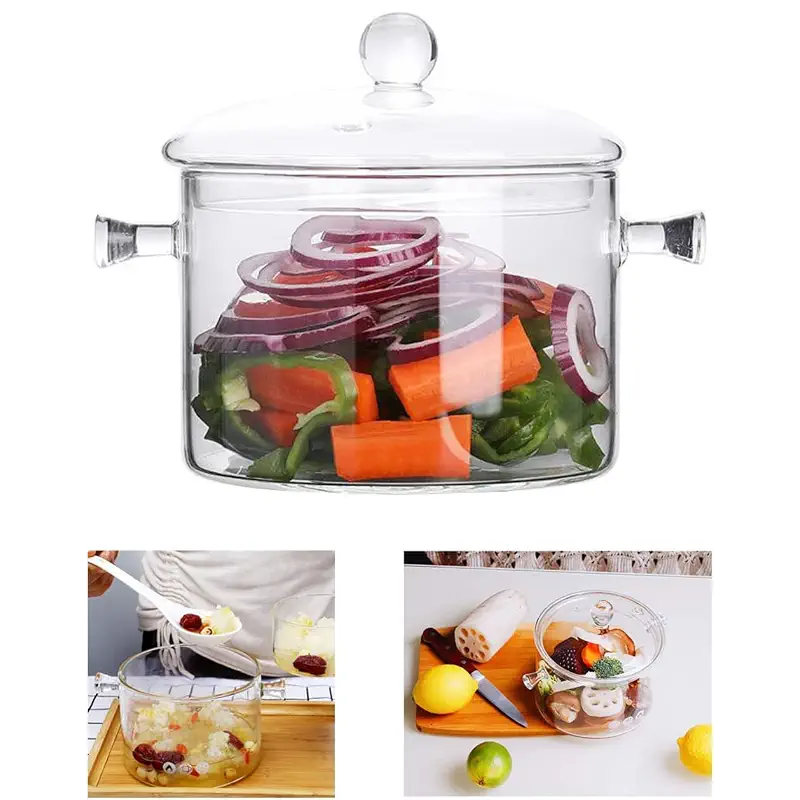
The Miecux pot appeals to buyers wanting borosilicate glass at an entry price point and who primarily use stovetop cooking for tea, instant noodles, and small soups. The two-liter capacity is slightly larger than the Simax 48-ounce option, and it includes measurement markings on the outside, which is handy for batch cooking and portion tracking. The thin, lightweight construction makes it easy to handle and store: a bonus if cabinet space is tight.
Durability, however, is the weak link. Multiple buyers report cracking during normal boiling or gentle use, and one reviewer noted that despite Chinese-language markings claiming heat resistance, the pot failed during everyday boiling. Another buyer also mentioned non-stick coating that contains PTFA, raising health concerns for those avoiding fluoropolymers. The handles are small nubs that get hot quickly and don't provide secure grip points, creating risk of spills or burns. Compared to the Simax stovetop option, this pot sacrifices stability and thermal engineering for lower cost.
This is a "buyer beware" product. It works for light, occasional stovetop use if you're willing to accept breakage risk and handle it with extreme care. For daily stovetop cooking, the Simax saucepan is worth the premium.
Pros
Lightweight and compact for small kitchens
Measurement markings aid in batch cooking
Lower entry price for experimenting with glass cookware
Cons
Reports of cracking during normal boiling under everyday conditions
Handle design is uncomfortable and prone to overheating
Key features
Two-liter borosilicate glass saucepan with lid and measurement marks
Lightweight construction designed for compact kitchens
Temperature range 0°F to 400°F for stovetop and oven use
Microwave, freezer, and dishwasher safe
How to Choose Borosilicate Glass Cookware
Four trade-offs that actually matter when matching a borosilicate glass cookware to your kitchen.
What Makes Borosilicate Glass Different
Borosilicate glass contains boron oxide, which lowers the glass's expansion rate under heat. This means it can handle rapid temperature shifts (from a 500°F oven to a cool counter) without cracking or shattering like regular soda-lime glass. The best borosilicate cookware, especially that manufactured in Europe using lab-grade formulas, resists thermal shock far better than budget alternatives. American brands that once set the standard have shifted manufacturing methods in recent years, and many owners now report that European makers like Simax deliver superior durability. Understanding borosilicate versus regular glass helps explain why some dishes cost more: the material itself is engineered differently.
Size and Shape: Matching Your Cooking Style
Glass cookware comes in round casseroles, roasting pans, and saucepans. Round casseroles (1 to 2 quarts) suit everyday baking, sides, and leftovers. Eight-quart roasters work for bread baking, whole birds, and batch cooking. Stovetop pots and saucepans (48 ounces to 2 liters) excel at simmering, heating milk, and decorative serving. Consider what you cook most: if you roast whole chickens and bake bread, the large roaster pays for itself. If you make small soups and stovetop potpourri, a saucepan is smarter. Many cooks own both casserole sets and a stovetop pot, using each for its purpose.
Handle Design and Kitchen Safety
Integrated handles molded into the glass body (not glued on) stay cooler and last longer than separate handles. On stovetop pots, handles that remain cool to the touch during cooking matter for safety. Small nub handles are trendy but cumbersome and prone to overheating; wider, grippier handles let you lift and pour confidently. Check reviews for handle feedback; if buyers mention difficulty gripping or burning fingers, the ergonomics may not suit your strength or cooking style. For borosilicate glass cookware care, proper handling prevents unnecessary thermal shock, so a comfortable grip matters.
Manufacturing and Durability Standards
Cookware made in Europe, particularly the Czech Republic, typically uses higher-quality borosilicate formulas and stricter quality control than imports made elsewhere. European products often include cadmium and lead-free certifications and are tested for thermal resistance. American-made alternatives vary widely; some are excellent, while others have experienced durability issues in recent years. Read reviews for specific failure patterns (unexpected cracking, chipping, or thermal shock) and favor brands with thousands of five-star ratings from long-term users. A higher upfront cost often reflects years of reliable use, not hype.
Lid Fit and Storage Efficiency
Tight-fitting lids keep moisture in during cooking and prevent spills when stacking in the fridge. Glass lids with flat tops (rather than knob-topped) nest together and allow other items to stack on top without wobbling. This matters if your kitchen storage is tight. Lids that double as shallow serving or roasting pans add functionality. Poor lid fit wastes heat and creates frustration during everyday cooking. Before buying, check reviews for complaints about loose lids or lids that slip off during transport.
Frequently asked
Quick answers to the questions readers ask most.
Can I use borosilicate glass cookware on a gas stovetop?
Yes, but with care. Many borosilicate glass pots and saucepans are stovetop-safe, though they require gradual heating to avoid thermal shock. Start on low to medium heat and avoid resting the glass directly over a high flame if possible. Some glass saucepans heat unevenly over an open flame, so a simmer ring or diffuser helps. Always let the pot cool slightly before adding cold liquid, and never move a hot pot immediately to cold water: thermal extremes cause cracking.
Is borosilicate glass really unbreakable?
No. While borosilicate glass resists thermal shock better than regular glass, it can still crack if mishandled, dropped, or subjected to extreme temperature swings. Sudden cooling (like placing a hot pot in cold water) or heating thin areas unevenly can cause failure. Quality matters: European lab-grade borosilicate holds up far better than budget alternatives. Handle it carefully, heat and cool gradually, and avoid sudden temperature changes to minimize breakage risk.
Do glass lids ever shatter while cooking?
Rarely, but moisture and steam pressure can contribute. If a lid cracks invisibly or has a hidden flaw, steam buildup may accelerate failure. To minimize risk, ensure lids fit properly so pressure doesn't concentrate on weak spots, avoid covering boiling liquids immediately, and let steam escape gradually. High-quality glass lids from reputable manufacturers (like Simax) are engineered to handle typical kitchen use, but defects in budget glass are more common.
How do I know if my borosilicate glass cookware is truly food-safe?
Reputable brands list borosilicate glass composition and certifications on the product page or packaging. Look for cadmium and lead-free claims and manufacturing location (Czech Republic, Germany, or similar trusted regions are strong signals). Brands with thousands of reviews and long ownership histories have greater accountability. Avoid unmarked or poorly reviewed glass cookware from unknown sellers, as it may contain harmful elements or be made with inferior borosilicate formulas that fail unexpectedly.
What's the best way to store borosilicate glass cookware?
Stack casseroles with flat-topped lids nested together to save space. Avoid stacking heavy items on top of glass dishes, as weight and pressure can concentrate stress at weak points. Store in a stable cabinet where dishes won't shift or tip. Separate glass lids from bases if possible to reduce weight in any one stack. Keep away from extreme temperature zones (next to an oven vent or freezer) where thermal stress could accumulate over time. Handle gently when retrieving to prevent chips or cracks.