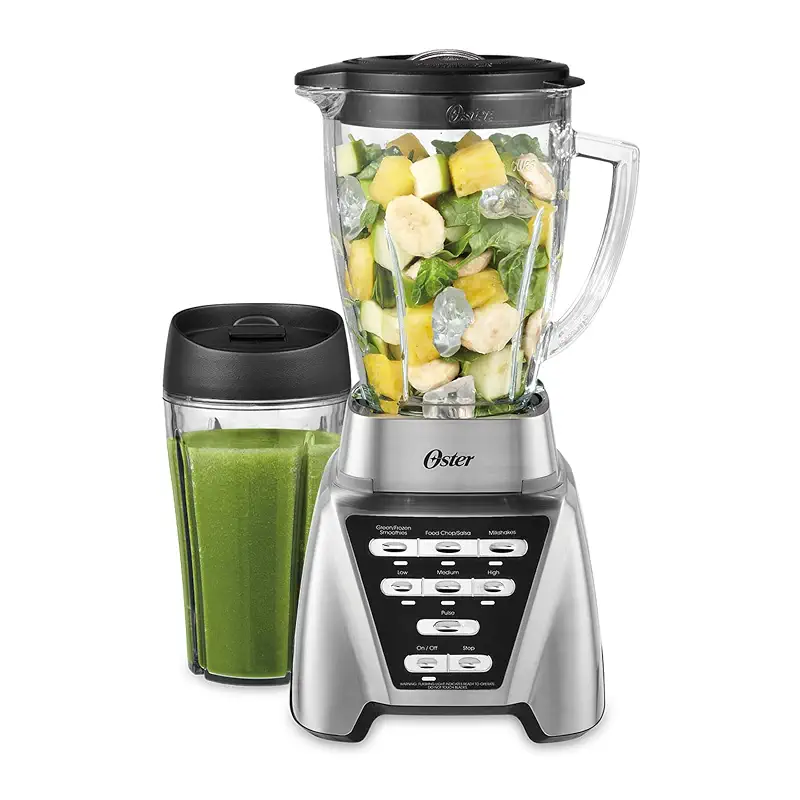
Ideal for: Daily smoothie makers and home cooks who blend regularly and want proven durability.
The Oster Pro 1200 is the standard-setter for everyday blender buyers who don't want compromise. At 1200 watts with a dual-direction blade system that pulses forward and backward, it crushes ice and frozen fruit without hesitation, and the six-cup Boroclass glass jar is genuinely thick enough to survive years of daily use. Owners who've relied on this model for five, six, or more years report consistent performance and minimal wear, which is rare in this price bracket. The auto-reverse feature during blending pulls ingredients down toward the blades, so you spend less time fussing and more time sipping.
The included 24-ounce smoothie cup is a nice practical touch for grab-and-go breakfasts. Three preset buttons handle the most common tasks (smoothies, salsas, milkshakes), though you also get seven manual speeds and a pulse function if you want more control. One real caveat: the noise level is substantial: owners consistently flag it as loud enough that you'll pause background TV or podcasts. The motor base also needs a dry environment; the metal connection point can rust if water pools during cleaning.
Compared to the Ninja Professional Plus, the Oster trades some peak wattage and pitcher size for a more compact footprint and better affordability. If you're blending daily and value longevity over sheer capacity, this hits the sweet spot.
Pros
1200W motor with dual-direction blade technology crushes frozen fruit efficiently
Six-cup Boroclass glass jar withstands thermal shock and years of daily use
Removable blades and gasket make thorough cleaning simple
Ideal for: Budget-conscious blenders who want a genuine glass jar and basic smoothie and sauce capability.
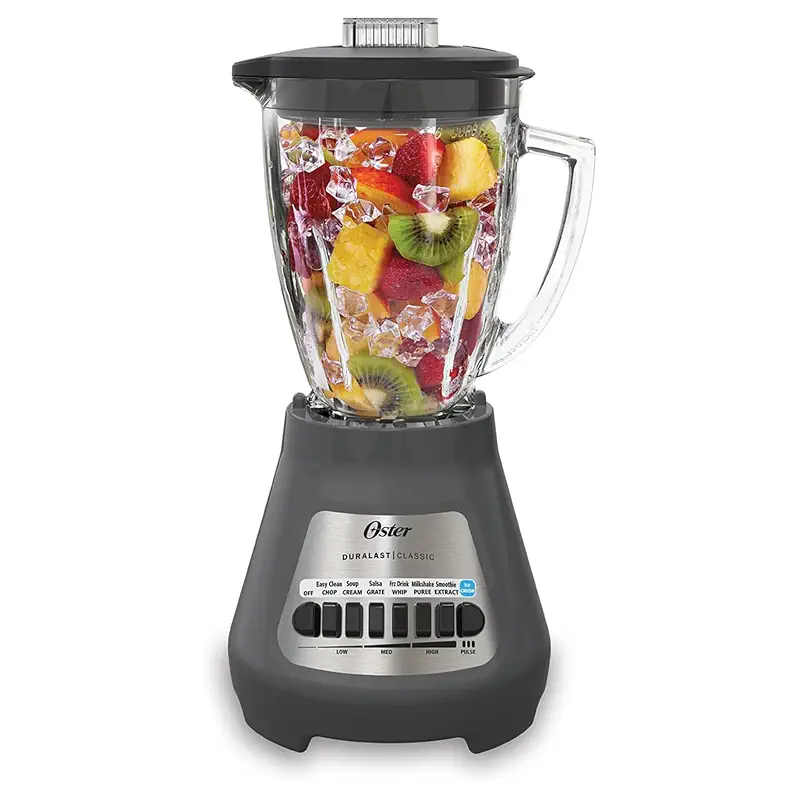
The Oster Classic Series 8-Speed offers the most straightforward value calculation: decent motor power (700 watts), a real glass jar, and no fluff. It does what it promises without pretense. The Crush Pro 4 blade design handles ice competently, and owners report smooth results on smoothies, soups, and sauces without drama. The gray plastic base looks utilitarian rather than premium, but the build feels sturdy enough for regular use.
This model sits below the Pro 1200 in processing power and jar capacity, but that matters less if you're blending for one or two people most days. Eight speeds give you enough range to pulse delicate greens or run full-tilt through frozen berries. The major trade-off versus pricier options is that at 700 watts, you may notice the motor working harder if you frequently blend full jars of ice and dense frozen fruit; one owner reported a faint motor smell when pushing it. Glass jar aside, there's less to distinguish this from cheaper plastic-jar competitors, so glass becomes the primary reason to step up to this price tier.
Where the Oster Classic Series 8-Speed differs from the Pro 1200 is motor power and preset convenience; you lose the auto-reverse feature and those one-touch buttons, but you also lose bulk and some operational complexity. If you're evaluating a best blender for hummus or other dense preparations, the 700-watt motor handles soft blends well though it may work harder on tougher ingredients. The Ninja Professional Plus offers more power and a larger pitcher if capacity becomes important.
Pros
700-watt motor handles everyday smoothies, soups, and frozen drinks reliably
Six-cup glass jar doesn't stain, absorb odors, or degrade over time
Eight-speed control with ice-crush button gives adequate versatility
Compact footprint fits tight counter and cabinet spaces
Cons
Lower wattage may require patience with very dense frozen batches
Plastic base feels less durable than all-metal competitors
Key features
700-watt motor with Crush Pro 4 stainless-steel blade for ice crushing
Eight speed settings plus dedicated ice-crush button and pulse mode
Six-cup dishwasher-safe glass jar resists staining and odor absorption
Simple push-button interface with no complicated presets or programming
Oster 10-year limited warranty on all-metal drive system
#3 Pick
Best Heritage Design
Oster
Oster Classic Series Heritage Blender with 6-Cup Glass Jar, 1000 Peak Watts, 600 Rated Watts, Stainless Steel Countertop Blender
4.3(2,324)
Classic two-speed workhorse with premium glass jar and exceptional long-term value for steady daily use.
Ideal for: Minimalist cooks and smoothie devotees who value durability and simplicity over convenience features.
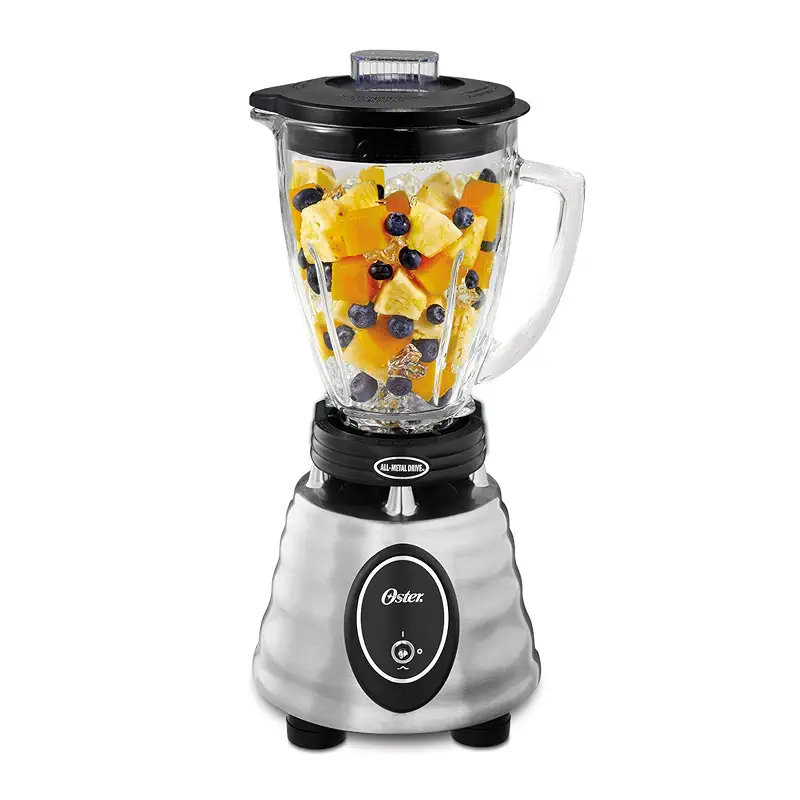
The Oster Classic Series Heritage is the minimalist's glass-jar blender. Two speeds: high and low, nothing else. No presets, no digital buttons, no display. Just a sturdy metal base and a six-cup Boroclass glass jar that will outlast the plastic alternative by years. The 600-watt motor (though marketed as 1000 peak watts) moves ingredients into a spiraling vortex that does the work; owners who switched from $400 Blendtec and Vitamix models report that this Heritage produces nearly identical smoothie quality for a fraction of the cost.
The retro industrial look (brushed stainless steel and glass) appeals to cooks who want their tools visible and unadorned. Beyond aesthetics, the real value lies in simplicity itself. No complex electronics to fail, minimal parts to lose or replace, and the blade assembly disassembles entirely for deep cleaning in seconds. One experienced user makes two 40-ounce green smoothies daily and has found the Heritage's performance on par with high-end alternatives. Parts like replacement gaskets cost dollars rather than the $150 a Vitamix container runs.
The trade-off versus the Pro 1200 or the Ninja is obvious: no presets, no multi-speed convenience, and genuinely less raw power. If your routine is simple (smoothies, the occasional soup), this works. If you're experimenting with nut butters, grinding grains, or juggling multiple recipes weekly, the extra speed range and processing muscle elsewhere will serve you better.
Pros
600-watt motor delivers impressive results compared to much pricier competitors
Two-speed toggle eliminates unnecessary complexity and points of failure
Fully disassembles for easy cleaning and maintenance without tools
Glass jar is virtually indestructible and stays clear and odor-free indefinitely
Cons
Two speeds offer less control than multi-speed models for varied recipes
Lower wattage can strain on very dense or high-volume frozen-ingredient loads
Key features
600-watt motor with 1000-watt peak power and Crush Pro 4 stainless blade
Simple high-low toggle switch with no presets or complicated programming
Six-cup boroclass glass jar with built-in measurement cap and markings
Entirely removable blade assembly for thorough cleaning without disassembly tools
Stainless-steel base with timeless retro design. Oster 10-year warranty
#4 Pick
Best Feature Set
Oster
Oster Classic Series 16-Speed Blender with Food Chopper & 6-Cup Glass Jar, Countertop Kitchen Blender, Brushed Nickel
4.3(4,161)
Sixteen speeds plus bonus food chopper attachment offer maximum versatility for cooks tackling diverse prep tasks.
Ideal for: Versatile home cooks who blend daily and also prep vegetables, nuts, and other ingredients regularly.
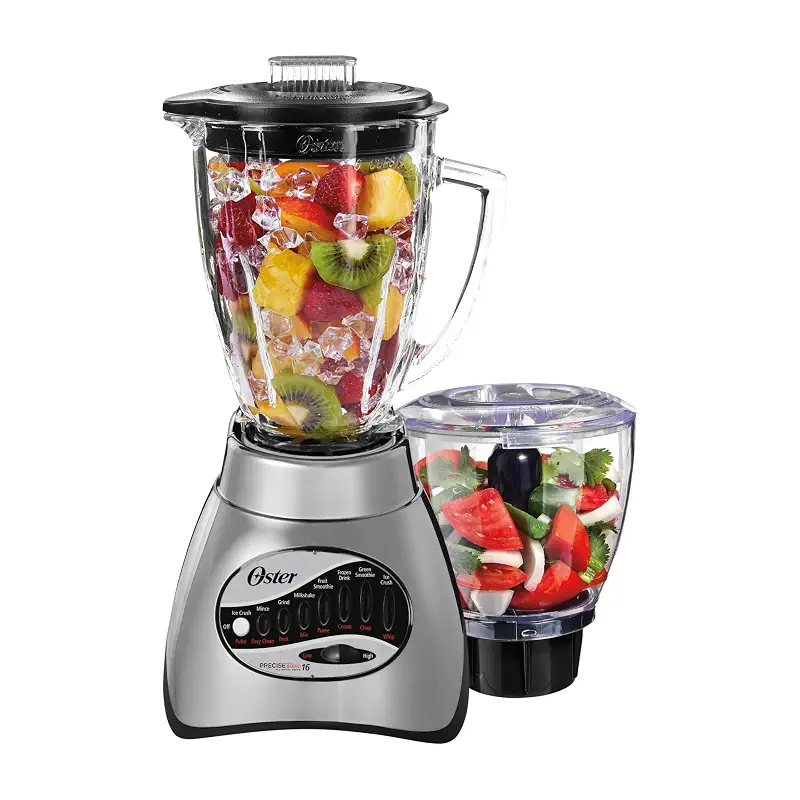
The Oster Classic Series adds complexity deliberately, not for complexity's sake, but to handle a wider range of recipes and ingredients. Sixteen speeds span from gentle pulse to full-throttle puree, and the bundled 3-cup food chopper with its own S-blade doubles this blender as a prep tool. That dual capacity appeals to cooks who want one workhorse rather than two appliances. The 700-watt motor is adequate for the main jar, though owners note that very thick smoothies or dense batches sometimes slow the blade or trigger motor strain.
The glass jar is the same Boroclass quality as other Oster models, so durability isn't the weakness: versatility is the draw. Where this model diverges from simpler Oster options is the invitation to experiment: salsa, nut butters, hot soups, even grinding grains become accessible with sixteen speeds to dial in just the right texture. The food chopper alone saves prep time on cheese, nuts, and vegetables.
The significant caveat is noise. Owners report this model runs exceptionally loud: one reviewer purchased noise-reducing earplugs specifically for it. At maximum power, it can strain on very dense ingredients, and some units have shown electrical smell issues earlier than expected. For specialty tasks like making thick pastes, compare this against the best blender for frappes and other frozen drinks, where higher wattage models excel. Compared to the Ninja Professional Plus, the trades raw power and pitcher capacity for added prep-task versatility and a lower price, but you're trading some durability reputation and performance consistency too.
Pros
Sixteen-speed control handles everything from gentle pulsing to intense pureeing
Included food chopper with S-blade tackles cheese, nuts, and vegetable prep
700-watt motor adequate for smoothies, soups, sauces, and most daily tasks
Six-cup glass jar maintains Oster durability and clarity standards
Cons
Exceptionally loud operation at high speeds, louder than most competitors
Some reports of electrical smell under sustained use or dense batches
Key features
700-watt motor with 16 distinct speeds from pulse to full-power puree
Three-cup food chopper with stainless-steel S-blade for vegetable and nut prep
Six-cup boroclass glass jar dishwasher-safe and built-in measurement filler cap
Brushed nickel finish with modern aesthetic; durable all-metal drive connection
Oster 10-year limited warranty; includes 3-year satisfaction guarantee
#5 Pick
Most Powerful
Ninja
Ninja Professional Plus Blender, Auto-iQ, 1400W, 72oz Pitcher, BN701 | 1400 peak-watt motor, 3 Auto-iQ presets for smoothies, frozen drinks & ice cream. Total Crushing blades. Dishwasher safe.
4.7(19,506)
1400-watt peak power and 72-ounce pitcher make this Ninja ideal for large batches and demanding tasks.
Ideal for: Families, meal preppers, and power users who blend large batches and value preset convenience and raw motor power.
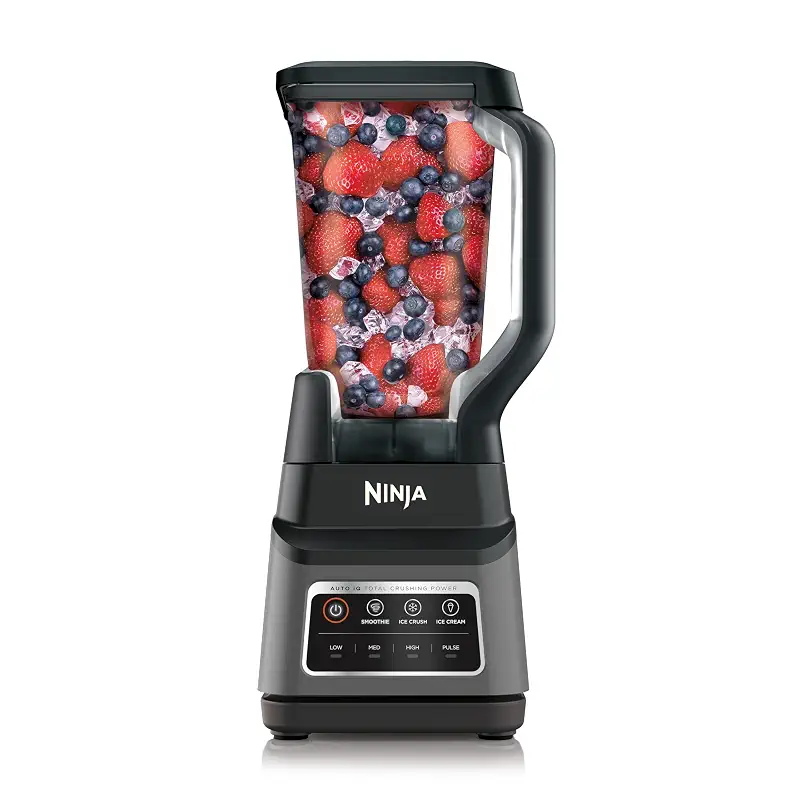
The Ninja Professional Plus is the power player in this lineup. At 1400 peak watts with three-tiered Total Crushing blades and a 72-ounce pitcher, it's built for volume and intensity. The Auto-iQ presets combine timed pulsing and blending sequences, so you set it and the machine handles the timing; one push for smoothies, another for frozen drinks. Owners who make smoothies for the whole family report that capacity matters: this pitcher lets you prep multiple servings at once without refilling. The motor doesn't stall on thick smoothie bowls or nut butters, and it crushes ice into snow in seconds.
The trade-off against glass-jar models is the plastic pitcher, which, while BPA-free and durable, will eventually fog and can absorb stains and odors over years of daily use. If you prioritize raw power, large-batch convenience, and feature-rich automation over the clarity and timelessness of glass, the Ninja delivers. The base is heavier and more stable than most competing brands, and suction feet keep it planted even during aggressive blending. Cleanup is straightforward: the pitcher, blade assembly, and lid all go in the top rack dishwasher.
Where the Ninja diverges from Oster models is in philosophy: it trades the tactile simplicity and permanence of a glass jar for practical engineering: power, capacity, and preset intelligence. If you're a household blender or do meal prep for multiple people weekly, the 72-ounce capacity and 1400 watts justify the switch away from glass versus plastic blender jars. The Oster Pro 1200 remains the better choice if you value enduring clarity and prefer manual control.
Pros
1400-watt peak power crushes ice and frozen ingredients without hesitation
72-ounce pitcher handles multiple servings and meal-prep batches in one run
Three Auto-IQ presets eliminate guesswork with timed pulse and blend sequences
Heavy base with suction feet provides rock-solid stability during operation
Cons
Plastic pitcher will eventually fog and absorb stains unlike glass alternatives
High-power operation is notably loud, requiring volume tolerance or hearing protection
Key features
1400-watt peak motor with three-tiered Total Crushing blade assembly
72-ounce BPA-free plastic pitcher with 64-ounce max liquid capacity marking
Three intelligent Auto-IQ presets for smoothies, frozen drinks, and ice cream
Locking pitcher and safety features prevent operation until fully assembled
Dishwasher-safe pitcher and blade assembly; includes 15-recipe inspiration guide
How to Choose a Blender with Glass Jar
Four trade-offs that actually matter when matching a blender with glass jar to your kitchen.
Power and Motor Wattage
Motor wattage determines how quickly and smoothly a blender processes tough ingredients like ice and frozen fruit. Entry-level glass-jar blenders run 600–700 watts and handle everyday smoothies without struggle. Mid-range models (1000–1200 watts) crush ice faster and manage denser batches with less strain on the motor. For occasional use or single smoothies, 700 watts suffices. If you blend daily or work with nut butters and ice cream, jump to 1000 watts or higher. The Ninja Professional Plus at 1400 watts sits at the top for maximum power and capacity.
Glass Jar Benefits and Considerations
Glass doesn't fog, stain, or absorb odors the way plastic does, so your blender jar stays clear and clean-smelling for years. Boroclass glass resists thermal shock, meaning you can blend hot soups one minute and add ice the next without cracking. The downside is weight: glass jars are heavier than plastic, so they take up more counter or cabinet space. They can also break if dropped hard, though most owners find the durability trade-off worth it. Understanding glass versus plastic blender jars helps you weigh whether premium clarity and longevity justify the extra heft in your kitchen.
Capacity and Your Blending Routine
Most glass-jar blenders come in six-cup (48-ounce) sizes, which covers single smoothies, sauces for two, and small soup batches. The Ninja Professional Plus offers 72 ounces, ideal if you regularly blend for four or more people or prep smoothies for the week. If you live alone or blend occasionally, six cups is plenty. For families or meal preppers, larger capacity saves time and multiple runs. Balance pitcher size against counter space: bigger blenders occupy more real estate permanently or in storage.
Speed Control and Preset Convenience
Simple two-speed models (high-low) suit minimalist cooks comfortable with manual control. Eight to sixteen speeds offer more precision for texture experimentation: frozen drinks versus hot soups versus grinding. Auto-IQ presets program timed sequences so you don't stand over the blender; one touch handles smoothies or frozen drinks automatically. Entry-level buyers often prefer simpler controls to learn the machine, while daily blenders eventually appreciate extra speed range. Consider whether you experiment with recipes or stick to the same few blends. If you enjoy crafting specialty frozen beverages, explore options in the top blender for frappes category to see how models perform under specialized demands.
Noise and Maintenance Logistics
All powerful blenders are loud: expect 80–105 decibels at full power. If you blend early morning or in an open kitchen, this matters. Some owners use earplugs or blend in a distant room. Maintenance involves rinsing the jar immediately after use; glass prevents staining if you rinse quickly. The glass blender jar cleaning guide covers thorough care to extend jar life and prevent odor buildup. Removable blade assemblies and gaskets simplify deep cleaning. Check whether replacement parts are affordable and available. Oster parts cost far less than premium brands.
Frequently asked
Quick answers to the questions readers ask most.
Is a glass jar really worth the extra weight compared to plastic?
Yes, for daily blenders. Glass won't fog, stain, or absorb odors after years of smoothies and sauces. It also withstands heat from warm ingredients without warping. The trade-off is weight and breakage risk if dropped hard. Owners who blend regularly report that clarity and durability make the extra weight negligible, and most glass jars outlast plastic by five or more years. For occasional or once-weekly use, plastic suffices.
How loud is too loud for a blender?
Blenders at 1000+ watts typically run 85–105 decibels: equivalent to a busy city street. If you blend early morning or live in a noise-sensitive household, consider pausing background music or blending in a different room. Some owners wear noise-reducing earplugs. Lower-wattage models (600–700 watts) are slightly quieter but still audible. Ninja and Oster Pro models tend toward the louder end due to raw power. If noise is a dealbreaker, look for smaller capacity, lower-wattage options.
Can I use a blender for hot soups if it has a glass jar?
Yes. Boroclass glass resists thermal shock, so you can blend hot soups without cracking. Let soup cool slightly (around 140–150 degrees) before blending to avoid steam pressure building inside. Never fill the jar more than halfway with hot liquid, and remove the lid or vent it slightly to prevent explosive steam release. Allow the jar to cool completely before washing with cold water. Always check the manufacturer's heat guidelines: most glass-jar blenders handle soups safely.
What's the difference between peak watts and rated watts?
Rated watts (also called continuous power) is the motor's sustained output during normal blending. Peak watts is the maximum power burst: usually during startup or when tackling very dense ingredients. A blender listed as 1000 peak and 600 rated means it can spike to 1000 watts briefly but runs at 600 watts most of the time. Rated wattage matters more for everyday performance; peak wattage is marketing flourish. Compare rated wattage across models for a fair power comparison.
Should I buy a blender with presets or manual speed control?
Presets (Auto-IQ) simplify one-touch blending if you make the same drinks regularly: perfect for busy mornings. Manual speeds give you complete control for experimentation and are easier to learn if you're new to blending. Many daily blenders end up using presets 80 percent of the time and reach for manual control only occasionally. If you blend the same smoothie every morning, presets save a few seconds. If you experiment with recipes, manual control feels less restrictive. Both approaches work equally well for durability and results.