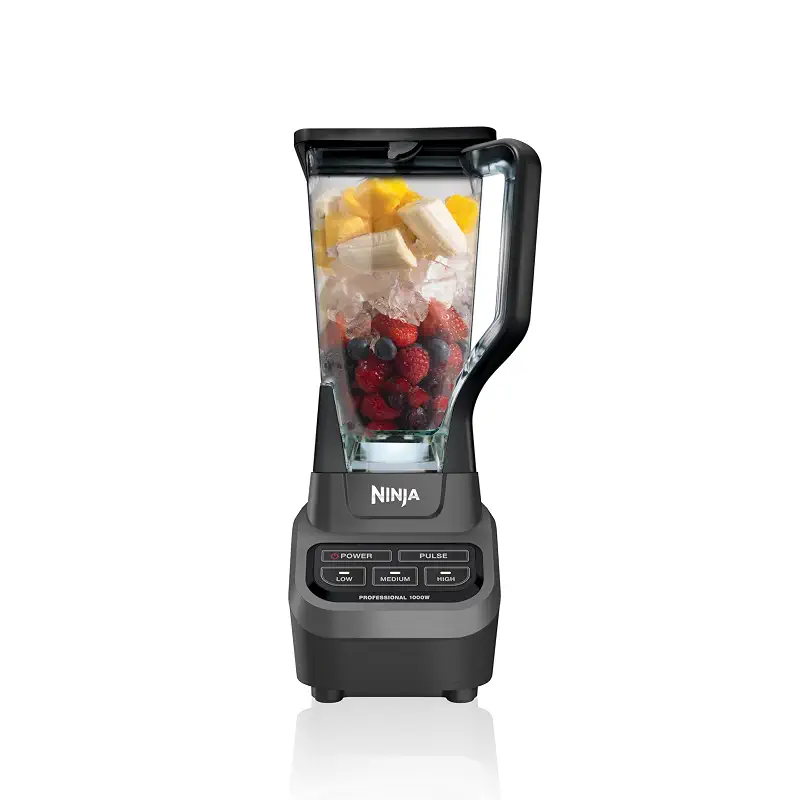
Ideal for: Home cooks who want reliable nut butter production without spending premium money.
The Ninja Professional's 1000-watt motor and Total Crushing blade design make it a strong workhorse for nut butter production. The XL 72-ounce pitcher means you can process a full batch of peanuts without multiple runs, and the durable stainless-steel blades are engineered to pulverize, not just cut. Owners report the blender handles frozen fruit, whole vegetables, and dense ingredients consistently: all markers of a motor that won't quit under load.
There's one real trade-off to consider: the sharp blades that give the Ninja its initial bite do dull over time, particularly with regular use or when processing hard ingredients. One long-term user noted that after about 25 blending sessions with nut-heavy smoothies, they detected a subtle texture change. If you're making peanut butter weekly, blade replacement may become part of your maintenance routine within a year or two. That's not unusual for this price tier, but it's a factor if durability matters most to you.
Compared to the Ninja Mega Kitchen System, this model trades the food processor bowl and extra cups for simplicity and counter space. If nut butter is your primary goal and you don't need a full food processor, the streamlined design and straightforward one-pitcher setup make this the smarter pick.
Pros
1000W motor handles dense nut pastes without stalling
XL pitcher for full-batch peanut butter production
Dishwasher-safe pitcher simplifies cleanup after nut butter sessions
Total Crushing blades pulverize rather than chop
Cons
Sharp blades dull with frequent use over time
Motor generates some heat during extended blending
Key features
1000-watt motor with Total Crushing technology for thorough nut breakdown
72-ounce pitcher holds full batches of peanuts or nuts
Stainless-steel blade assembly for durable, consistent cutting
Ideal for: Cooks who blend nut butters regularly and want a single system for multiple kitchen tasks.
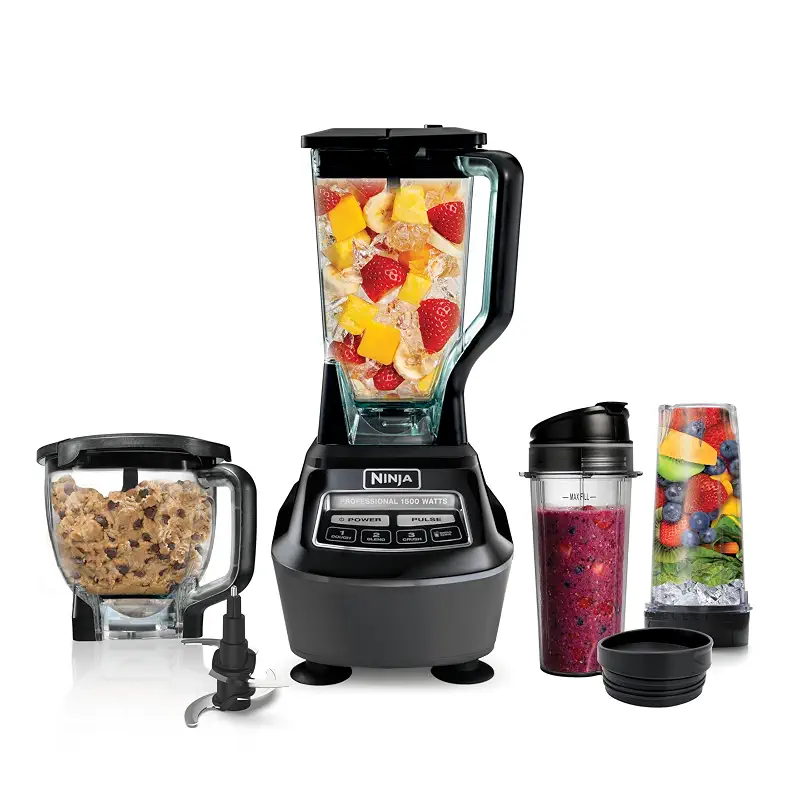
The Ninja Mega Kitchen System is engineered with 1500 watts of power, making it the most muscular option in this lineup for dense, oily work like peanut butter. The XL 72-ounce pitcher paired with a dedicated 8-cup food processor bowl gives you flexibility: blend nut butter in the pitcher, then switch to the processor for chopping vegetables or mixing dough without changing appliances. Owners consistently praise the motor's stability under load; several reported blending chicken breasts and potatoes without the motor showing strain.
The real advantage over the Ninja Professional is sheer horsepower and the processor attachment's utility. If you make nut butters weekly and also use your blender for soups, sauces, and meal prep, the all-in-one design eliminates swapping between appliances. However, the system's footprint is considerably larger, and the extra components add cleaning steps. The multiple blade types (Total Crushing, Pro Extractor, chopping, and dough blades) mean more parts to store and manage. Noise is also notable; several owners compared it to heavy machinery, which matters if early mornings or shared spaces are part of your routine.
Where the NutriBullet Full-Size Blender Combo emphasizes quieter operation and single-serve cups, this Ninja prioritizes pure processing power and kitchen consolidation.
Pros
1500W motor delivers sustained power through dense nut pastes
Food processor bowl with dough blade adds chopping and mixing versatility
Includes two cups for single-serve smoothies alongside large pitcher
Stable base prevents movement during heavy blending
Cons
Larger footprint requires significant counter or storage space
Noticeably loud operation during blending cycles
Key features
1500-watt motor base for professional-grade processing power
Dual blending system: pitcher plus 8-cup food processor bowl
Total Crushing blades crush ice and whole nuts to smooth consistency
Dough blade capable of mixing up to 2 pounds in 30 seconds
Ideal for: Home cooks seeking exceptionally smooth nut butter with quieter blending and less maintenance.
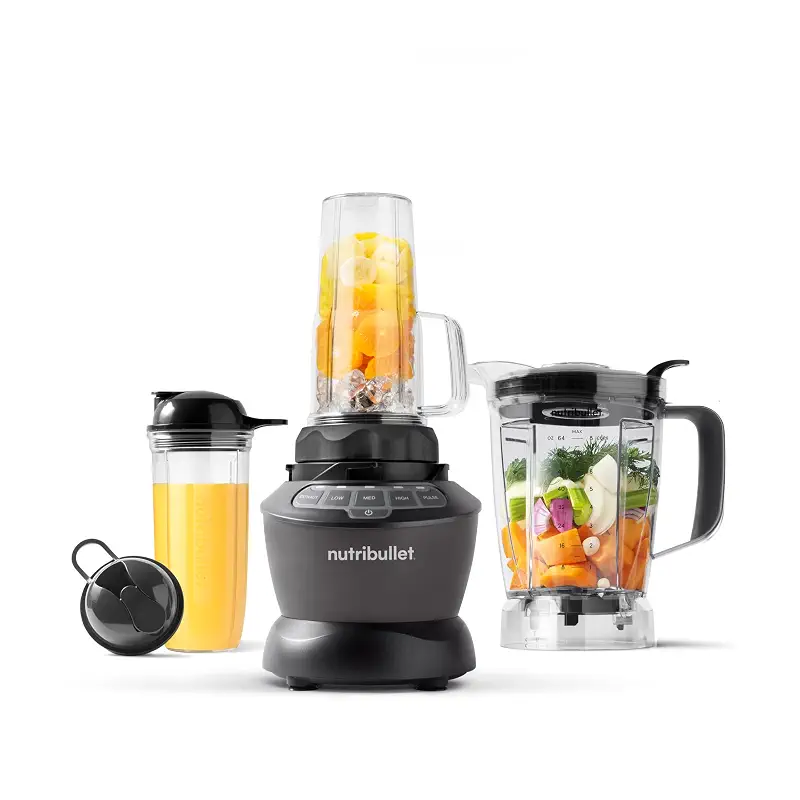
The NutriBullet Full-Size Blender Combo's 1200-watt motor and Easy-Twist Extractor Blade (made of stainless steel with cyclonic action) deliver a different blending philosophy: instead of relying on blade sharpness, it uses power and blade design to break down nuts into uniformly fine particles. Owners consistently report making nut butters with a professional texture; one reviewer specifically praised it for achieving smoothness that a cheaper Ninja model could not match. The cyclonic action is engineered to process ingredients evenly rather than leaving unmixed solids in pockets.
The major draw is quieter operation than comparable Ninja models. If noise from early-morning peanut butter sessions bothers neighbors or family, this blender's lower decibel output is a meaningful quality-of-life upgrade. The large 64-ounce pitcher and two smaller cups also cover both batch and single-serve needs. The one caveat: some users have reported occasional leaking from the single-serve cups during blending, though this is more common with the smaller wattage units (600–900W). The 1200W model's tighter seals appear to resolve this for most buyers, but it's worth being mindful if you're planning to blend on the go regularly.
Unlike the Ninja Mega Kitchen System, the NutriBullet stays dedicated to blending and doesn't include food processing attachments, which means no additional bowls or blades to manage.
Ideal for: Home cooks in small kitchens who prioritize thick, creamy nut butter texture over batch size.
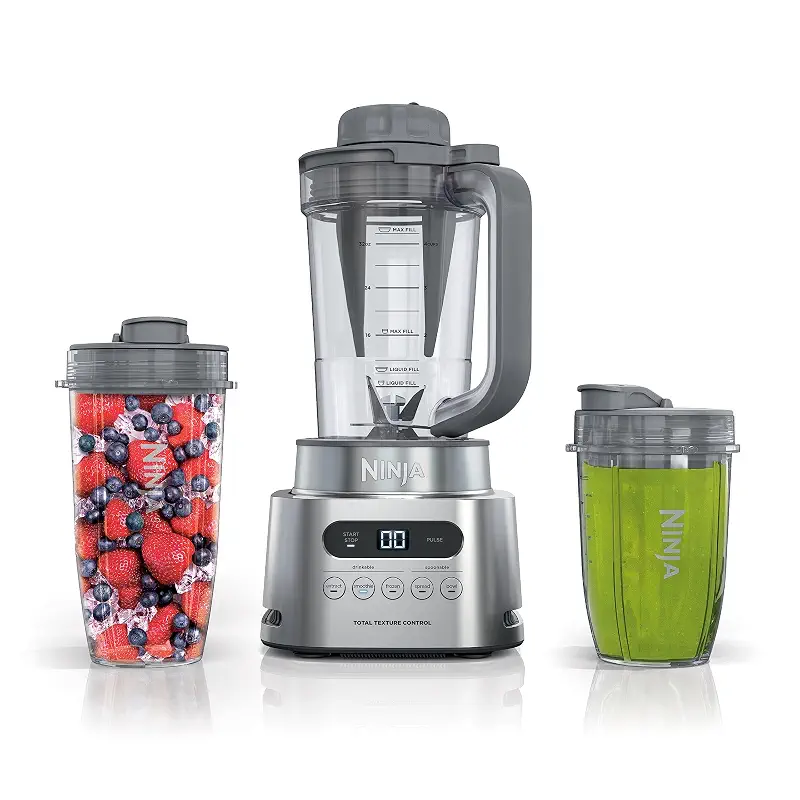
The Ninja TWISTi Blender DUO's standout feature is the built-in Twist Tamper, which pushes ingredients down toward the high-speed blades without requiring you to stop and manually tamp the pitcher. For peanut butter specifically, this design is a game-changer: as nuts thicken into paste, the rotating tamper continuously feeds material into the blade zone, preventing stalling and ensuring you achieve that dense, creamy consistency in a single pass. The 1600 peak-watt smartTORQUE motor never shuts down under heavy load: it's designed for exactly this kind of sustained, pressure-intensive work.
The 34-ounce pitcher is smaller than the Ninja Professional or NutriBullet, so you'll process peanut butter in smaller batches. However, the motor's efficiency means processing time per batch is often faster. The Hybrid-Edge blade assembly (with both cutting and crushing edges) breaks down nuts more thoroughly than purely sharp blades, reducing the blade-dulling problem that plagues other Ninja models over time. The two included 24-ounce and 18-ounce cups add single-serve smoothie convenience, though the main draw remains the core blending performance.
Where the Ninja Professional offers larger capacity and the NutriBullet emphasizes quieter operation, the TWISTi prioritizes compact power and the mechanical efficiency of its tamper system. If you have limited counter space but want the strongest nut-butter performance, this is the trade-off to consider.
Pros
Built-in twist tamper continuously feeds nuts toward blades without stopping
1600 peak-watt smartTORQUE motor sustains power under dense load
Hybrid-Edge blades reduce sharpness-dependent dulling over time
Compact pitcher fits easily on small counters
Cons
Smaller pitcher requires multiple batches for large quantities
Very loud during operation; hearing protection may be needed
Key features
1600 peak-watt smartTORQUE motor with no-stall technology
Ideal for: Dorm residents and travelers making quick, soft-ingredient smoothies in minimal space.
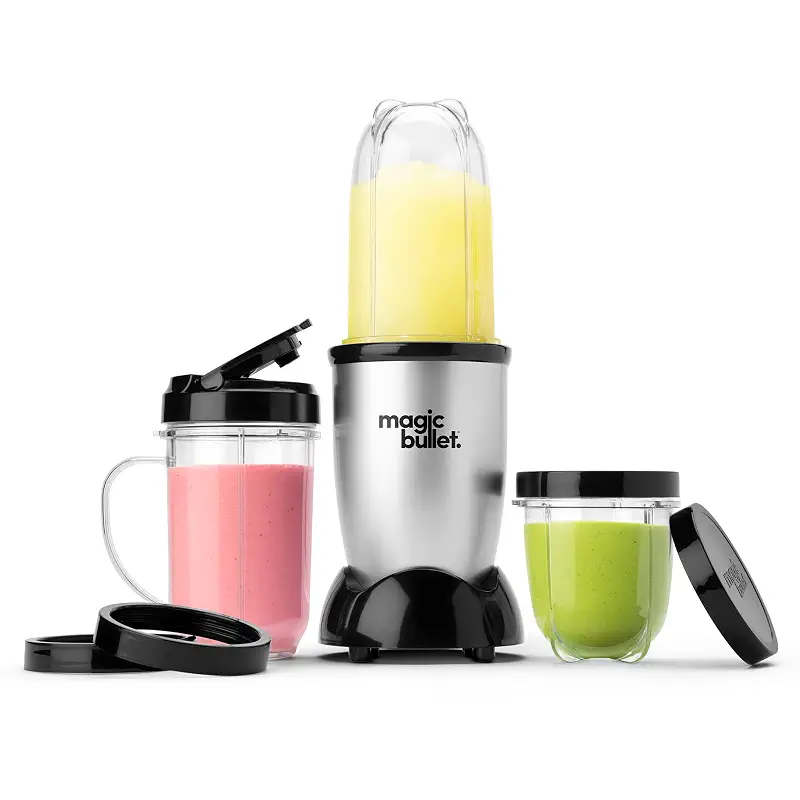
The Magic Bullet is the entry-level choice in this lineup, and I need to be direct: its 250-watt motor is not adequate for making peanut butter, especially not from raw nuts. While the cyclonic cutting zone works well for soft fruits, leafy greens, and quick protein shakes, nut butter production demands sustained pressure and motor stability that this appliance simply doesn't offer. Attempting to blend dense nuts will likely stall the motor or cause it to overheat, and you'll end up with uneven, chunky results rather than the smooth, creamy texture peanut butter requires.
The Magic Bullet's real value lies in its compact footprint and ease of use for quick, light blending tasks. If you're making single-serve smoothies or soft-ingredient dips, it's a worthwhile space-saver at a low entry price. The included cups and travel lids add convenience for on-the-go drinks. However, if nut butter is in your blending future, this model will frustrate you quickly. The best blender for hummus (another nut-based spread) also demands more power than the Magic Bullet provides, which tells you this appliance is genuinely outside its operating envelope for thick, oily pastes.
Budget-conscious shoppers should invest the extra money in the Ninja Professional, which starts at a higher price point but won't let you down when the motor hits its true load.
Pros
Ultra-compact size takes virtually no counter space
Quiet operation suitable for early mornings or shared kitchens
Includes multiple cups and travel lids for on-the-go convenience
Low price point for basic blending needs
Cons
250W motor insufficient for thick nut butters or hard ingredients
Lacks power to sustain production under dense load
Key features
250-watt high-torque motor sized for single-serve blending
Cross-blade assembly chops soft fruits and greens quickly
Includes two resealable cups and travel lids for grab-and-go drinks
How to Choose a Blender for Making Peanut Butter
Four trade-offs that actually matter when matching a blender to make peanut butter to your kitchen.
Motor Power Matters More Than Speed Settings
Nut butter production is not about variable speeds; it's about sustained, uninterrupted power. A blender making peanut butter must maintain torque as the motor encounters increasing resistance: first from whole nuts, then from the thickening paste. Look for motors rated at least 1000 watts; anything below 750W will struggle. The Ninja Professional and NutriBullet both deliver solid 1000–1200W, while the Ninja Mega and TWISTi push toward 1500–1600W. The extra wattage isn't flashy, but it prevents the motor from throttling down or stalling mid-blend, which saves you time and frustration.
Pitcher Capacity vs. Your Batch Size
How much peanut butter do you make at once? If you're processing 2–3 cups of raw peanuts weekly, a 72-ounce pitcher like the Ninja Professional or Ninja Mega is ideal; you can do a full batch in one go. If you live alone or blend smaller amounts, the 34-ounce pitcher on the Ninja TWISTi or the dual-cup system on the NutriBullet may be more practical and easier to handle. Smaller pitchers also mean quicker cleanup: an underrated factor when you're dealing with oily residue. Don't buy a oversized pitcher just to have it; a pitcher that matches your actual needs reduces both storage hassle and water usage during washing.
Blade Design: Sharpness vs. Long-Term Durability
High-speed blades stay sharp initially but dull with use, especially when grinding hard ingredients like nuts. The NutriBullet's stainless-steel cyclonic extractor and the Ninja TWISTi's Hybrid-Edge design reduce sharpness dependency by pairing blade geometry with motor force, which can extend the life of your blending performance. If you plan to make nut butter multiple times per week, consider a blender specs for nut butters that emphasizes durable blade materials. Standard sharp-blade designs (like the Ninja Professional's Total Crushing blades) are powerful out of the box but will require blade replacement within a year or two of frequent use. Budget accordingly for replacement parts, or factor durability into your initial purchase cost.
Noise and Kitchen Context
If you have neighbors, roommates, or early sleepers in your household, blender noise deserves serious weight in your decision. The NutriBullet Full-Size runs noticeably quieter than the Ninja Mega or TWISTi, though all high-power blenders produce significant sound during operation. The Ninja Professional sits in the middle; owners rarely complain, but it's not silent. The Magic Bullet is quiet by comparison, but its motor is too weak for nut butter anyway. If noise is a dealbreaker and you insist on nut butter capability, the NutriBullet is your best compromise: it's still a high-wattage blender, but owners report it as one of the quietest in its class.
Cleaning and Maintenance Demands
Making peanut butter leaves oily residue that clings to pitcher walls and blade assembly. A dishwasher-safe pitcher (like the Ninja Professional's) saves scrubbing time. The blade assembly typically requires hand washing to avoid motor-base exposure to moisture. Some blenders (like the NutriBullet) also include a tamper or tool for pushing ingredients safely during blending, which reduces the temptation to poke around with fingers near running blades. How to make homemade peanut butter includes proper cleanup steps; choose a blender where the disassembly process feels intuitive and where parts are easy to access. Complex blade stacks or hard-to-reach interior surfaces make maintenance a chore you'll dread.
Frequently asked
Quick answers to the questions readers ask most.
Can I make peanut butter from raw peanuts, or do I need roasted?
Both work, but roasted peanuts blend faster and produce a better texture. Raw peanuts require more blending time and take longer to release their oils, which stresses the motor. A high-wattage blender (1000W+) handles raw nuts, but roasted is the easier path, especially if your blender is under 1200W. If you use raw peanuts, blend in batches and give the motor rest periods to avoid overheating.
How long does it take to make peanut butter in a blender?
Roasted peanuts typically blend into creamy butter in 3–7 minutes, depending on the blender's wattage and your desired consistency. High-power models (1500W+) may finish in 3–4 minutes, while mid-range motors (1000–1200W) take 5–7 minutes. Raw peanuts need an additional 2–3 minutes. Start checking at 3 minutes; if the paste is still chunky or powdery, continue blending in 1-minute intervals.
Do I need to add oil to make peanut butter in a blender?
No. Peanuts release their own natural oils as they break down under blending, which makes the paste creamy without added oil. If your blender stalls or the paste refuses to become smooth after 10 minutes, your motor is likely underpowered. A properly powered blender (1000W+) will achieve smooth peanut butter from peanuts alone. Oil is optional only if you prefer a thinner, more pourable texture.
Will making nut butter void my blender's warranty?
Most blender warranties (Ninja, NutriBullet, Magic Bullet) cover normal food blending including nut butters, as long as you don't exceed the manufacturer's recommended fill levels or run the motor continuously beyond what the manual specifies. Avoid overheating the motor by taking brief rest breaks during long peanut butter sessions, and keep the motor base dry. Read your specific warranty: some manufacturers exclude commercial or extended continuous-duty use, but home peanut butter production is standard.
Can a smoothie blender make peanut butter, or do I need a food processor?
A smoothie blender is better suited to nut butter than a food processor, provided it has at least 1000W of power. High-speed blenders generate the friction and centrifugal force needed to extract oils and create a smooth paste, while food processors use a chopping blade and typically leave nut butter gritty or uneven. The Ninja Mega Kitchen System includes both a high-power blender pitcher and a food processor; for nut butter specifically, use the blender pitcher, not the processor bowl.