Best Blender to Make Nut Butter: Top Picks for Creamy Results
Find the best blender for nut butter with our expert comparison. Powerful motors, strong blades, and tested designs for smooth, creamy homemade spreads.
Ideal for: Home cooks making nut butter weekly; small households that prioritize thick spreads over large-batch smoothies.
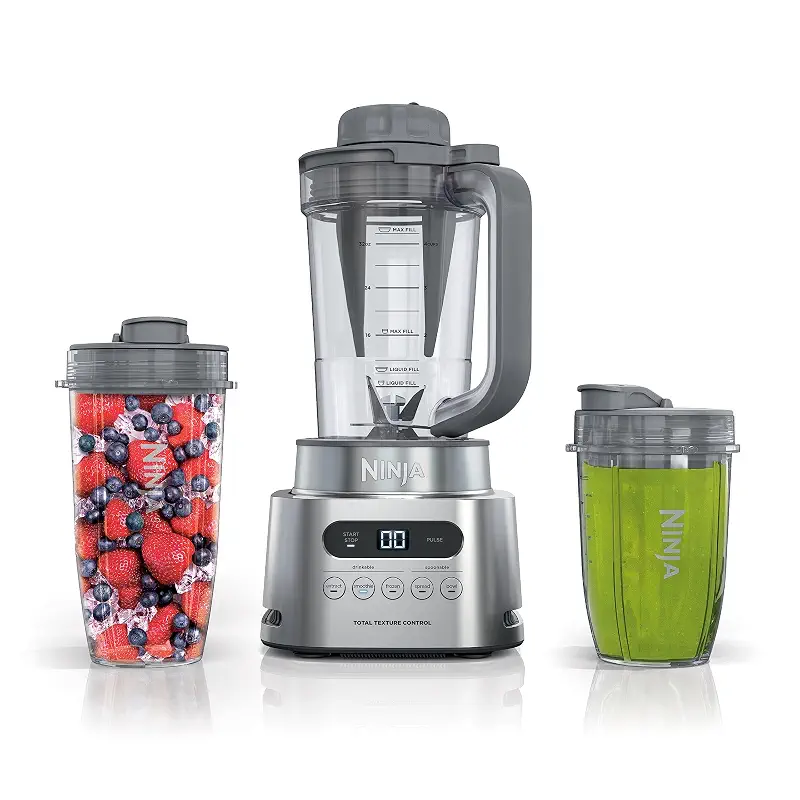
The Ninja TWISTi stands out for nut butter because it pairs raw horsepower with a built-in twist tamper that keeps thick pastes moving toward the blades. The 1600-watt smartTORQUE motor maintains speed even when resistance builds: a critical advantage when processing dense nut loads. Hybrid-edge blades are sharper and more durable than standard designs, meaning they stay effective through hundreds of batches. The 34-ounce pitcher is right-sized for nut butter work; large enough to handle meaningful quantities but small enough that you're not fighting air pockets the way you would in a full-size blender.
Owners consistently report that the tamper engineering makes the difference. Unlike blenders where you stop and stir by hand, this tamper rotates with the motor and pushes stubborn chunks downward, cutting blend time and reducing the risk of motor strain. The five preset programs include a spreads function tuned for this exact application.
Compared to the Ninja Professional, the TWISTi trades raw pitcher capacity for precision and the hands-free tamper feature, which genuinely matters when you're making nut butter weekly. Noise runs high (one review clocked it like an old palm sander), and the pitch is sharpest when the pitcher isn't completely full, so consider that if early mornings are your blend time.
Pros
Built-in twist tamper prevents manual stirring during blending
1600-watt motor sustains power through dense nut pastes
Hybrid-edge blades engineered for durability and consistent texture
Spreads preset program specifically tunes for nut butter consistency
Cons
Very loud operation, especially when pitcher not completely full
Lid locking mechanism occasionally feels loose under rotation
Key features
1600-watt smartTORQUE motor with anti-stall technology for heavy loads
Hybrid-edge blade assembly engineered for nut and seed processing
34-ounce pitcher with built-in rotating tamper for hands-free blending
Five preset programs including dedicated spreads function
Includes two single-serve nutrient extraction cups with lids
Ideal for: Families making large nut butter batches; multi-purpose blending where nut butter is one of several regular tasks.
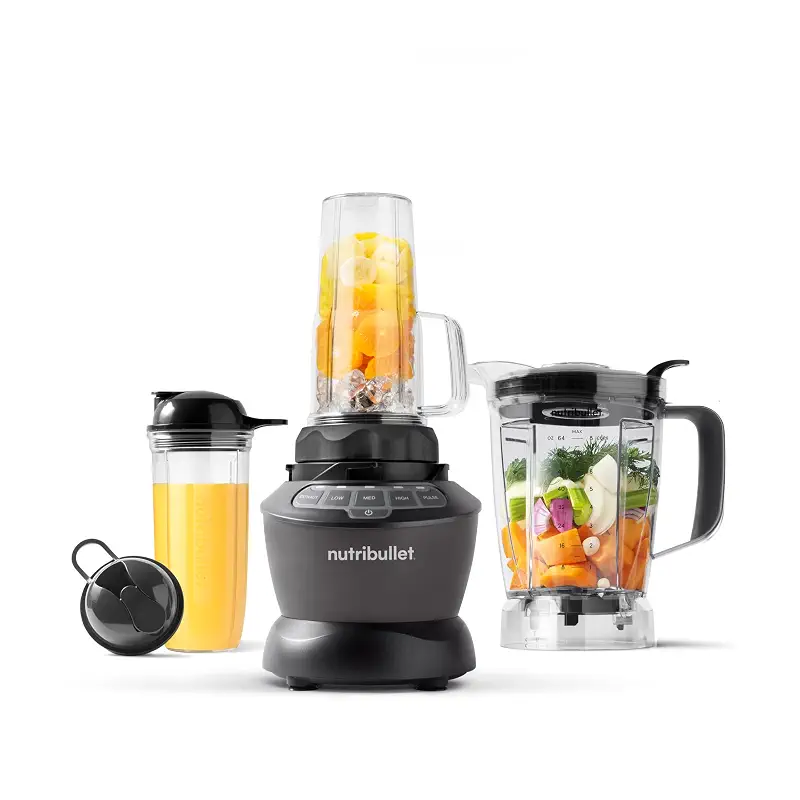
The NutriBullet Full-Size Blender Combo brings industrial-grade stainless-steel blades and a 64-ounce pitcher that lets you process substantial nut quantities in a single cycle. The 1200-watt motor is adequate for nut butter if you're patient and respect the fill guidelines, though it trades the tamper convenience of the TWISTi for raw capacity. Owners report smooth results when blending nuts with a small amount of oil, which is the traditional approach to nut butter anyway.
The extractor blade design (made of stainless steel with cyclonic action) works differently from standard cutting blades; it pulverizes rather than chops, which produces creamier texture over time compared to sharp-blade designs. The three-speed plus pulse control gives you granular control over consistency, useful if you like your almond butter chunky or want tahini nearly liquid. The combination of a large pitcher, two single-serve cups, and interchangeable blade systems makes this the most versatile pick if you blend for multiple purposes beyond nut butter.
Where the NutriBullet lags behind the TWISTi for nut butter specifically: no tamper means you'll stop and scrape, and the motor, while solid, doesn't have the anti-stall smartTORQUE technology. That said, if you also make soups, grind coffee, or process large family smoothie batches, the capacity and dual-vessel design win the versatility argument. Noise levels are lower than the Ninja models, a genuine advantage if blending early or late.
Pros
Stainless-steel extractor blade engineered for pulverizing rather than cutting
64-ounce pitcher handles bulk nut processing without multiple batches
Three speeds plus pulse for texture control across consistency spectrum
Quieter operation than comparable Ninja models at full power
Cons
No built-in tamper requires manual stopping and scraping during thick blends
1200-watt motor lacks anti-stall protection under sustained heavy loads
Key features
1200-watt motor with stainless-steel cyclonic extractor blade
64-ounce pitcher plus two 24-ounce single-serve cups with lids
Three precision speeds and pulse function for fine texture control
Extract program optimizes nutrition breakdown for dense ingredients
All containers and blades dishwasher-safe for easy cleanup
#3 Pick
Best for Budget-Conscious Cooks
Ninja
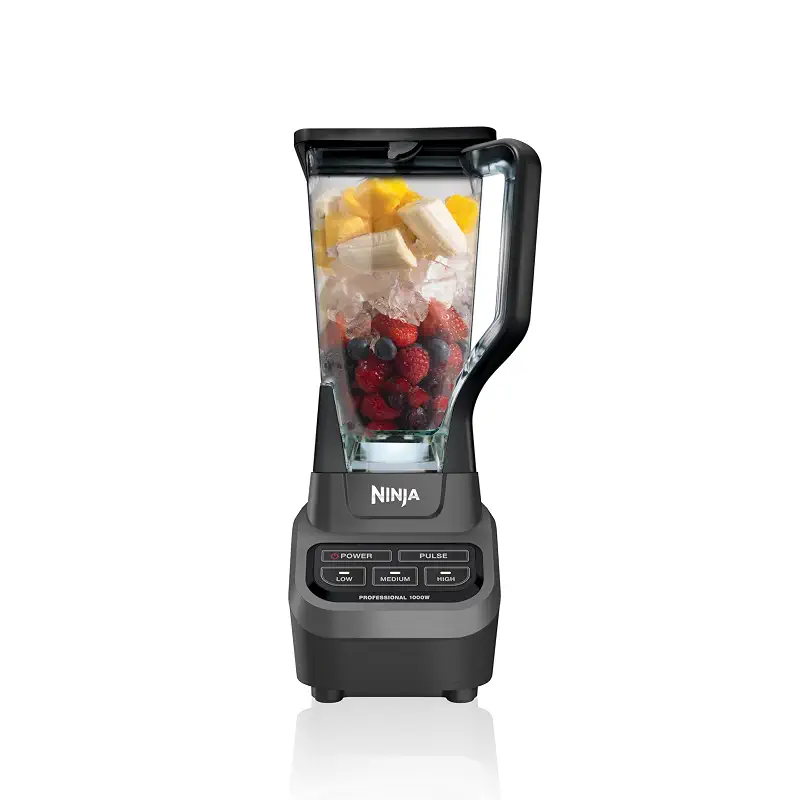
Ninja Professional Blender, 1000W, Total Crushing Tech, 72oz Pitcher, BL610 | 1000W Total Crushing blades crush ice & blend smoothies, sauces. XL 72-oz pitcher for family batches. Dishwasher-safe parts.
4.6(57,120)
1000-watt total-crushing blender with 72-ounce pitcher offers entry-level nut butter potential at a lower investment.
Ideal for: Budget-first buyers; occasional nut butter makers willing to pulse and scrape; those blending smoothies primarily with nut butter as a secondary task.
The Ninja Professional ranks as the most affordable full-size blender on this list and handles nut butter with the caveat that you'll need patience and proper technique. At 1000 watts, it's less powerful than both the TWISTi and NutriBullet, so you may need to blend in shorter pulses or add a small amount of neutral oil to ease the load on the motor. The total-crushing blade design (similar to the NutriBullet's principle) pulverizes rather than cuts, which means texture improves the longer you run it.
The 72-ounce pitcher is genuinely large and dishwasher-safe, making cleanup straightforward. Many owners have used this blender daily for smoothies over years with no degradation, suggesting the motor design is robust even if not overtly powerful. The simple three-button control means no learning curve, and replacement blades are inexpensive when the time comes.
The trade-off is clear: where the TWISTi has a tamper and the NutriBullet has cyclonic stainless steel, this Ninja relies on you to pulse, pause, and scrape. For occasional nut butter makers on a tight budget, that manual work is acceptable. For weekly nut butter production, the TWISTi's tamper will save you frustration. The best blender for hummus shares similar motor demands, and this unit handles that category well, so it's a reasonable choice if you want one appliance covering multiple thick-paste applications.
Pros
1000-watt total-crushing blade design creates smooth texture with patience
72-ounce pitcher allows substantial batches with single motor cycle
Simple three-button interface, no preset confusion or unnecessary features
Lowest purchase cost among full-size options on this comparison
Cons
No tamper or anti-stall tech requires manual intervention between pulses
1000-watt motor may struggle with dry nuts without added oil
Key features
1000-watt professional motor with total-crushing blade technology
XL 72-ounce pitcher with 64-ounce max liquid fill line clearly marked
Three-speed control with pulse function for texture precision
Pitcher and blade assembly are BPA-free and top-rack dishwasher-safe
Included recipe guide covers smoothies, sauces, and frozen drinks
#4 Pick
Best High-Power Professional Option
Psiidan
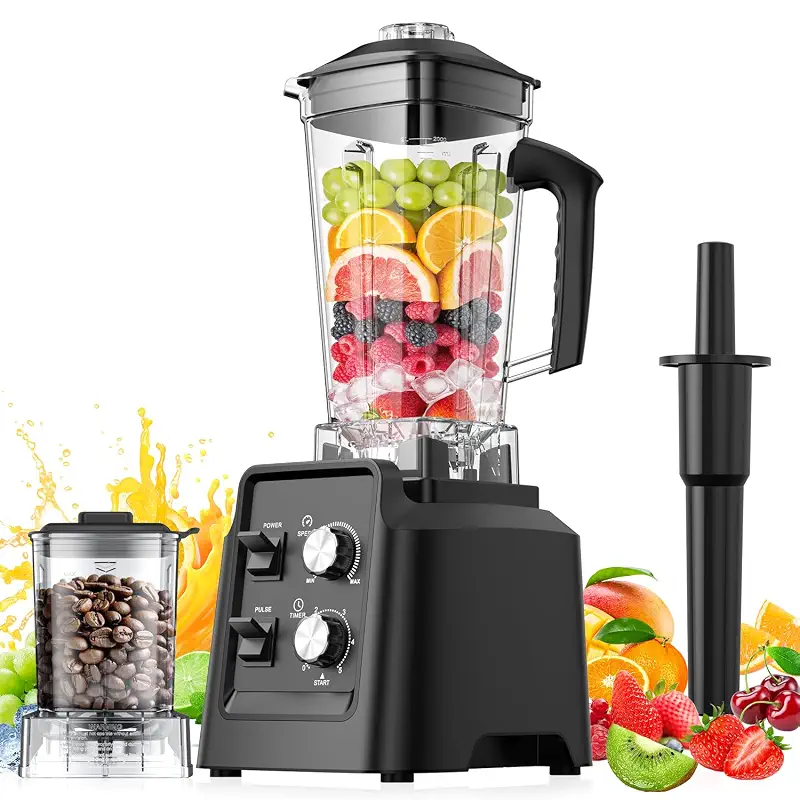
Blender, 1800W Blender with Grinder - 6-Blade Professional Smoothie Blenders for Kitchen, Crushes Ice, Self-Cleaning, 68oz & 20oz Jars Dishwasher Safe, for Baby Food, Nut Butter
4.5(409)
1800-watt motor with six-blade system and dual-jar design crushes nuts to ultra-smooth nut butter faster than standard blenders.
Ideal for: High-volume nut butter makers; those who blend daily and want commercial-grade durability; cooks needing separate grinding and blending capacity.
The Psiidan brings genuine commercial-grade power to residential nut butter making. At 1800 watts, it's the most powerful motor in this lineup, and the six-blade 3D stainless-steel cutting system is engineered to handle sustained heavy work. The motor runs hot during long cycles, and that's by design; thermal protection cuts it off if temperature exceeds safety limits, but that also means you won't lose power mid-blend on thick pastes.
The dual-jar design sets it apart: a 68-ounce main pitcher for bulk blending and a separate 20-ounce grinder jar for spice or coffee-bean work. If you make nut butter regularly but also grind coffee or process seeds separately, you don't need to disassemble and clean the main blade assembly between tasks. The self-cleaning function (add water and soap, pulse for 60 seconds) is a genuine time-saver for daily use.
One honest limitation: this blender is large and heavy. It occupies more counter real estate than the Ninja TWISTi and requires dedicated space. If your kitchen is compact, the footprint matters. Owners also note that while the motor is more powerful, the overall design feels built for semi-commercial environments (smoothie shops, juice bars) rather than typical home kitchens. For apartment dwellers or those with limited storage, the smaller Ninja models make more practical sense. Compared to the NutriBullet, the Psiidan costs more and takes up roughly twice the space, but the raw motor power and dual-jar system justify the premium for high-volume nut butter makers.
Pros
1800-watt motor delivers fastest nut-to-butter processing time
Six-blade stainless-steel system engineered for sustained heavy loads
Separate grinder jar eliminates blade disassembly between grinding and blending
Self-cleaning pulse function cuts daily cleanup time significantly
Cons
Large footprint and weight require dedicated counter space and effort to move
Commercial-scale design may feel oversized for typical home kitchen use
Key features
1800-watt peak power motor with six-blade 3D stainless-steel crusher
68-ounce main pitcher plus dedicated 20-ounce grinder jar for dual functions
Built-in timer and multiple speed settings for hands-free operation
Self-cleaning pulse mode using water and soap for rapid cleanup
Thermal protection system prevents motor damage during extended use
Ideal for: Single or couple households making small-batch nut butter regularly; apartment dwellers and those with limited counter space; users prioritizing quick cleanup.
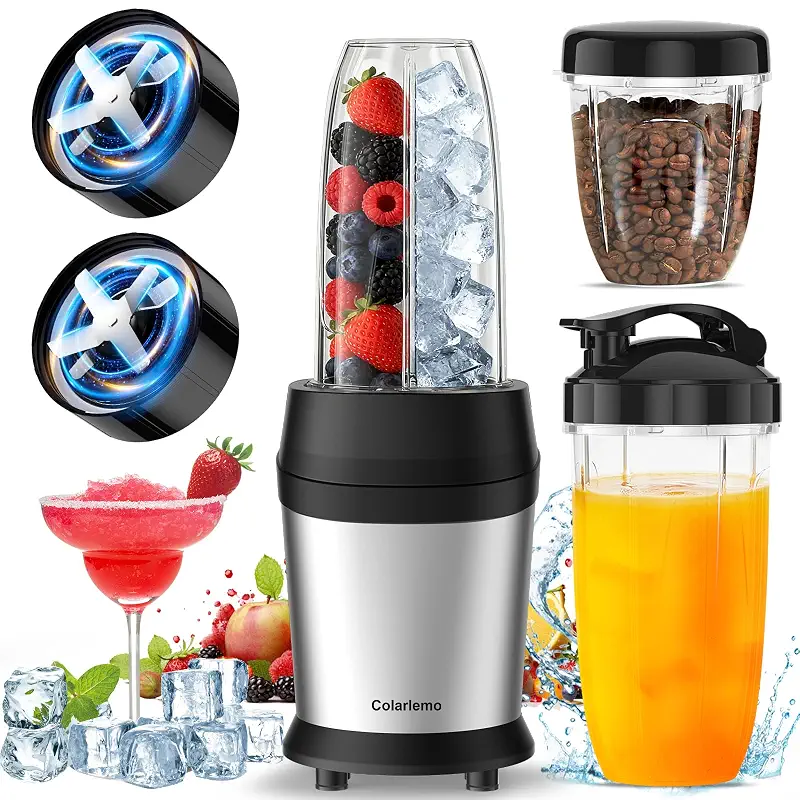
The Colarlemo offers surprising power in a personal-blender frame. At 1200 watts and 25,000 RPM, the motor spec matches the NutriBullet's wattage but spins faster, which translates to quicker processing of nuts. The 6-blade dual-assembly design (two interchangeable blade sets) provides backup, useful if one set dulls over time and frequent nut-butter use. The three cup sizes (23, 32, and 37 ounces) solve a real problem: the 37-ounce cup fits genuine batches, while the 23-ounce cup handles single servings without wasting motor power on mostly air.
For someone making nut butter two or three times a week in modest quantities, this hits the sweet spot between the full-size Ninja and the overbuilt Psiidan. Setup takes seconds, cleanup is faster than any pitcher blender, and the to-go lids let you blend straight into a travel cup. Owners report smooth nut-butter results when using the largest cup and respecting the fill line guidance.
The catches: reviews note that the motor can overheat if continuously overloaded (it has a cool-down timer), and the O-rings occasionally slip during high-speed operation, requiring you to unscrew, reseat, and re-tighten. These aren't defects so much as design trade-offs for the compact form. Also, the 37-ounce capacity, while usable for nut butter, is smaller than the Psiidan's 68-ounce pitcher, so if you're batch-prepping for a month, you'll make multiple cycles. Compared to the Psiidan, the Colarlemo costs significantly less and demands minimal storage, but sacrifices raw power and capacity for everyday convenience.
Pros
1200-watt motor with 25,000 RPM spins fast enough to process nuts quickly
Three cup sizes reduce wasted air and motor strain for smaller batches
Dual six-blade assemblies provide backup and longer operational lifespan
Compact footprint with to-go lids streamlines cleanup and portability
Cons
37-ounce maximum capacity requires multiple cycles for larger batch prep
Motor thermal protection cuts power if overworked, requiring cool-down breaks
Key features
1200-watt motor spinning up to 25,000 RPM for fast nut processing
Two interchangeable six-blade stainless-steel assemblies with 304 steel construction
Three cup sizes (23, 32, 37 oz) with measurement lines and to-go lids
One-touch push-and-twist operation with non-slip silicone-foot base
Self-cleaning mode with water and soap for quick post-use rinsing
How to Choose a Nut Butter Blender
Four trade-offs that actually matter when matching a blender to make nut butter to your kitchen.
Motor Power and Anti-Stall Technology
Nut butter production demands sustained torque, not just peak wattage. A 1200-watt motor can handle nut blending if the design includes anti-stall technology (like Ninja's smartTORQUE) or cyclonic blade geometry that keeps pressure consistent. The blender motor specs explained in detail show that 1600 to 1800 watts is ideal for thick pastes, while 1000-watt models work if you're willing to pulse, pause, and add small amounts of oil. Look for motors rated to handle 'heavy loads' or specifically designed for 'spreads' and 'nut butter' functions.
Blade Design and Durability
Sharp cutting blades dull with repeated nut processing, while pulverizing or 6-blade designs maintain effectiveness longer. Stainless-steel blades last longer than hardened plastic. If the blender marketing mentions 'hybrid-edge' or 'cyclonic action' or lists multiple blade options, those are signs the designer anticipated high-friction work. Replacement blade kits (which many manufacturers sell separately for $15–$30) signal confidence in the design and give you a cost-effective refresh path after years of heavy use.
Pitcher Size and Tamper Engineering
The ideal pitcher size for nut butter is 30 to 68 ounces. A 34-ounce pitcher lets you work with a full load without excess air space, while larger pitchers (64+ ounces) suit families or meal-prep batches. A built-in tamper that rotates with the motor (like the Ninja TWISTi's design) is a game-changer because it keeps paste moving downward without your intervention. If there's no tamper, expect to stop and scrape by hand, which extends blend time and increases manual labor. Making nut butter at home demands this kind of convenience if you're blending weekly.
Heat Management and Thermal Protection
Nut butter production generates friction heat. Blenders with thermal protection (a motor cutoff if temperature exceeds safe limits) won't burn out under sustained loads, but they may require cool-down time if you're making multiple batches back-to-back. Motors with side and bottom ventilation cool more efficiently than sealed designs. If you're processing more than 2 cups of nuts in one session, look for a blender marketed as 'commercial-grade' or 'continuous-duty' rather than models designed primarily for smoothies and cold blending.
Cleaning and Maintenance
Nut oils cling to blades and pitcher seams. Dishwasher-safe parts speed cleanup, but blade assemblies often require hand-washing with a long brush to reach between teeth. Removable O-rings and seals (rather than glued components) let you disassemble, dry, and reassemble without mold or odor buildup. Some newer models include a self-cleaning pulse function (add water and soap, blend for 60 seconds), which is a genuine time-saver if you're making nut butter several times per week.
Frequently asked
Quick answers to the questions readers ask most.
Can I make nut butter in a 600 or 900-watt blender?
Technically yes, but with significant limitations. Lower-wattage blenders require more patience, frequent stopping to scrape, and risk overheating if you run them continuously. Adding a small amount of neutral oil (coconut, avocado) eases the load. For occasional nut butter making (once or twice a month), a 600-watt unit works. For weekly production, move to at least 1000 watts with anti-stall technology or a tamper to avoid frustration.
How long does it take to make nut butter in these blenders?
Processing time varies by nut type and motor power. Hard nuts like almonds or peanuts take 6 to 12 minutes in a 1000-watt blender with manual scraping, versus 3 to 5 minutes in a 1600-watt blender with a tamper. Softer nuts like cashews or macadamia blend faster. Higher RPM (revolutions per minute) generally means quicker conversion to paste, though wattage and blade geometry matter equally. Expect 2 to 4 minutes in the Psiidan's 1800-watt system.
Do I need to add oil to make nut butter?
Not strictly necessary, but a small amount (1 to 2 tablespoons per cup of nuts) reduces motor strain, speeds blending, and prevents overheating. Oil is optional if your blender has a tamper and 1500+ watts. For lower-wattage models or if you're making large batches, a splash of coconut or almond oil is practical insurance against motor fatigue and helps achieve creamier texture without manual stirring.
Which blender is quietest for nut butter making?
The NutriBullet Full-Size is notably quieter than Ninja models, though no blender is truly silent during high-speed nut blending. The Colarlemo personal blender runs quieter than full-size units, partly because the smaller pitcher and lower overall volume reduce sound projection. If noise is a concern, avoid models specifically flagged for 'chainsaw-like' volume, and choose units with enclosed motor housings and vibration-dampening bases.
How often should I replace the blender blade assembly?
With weekly nut butter use, quality blade assemblies last 1 to 2 years before noticeable dulling reduces texture quality. Stainless-steel designs outlast plastic or hardened composite blades. Most manufacturers sell replacement blade kits for $20–$40, making it affordable to refresh rather than replace the whole unit. If your blender includes dual blade options or easily removable assemblies, you can rotate them for extended life.