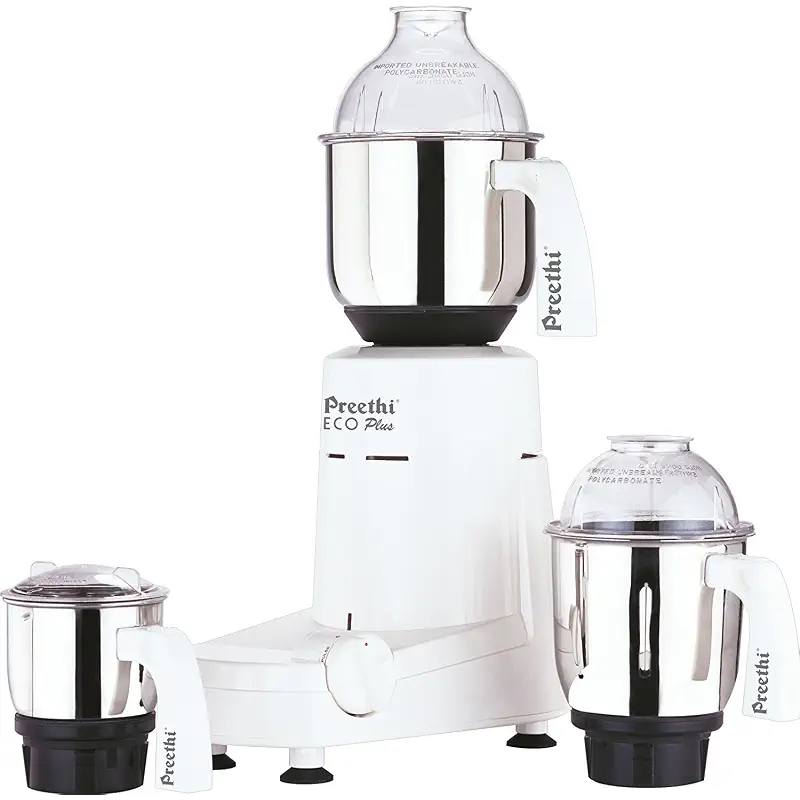
Ideal for: Indian households making idli, dosa, chutneys, and spice powders; home cooks prioritizing wet grinding over smoothies.
The Preethi Eco Plus brings wet-grinding expertise that matters when you're making idli batter. Owners who've used this model report that it produces the fluffy, fine-ground consistency that separates homemade idlis from dense ones, and multiple reviews highlight success with dosa batter, chutneys, and spice powders. The three different jar sizes (1.5L, 1.0L, and 0.4L) let you scale batches based on household size, which beats machines that force you into one-size-fits-all thinking.
The 550-watt motor and stainless steel construction are engineered for the wet-grinding demands of Indian cooking, not as an afterthought. Owners appreciate the included coconut scraper and replacement parts that arrive with the unit, a practical touch that reflects the brand's awareness that US-based Indian homes often lack convenient local repair options. One reviewer who had used Preethi models for over a decade noted this new purchase has held up through years of daily use.
The trade-off is power. At 550 watts, it won't bulldoze through frozen smoothies or raw nut butters the way higher-wattage machines do. Some owners report needing to run the grinder longer for thorough blending, and one noted the lack of latching lids means you'll hold the lid while it runs. If your primary use is idli batter and traditional Indian grinding tasks, this limitation barely registers. If you plan heavy daily smoothie use alongside batter prep, a Ninja model might suit you better.
Pros
Three stainless steel jars sized for different grinding tasks
Produces fluffy, finely-ground idli and dosa batter
Includes replacement parts and coconut scraper at no cost
Proven 15+ year durability in daily use
Cons
550-watt motor requires longer blending times for thick batters
Lids do not latch, requiring manual holding during operation
Key features
550-watt motor with high-grade nylon couplers for steady operation
Three stainless steel jars with flow breakers for consistent grinding
Wet and dry grinding, chutney jar, mincer and grater blade options
ISI-certified for durability and food safety in Indian kitchens
110-volt US/Canada compatible with vacuum rubber feet
#2 Pick
Best for Smoothies and Everyday Blending
Ninja
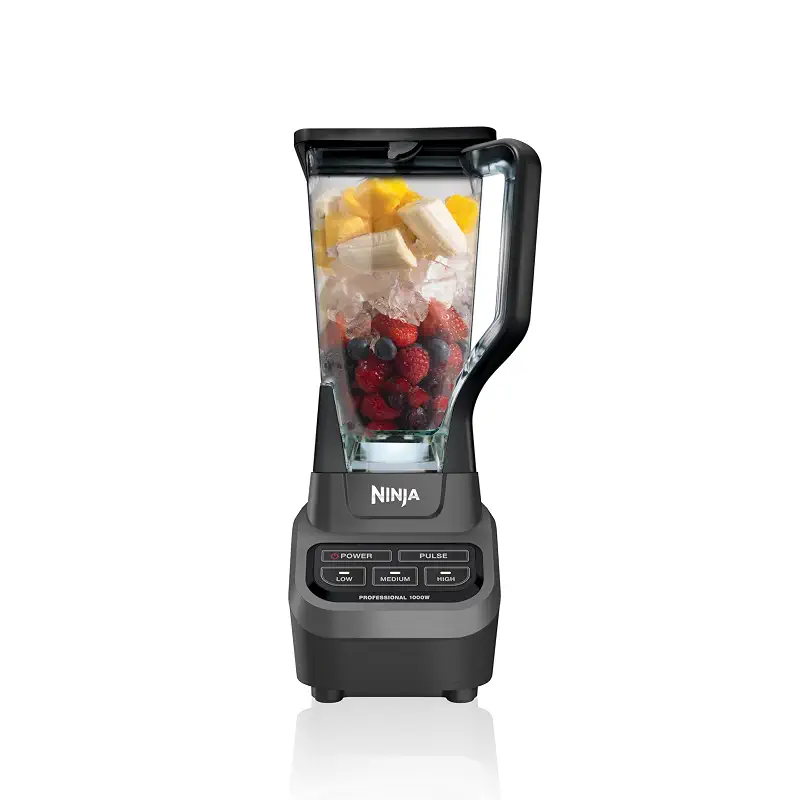
Ninja Professional Blender, 1000W, Total Crushing Tech, 72oz Pitcher, BL610 | 1000W Total Crushing blades crush ice & blend smoothies, sauces. XL 72-oz pitcher for family batches. Dishwasher-safe parts.
4.6(57,120)
Powerful single-pitcher blender optimized for smoothies and frozen drinks with sharp, durable stainless steel blades.
Ideal for: Smoothie enthusiasts and daily-blend cooks who occasionally need batter grinding; families prioritizing beverage prep.
The Ninja Professional trades wet-grinding specialization for raw blending power and versatility. At 1000 watts, it crushes ice and frozen fruit with ease, making it the obvious choice if your household blends daily smoothies alongside occasional batter prep. Owners consistently report silky-smooth smoothie results and appreciate the straightforward operation: three speeds, no presets, no fuss. The 72-ounce pitcher is generous for family batches, and the dishwasher-safe design means cleanup takes seconds.
One critical insight from long-term owners: this blender relies on blade sharpness to function. Several reviewers noted that after months of heavy use (especially with ice or frozen fruit), blades dull noticeably and smoothies shift from silky to slightly grainy. A Vitamix-owning reviewer switched to the Ninja for cost reasons but eventually moved back to the Vitamix because the Ninja's performance degraded over time. Compared to the Preethi Eco Plus, which excels at wet grinding but isn't ideal for smoothies, the Ninja swings the opposite direction: it's exceptional for blending drinks but not purpose-built for idli batter.
For idli batter specifically, the Ninja will work but demands careful ingredient ratios and patience. It's not designed for the wet grinding that traditional idli preparation requires, so batter may lack the characteristic fluffiness. If idli batter is 20% of your blending and smoothies are 80%, this machine is efficient and affordable. If batter quality is paramount, the Preethi or Premier wet grinder will serve you better.
Pros
1000-watt motor crushes ice and frozen fruit in seconds
Simple three-speed controls, easy to master and use
72-ounce pitcher excellent for family-size batches
Dishwasher-safe pitcher simplifies cleanup
Cons
Blade sharpness dulls over time, affecting smoothie texture after months
Not purpose-designed for wet grinding or idli batter consistency
Key features
1000-watt motor with Total Crushing Technology for ice crushing
Stainless steel blades sharp for efficient blending of frozen ingredients
72-ounce BPA-free pitcher with clear capacity markings
Corded electric, 12.5-amp power for household 110V outlets
Three-speed control with included recipe guide for smoothies and sauces
Ideal for: Busy households needing blending, food processing, dough mixing, and entertaining; cooks who want one powerful base replacing multiple tools.
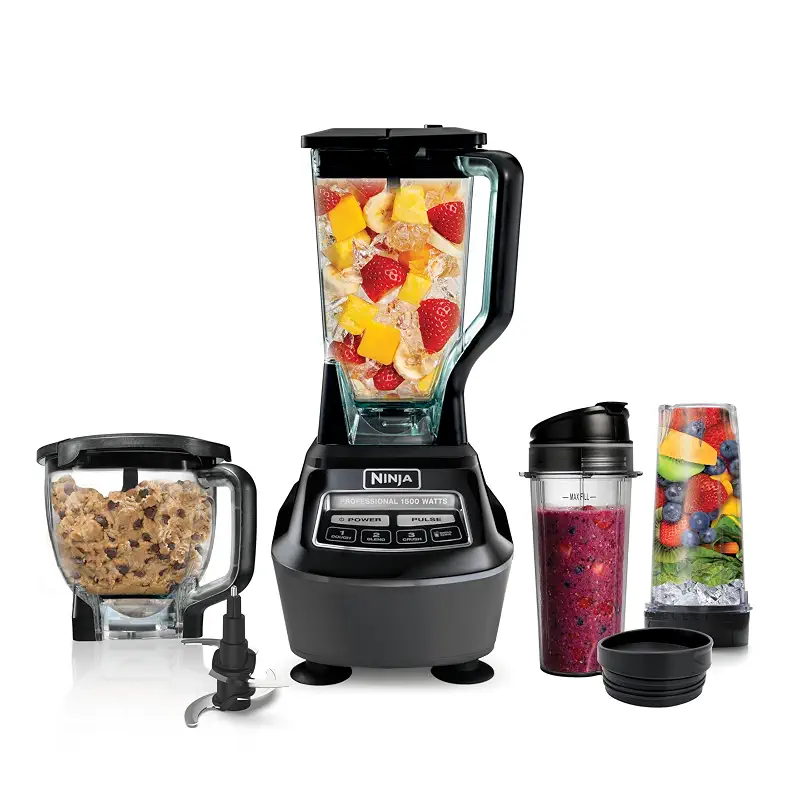
The Ninja Mega Kitchen System () attacks the problem from a different angle: why choose between a blender and a food processor? At 1500 watts, it matches the power of the Premier wet grinder while adding food-processing capability. Owners rave about its ability to handle large quantities: chicken breasts and potatoes for meal prep, dough mixing up to 2 pounds in 30 seconds, and smoothie batches for a family of six without pause. The system includes a 72-ounce blending pitcher, an 8-cup food processor bowl, two 16-ounce personal smoothie cups, and four blade types optimized for different tasks.
The appeal is consolidation and power. Unlike the single-purpose Preethi or Ninja smoothie blender, this machine stays relevant across breakfast smoothies, lunch salsa grinding, dinner dough prep, and weekend entertaining. Reviewers who previously owned multiple appliances note that the Mega replaces a Vitamix, a food processor, and a stand mixer, reclaiming counter and cabinet space. One owner who used the previous-generation Ninja for over 1000 smoothies and then upgraded specifically praised the new model's performance after a minor warranty claim.
Where it falls short for idli batter: the food processor bowl and blending pitcher are optimized for chopping and blending, not the traditional wet-grinding motion that produces fluffy idli batter. You can make batter in the processor bowl with coarser results, but it won't match what a wet grinder produces. Compared to the Preethi, this system is louder, larger, and less specialized for Indian wet-grinding traditions. However, if your household also bakes, meal-preps vegetables, and blends daily, the Mega's versatility may justify the trade-off.
Pros
1500-watt motor handles ice, frozen fruit, vegetables, and dough equally
Four interchangeable blades for blending, chopping, dough mixing, and extraction
Two personal smoothie cups with lids for on-the-go convenience
All containers and blades dishwasher-safe for quick cleanup
Cons
Significantly louder than single-blade models during operation
Larger footprint and height require dedicated counter or pull-out storage
Key features
1500-watt motor base powers blending, chopping, mixing, and processing in one
72-ounce XL pitcher with Total Crushing Blades for ice and frozen fruit
8-cup food processor bowl with chopping blade, dough blade, and pulse function
Two 16-ounce Nutri Ninja cups with extraction blades and to-go spout lids
Four optimized blade types for versatile kitchen tasks from smoothies to dough
Ideal for: Tech-forward home cooks blending smoothies, processing salads, and prepping ingredients; those who value automation and minimal oversight.
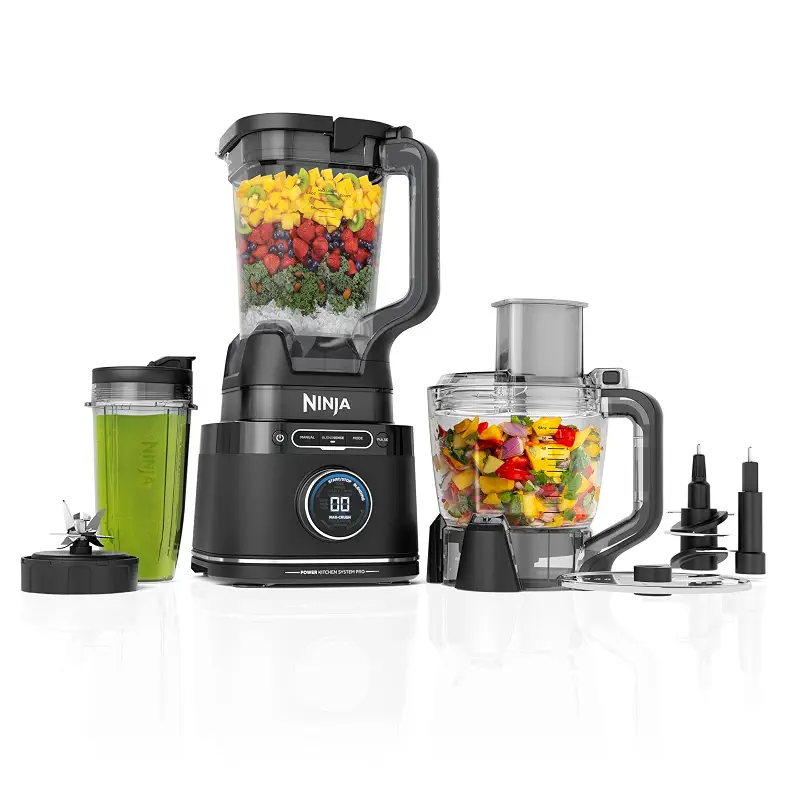
The Ninja Kitchen System () introduces BlendSense Technology, which automatically senses ingredient density and adjusts blending speed and duration in real time. For a cook who wants to minimize guesswork, this is appealing: add spinach, frozen berries, yogurt, and ice, press the smoothie button, and the machine figures out the rest. Owners report consistently smooth results without the babysitting required by manual-speed machines. The 1800 peak watts deliver power comparable to the Mega, but this system adds slicing and shredding discs, letting you prep vegetables and cheese without a separate mandoline or box grater.
Compared to the Mega Kitchen System, the is slightly newer technology with more refined automation and a leaner feature set (one personal cup instead of two). One owner who switched from a Blendtech to this Ninja noted it runs quieter, cleans more easily, and handles creamier preparations like cashew yogurt better than their previous high-end machine. The variable speed control gives you 10 manual settings if you want to override the automatic program.
For idli batter, BlendSense won't solve the fundamental mismatch between blender and wet-grinding design. The automatic pulse feature may help, but the pitcher and motor aren't tuned for the gentle, prolonged grinding that traditional idli batter needs. If your mix of tasks is smoothies, salsa, shredded cheese, and occasional batter, this system competes with the Mega. If idli batter is a primary use and you want the specialist edge, stick with the Preethi wet grinder or Premier model.
Pros
BlendSense Technology auto-adjusts speed and time for consistent smoothness
1800 peak watts with 10 manual speed settings for precise control
Slicing and shredding discs for vegetable and cheese prep without extras
Quieter operation than comparable high-wattage blenders during use
Cons
Advanced technology adds complexity and higher price point than simpler models
Single personal cup less convenient for multi-user households than Mega's two cups
Key features
1800 peak watts with BlendSense automatic program detection and adjustment
72-ounce XL pitcher and 8-cup processor bowl for large-batch preparation
Slicing and shredding discs with feed chute and pusher for vegetable prep
24-ounce single-serve cup with liquid-detect alert and spout lid
10-speed variable control lets you override automation for manual precision
#5 Pick
Best Wet Grinder for Authentic Indian Batter
Premier
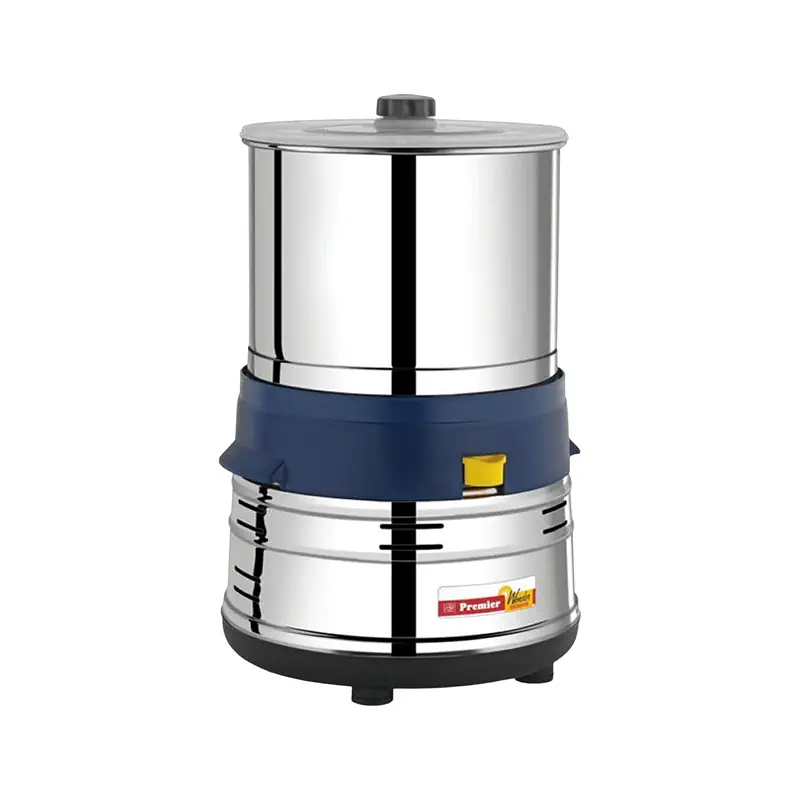
Premier Small Wonder Table Top Wet Rice and Lentils Grinder 1.5 Liter,110 volts with coconut scrapper and atta kneader
4.5(1,598)
Dedicated wet grinder with stone grinding action optimized for fluffy idli and dosa batter in compact, lightweight form.
Ideal for: Home cooks committed to authentic idli and dosa preparation; households willing to dedicate an appliance to wet grinding.
The Premier Small Wonder is purpose-built for wet grinding in a way that no blender, no matter how powerful, can replicate. A wet grinder uses a rotating stone drum against a stationary stone base, a design that has made idli, dosa, and chutney for centuries across India. The action is gentler and slower than blade blending, which preserves the natural fermentation and air incorporation that produces fluffy idlis. Owners consistently report batter quality that electric mixers and blenders simply cannot match: one reviewer noted their idlis and dosas became "divine in taste" after switching from a mixer grinder, with the batter feeling soft and fluffy in hand, exactly like traditionally whisked batter.
At 200 watts and 1.5 liters, the Premier trades raw power for precision. This is not a machine that crushes ice or blends frozen smoothies. It grinds urad, rice, and lentils into silky batter and makes chutneys and spice powders. The compact, lightweight design fits in a kitchen sink for easy cleaning, and the stainless steel drum with food-grade plastic components is durable and low-maintenance. Multiple owners have reported 8+ years of reliable daily use. The included coconut scraper and atta kneader add practical value without inflating cost.
The clear limitation: this is a single-purpose tool. If your household needs smoothies, frozen drinks, or heavy-duty blending, you will need a second appliance. Where a mixer grinder versus blender comparison becomes critical is understanding that wet grinders excel at one thing (batter) and do that one thing better than anything else. If you're serious about authentic idli batter and can dedicate space or accept a dedicated appliance, the Premier delivers what blender-based solutions cannot.
Pros
Stone grinding action produces fluffy, finely-ground idli and dosa batter
Compact 1.5-liter capacity fits kitchen sink for convenient cleaning
Lightweight and durable stainless steel drum for long-term reliability
Includes coconut scraper and atta kneader accessories at no cost
Cons
200-watt motor limits use to grinding; cannot blend smoothies or crush ice
Grinding process produces notable noise typical of stone grinders
Key features
200-watt motor with stone drum grinding action for traditional batter texture
1.5-liter stainless steel grinding vessel fits standard kitchen sink
Produces soft, fluffy idli and dosa batter without overheating ingredients
Includes coconut scraper and atta kneader for expanded grinding versatility
Food-grade plastic components and stainless steel construction, BPA-free
How to Choose a Blender or Grinder for Idli Batter
Four trade-offs that actually matter when matching a blender for idli batter in usa to your kitchen.
Wet Grinding vs. Blade Blending
The core difference between a wet grinder and a blender matters for idli quality. A mixer grinder versus blender comparison reveals that wet grinders use stone-on-stone grinding, which produces the fluffy, finely-ground consistency that makes idlis rise and stay tender. Blenders use rotating blades, which work faster but create heat and don't replicate traditional grinding. If authentic idli texture is your priority, a dedicated wet grinder produces superior results. If you need a machine for smoothies, sauces, and occasional batter, a blender is more versatile.
Motor Power and Grinding Time
Motor wattage affects speed and consistency. A 550-watt mixer grinder takes longer to achieve smooth batter than a 1500-watt blender, but the quality difference depends on design, not just watts. For wet grinding, lower wattage with stone-based mechanisms (200 watts on a wet grinder) often outperforms high-wattage blade designs. Consider your patience: if you'll stand over the machine anyway, a smaller motor handling batter-specific grinding is worth the extra time.
Jar Size and Household Capacity
Three-jar systems (1.5L, 1.0L, 0.4L) scale with batch size, which matters if you cook for one or for six. A single large pitcher works for big batches but forces you to over-fill for small quantities, reducing blending efficiency. Multiple jar sizes let you match the vessel to the task: small jar for coffee beans or masala, large jar for a week's idli batter.
Grinding Idli Batter Technique and Durability
Idli batter quality depends on ingredient ratios and grind time as much as machine design. Running a grinding idli batter technique requires soaking rice and urad for the right duration, using the correct liquid-to-grain ratio, and allowing proper fermentation time. A machine built to last (stainless steel jars, quality motor couplers, proven multi-year reliability) will support consistent results over years of daily use. Read reviews focusing on long-term durability, not just first-impression performance.
US Voltage and Repair Access
All machines listed here are 110-volt compatible for US households. What differs is support: Indian brands like Preethi and Premier sometimes offer warranty support through US distributors, but local repair options are limited. Ninja and other US brands have broader service networks. If durability and peace-of-mind matter, factor in brand support availability.
Frequently asked
Quick answers to the questions readers ask most.
Can a regular blender make idli batter as good as a wet grinder?
A regular blender can grind ingredients into a batter, but the result differs from a wet grinder. Blender batter often lacks the fluffy, fine-ground consistency that makes idlis rise and stay tender. Stone-based wet grinders preserve fermentation and air incorporation better than blade blending. If texture is critical, a wet grinder produces noticeably better results. A blender works if convenience and versatility matter more than perfection.
How long does wet grinding take compared to a mixer grinder?
Wet grinders typically take 20–45 minutes for a full batch, depending on quantity and stone condition. Mixer grinders or blenders finish in 5–10 minutes. The longer wet-grinding time is part of the design: the slow action produces finer, fluffier batter. If speed is your priority, a blender or mixer grinder saves time. If batter quality is the goal, the extra time is worthwhile.
What is the best size wet grinder for a family of four?
A 1.5-liter wet grinder suits a family of four to six, producing enough batter for 12–18 idlis per grind. If you batch-cook for the freezer or make dosa, chutneys, and powders regularly, a 2-liter model offers more flexibility. A 1-liter model works for one to two people but requires multiple grinds for larger families, becoming inconvenient.
Are Preethi and Ninja blenders reliable for long-term daily use?
Both brands show strong reliability in owner reviews spanning years of daily use. Preethi models often reach 10–15 years with consistent performance. Ninja blenders typically perform well for 3–5 years before blade sharpness noticeably declines. Both offer better durability than budget alternatives, but expectations differ. Preethi targets Indian cooking endurance, Ninja targets smoothie-maker efficiency.
Can I make idli batter in a food processor instead of a blender or wet grinder?
A food processor can grind ingredients but produces a coarser, less fluffy result than either a wet grinder or a mixer grinder optimized for batter. The bowl shape and blade design are meant for chopping and mixing, not the prolonged grinding action that develops batter texture. For authentic idli batter, a dedicated grinder significantly outperforms a food processor.